
NOTES MINERAL IDENTIFICATION The pictures seen here are
- Slides: 42
NOTES: MINERAL IDENTIFICATION
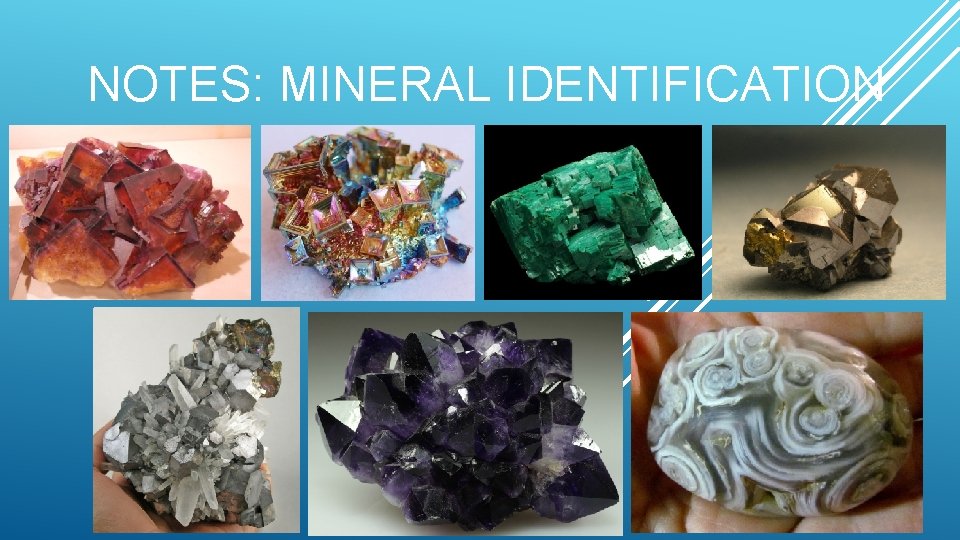
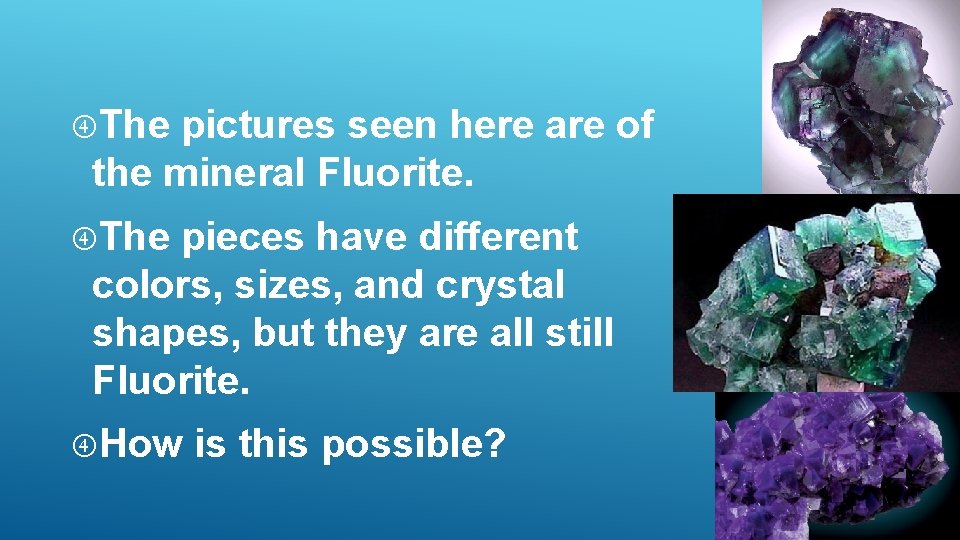
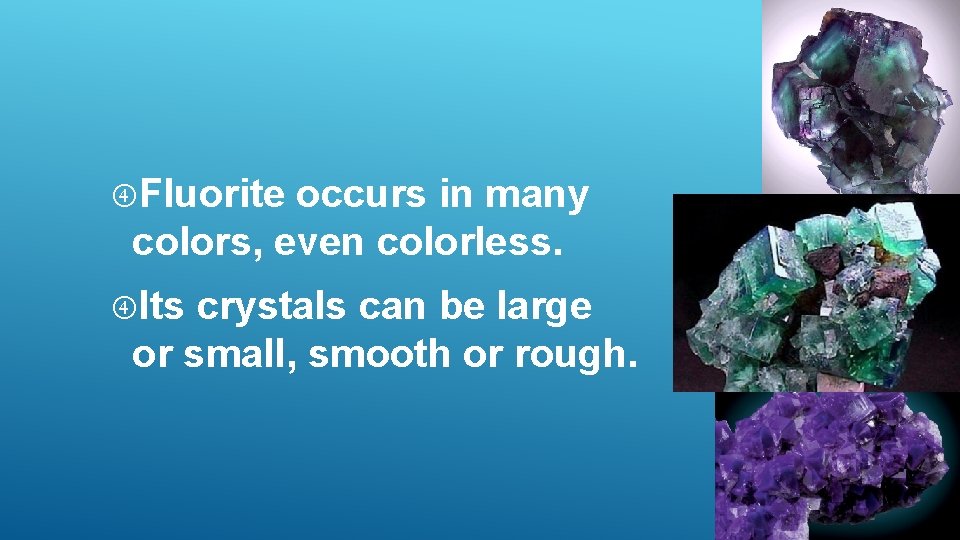
The pictures seen here are of the mineral Fluorite. The pieces have different colors, sizes, and crystal shapes, but they are all still Fluorite. How is this possible?
Fluorite occurs in many colors, even colorless. Its crystals can be large or small, smooth or rough.
If you came across fluorite while hiking, would you know what it was just by looking at it? Probably not. Today we will learn how you could identify it.
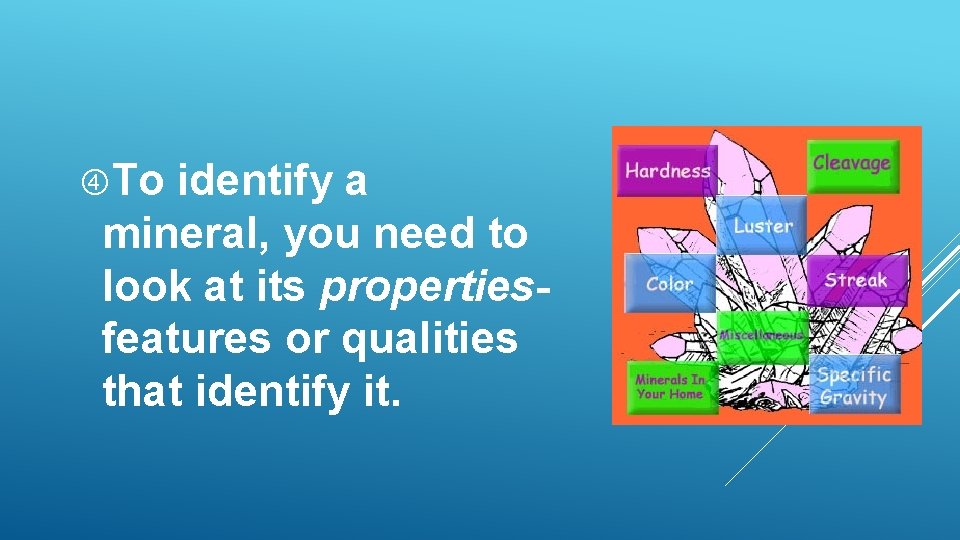
To identify a mineral, you need to look at its propertiesfeatures or qualities that identify it.
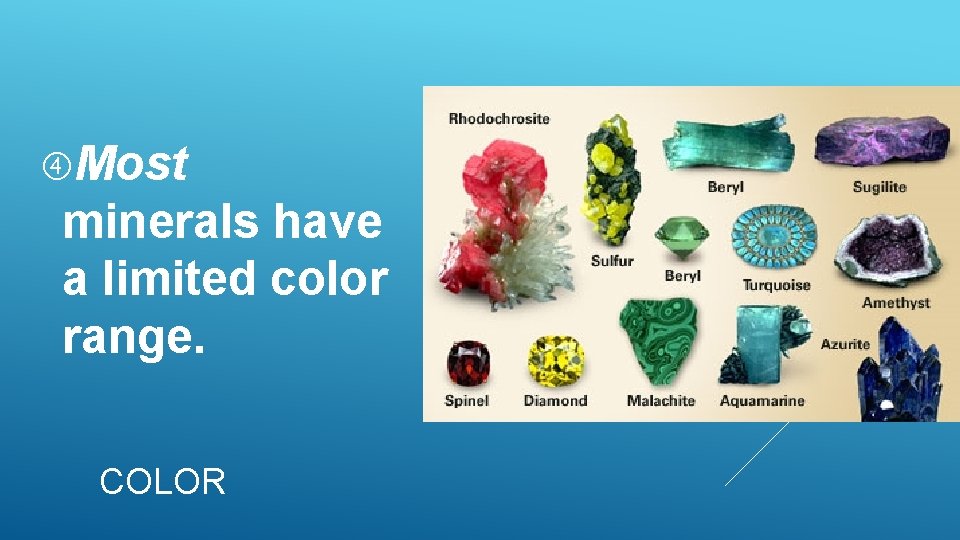
Most minerals have a limited color range. COLOR
3 causes for minerals to come in different colors… COLOR
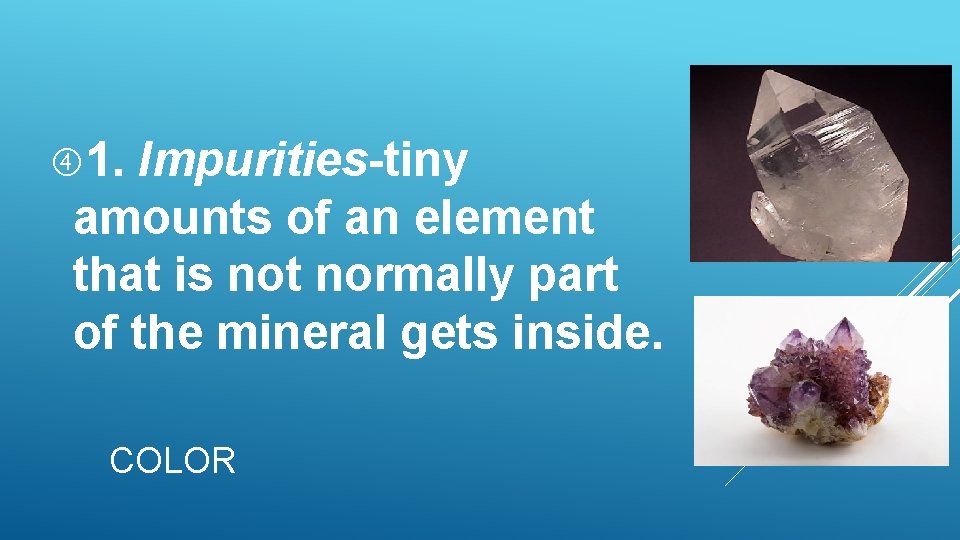
1. Impurities-tiny amounts of an element that is not normally part of the mineral gets inside. COLOR
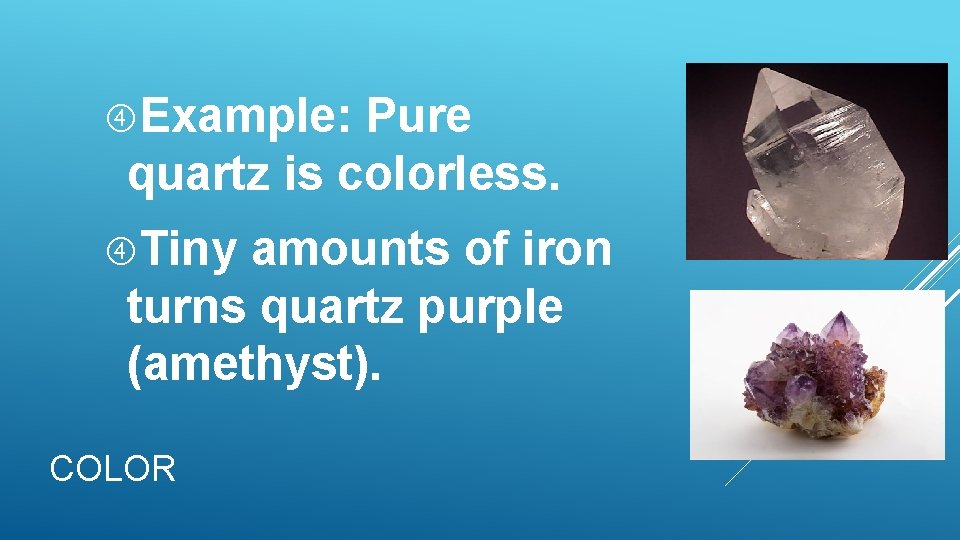
Example: Pure quartz is colorless. Tiny amounts of iron turns quartz purple (amethyst). COLOR
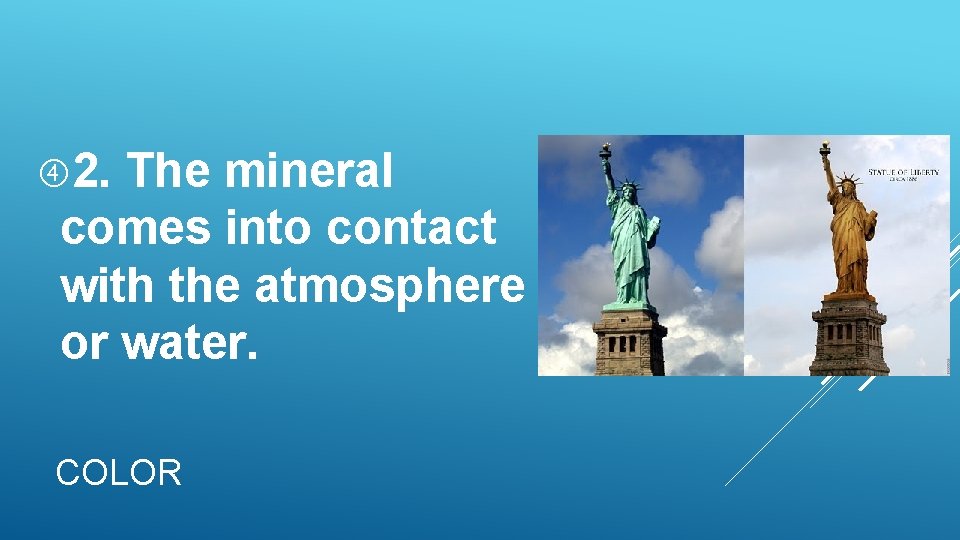
2. The mineral comes into contact with the atmosphere or water. COLOR
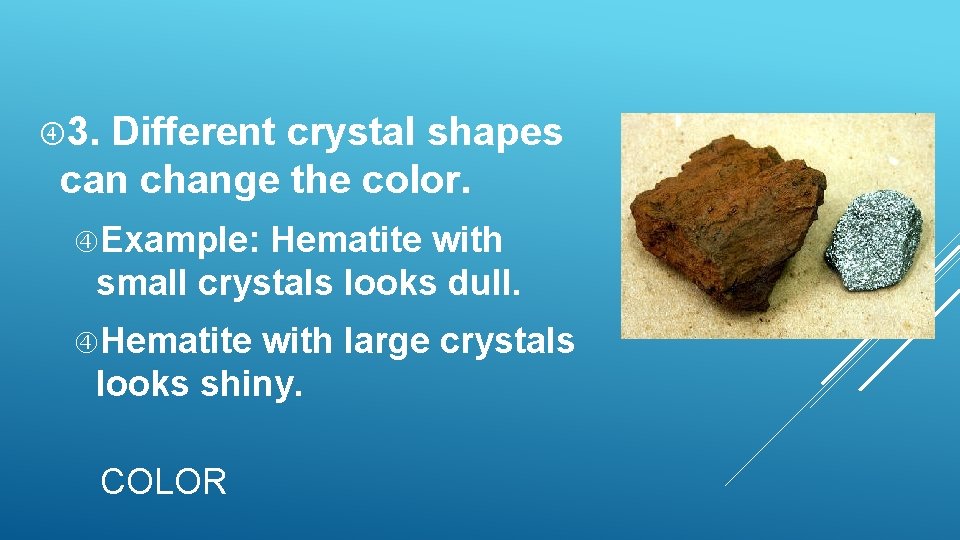
3. Different crystal shapes can change the color. Example: Hematite with small crystals looks dull. Hematite with large crystals looks shiny. COLOR
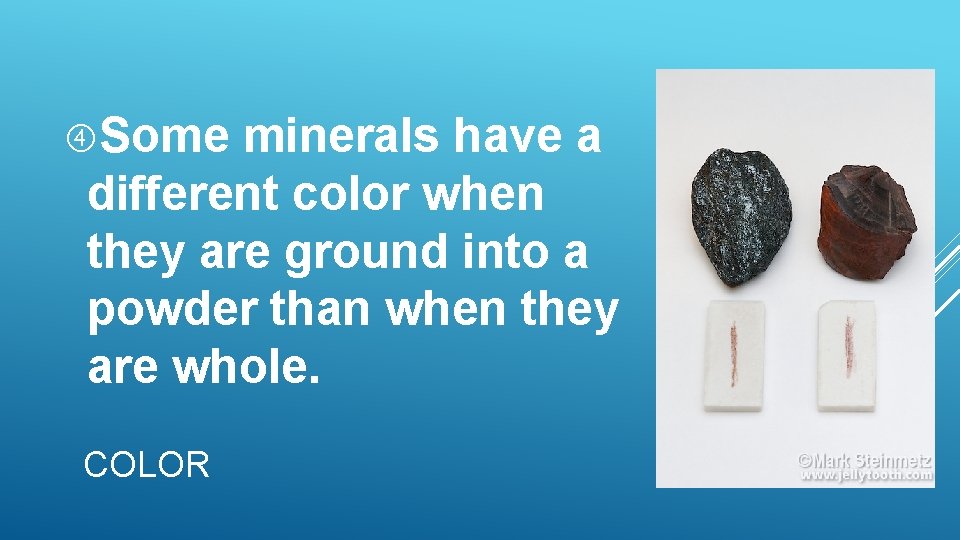
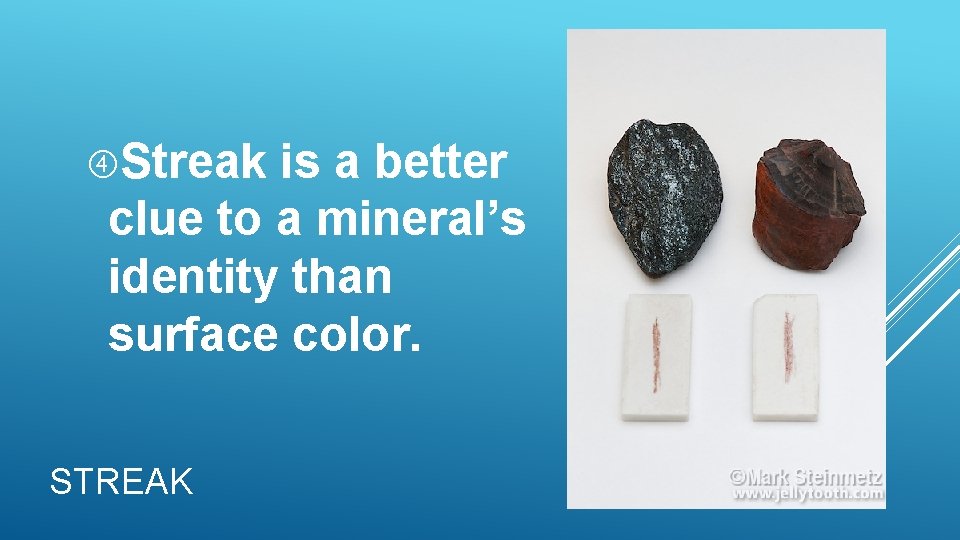
Some minerals have a different color when they are ground into a powder than when they are whole. COLOR
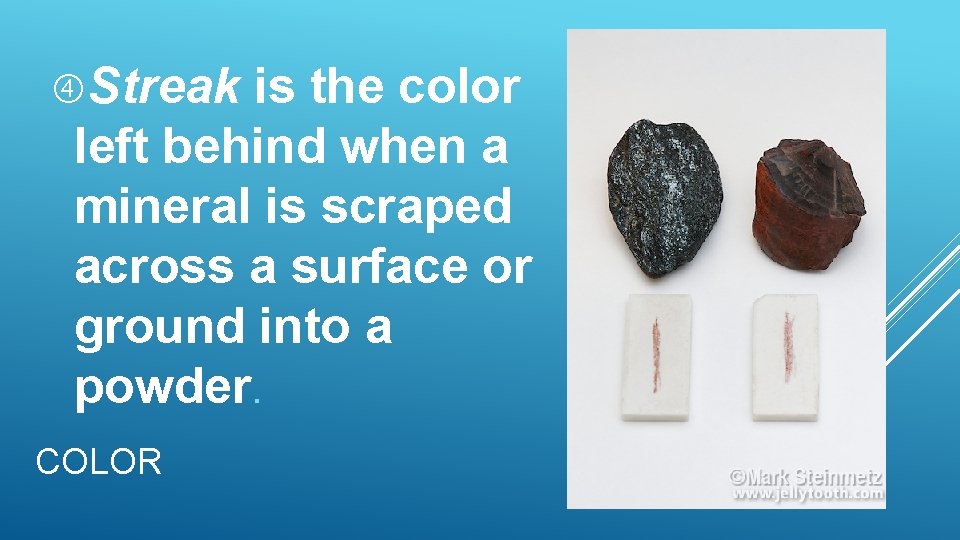
Streak is the color left behind when a mineral is scraped across a surface or ground into a powder. COLOR
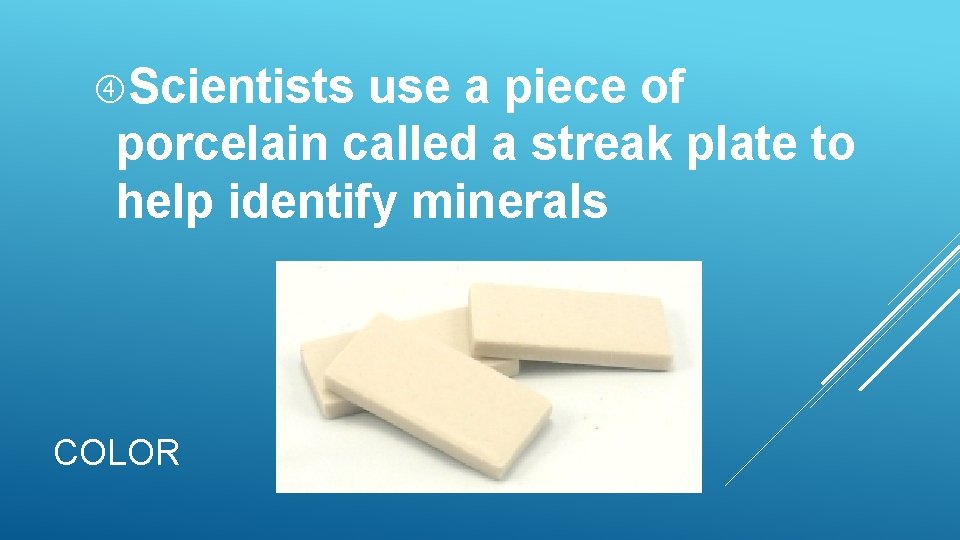
Scientists use a piece of porcelain called a streak plate to help identify minerals COLOR
Streak is a better clue to a mineral’s identity than surface color. STREAK
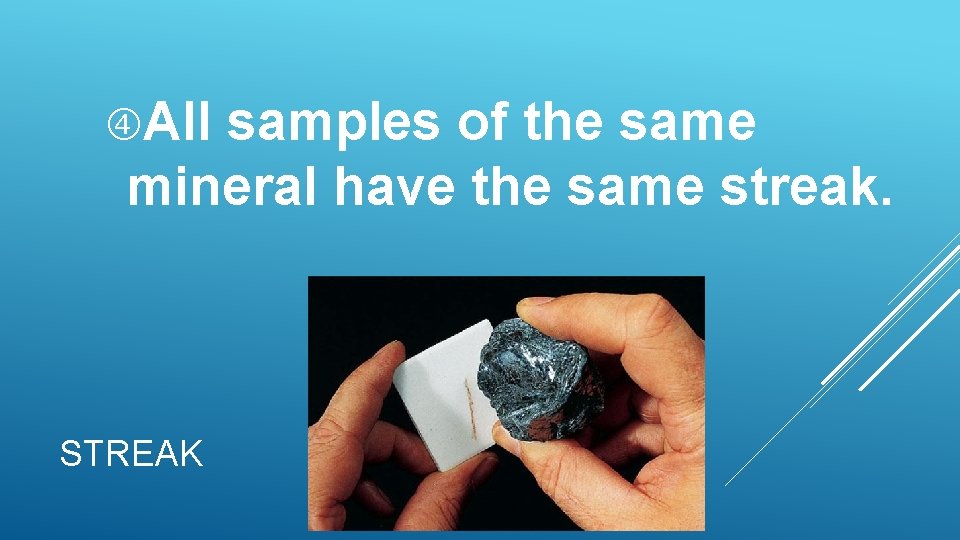
All samples of the same mineral have the same streak. STREAK
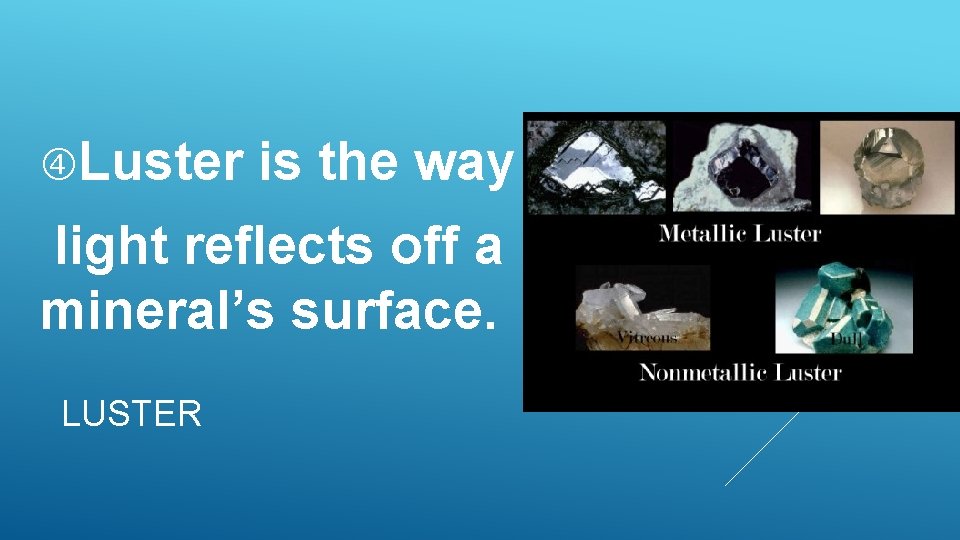
Luster is the way light reflects off a mineral’s surface. LUSTER
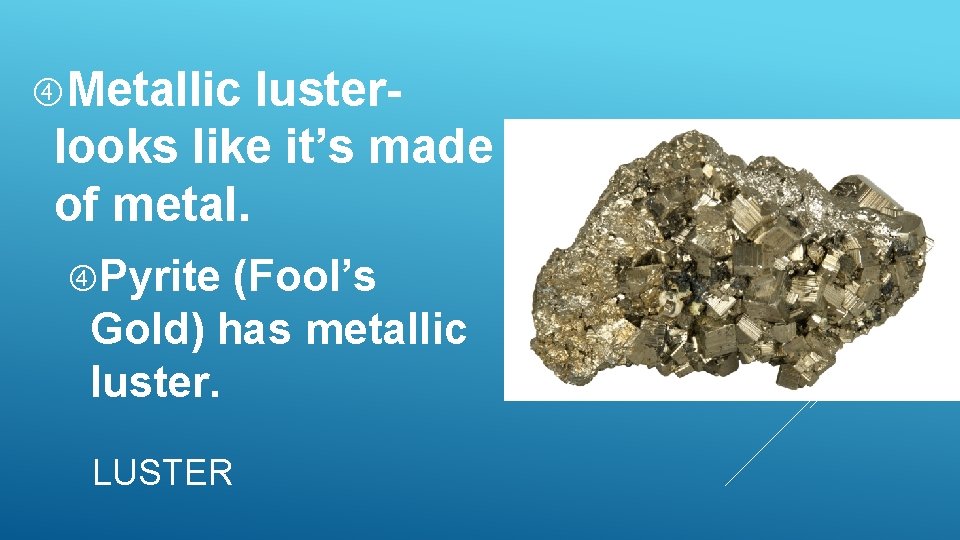
Metallic lusterlooks like it’s made of metal. Pyrite (Fool’s Gold) has metallic luster. LUSTER
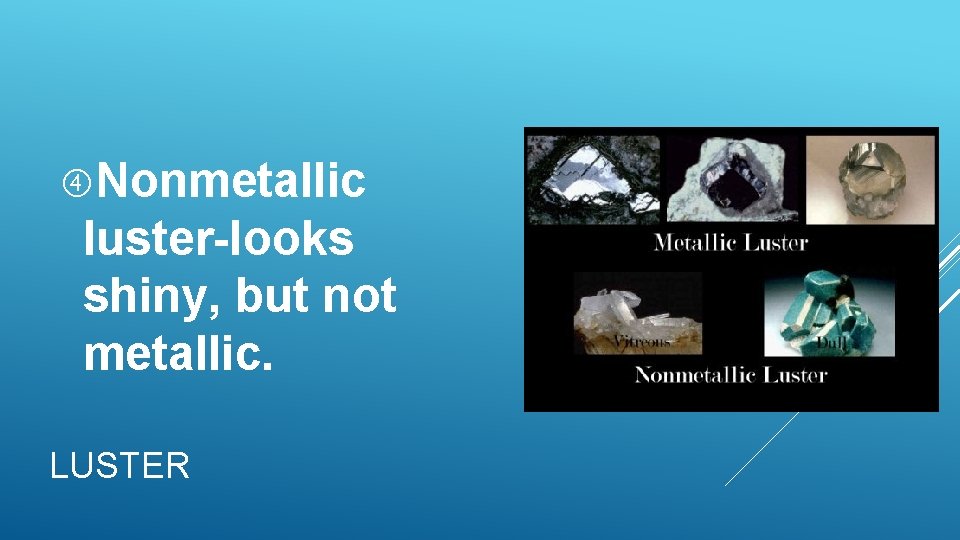
Nonmetallic luster-looks shiny, but not metallic. LUSTER
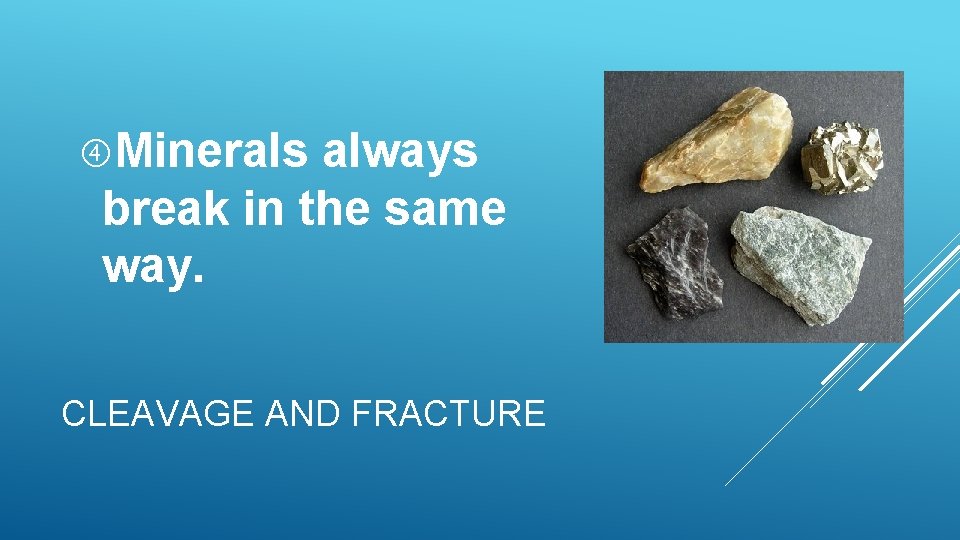
Minerals always break in the same way. CLEAVAGE AND FRACTURE
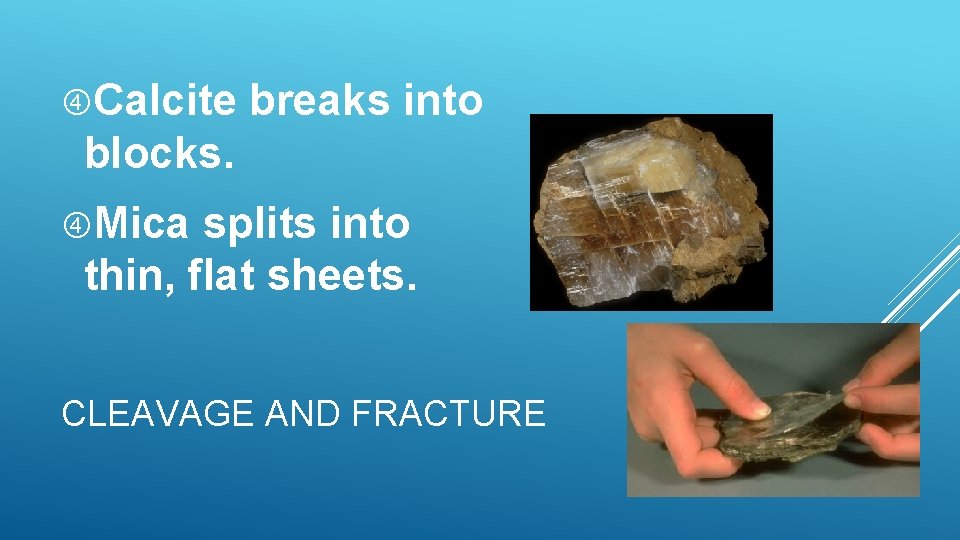
Calcite breaks into blocks. Mica splits into thin, flat sheets. CLEAVAGE AND FRACTURE
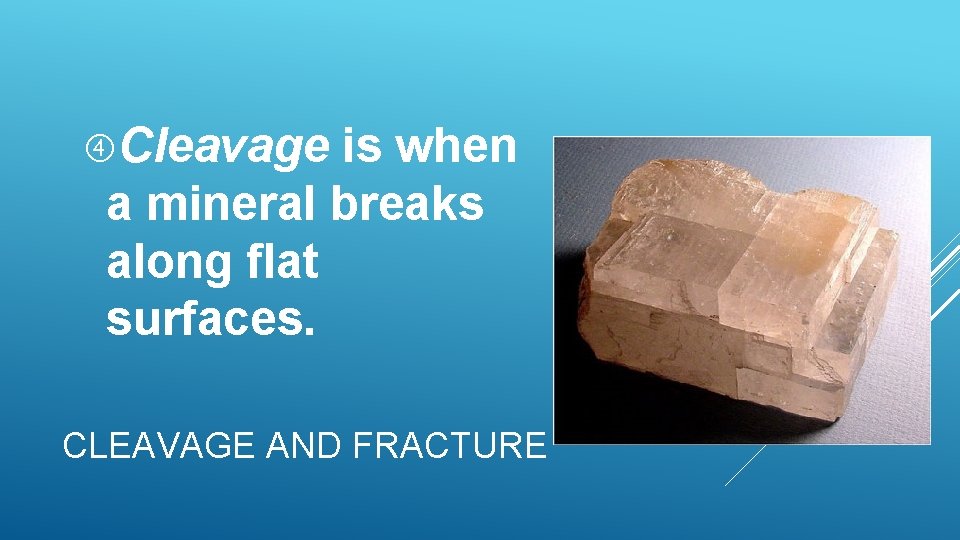
Cleavage is when a mineral breaks along flat surfaces. CLEAVAGE AND FRACTURE
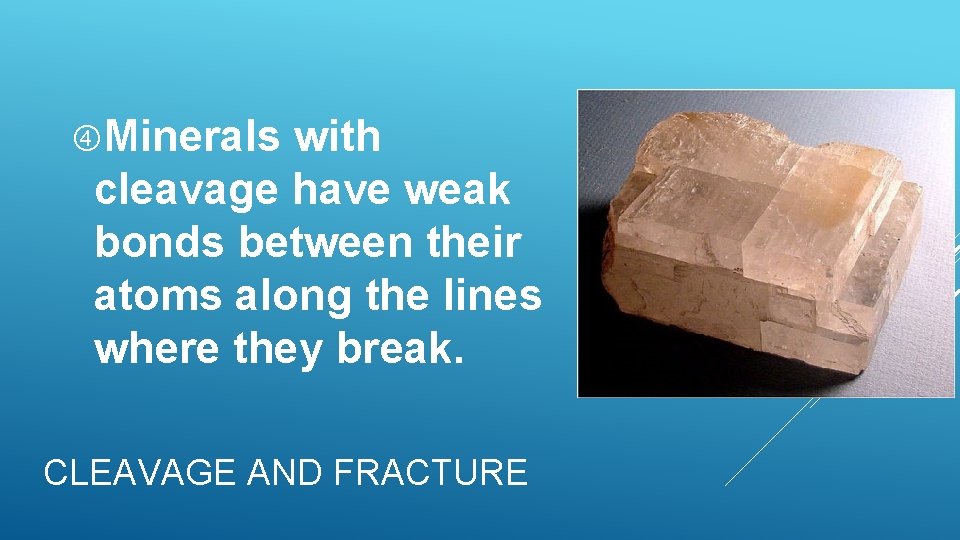
Minerals with cleavage have weak bonds between their atoms along the lines where they break. CLEAVAGE AND FRACTURE
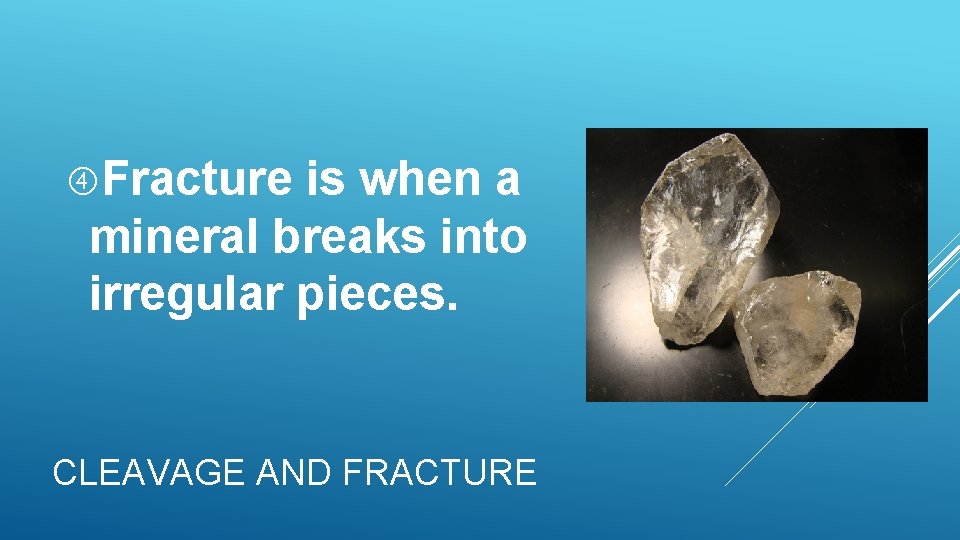
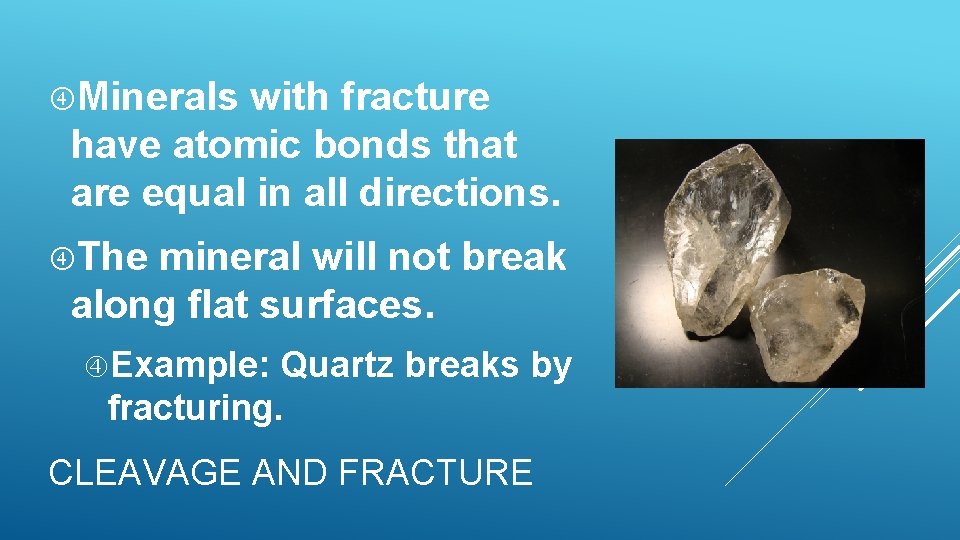
Fracture is when a mineral breaks into irregular pieces. CLEAVAGE AND FRACTURE
Minerals with fracture have atomic bonds that are equal in all directions. The mineral will not break along flat surfaces. Example: Quartz breaks by fracturing. CLEAVAGE AND FRACTURE
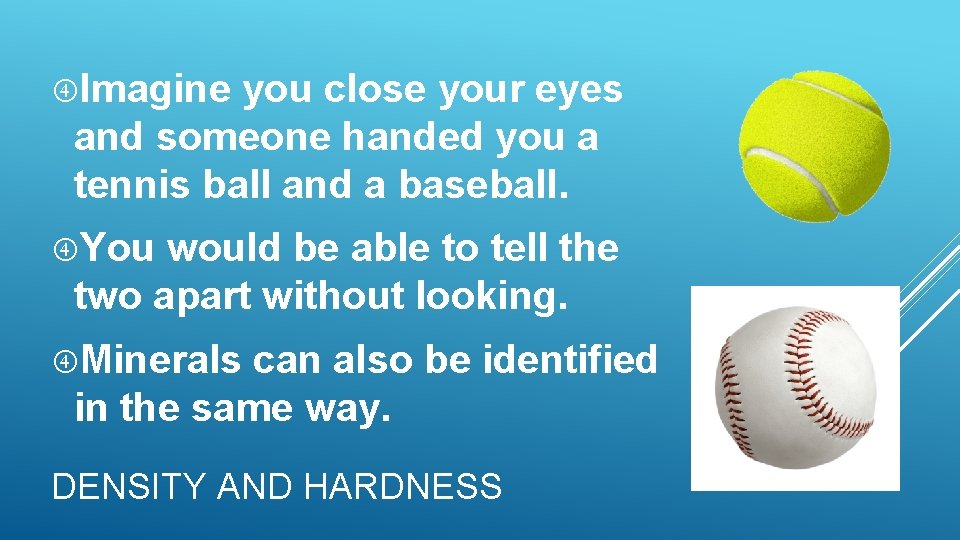
Imagine you close your eyes and someone handed you a tennis ball and a baseball. You would be able to tell the two apart without looking. Minerals can also be identified in the same way. DENSITY AND HARDNESS
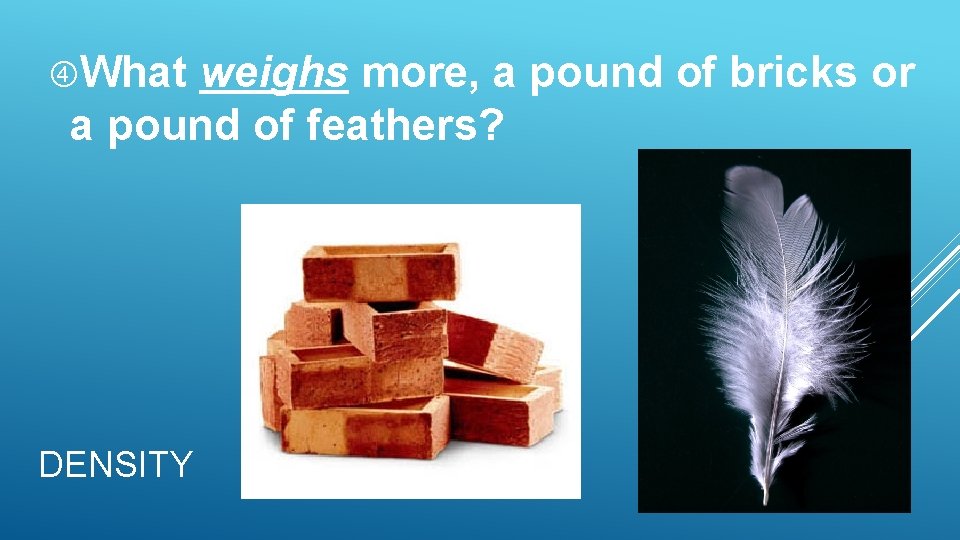
What weighs more, a pound of bricks or a pound of feathers? DENSITY
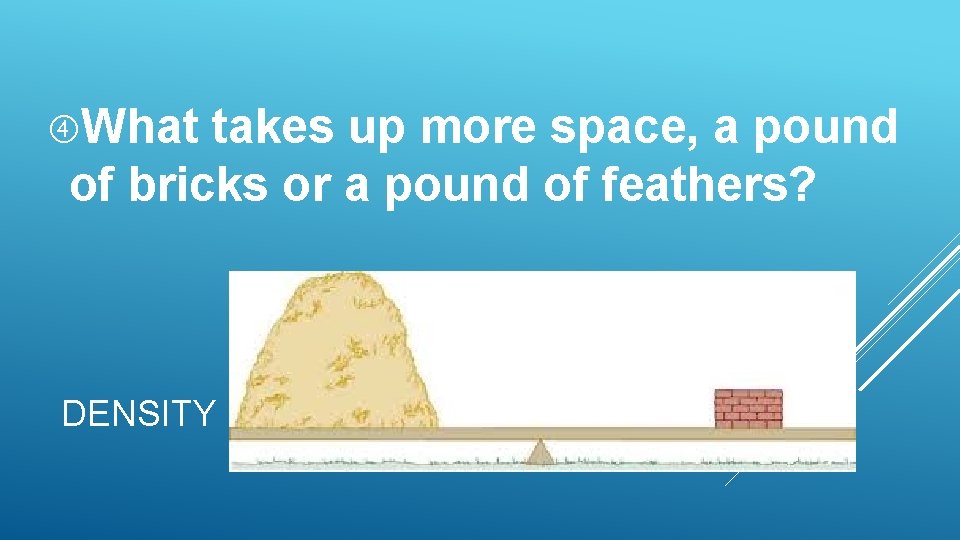
What takes up more space, a pound of bricks or a pound of feathers? DENSITY
The bricks are more dense; they have more density! DENSITY
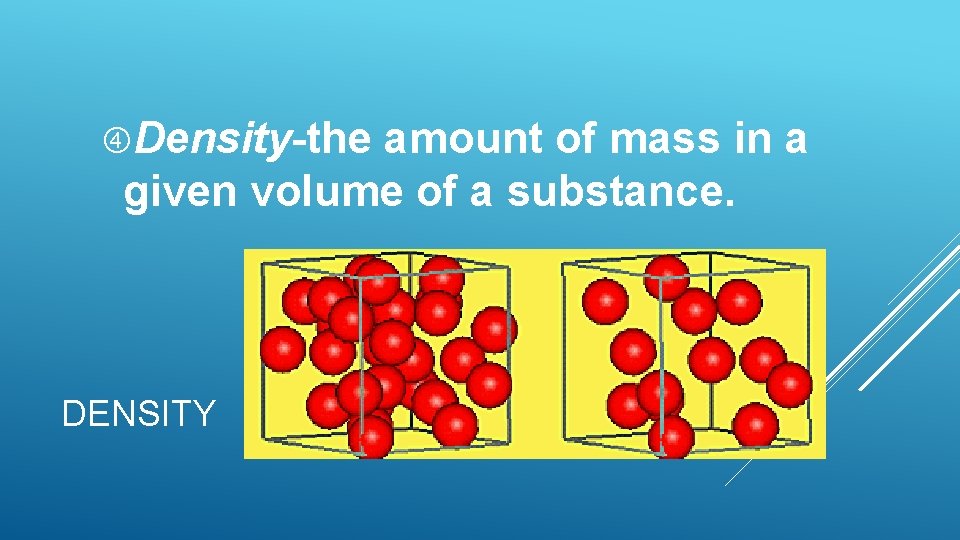
Density-the amount of mass in a given volume of a substance. DENSITY
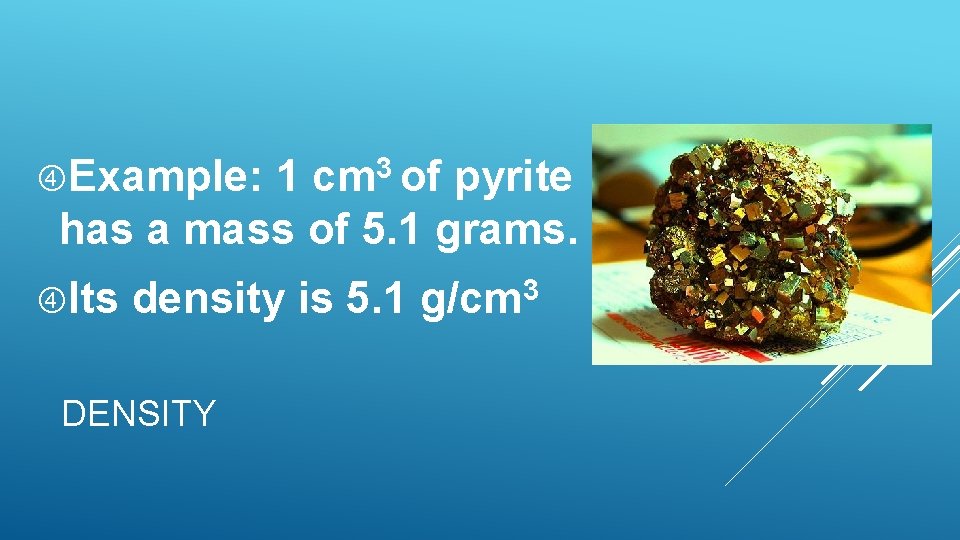
Example: 1 cm 3 of pyrite has a mass of 5. 1 grams. Its density is 5. 1 DENSITY 3 g/cm
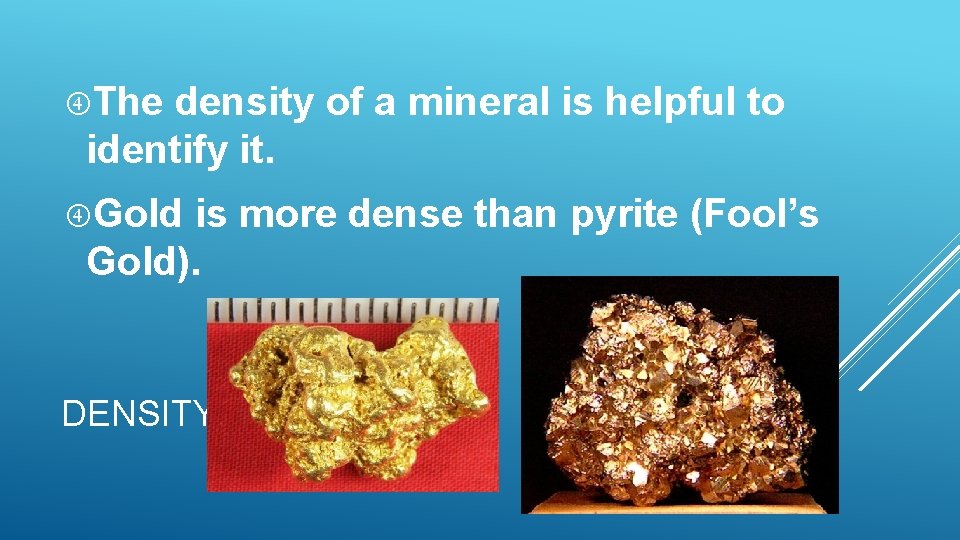
The density of a mineral is helpful to identify it. Gold is more dense than pyrite (Fool’s Gold). DENSITY
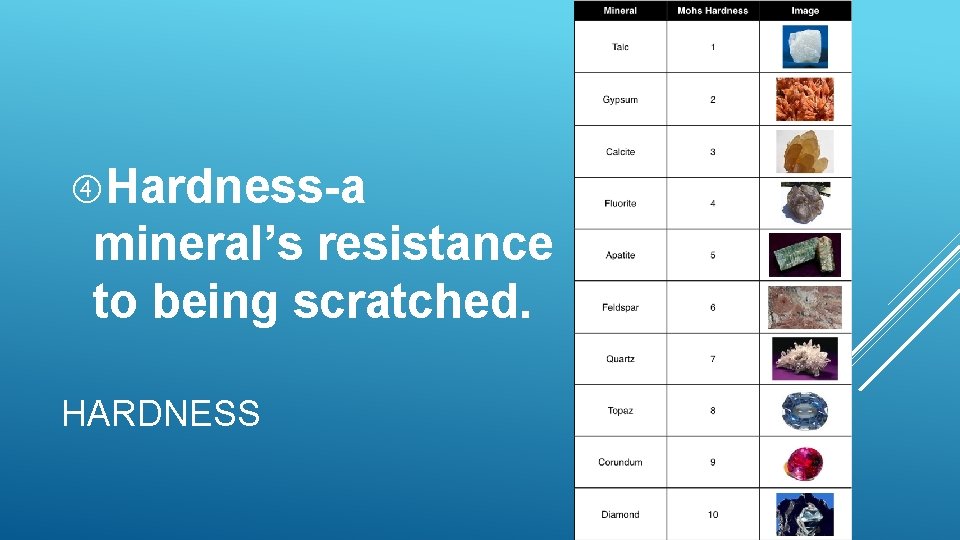
Hardness-a mineral’s resistance to being scratched. HARDNESS
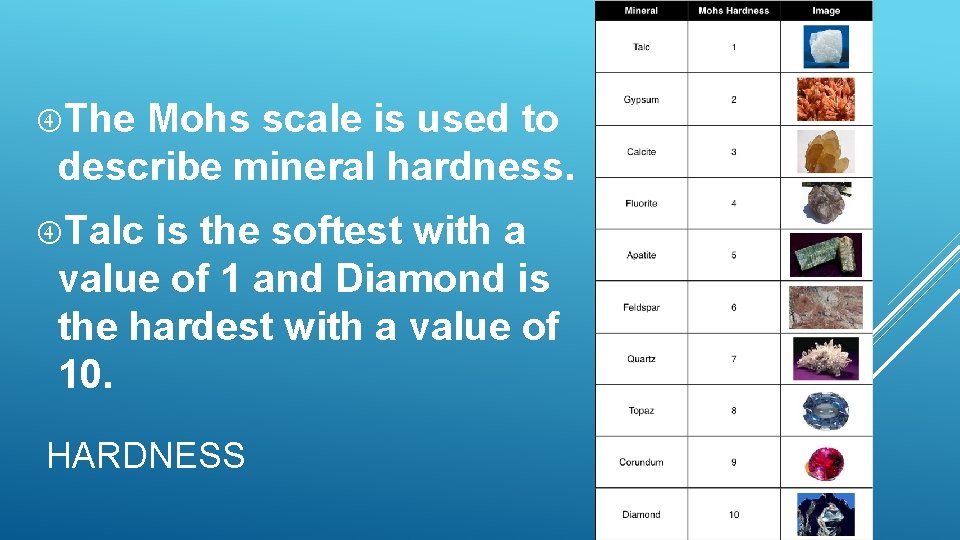
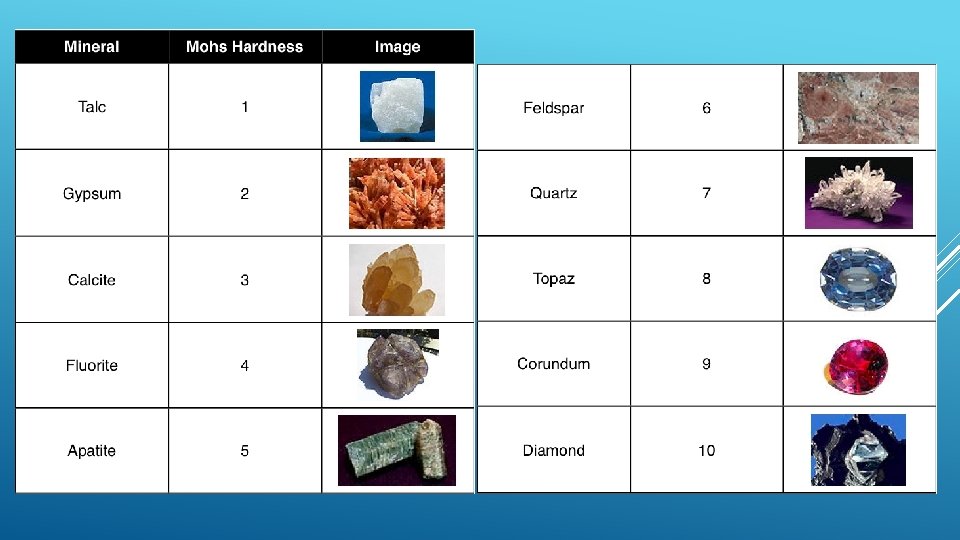
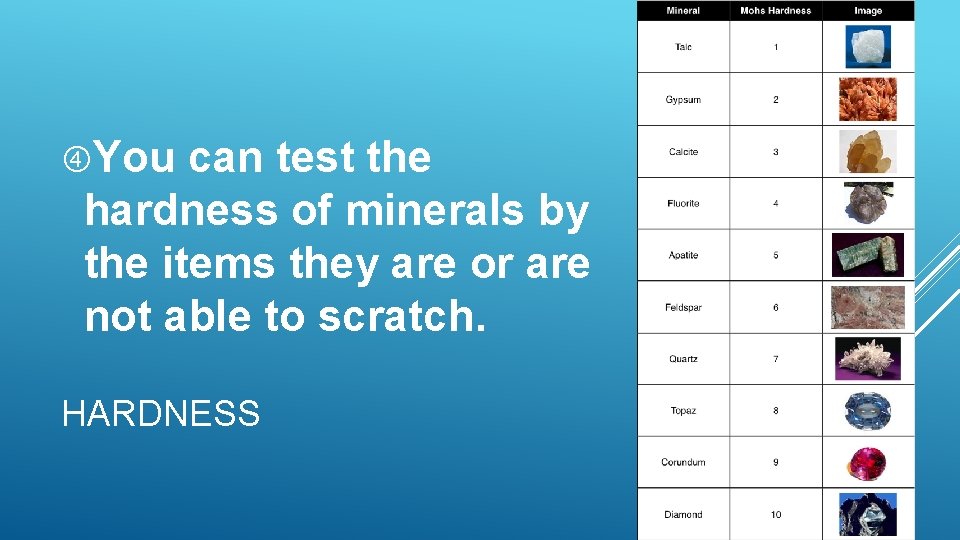
The Mohs scale is used to describe mineral hardness. Talc is the softest with a value of 1 and Diamond is the hardest with a value of 10. HARDNESS
You can test the hardness of minerals by the items they are or are not able to scratch. HARDNESS
Some minerals have extra special properties that can help identify them. SPECIAL PROPERTIES
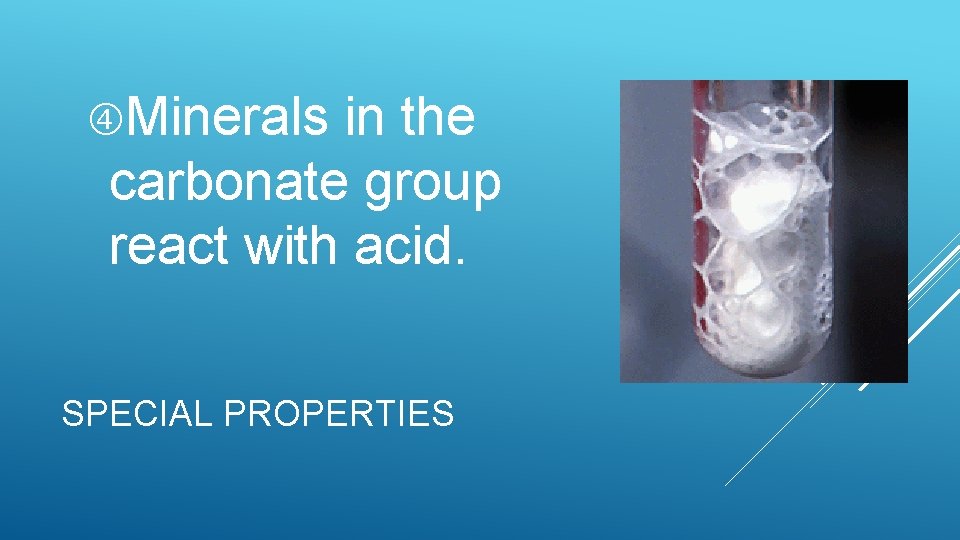
Minerals in the carbonate group react with acid. SPECIAL PROPERTIES
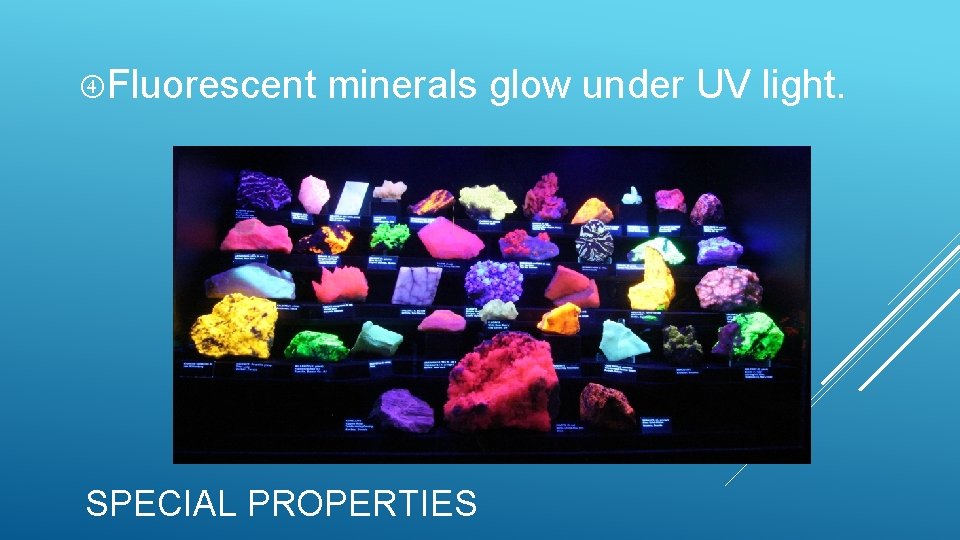
Fluorescent minerals glow under UV light. SPECIAL PROPERTIES
REVIEW 1. How is it possible for two different minerals to have the same chemical composition? A. They B. One have different crystal structures. is formed only by organisms. C. Only one is a rock-forming mineral. D. They have different appearances.
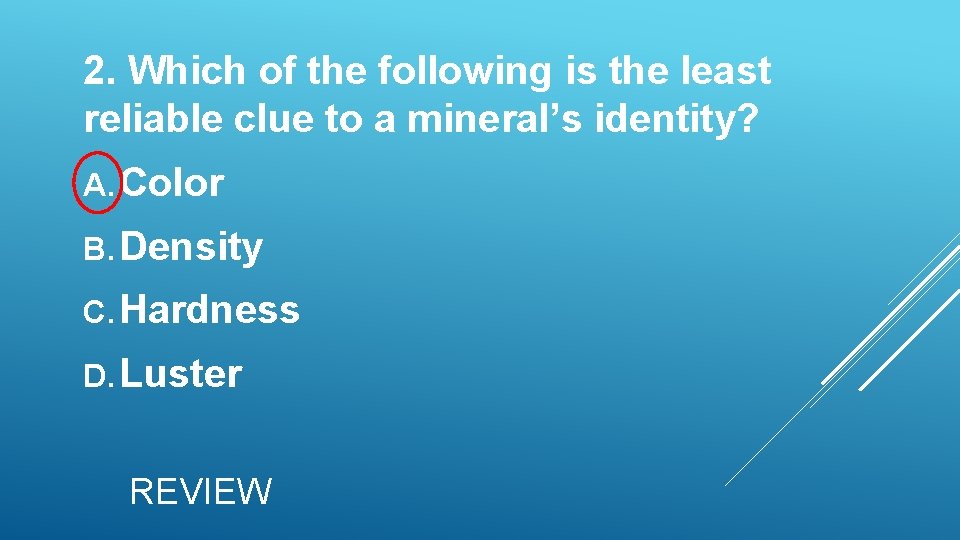
2. Which of the following is the least reliable clue to a mineral’s identity? A. Color B. Density C. Hardness D. Luster REVIEW
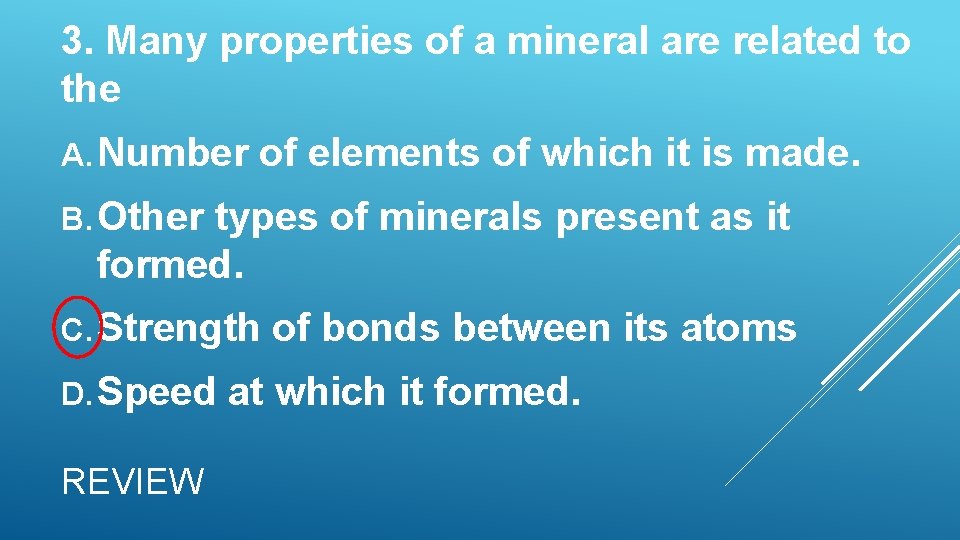
3. Many properties of a mineral are related to the A. Number of elements of which it is made. B. Other types of minerals present as it formed. C. Strength D. Speed REVIEW of bonds between its atoms at which it formed.