
Notes Levels of Organization 5 Levels of Organization
- Slides: 13
Notes: Levels of Organization
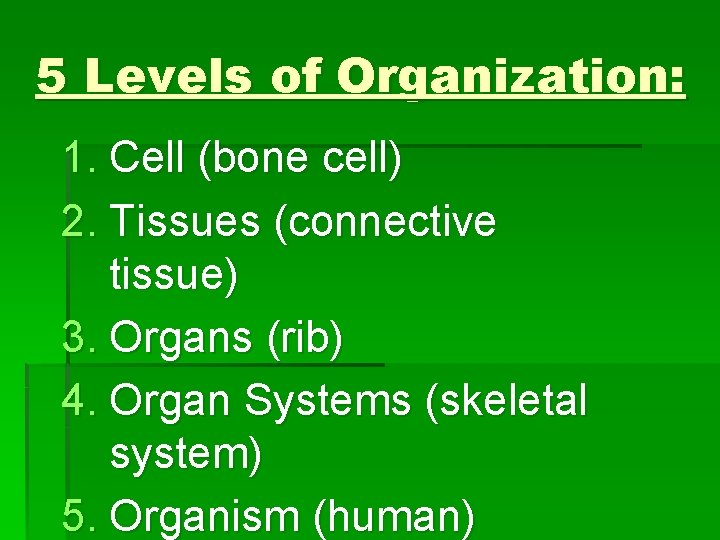
5 Levels of Organization: 1. Cell (bone cell) 2. Tissues (connective tissue) 3. Organs (rib) 4. Organ Systems (skeletal system) 5. Organism (human)
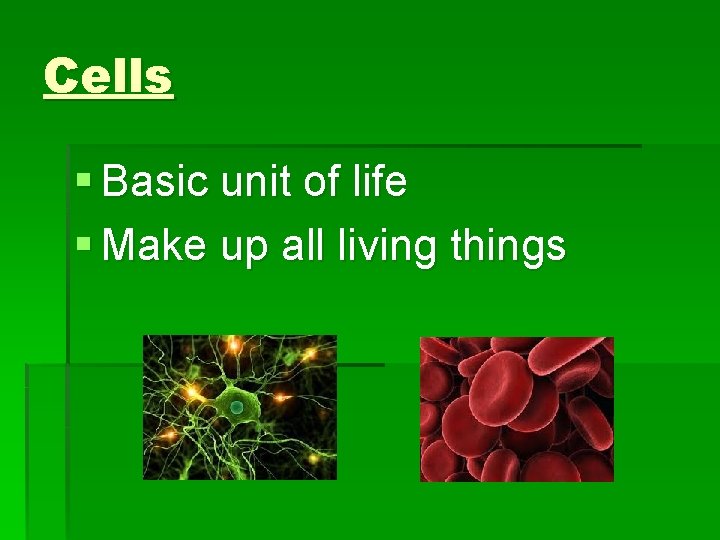
Cells § Basic unit of life § Make up all living things
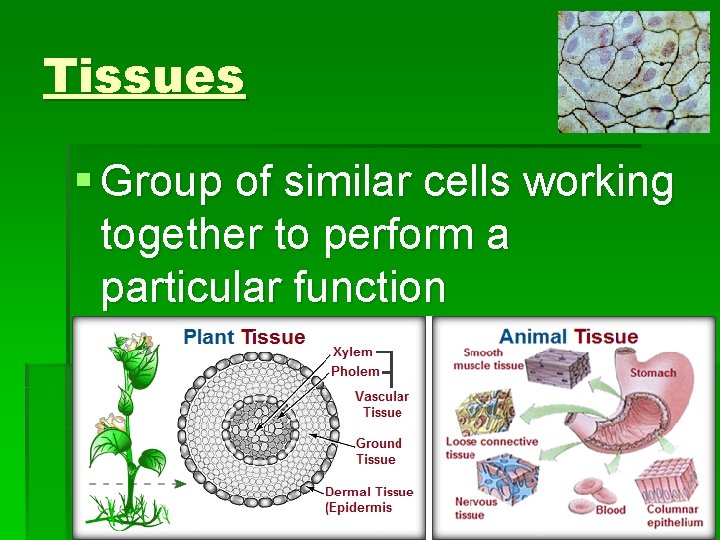
Tissues § Group of similar cells working together to perform a particular function
Types of Human Tissue § Connective – structure and support (bones) § Epithelial – skin and lining of major organs § Muscle – movement (biceps) § Nervous – carries messages to and from the brain (nerves)
Types of Plant Tissue § Dermal – protection and reduce water loss § Vascular – transport water and nutrients § Ground – storage and support and where photosynthesis takes place
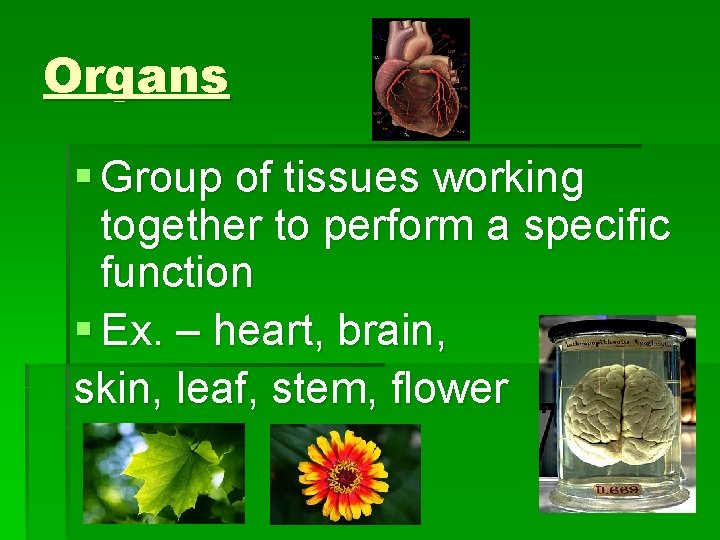
Organs § Group of tissues working together to perform a specific function § Ex. – heart, brain, skin, leaf, stem, flower
Organ Systems § Group of organs working together to perform a specific function. § Allow organisms to grow, reproduce, and maintain life.
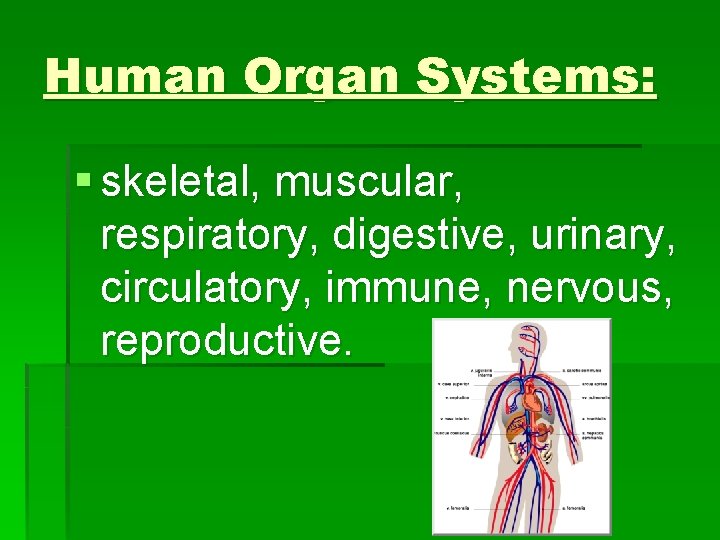
Human Organ Systems: § skeletal, muscular, respiratory, digestive, urinary, circulatory, immune, nervous, reproductive.
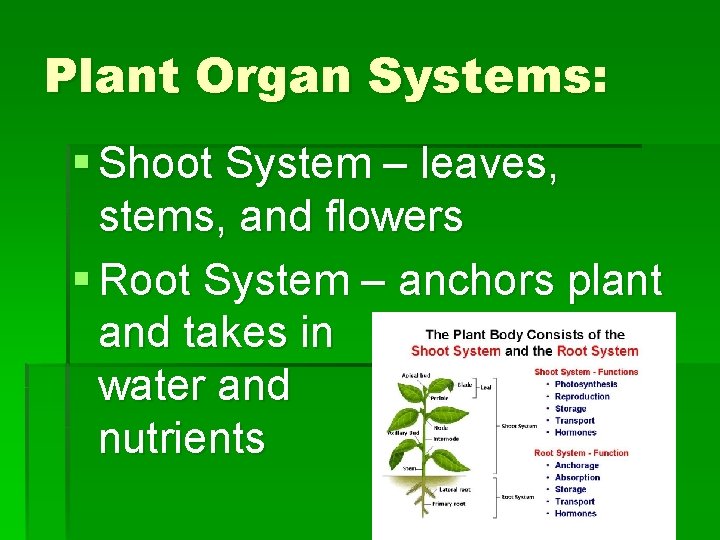
Plant Organ Systems: § Shoot System – leaves, stems, and flowers § Root System – anchors plant and takes in water and nutrients
Organism § Entire living things that can carry out all basic life processes. § Made up of organ systems (some are single celled)
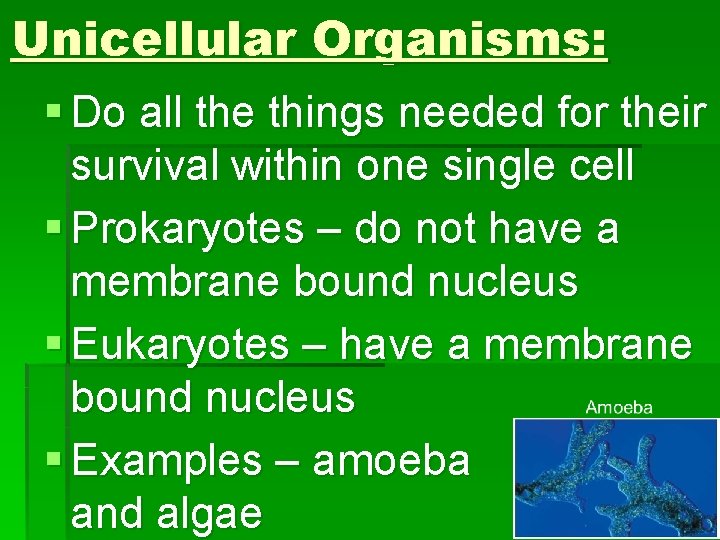
Unicellular Organisms: § Do all the things needed for their survival within one single cell § Prokaryotes – do not have a membrane bound nucleus § Eukaryotes – have a membrane bound nucleus § Examples – amoeba and algae
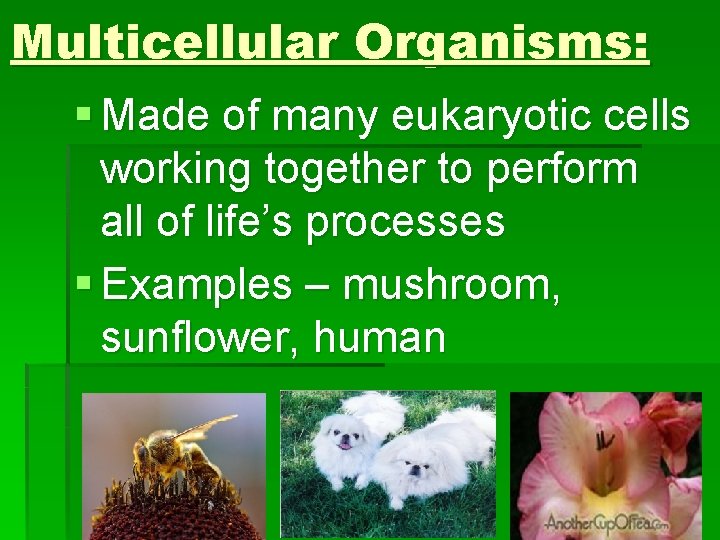
Multicellular Organisms: § Made of many eukaryotic cells working together to perform all of life’s processes § Examples – mushroom, sunflower, human