
Notes le 15 dcembre Les adjectifs descriptifs Descriptive

Notes le 15 décembre Les adjectifs descriptifs (Descriptive Adjectives) As we’ve already learned, adjectives agree with the nouns they describe in both gender (masculine /feminine) and number (singular/ plural). Ma voisine est canadienne. Ces sont des cours difficiles. My neighbor is Canadian. These are difficult classes.
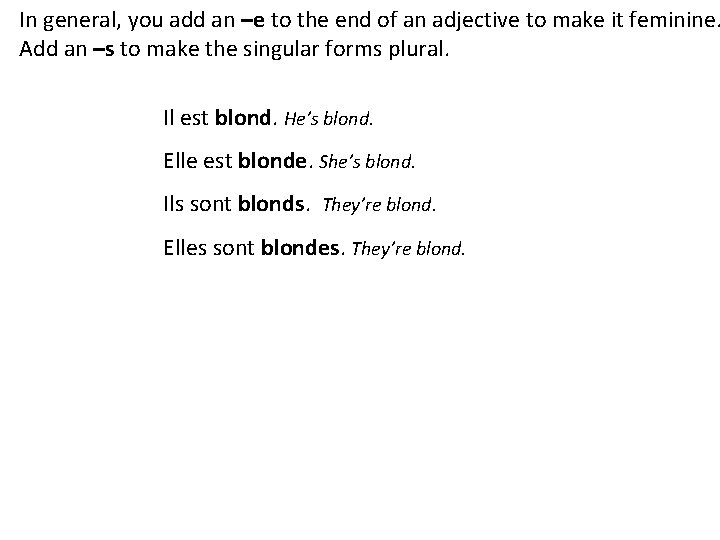
In general, you add an –e to the end of an adjective to make it feminine. Add an –s to make the singular forms plural. Il est blond. He’s blond. Elle est blonde. She’s blond. Ils sont blonds. They’re blond. Elles sont blondes. They’re blond.
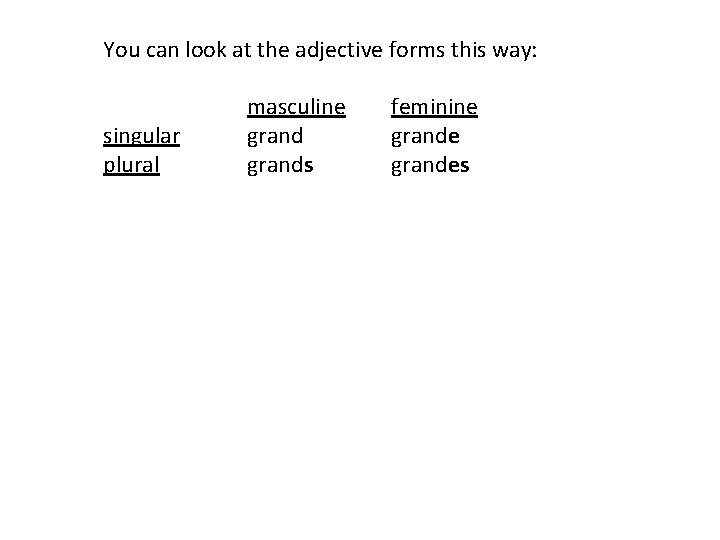
You can look at the adjective forms this way: singular plural masculine grands feminine grandes
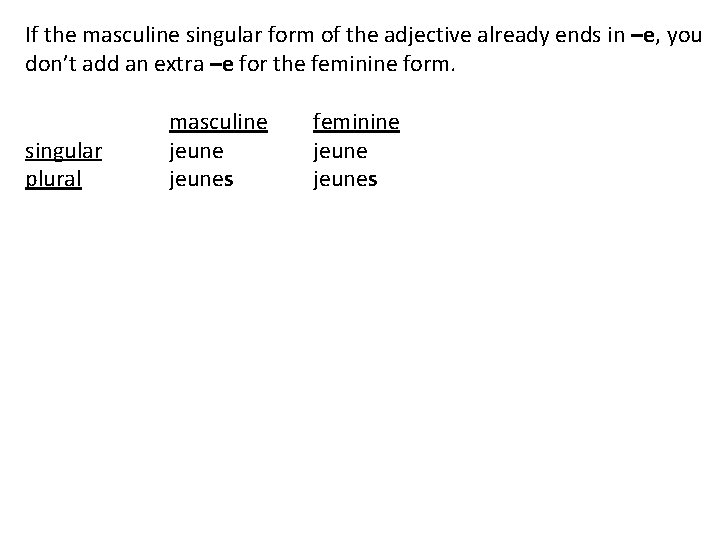
If the masculine singular form of the adjective already ends in –e, you don’t add an extra –e for the feminine form. singular plural masculine jeunes feminine jeunes
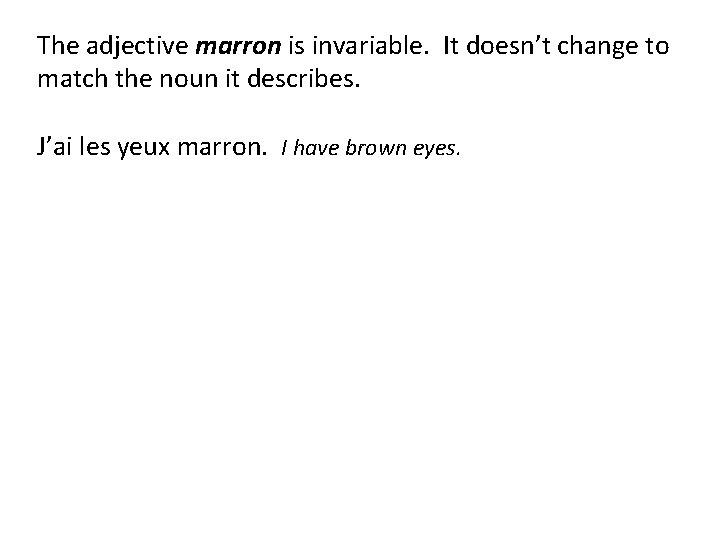
The adjective marron is invariable. It doesn’t change to match the noun it describes. J’ai les yeux marron. I have brown eyes.
The expression de taille moyenne means of average height/size. Tes parents sont-ils grands? Are your parents tall? Non, ils sont de taille moyenne. No, they’re of average height.

Some adjectives have irregular forms:
Most of the time, adjectives follow the nouns they describe. Marie est une fille sympathique. Marie is a nice girl.
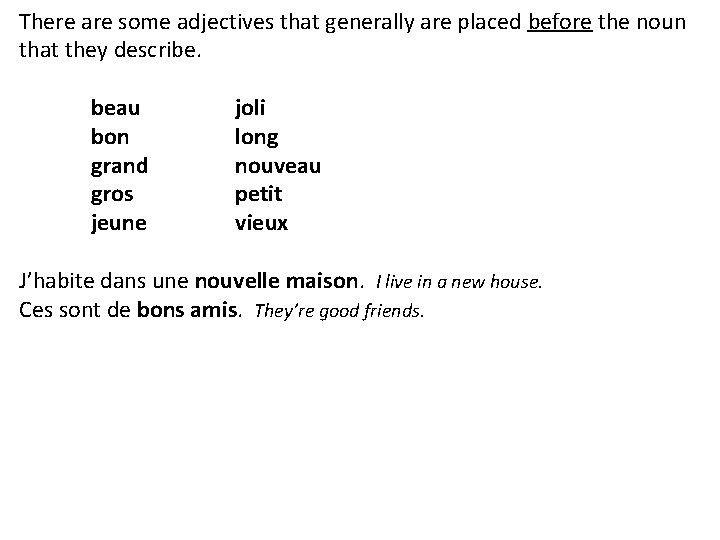
There are some adjectives that generally are placed before the noun that they describe. beau bon grand gros jeune joli long nouveau petit vieux J’habite dans une nouvelle maison. I live in a new house. Ces sont de bons amis. They’re good friends.
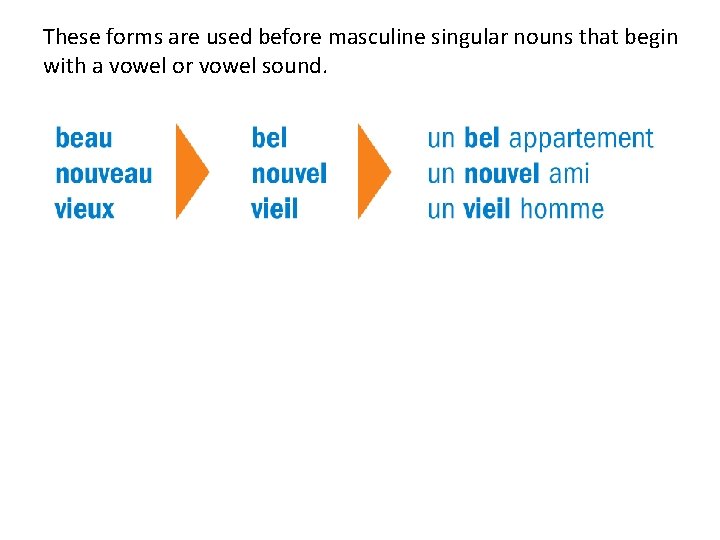
These forms are used before masculine singular nouns that begin with a vowel or vowel sound.
- Slides: 10