
Notes from NSCA Guide to Hypertrophy Training Need
- Slides: 10
Notes from NSCA Guide to Hypertrophy Training • Need to create muscle damage • Damage is repaired by increasing muscle size • Increased muscle size also has come correlation to strength • Same amount work will not cause the same amount of damage • Protein is required to aid in the process • Generally accepted that between 1. 2 g - 2. 0 g per kg. of bodyweight • 1 lb = 0. 5 kg so a 160# person should consume between 96 g & 160 g of protein during resistance days to help aid in gaining hypertrophy
Hypertrophy • Added muscle cross sectional size • Happens because of an increase in the size of actin/myosin filaments or their # • Generally accepted that both type I (slow twitch) & type II (fast twitch) fibers react to hypertrophy work, more so type II • Believed a bigger muscle is a stronger muscle • Higher muscle mass can positively effect body compostion
Benefits of Increasing lean Muscle Mass • Improves Body composition by: • Increasing resting metabolic rate(RMR) • Fat free mass accounts for 65 -70% of RMR so more mass = higher RMR • Increasing thermic effect of food • Resistance training Increase energy expenditure not only during activity but 24 -48 hours after working out
Creating Hypertrophy • 3 main Factors 1) mechanical tension 2) muscle damage 3) metabolic stress • Resistance training overload causes muscle damage, inflammation & p. H changes in blood which = stimulation of the endocrine system • Endocrine system – releases growth factors • Muscular tension, damage & stress cause the anabolic stress that stimulates recovery in the form of hypertrophy • Most common variable = manipulation of volume • Rest & recovery (sleep) with good nutrition, including protein (1. 2 g – 2 g) per kg. of bodyweight (after intense exercise)
Generally Speaking • Multiple sets of 6 -12 reps using 65%-85% of 1 RM with 60 second rest periods • Elevates testosterone & growth hormone
Varying Tempo for hypertrophy NSCA Personal Training Quarterly June 2017 vol. 3 issue 3 Lee Boyce hypertrophy • Often done for aesthetics, but does have positive impacts on muscular, skeletal, respiratory cardiovascular & endocrine systems • Some studies indicate similar effects with low load & high load (volume equated) people respond individually • Using a variety of loads makes the most sense • Anecdotally speaking – cyclist speed skaters skiers often great development of quadriceps. • Suggests that high rep / endurance type activities can also contribute to hypertrophy
Diversify Training Protocol Not just Investments Taken form Manipulating Time under tension Example A • 1 minute set of 30 reps with a 1 se. Lowering with no amortization / bottom & raise bar with a 1 sec. Tempo (1 -0 -1) Example B • 4 -1 -1 tempo with a soft lock @ top • Lower the bar in 4 sec. 1 sec. pause & a 1 sec. raise / press of bar & immediately re-bend elbow or knee at top of rep. • Change rep tempo protocol often
Ladder Sets • 10 -12 total reps Using same weight (ie. 12 rep max load) • Start with 2 reps & rest for 10 sec. • Add 1 rep each set & continue with rest • Work up to 10 -12 reps (total of 20 reps with 12 rep max) • Short 10 sec. rest = ATP restoration = greater amount of work • Rest for 1 -2 minutes adjust, adjust rep range if needed (stop @ 8 total reps) repeat protocol
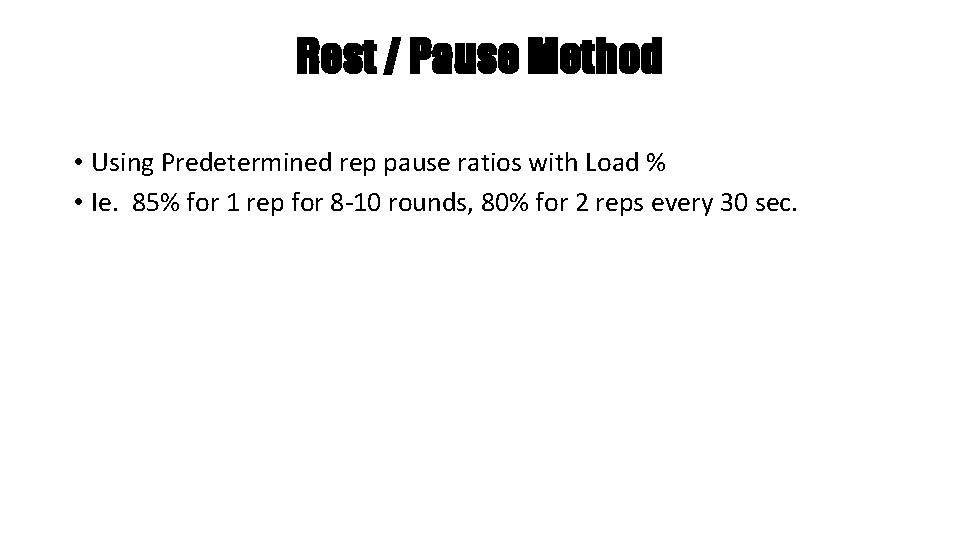
Rest / Pause Method • Using Predetermined rep pause ratios with Load % • Ie. 85% for 1 rep for 8 -10 rounds, 80% for 2 reps every 30 sec.
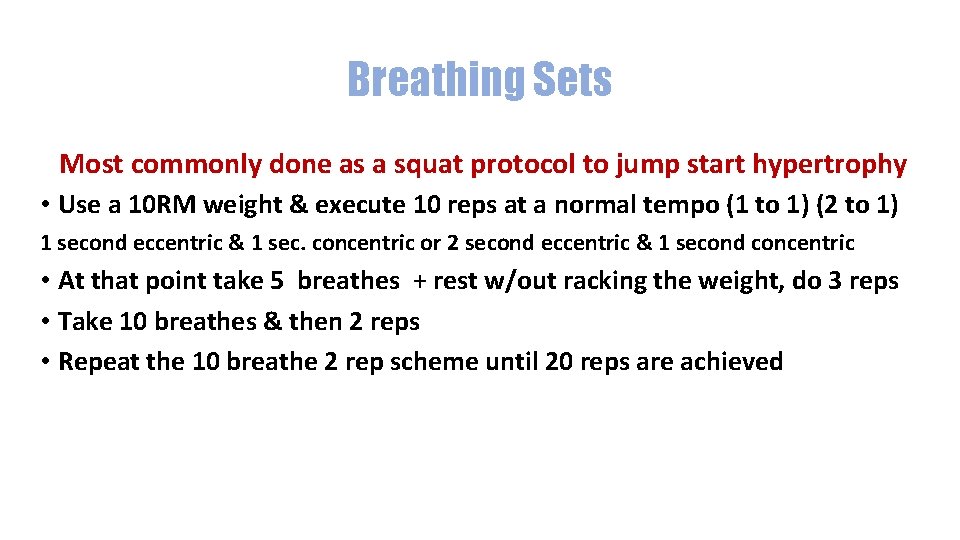
Breathing Sets Most commonly done as a squat protocol to jump start hypertrophy • Use a 10 RM weight & execute 10 reps at a normal tempo (1 to 1) (2 to 1) 1 second eccentric & 1 sec. concentric or 2 second eccentric & 1 second concentric • At that point take 5 breathes + rest w/out racking the weight, do 3 reps • Take 10 breathes & then 2 reps • Repeat the 10 breathe 2 rep scheme until 20 reps are achieved