
Notes Chapter 6 The Cell part 1 Prokaryotic
- Slides: 12
Notes – Chapter 6 – The Cell part 1
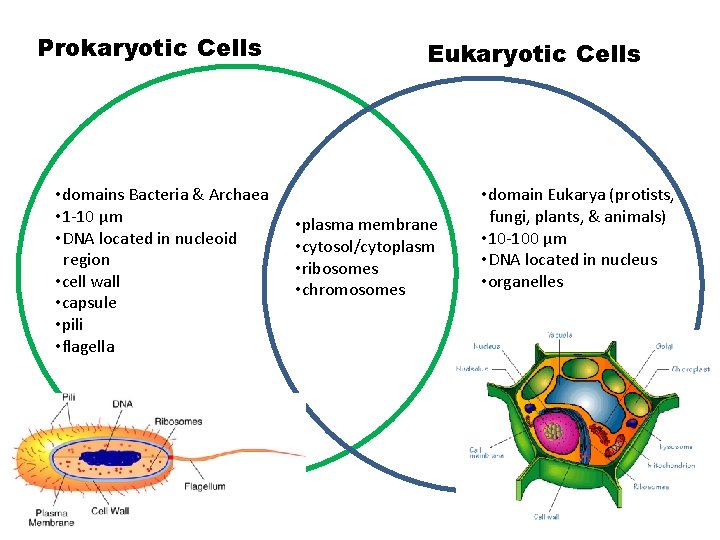
Prokaryotic Cells • domains Bacteria & Archaea • 1 -10 μm • DNA located in nucleoid region • cell wall • capsule • pili • flagella Eukaryotic Cells • plasma membrane • cytosol/cytoplasm • ribosomes • chromosomes • domain Eukarya (protists, fungi, plants, & animals) • 10 -100 μm • DNA located in nucleus • organelles
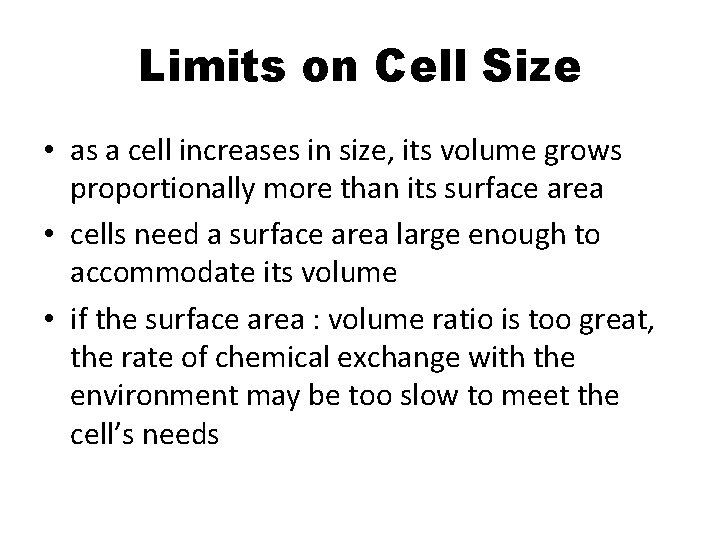
Limits on Cell Size • as a cell increases in size, its volume grows proportionally more than its surface area • cells need a surface area large enough to accommodate its volume • if the surface area : volume ratio is too great, the rate of chemical exchange with the environment may be too slow to meet the cell’s needs
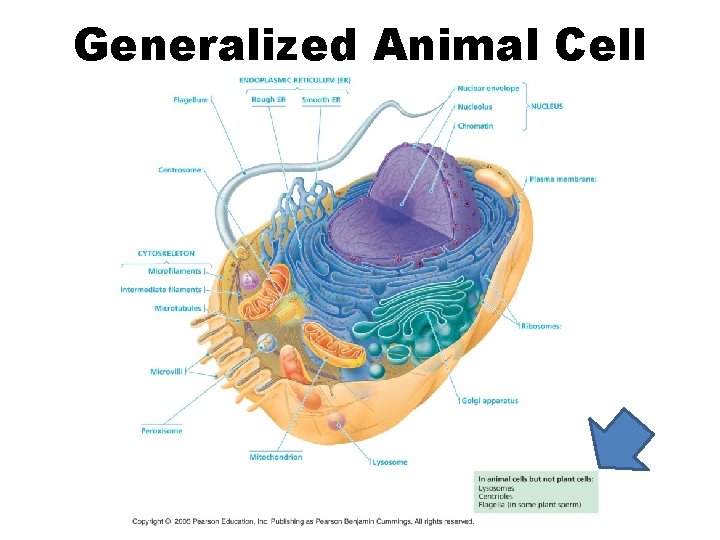
Generalized Animal Cell
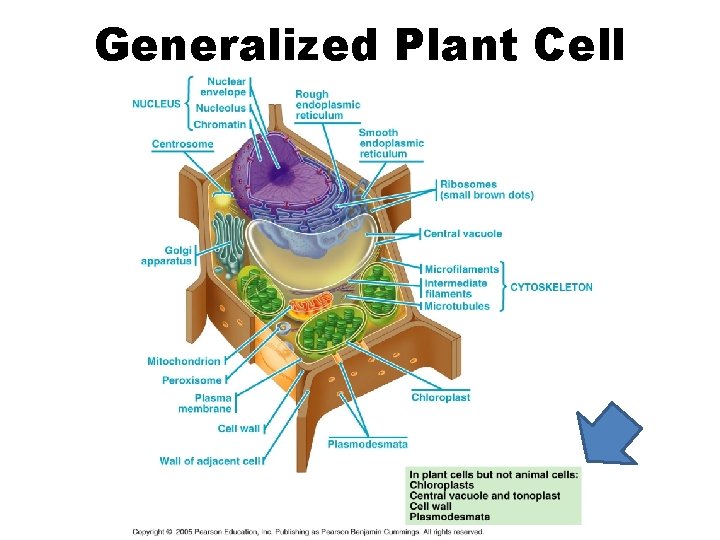
Generalized Plant Cell
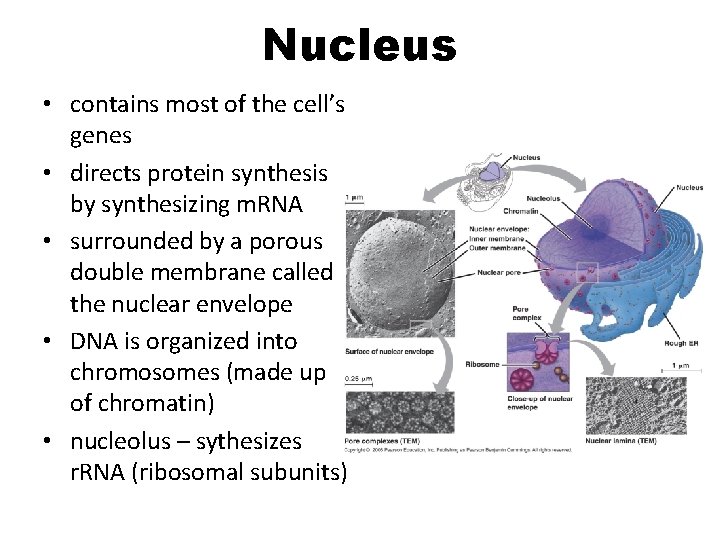
Nucleus • contains most of the cell’s genes • directs protein synthesis by synthesizing m. RNA • surrounded by a porous double membrane called the nuclear envelope • DNA is organized into chromosomes (made up of chromatin) • nucleolus – sythesizes r. RNA (ribosomal subunits)
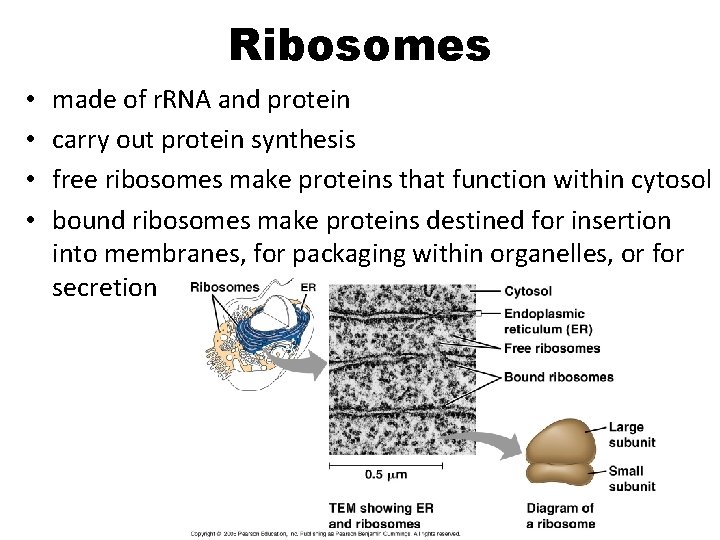
Ribosomes • • made of r. RNA and protein carry out protein synthesis free ribosomes make proteins that function within cytosol bound ribosomes make proteins destined for insertion into membranes, for packaging within organelles, or for secretion
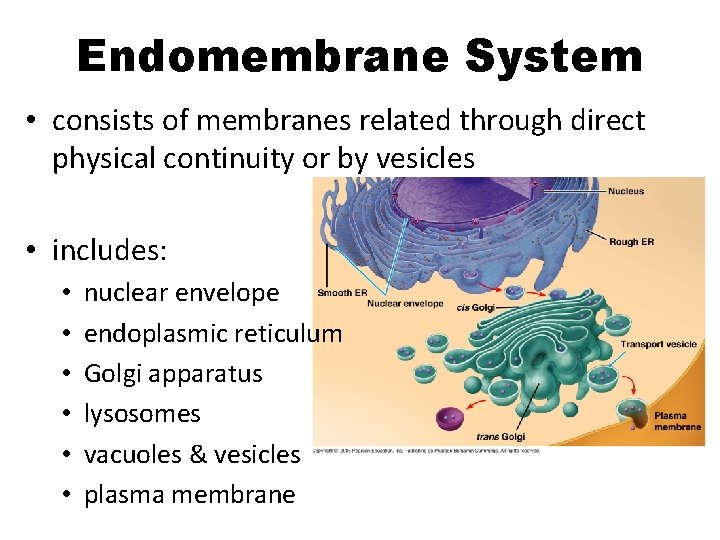
Endomembrane System • consists of membranes related through direct physical continuity or by vesicles • includes: • • • nuclear envelope endoplasmic reticulum Golgi apparatus lysosomes vacuoles & vesicles plasma membrane
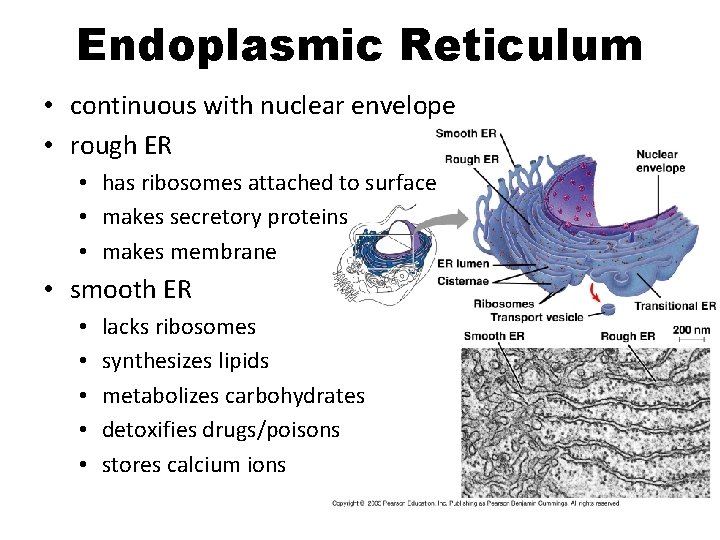
Endoplasmic Reticulum • continuous with nuclear envelope • rough ER • has ribosomes attached to surface • makes secretory proteins • makes membrane • smooth ER • • • lacks ribosomes synthesizes lipids metabolizes carbohydrates detoxifies drugs/poisons stores calcium ions
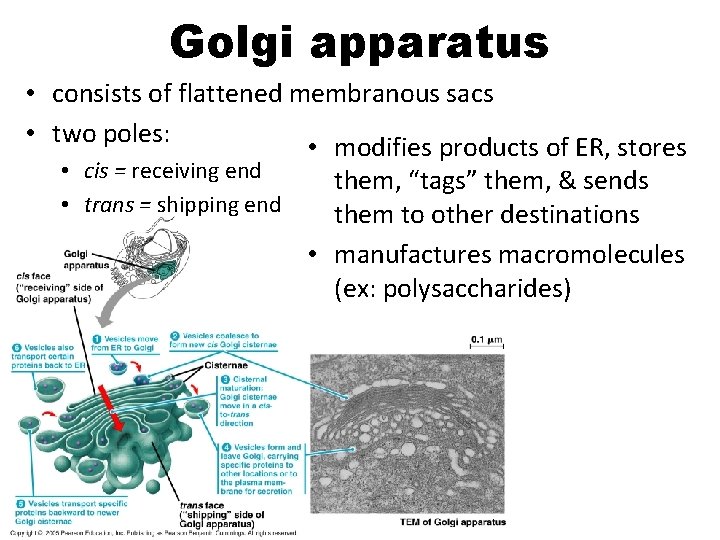
Golgi apparatus • consists of flattened membranous sacs • two poles: • modifies products of ER, stores • cis = receiving end • trans = shipping end them, “tags” them, & sends them to other destinations • manufactures macromolecules (ex: polysaccharides)
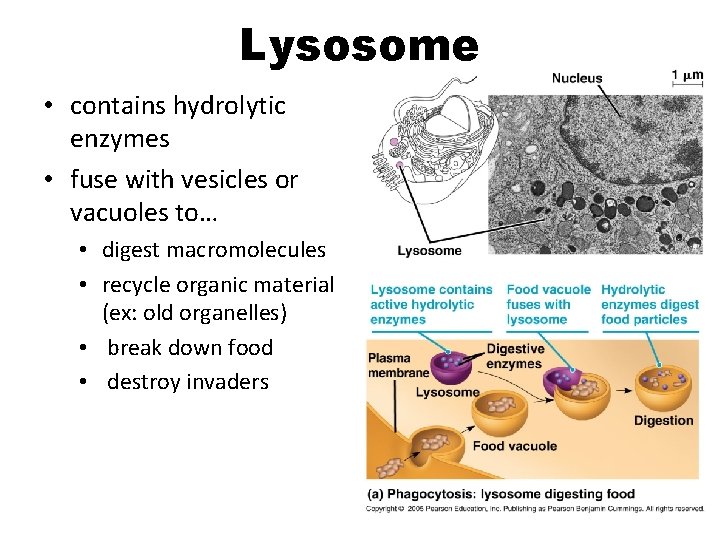
Lysosome • contains hydrolytic enzymes • fuse with vesicles or vacuoles to… • digest macromolecules • recycle organic material (ex: old organelles) • break down food • destroy invaders
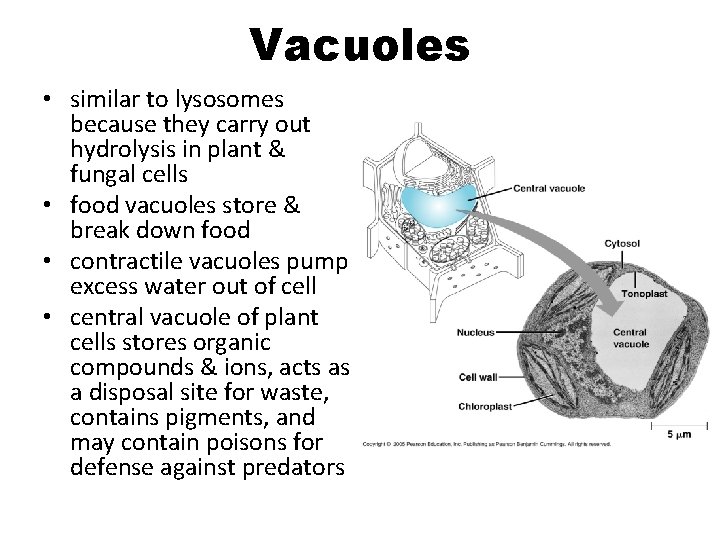
Vacuoles • similar to lysosomes because they carry out hydrolysis in plant & fungal cells • food vacuoles store & break down food • contractile vacuoles pump excess water out of cell • central vacuole of plant cells stores organic compounds & ions, acts as a disposal site for waste, contains pigments, and may contain poisons for defense against predators