
Notes Chapter 39 page 1022 1047 Immunity from
- Slides: 15
Notes: Chapter 39 (page 1022 -1047) – Immunity from Disease
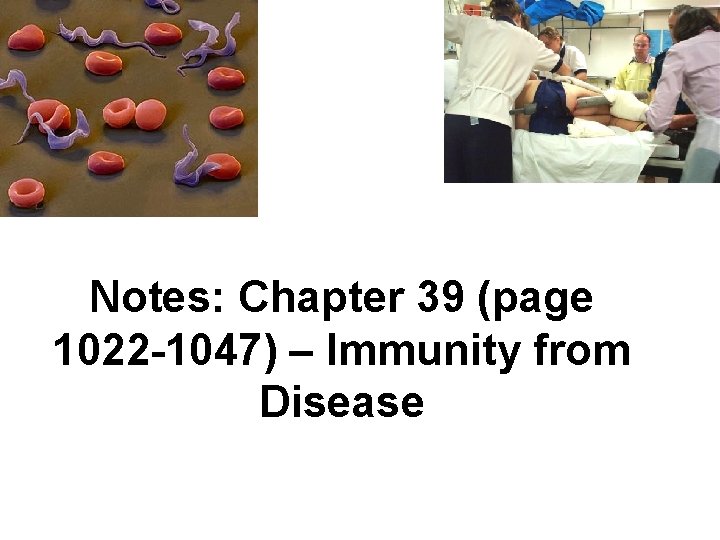
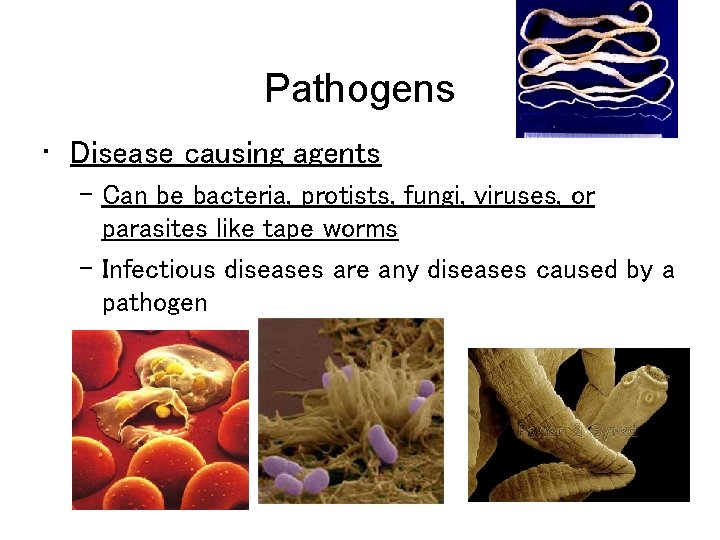
Pathogens • Disease causing agents – Can be bacteria, protists, fungi, viruses, or parasites like tape worms – Infectious diseases are any diseases caused by a pathogen
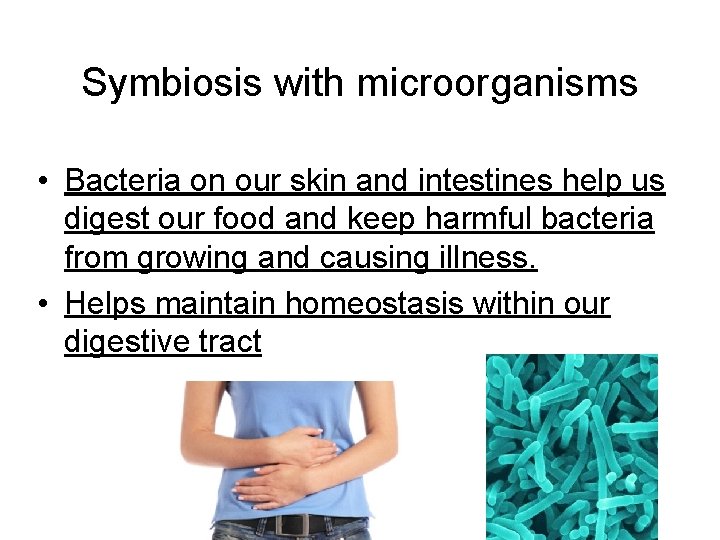
Symbiosis with microorganisms • Bacteria on our skin and intestines help us digest our food and keep harmful bacteria from growing and causing illness. • Helps maintain homeostasis within our digestive tract
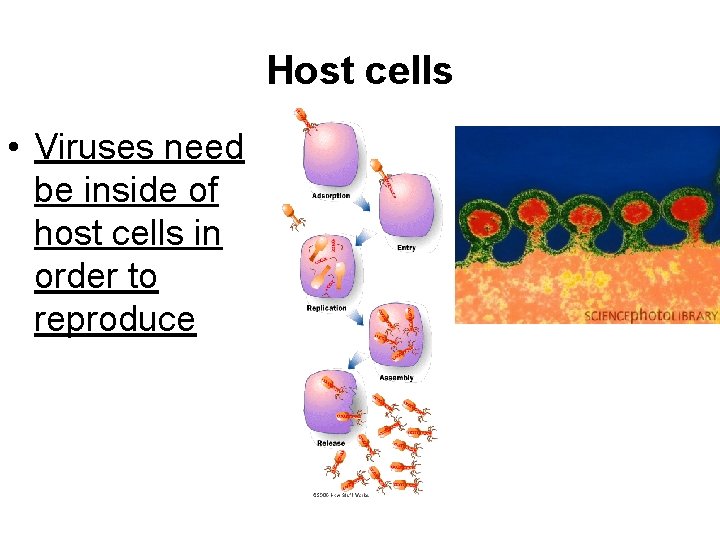
Host cells • Viruses need be inside of host cells in order to reproduce
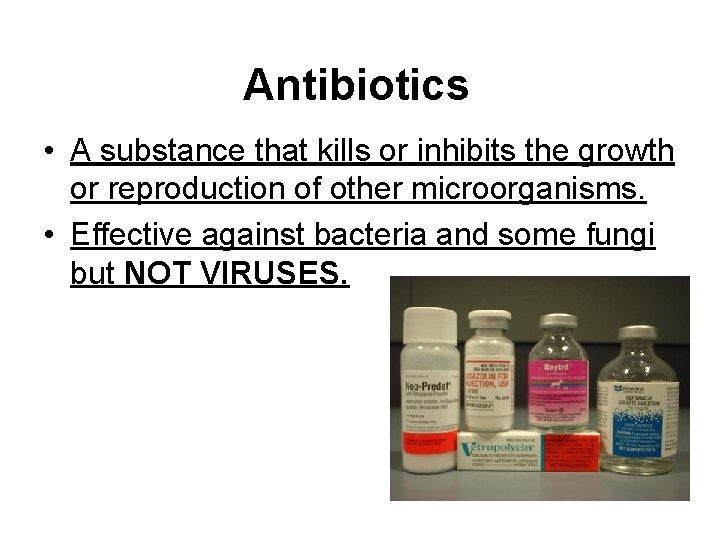
Antibiotics • A substance that kills or inhibits the growth or reproduction of other microorganisms. • Effective against bacteria and some fungi but NOT VIRUSES.
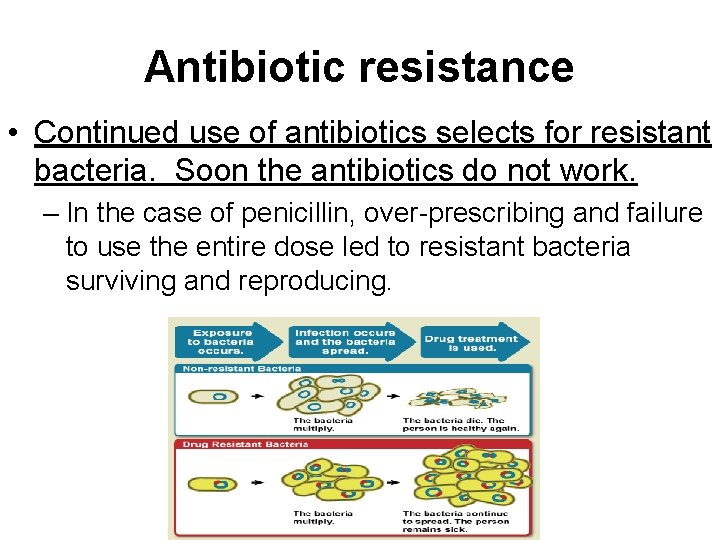
Antibiotic resistance • Continued use of antibiotics selects for resistant bacteria. Soon the antibiotics do not work. – In the case of penicillin, over-prescribing and failure to use the entire dose led to resistant bacteria surviving and reproducing.
Our Immune system
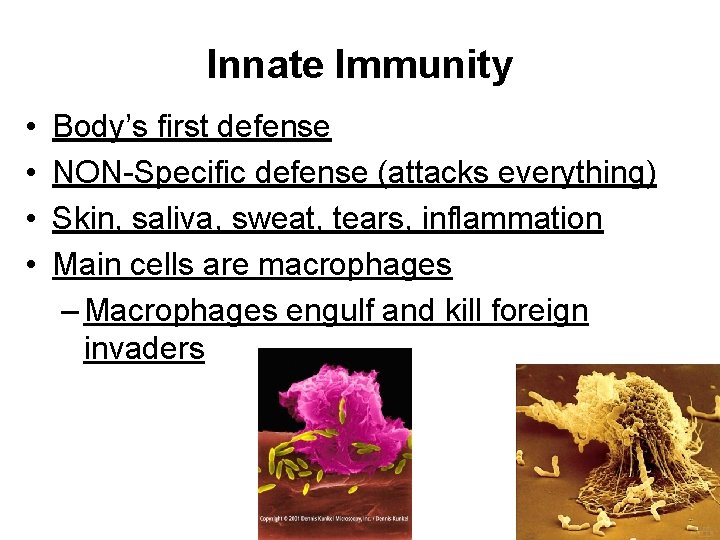
Innate Immunity • • Body’s first defense NON-Specific defense (attacks everything) Skin, saliva, sweat, tears, inflammation Main cells are macrophages – Macrophages engulf and kill foreign invaders
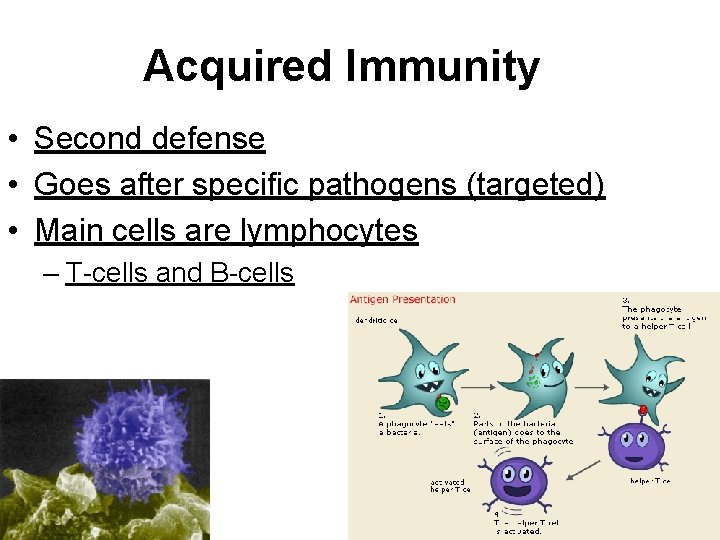
Acquired Immunity • Second defense • Goes after specific pathogens (targeted) • Main cells are lymphocytes – T-cells and B-cells
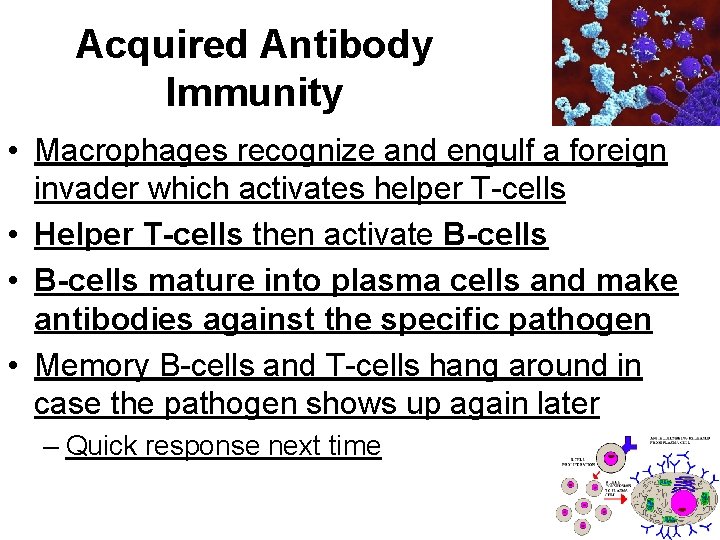
Acquired Antibody Immunity • Macrophages recognize and engulf a foreign invader which activates helper T-cells • Helper T-cells then activate B-cells • B-cells mature into plasma cells and make antibodies against the specific pathogen • Memory B-cells and T-cells hang around in case the pathogen shows up again later – Quick response next time
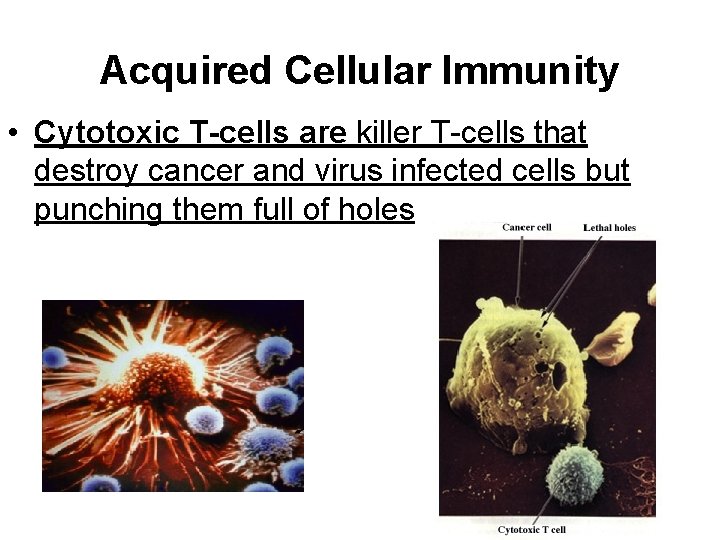
Acquired Cellular Immunity • Cytotoxic T-cells are killer T-cells that destroy cancer and virus infected cells but punching them full of holes
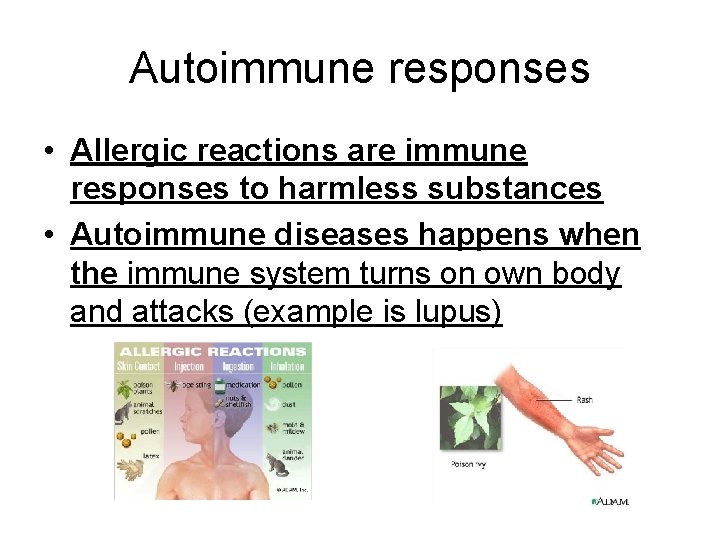
Autoimmune responses • Allergic reactions are immune responses to harmless substances • Autoimmune diseases happens when the immune system turns on own body and attacks (example is lupus)
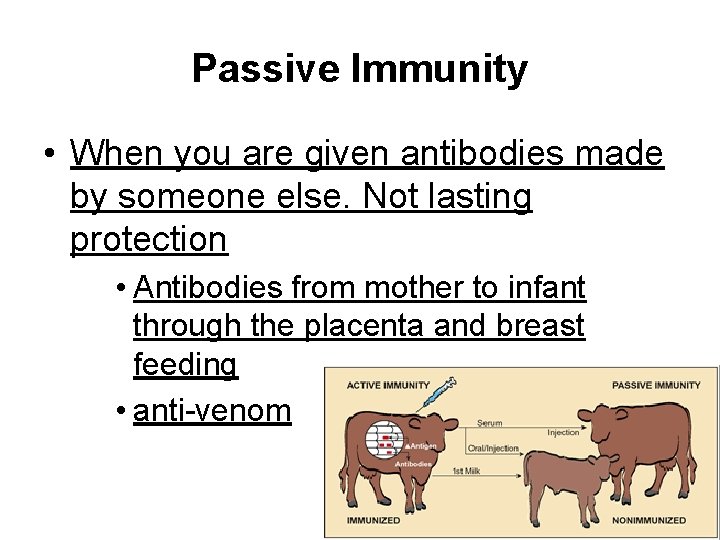
Passive Immunity • When you are given antibodies made by someone else. Not lasting protection • Antibodies from mother to infant through the placenta and breast feeding • anti-venom
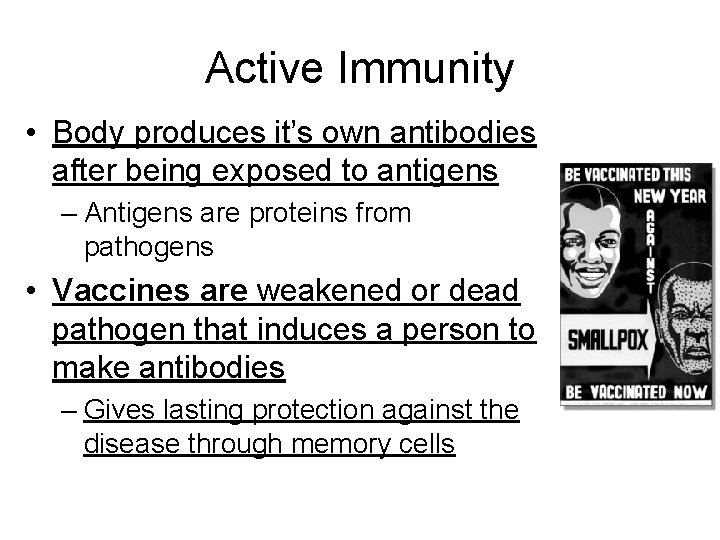
Active Immunity • Body produces it’s own antibodies after being exposed to antigens – Antigens are proteins from pathogens • Vaccines are weakened or dead pathogen that induces a person to make antibodies – Gives lasting protection against the disease through memory cells
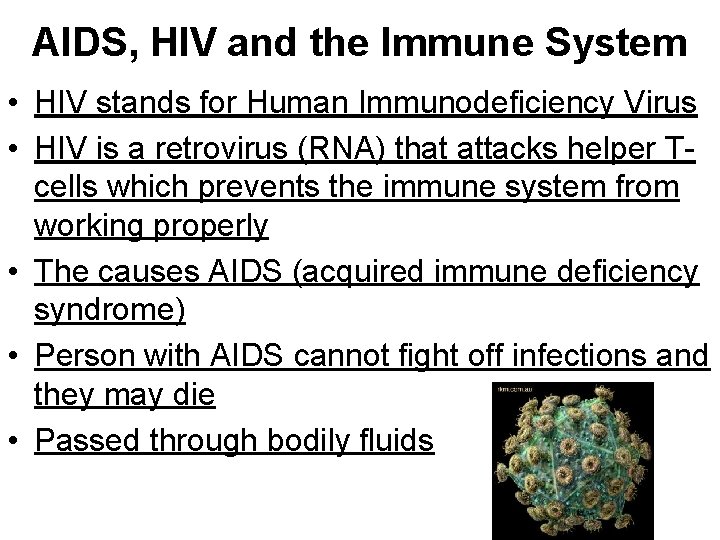
AIDS, HIV and the Immune System • HIV stands for Human Immunodeficiency Virus • HIV is a retrovirus (RNA) that attacks helper Tcells which prevents the immune system from working properly • The causes AIDS (acquired immune deficiency syndrome) • Person with AIDS cannot fight off infections and they may die • Passed through bodily fluids