
NOTES Ch 8 Metabolism and Enzymes 8 1
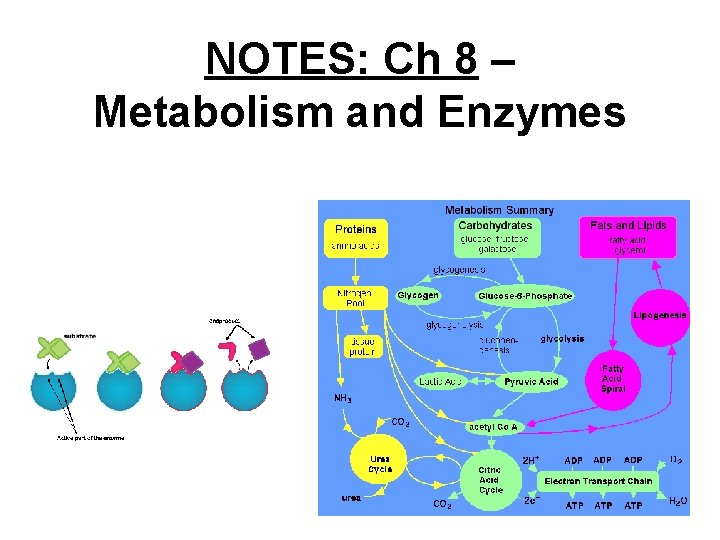
NOTES: Ch 8 – Metabolism and Enzymes
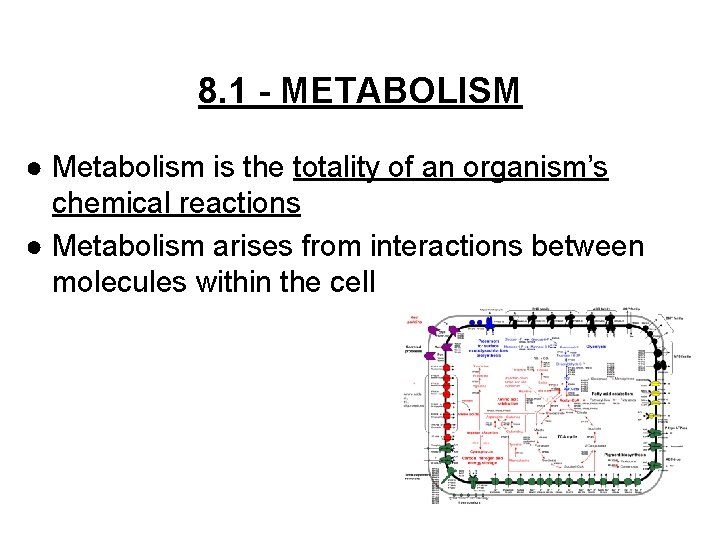
8. 1 - METABOLISM ● Metabolism is the totality of an organism’s chemical reactions ● Metabolism arises from interactions between molecules within the cell

Organization of the Chemistry of Life into Metabolic Pathways ● A metabolic pathway begins with a specific molecule and ends with a product ● Each step is catalyzed by a specific enzyme Enzyme 1 A B Reaction 1 Starting molecule Enzyme 2 Enzyme 3 D C Reaction 2 Reaction 3 Product
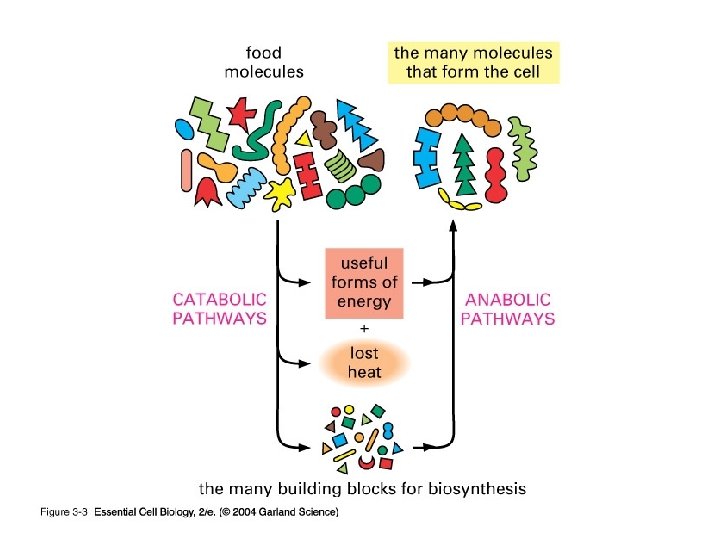
Metabolism includes reactions that are: CATABOLIC pathways release energy by breaking down complex molecules into simpler compounds ● ANABOLIC pathways consume energy to build complex molecules from simpler ones ●
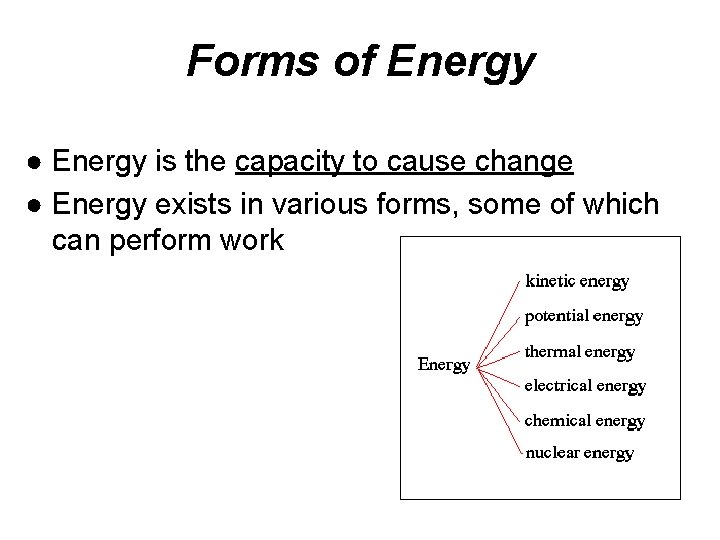
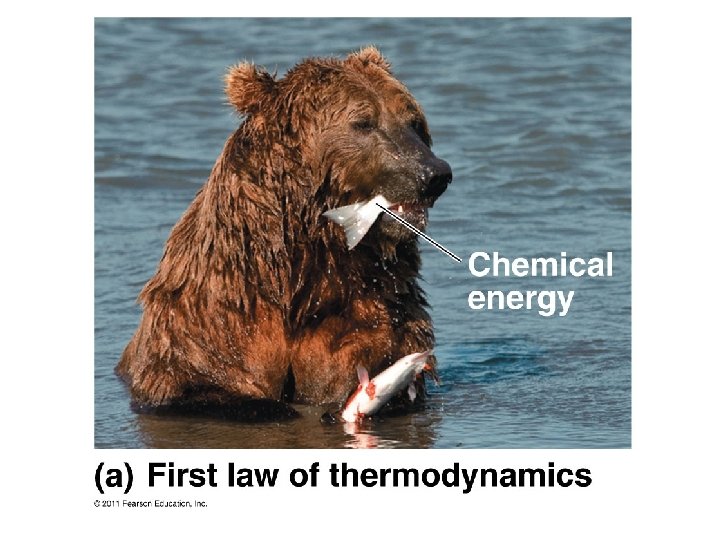
Forms of Energy ● Energy is the capacity to cause change ● Energy exists in various forms, some of which can perform work
● Kinetic energy is energy associated with motion -Heat (thermal energy) is kinetic energy associated with random movement of atoms or molecules ● Potential energy is energy that matter possesses because of its location or structure -Chemical energy is potential (stored) energy available for release in a chemical reaction ● Energy can be converted from one form to another
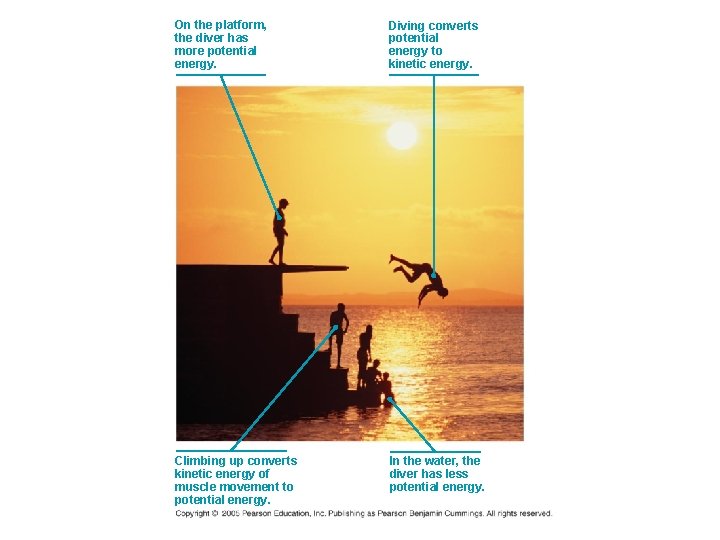
On the platform, the diver has more potential energy. Diving converts potential energy to kinetic energy. Climbing up converts kinetic energy of muscle movement to potential energy. In the water, the diver has less potential energy.
Energy Transformations: ● A closed system is isolated from its surroundings ● In an open system, energy and matter can be transferred between the system and its surroundings ● Organisms are open systems!
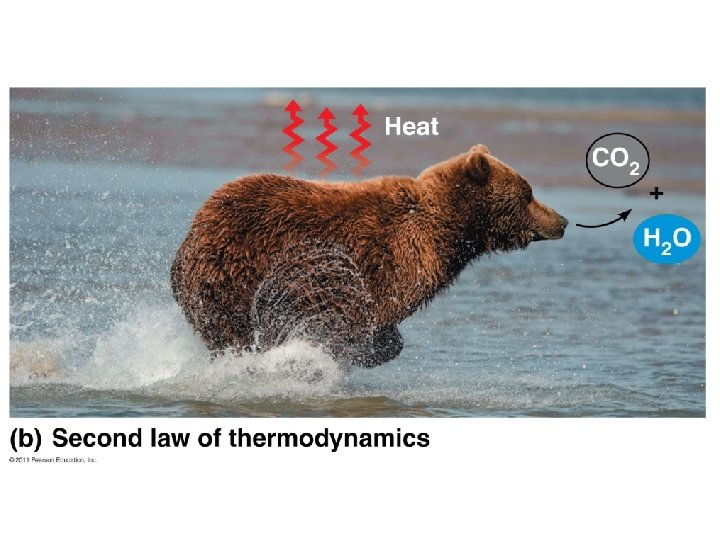
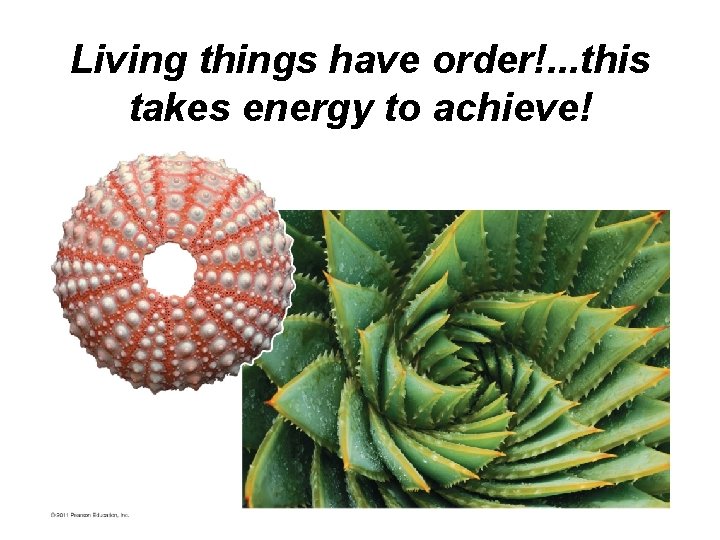
Living things have order!. . . this takes energy to achieve!
8. 2 – Free Energy ● FREE ENERGY: the portion of a system’s energy that is available to do work ● Systems tend to change spontaneously to a more stable state (so, ΔG < 0)
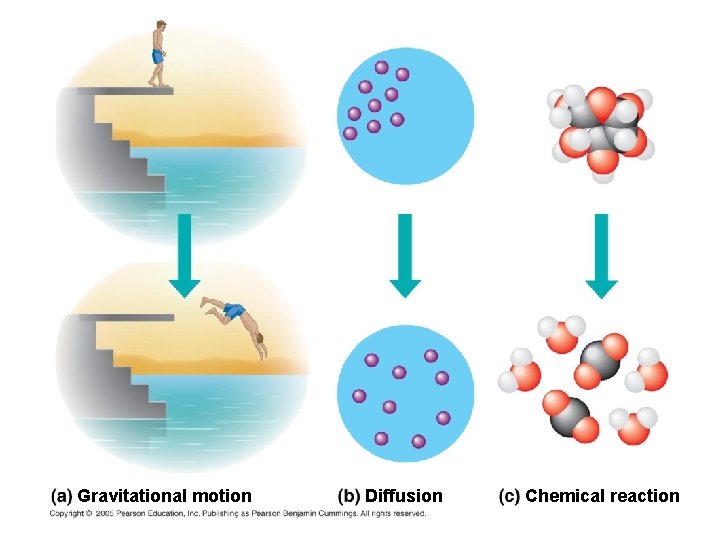
Gravitational motion Diffusion Chemical reaction
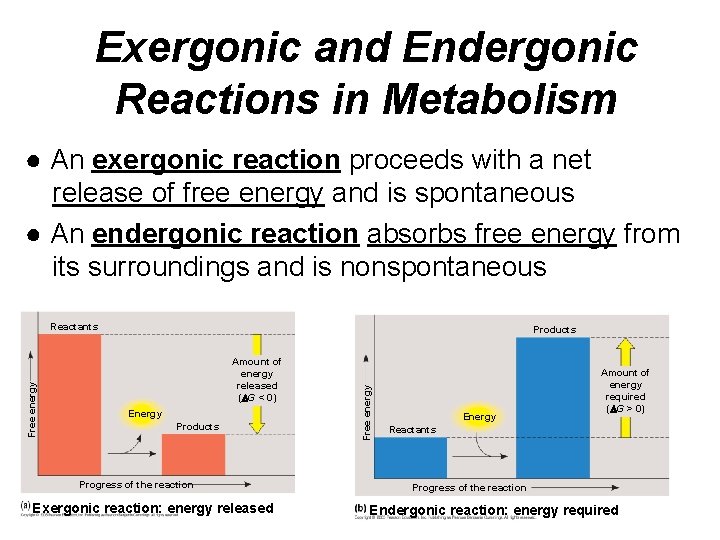
Exergonic and Endergonic Reactions in Metabolism ● An exergonic reaction proceeds with a net release of free energy and is spontaneous ● An endergonic reaction absorbs free energy from its surroundings and is nonspontaneous Products Amount of energy released ( G < 0) Energy Products Progress of the reaction Exergonic reaction: energy released Free energy Reactants Energy Amount of energy required ( G > 0) Reactants Progress of the reaction Endergonic reaction: energy required
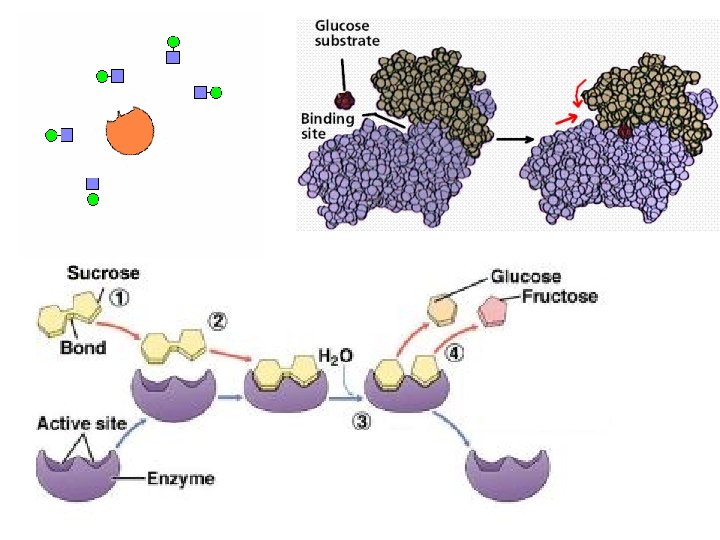
8. 4 - Enzymes speed up metabolic reactions by lowering energy barriers ● A catalyst is a chemical agent that speeds up a reaction without being consumed by the reaction ● An enzyme is a catalytic protein ● Hydrolysis of SUCROSE by the enzyme SUCRASE is an example of an enzymecatalyzed reaction
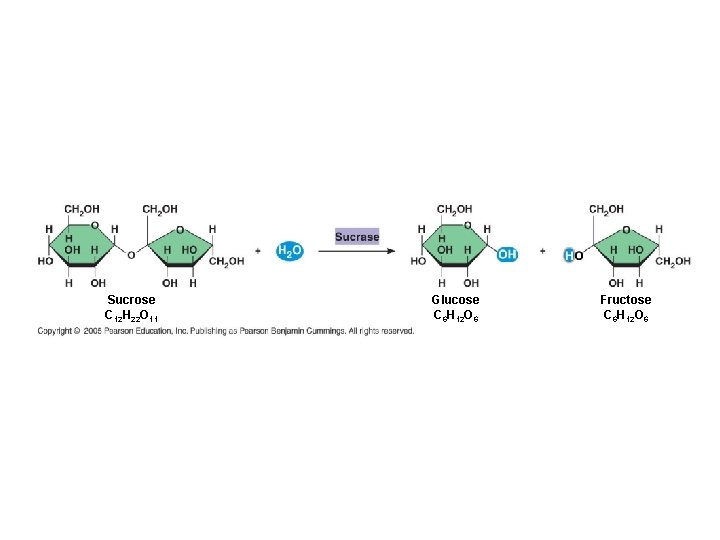
Sucrose C 12 H 22 O 11 Glucose C 6 H 12 O 6 Fructose C 6 H 12 O 6
The Activation Energy Barrier ● Every chemical reaction between molecules involves bond breaking and bond forming ● The initial energy needed to start a chemical reaction is called the free energy of activation, or activation energy (EA) ● Activation energy is often supplied in the form of heat from the surroundings
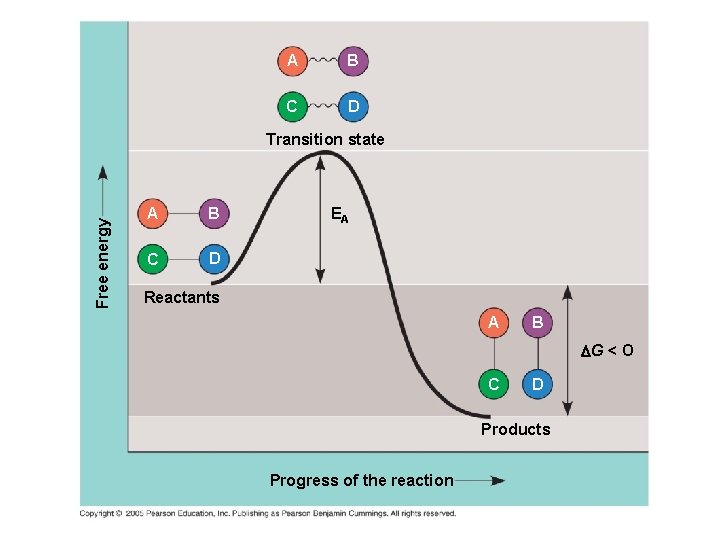
A B C D Free energy Transition state A B C D EA Reactants A B G < O C D Products Progress of the reaction
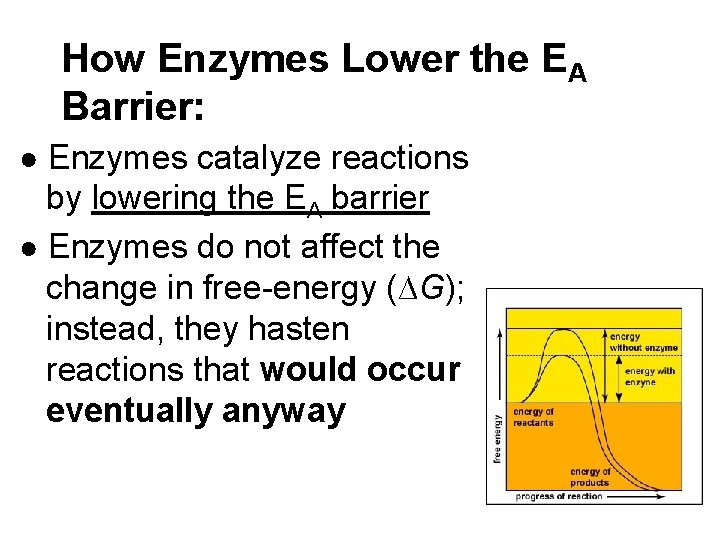
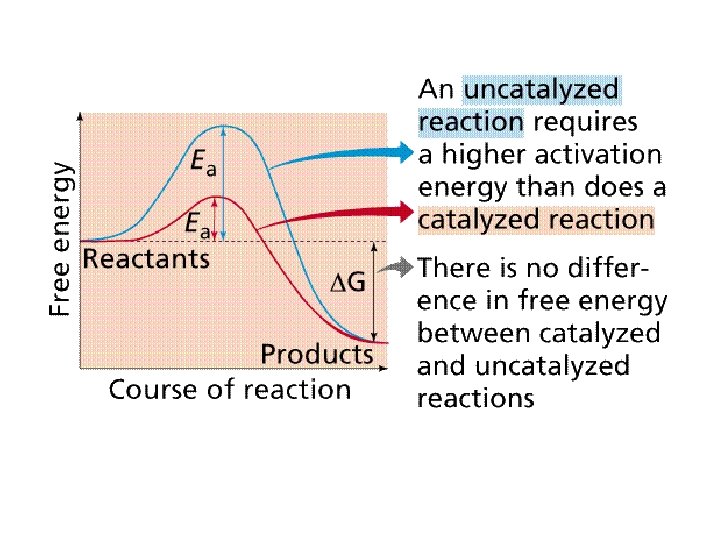
How Enzymes Lower the EA Barrier: ● Enzymes catalyze reactions by lowering the EA barrier ● Enzymes do not affect the change in free-energy (∆G); instead, they hasten reactions that would occur eventually anyway
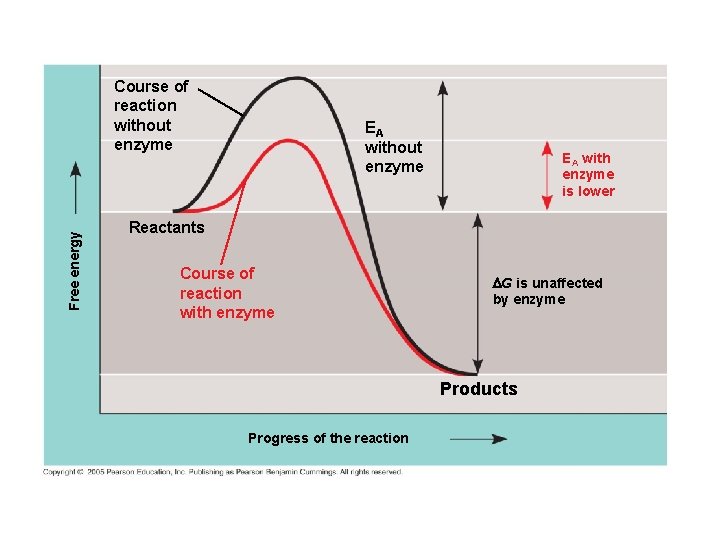
Free energy Course of reaction without enzyme EA with enzyme is lower Reactants Course of reaction with enzyme G is unaffected by enzyme Products Progress of the reaction
Substrate Specificity of Enzymes ● The reactant that an enzyme acts on is called the enzyme’s SUBSTRATE ● The enzyme binds to its substrate, forming an enzyme-substrate complex ● The ACTIVE SITE is the region on the enzyme where the substrate binds
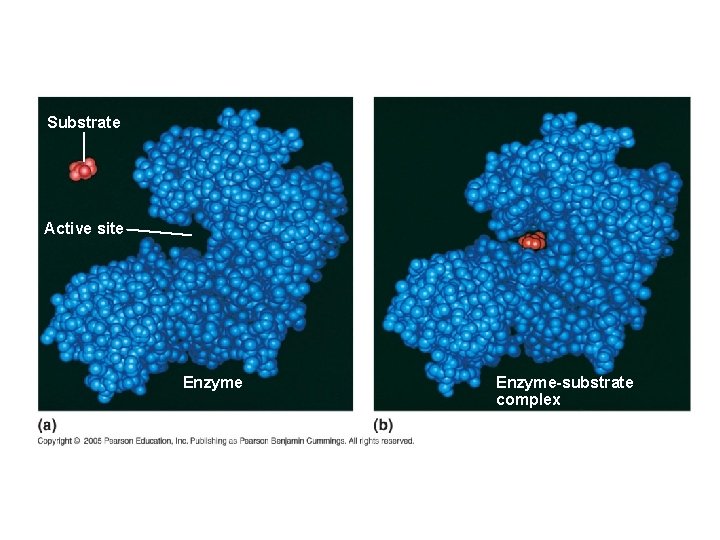
Substrate Active site Enzyme-substrate complex
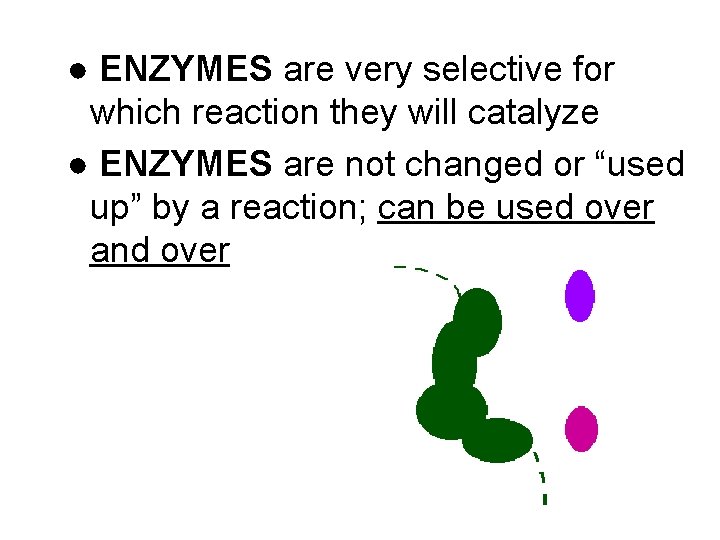
● ENZYMES are very selective for which reaction they will catalyze ● ENZYMES are not changed or “used up” by a reaction; can be used over and over
● ACTIVE SITE = region of an enzyme which binds to the substrate – is usually a pocket or groove on surface – determines enzyme’s specificity – compatible “fit” between shape of enzyme’s active site and shape of substrate (“Lock-and-Key” analogy)
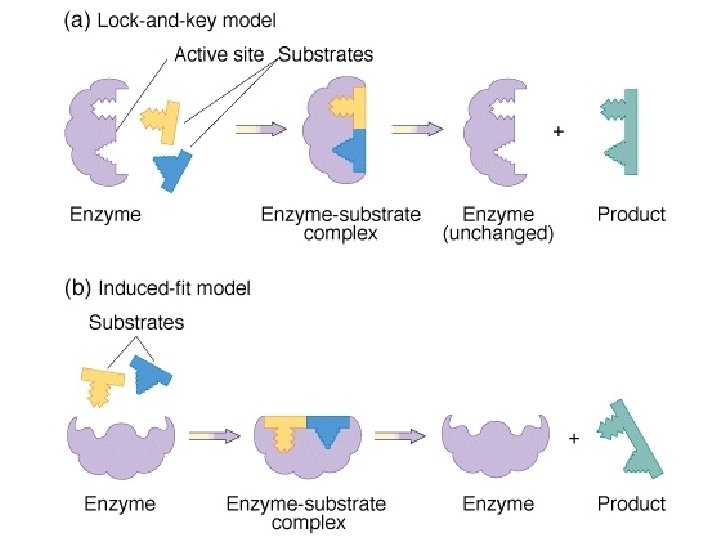
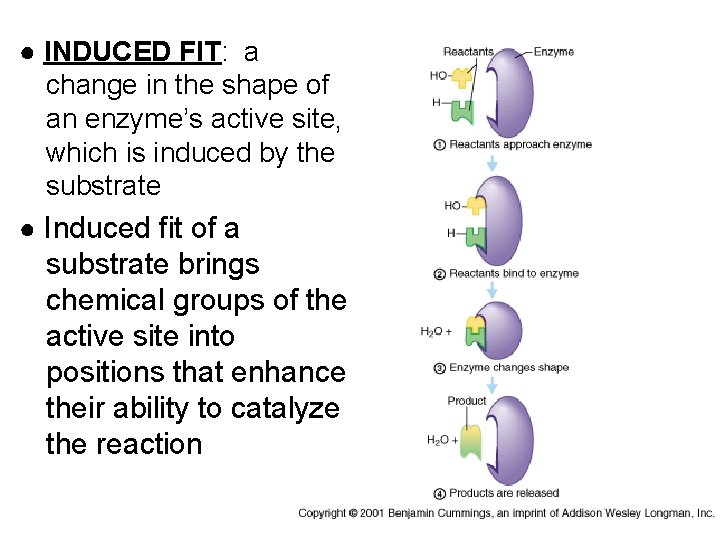
● INDUCED FIT: a change in the shape of an enzyme’s active site, which is induced by the substrate ● Induced fit of a substrate brings chemical groups of the active site into positions that enhance their ability to catalyze the reaction
Catalysis in the Enzyme’s Active Site: ● In an enzymatic reaction, the substrate binds to the active site ● The active site can lower an EA barrier by -Orienting substrates correctly -Straining substrate bonds -Providing a favorable microenvironment -Covalently bonding to the substrate
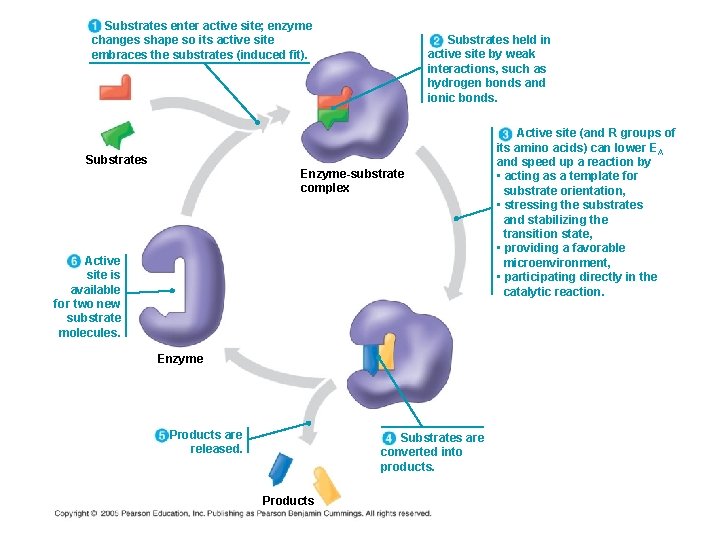
Substrates enter active site; enzyme changes shape so its active site embraces the substrates (induced fit). Substrates held in active site by weak interactions, such as hydrogen bonds and ionic bonds. Substrates Enzyme-substrate complex Active site is available for two new substrate molecules. Enzyme Products are released. Substrates are converted into products. Products Active site (and R groups of its amino acids) can lower EA and speed up a reaction by • acting as a template for substrate orientation, • stressing the substrates and stabilizing the transition state, • providing a favorable microenvironment, • participating directly in the catalytic reaction.
Enzyme Reaction Rate: Substrate Concentration: -the higher the substrate concentration, the faster the reaction -if the substrate concentration is high enough, the enzyme is saturated; in this case, the reaction rate can be increased by adding more enzyme
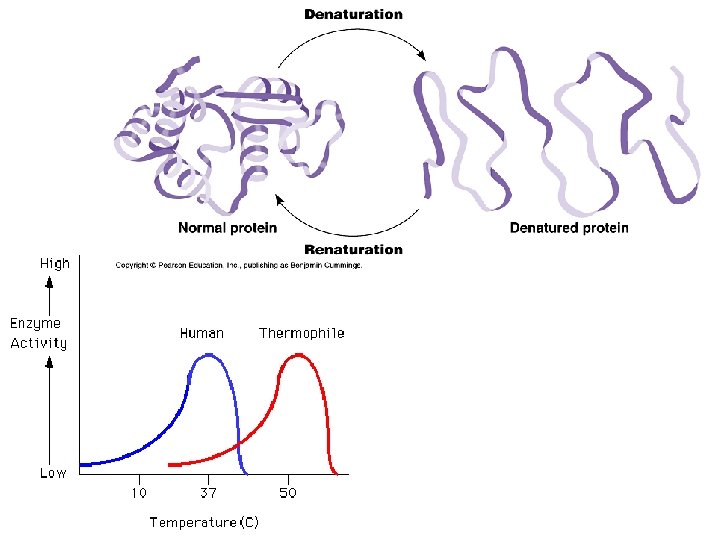
Factors Affecting Enzyme Activity: 1) Temperature: -as temp increases, reaction rate increases -if temp gets too high, enzyme denatures and loses shape and function -optimal range for human enzymes: 35 -40°C
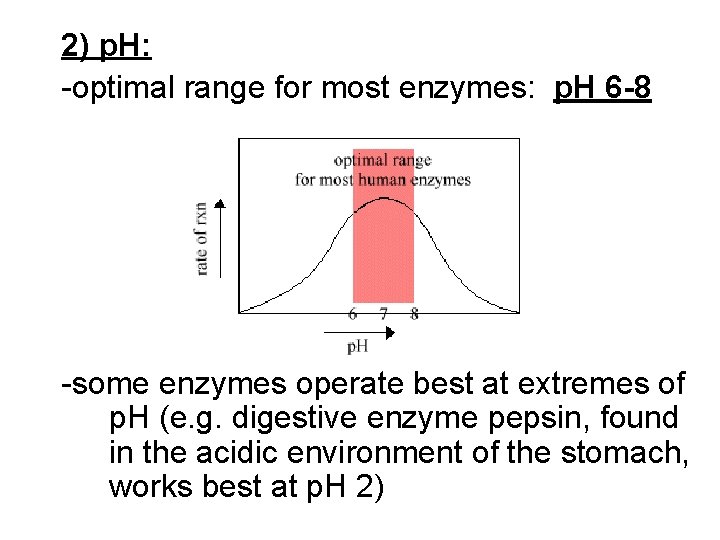
2) p. H: -optimal range for most enzymes: p. H 6 -8 -some enzymes operate best at extremes of p. H (e. g. digestive enzyme pepsin, found in the acidic environment of the stomach, works best at p. H 2)
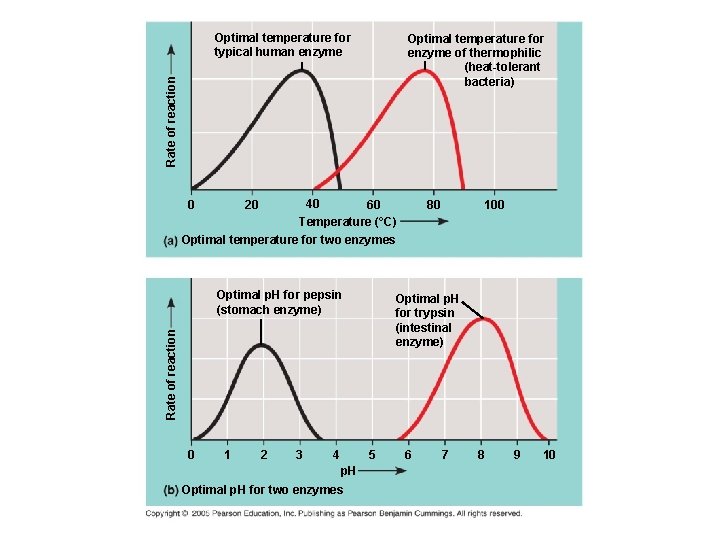
Optimal temperature for typical human enzyme Rate of reaction Optimal temperature for enzyme of thermophilic (heat-tolerant bacteria) 0 40 60 Temperature (°C) 20 80 100 Optimal temperature for two enzymes Optimal p. H for pepsin (stomach enzyme) Rate of reaction Optimal p. H for trypsin (intestinal enzyme) 0 1 2 3 4 5 p. H Optimal p. H for two enzymes 6 7 8 9 10
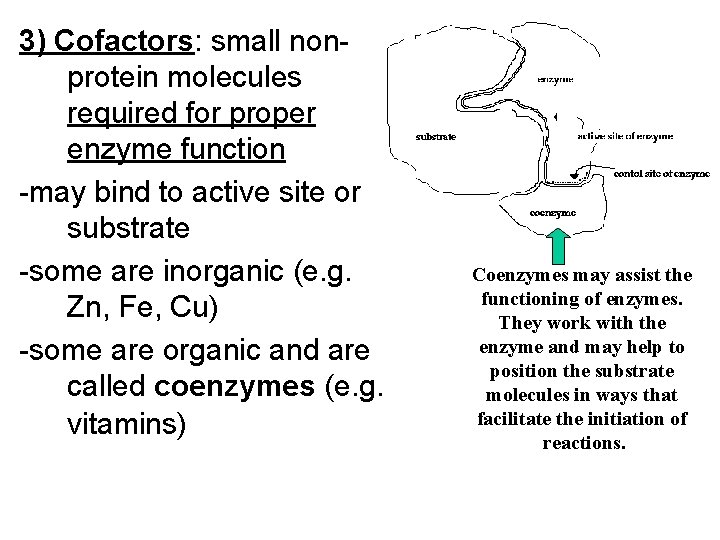
3) Cofactors: small nonprotein molecules required for proper enzyme function -may bind to active site or substrate -some are inorganic (e. g. Zn, Fe, Cu) -some are organic and are called coenzymes (e. g. vitamins) Coenzymes may assist the functioning of enzymes. They work with the enzyme and may help to position the substrate molecules in ways that facilitate the initiation of reactions.
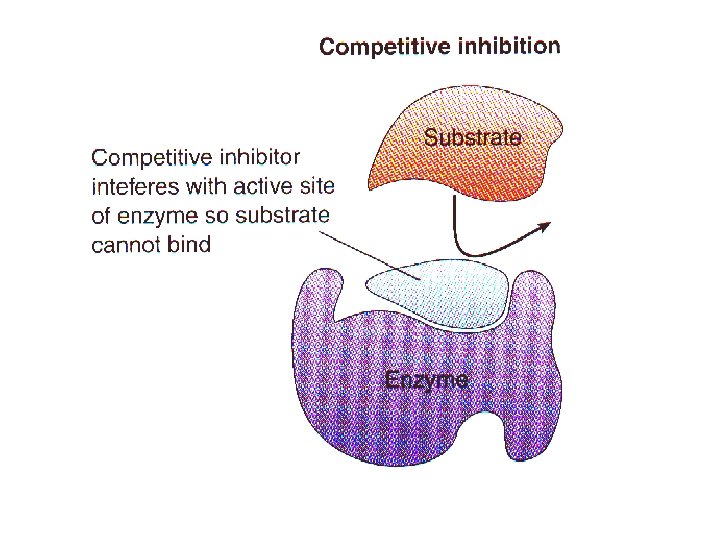
4) Enzyme inhibitors: -COMPETITIVE INHIBITORS: chemicals that resemble an enzyme’s normal substrate and compete with it for the active site block active site from substrate (example: penicillin)
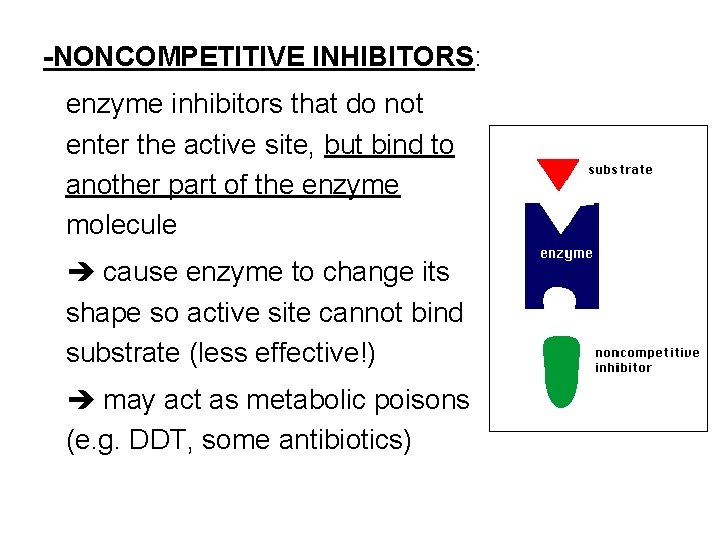
-NONCOMPETITIVE INHIBITORS: enzyme inhibitors that do not enter the active site, but bind to another part of the enzyme molecule cause enzyme to change its shape so active site cannot bind substrate (less effective!) may act as metabolic poisons (e. g. DDT, some antibiotics)
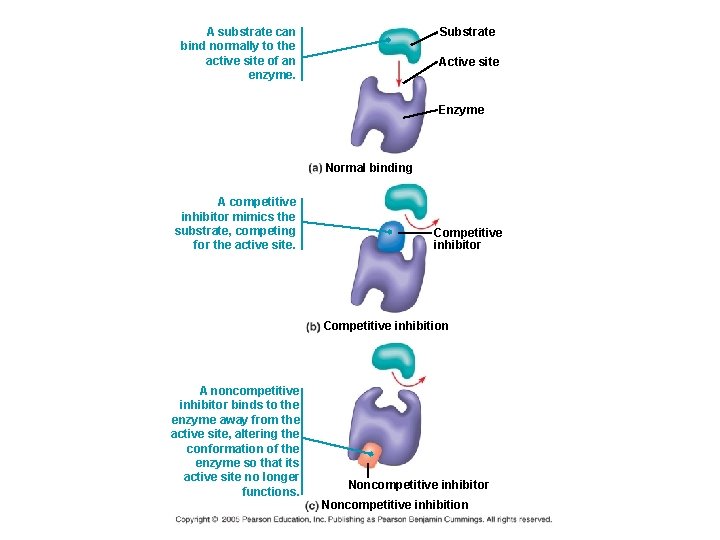
A substrate can bind normally to the active site of an enzyme. Substrate Active site Enzyme Normal binding A competitive inhibitor mimics the substrate, competing for the active site. Competitive inhibitor Competitive inhibition A noncompetitive inhibitor binds to the enzyme away from the active site, altering the conformation of the enzyme so that its active site no longer functions. Noncompetitive inhibitor Noncompetitive inhibition
8. 5 - Regulation of enzyme activity helps control metabolism Chemical chaos would result if a cell’s metabolic pathways were not tightly regulated ● To regulate metabolic pathways, the cell switches on or off the genes that encode specific enzymes ●
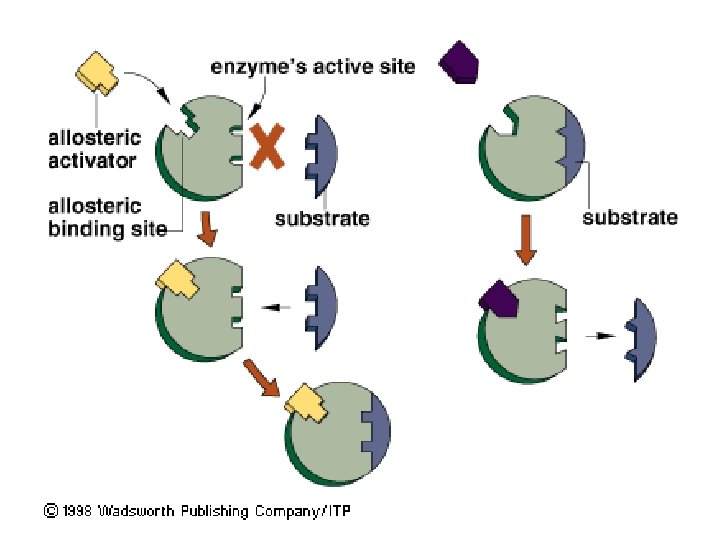
Allosteric Regulation of Enzymes Allosteric regulation is the term used to describe cases where a protein’s function at one site is affected by binding of a regulatory molecule at another site ● Allosteric regulation may either inhibit or stimulate an enzyme’s activity ●
Allosteric Activation and Inhibition Most allosterically regulated enzymes are made from polypeptide subunits ● Each enzyme has active and inactive forms ● The binding of an activator stabilizes the active form of the enzyme ● The binding of an inhibitor stabilizes the inactive form of the enzyme ●
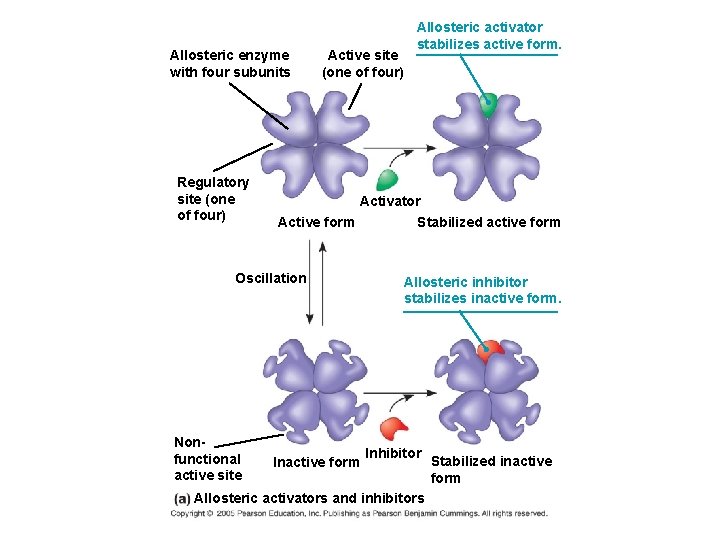
Allosteric enzyme with four subunits Regulatory site (one of four) Active site (one of four) Activator Active form Oscillation Nonfunctional active site Allosteric activator stabilizes active form. Inactive form Stabilized active form Allosteric inhibitor stabilizes inactive form. Inhibitor Allosteric activators and inhibitors Stabilized inactive form
Allosteric Activation and Inhibition Cooperativity is a form of allosteric regulation that can amplify enzyme activity ● In cooperativity, binding by a substrate to one active site stabilizes favorable conformational changes at all other subunits ●
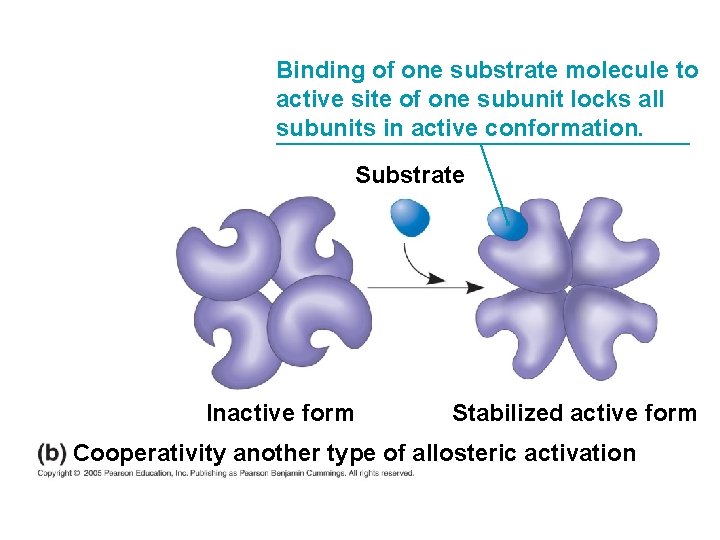
Binding of one substrate molecule to active site of one subunit locks all subunits in active conformation. Substrate Inactive form Stabilized active form Cooperativity another type of allosteric activation
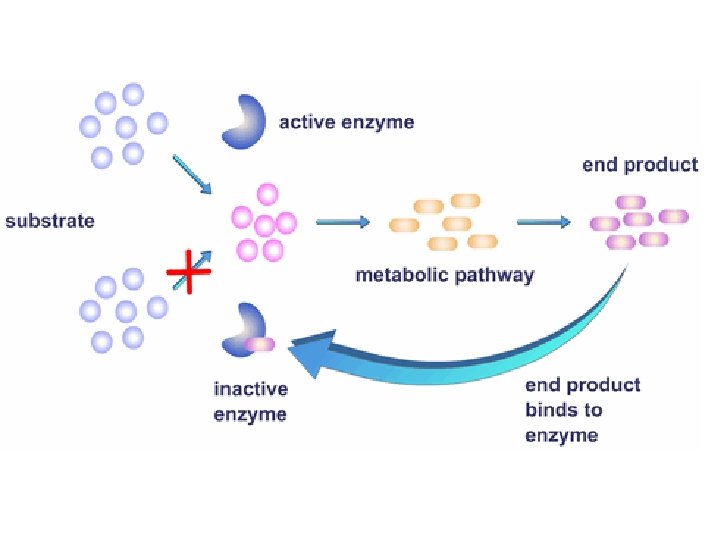
Feedback Inhibition ● In feedback inhibition, the end product of a metabolic pathway shuts down the pathway that produced it ● Feedback inhibition prevents a cell from wasting chemical resources by synthesizing more product than is needed
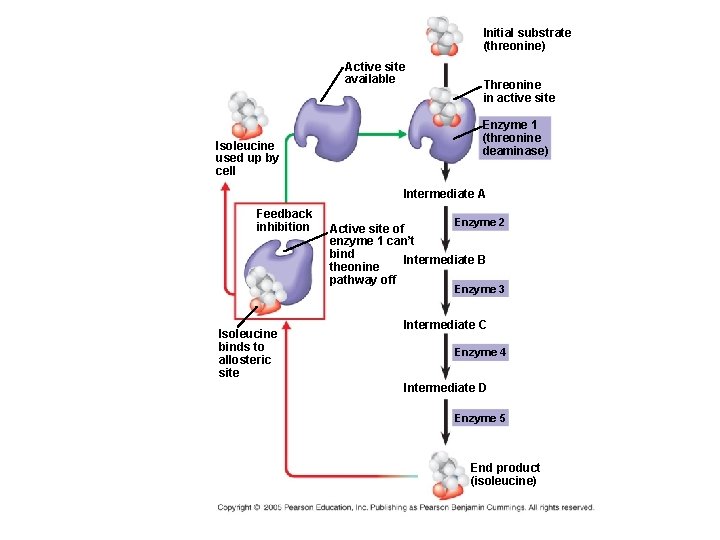
Initial substrate (threonine) Active site available Isoleucine used up by cell Threonine in active site Enzyme 1 (threonine deaminase) Intermediate A Feedback inhibition Enzyme 2 Active site of enzyme 1 can’t bind Intermediate B theonine pathway off Enzyme 3 Isoleucine binds to allosteric site Intermediate C Enzyme 4 Intermediate D Enzyme 5 End product (isoleucine)
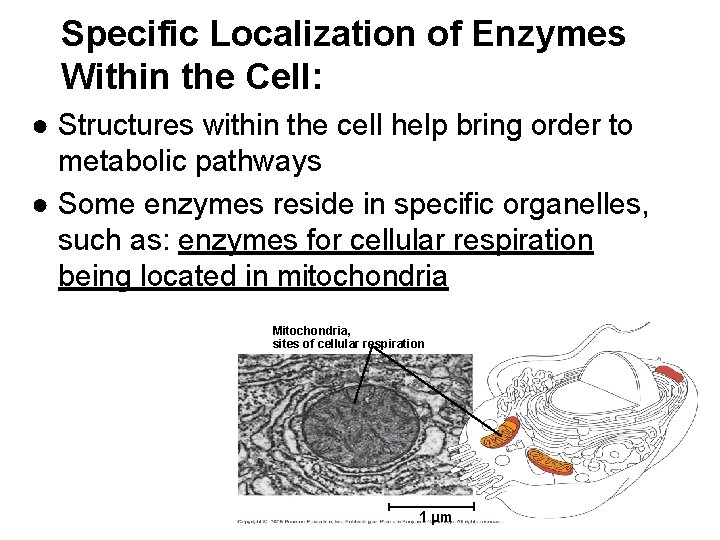
Specific Localization of Enzymes Within the Cell: ● Structures within the cell help bring order to metabolic pathways ● Some enzymes reside in specific organelles, such as: enzymes for cellular respiration being located in mitochondria Mitochondria, sites of cellular respiration 1 µm
- Slides: 52