
NOTES Cell Energy Part 3 Cellular Respiration Cell
- Slides: 55
NOTES – Cell Energy Part 3 (Cellular Respiration)
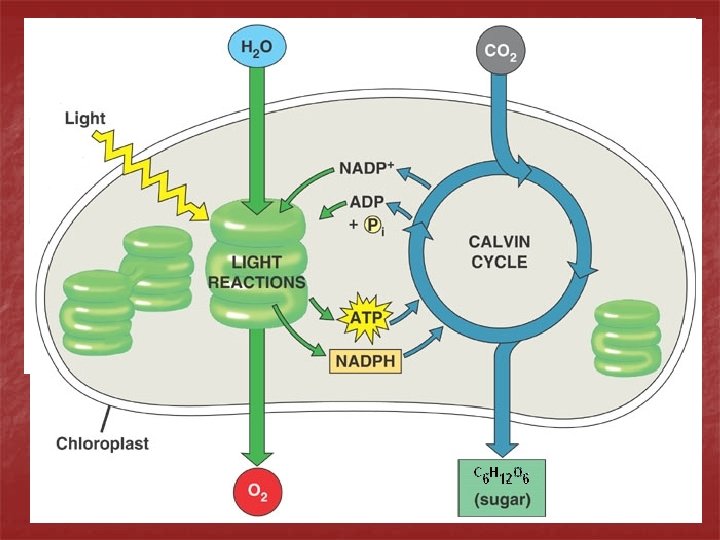
Cell Energy Review n n Cell Energy Part 1 – ATP n ATP is the “energy currency” of the cell n Cells must regenerate ATP from ADP and P to keep working n A constant input of energy (food) is required to power the ATP cycle Cell Energy Part 2 – Photosynthesis n The source of almost all food molecules n Light energy is converted into chemical energy and stored in the bonds of high-energy molecules n These molecules are used to power the ATP cycle and are used as skeletons to build other molecules necessary for life
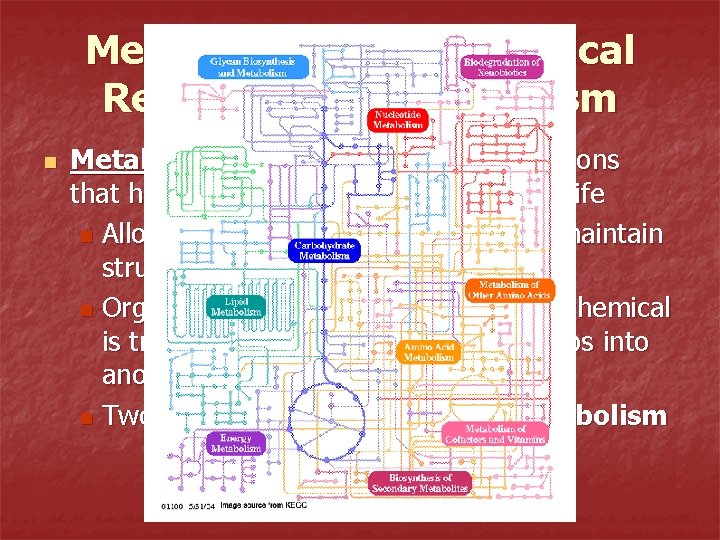
Metabolism – The Chemical Reactions of an Organism n Metabolism – the set of chemical reactions that happen in an organism to maintain life n Allow organisms to grow/reproduce, maintain structures, respond to environment n Organized into pathways, where one chemical is transformed through a series of steps into another chemical n Two categories: catabolism and anabolism
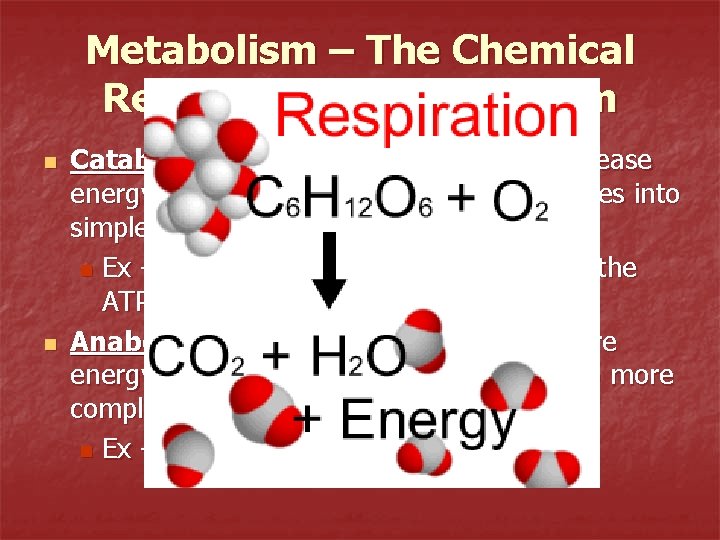
Metabolism – The Chemical Reactions of an Organism n n Catabolism – metabolic reactions that release energy by breaking down complex molecules into simpler compounds n Ex - Cells break down glucose to power the ATP cycle (cell respiration) Anabolism – metabolic reactions that store energy by building simpler compounds into more complex molecules n Ex - Photosynthesis
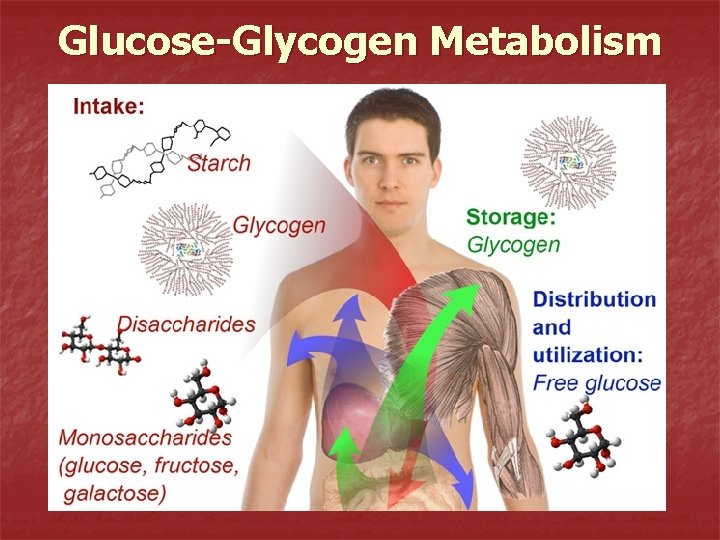
Glucose-Glycogen Metabolism
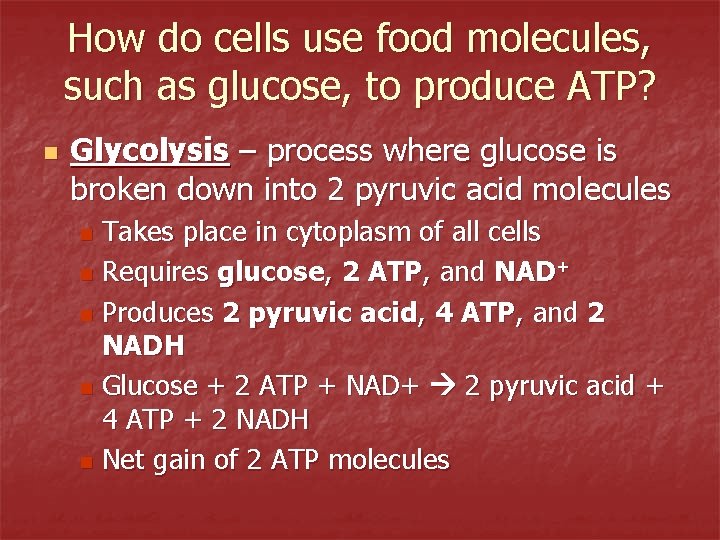
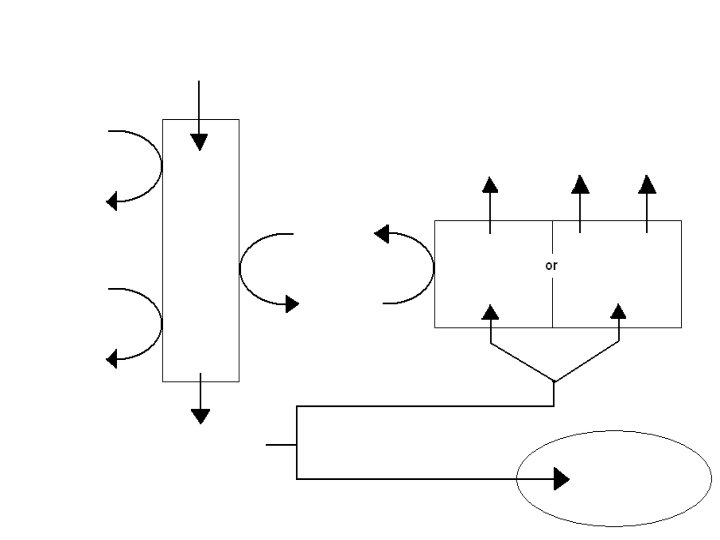
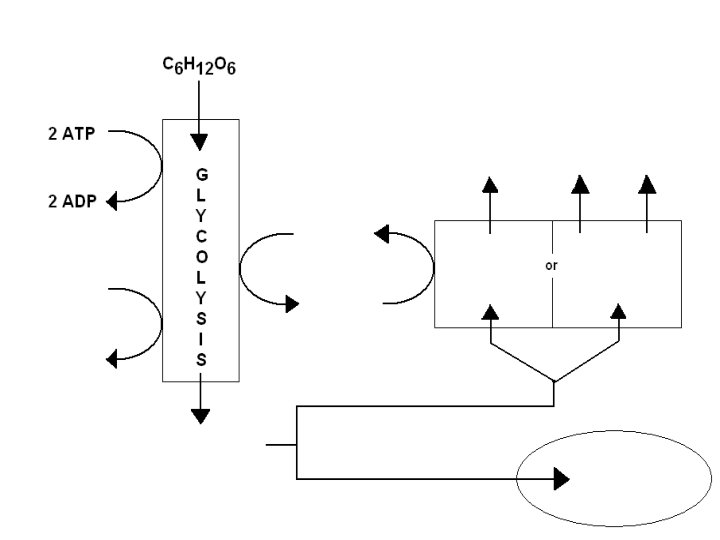
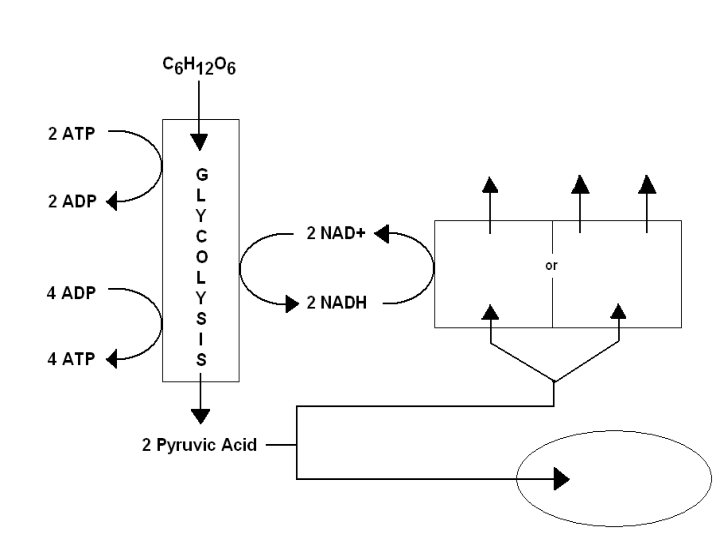
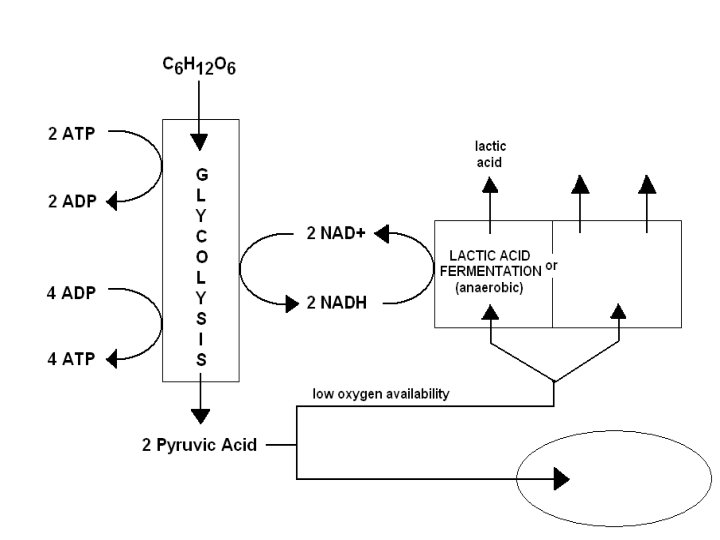
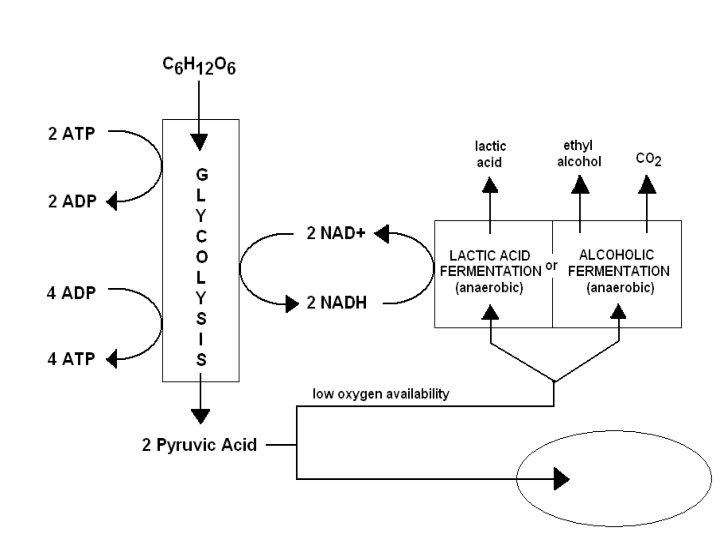
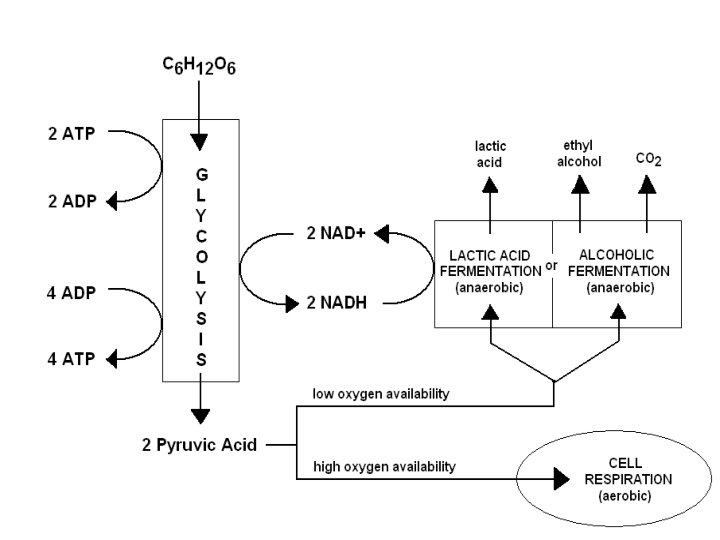
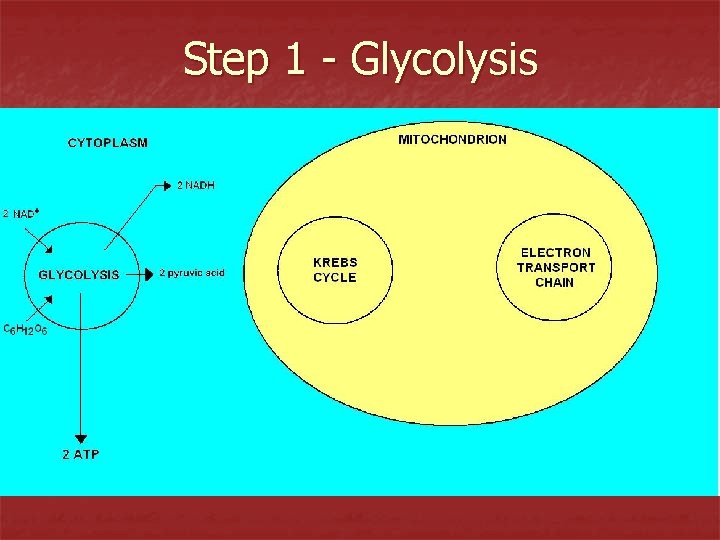
How do cells use food molecules, such as glucose, to produce ATP? n Glycolysis – process where glucose is broken down into 2 pyruvic acid molecules Takes place in cytoplasm of all cells n Requires glucose, 2 ATP, and NAD+ n Produces 2 pyruvic acid, 4 ATP, and 2 NADH n Glucose + 2 ATP + NAD+ 2 pyruvic acid + 4 ATP + 2 NADH n Net gain of 2 ATP molecules n
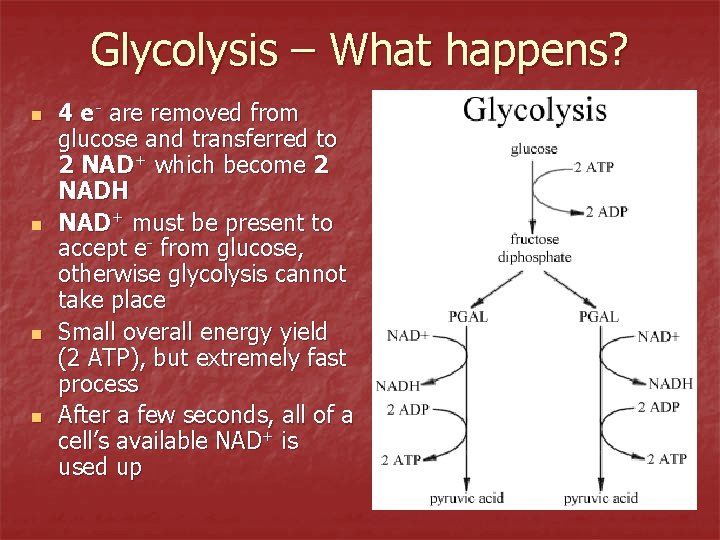
Glycolysis – What happens? n n 4 e- are removed from glucose and transferred to 2 NAD+ which become 2 NADH NAD+ must be present to accept e- from glucose, otherwise glycolysis cannot take place Small overall energy yield (2 ATP), but extremely fast process After a few seconds, all of a cell’s available NAD+ is used up
What happens when there is no more NAD+? n n Cells need a way to convert NADH back into NAD+ How they do this depends on the amount of oxygen present in the cell Insufficient oxygen = fermentation n Plentiful oxygen = aerobic respiration n
Fermentation n Fermentation – process where e- from NADH are passed back to pyruvic acid molecules, producing NAD+ Keeps glycolysis going n Anaerobic process – does not require oxygen n Pyruvic acid molecules are changed into new products n Most cells perform some type of fermentation n
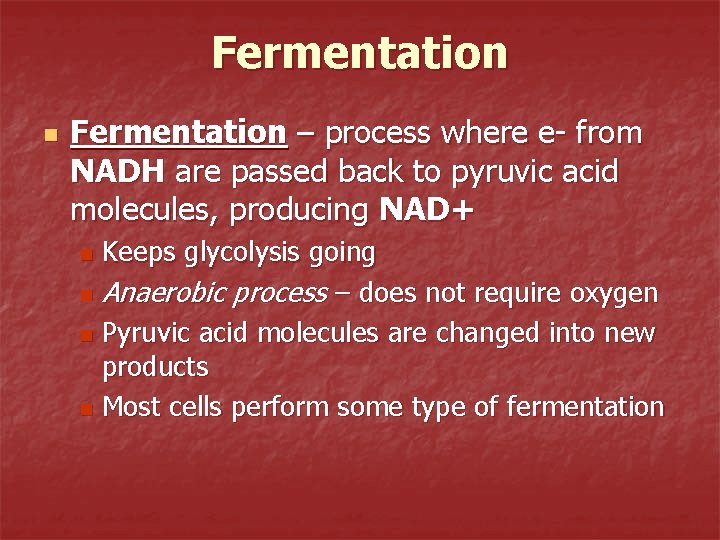
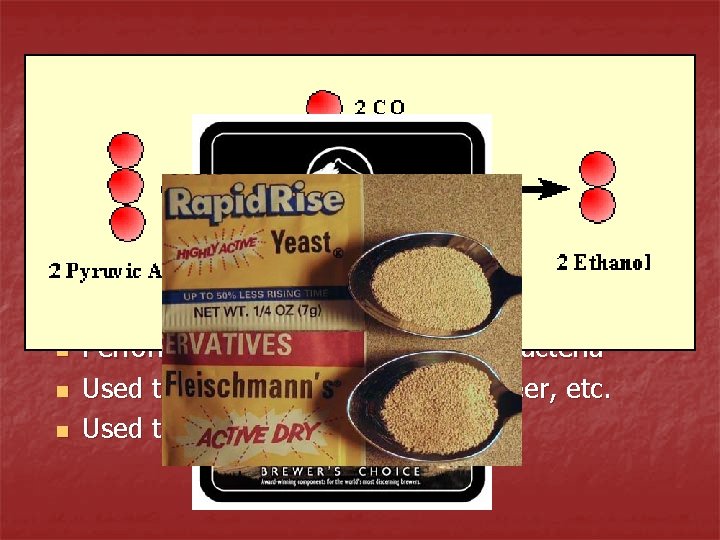
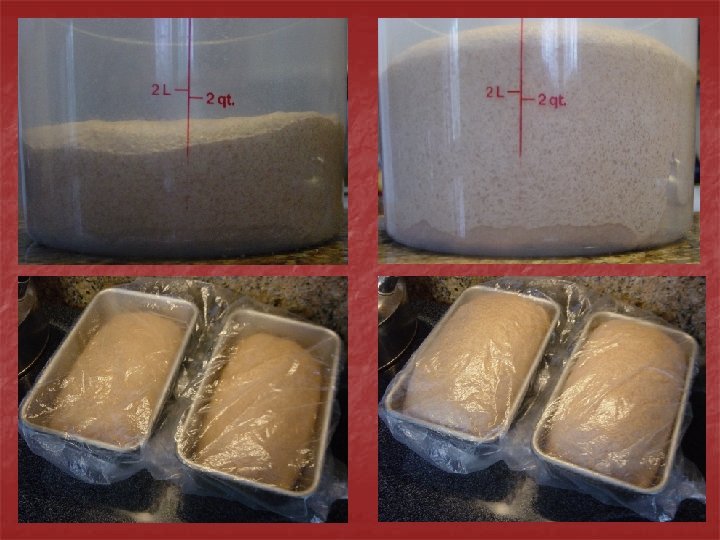
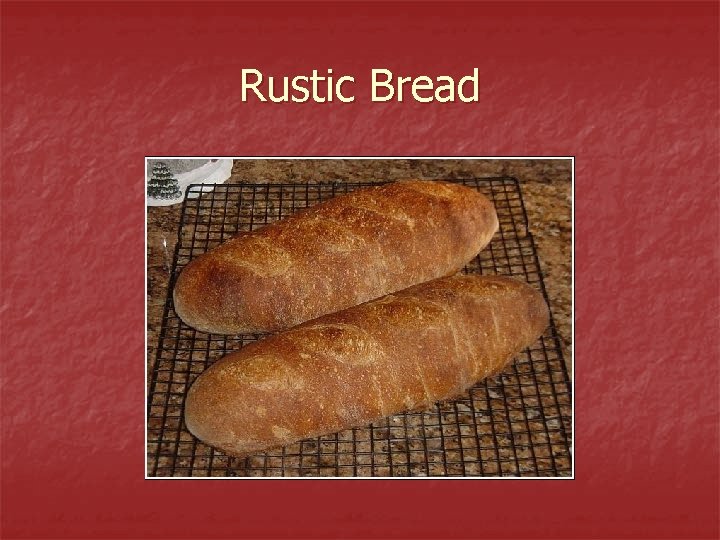
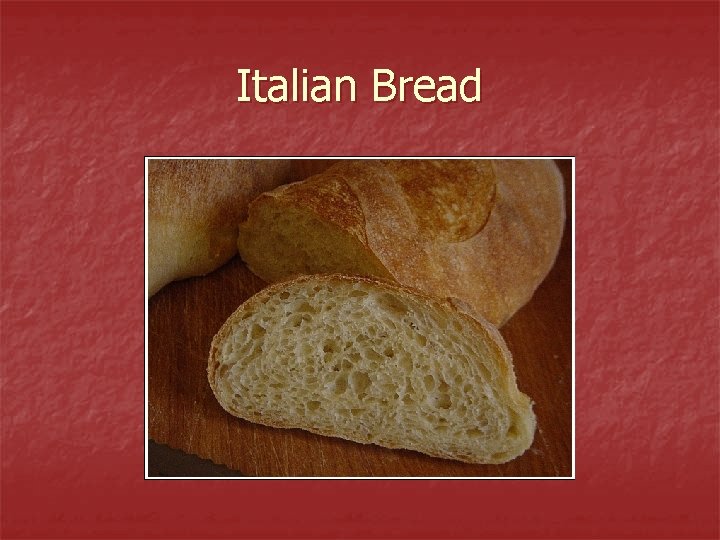
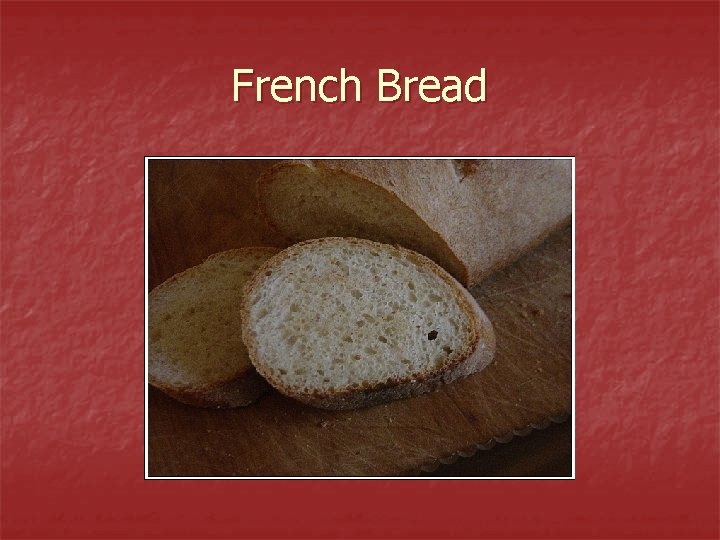
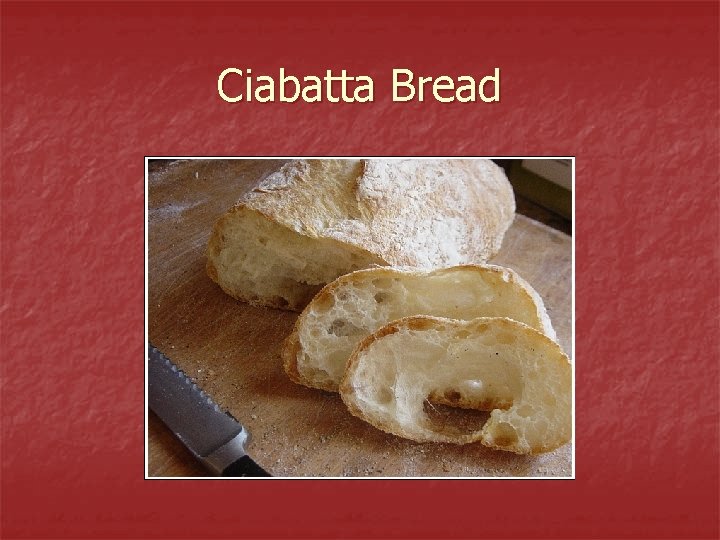
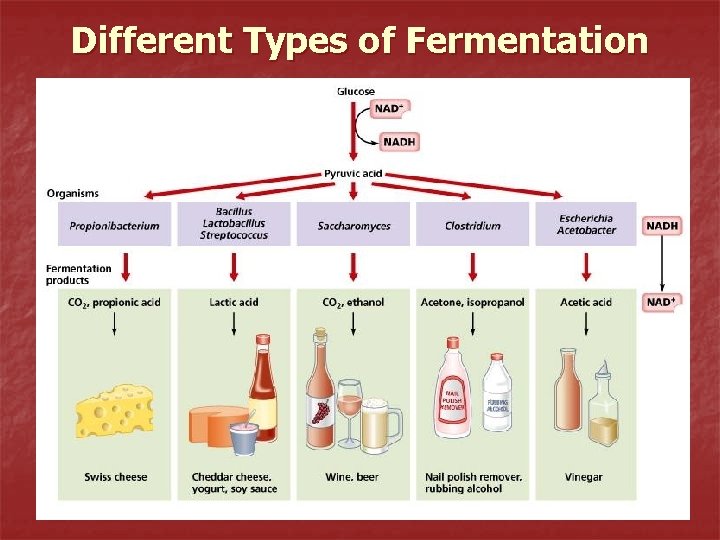
2 Common Types of Fermentation 1. Alcoholic Fermentation – process where pyruvic acid accepts e- from NADH producing ethyl alcohol, CO 2, and NAD+ n n pyruvic acid + NADH ethyl alcohol + CO 2 + NAD+ Performed by yeast, plants, some bacteria Used to produce alcohol in wine, beer, etc. Used to make bread rise
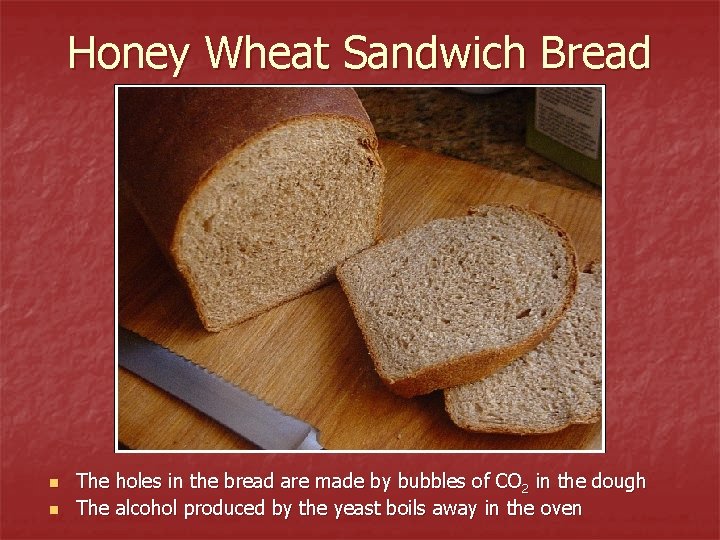
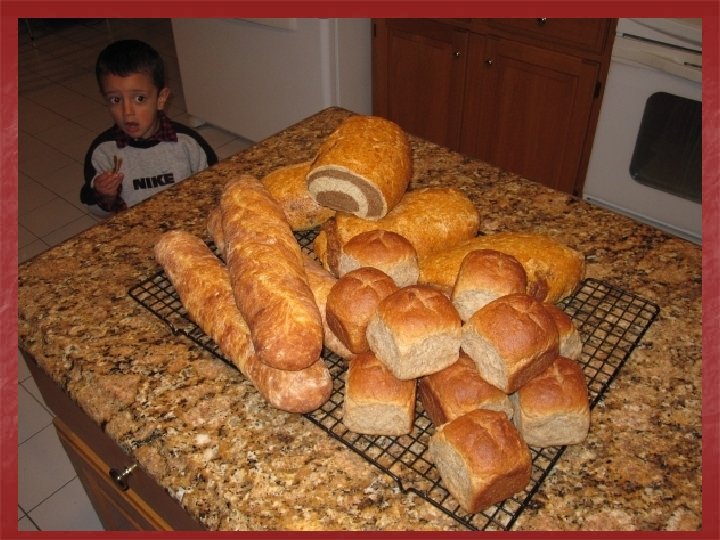
Honey Wheat Sandwich Bread n n The holes in the bread are made by bubbles of CO 2 in the dough The alcohol produced by the yeast boils away in the oven
Rustic Bread
Italian Bread
French Bread
Ciabatta Bread
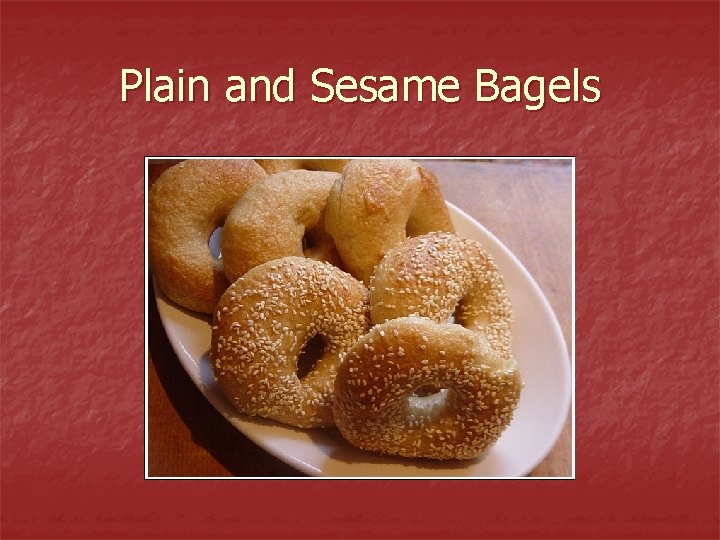
Plain and Sesame Bagels
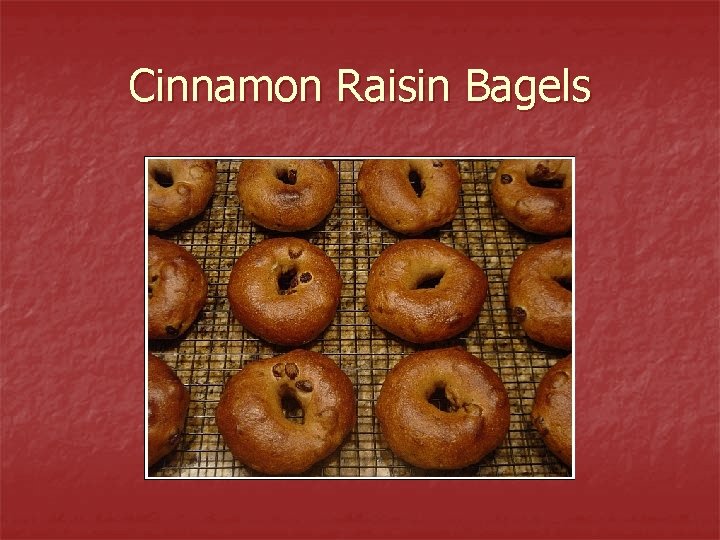
Cinnamon Raisin Bagels
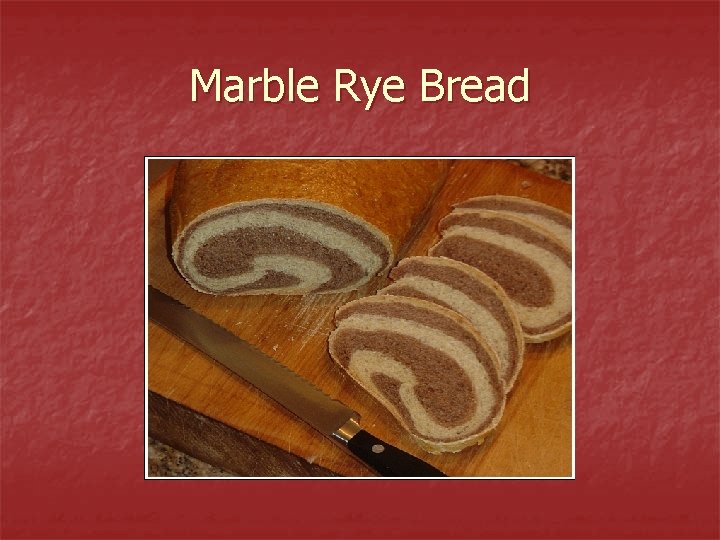
Marble Rye Bread
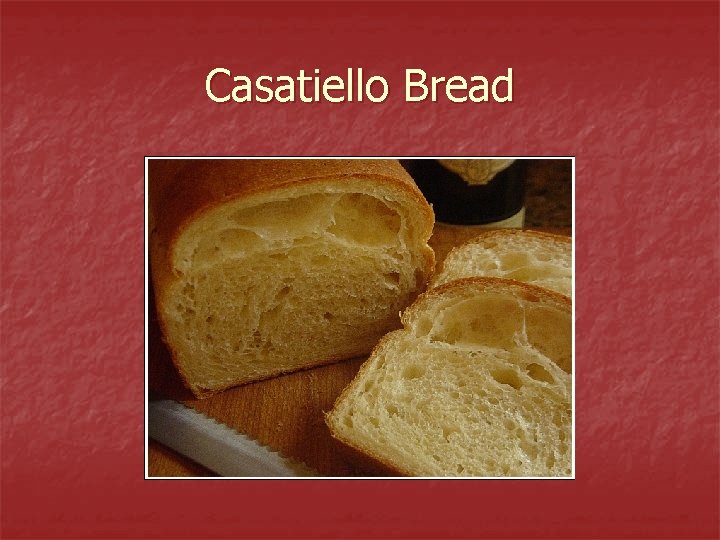
Casatiello Bread
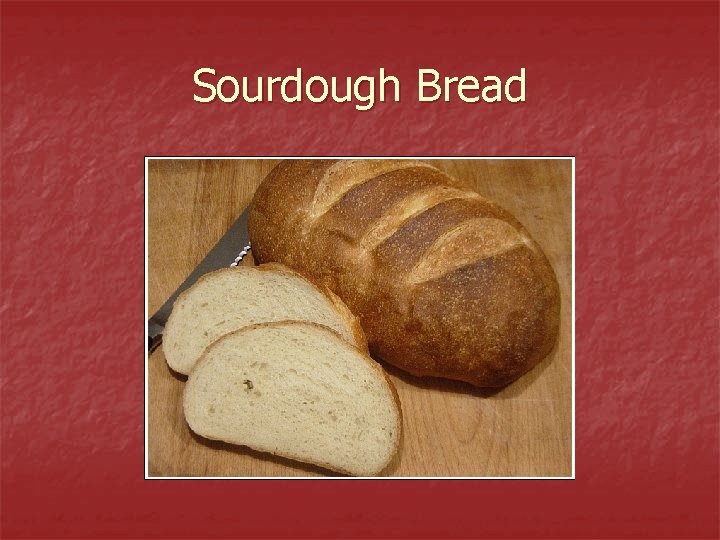
Sourdough Bread
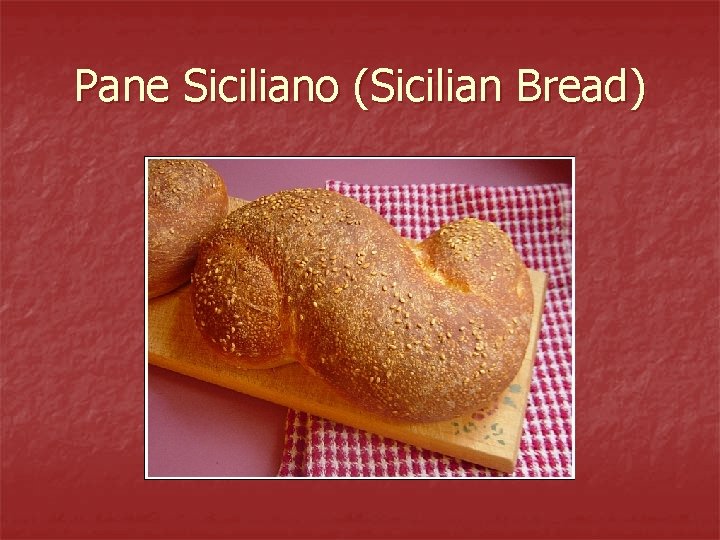
Pane Siciliano (Sicilian Bread)
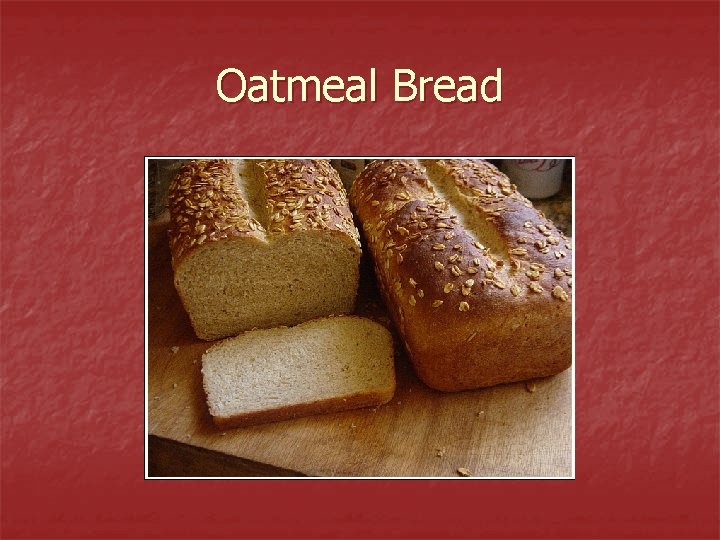
Oatmeal Bread
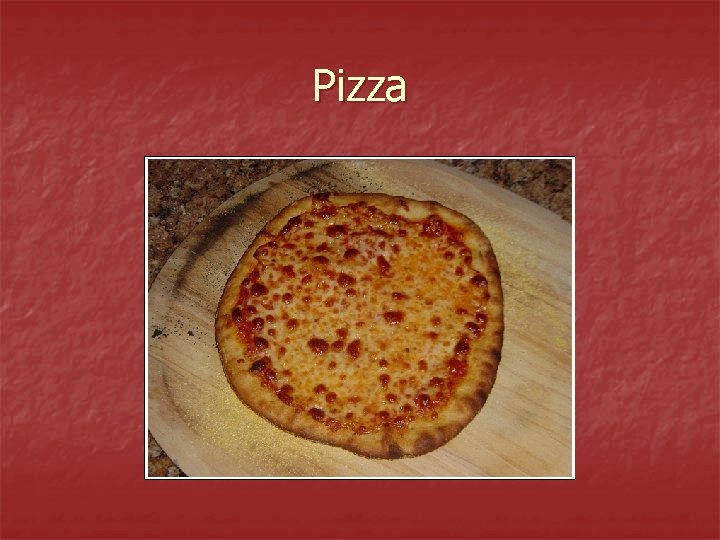
Pizza
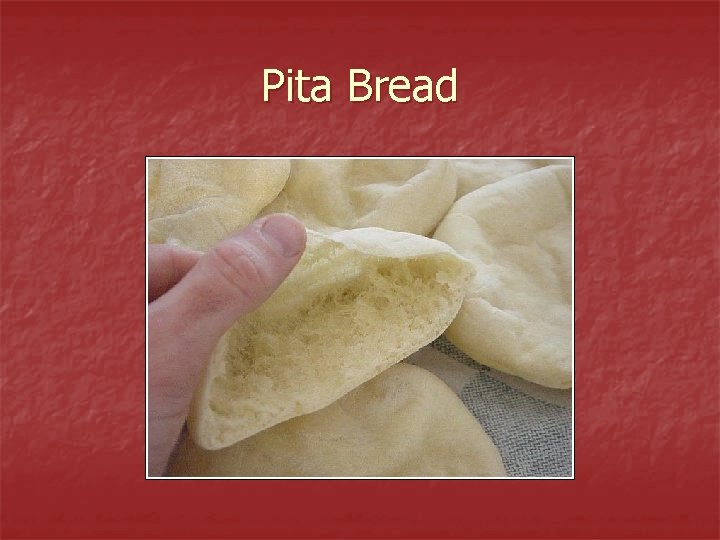
Pita Bread
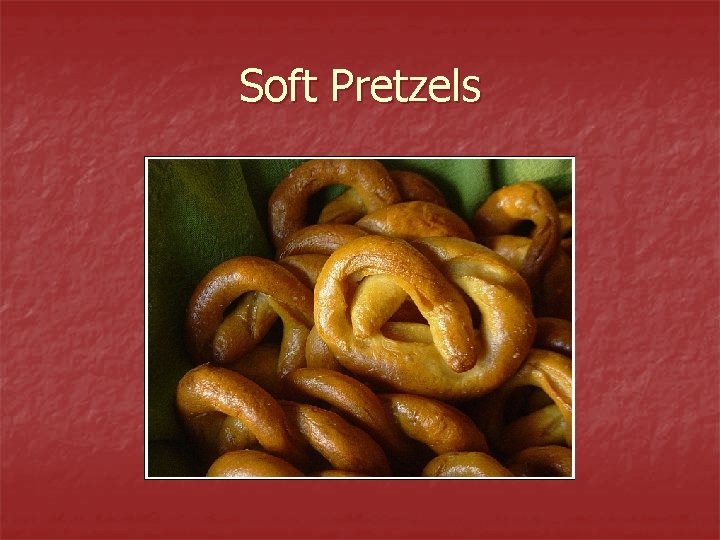
Soft Pretzels
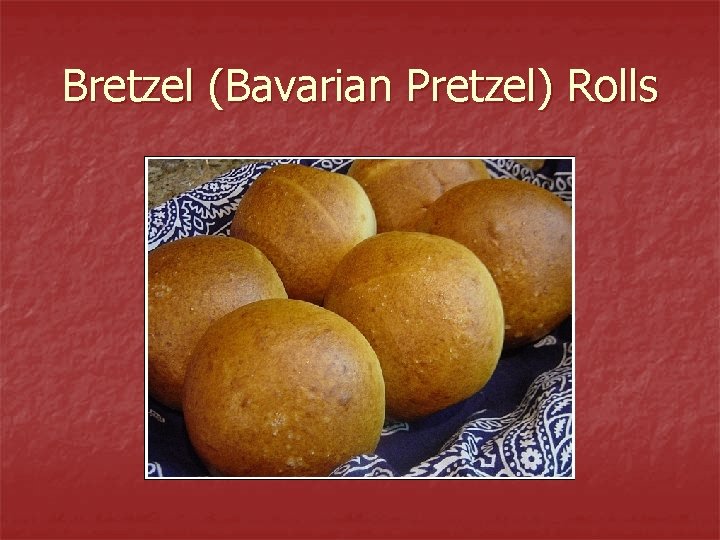
Bretzel (Bavarian Pretzel) Rolls
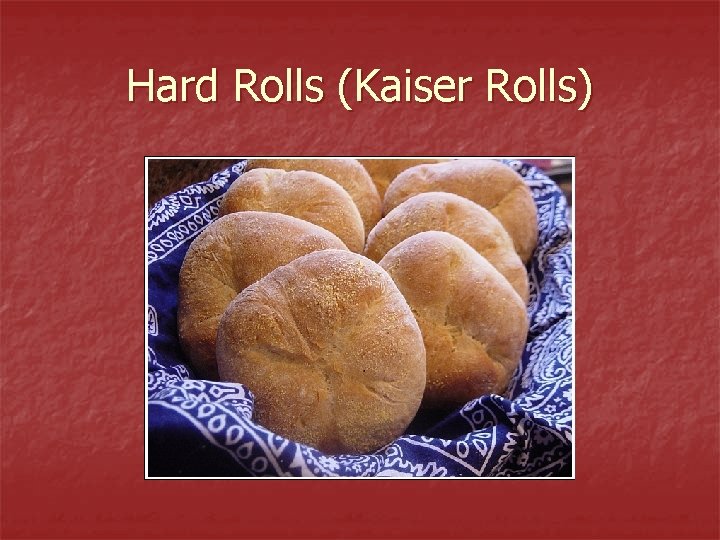
Hard Rolls (Kaiser Rolls)
2 Common Types of Fermentation 2. Lactic Acid Fermentation – process where pyruvic acid accepts e- from NADH producing lactic acid and NAD+ n n pyruvic acid + NADH lactic acid + NAD+ Performed by animals, some bacteria Used to produce cheese, sour cream, yogurt Responsible for quick bursts of energy in animals (Ex. Sprinting)
Different Types of Fermentation
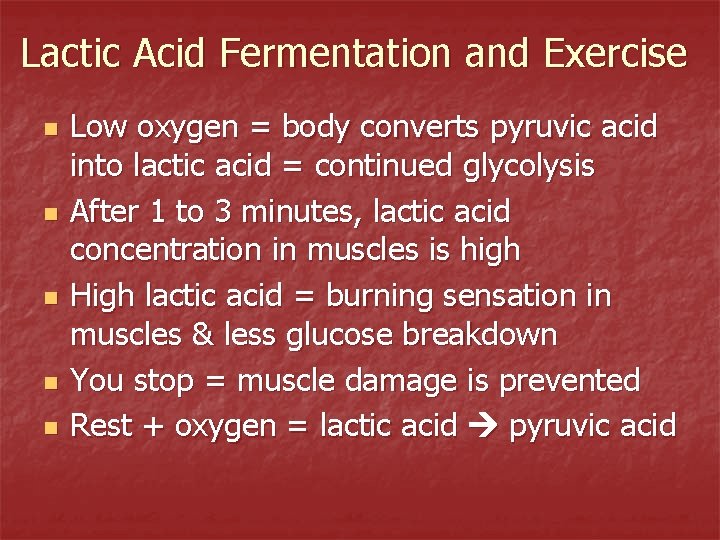
Lactic Acid Fermentation and Exercise n n n Low oxygen = body converts pyruvic acid into lactic acid = continued glycolysis After 1 to 3 minutes, lactic acid concentration in muscles is high High lactic acid = burning sensation in muscles & less glucose breakdown You stop = muscle damage is prevented Rest + oxygen = lactic acid pyruvic acid
Remember… n n n The goal of fermentation is to generate NAD+ to keep glycolysis going in low oxygen conditions The e- from NADH are passed back to pyruvic acid molecules, generating different products and NAD+ If there is plenty of oxygen available, in most cells a different process occurs
Cellular Respiration – Overview n n n After glycolysis about 90% of the chemical energy available in glucose is still unused The energy is locked up in the pyruvic acid molecules In the presence of plentiful oxygen, most cells can break down pyruvic acid molecules further, generating much more ATP
Cellular Respiration n Cellular Respiration – process that releases energy by breaking down food molecules (glucose) in the presence of oxygen 6 O 2 + C 6 H 12 O 6 6 CO 2 + 6 H 2 O + 36 ATP n Aerobic process – requires oxygen n In eukaryotic cells, respiration takes place in mitochondria n In some prokaryotic cells, the entire cell functions like a single mitochondrion, allowing respiration to be carried out n
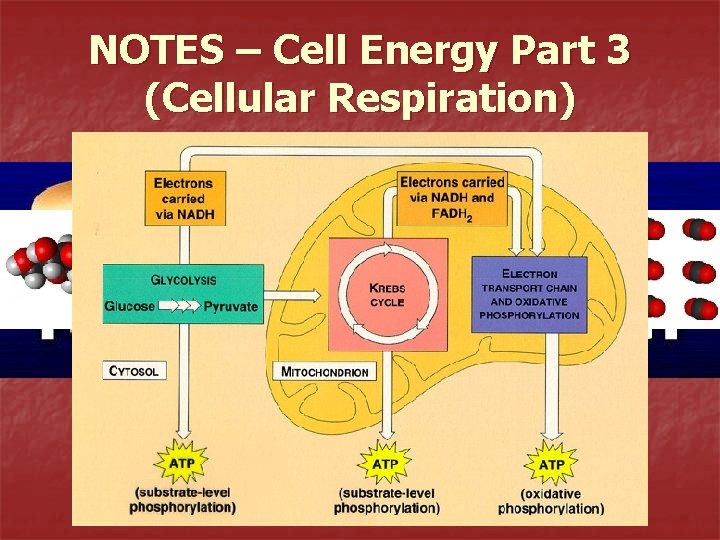
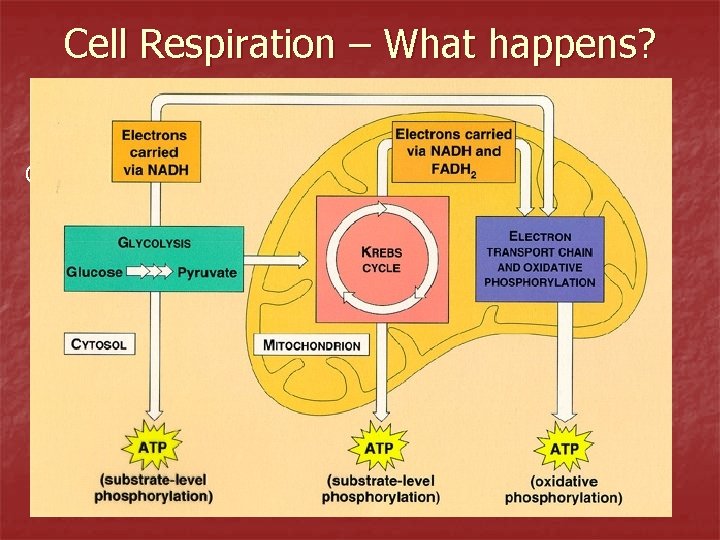
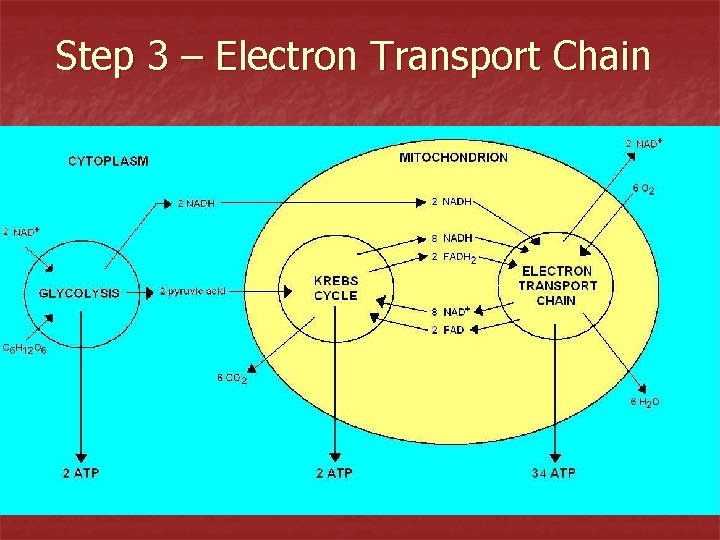
Cell Respiration – What happens? Cell Respiration is a 3 -Step process: 1. Glycolysis – begins break down of glucose in cytoplasm into pyruvic acid 2. Krebs Cycle – breaks down pyruvic acid into CO 2, releasing energy (in mitochondria) 3. Electron Transport Chain – generates ATP in mitochondria using products from the Krebs Cycle
Step 1 - Glycolysis
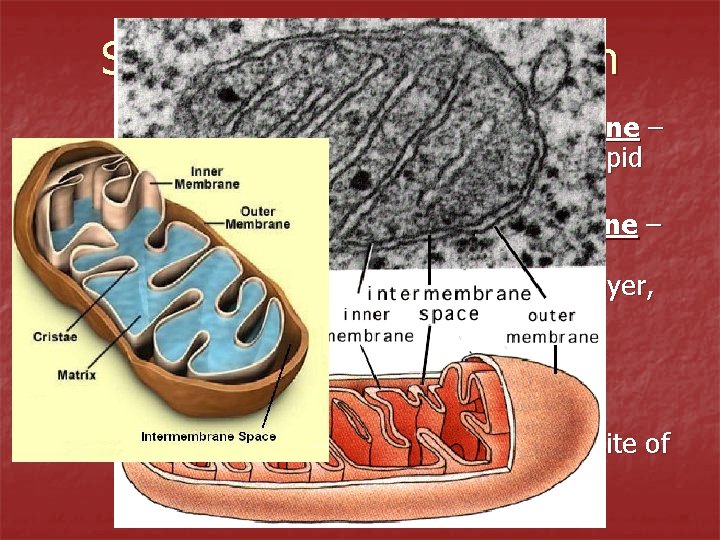
Structure of Mitochondrion n Outer membrane – simple phospholipid bilayer Inner membrane – highly folded phospholipid bilayer, site of electron transport chain Matrix – inner portion of mitochondrion, site of Krebs Cycle
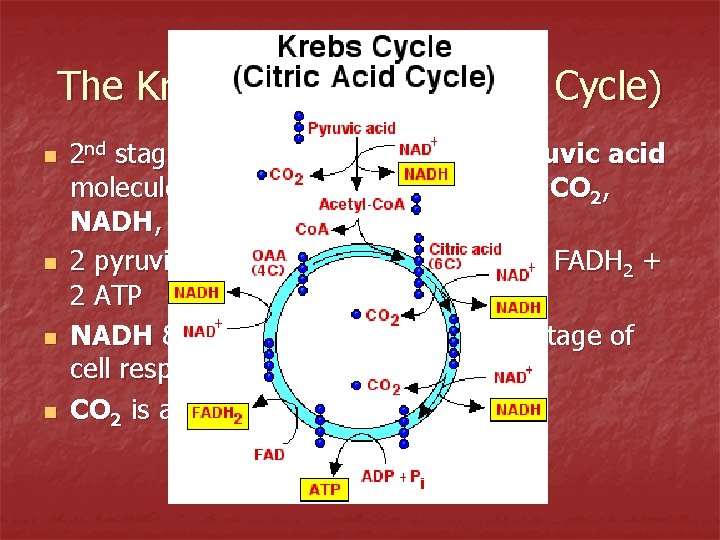
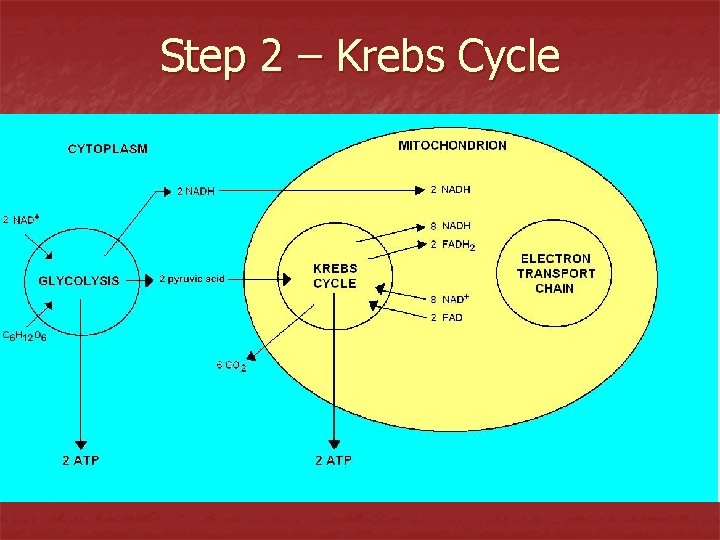
The Krebs Cycle (Citric Acid Cycle) n n 2 nd stage of cell respiration where pyruvic acid molecules are broken down producing CO 2, NADH, FADH 2, and ATP 2 pyruvic acid 6 CO 2 + 8 NADH + 2 FADH 2 + 2 ATP NADH & FADH 2 carry e- to the final stage of cell respiration CO 2 is a waste product
Step 2 – Krebs Cycle
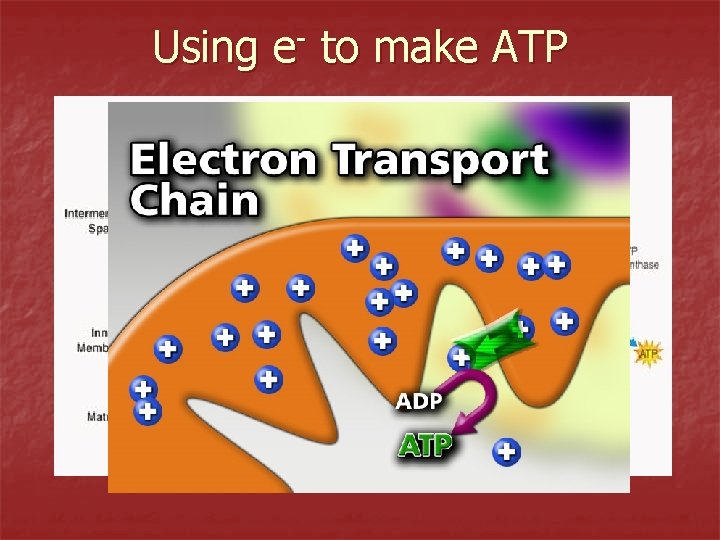
The Electron Transport Chain (ETC) n n 3 rd stage of cell respiration where e- from the Krebs Cycle are used to convert ADP into ATP e- are passed from NADH and FADH 2 to a series of carrier proteins that are embedded in the inner membrane of a mitochondrion As the e- pass from one protein to the next, H+ ions are pulled from the matrix into the intermembrane space of the mitochondrion e- flow back into the matrix through ATP sythase proteins, which use the energy to convert ADP into ATP
Using e- to make ATP
What happens to the electrons? n n As e- reach the end of the chain, they must go somewhere, or else the chain cannot accept new e- from the Krebs Cycle Oxygen molecules accept the e-, and immediately bond H+ ions, forming H 2 O molecules As long as there is plentiful oxygen, NADH is continually converted to NAD+ by the ETC, allowing glycolysis to continue If oxygen is not brought in quickly enough, the chain slows down, NAD+ is quickly used up, and fermentation begins
Step 3 – Electron Transport Chain
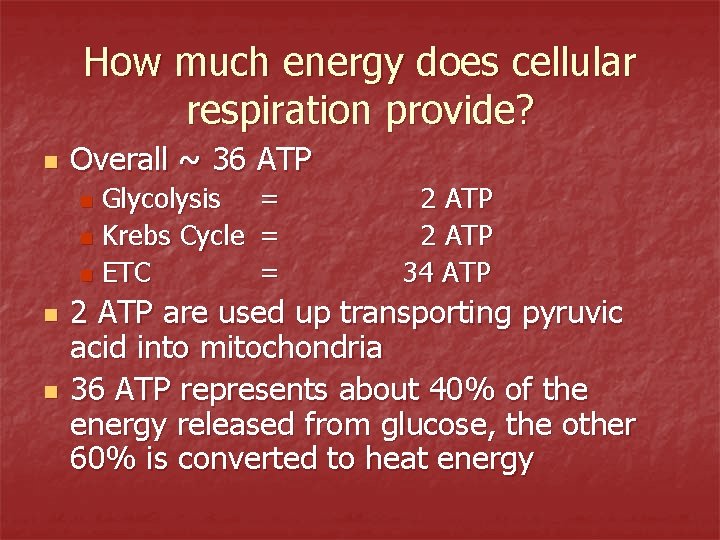
How much energy does cellular respiration provide? n Overall ~ 36 ATP Glycolysis n Krebs Cycle n ETC n n n = = = 2 ATP 34 ATP 2 ATP are used up transporting pyruvic acid into mitochondria 36 ATP represents about 40% of the energy released from glucose, the other 60% is converted to heat energy
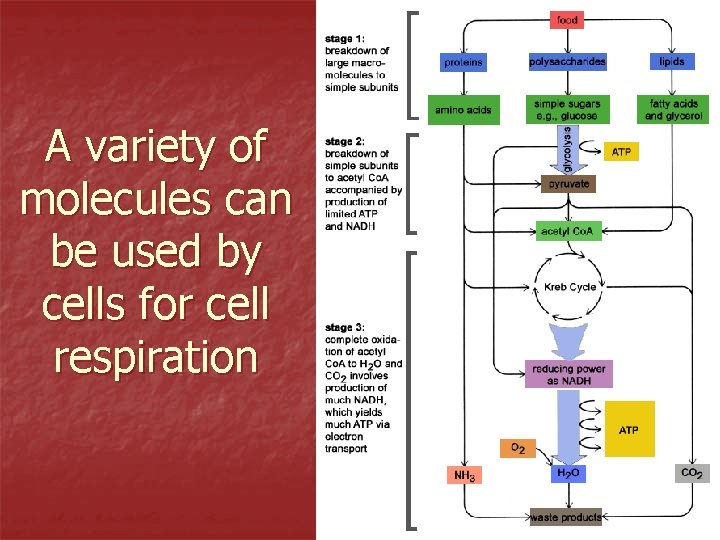
A variety of molecules can be used by cells for cell respiration
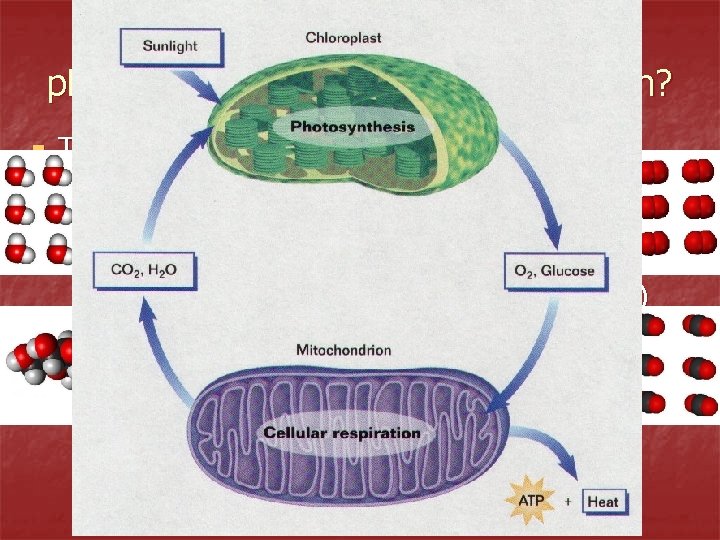
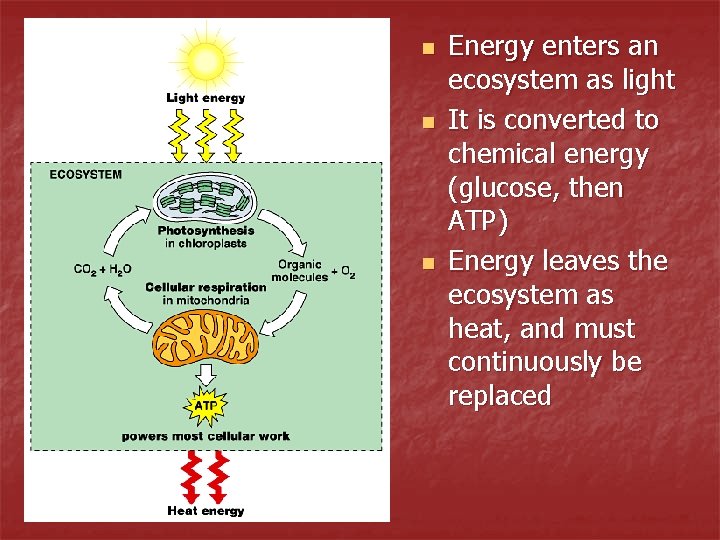
What is the relationship between photosynthesis and cellular respiration? n They are opposite processes n Photosynthesis stores energy in glucose (it is an endergonic anabolic reaction) n Respiration releases energy by breaking down glucose (it is an exergonic catabolic reaction) n The products of photosynthesis are the reactants of cell respiration n The products of cell respiration (excluding the ATP) can be recycled by photosynthesis
n n n Energy enters an ecosystem as light It is converted to chemical energy (glucose, then ATP) Energy leaves the ecosystem as heat, and must continuously be replaced
Cell Energy Review n n n Cells use ATP for energy (ATP Cycle) Cells generate ATP by releasing energy from food molecules (glucose) during the processes of cell respiration and fermentation Food molecules (glucose) are generated during the process of photosynthesis