
NOTES 19 1 AcidBase Theories Acids Bases have
NOTES: 19. 1 – Acid-Base Theories
Acids & Bases have distinctive properties…
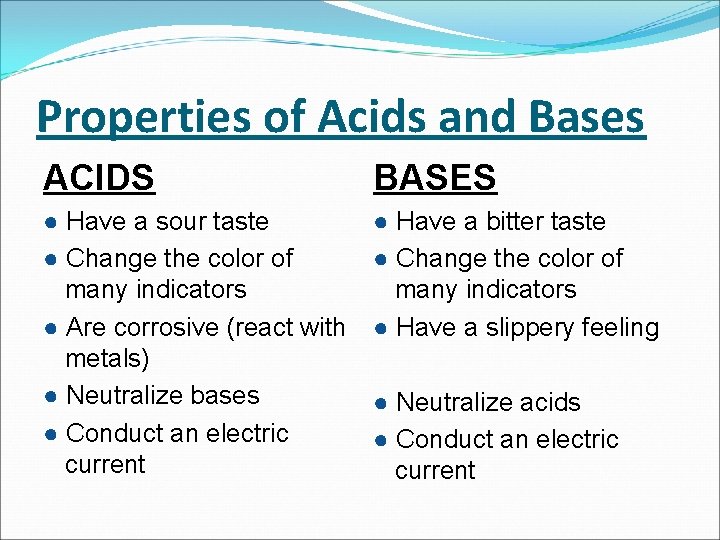
Properties of Acids and Bases ACIDS BASES ● Have a sour taste ● Change the color of many indicators ● Are corrosive (react with metals) ● Neutralize bases ● Conduct an electric current ● Have a bitter taste ● Change the color of many indicators ● Have a slippery feeling ● Neutralize acids ● Conduct an electric current
The Arrhenius Theory of Acids and Bases
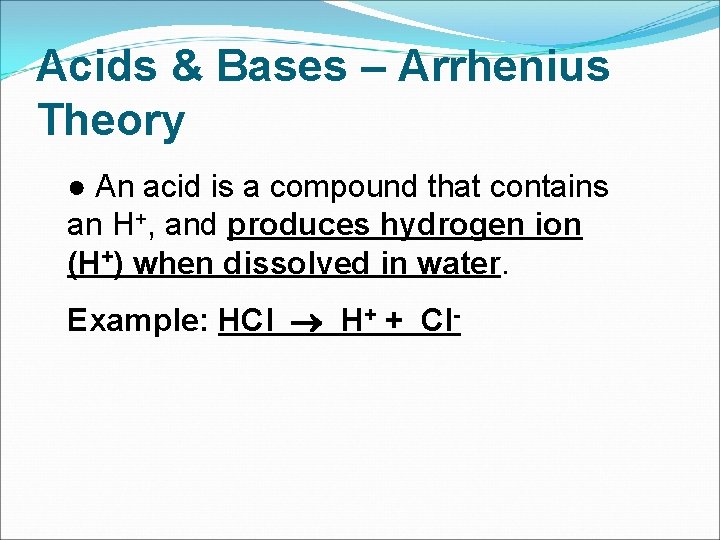
Acids & Bases – Arrhenius Theory ● An acid is a compound that contains an H+, and produces hydrogen ion (H+) when dissolved in water. Example: HCl H+ + Cl-
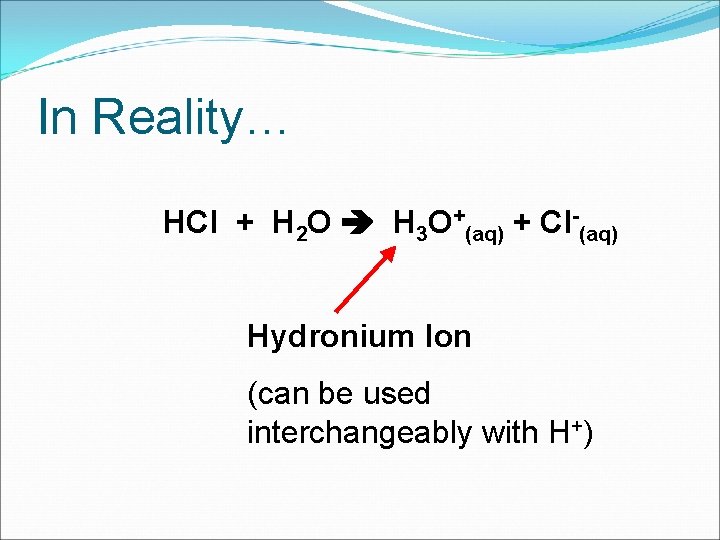
In Reality… HCl + H 2 O H 3 O+(aq) + Cl-(aq) Hydronium Ion (can be used interchangeably with H+)
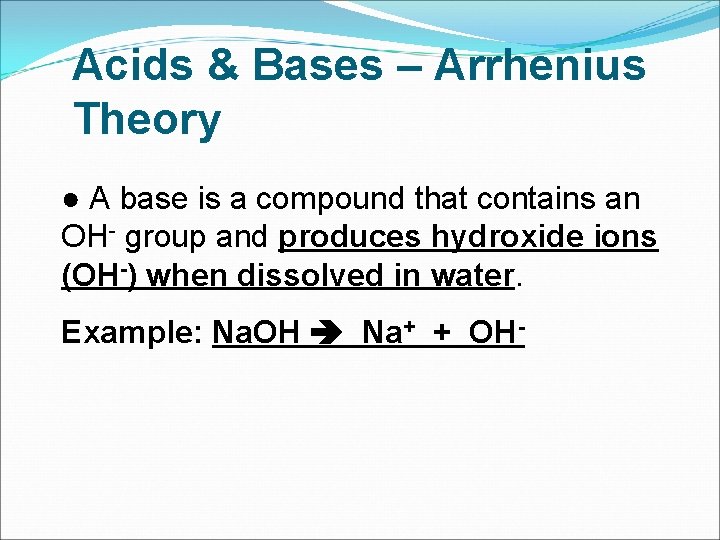
Acids & Bases – Arrhenius Theory ● A base is a compound that contains an OH- group and produces hydroxide ions (OH-) when dissolved in water. Example: Na. OH Na+ + OH-
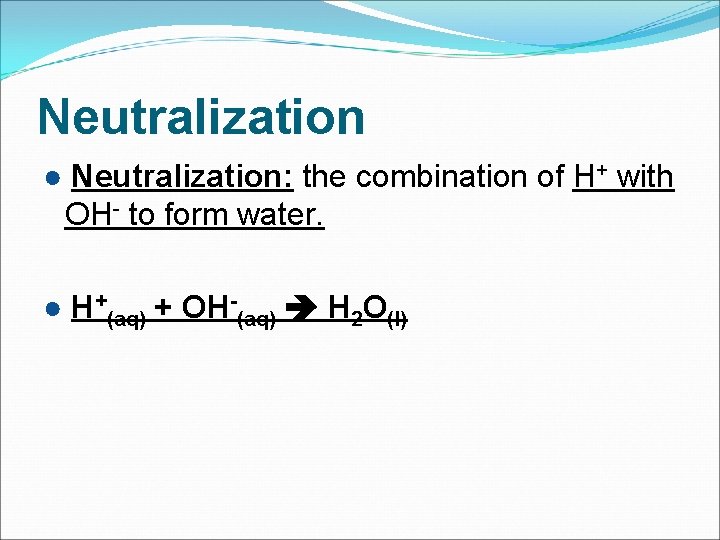
Neutralization ● Neutralization: the combination of H+ with OH- to form water. ● H+(aq) + OH-(aq) H 2 O(l)
Commentary on Arrhenius Theory… One problem with the Arrhenius theory is that it’s not comprehensive enough. Some compounds act like acids and bases that don’t fit the standard definition.
Bronsted-Lowry Theory of Acids & Bases
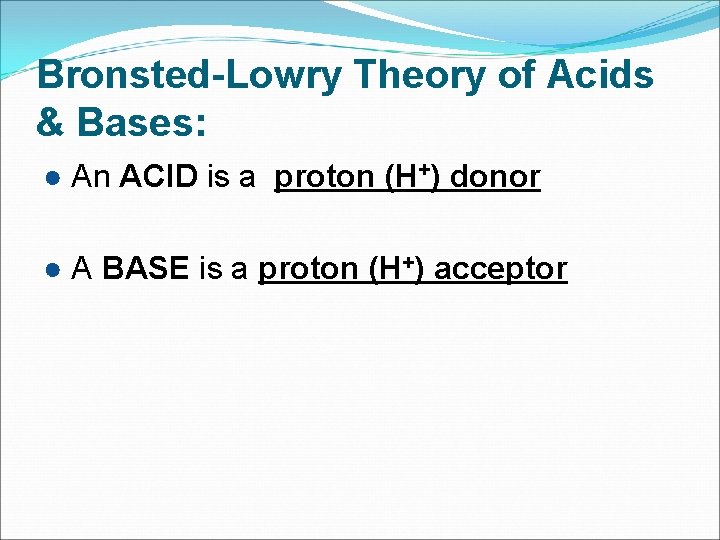
Bronsted-Lowry Theory of Acids & Bases: ● An ACID is a proton (H+) donor ● A BASE is a proton (H+) acceptor
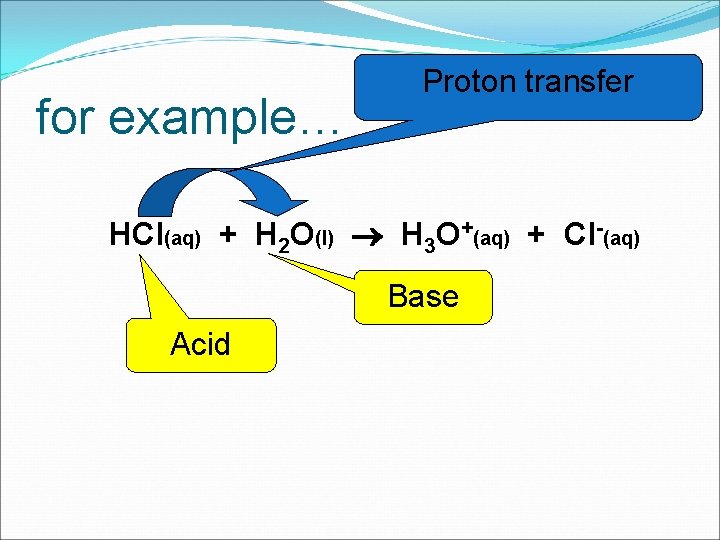
for example… Proton transfer HCl(aq) + H 2 O(l) H 3 O+(aq) + Cl-(aq) Base Acid

Water is a proton donor, and thus an acid. another example… ACID CONJUGATE BASE NH 3(aq) + H 2 O(l) NH 4+(aq) + OH-(aq) BASE Ammonia is a proton acceptor, and thus a base CONJUGATE ACID
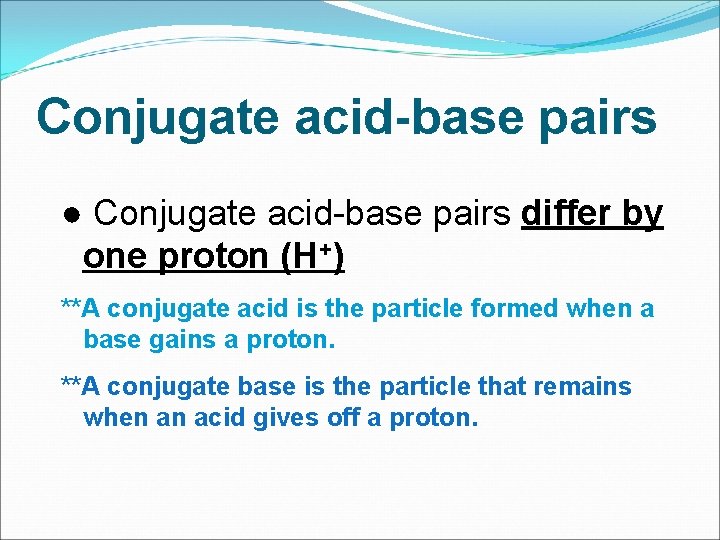
Conjugate acid-base pairs ● Conjugate acid-base pairs differ by one proton (H+) **A conjugate acid is the particle formed when a base gains a proton. **A conjugate base is the particle that remains when an acid gives off a proton.
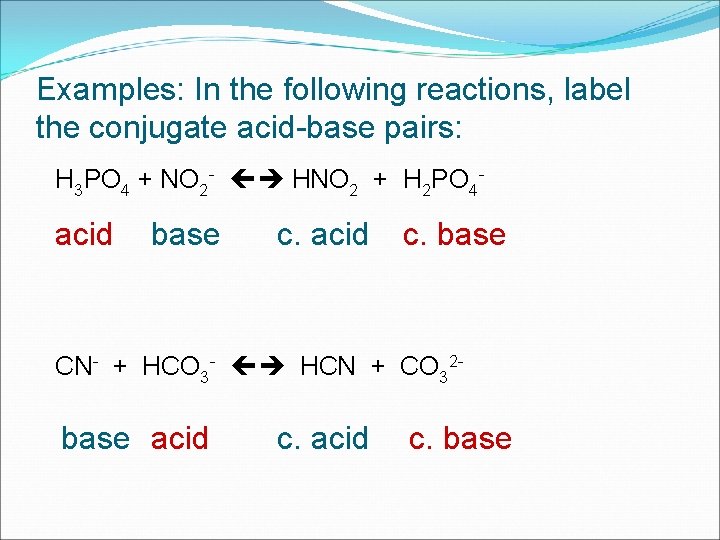
Examples: In the following reactions, label the conjugate acid-base pairs: H 3 PO 4 + NO 2 - HNO 2 + H 2 PO 4 - acid base c. acid c. base CN- + HCO 3 - HCN + CO 32 - base acid c. base
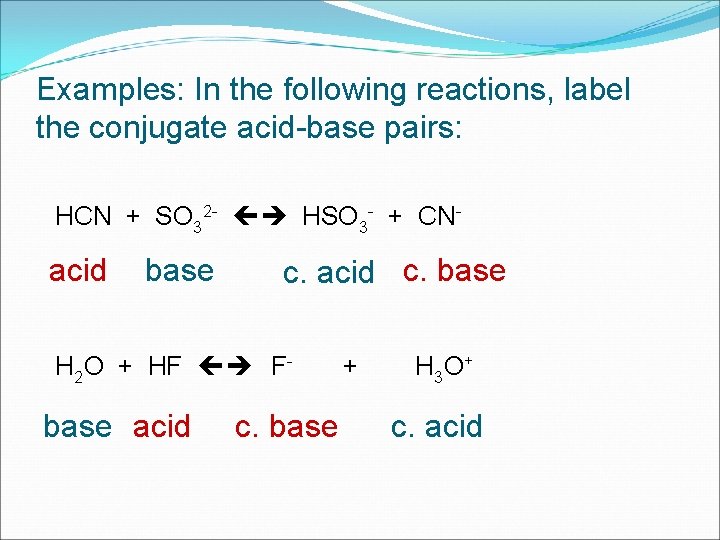
Examples: In the following reactions, label the conjugate acid-base pairs: HCN + SO 32 - HSO 3 - + CN- acid base c. acid c. base H 2 O + HF F- base acid c. base + H 3 O + c. acid
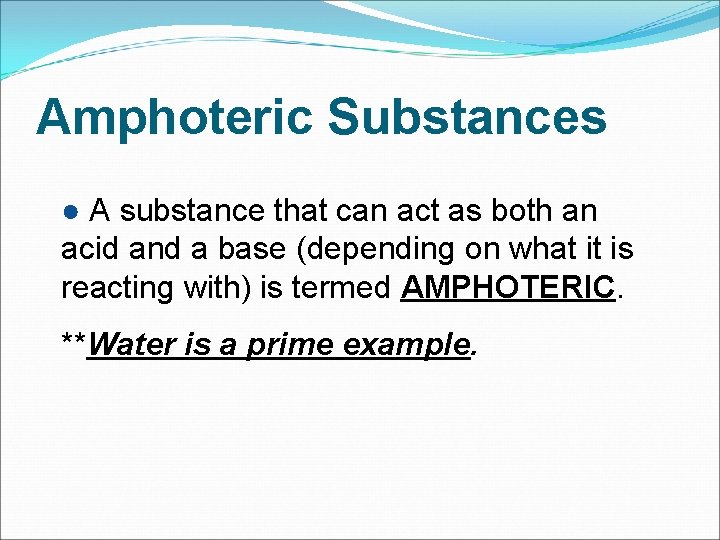
Amphoteric Substances ● A substance that can act as both an acid and a base (depending on what it is reacting with) is termed AMPHOTERIC. **Water is a prime example.
The Lewis Theory of Acids and Bases
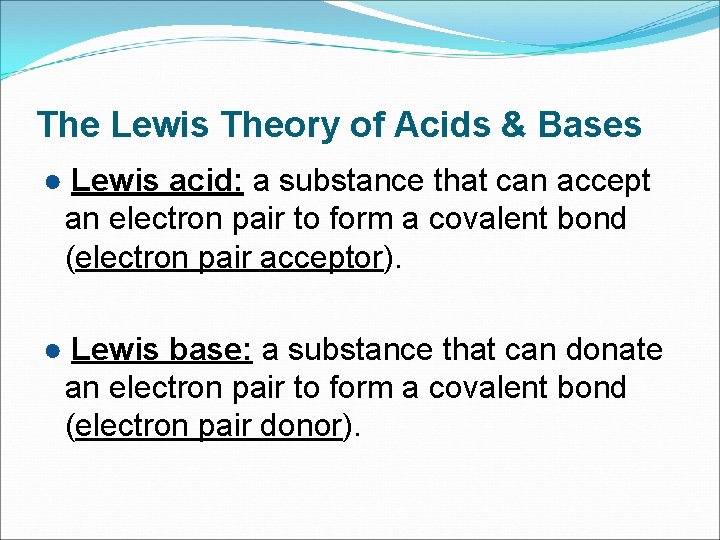
The Lewis Theory of Acids & Bases ● Lewis acid: a substance that can accept an electron pair to form a covalent bond (electron pair acceptor). ● Lewis base: a substance that can donate an electron pair to form a covalent bond (electron pair donor).
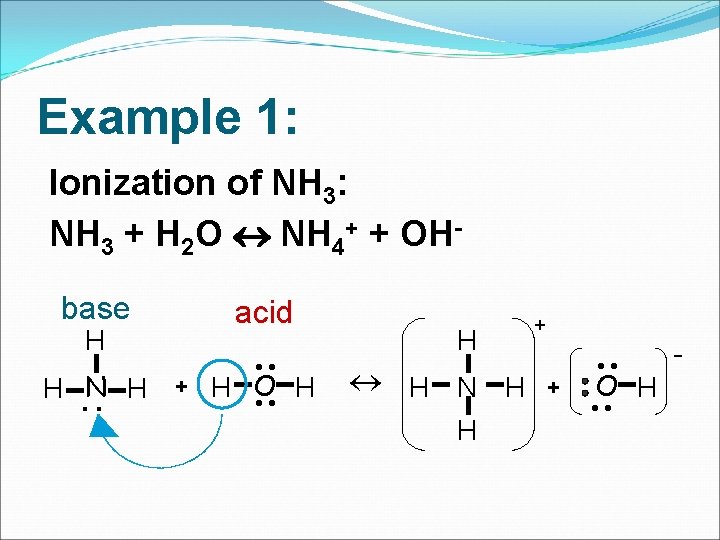
Example 1: Ionization of NH 3: NH 3 + H 2 O NH 4+ + OHbase H H N H + H . . acid . . O. . H H + H N H + H . . O - H
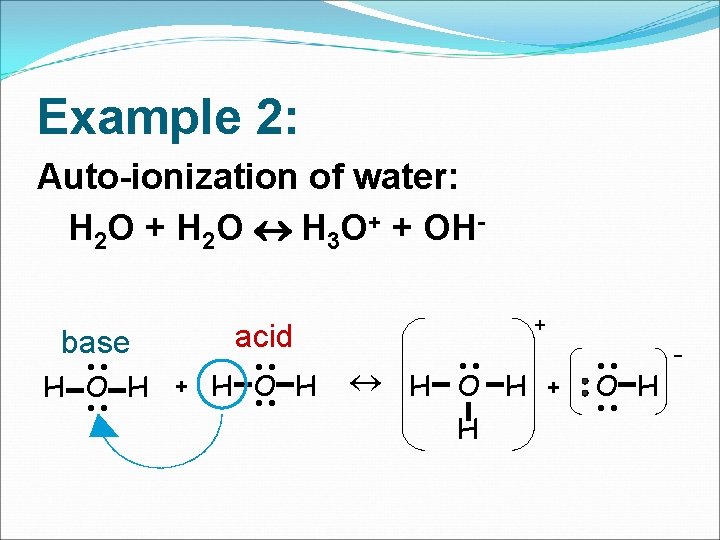
Example 2: Auto-ionization of water: H 2 O + H 2 O H 3 O+ + OH- . . O. . base H H + H . . O. . acid H . . + H O H + H . . O. . H -
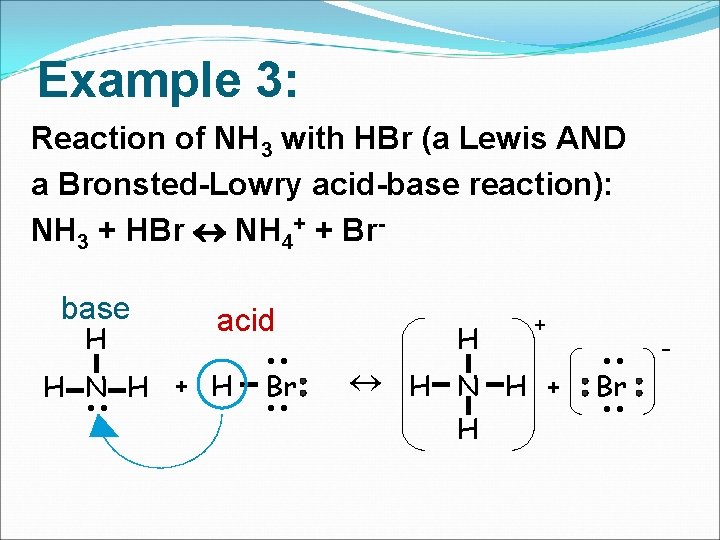
Example 3: Reaction of NH 3 with HBr (a Lewis AND a Bronsted-Lowry acid-base reaction): NH 3 + HBr NH 4+ + Brbase H . . acid H N H + H . . Br. . H + H N H + H . . Br. . -
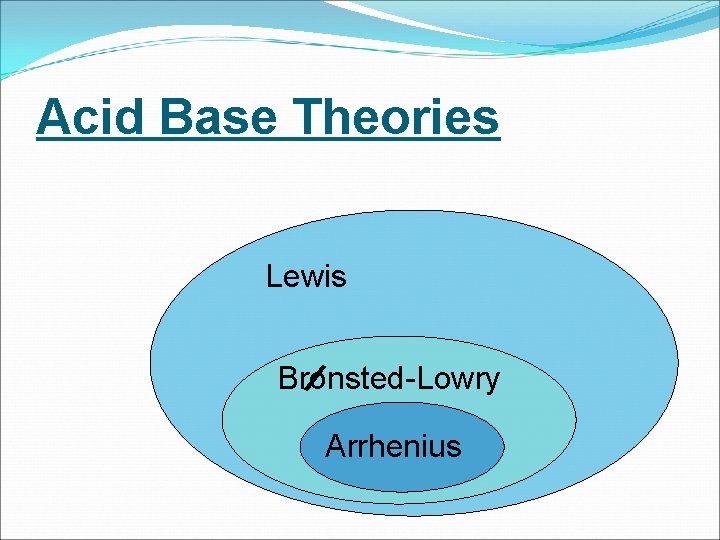
Acid Base Theories Lewis Bronsted-Lowry Arrhenius
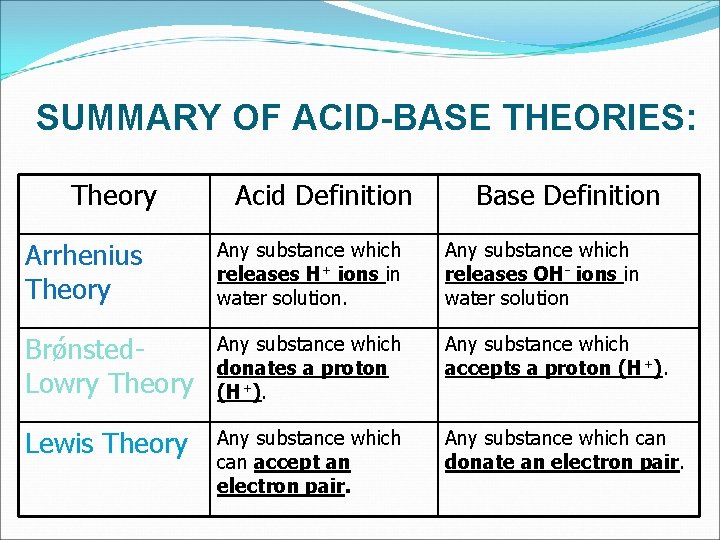
SUMMARY OF ACID-BASE THEORIES: Theory Acid Definition Base Definition Arrhenius Theory Any substance which releases H+ ions in water solution. Any substance which releases OH- ions in water solution Brǿnsted. Lowry Theory Any substance which donates a proton (H+). Any substance which accepts a proton (H+). Lewis Theory Any substance which can accept an electron pair. Any substance which can donate an electron pair.
- Slides: 24