
Notes 16 1 B static electricity Static electricity
Notes 16. 1 B static electricity
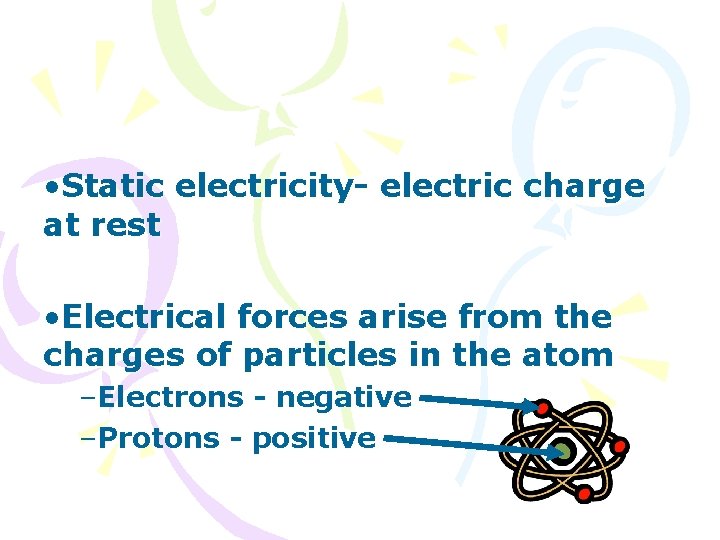
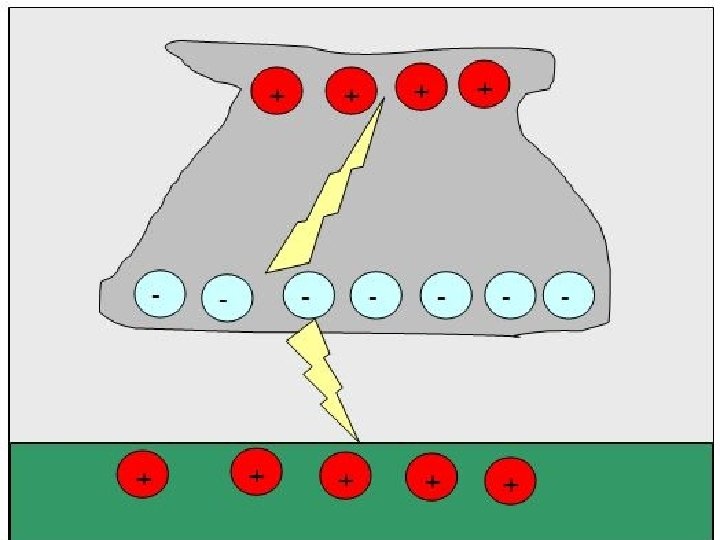
• Static electricity- electric charge at rest • Electrical forces arise from the charges of particles in the atom –Electrons - negative –Protons - positive
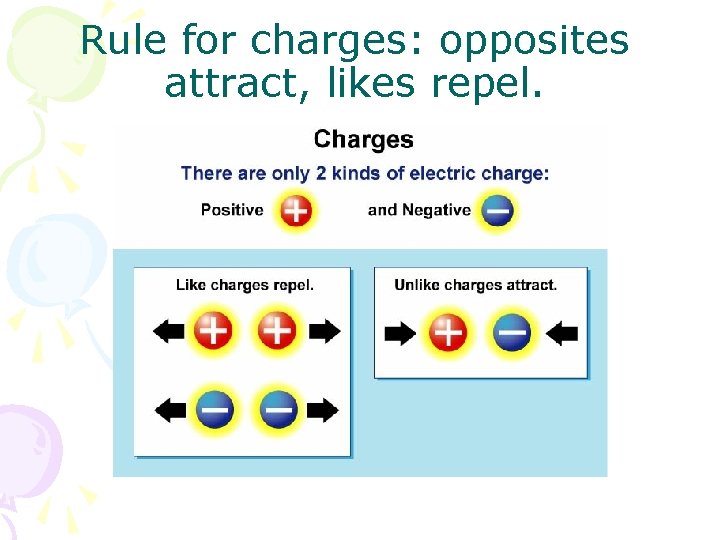
Rule for charges: opposites attract, likes repel.
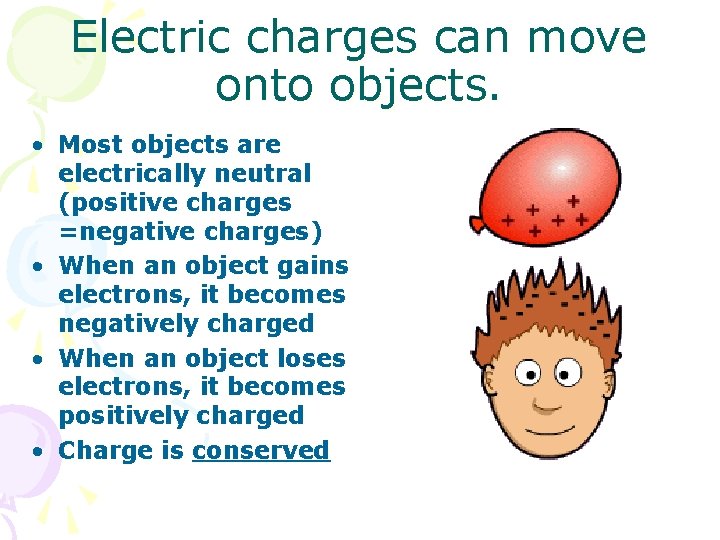
Electric charges can move onto objects. • Most objects are electrically neutral (positive charges =negative charges) • When an object gains electrons, it becomes negatively charged • When an object loses electrons, it becomes positively charged • Charge is conserved
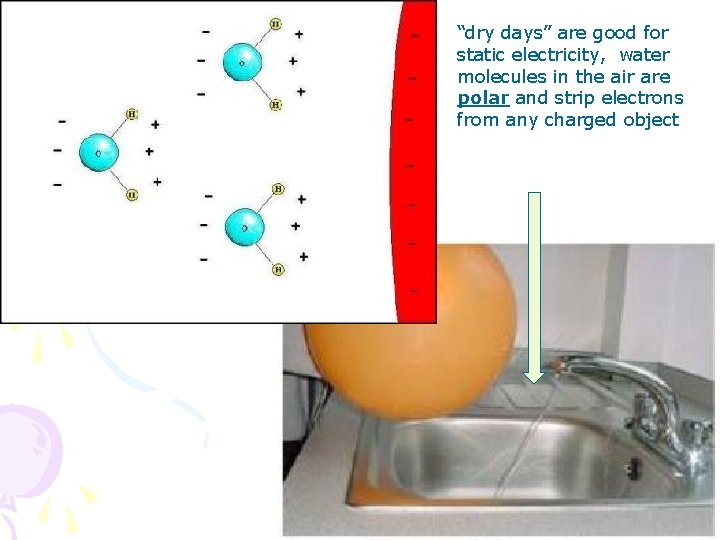
“dry days” are good for static electricity, water molecules in the air are polar and strip electrons from any charged object
Positive items in the series are at the top, and negative items are at the bottom: • Human hands (usually too moist, though) Very positive • Rabbit fur • Glass • Human hair • Nylon • Wool • Fur • Silk • Aluminum • Paper • Cotton • Steel Neutral • Wood • Hard rubber • Nickel, Copper Brass, Silver Gold, Platinum • Polyester • Styrene (Styrofoam) • Saran Wrap polyurethane plastic, Polyethylene (like Scotch Tape) • Polypropylene Vinyl (PVC) • Silicon • Teflon Very negative
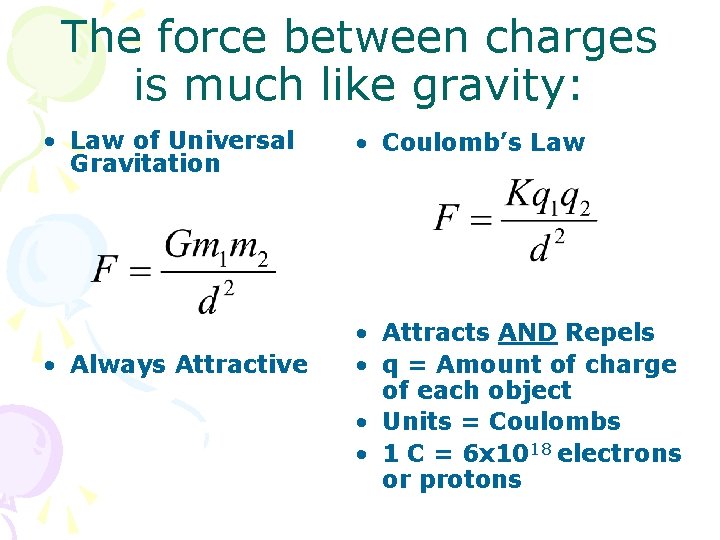
The force between charges is much like gravity: • Law of Universal Gravitation • Always Attractive • Coulomb’s Law • Attracts AND Repels • q = Amount of charge of each object • Units = Coulombs • 1 C = 6 x 10¹⁸ electrons or protons
3 ways an object can be charged: 1 -Friction 2 -Contact 3 -Induction • Conductors vs. Insulators
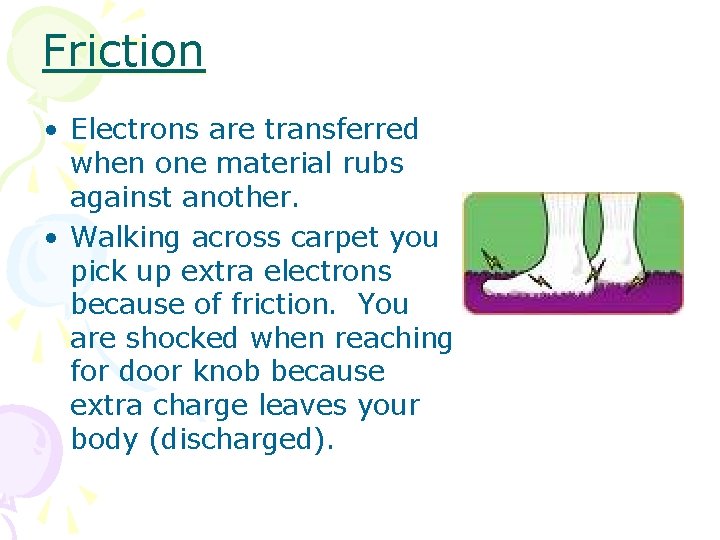
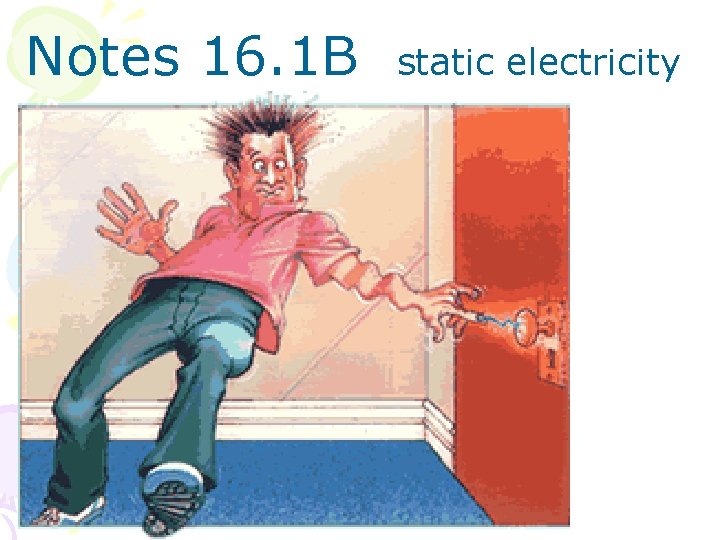
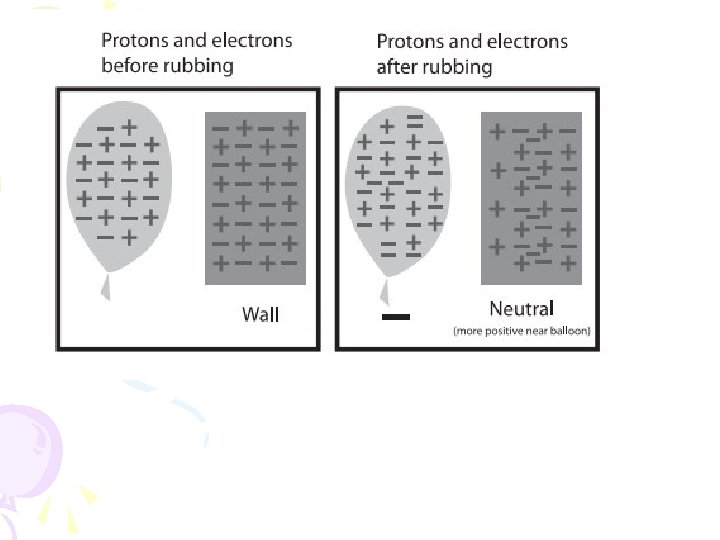
Friction • Electrons are transferred when one material rubs against another. • Walking across carpet you pick up extra electrons because of friction. You are shocked when reaching for door knob because extra charge leaves your body (discharged).
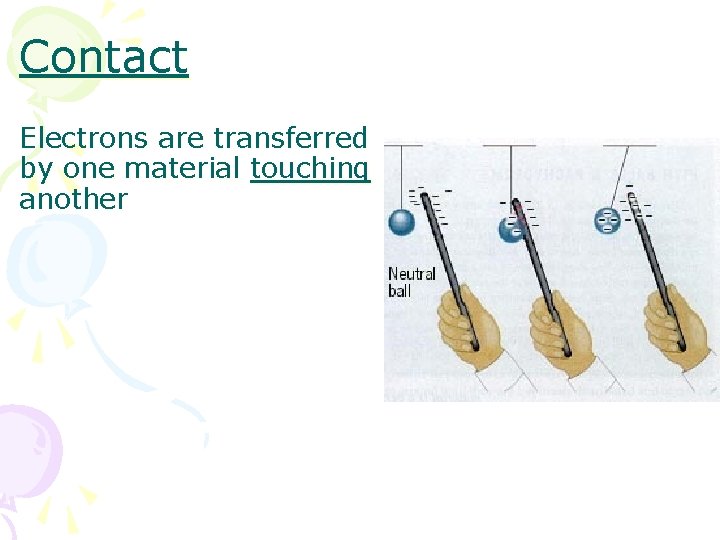
Contact Electrons are transferred by one material touching another
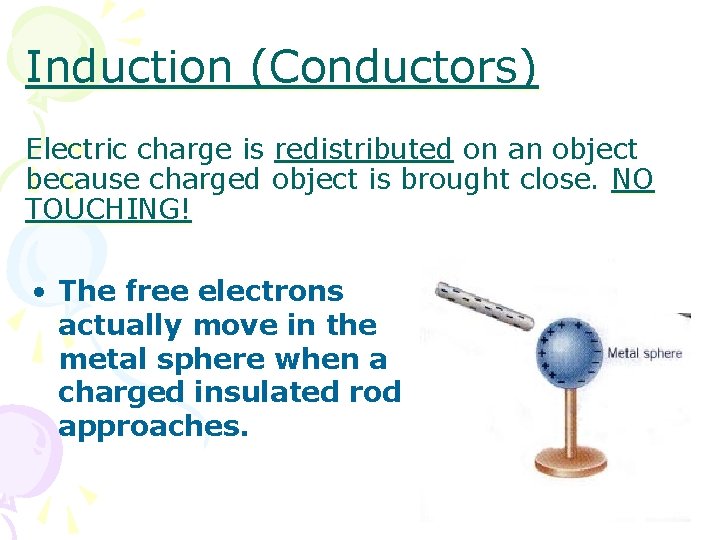
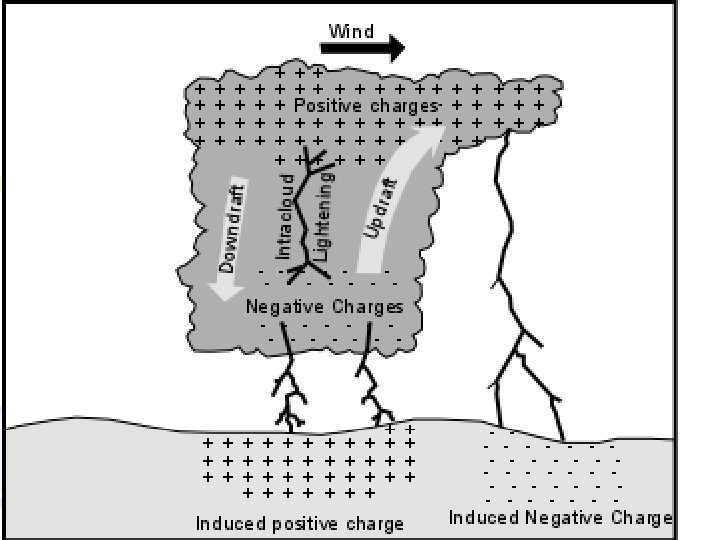
Induction (Conductors) Electric charge is redistributed on an object because charged object is brought close. NO TOUCHING! • The free electrons actually move in the metal sphere when a charged insulated rod approaches.
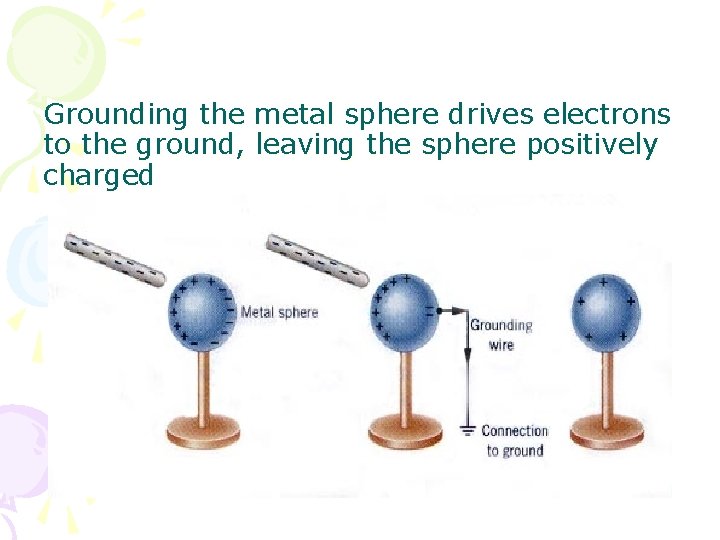
Grounding the metal sphere drives electrons to the ground, leaving the sphere positively charged
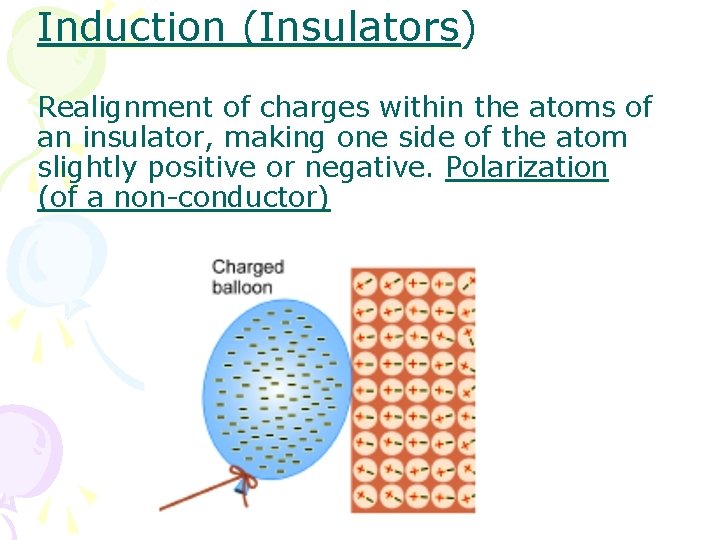
Induction (Insulators) Realignment of charges within the atoms of an insulator, making one side of the atom slightly positive or negative. Polarization (of a non-conductor)
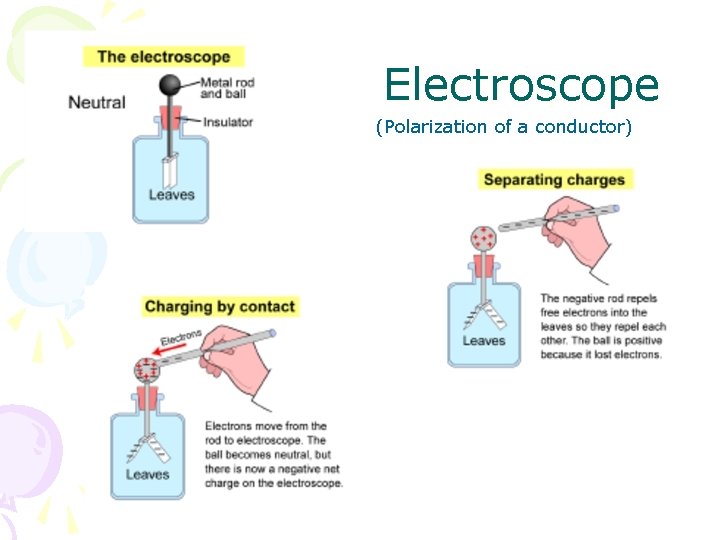
Electroscope (Polarization of a conductor)
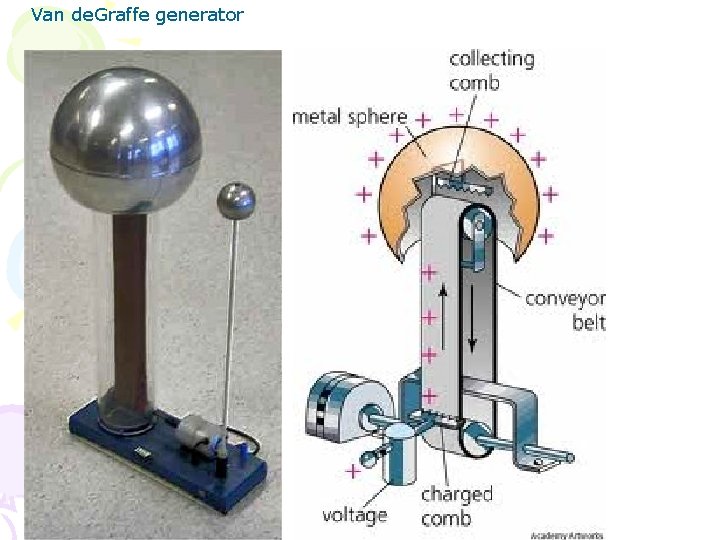
Van de. Graffe generator
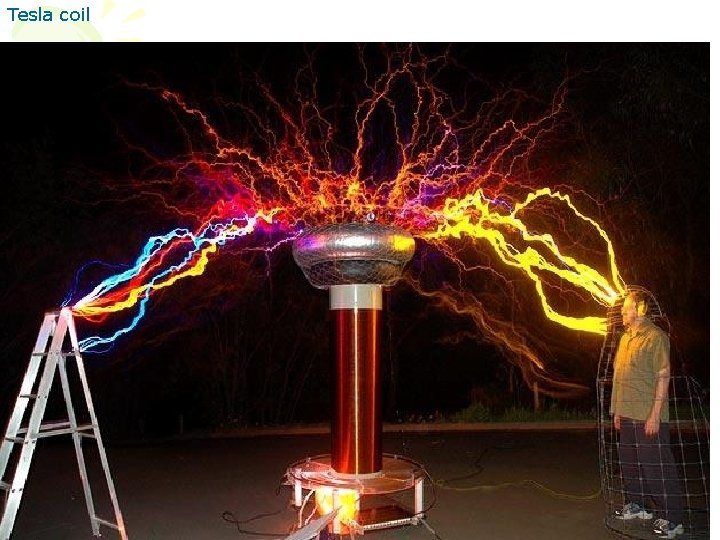
Tesla coil
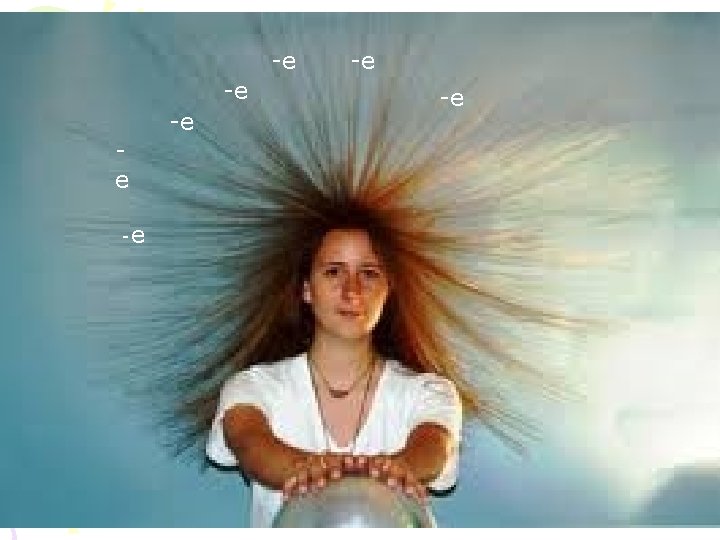
-e -e -e



- Slides: 24