
Notes 12 Forms of Energy Part 1 States
- Slides: 33
Notes 12 – Forms of Energy Part 1
States of Energy exists in two basic states: 1. potential 2. kinetic Potential energy is stored energy Kinetic energy is motion energy Potential and kinetic are NOT OPPOSITES
What is Potential Energy? Stored energy that must be released Energy that could be used to do work but isn’t yet It is energy an object has because of: – its position: book held above your head – its shape: stretched rubber band – Or its condition: charged battery
What is Kinetic Energy? The energy an object has because of its motion It depends on 2 things: 1. Mass 2. Velocity An aircraft carrier moving 30 mph has tremendous kinetic energy A water molecule moving 10 mph has little kinetic energy
Potential or Kinetic? A A A A rolling ball bow with an arrow ready to fire pile of fire wood falling avalanche tank of gasoline student walking to class flying bird chicken patty
Potential energy comes in many forms: 1. 2. 3. 4. Gravitational Potential Energy Elastic Potential Energy Chemical Energy Nuclear Energy
What is gravitational potential energy (GPE)? Gravitational Potential Energy energy stored in an object because of its potential to fall and do work as it falls The heavier the object and the further it can fall, the more potential it has to do work GPE = weight x height
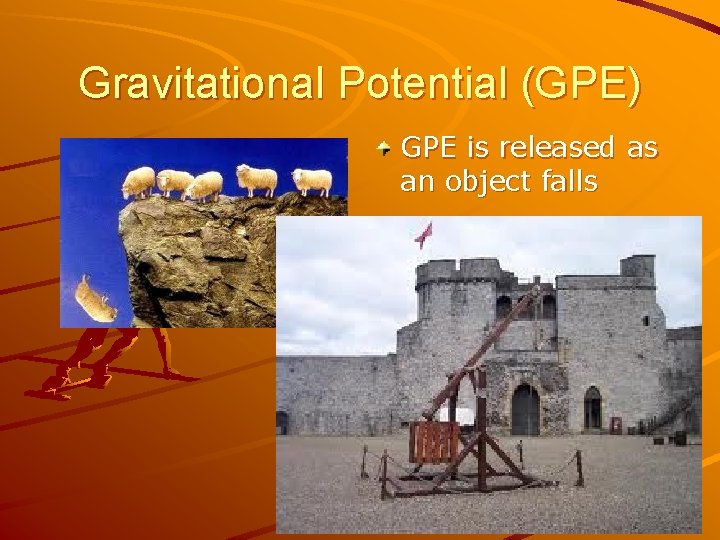
Gravitational Potential (GPE) GPE is released as an object falls
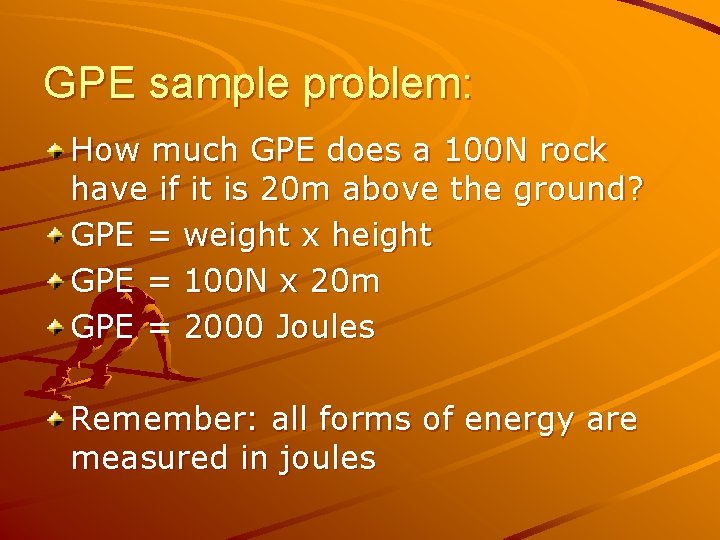
GPE sample problem: How much GPE does a 100 N rock have if it is 20 m above the ground? GPE = weight x height GPE = 100 N x 20 m GPE = 2000 Joules Remember: all forms of energy are measured in joules
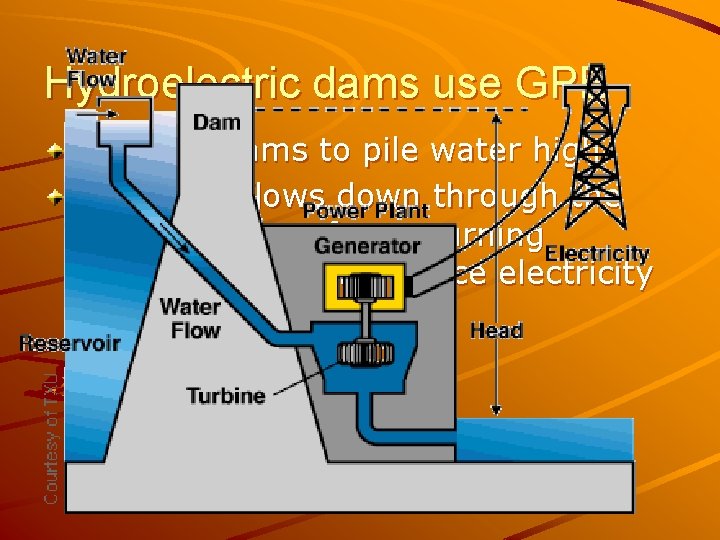
Hydroelectric dams use GPE We build dams to pile water high The water flows down through the dam with great force, turning generators which produce electricity
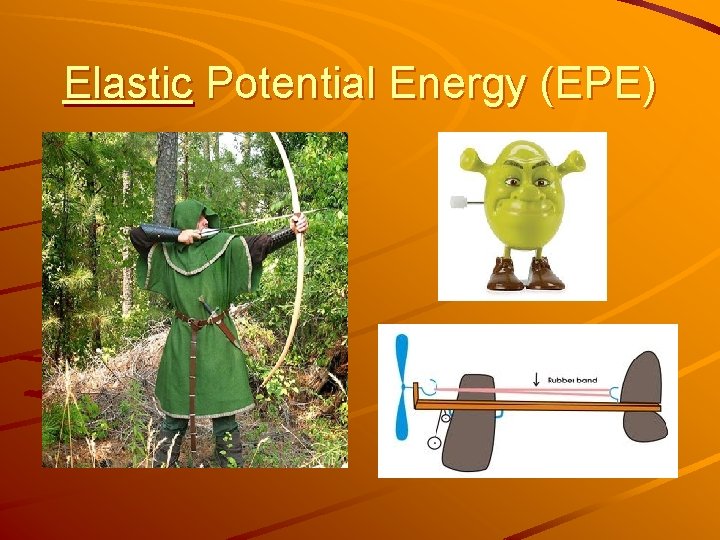
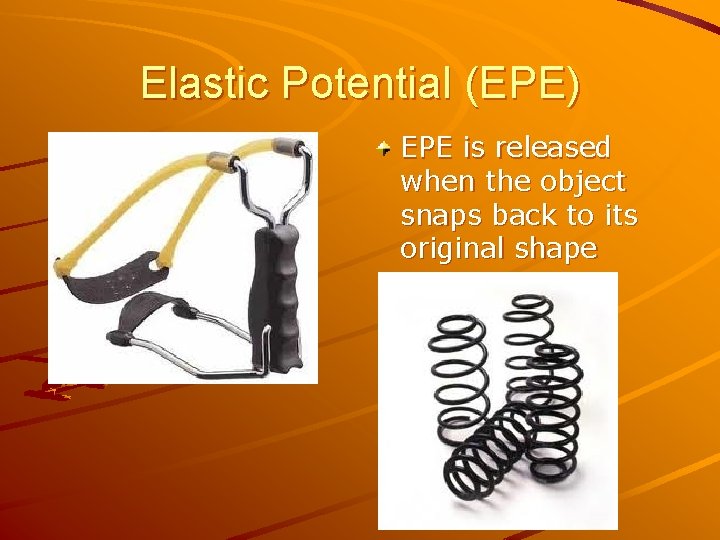
What is Elastic Potential Energy (EPE)? Elastic Potential Energy (EPE) energy stored in an object that is stretched or compressed EPE can be stored in springs, elastic bands, bouncy balls and bows. Wind-up toys and old watches use springs that store EPE
Elastic Potential Energy (EPE)
Elastic Potential (EPE) EPE is released when the object snaps back to its original shape
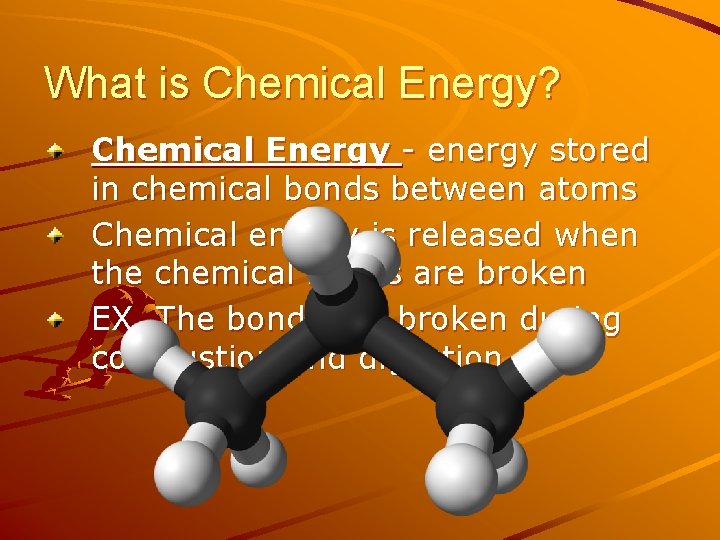
What is Chemical Energy? Chemical Energy - energy stored in chemical bonds between atoms Chemical energy is released when the chemical bonds are broken EX. The bonds are broken during combustion and digestion
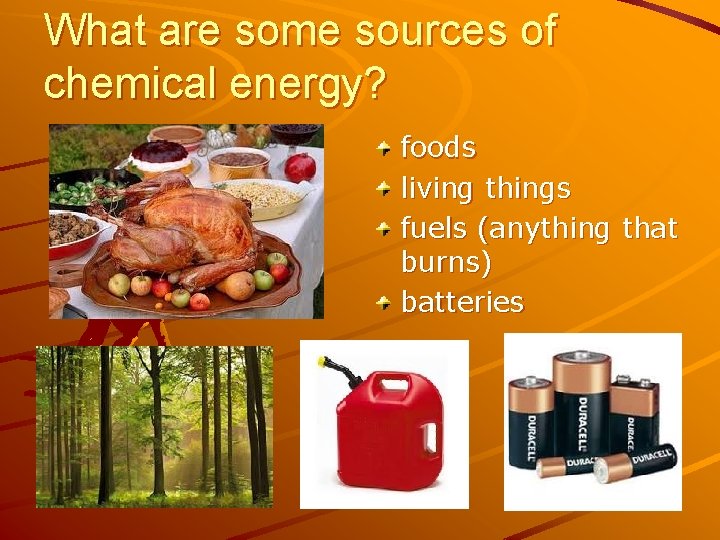
What are some sources of chemical energy? foods living things fuels (anything that burns) batteries
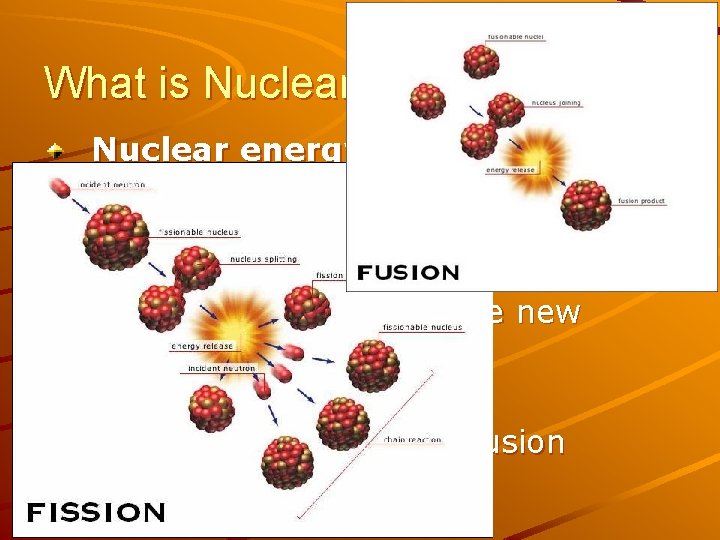
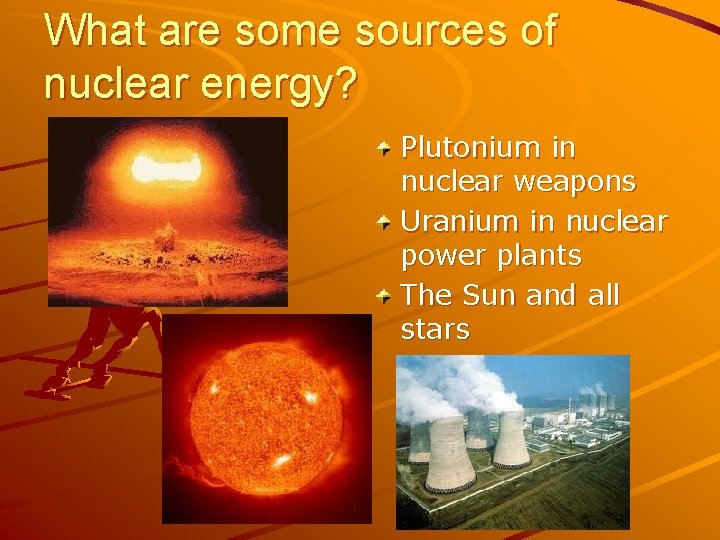
What is Nuclear Energy? Nuclear energy – energy stored in the nucleus of an atom Nuclear energy is released when a nucleus is split or when nuclei join together and become one new nucleus. Splitting is called fission Becoming one is called fusion
What are some sources of nuclear energy? Plutonium in nuclear weapons Uranium in nuclear power plants The Sun and all stars
Notes 13 – Forms of Energy Part 2
Kinetic energy comes in many forms: 1. Mechanical Energy 2. Heat Energy 3. Light Energy 4. Sound Energy 5. Electricity
What is mechanical energy? Mechanical Energy– motion energy of objects and substances Moving machine parts that do work have mechanical energy Moving air and water (wind and waves and currents) have mechanical energy
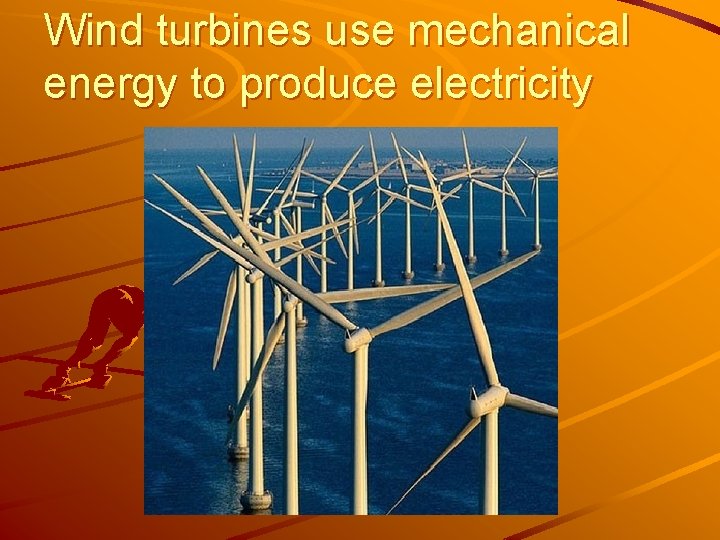
Wind turbines use mechanical energy to produce electricity
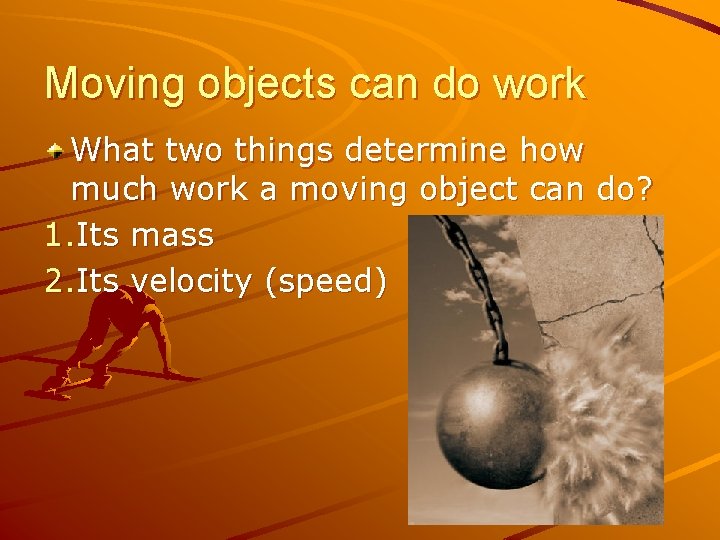
Moving objects can do work What two things determine how much work a moving object can do? 1. Its mass 2. Its velocity (speed)
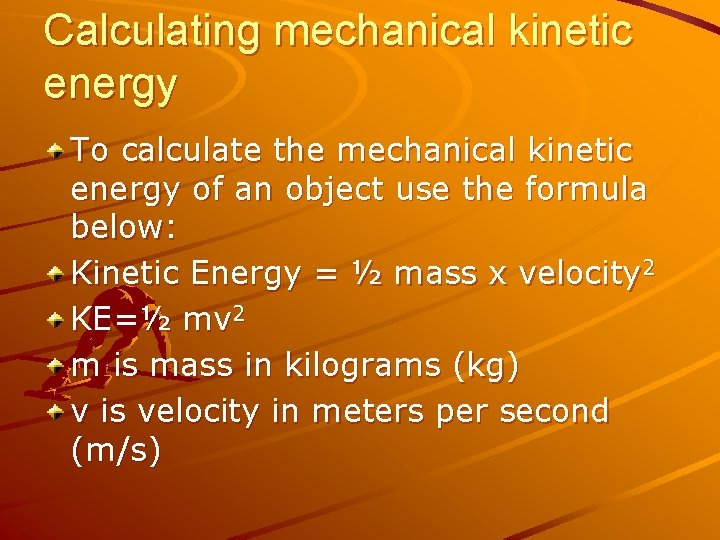
Calculating mechanical kinetic energy To calculate the mechanical kinetic energy of an object use the formula below: Kinetic Energy = ½ mass x velocity 2 KE=½ mv 2 m is mass in kilograms (kg) v is velocity in meters per second (m/s)
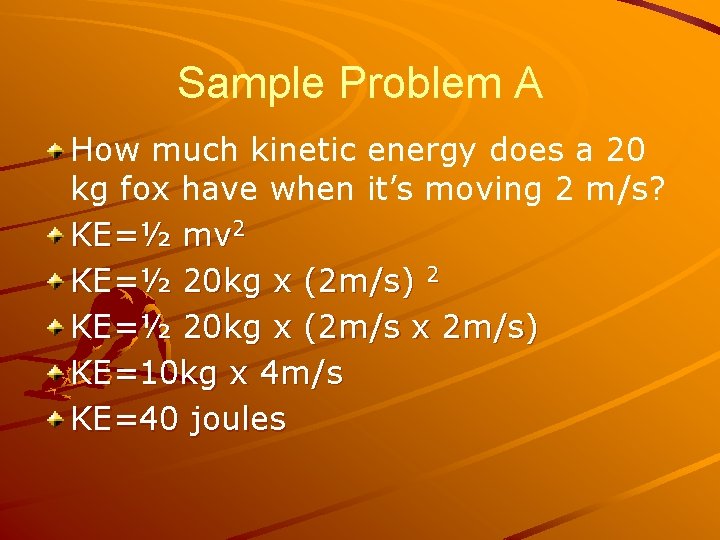
Sample Problem A How much kinetic energy does a 20 kg fox have when it’s moving 2 m/s? KE=½ mv 2 KE=½ 20 kg x (2 m/s) 2 KE=½ 20 kg x (2 m/s x 2 m/s) KE=10 kg x 4 m/s KE=40 joules
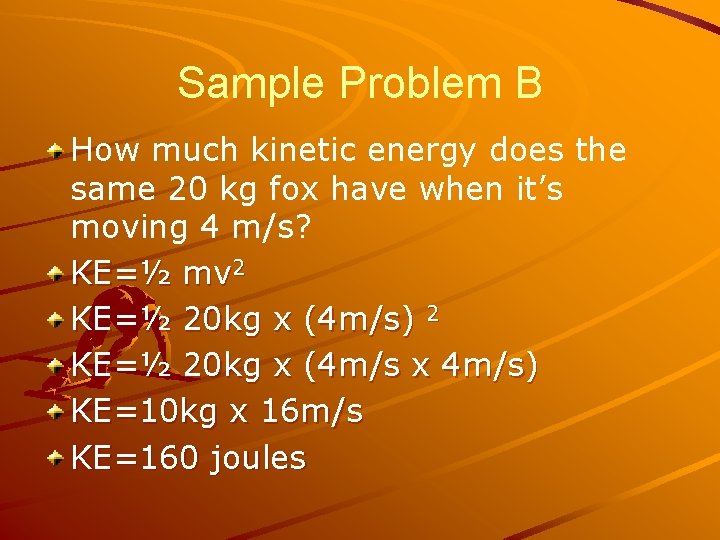
Sample Problem B How much kinetic energy does the same 20 kg fox have when it’s moving 4 m/s? KE=½ mv 2 KE=½ 20 kg x (4 m/s) 2 KE=½ 20 kg x (4 m/s x 4 m/s) KE=10 kg x 16 m/s KE=160 joules
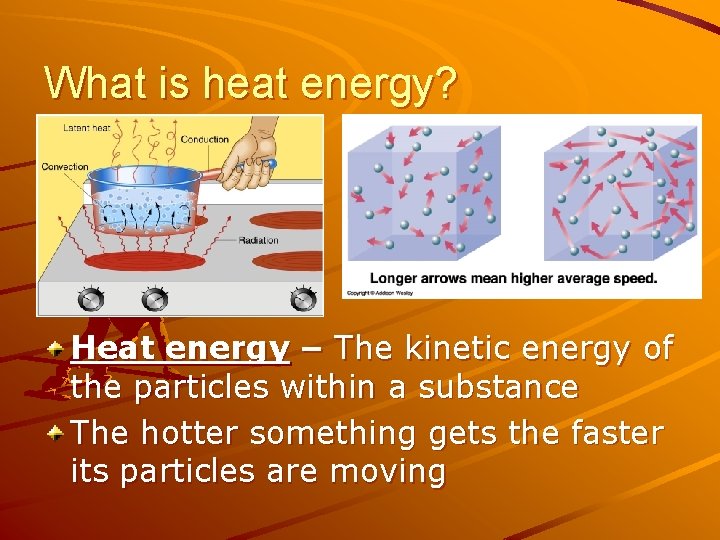
What is heat energy? Heat energy – The kinetic energy of the particles within a substance The hotter something gets the faster its particles are moving
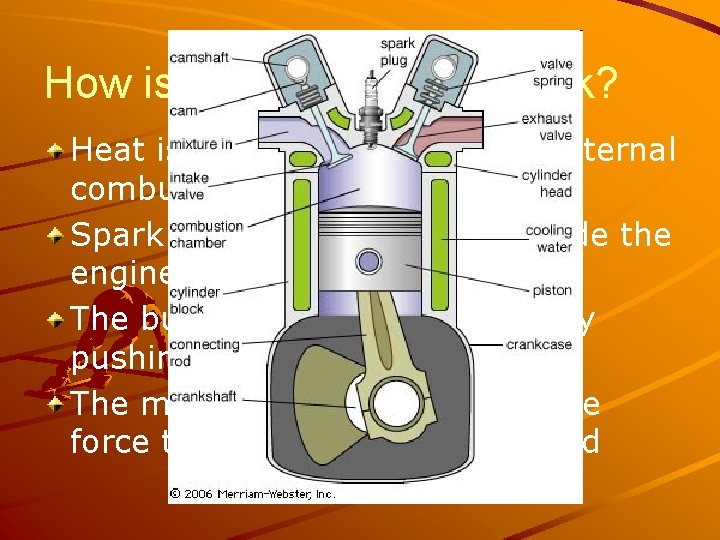
How is heat used to do work? Heat is used to do work in an internal combustion engine. Spark plugs ignite gasoline inside the engine. The burning gas expands rapidly pushing on the pistons The moving pistons generate the force that moves the car forward
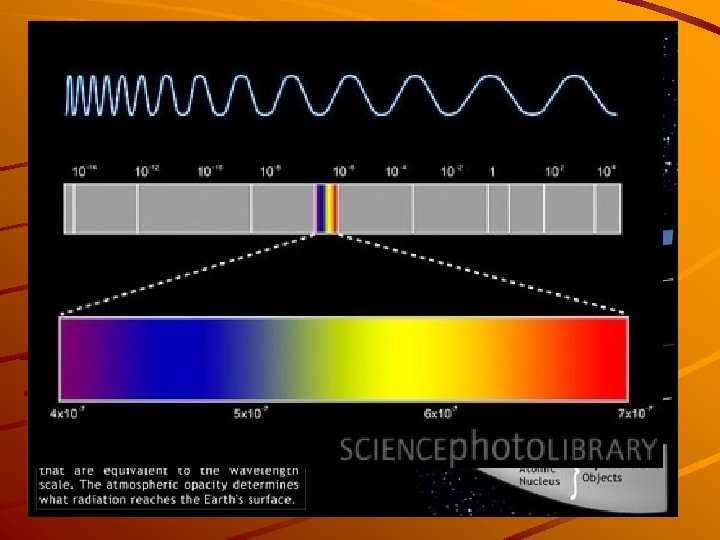
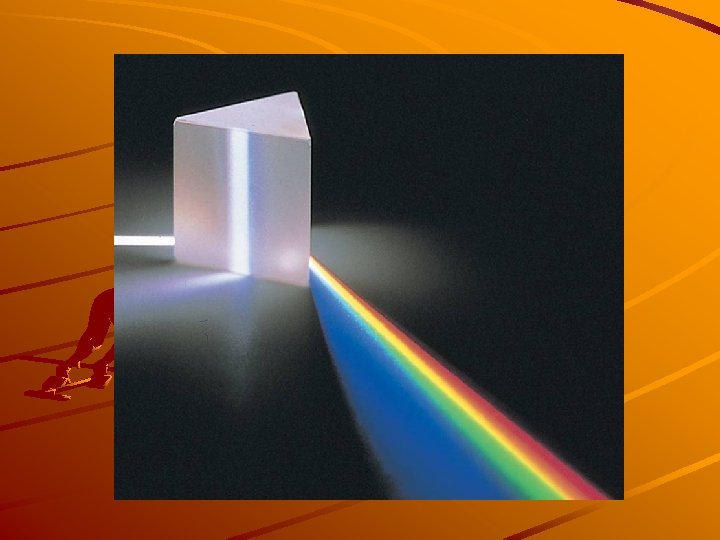
What is light energy? Light energy – the motion of waves of electromagnetic energy Light travels 186, 000 miles per second. That’s 7 ½ times around Earth in a second. It takes 8 minutes and 20 seconds to reach earth from the sun.
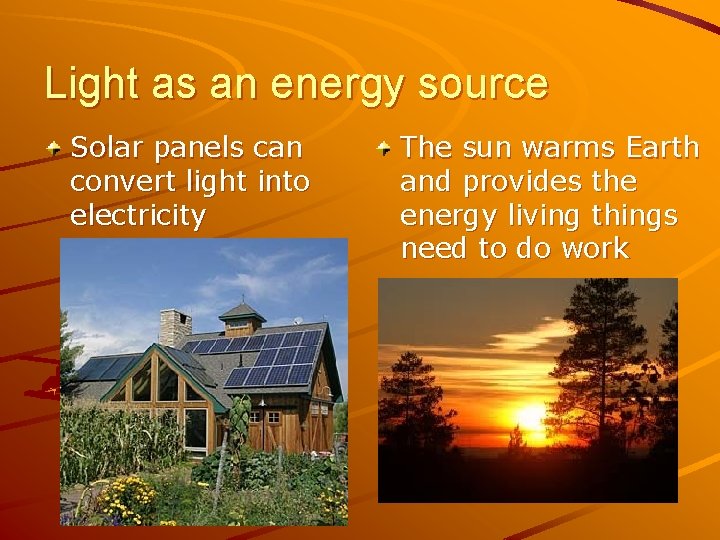
Light as an energy source Solar panels can convert light into electricity The sun warms Earth and provides the energy living things need to do work
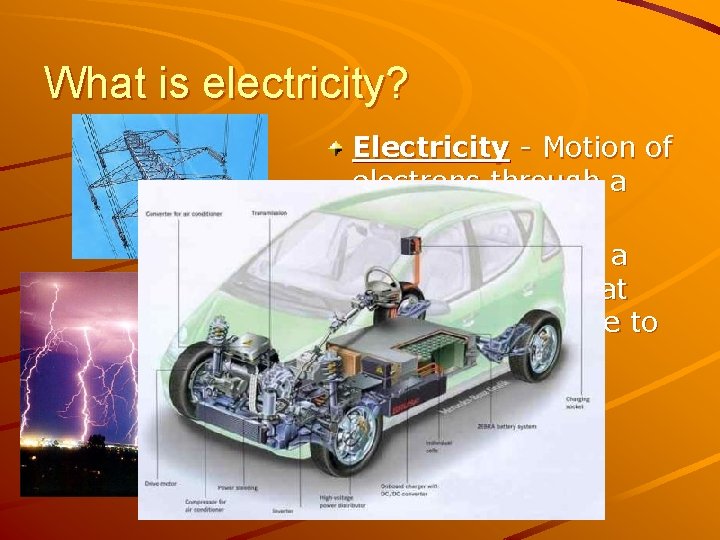
What is electricity? Electricity - Motion of electrons through a conductor Electricity creates a magnetic force that electric motors use to do work.
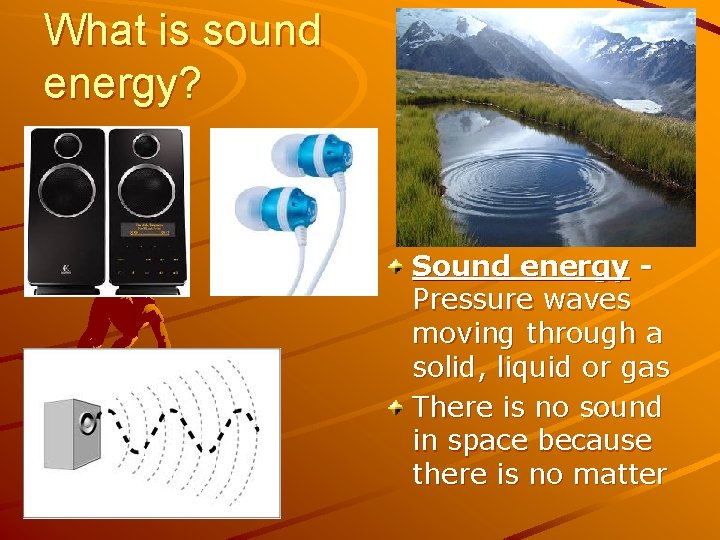
What is sound energy? Sound energy Pressure waves moving through a solid, liquid or gas There is no sound in space because there is no matter
Law of Conservation of Energy cannot be created nor can it be destroyed The total amount of energy in the universe remains constant Energy can be transferred - move from place to place Energy can be transformed - change from one form to another