
Notes 1 2 What is Physical Science Physical
- Slides: 9
Notes: 1. 2 – What is Physical Science?
Physical Science is: • A way to understand, deduce and apply the natural laws of the universe.
• A way to describe the relationship between matter and energy.
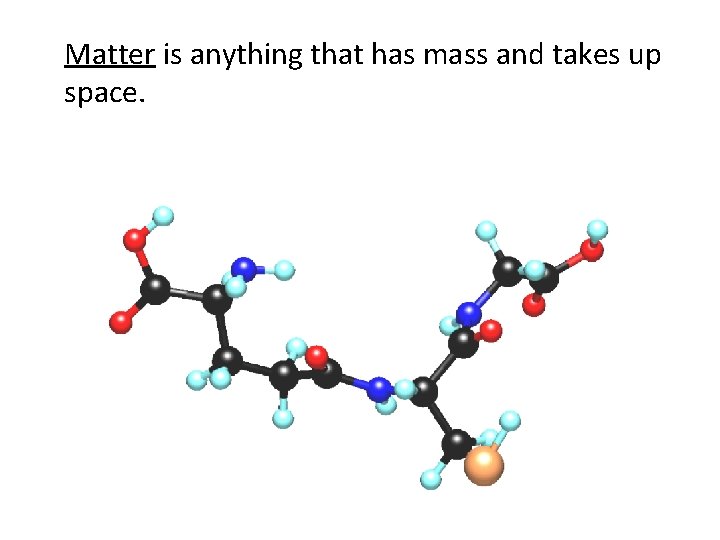
Matter is anything that has mass and takes up space.
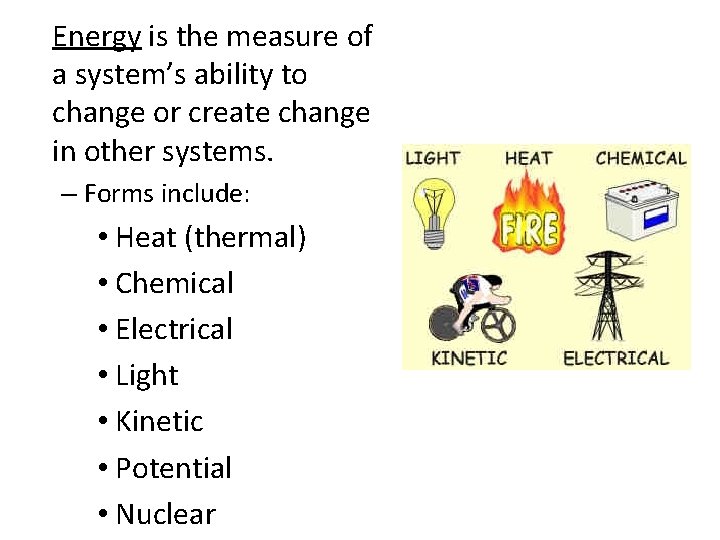
Energy is the measure of a system’s ability to change or create change in other systems. – Forms include: • Heat (thermal) • Chemical • Electrical • Light • Kinetic • Potential • Nuclear
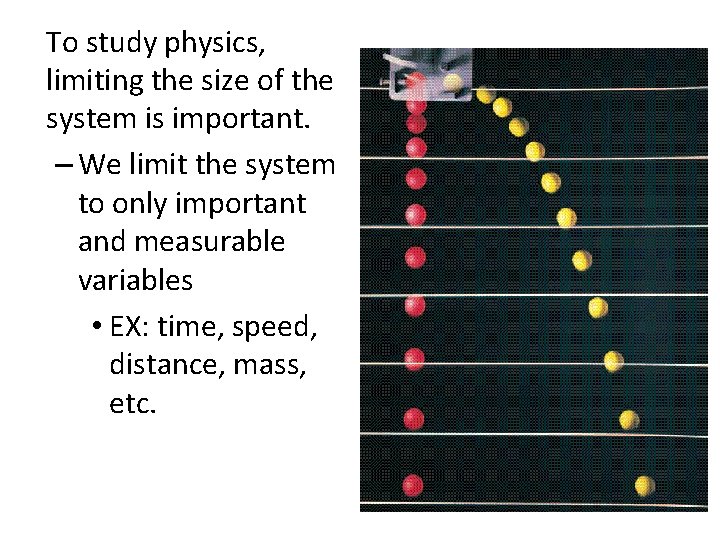
To study physics, limiting the size of the system is important. – We limit the system to only important and measurable variables • EX: time, speed, distance, mass, etc.
When investigating a system, physicists use the Scientific Method. 1. Pose a question 2. Make a hypothesis (theory or guess) Must be testable (can be proved wrong) 3. Conduct experiment 4. Collect and analyze data 5. Refine hypothesis
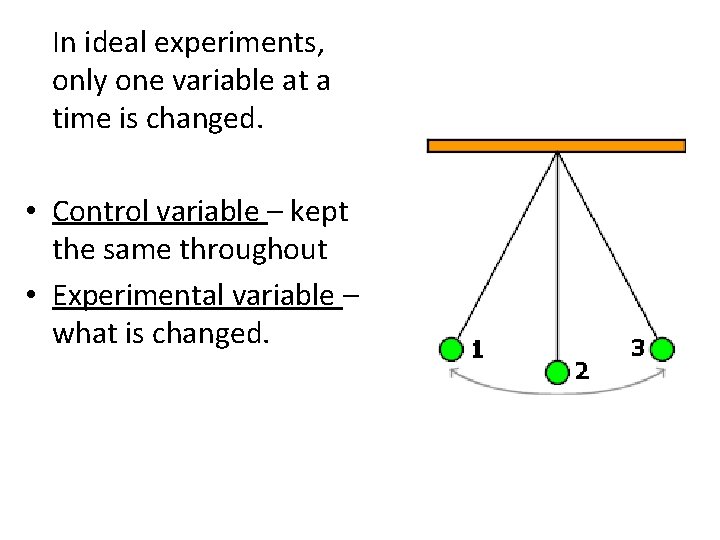
In ideal experiments, only one variable at a time is changed. • Control variable – kept the same throughout • Experimental variable – what is changed.
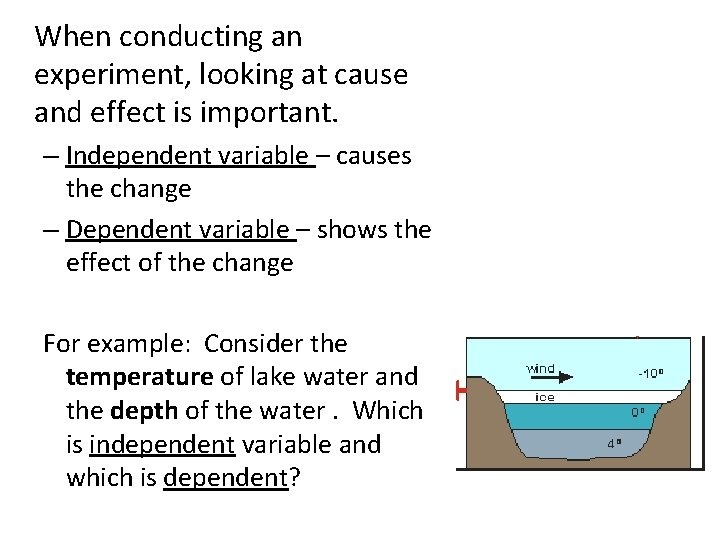
When conducting an experiment, looking at cause and effect is important. – Independent variable – causes the change – Dependent variable – shows the effect of the change For example: Consider the temperature of lake water and the depth of the water. Which is independent variable and which is dependent?