
Note to teachers The emphasis of this revision
- Slides: 24
Note to teachers • The emphasis of this revision session is on writing case study answers for the 3 global hazards case studies. • It can be used in conjunction with the handout – 01. 1 Global Hazards revision sheet. • I will get students to write or draft their own case study answers, then evaluate them by using the model answers provided. They can ‘green pen’ their answers with areas for improvement. • I have not covered all the other details needed for climatic & tectonic hazards. Students can revise these from their green revision books. • Given the short time available I will try to complete this in under one double lesson, to allow some time for a brief revision of ‘changing climates’. If not, this could be a homework focus.
Geography GCSE Revision 2018: Learning outcomes To clarify the structure of the exam and the exam technique needed for success. To outline the different case studies needed for the Global Hazards and Changing Climate units. To revise the key terminology for the above units.
Revision: Basic exam technique. You may do all the revision possible, learn everything thoroughly and memorise endless details and still mess up in the exam by making the following mistakes – 1) Misreading the question. There is no excuse. Read it carefully. Think! Read it again. Answer. 2) Not answering what the question asks. Irrelevant details, however precise, gains no credit. Focus on the question asked. 3) Miss-timing your answers and running out of time. Watch the clock. Adjust your answers to fit the time (and space) available. You must answer all the questions. For example – not answering two 4 mark questions will cost you 8 marks That is the same as not answering a case study question and it will affect your grade.
The ‘command words’ The command words are always printed in bold. They are important. Describe: means ‘say what you see’. For a map - describe patterns and distribution. Name places, countries, continents. Use geographical terms – north, west, etc. Refer to lines of latitude if appropriate (equator, tropics) For a graph - quote data. Describe trends. Rising / falling/ fluctuating. Mention any anomalies. Describe - means you do not have to explain. Don’t give reasons. Explain: Give reasons. Explain the pattern. Develop your answer. You should use connectives for this. If it is worth more than 2 marks then give more than one reason. Compare: Use comparative language. eg higher than, more than, bigger than, twice the figure for , in contrast; whereas. . Refer to similarities and differences. (unless the question specifically asks you to focus on just one or the other). Useful connectives This means that…. Therefore … As a result …. Consequently….
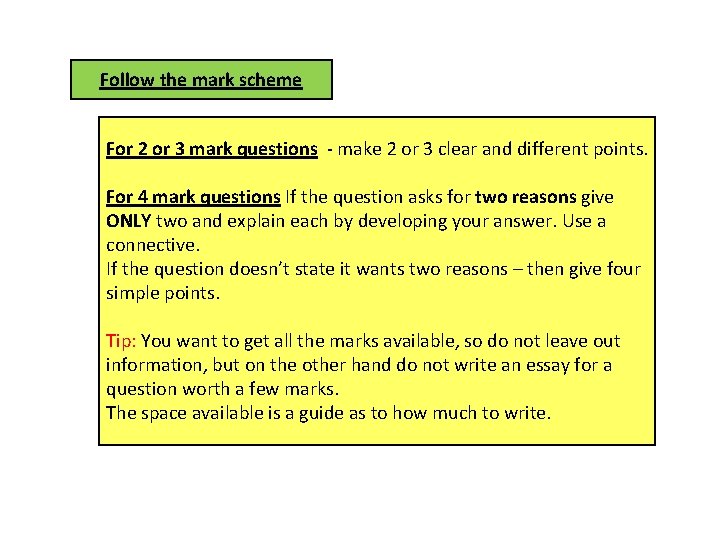
Follow the mark scheme For 2 or 3 mark questions - make 2 or 3 clear and different points. For 4 mark questions If the question asks for two reasons give ONLY two and explain each by developing your answer. Use a connective. If the question doesn’t state it wants two reasons – then give four simple points. Tip: You want to get all the marks available, so do not leave out information, but on the other hand do not write an essay for a question worth a few marks. The space available is a guide as to how much to write.
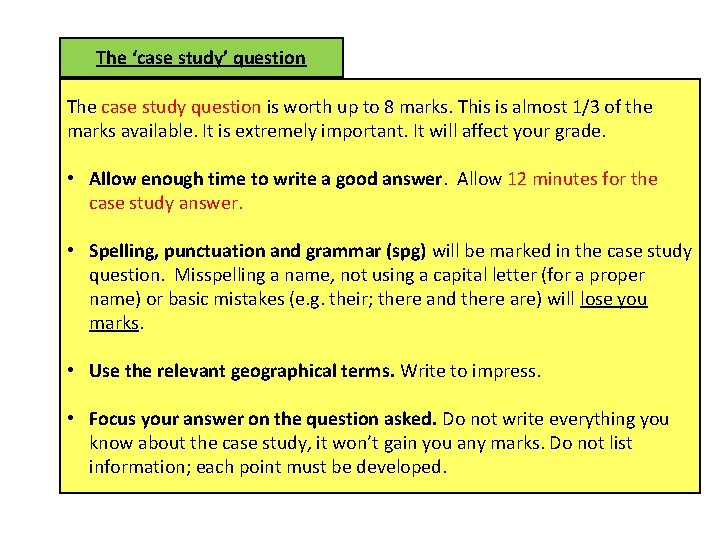
The ‘case study’ question The case study question is worth up to 8 marks. This is almost 1/3 of the marks available. It is extremely important. It will affect your grade. • Allow enough time to write a good answer. Allow 12 minutes for the case study answer. • Spelling, punctuation and grammar (spg) will be marked in the case study question. Misspelling a name, not using a capital letter (for a proper name) or basic mistakes (e. g. their; there and there are) will lose you marks. • Use the relevant geographical terms. Write to impress. • Focus your answer on the question asked. Do not write everything you know about the case study, it won’t gain you any marks. Do not list information; each point must be developed.
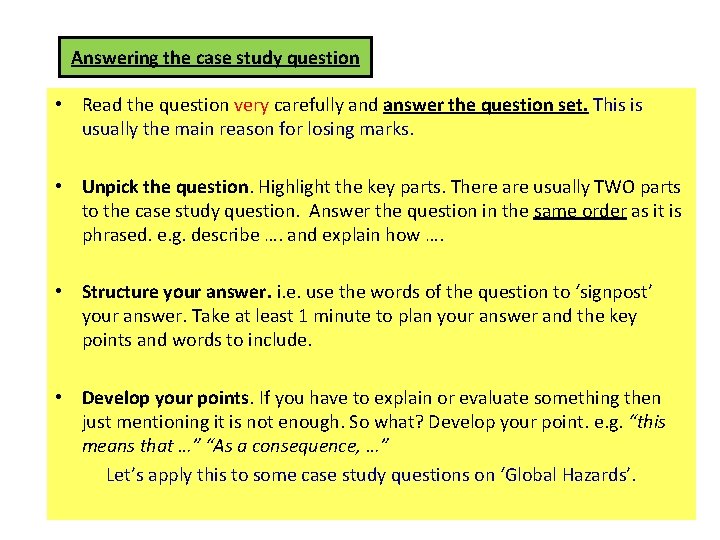
Answering the case study question • Read the question very carefully and answer the question set. This is usually the main reason for losing marks. • Unpick the question. Highlight the key parts. There are usually TWO parts to the case study question. Answer the question in the same order as it is phrased. e. g. describe …. and explain how …. • Structure your answer. i. e. use the words of the question to ‘signpost’ your answer. Take at least 1 minute to plan your answer and the key points and words to include. • Develop your points. If you have to explain or evaluate something then just mentioning it is not enough. So what? Develop your point. e. g. “this means that …” “As a consequence, …” Let’s apply this to some case study questions on ‘Global Hazards’.
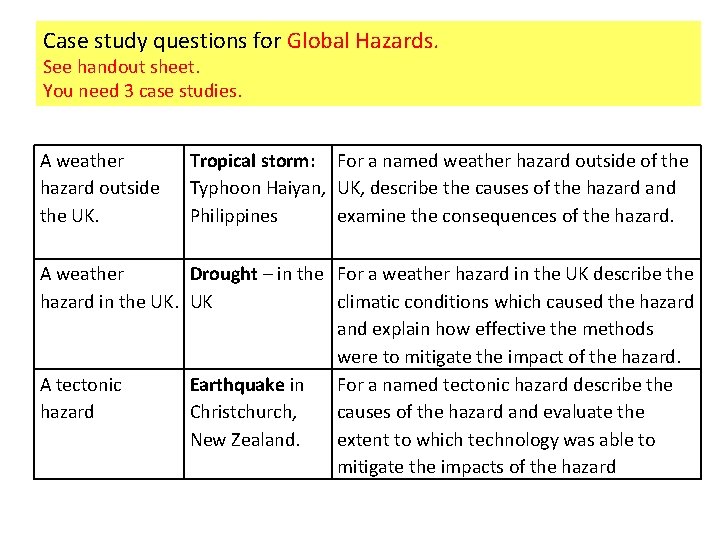
Case study questions for Global Hazards. See handout sheet. You need 3 case studies. A weather hazard outside the UK. Tropical storm: For a named weather hazard outside of the Typhoon Haiyan, UK, describe the causes of the hazard and Philippines examine the consequences of the hazard. A weather Drought – in the For a weather hazard in the UK describe the hazard in the UK. UK climatic conditions which caused the hazard and explain how effective the methods were to mitigate the impact of the hazard. A tectonic Earthquake in For a named tectonic hazard describe the hazard Christchurch, causes of the hazard and evaluate the New Zealand. extent to which technology was able to mitigate the impacts of the hazard
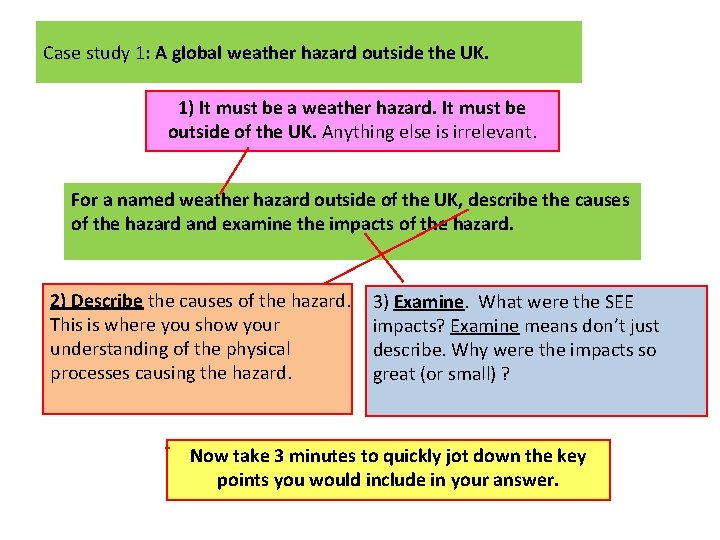
Case study 1: A global weather hazard outside the UK. 1) It must be a weather hazard. It must be outside of the UK. Anything else is irrelevant. For a named weather hazard outside of the UK, describe the causes of the hazard and examine the impacts of the hazard. 2) Describe the causes of the hazard. This is where you show your understanding of the physical processes causing the hazard. 3) Examine. What were the SEE impacts? Examine means don’t just describe. Why were the impacts so great (or small) ? Now take 3 minutes to quickly jot down the key points you would include in your answer.
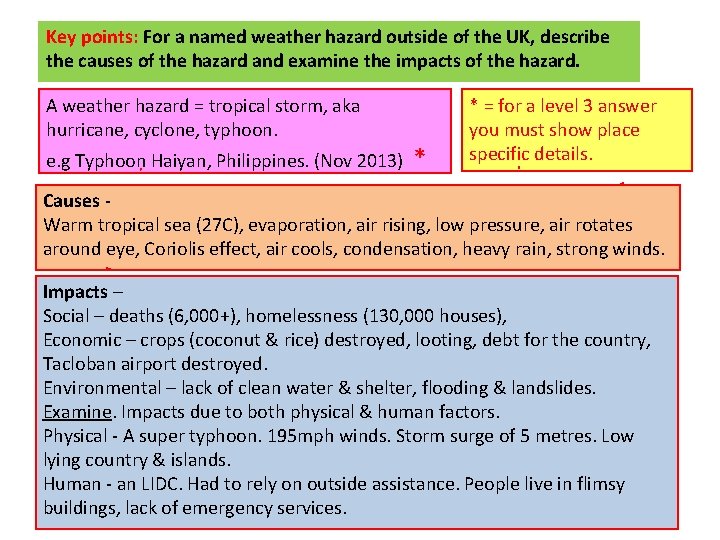
Key points: For a named weather hazard outside of the UK, describe the causes of the hazard and examine the impacts of the hazard. A weather hazard = tropical storm, aka hurricane, cyclone, typhoon. e. g Typhoon Haiyan, Philippines. (Nov 2013) * * = for a level 3 answer you must show place specific details. Causes Warm tropical sea (27 C), evaporation, air rising, low pressure, air rotates around eye, Coriolis effect, air cools, condensation, heavy rain, strong winds. Impacts – Social – deaths (6, 000+), homelessness (130, 000 houses), Economic – crops (coconut & rice) destroyed, looting, debt for the country, Tacloban airport destroyed. Environmental – lack of clean water & shelter, flooding & landslides. Examine. Impacts due to both physical & human factors. Physical - A super typhoon. 195 mph winds. Storm surge of 5 metres. Low lying country & islands. Human - an LIDC. Had to rely on outside assistance. People live in flimsy buildings, lack of emergency services.
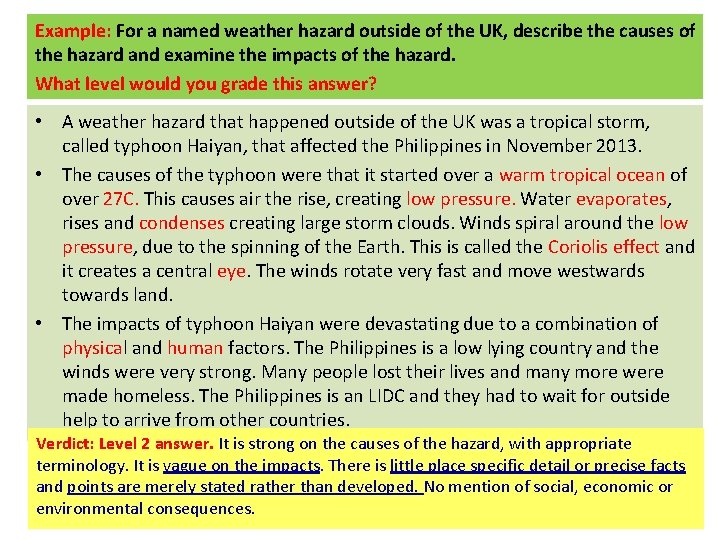
Example: For a named weather hazard outside of the UK, describe the causes of the hazard and examine the impacts of the hazard. What level would you grade this answer? • A weather hazard that happened outside of the UK was a tropical storm, called typhoon Haiyan, that affected the Philippines in November 2013. • The causes of the typhoon were that it started over a warm tropical ocean of over 27 C. This causes air the rise, creating low pressure. Water evaporates, rises and condenses creating large storm clouds. Winds spiral around the low pressure, due to the spinning of the Earth. This is called the Coriolis effect and it creates a central eye. The winds rotate very fast and move westwards towards land. • The impacts of typhoon Haiyan were devastating due to a combination of physical and human factors. The Philippines is a low lying country and the winds were very strong. Many people lost their lives and many more were made homeless. The Philippines is an LIDC and they had to wait for outside help to arrive from other countries. Verdict: Level 2 answer. It is strong on the causes of the hazard, with appropriate terminology. It is vague on the impacts. There is little place specific detail or precise facts and points are merely stated rather than developed. No mention of social, economic or environmental consequences.
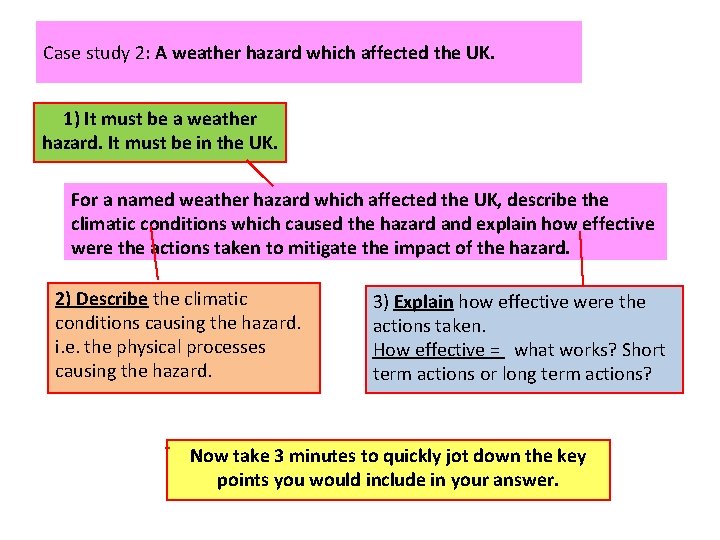
Case study 2: A weather hazard which affected the UK. 1) It must be a weather hazard. It must be in the UK. For a named weather hazard which affected the UK, describe the climatic conditions which caused the hazard and explain how effective were the actions taken to mitigate the impact of the hazard. 2) Describe the climatic conditions causing the hazard. i. e. the physical processes causing the hazard. 3) Explain how effective were the actions taken. How effective = what works? Short term actions or long term actions? Now take 3 minutes to quickly jot down the key points you would include in your answer.
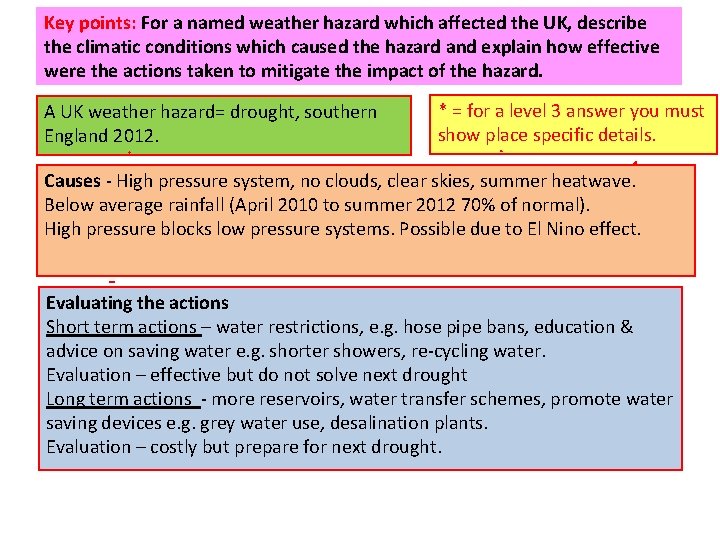
Key points: For a named weather hazard which affected the UK, describe the climatic conditions which caused the hazard and explain how effective were the actions taken to mitigate the impact of the hazard. A UK weather hazard= drought, southern England 2012. * = for a level 3 answer you must show place specific details. Causes - High pressure system, no clouds, clear skies, summer heatwave. Below average rainfall (April 2010 to summer 2012 70% of normal). High pressure blocks low pressure systems. Possible due to El Nino effect. Evaluating the actions Short term actions – water restrictions, e. g. hose pipe bans, education & advice on saving water e. g. shorter showers, re-cycling water. Evaluation – effective but do not solve next drought Long term actions - more reservoirs, water transfer schemes, promote water saving devices e. g. grey water use, desalination plants. Evaluation – costly but prepare for next drought.
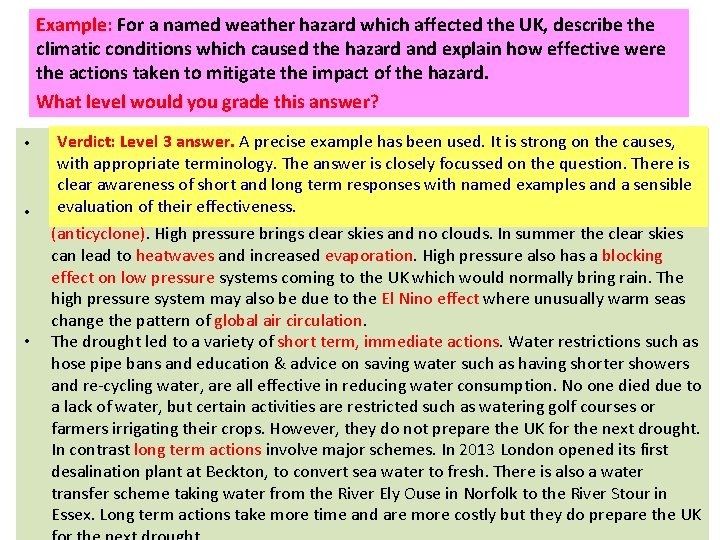
Example: For a named weather hazard which affected the UK, describe the climatic conditions which caused the hazard and explain how effective were the actions taken to mitigate the impact of the hazard. What level would you grade this answer? • • • 3 answer. A precise example been used. It is strong on the AVerdict: weather. Level hazard which affected the UK washas a drought in southern England in causes, summer with appropriate The answer is closely theplaces question. is 2012. Drought is aterminology. prolonged period of below normalfocussed rain and on some had There less than clearofawareness of shortinand term responses with. April named examples and 2012. a sensible 60% normal amounts thelong preceding months from 2010 to summer evaluation their effectiveness. The climaticof condition which cause the drought was a high pressure system (anticyclone). High pressure brings clear skies and no clouds. In summer the clear skies can lead to heatwaves and increased evaporation. High pressure also has a blocking effect on low pressure systems coming to the UK which would normally bring rain. The high pressure system may also be due to the El Nino effect where unusually warm seas change the pattern of global air circulation. The drought led to a variety of short term, immediate actions. Water restrictions such as hose pipe bans and education & advice on saving water such as having shorter showers and re-cycling water, are all effective in reducing water consumption. No one died due to a lack of water, but certain activities are restricted such as watering golf courses or farmers irrigating their crops. However, they do not prepare the UK for the next drought. In contrast long term actions involve major schemes. In 2013 London opened its first desalination plant at Beckton, to convert sea water to fresh. There is also a water transfer scheme taking water from the River Ely Ouse in Norfolk to the River Stour in Essex. Long term actions take more time and are more costly but they do prepare the UK
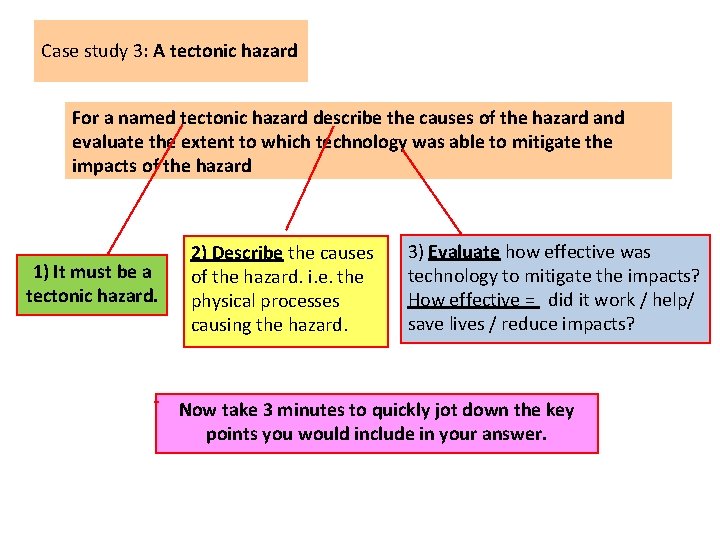
Case study 3: A tectonic hazard For a named tectonic hazard describe the causes of the hazard and evaluate the extent to which technology was able to mitigate the impacts of the hazard 1) It must be a tectonic hazard. 2) Describe the causes of the hazard. i. e. the physical processes causing the hazard. 3) Evaluate how effective was technology to mitigate the impacts? How effective = did it work / help/ save lives / reduce impacts? Now take 3 minutes to quickly jot down the key points you would include in your answer.
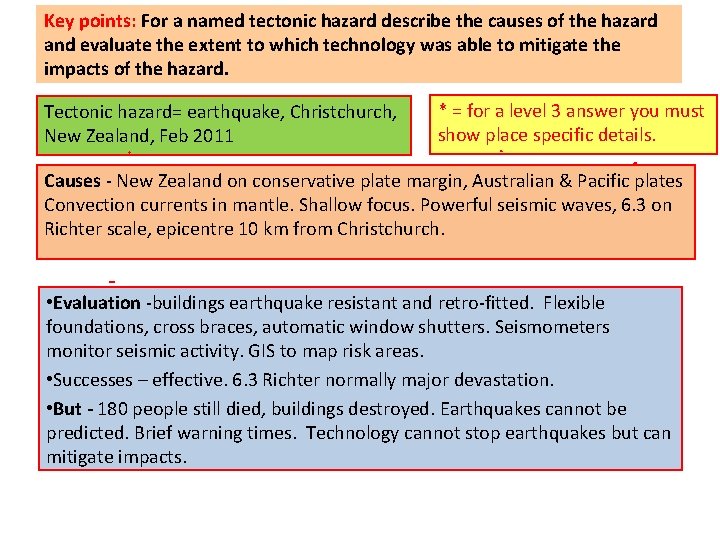
Key points: For a named tectonic hazard describe the causes of the hazard and evaluate the extent to which technology was able to mitigate the impacts of the hazard. Tectonic hazard= earthquake, Christchurch, New Zealand, Feb 2011 * = for a level 3 answer you must show place specific details. Causes - New Zealand on conservative plate margin, Australian & Pacific plates Convection currents in mantle. Shallow focus. Powerful seismic waves, 6. 3 on Richter scale, epicentre 10 km from Christchurch. • Evaluation -buildings earthquake resistant and retro-fitted. Flexible foundations, cross braces, automatic window shutters. Seismometers monitor seismic activity. GIS to map risk areas. • Successes – effective. 6. 3 Richter normally major devastation. • But - 180 people still died, buildings destroyed. Earthquakes cannot be predicted. Brief warning times. Technology cannot stop earthquakes but can mitigate impacts.
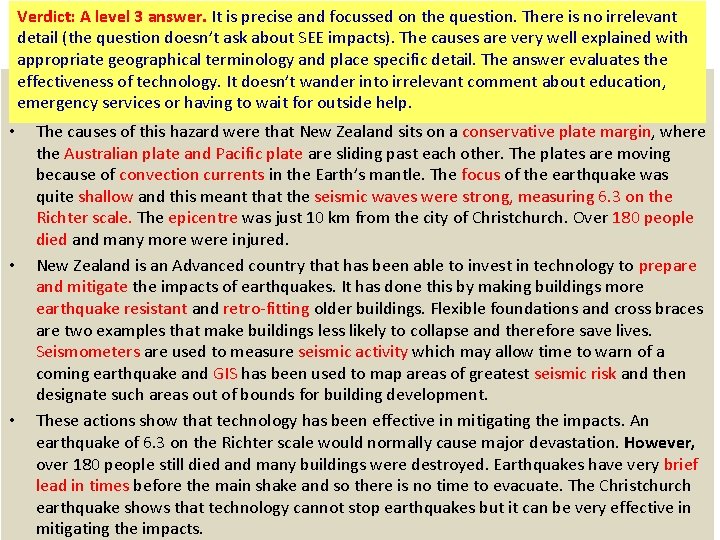
Verdict: AFor Example: level a named 3 answer. tectonic It is precise hazardand describe focussed theon causes the question. of the hazard Thereand is no evaluate irrelevant the extent detail (the question to which doesn’t technology ask about was able SEEto impacts). mitigate. The thecauses impacts areofvery the well hazard. explained with appropriate geographical terminology and place specific detail. The answer evaluates the What level would you grade this answer? of technology. It doesn’t wander into irrelevant comment about education, » effectiveness A tectonic hazard was the earthquake that happened in Christchurch, New Zealand in emergency services or having to wait for outside help. February 2011. • • • The causes of this hazard were that New Zealand sits on a conservative plate margin, where the Australian plate and Pacific plate are sliding past each other. The plates are moving because of convection currents in the Earth’s mantle. The focus of the earthquake was quite shallow and this meant that the seismic waves were strong, measuring 6. 3 on the Richter scale. The epicentre was just 10 km from the city of Christchurch. Over 180 people died and many more were injured. New Zealand is an Advanced country that has been able to invest in technology to prepare and mitigate the impacts of earthquakes. It has done this by making buildings more earthquake resistant and retro-fitting older buildings. Flexible foundations and cross braces are two examples that make buildings less likely to collapse and therefore save lives. Seismometers are used to measure seismic activity which may allow time to warn of a coming earthquake and GIS has been used to map areas of greatest seismic risk and then designate such areas out of bounds for building development. These actions show that technology has been effective in mitigating the impacts. An earthquake of 6. 3 on the Richter scale would normally cause major devastation. However, over 180 people still died and many buildings were destroyed. Earthquakes have very brief lead in times before the main shake and so there is no time to evacuate. The Christchurch earthquake shows that technology cannot stop earthquakes but it can be very effective in mitigating the impacts.
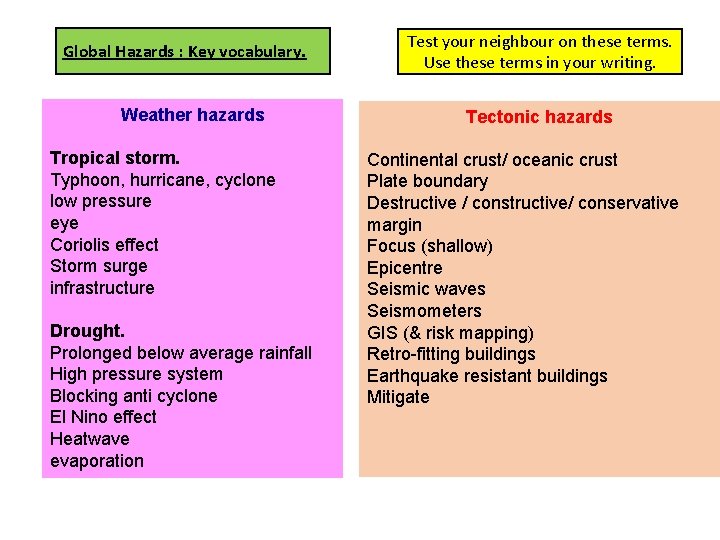
Global Hazards : Key vocabulary. Weather hazards Tropical storm. Typhoon, hurricane, cyclone low pressure eye Coriolis effect Storm surge infrastructure Drought. Prolonged below average rainfall High pressure system Blocking anti cyclone El Nino effect Heatwave evaporation Test your neighbour on these terms. Use these terms in your writing. Tectonic hazards Continental crust/ oceanic crust Plate boundary Destructive / constructive/ conservative margin Focus (shallow) Epicentre Seismic waves Seismometers GIS (& risk mapping) Retro-fitting buildings Earthquake resistant buildings Mitigate
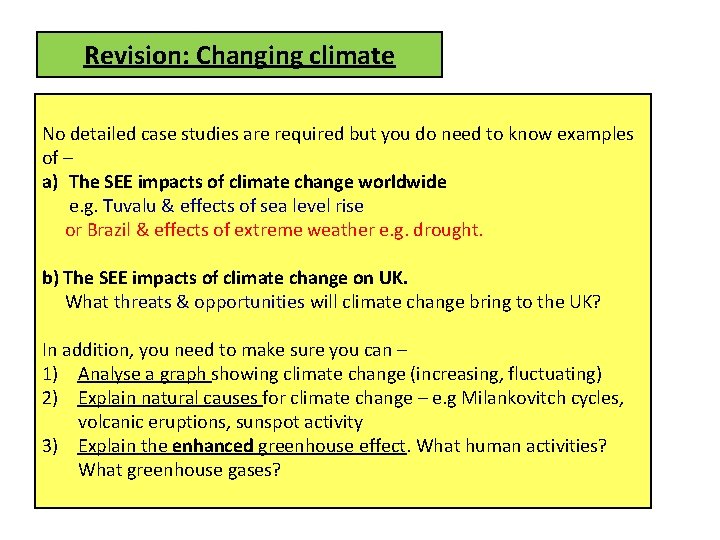
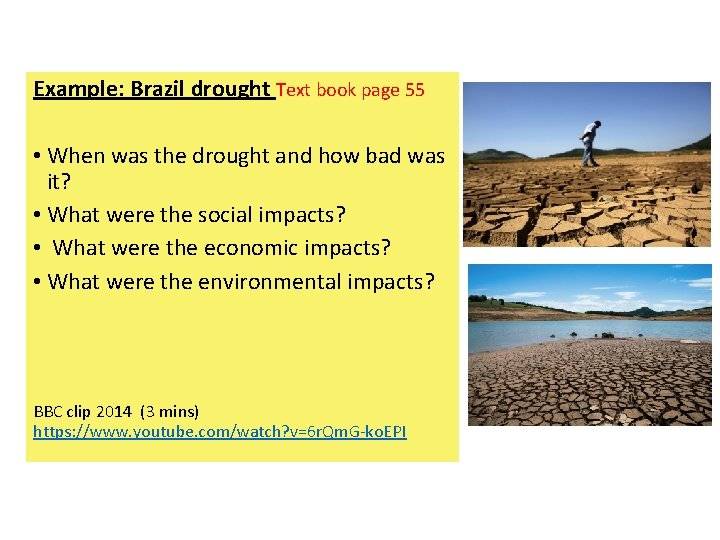
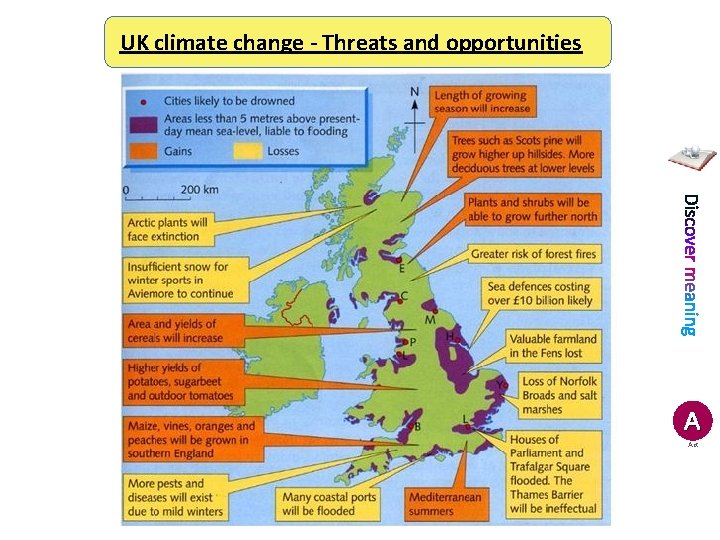
Revision: Changing climate No detailed case studies are required but you do need to know examples of – a) The SEE impacts of climate change worldwide e. g. Tuvalu & effects of sea level rise or Brazil & effects of extreme weather e. g. drought. b) The SEE impacts of climate change on UK. What threats & opportunities will climate change bring to the UK? In addition, you need to make sure you can – 1) Analyse a graph showing climate change (increasing, fluctuating) 2) Explain natural causes for climate change – e. g Milankovitch cycles, volcanic eruptions, sunspot activity 3) Explain the enhanced greenhouse effect. What human activities? What greenhouse gases?
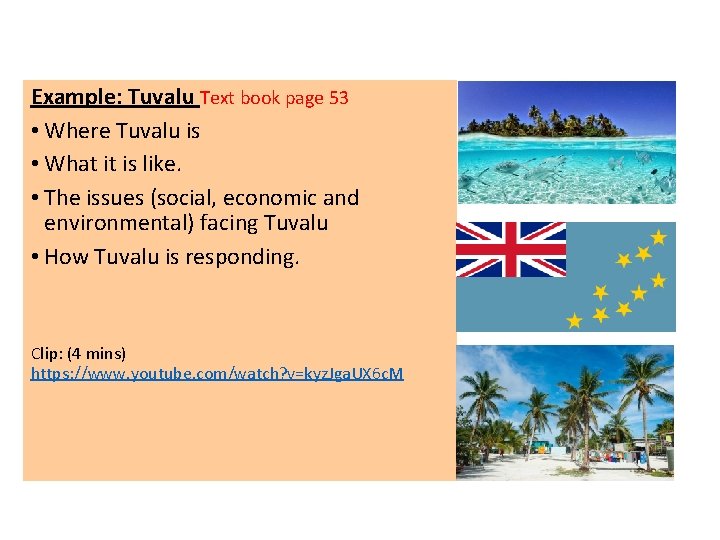
Example: Tuvalu Text book page 53 • Where Tuvalu is • What it is like. • The issues (social, economic and environmental) facing Tuvalu • How Tuvalu is responding. Clip: (4 mins) https: //www. youtube. com/watch? v=kyz. Jga. UX 6 c. M
Example: Brazil drought Text book page 55 • When was the drought and how bad was it? • What were the social impacts? • What were the economic impacts? • What were the environmental impacts? BBC clip 2014 (3 mins) https: //www. youtube. com/watch? v=6 r. Qm. G-ko. EPI
UK climate change - Threats and opportunities A Act
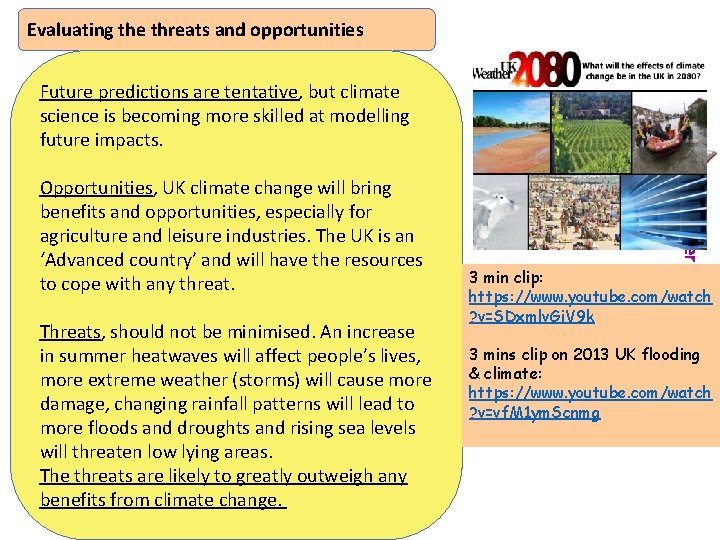
Evaluating the threats and opportunities Future predictions are tentative, but climate science is becoming more skilled at modelling future impacts. Opportunities, UK climate change will bring benefits and opportunities, especially for agriculture and leisure industries. The UK is an ‘Advanced country’ and will have the resources to cope with any threat. Threats, should not be minimised. An increase in summer heatwaves will affect people’s lives, more extreme weather (storms) will cause more damage, changing rainfall patterns will lead to more floods and droughts and rising sea levels will threaten low lying areas. The threats are likely to greatly outweigh any benefits from climate change. 3 min clip: https: //www. youtube. com/watch ? v=SDxmlv. Gi. V 9 k 3 mins clip on 2013 UK flooding & climate: https: //www. youtube. com/watch ? v=vf. M 1 ym. Scnmg A Act
Changing climate : Key vocabulary. Global warming Thermal expansion (sea level rise) Milankovitch cycles Precession Eccentricity Axial tilt Volcanic winter Enhanced greenhouse effect Solar radiation Terrestrial radiation Greenhouse gases – examples Test your neighbour on these terms.