
NOTE This presentation was not made for public

NOTE: This presentation was not made for public use. Please do not use this presentation without my permission and the permission of each of the authors of the photographs, quotes, and other materials that they contain. Thank you, Vicki Hughes
Mendelian Genetics Gregor Mendel Let there be PEAS ON EARTH! th me! i w n i g e b t i And let math. uit. no
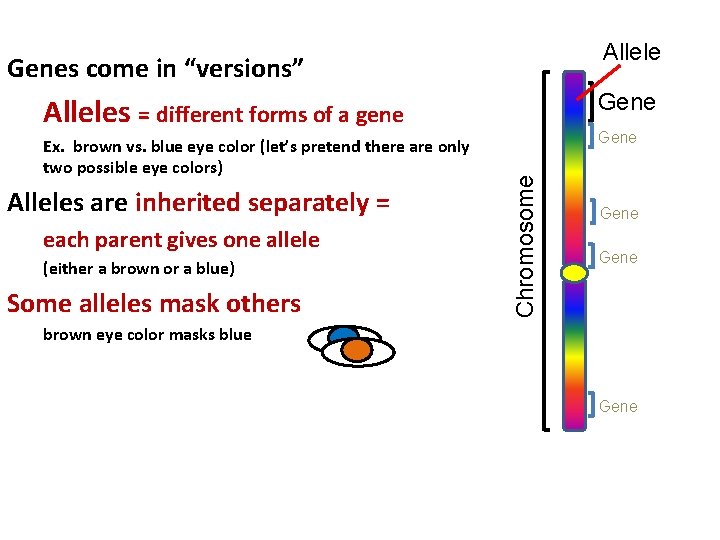
Allele Genes come in “versions” Gene Alleles = different forms of a gene Alleles are inherited separately = each parent gives one allele (either a brown or a blue) Some alleles mask others Gene Chromosome Ex. brown vs. blue eye color (let’s pretend there are only two possible eye colors) Gene brown eye color masks blue Gene
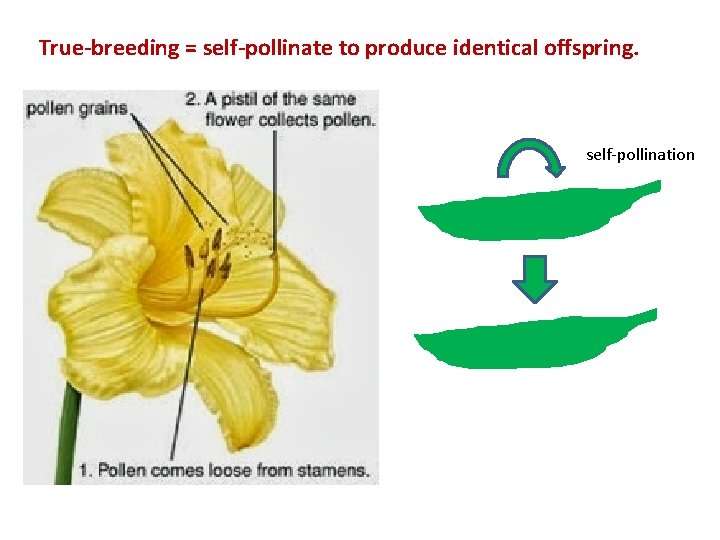
True-breeding = self-pollinate to produce identical offspring. self-pollination
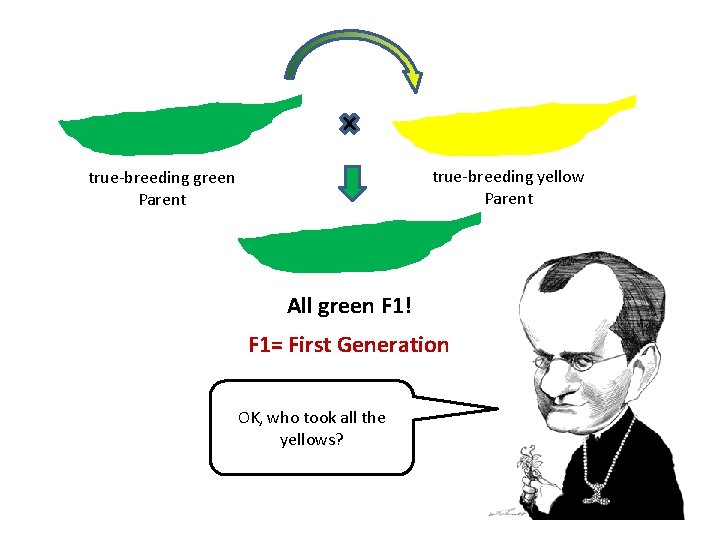
true-breeding yellow Parent true-breeding green Parent All green F 1! F 1= First Generation OK, who took all the yellows?
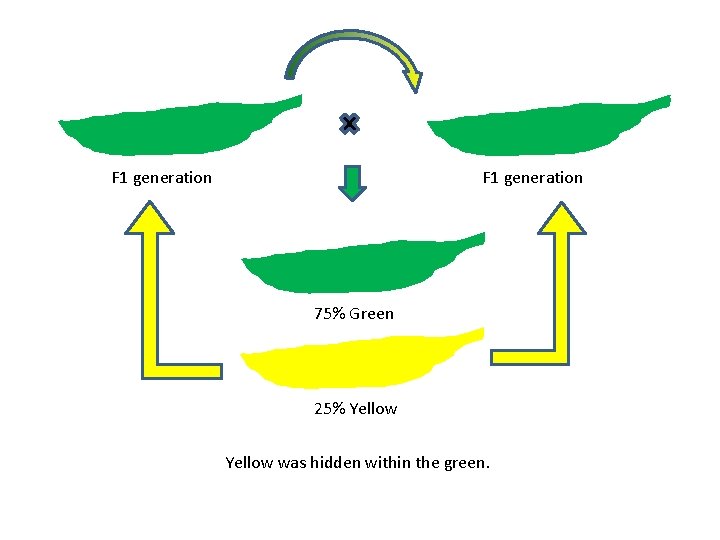
F 1 generation 75% Green 25% Yellow was hidden within the green.
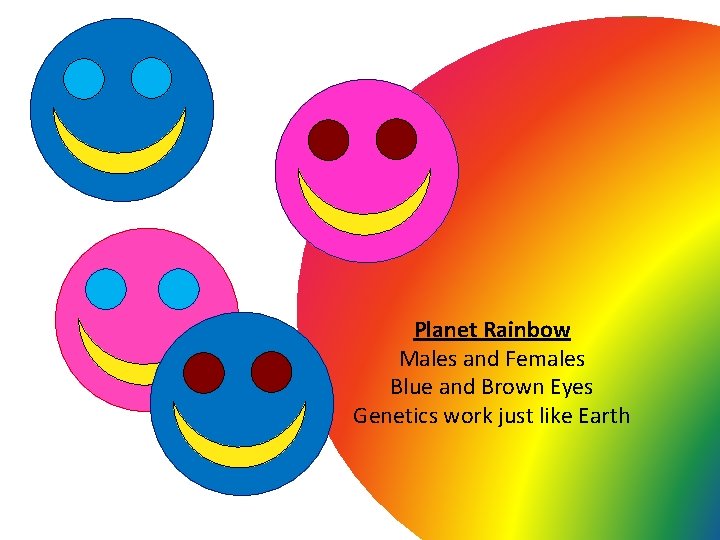
Planet Rainbow Males and Females Blue and Brown Eyes Genetics work just like Earth
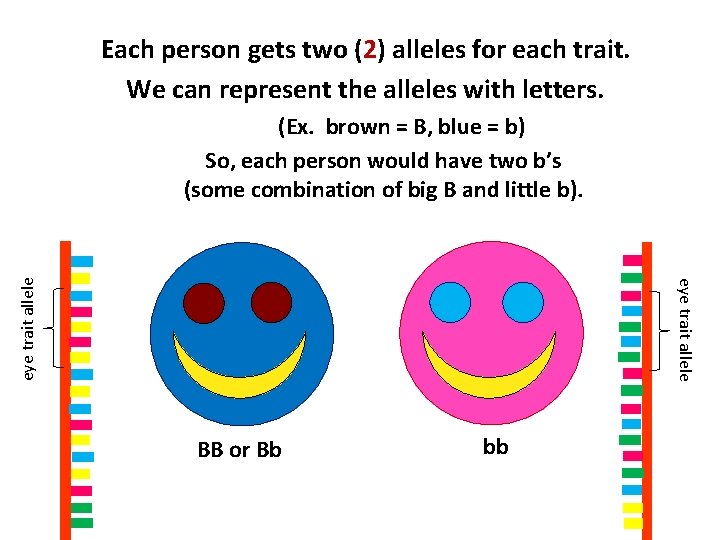
Each person gets two (2) alleles for each trait. We can represent the alleles with letters. eye trait allele (Ex. brown = B, blue = b) So, each person would have two b’s (some combination of big B and little b). BB or Bb bb
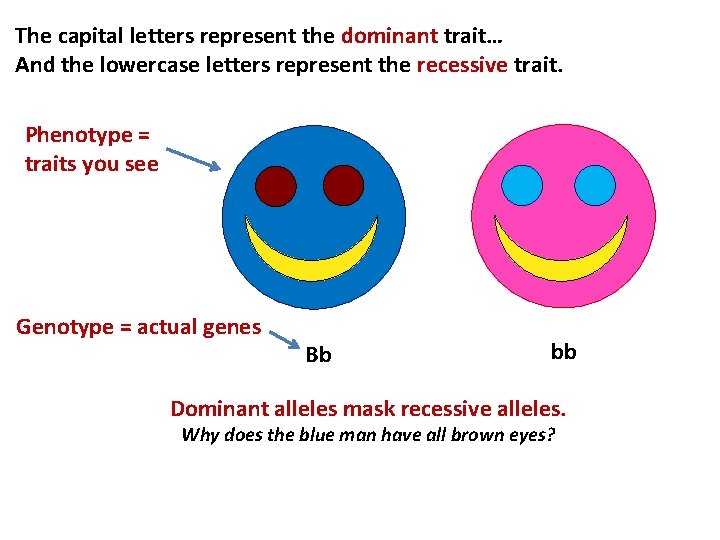
The capital letters represent the dominant trait… And the lowercase letters represent the recessive trait. Phenotype = traits you see Genotype = actual genes Bb bb Dominant alleles mask recessive alleles. Why does the blue man have all brown eyes?
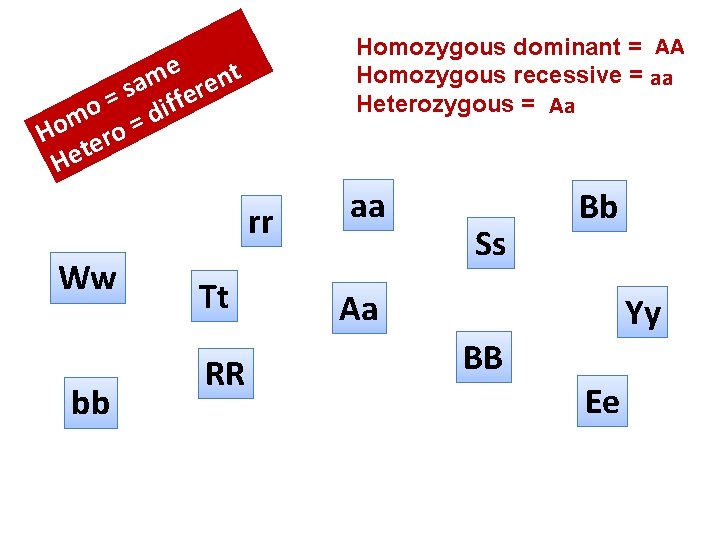
Homozygous dominant = AA Homozygous recessive = aa Heterozygous = Aa e nt m sa fere = if o d m Ho ero = t e H rr Ww bb Tt RR aa Ss Bb Aa Yy BB Ee
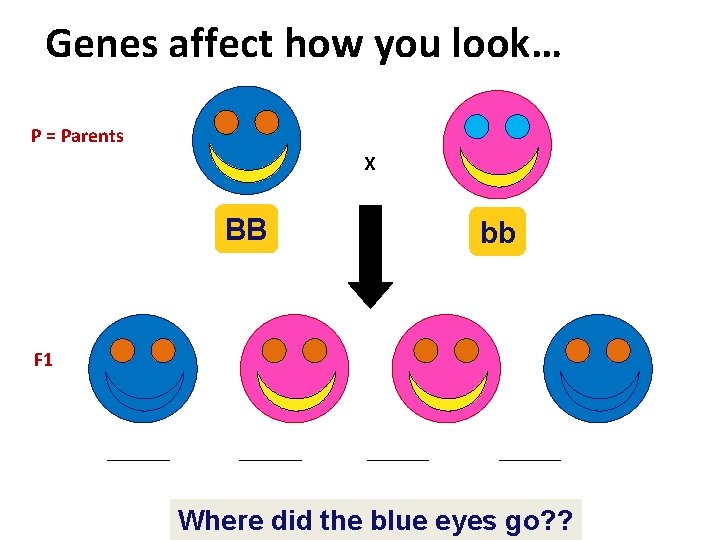
Genes affect how you look… P = Parents X BB bb F 1 _______ Where did the blue eyes go? ?
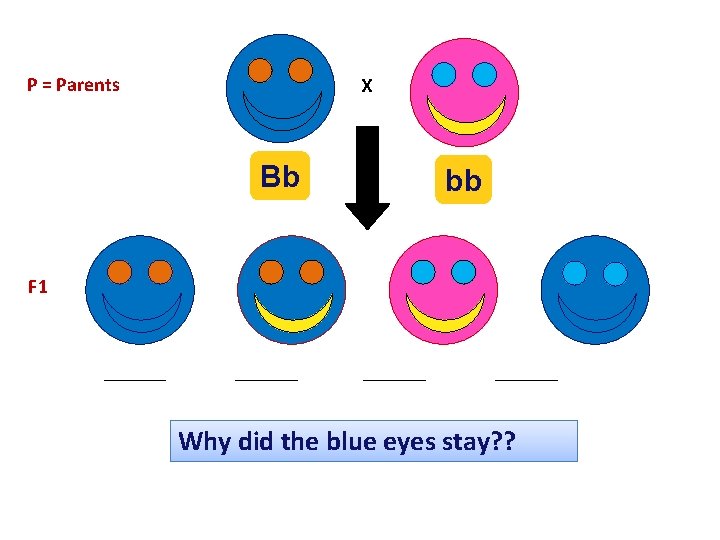
P = Parents X Bb bb F 1 _______ Why did the blue eyes stay? ?
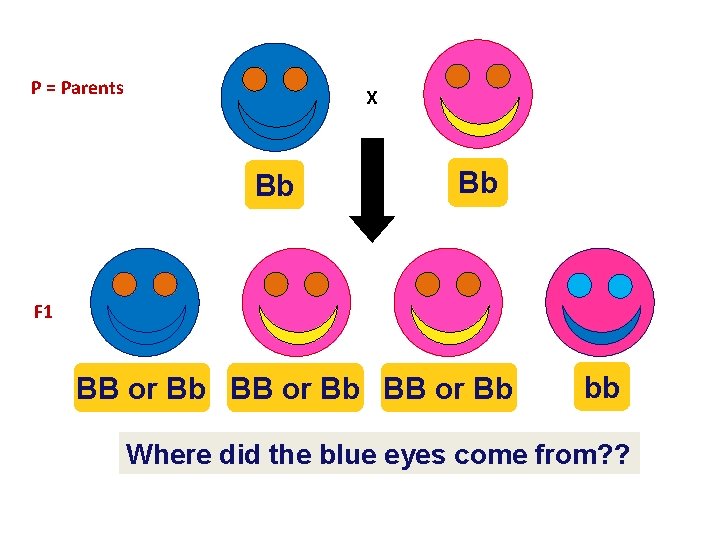
P = Parents X Bb Bb F 1 BB or Bb bb Where did the blue eyes come from? ?
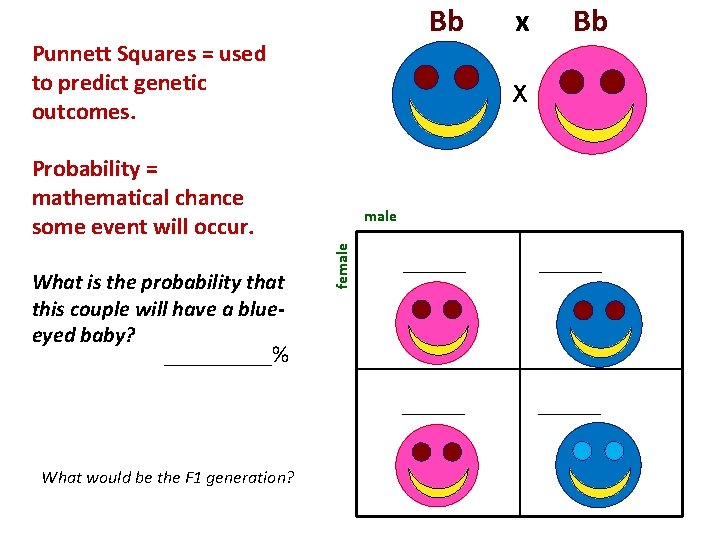
Bb Punnett Squares = used to predict genetic outcomes. Bb X Probability = mathematical chance some event will occur. male female What is the probability that this couple will have a blueeyed baby? x _______ _____% What would be the F 1 generation?
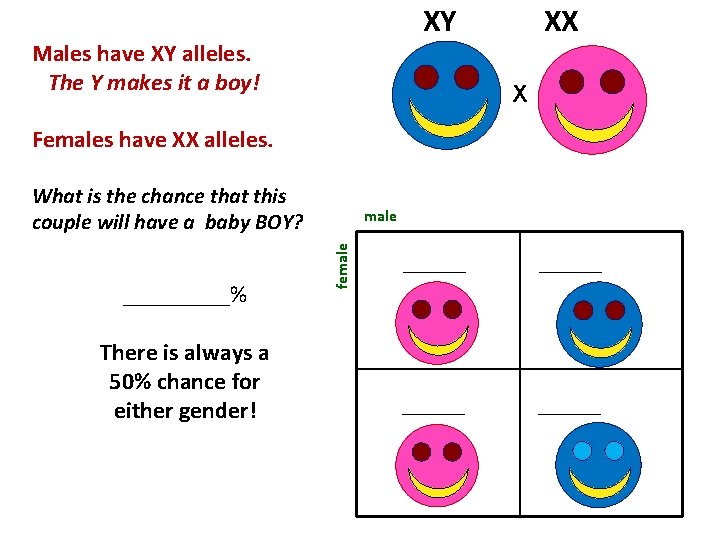
XY Males have XY alleles. The Y makes it a boy! XX X Females have XX alleles. What is the chance that this couple will have a baby BOY? There is always a 50% chance for either gender! female _____% male _______
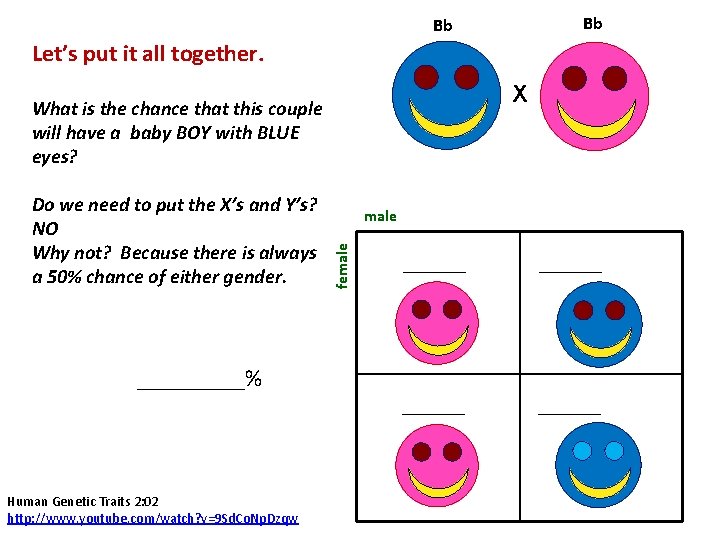
Bb Bb Let’s put it all together. X What is the chance that this couple will have a baby BOY with BLUE eyes? male female Do we need to put the X’s and Y’s? NO Why not? Because there is always a 50% chance of either gender. _______ _____% Human Genetic Traits 2: 02 http: //www. youtube. com/watch? v=9 Sd. Co. Np. Dzqw
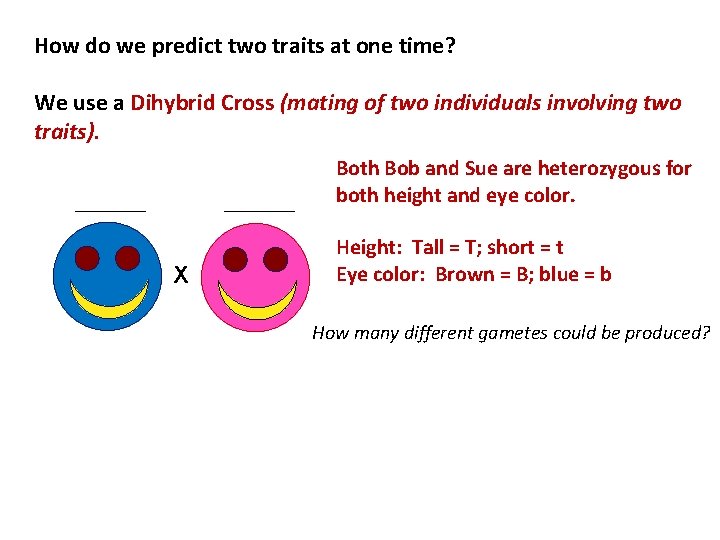
How do we predict two traits at one time? We use a Dihybrid Cross (mating of two individuals involving two traits). ________ X Both Bob and Sue are heterozygous for both height and eye color. Height: Tall = T; short = t Eye color: Brown = B; blue = b How many different gametes could be produced?
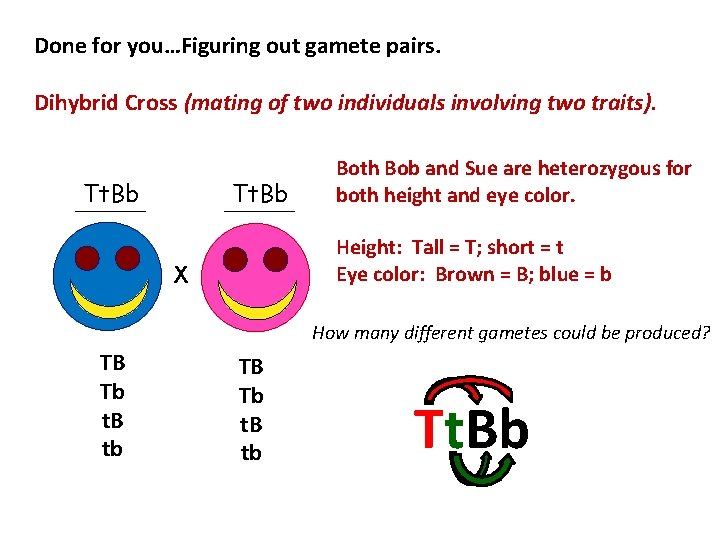
Done for you…Figuring out gamete pairs. Dihybrid Cross (mating of two individuals involving two traits). Tt. Bb ________ Both Bob and Sue are heterozygous for both height and eye color. Height: Tall = T; short = t Eye color: Brown = B; blue = b X How many different gametes could be produced? TB Tb t. B tb Tt. Bb
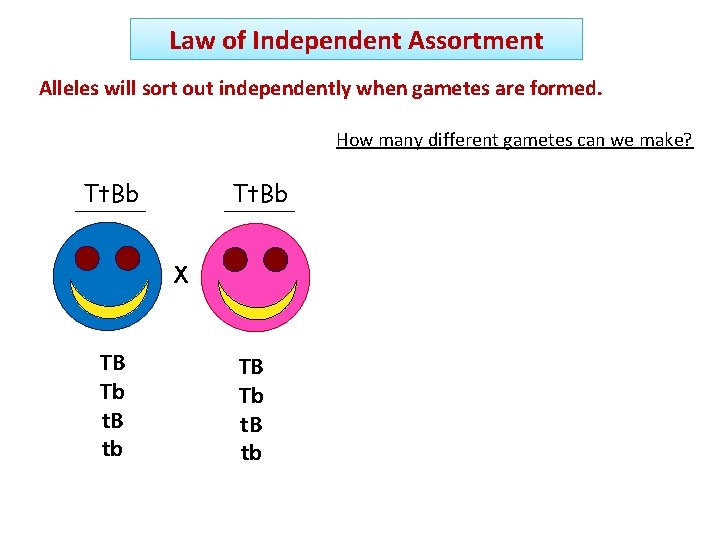
Law of Independent Assortment Alleles will sort out independently when gametes are formed. How many different gametes can we make? Tt. Bb ________ X TB Tb t. B tb
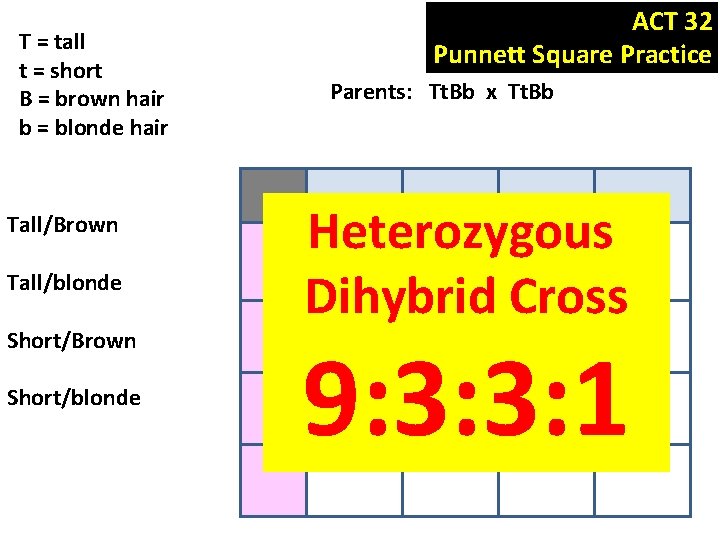
T = tall t = short B = brown hair b = blonde hair Tall/Brown Tall/blonde Short/Brown Short/blonde ACT 32 Punnett Square Practice Parents: Tt. Bb x Tt. Bb Heterozygous Dihybrid Cross 9: 3: 3: 1
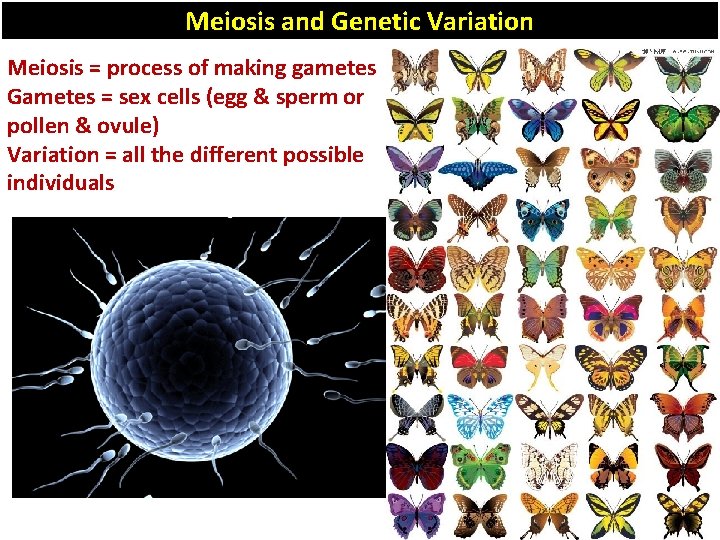
Meiosis and Genetic Variation Meiosis = process of making gametes Gametes = sex cells (egg & sperm or pollen & ovule) Variation = all the different possible individuals
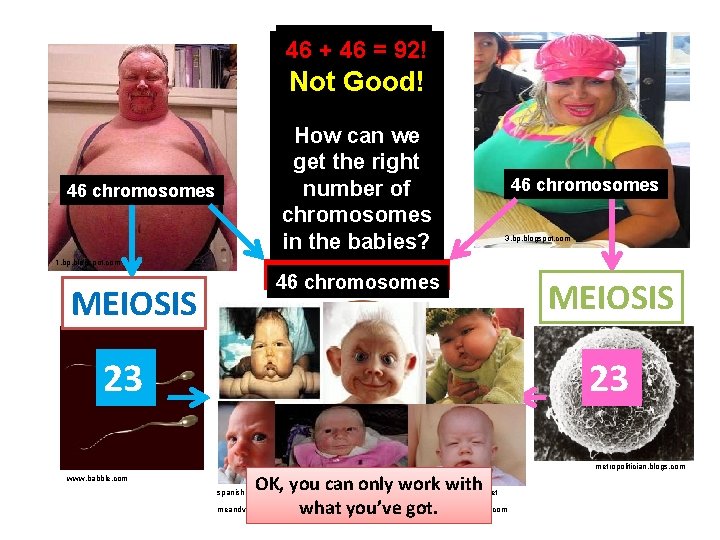
“Sweet Mama” “Big Daddy” Everyone knows 46 + 46 = 92! it takes two to make. Good! babies. Not That’s how How can we getwe theget right number of variation! chromosomes BUT HOW? 46 chromosomes in the babies? 1. bp. blogspot. com MEIOSIS 3. bp. blogspot. com 92 46 chromosomes!? chromosomes 46 23 MEIOSIS 23 metropolitician. blogs. com www. babble. com OK, you can only work with Mutant Baby! what you’ve got. spanishdict. com durtbagz. wordpress. com meandvinnie. blogspot. com babyinsane. com hihi 11. seesaa. net www. greatwhatsit. com
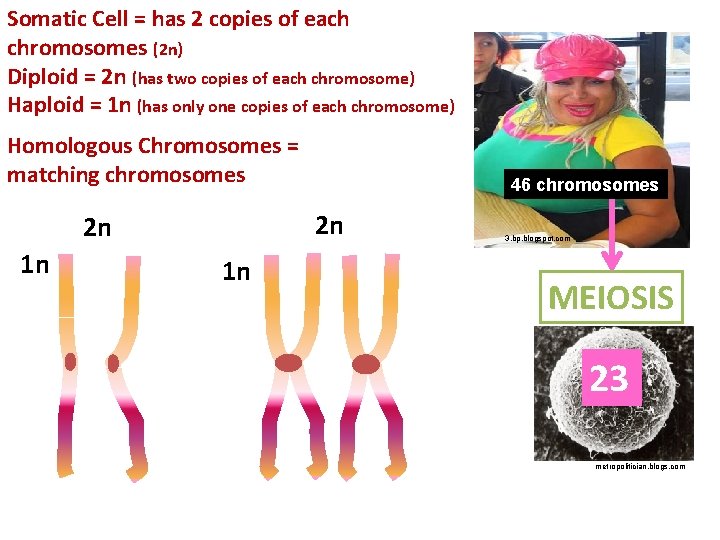
Somatic Cell = has 2 copies of each chromosomes (2 n) Diploid = 2 n (has two copies of each chromosome) Haploid = 1 n (has only one copies of each chromosome) Homologous Chromosomes = matching chromosomes 1 n 46 chromosomes 2 n 2 n 1 n “Sweet Mama” 3. bp. blogspot. com MEIOSIS 23 metropolitician. blogs. com
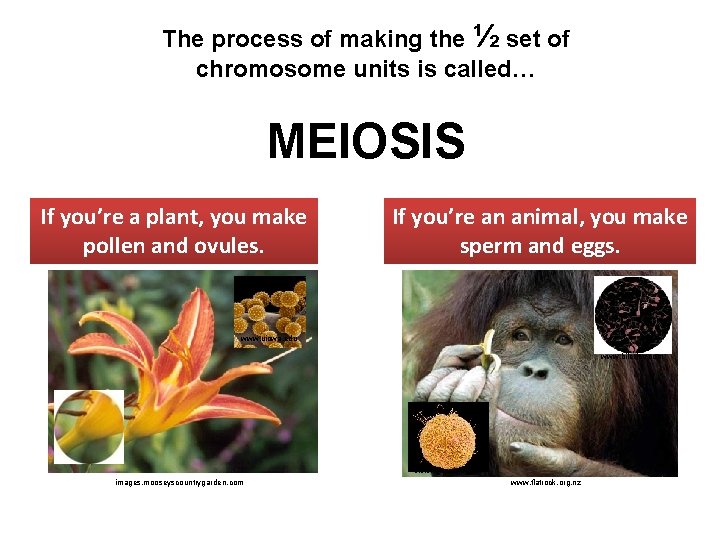
The process of making the ½ set of chromosome units is called… MEIOSIS If you’re a plant, you make pollen and ovules. If you’re an animal, you make sperm and eggs. www. uiowa. edu www. bilerico. com www. alvesbio. com images. mooseyscountrygarden. com www. flatrock. org. nz
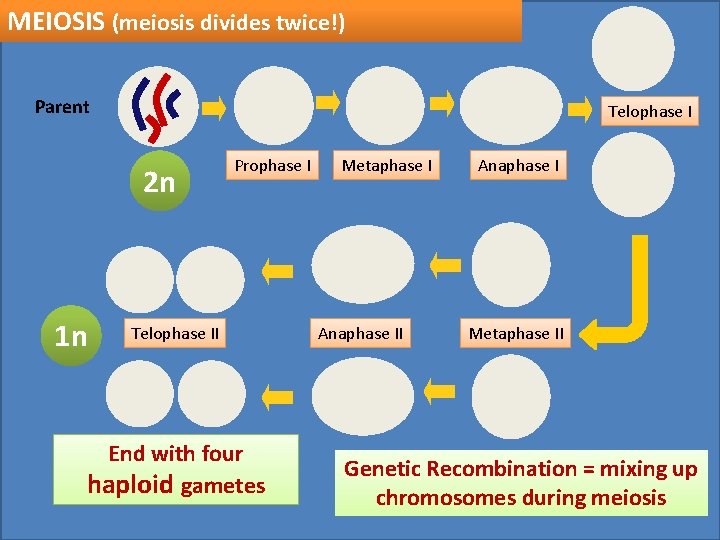
MEIOSIS (meiosis divides twice!) Parent Telophase I 2 n 1 n Prophase I Telophase II End with four haploid gametes Metaphase I Anaphase I Metaphase II Genetic Recombination = mixing up chromosomes during meiosis
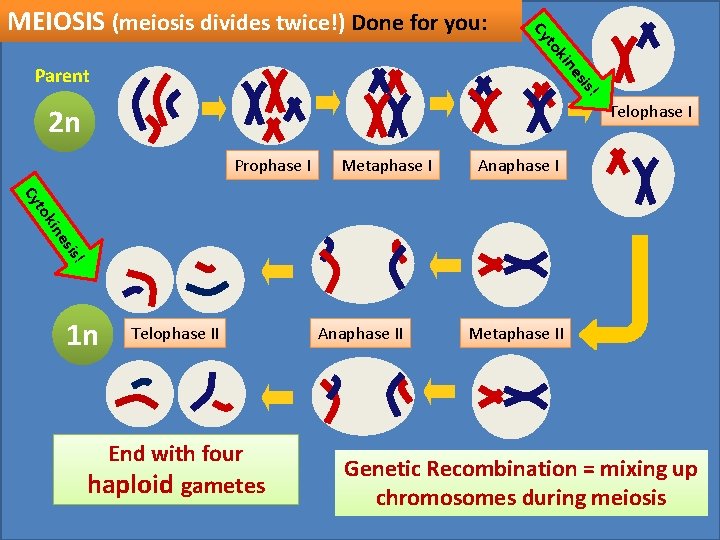
kin to Cy MEIOSIS (meiosis divides twice!) Done for you: is! es Parent Telophase I 2 n Prophase I Metaphase I Anaphase I is es kin to Cy ! 1 n Telophase II End with four haploid gametes Anaphase II Metaphase II Genetic Recombination = mixing up chromosomes during meiosis
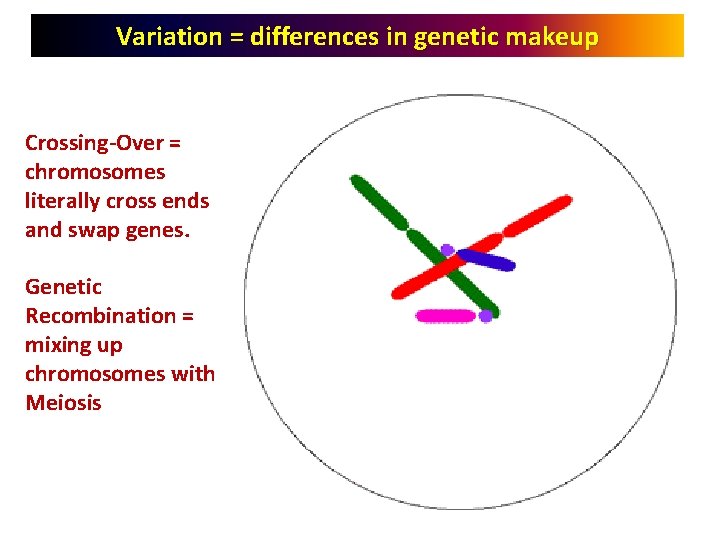
Variation = differences in genetic makeup Crossing-Over = chromosomes literally cross ends and swap genes. Genetic Recombination = mixing up chromosomes with Meiosis
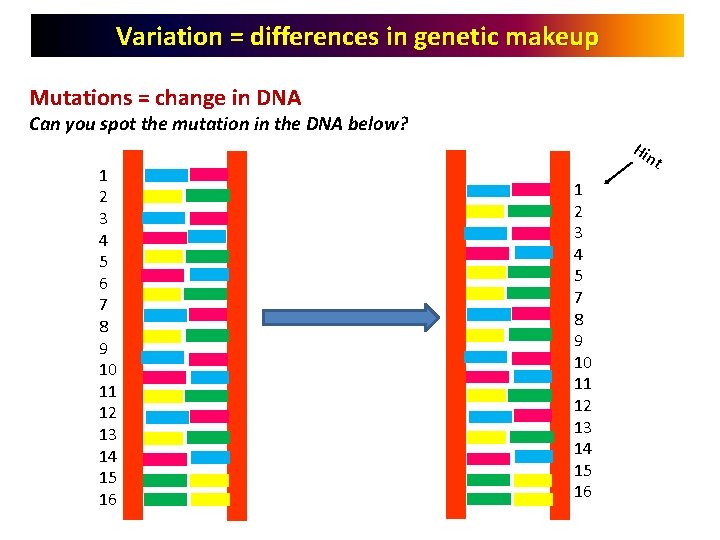
Variation = differences in genetic makeup Mutations = change in DNA Can you spot the mutation in the DNA below? 1 2 3 4 5 6 7 8 9 10 11 12 13 14 15 16 Hin t 1 2 3 4 5 7 8 9 10 11 12 13 14 15 16
Any Questions? ACT 33
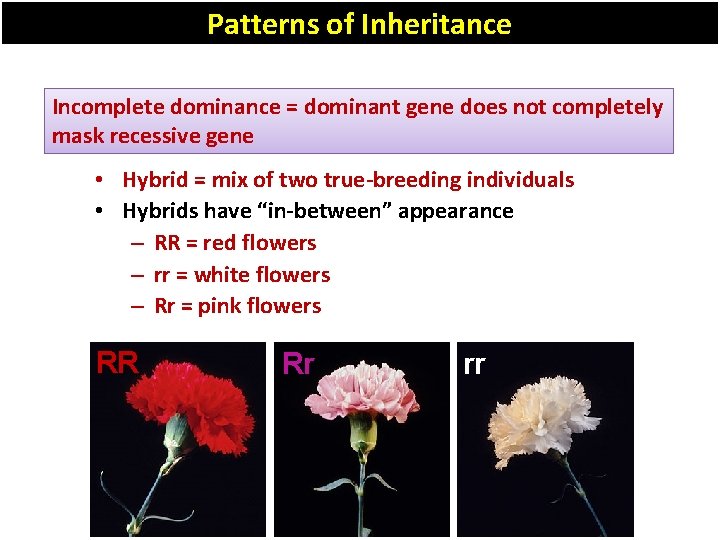
Patterns of Inheritance Incomplete dominance = dominant gene does not completely mask recessive gene • Hybrid = mix of two true-breeding individuals • Hybrids have “in-between” appearance – RR = red flowers – rr = white flowers – Rr = pink flowers RR Rr rr
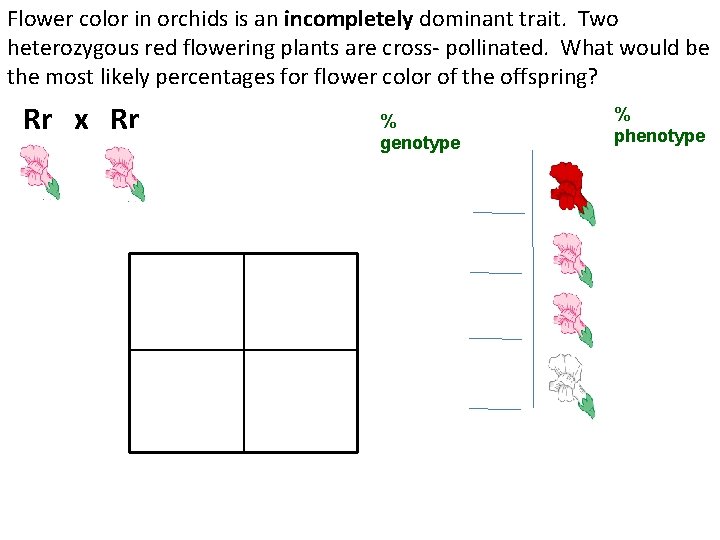
Flower color in orchids is an incompletely dominant trait. Two heterozygous red flowering plants are cross- pollinated. What would be the most likely percentages for flower color of the offspring? Rr x Rr % genotype % phenotype
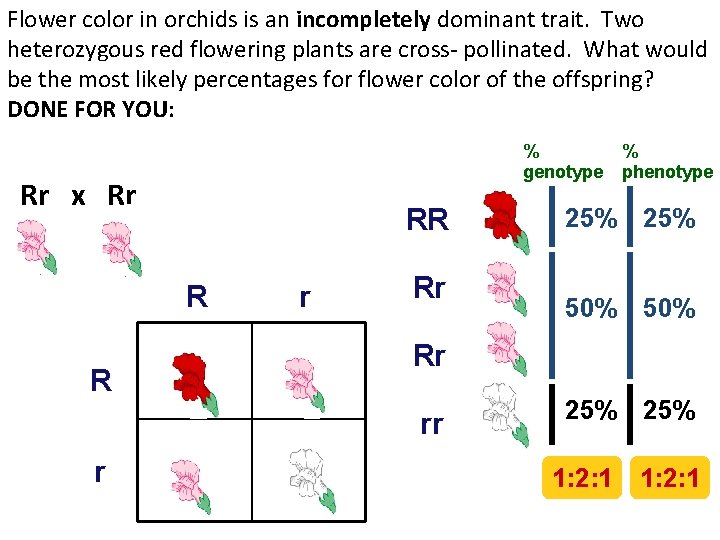
Flower color in orchids is an incompletely dominant trait. Two heterozygous red flowering plants are cross- pollinated. What would be the most likely percentages for flower color of the offspring? DONE FOR YOU: % genotype Rr x Rr RR R R r Rr 25% 50% Rr rr r % phenotype 25% 1: 2: 1
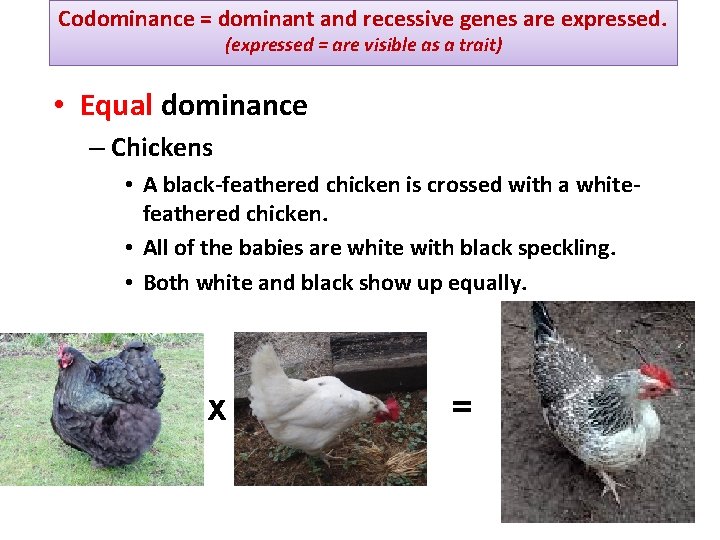
Codominance = dominant and recessive genes are expressed. Codominance (expressed = are visible as a trait) • Equal dominance – Chickens • A black-feathered chicken is crossed with a whitefeathered chicken. • All of the babies are white with black speckling. • Both white and black show up equally. x =
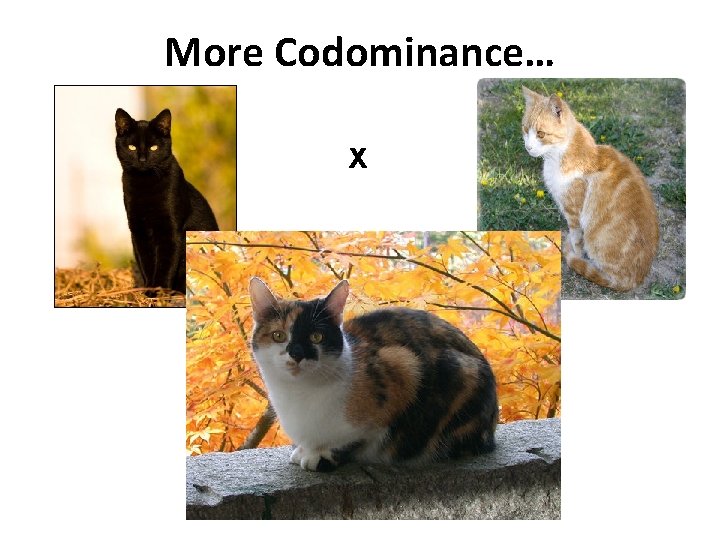
More Codominance… x
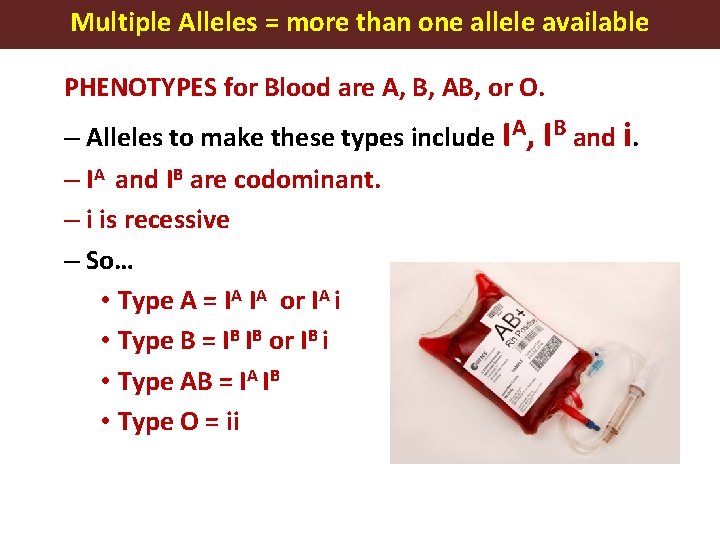
Multiple Alleles = more than one allele available PHENOTYPES for Blood are A, B, AB, or O. – Alleles to make these types include IA, IB and i. – IA and IB are codominant. – i is recessive – So… • Type A = IA IA or IA i • Type B = IB IB or IB i • Type AB = IA IB • Type O = ii
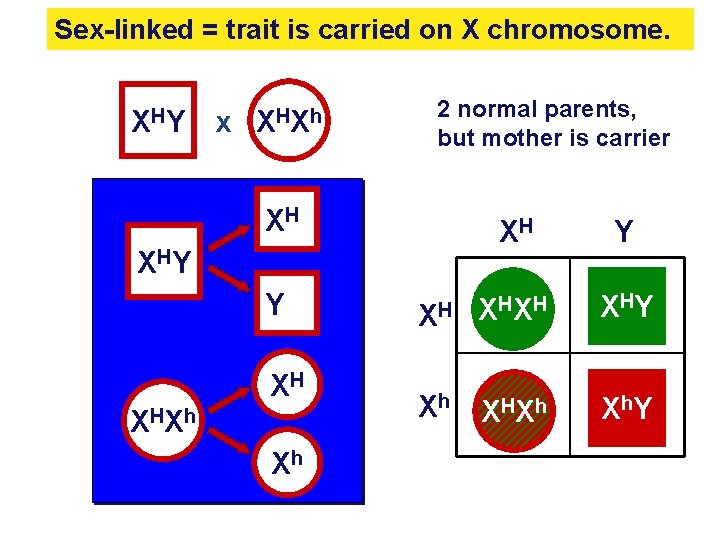
Sex-linked = trait is carried on X chromosome. HX h HY XHH x XHh 2 normal parents, but mother is carrier XH XH Y XH X HX H X HY Xh X HX h X h. Y X HY Y XH X HX h Xh
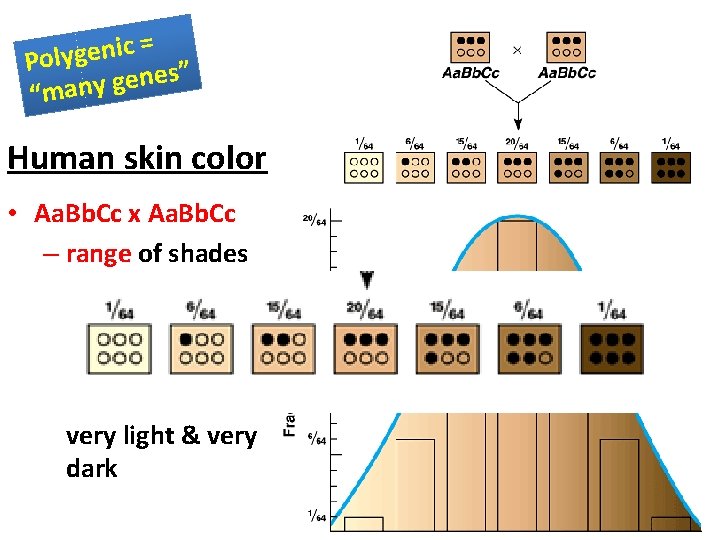
= c i n e g y l Po s” e n e g y “man Human skin color • Aa. Bb. Cc x Aa. Bb. Cc – range of shades – most children = intermediate skin color – some can be very light & very dark
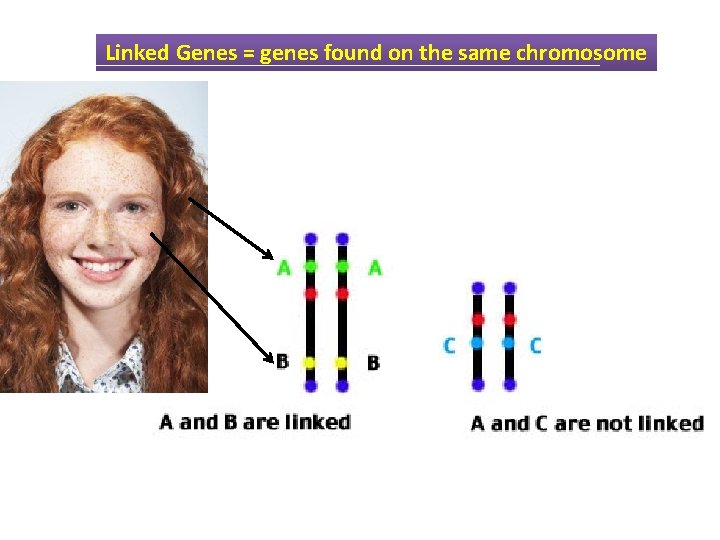
Linked Genes = genes found on the same chromosome
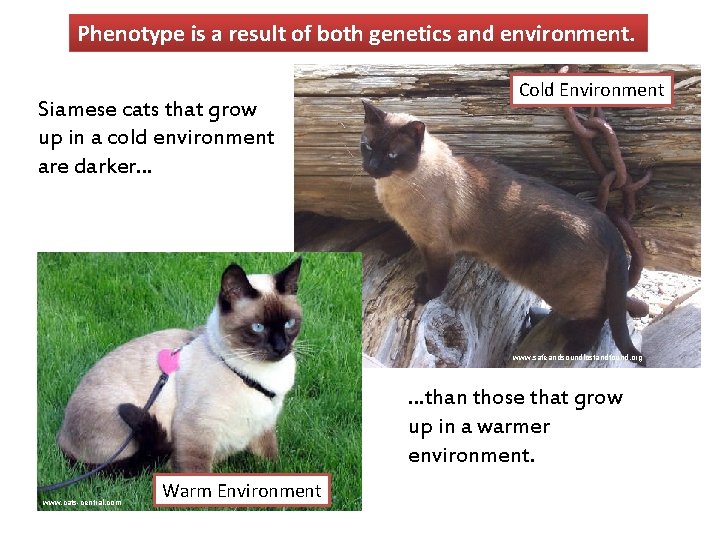
Phenotype is a result of both genetics and environment. Siamese cats that grow up in a cold environment are darker… Cold Environment www. safeandsoundlostandfound. org …than those that grow up in a warmer environment. www. cats-central. com Warm Environment
ACT 34 You got questions? ASK THE TEACHER!
- Slides: 40