
Note of Caution Before a student may submit
Note of Caution! Before a student may submit a research application, they MUST ensure the mentor is an approved Duke-NUS mentor with the education department. To check if a mentor is approved, you may download the Duke-NUS Approved Mentors List AY 2014 -2015 on the Learner’s Wiki.
Approved Mentors in HSSR 1. David Bruce Matchar, Program Director 2. Eric Finkelstein 3. Angelique Chan 4. Tazeen H Jafar 5. Rahul Malhotra 6. Truls Østbye 7. Julian Thumboo 8. Marcus Ong Eng Hock 9. Stella Quah 10. Marcel Bilger, application as mentor pending
Health Services and Systems Research Your key to a lifetime of success Level : Basic Version No: 2 Version Date: Sep 2013 Authors: Prof. Tazeen Jafar & Prof. David Matchar Affiliation: Duke-NUS
Why Choose HSSR? • • • Prepare to be independent investigators in the field of health services, clinical and community-based research. Opportunity to engage in applied work that connects science to practice. Gain exposure to health related problems that are relevant to the needs of diverse individuals and communities. Work closely with world-renowned faculty mentors engaged in cutting-edge research. Opportunity for creative thinking and developing feasible, cost-effective innovative solutions using rigorous scientific methods that can potentially be scaled up for advancing public health research and its application in programs, practice and policy at national, regional and global levels. Outstanding opportunities to interact and collaborate with communities and other key stakeholders and entities including the government- and making a big difference!
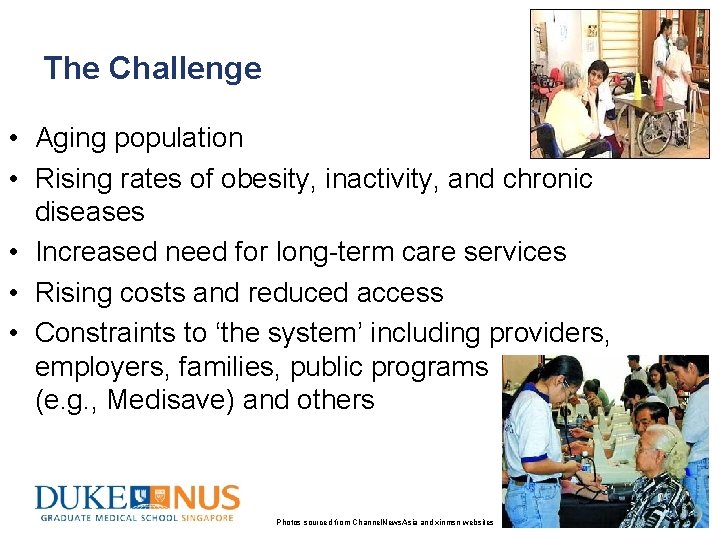
The Challenge • Aging population • Rising rates of obesity, inactivity, and chronic diseases • Increased need for long-term care services • Rising costs and reduced access • Constraints to ‘the system’ including providers, employers, families, public programs (e. g. , Medisave) and others Photos sourced from Channel. News. Asia and xinmsn websites
What We Do • HSSR aims to promote successful health care services that are: – Humane (address the needs of people), – Effective (produce what is intended), and – Sustainable (have adequate resources and appropriate incentives to persist) through development and rigorously testing potential solutions.
What We Do (cont. ) • Our goal is to bridge theory and practice in a way that both advances the state of the scientific theory and is sufficiently pragmatic to improve health care practice and health outcomes.
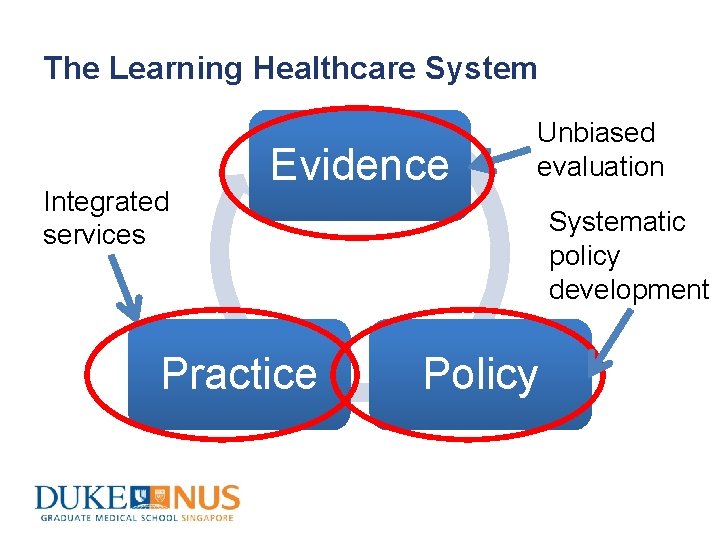
The Learning Healthcare System Integrated services Evidence Practice Unbiased evaluation Systematic policy development Policy
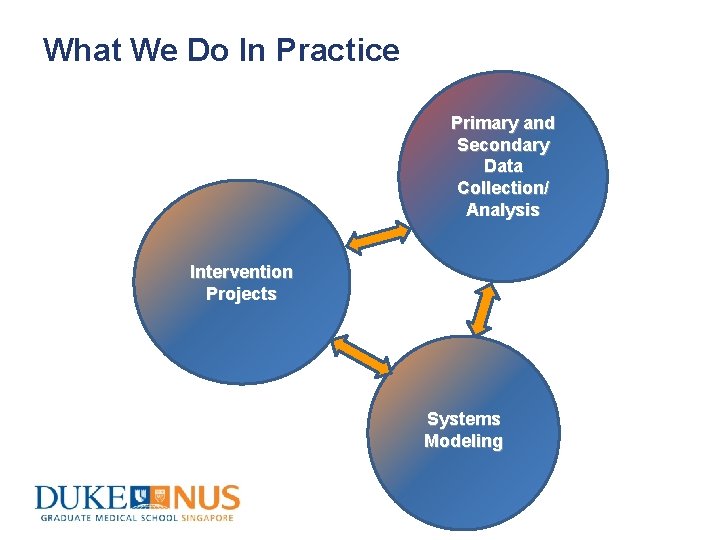
What We Do In Practice Primary and Secondary Data Collection/ Analysis Intervention Projects Systems Modeling
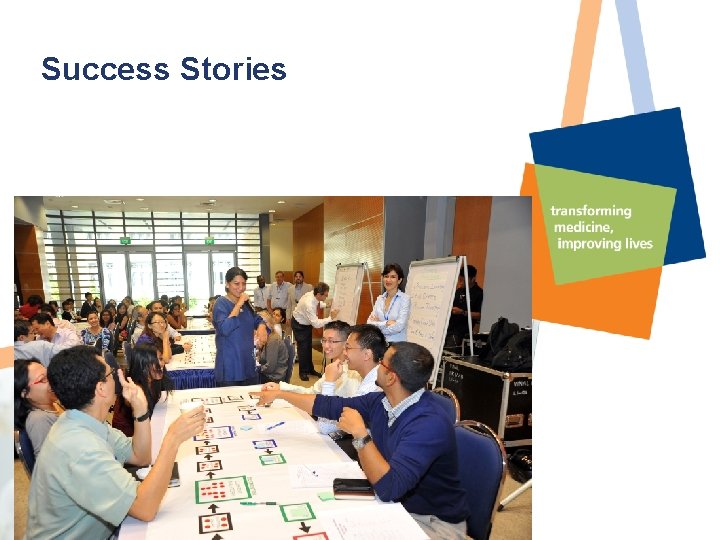
Success Stories
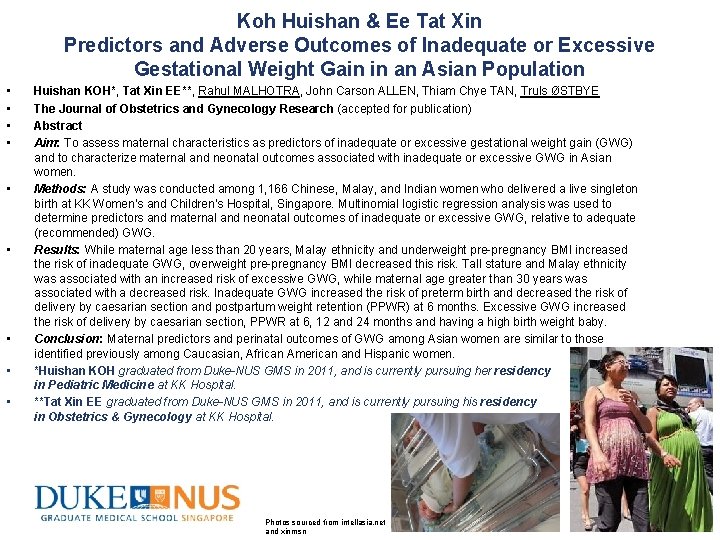
Koh Huishan & Ee Tat Xin Predictors and Adverse Outcomes of Inadequate or Excessive Gestational Weight Gain in an Asian Population • • • Huishan KOH*, Tat Xin EE**, Rahul MALHOTRA, John Carson ALLEN, Thiam Chye TAN, Truls ØSTBYE The Journal of Obstetrics and Gynecology Research (accepted for publication) Abstract Aim: To assess maternal characteristics as predictors of inadequate or excessive gestational weight gain (GWG) and to characterize maternal and neonatal outcomes associated with inadequate or excessive GWG in Asian women. Methods: A study was conducted among 1, 166 Chinese, Malay, and Indian women who delivered a live singleton birth at KK Women’s and Children’s Hospital, Singapore. Multinomial logistic regression analysis was used to determine predictors and maternal and neonatal outcomes of inadequate or excessive GWG, relative to adequate (recommended) GWG. Results: While maternal age less than 20 years, Malay ethnicity and underweight pre-pregnancy BMI increased the risk of inadequate GWG, overweight pre-pregnancy BMI decreased this risk. Tall stature and Malay ethnicity was associated with an increased risk of excessive GWG, while maternal age greater than 30 years was associated with a decreased risk. Inadequate GWG increased the risk of preterm birth and decreased the risk of delivery by caesarian section and postpartum weight retention (PPWR) at 6 months. Excessive GWG increased the risk of delivery by caesarian section, PPWR at 6, 12 and 24 months and having a high birth weight baby. Conclusion: Maternal predictors and perinatal outcomes of GWG among Asian women are similar to those identified previously among Caucasian, African American and Hispanic women. *Huishan KOH graduated from Duke-NUS GMS in 2011, and is currently pursuing her residency in Pediatric Medicine at KK Hospital. **Tat Xin EE graduated from Duke-NUS GMS in 2011, and is currently pursuing his residency in Obstetrics & Gynecology at KK Hospital. Photos sourced from intellasia. net and xinmsn
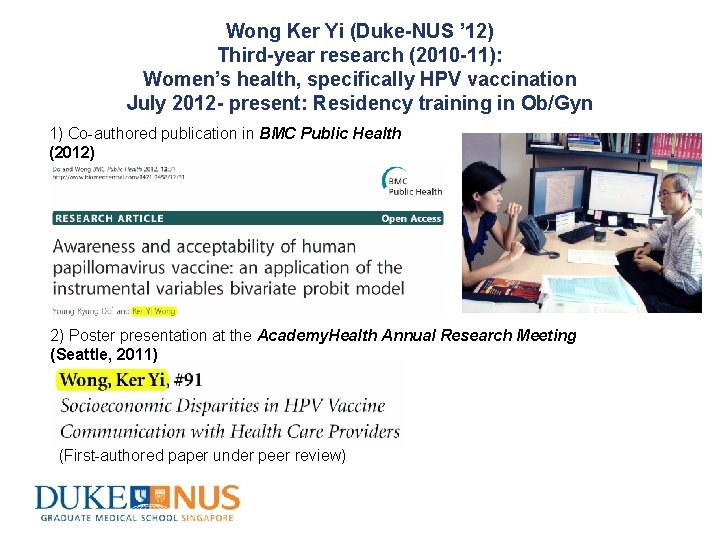
Wong Ker Yi (Duke-NUS ’ 12) Third-year research (2010 -11): Women’s health, specifically HPV vaccination July 2012 - present: Residency training in Ob/Gyn 1) Co-authored publication in BMC Public Health (2012) 2) Poster presentation at the Academy. Health Annual Research Meeting (Seattle, 2011) (First-authored paper under peer review)
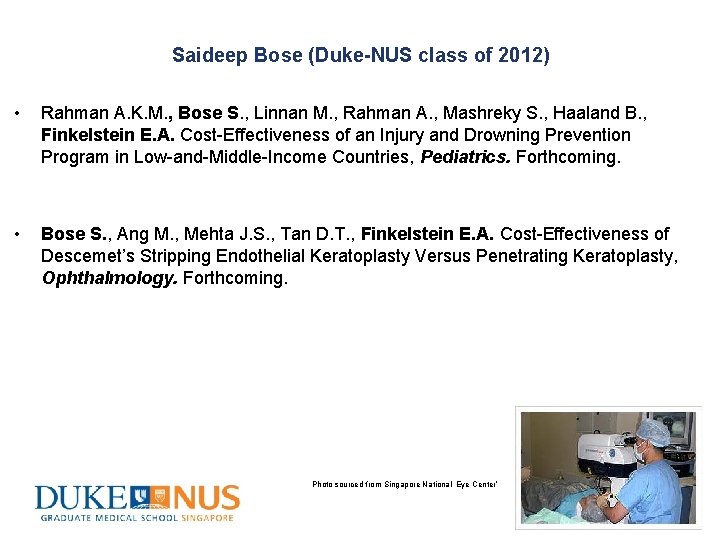
Saideep Bose (Duke-NUS class of 2012) • Rahman A. K. M. , Bose S. , Linnan M. , Rahman A. , Mashreky S. , Haaland B. , Finkelstein E. A. Cost-Effectiveness of an Injury and Drowning Prevention Program in Low-and-Middle-Income Countries, Pediatrics. Forthcoming. • Bose S. , Ang M. , Mehta J. S. , Tan D. T. , Finkelstein E. A. Cost-Effectiveness of Descemet’s Stripping Endothelial Keratoplasty Versus Penetrating Keratoplasty, Ophthalmology. Forthcoming. Photo sourced from Singapore National Eye Center’
Sarah Lombardo- 3 rd Year Medical Student- Global Health project • • Third-year medical student now resident in Surgery at Washington University Presented poster on the attitudes toward tobacco and alcohol among Sri Lankan adults. Thesis accepted in the International Journal of Occupational and Environmental Medicine As part of their research projects, they found that tobacco and alcohol use have not decreased in the last decade despite tighter governmental regulations on their production and sale. The most commonly cited reason for smoking was “as a habit, ” though women identified “to overcome frustration” as their top motivator. The primary reason for drinking among men was “for fun, ” and for women was being “unable to refuse in parties/functions. ” Mentors on the project were DGHI faculty members Truls Ostbye and Asia Maselko. Lombardo and Ostbye also presented two additional posters on the health status, musculoskeletal symptoms (MSK) and quality of life of female garment factory works in Sri Lanka.
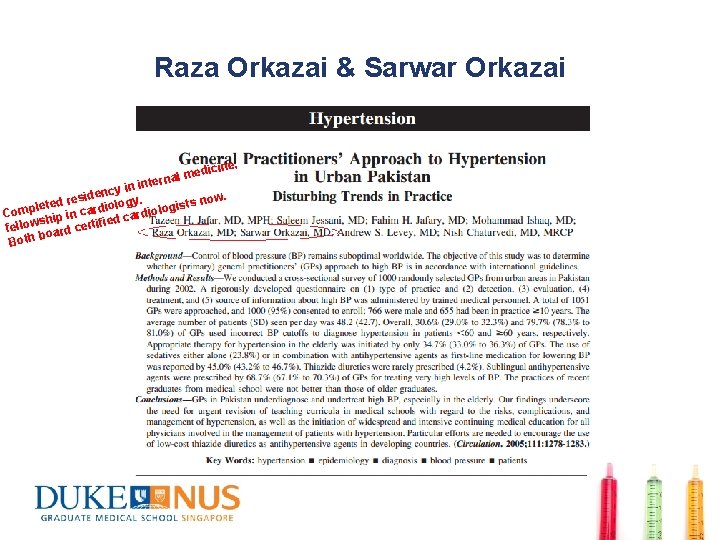
Raza Orkazai & Sarwar Orkazai e, edicin m l a n ter y in in c n e d. esi ow. eted r cardiology iologists n l p m Co n rd ship i ertified ca w o l l e c f board Both
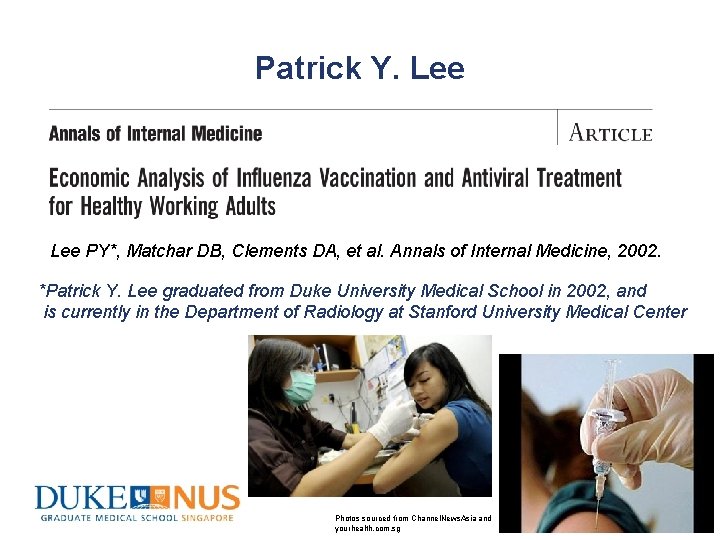
Patrick Y. Lee PY*, Matchar DB, Clements DA, et al. Annals of Internal Medicine, 2002. *Patrick Y. Lee graduated from Duke University Medical School in 2002, and is currently in the Department of Radiology at Stanford University Medical Center Photos sourced from Channel. News. Asia and yourhealth. com. sg

Process
HSSR Medical Student Research Structure • Completion of the research requires research experience supervised by HSSR faculty for at least 1 year on a full-time basis. • HSSR faculty serve as the primary methodological mentor. • There may be additional supervisors (from specific clinical specialties or others) depending upon the research topic. The supervisors could be from other departments. • We expect and support students to refine their research questions, develop the protocol, learn the appropriate regulatory processes for good conduct of studies, do primary data collection, analysis, prepare their theses and publish papers. • Students also participate in our seminars and gain critical thinking skills required for becoming a good investigator and practicing evidence based medicine.

Faculty
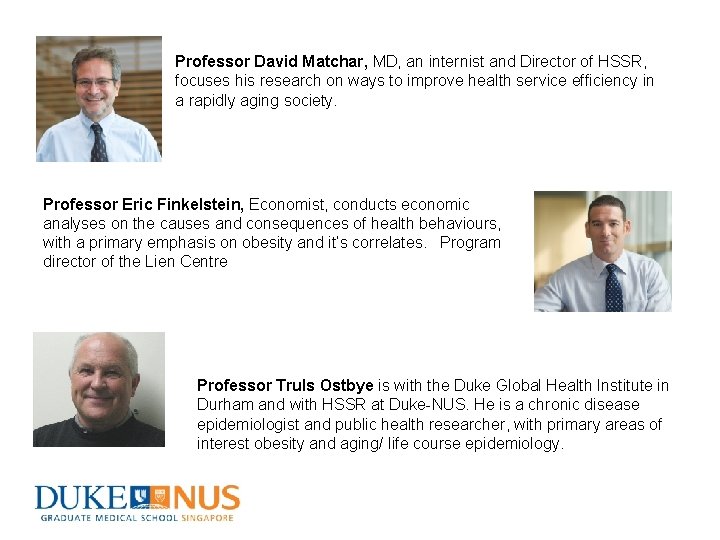
Professor David Matchar, MD, an internist and Director of HSSR, focuses his research on ways to improve health service efficiency in a rapidly aging society. Professor Eric Finkelstein, Economist, conducts economic analyses on the causes and consequences of health behaviours, with a primary emphasis on obesity and it’s correlates. Program director of the Lien Centre Professor Truls Ostbye is with the Duke Global Health Institute in Durham and with HSSR at Duke-NUS. He is a chronic disease epidemiologist and public health researcher, with primary areas of interest obesity and aging/ life course epidemiology.
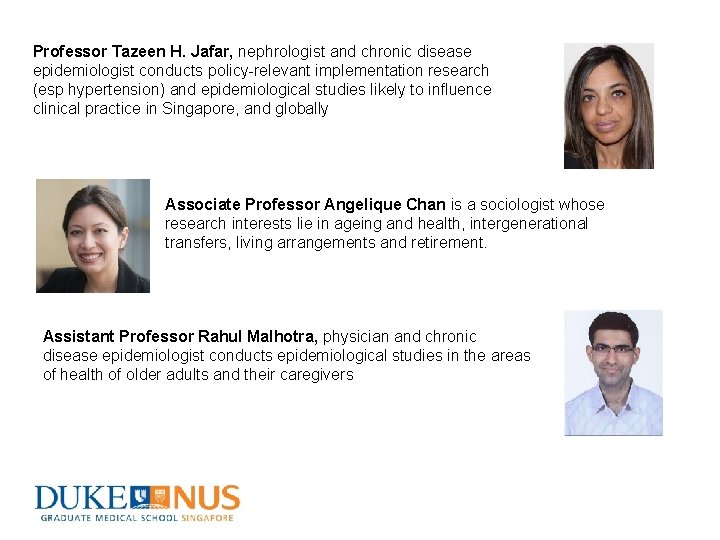
Professor Tazeen H. Jafar, nephrologist and chronic disease epidemiologist conducts policy-relevant implementation research (esp hypertension) and epidemiological studies likely to influence clinical practice in Singapore, and globally Associate Professor Angelique Chan is a sociologist whose research interests lie in ageing and health, intergenerational transfers, living arrangements and retirement. Assistant Professor Rahul Malhotra, physician and chronic disease epidemiologist conducts epidemiological studies in the areas of health of older adults and their caregivers

Thank you www. duke-nus. edu. sg
- Slides: 22