
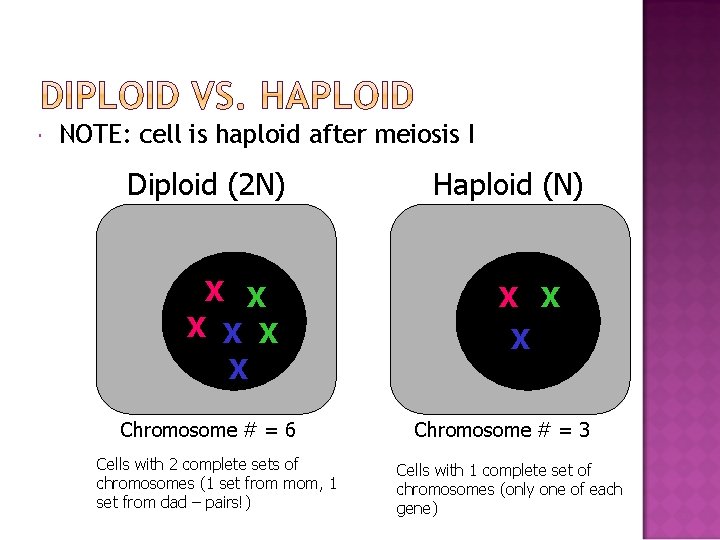
NOTE cell is haploid after meiosis I Diploid


- Slides: 23
NOTE: cell is haploid after meiosis I Diploid (2 N) X X X Chromosome # = 6 Cells with 2 complete sets of chromosomes (1 set from mom, 1 set from dad – pairs!) Haploid (N) X X X Chromosome # = 3 Cells with 1 complete set of chromosomes (only one of each gene)
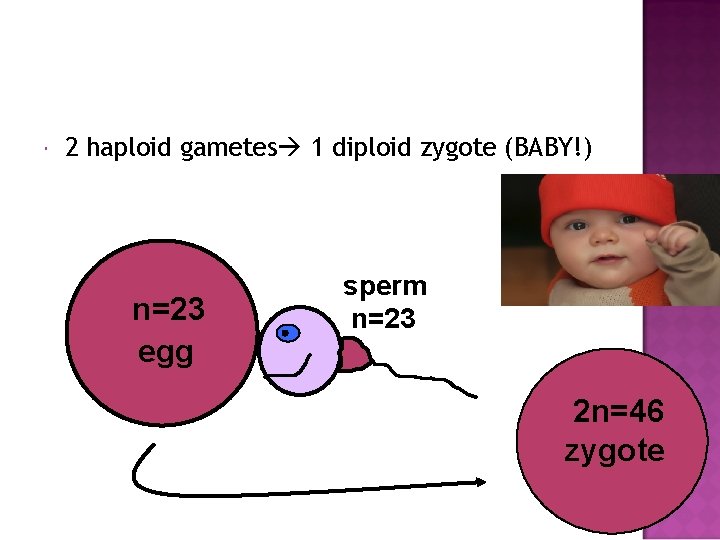
2 haploid gametes 1 diploid zygote (BABY!) n=23 egg sperm n=23 2 n=46 zygote
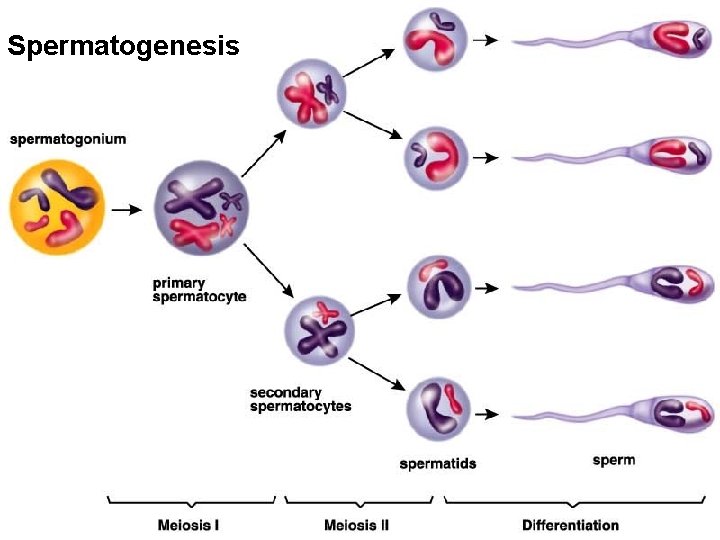
Both specific versions of MEIOSIS occurring in M and F reproductive systems, respectively Therefore, both involve 2 subsequent divisions and the formation of 4 daughter cells
Spermatogenesis
Approximately 3 million sperm cells undergo spermatogenesis each day Sperm stem cells that continuously undergo mitosis to produce spermatogonia 4 sperm cells with equal viability
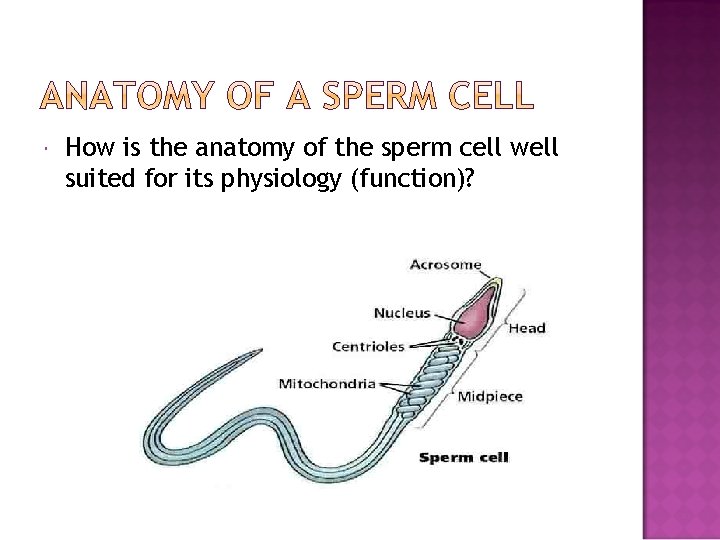
How is the anatomy of the sperm cell well suited for its physiology (function)?
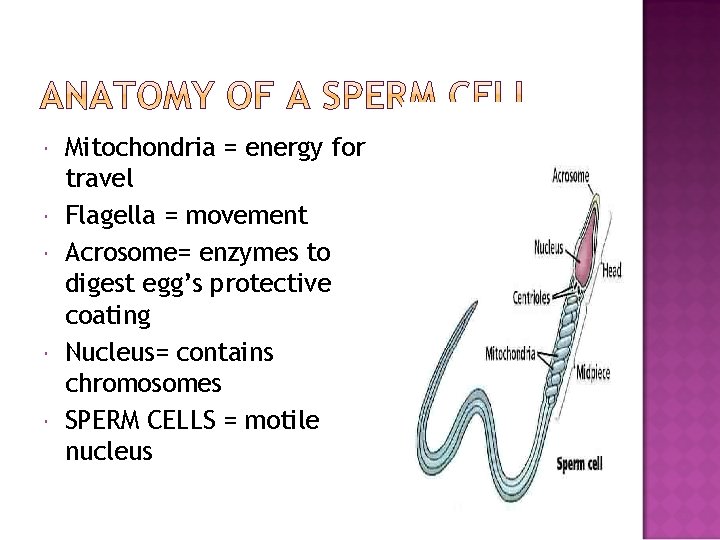
Mitochondria = energy for travel Flagella = movement Acrosome= enzymes to digest egg’s protective coating Nucleus= contains chromosomes SPERM CELLS = motile nucleus
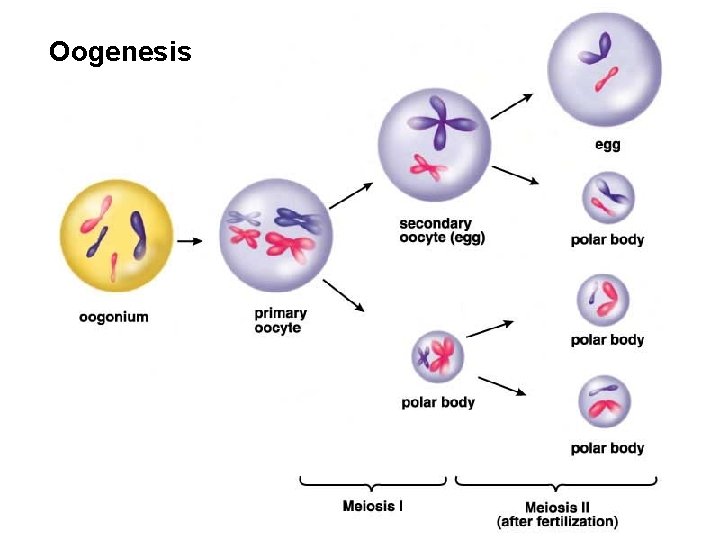
Oogenesis
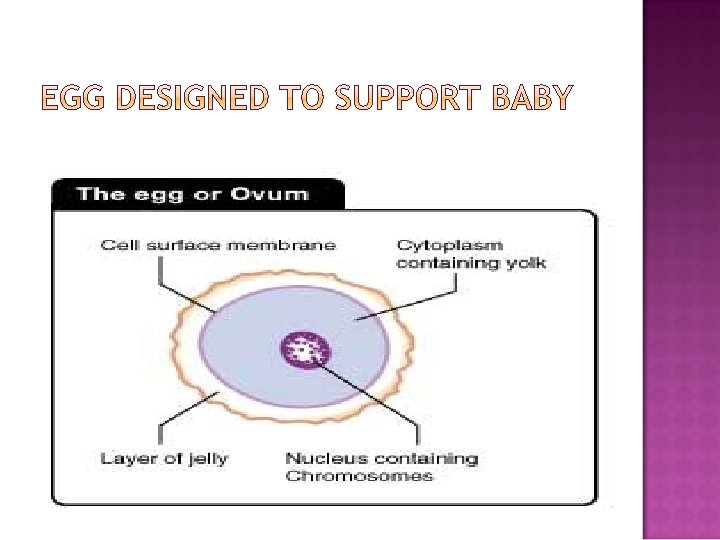
Unequal division of cytoplasm (and its organelles) Why is this important? Is there unequal division of the chromosomes? Polar bodies later degrade
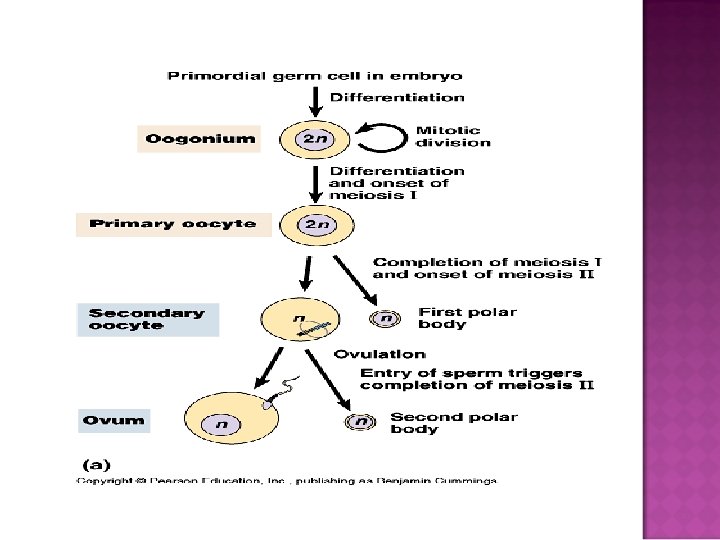
Females are born with set amount of oogonia 1) At birth, primary oocytes halted at prophase I 2) Hormones trigger ONE primary oocyte per month to finish meiosis I (after puberty) 3) secondary oocytes halted at metaphase II of meiosis 4) entry of sperm triggers completion of meiosis II 5) ovum is formed as product of meiosis II
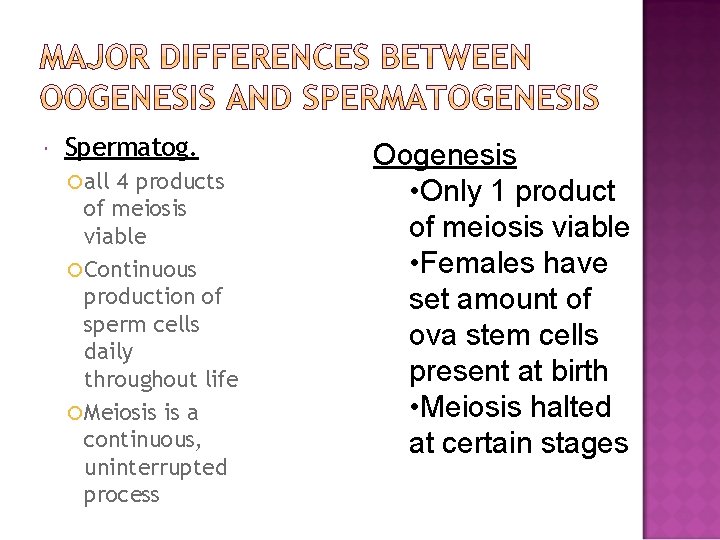
Spermatog. all 4 products of meiosis viable Continuous production of sperm cells daily throughout life Meiosis is a continuous, uninterrupted process Oogenesis • Only 1 product of meiosis viable • Females have set amount of ova stem cells present at birth • Meiosis halted at certain stages
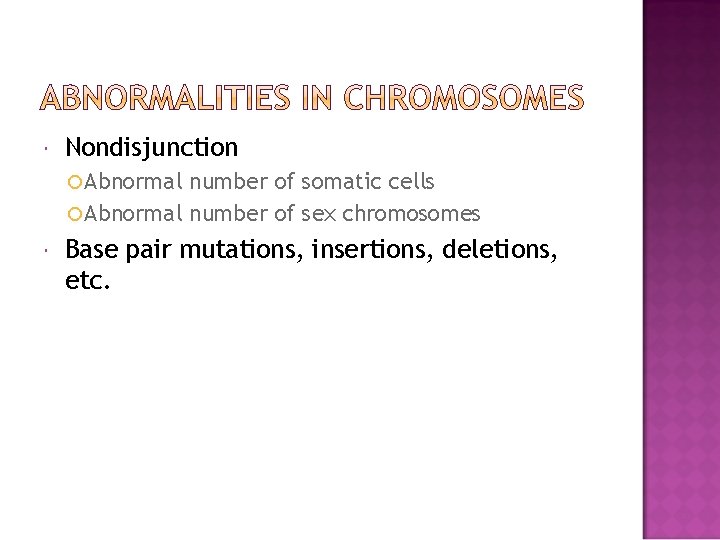
Nondisjunction Abnormal number of somatic cells Abnormal number of sex chromosomes Base pair mutations, insertions, deletions, etc.
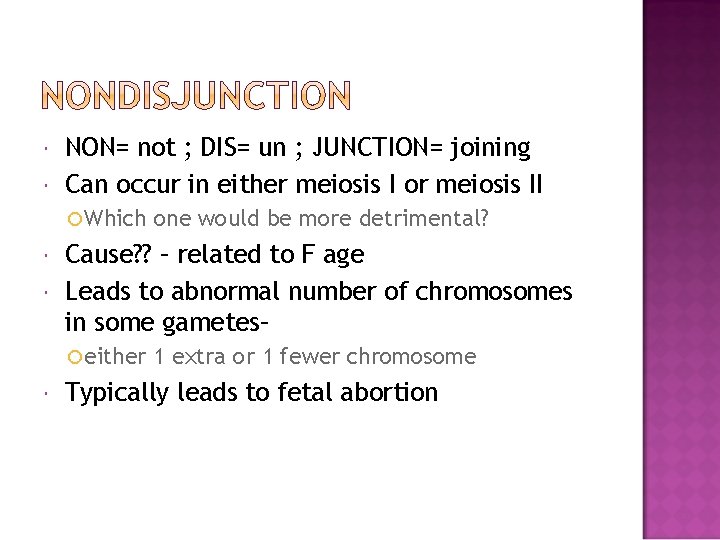
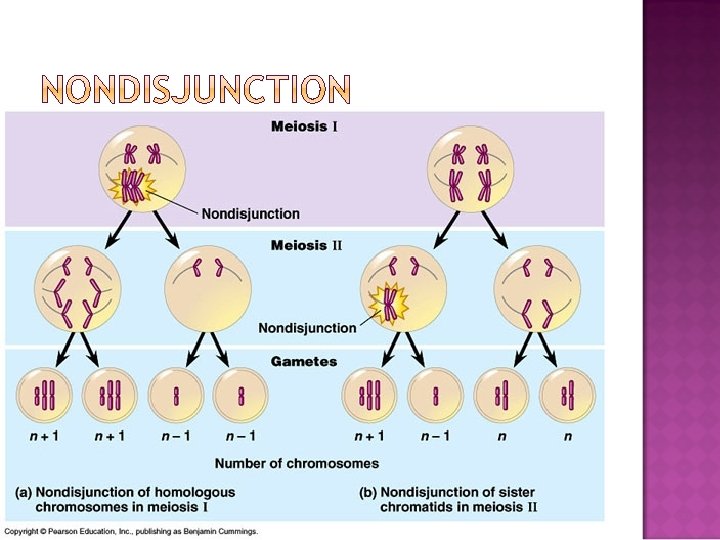
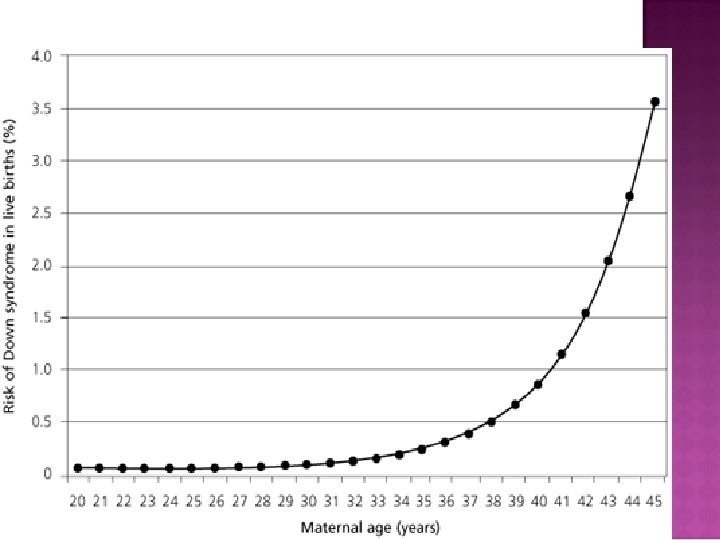
NON= not ; DIS= un ; JUNCTION= joining Can occur in either meiosis I or meiosis II Which Cause? ? – related to F age Leads to abnormal number of chromosomes in some gametes– either one would be more detrimental? 1 extra or 1 fewer chromosome Typically leads to fetal abortion
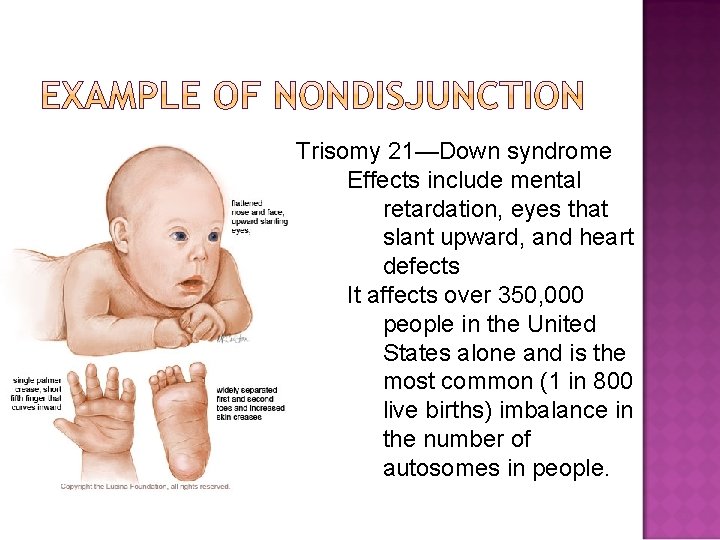
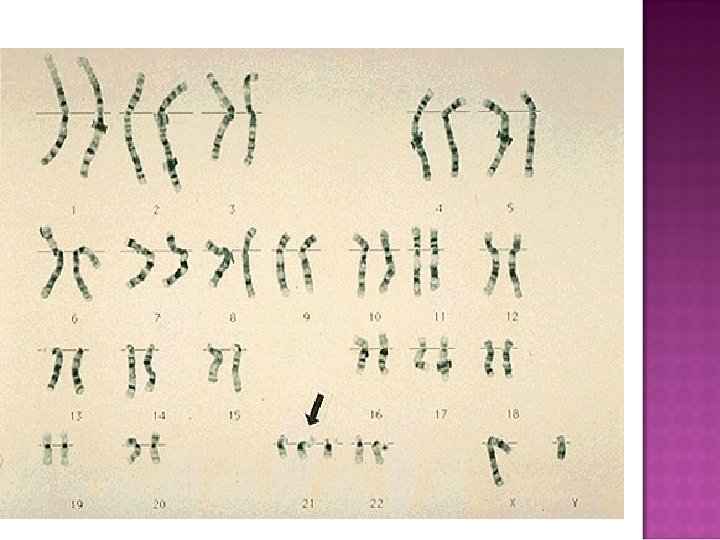
Trisomy 21—Down syndrome Effects include mental retardation, eyes that slant upward, and heart defects It affects over 350, 000 people in the United States alone and is the most common (1 in 800 live births) imbalance in the number of autosomes in people.
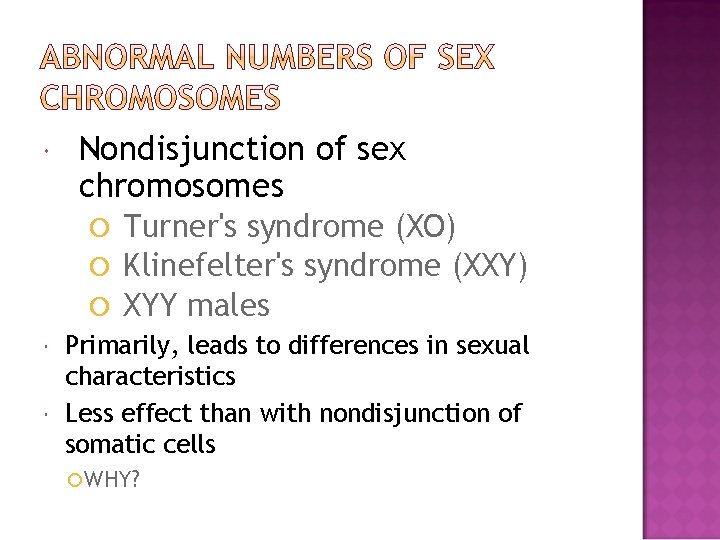
Nondisjunction of sex chromosomes Turner's syndrome (XO) Klinefelter's syndrome (XXY) XYY males Primarily, leads to differences in sexual characteristics Less effect than with nondisjunction of somatic cells WHY?
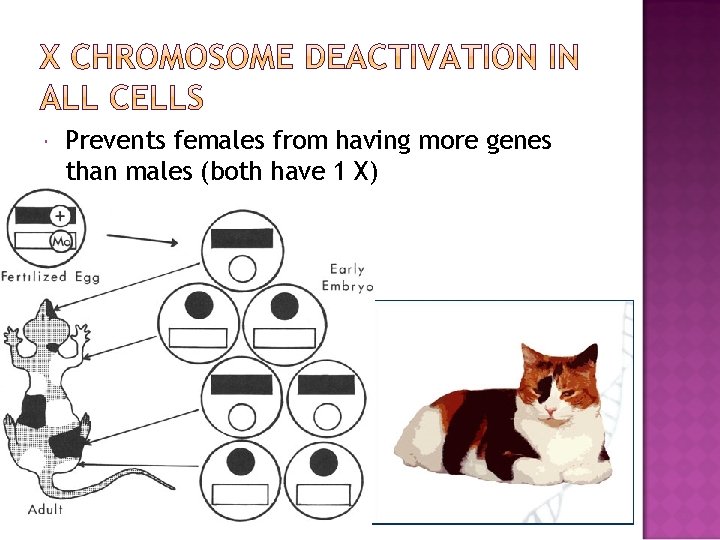
Prevents females from having more genes than males (both have 1 X)