
Not all pain is the same implications for



- Slides: 33
Not all pain is the same: implications for assessment and treatment Nancy Wiedemer, CRNP Pain Management Coordinator Philadelphia VA Medical Center nancy. wiedemer@med. va. gov
Assessment and Treatment of Pain: Issues and Challenges n n n Underassessment and undertreatment Interpatient variability Patient not believed OPIOIDS Complex pathophysiology
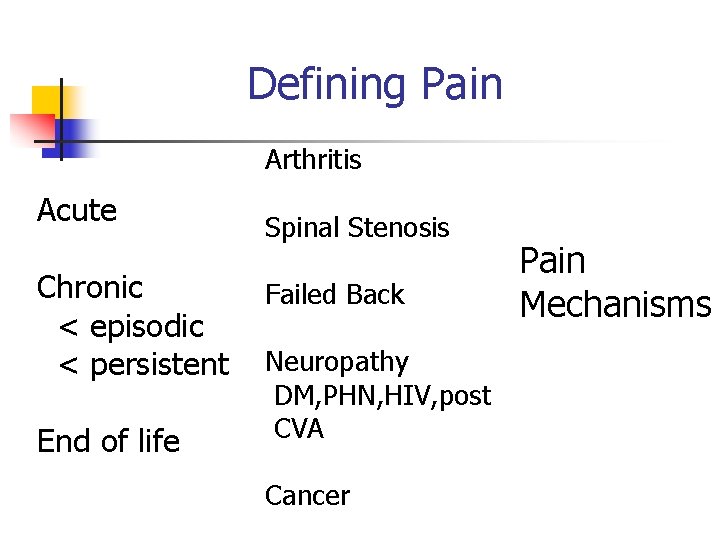
Defining Pain Arthritis Acute Chronic < episodic < persistent End of life Spinal Stenosis Failed Back Neuropathy DM, PHN, HIV, post CVA Cancer Pain Mechanisms
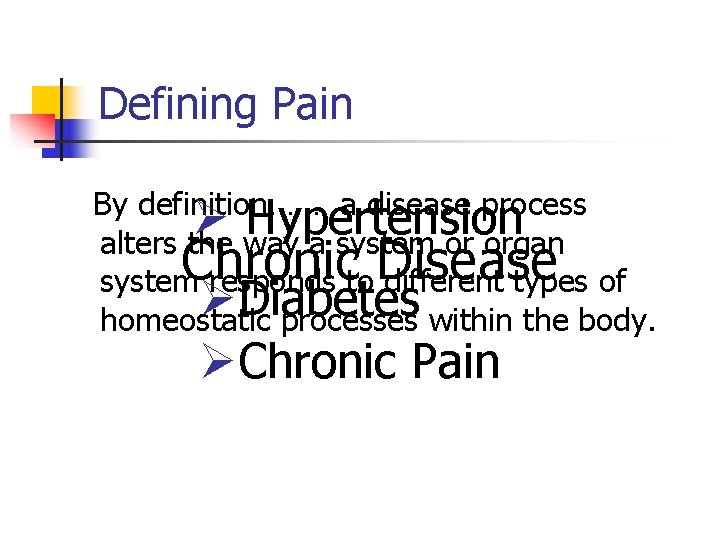
Defining Pain By definition…… a disease process Ø Hypertension alters the way a system or organ system responds to different types of Ø Diabetes homeostatic processes within the body. Chronic Disease ØChronic Pain
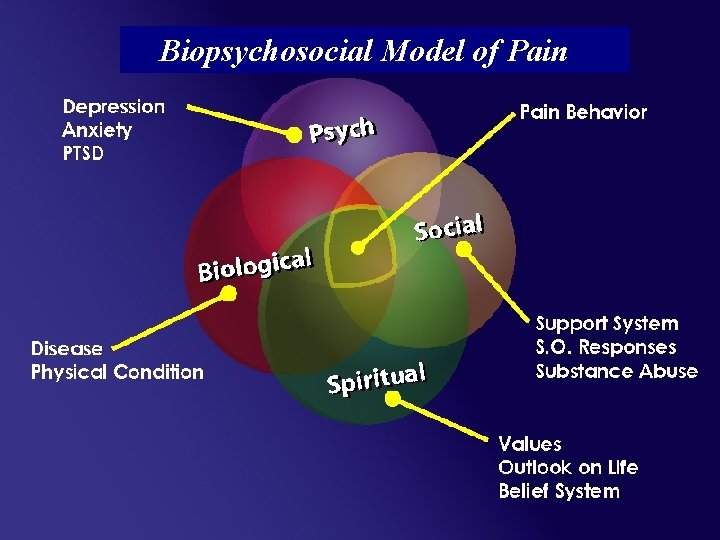
Biopsychosocial Model of Pain
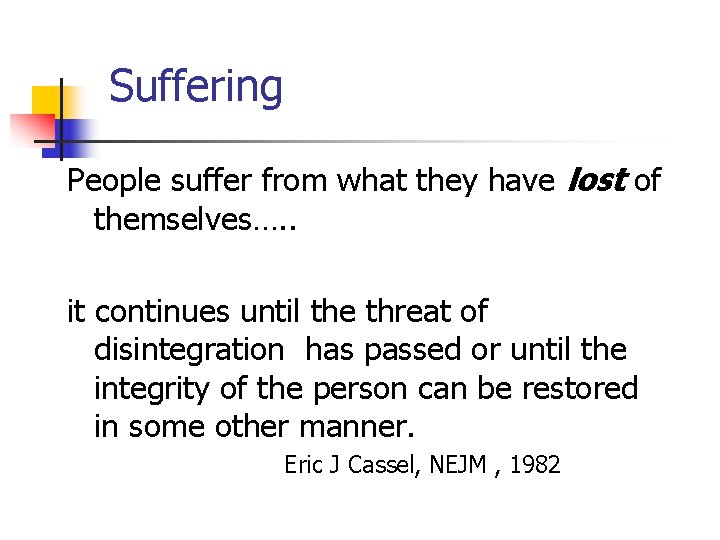
Suffering People suffer from what they have lost of themselves…. . it continues until the threat of disintegration has passed or until the integrity of the person can be restored in some other manner. Eric J Cassel, NEJM , 1982
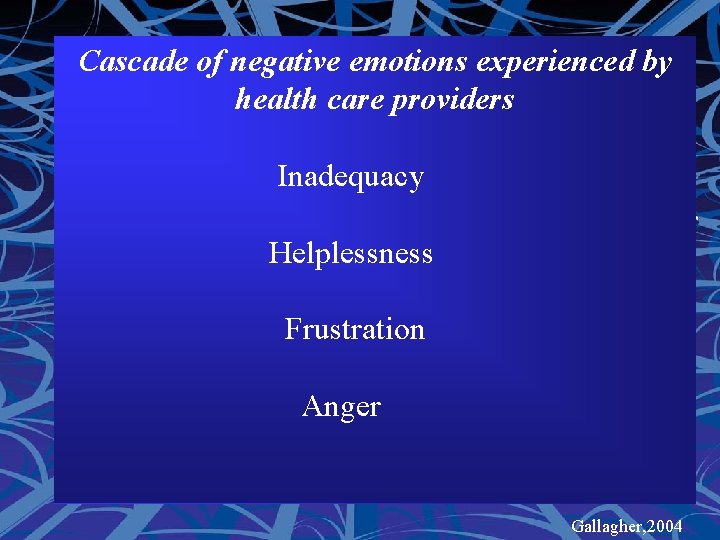
Cascade of negative emotions experienced by health care providers Inadequacy Helplessness Frustration Anger Gallagher, 2004
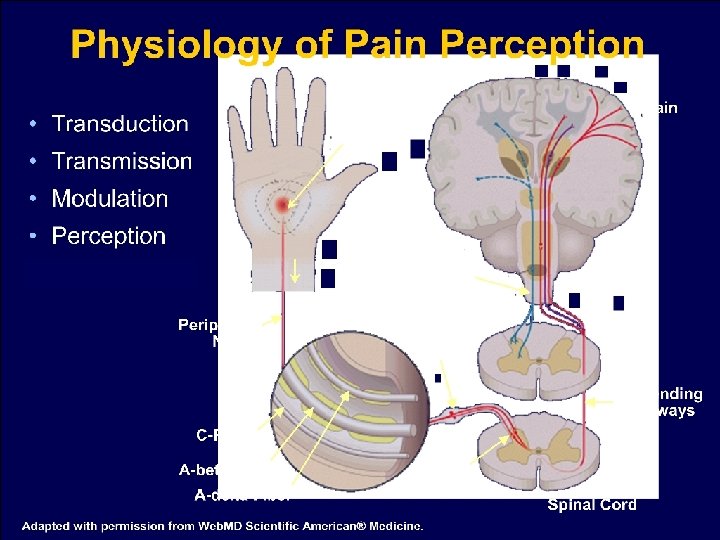
WHAT IS PAIN? PAIN is a sensory processing system with a known anatomy and physiology
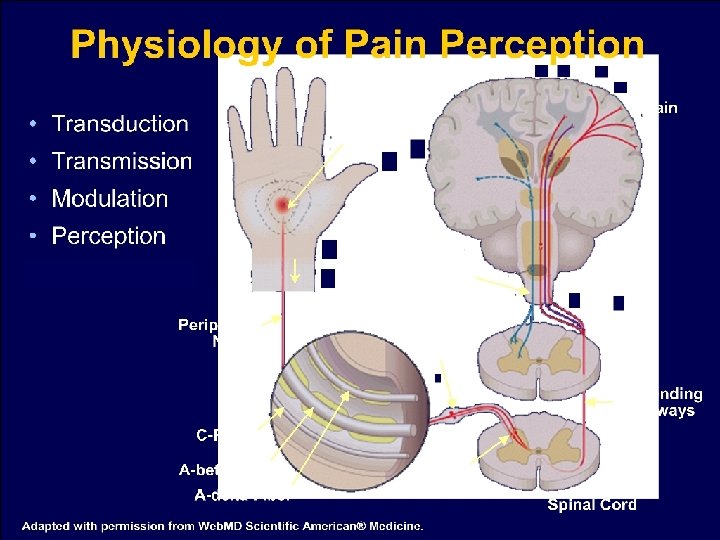
Overview of Pain Perception
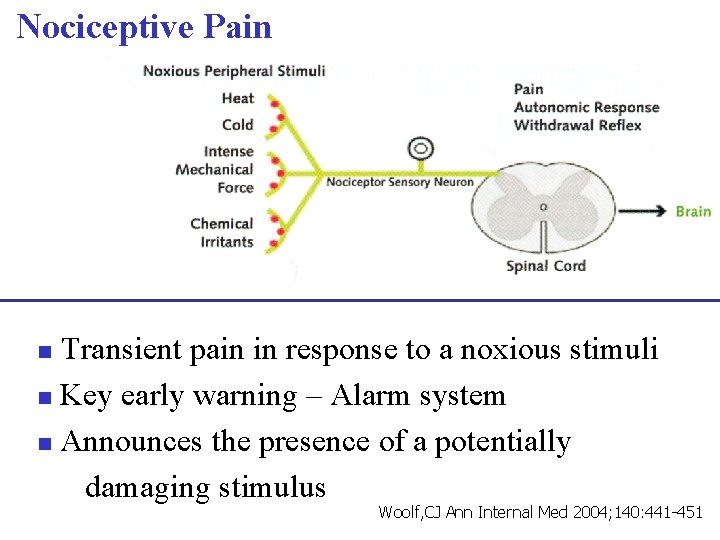
Nociceptive Pain Transient pain in response to a noxious stimuli n Key early warning – Alarm system n Announces the presence of a potentially damaging stimulus n Woolf, CJ Ann Internal Med 2004; 140: 441 -451
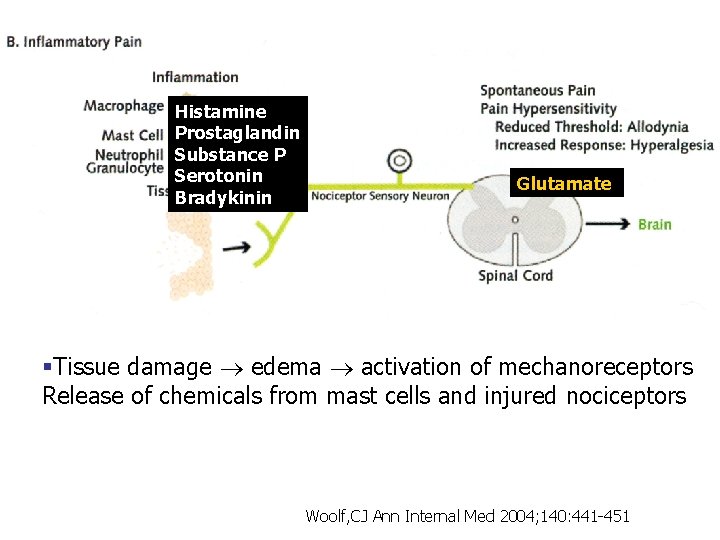
Histamine Prostaglandin Substance P Serotonin Bradykinin Glutamate §Tissue damage edema activation of mechanoreceptors Release of chemicals from mast cells and injured nociceptors Woolf, CJ Ann Internal Med 2004; 140: 441 -451
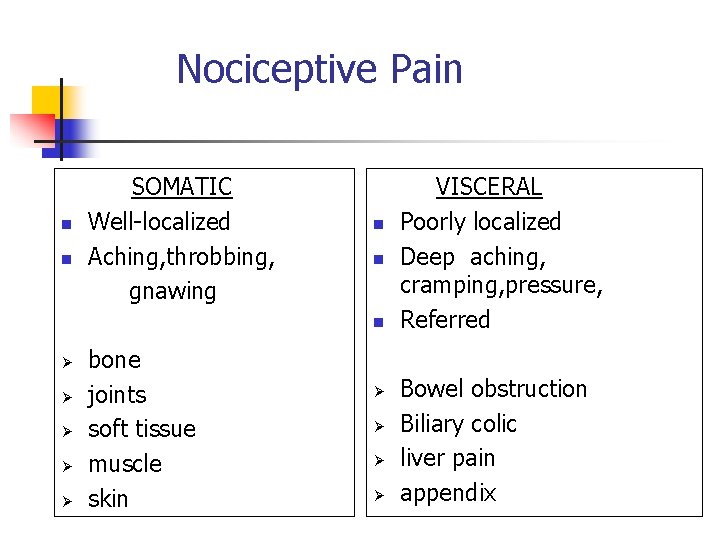
Nociceptive Pain n n SOMATIC Well-localized Aching, throbbing, gnawing n n n Ø Ø Ø bone joints soft tissue muscle skin Ø Ø VISCERAL Poorly localized Deep aching, cramping, pressure, Referred Bowel obstruction Biliary colic liver pain appendix
NEUROPATHIC PAIN
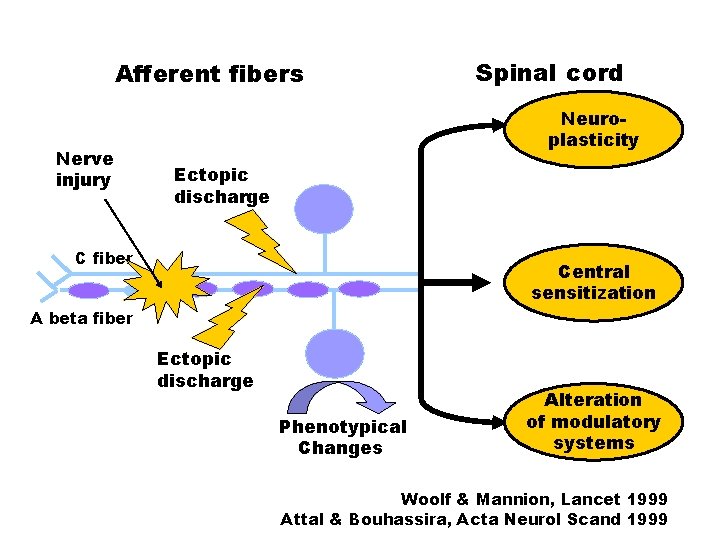
Afferent fibers Nerve injury Spinal cord Neuroplasticity Ectopic discharge C fiber Central sensitization A beta fiber Ectopic discharge Phenotypical Changes Alteration of modulatory systems Woolf & Mannion, Lancet 1999 Attal & Bouhassira, Acta Neurol Scand 1999
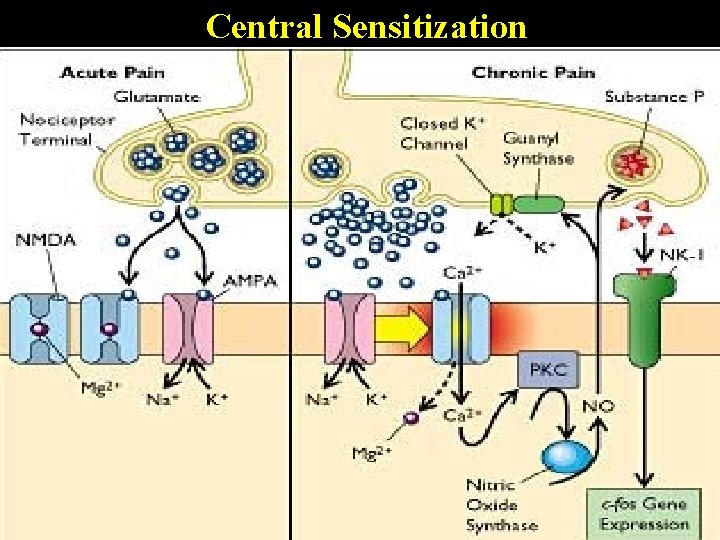
Central Sensitization
Overview of Pain Perception
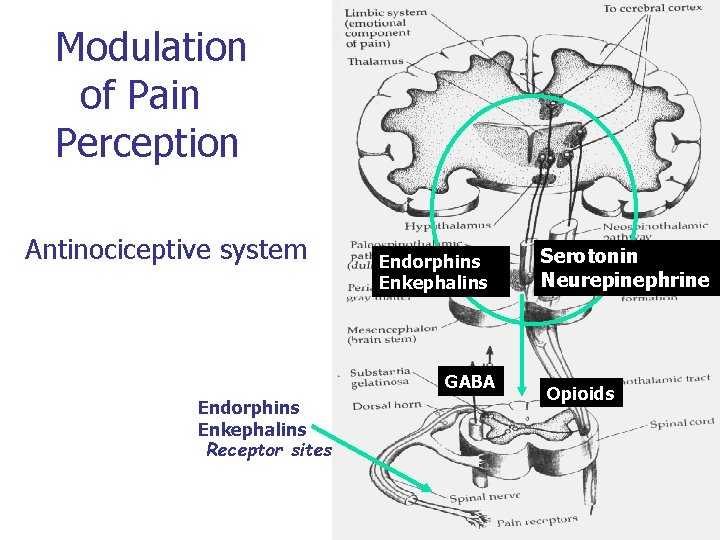
Modulation of Pain Perception Antinociceptive system Endorphins Opioids Enkephalins GABA Endorphins Enkephalins Receptor sites Serotonin Neurepinephrine Opioids
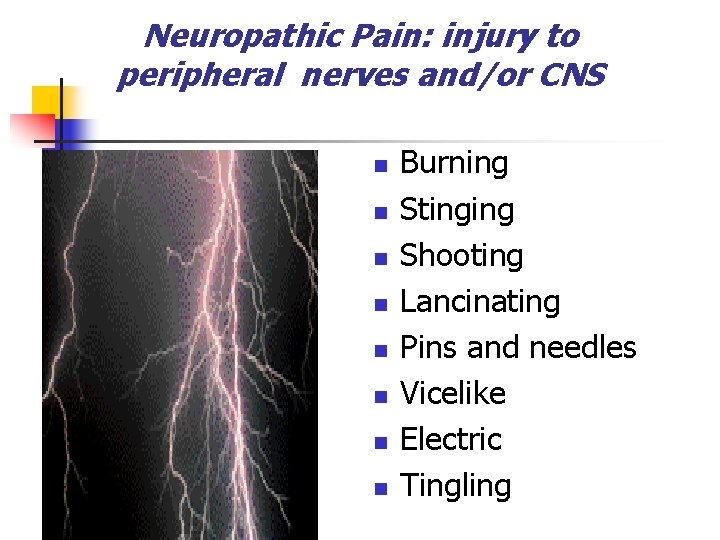
Neuropathic Pain: injury to peripheral nerves and/or CNS n n n n Burning Stinging Shooting Lancinating Pins and needles Vicelike Electric Tingling
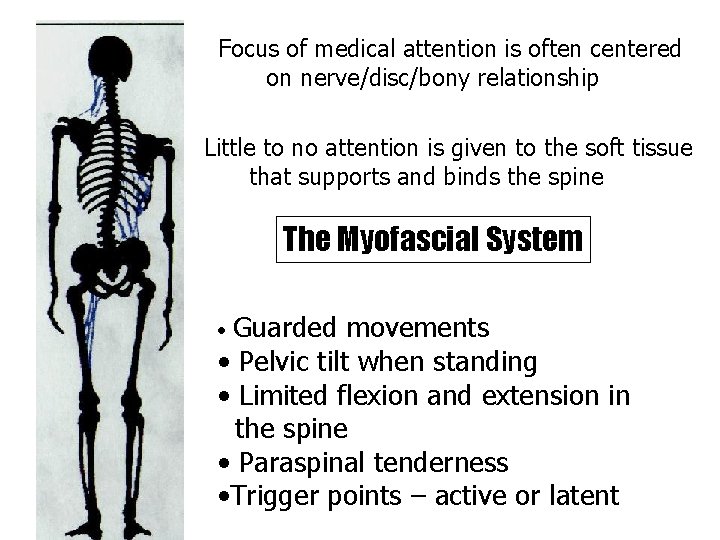
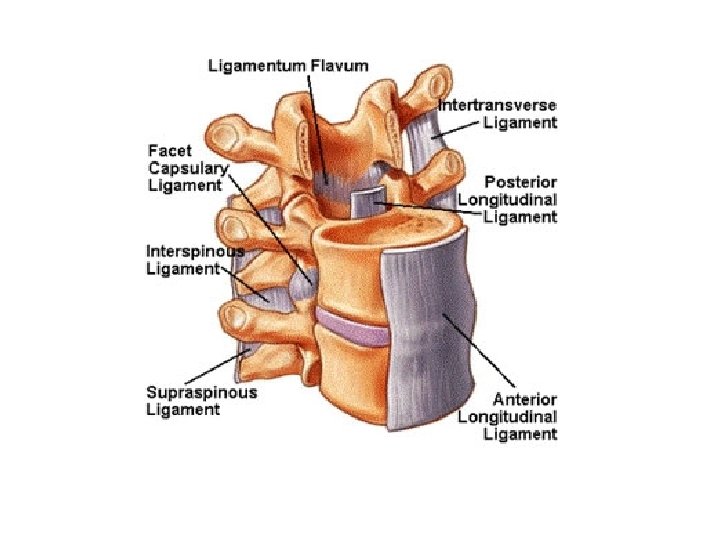
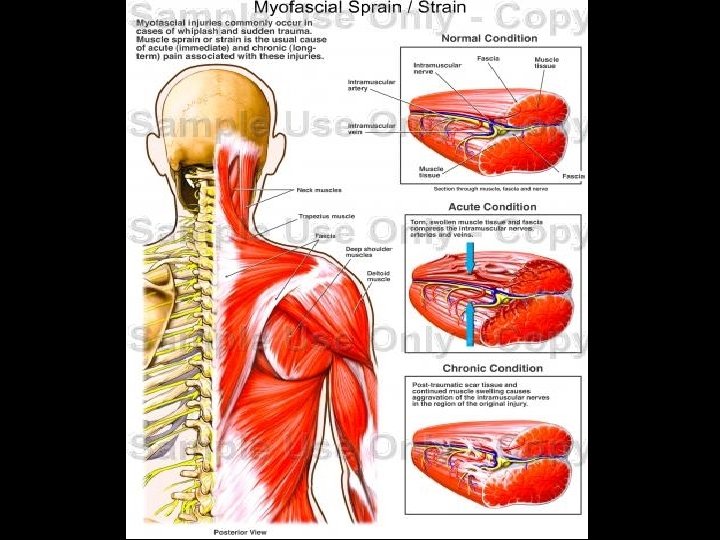
Focus of medical attention is often centered on nerve/disc/bony relationship Little to no attention is given to the soft tissue that supports and binds the spine The Myofascial System Guarded movements • Pelvic tilt when standing • Limited flexion and extension in the spine • Paraspinal tenderness • Trigger points – active or latent •
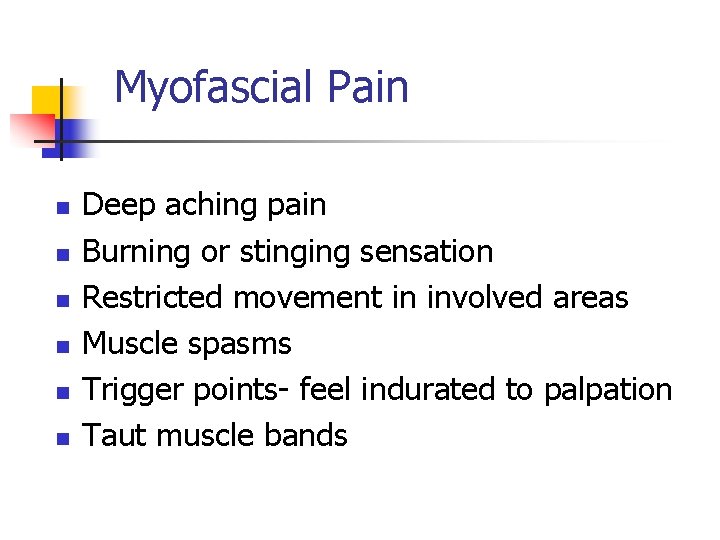
Myofascial Pain n n n Deep aching pain Burning or stinging sensation Restricted movement in involved areas Muscle spasms Trigger points- feel indurated to palpation Taut muscle bands
VA Clinician
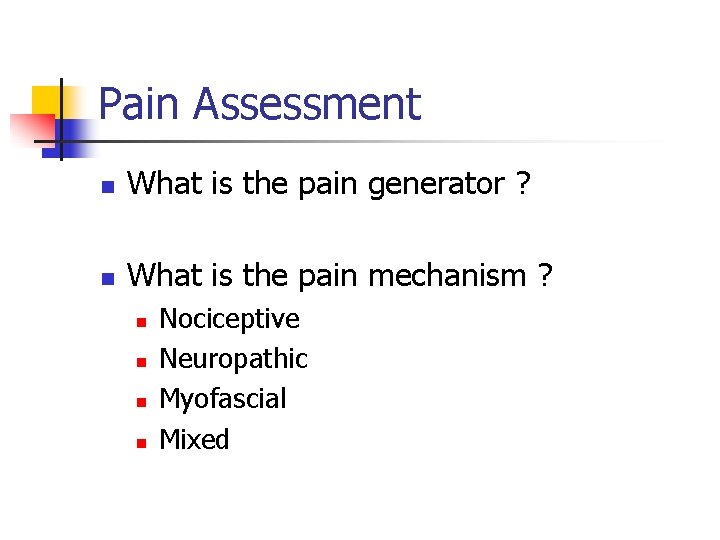
Pain Assessment n What is the pain generator ? n What is the pain mechanism ? n n Nociceptive Neuropathic Myofascial Mixed
Pain Assessment n Are there pain amplifiers ? n n Anxiety Depression PTSD Substance Abuse Disorder
Are there RED FLAGS ? ? ? n n Tumors Fractures Infection Cauda Equina Syndrome Factors that may impede recovery: n Emotional state n Fear-avoidance beliefs n Poor coping strategies Linton, SL & Boresma, K, 2003
History and Physical Exam n n Events at pain onset Pain: n n n n site & radiation quality intensity (numeric score 0 -10) temporal pattern provocations & sources of relief Activities and functional limitations Sleep disruption Previous therapies
Conclusions Chronic Pain ↔ Chronic Disease Management Approach based on Biopsychosocial Model
Conclusions n n n Not all patients with the same pain diagnosis have the same pain mechanisms Different mechanisms can coexist Treatment approaches that target each pain generator can improve outcomes
Conclusions Secondary prevention depends on early and aggressive assessment and management of pain