
Nostalgia Art the Archive New England Archivists Portsmouth


- Slides: 45
Nostalgia, Art, & the Archive New England Archivists Portsmouth, NH Spring 2014 John Campopiano, Matt Spry, Dana Keller
Nostalgia in (a few) nutshells ● Origins as a mental health issue ● A “longing” for “place” or a period of time ● A romantic feeling about displacement or loss
Restorative & Reflective Nostalgia ● Restorative: re-construction of monuments and artifacts from the past ● Reflective: longing for the past with the understanding that accurately recalling it is impossible; the past and memory as fragmentary and imprecise
Some nostalgic expressions today ● Hauntological re-interpretations of historical image & sound ● Networked and interactive dimensions of place ● Colorization of history through digital means
Closing the loop • How do these different uses relate to our understanding of neutrality in the archives? • How do these different uses complicate traditional notions of copyright? • If at all, how might these uses be applied to collections in your own institutions?
Nostalgia, Art, & the Archive New England Archivists Portsmouth, NH Spring 2014 Hauntology John Campopiano
Hauntology: Examining an alternative heritage No sta l Challenging temporality gia &c hild ho o d Reconsidering history & our sonic heritage
Hauntology: Tools for the job Public information films / Government & state-issued announcements Radio broadcasts BBC Radiophonic Workshop (BBC Archives, BFI) Library music Home movies Horror films and television programs Media sharing spaces / Digital libraries (You. Tube, Internet Archive) Original instrumentation / composition
“…In the music of each act you'll hear voices from sources such as archive folk recordings or government issued public information films, but they are often edited in a way to change their melodies or meanings. ” - Jim Jupp
“Time’s arrow is now a circle. ”
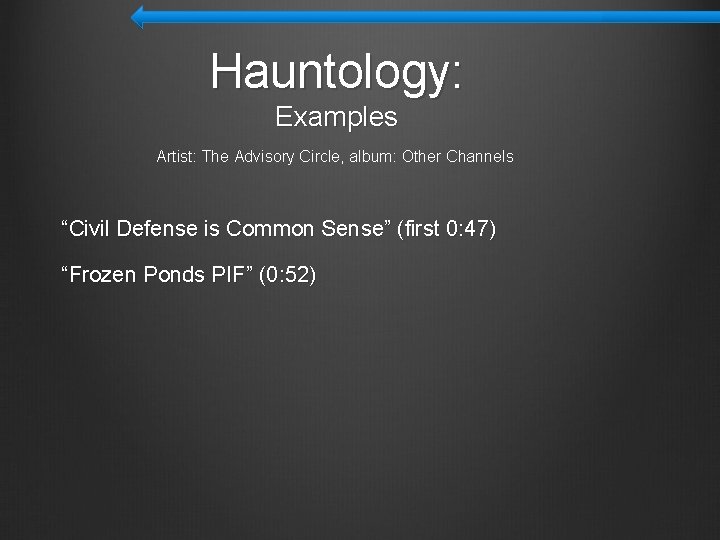
Hauntology: Examples Artist: The Advisory Circle, album: Other Channels “Civil Defense is Common Sense” (first 0: 47) “Frozen Ponds PIF” (0: 52)
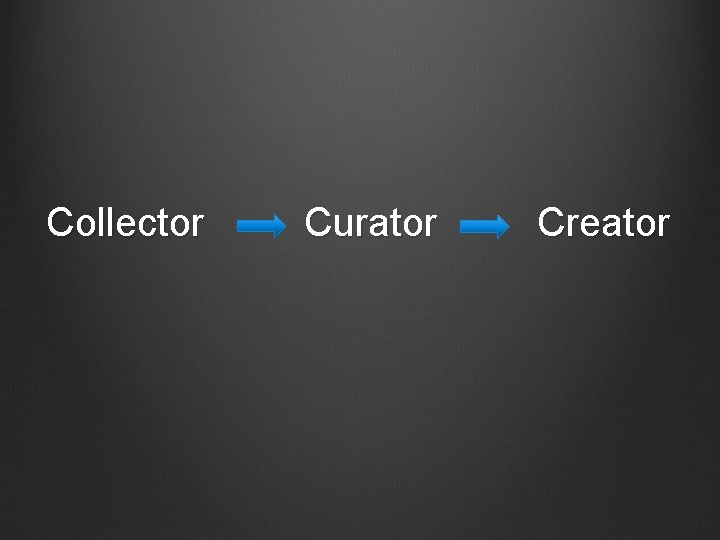
Collector Curator Creator
Opportunities & Challenges: For musician & archivist Musician Availability of resources Over abundance = de-mystification in the digital age Archivist (or information professional) Ability to reach new users Historical distortion (provenance)
“I think this kind of revisiting and re-presentation of archive material as a creative process in itself is a positive step, and ought also to inspire and encourage archivists to think more creatively about the possibilities inherent in their own collections and new ways to engage the public with what is usually hidden from their gaze. ” - Mark Pilkington, curator/musician/writer
Conclusion What do YOU think? Concerns? Issues to consider: Legal implications / copyright Historical distortion / the integrity of provenance Access & use / content control
Interactive and Networked Uses Nostalgia, Art, & the Archives Matt Spry New England Archivists Portsmouth, NH Spring 2014
What do we mean by interactive/networked? • • Interactive: the user provides some layer of input to a web-based platform (uploading, describing, etc. ). Networked: users sharing information across platforms (e. g. embed code, shares, retweets, likes, reblogs).
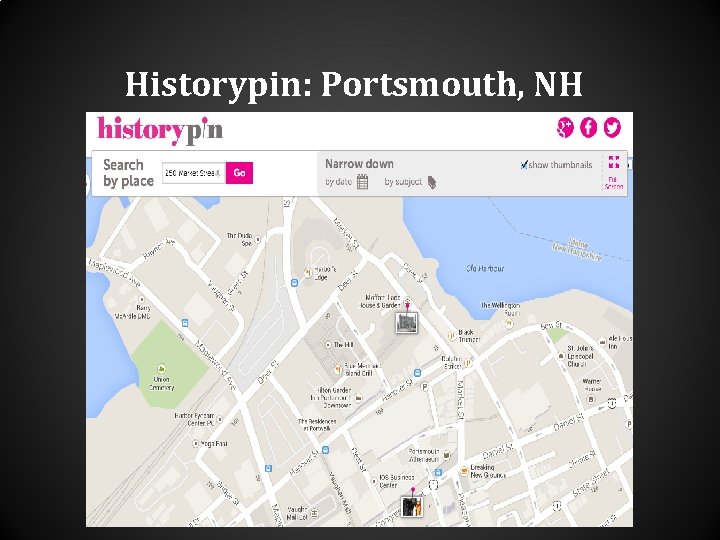
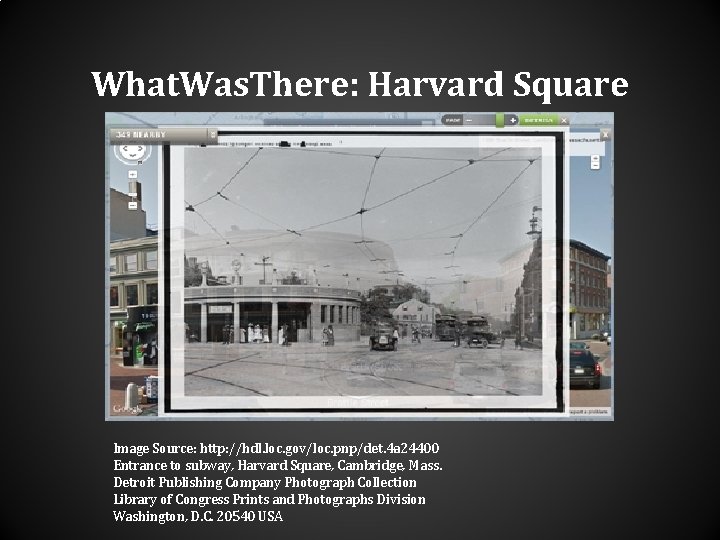
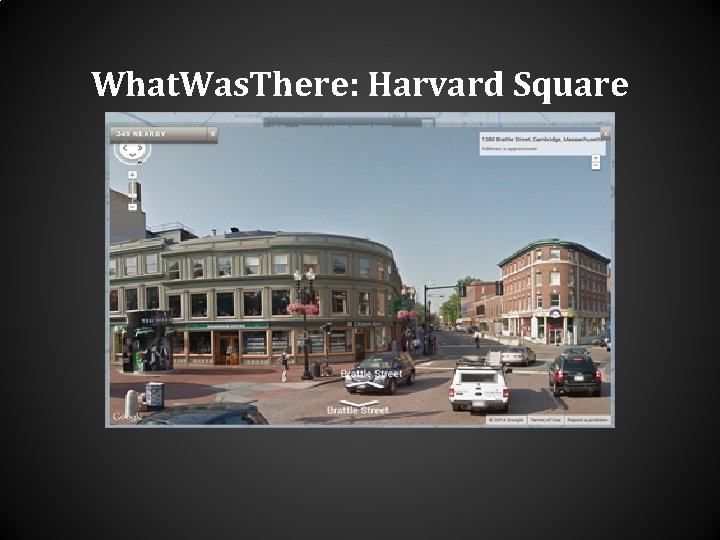
Geolocation History Platforms • • Leverage Google Maps API against historical archival materials Examples: Historypin, What. Was. There, Sepiatown
Historypin: Portsmouth, NH
What. Was. There: Harvard Square Image Source: http: //hdl. loc. gov/loc. pnp/det. 4 a 24400 Entrance to subway, Harvard Square, Cambridge, Mass. Detroit Publishing Company Photograph Collection Library of Congress Prints and Photographs Division Washington, D. C. 20540 USA
What. Was. There: Harvard Square
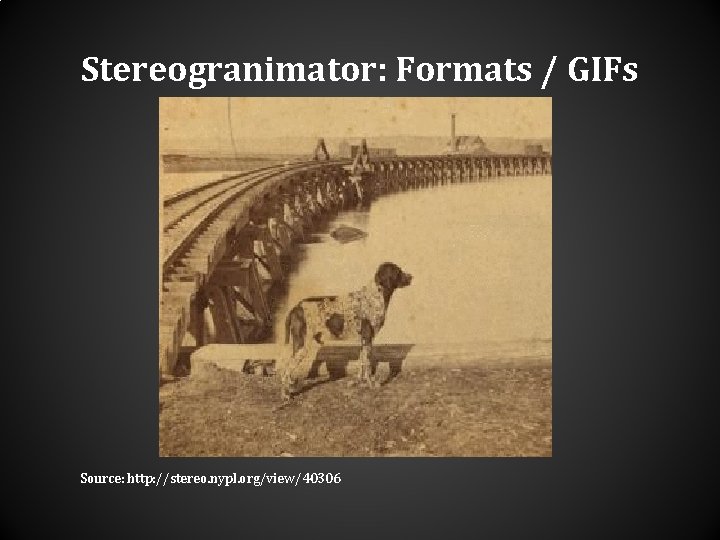
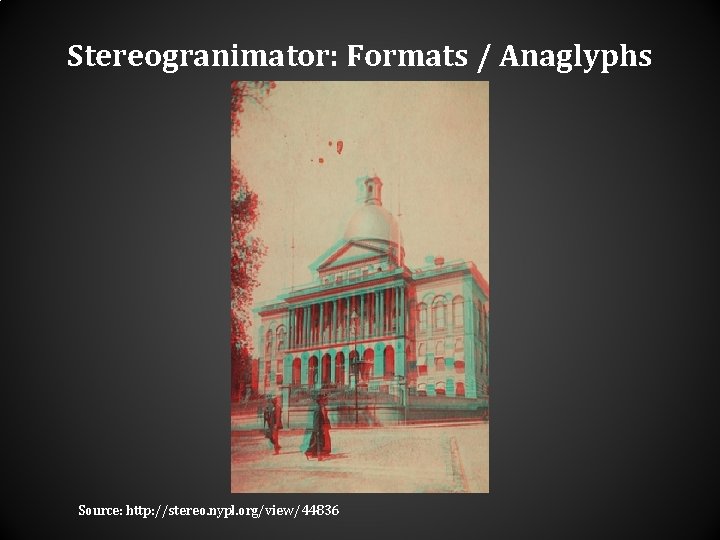
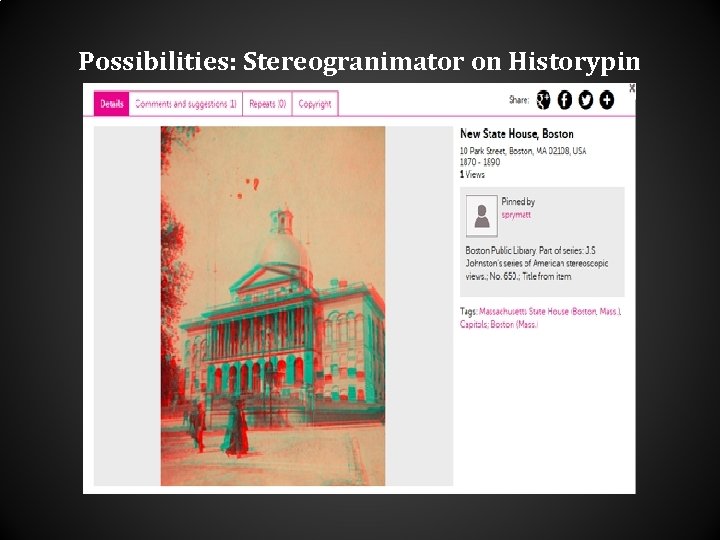
Stereogranimator: Overview • Inspired by project by artist Joshua Heineman • Used the NYPL’s Digital Collection • Allows users to transform archival stereographs into web-shareable 3 D images
Stereogranimator: Formats / GIFs Source: http: //stereo. nypl. org/view/40306
Please Put on 3 D Glasses
Stereogranimator: Formats / Anaglyphs Source: http: //stereo. nypl. org/view/44836
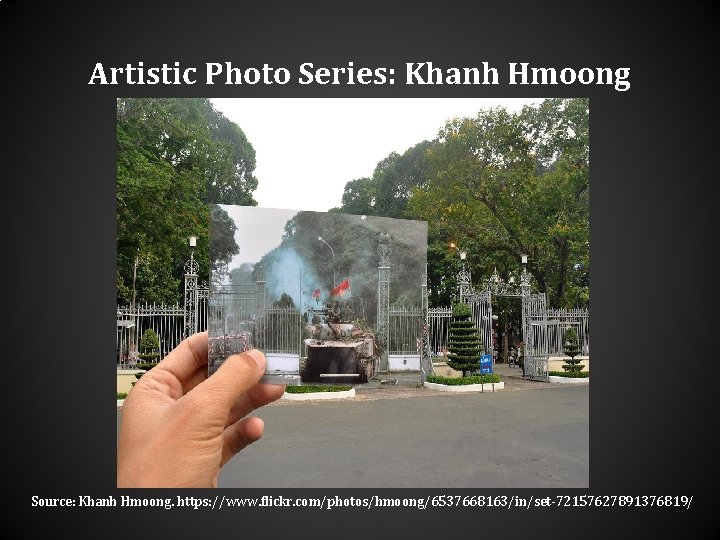
Artistic Photo Series: Khanh Hmoong Source: Khanh Hmoong. https: //www. flickr. com/photos/hmoong/6537668163/in/set-72157627891376819/
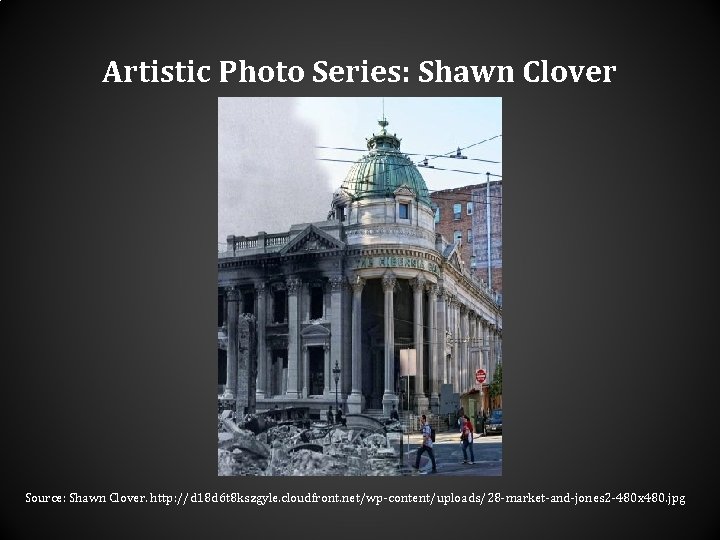
Artistic Photo Series: Shawn Clover Source: Shawn Clover. http: //d 18 d 6 t 8 kszgyle. cloudfront. net/wp-content/uploads/28 -market-and-jones 2 -480 x 480. jpg
Possibilities: Stereogranimator on Historypin
Possibilities: Photo Projects on What. Was. There Why combine them? Only a certain amount of visual information is communicated by: • A street view of the present day. (e. g. Google Maps) • An artist’s photo (with or without the use of historical imagery) • A historical photo (no visibility into change over time). Combining them in a single platform offers potential for a layered, networked meaning that contains the visual information offered by all of them.
Counterbalance "I think of my work less as nostalgia and more of an interrogation of history. As an artist of color, I am always suspicious of a 'longing' for a past that was in many ways rife with terror and inequality. At the same time I have an obsession with how nostalgia is used to selectively erase or omit a historical experience. As an artist I am selecting and omitting as well—with the intent of shifting the viewer's relationship to the past and/or historical object in question. ” – Wayne Hodge, artist
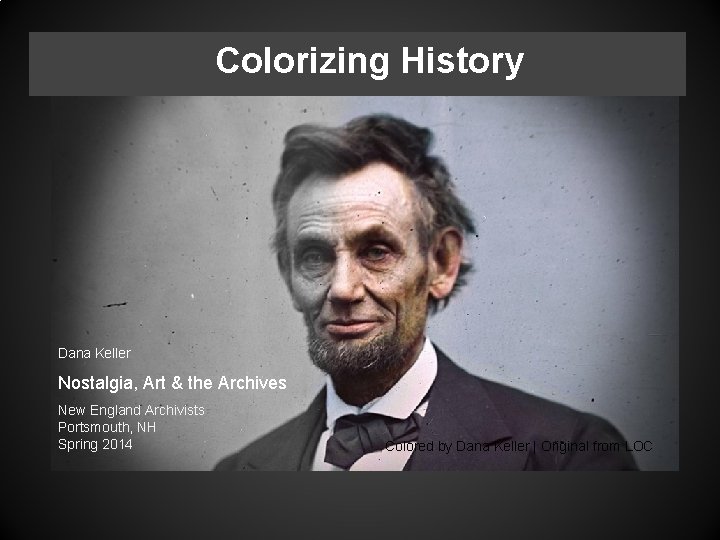
Colorizing History Dana Keller Nostalgia, Art & the Archives New England Archivists Portsmouth, NH Spring 2014 Colored by Dana Keller | Original from LOC
“The Barrier” • • Black and white photographs can seem like relics of the distant past. We are “disconnected” from the world in which these photographs were taken.
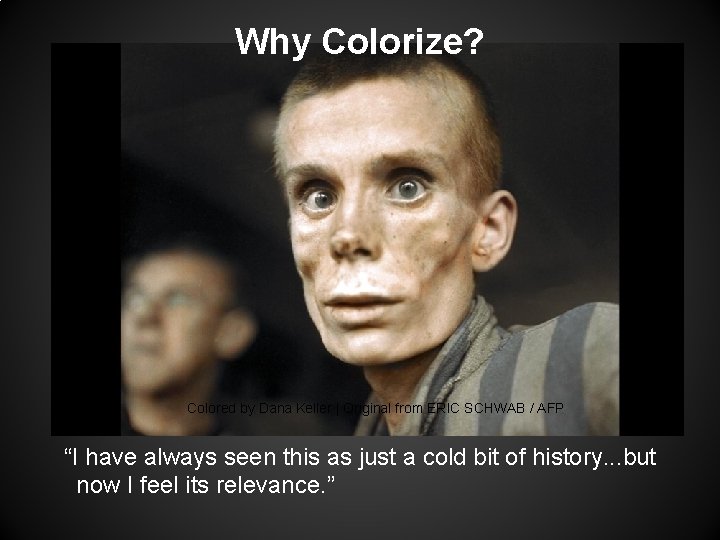
Why Colorize? Colored by Dana Keller | Original from ERIC SCHWAB / AFP “I have always seen this as just a cold bit of history. . . but now I feel its relevance. ”
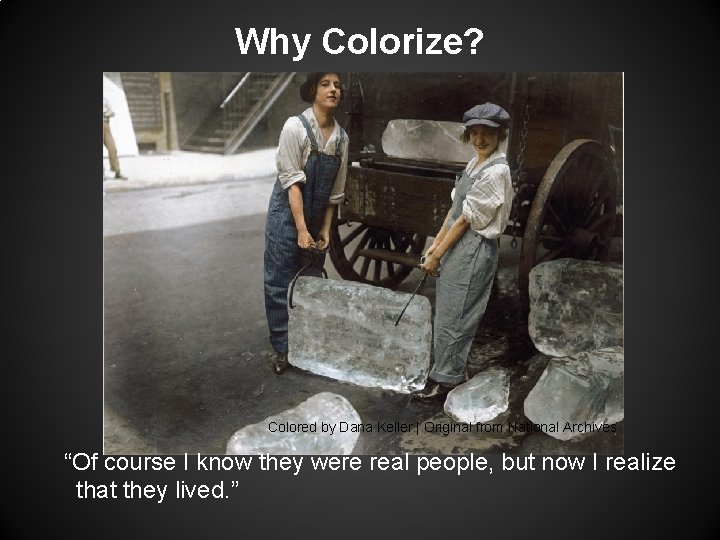
Why Colorize? Colored by Dana Keller | Original from National Archives “Of course I know they were real people, but now I realize that they lived. ”
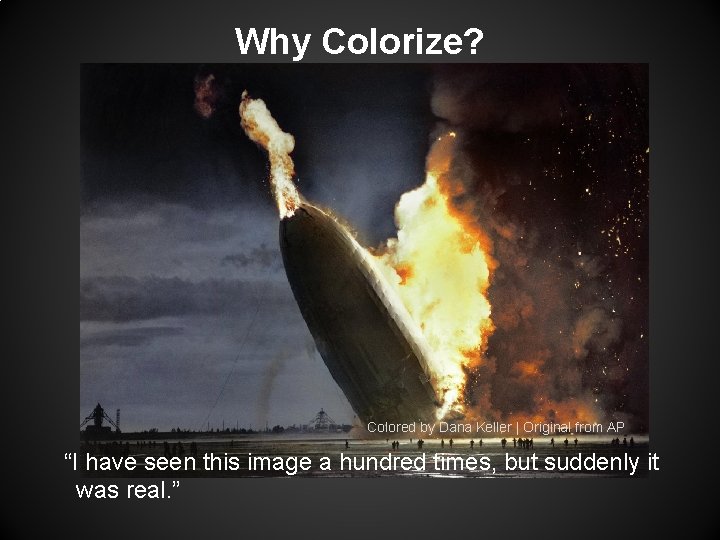
Why Colorize? Colored by Dana Keller | Original from AP “I have seen this image a hundred times, but suddenly it was real. ”
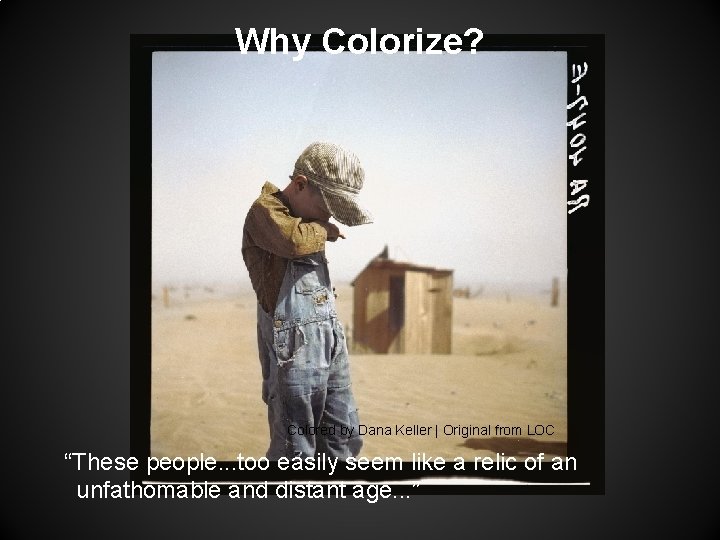
Why Colorize? Colored by Dana Keller | Original from LOC “These people. . . too easily seem like a relic of an unfathomable and distant age. . . ”
Wait a minute.
What Colorization Is • • • It is NOT a replacement or “improvement” of original historical elements. An opportunity to experience a closer connection to history. A powerful tool to engage different communities.
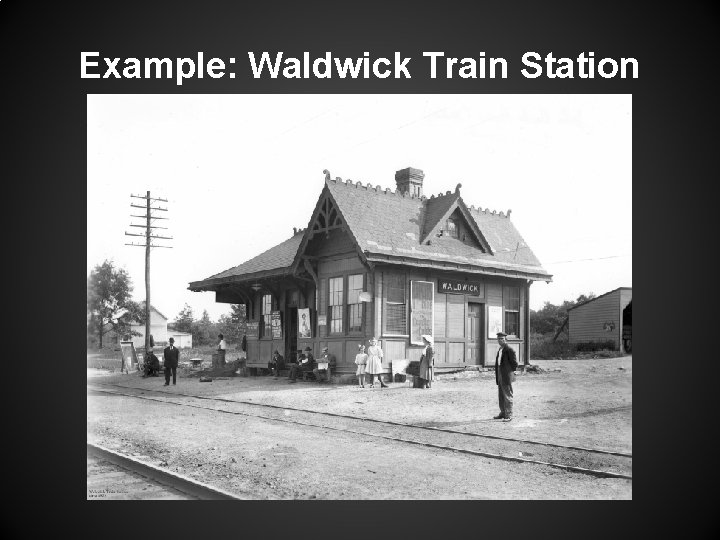
Example: Waldwick Train Station
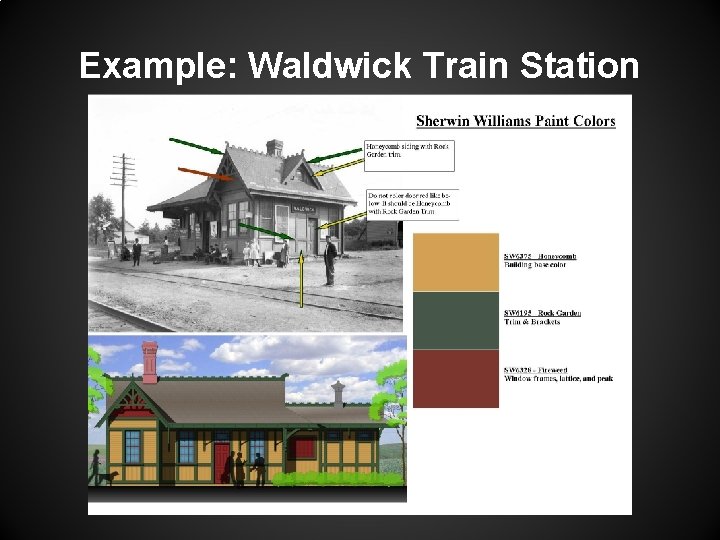
Example: Waldwick Train Station
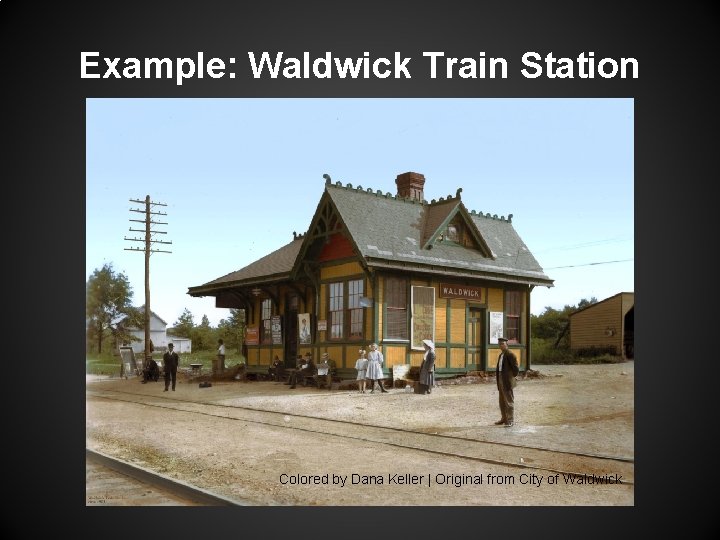
Example: Waldwick Train Station Colored by Dana Keller | Original from City of Waldwick
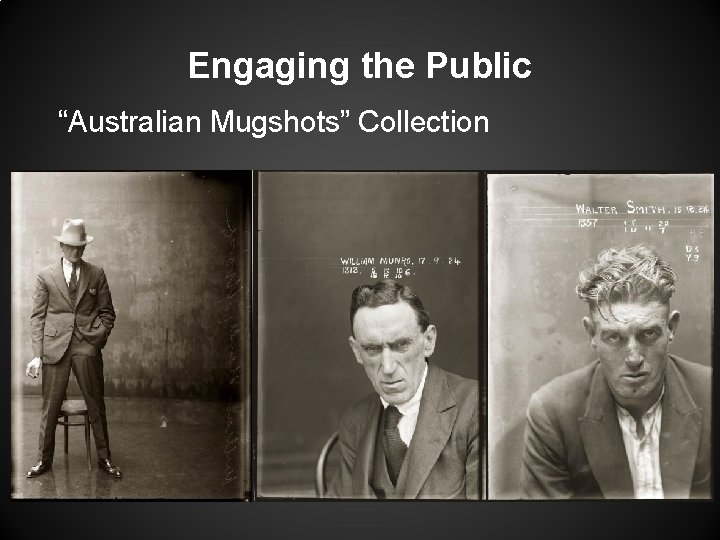
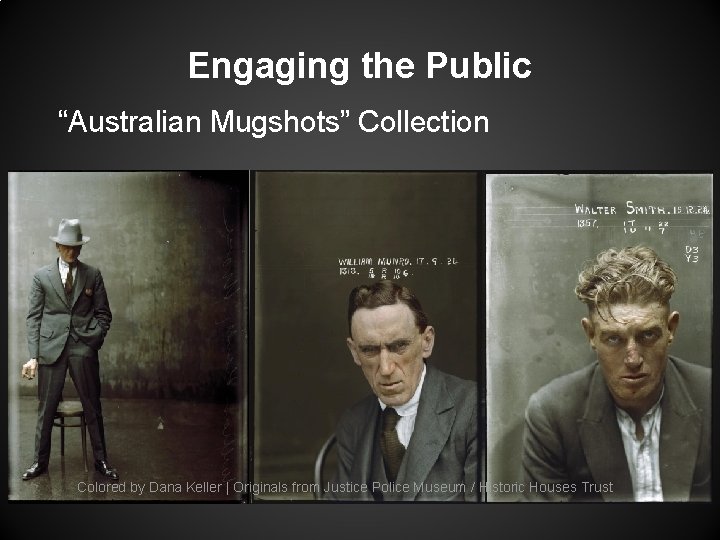
Engaging the Public “Australian Mugshots” Collection
Engaging the Public “Australian Mugshots” Collection Colored by Dana Keller | Originals from Justice Police Museum / Historic Houses Trust
Conclusion • • • Thoughts Questions Concerns
Closing the loop • How do these different uses relate to our understanding of neutrality in the archives? • How do these different uses complicate traditional notions of copyright? • If at all, how might these uses be applied to collections in your own institutions?