
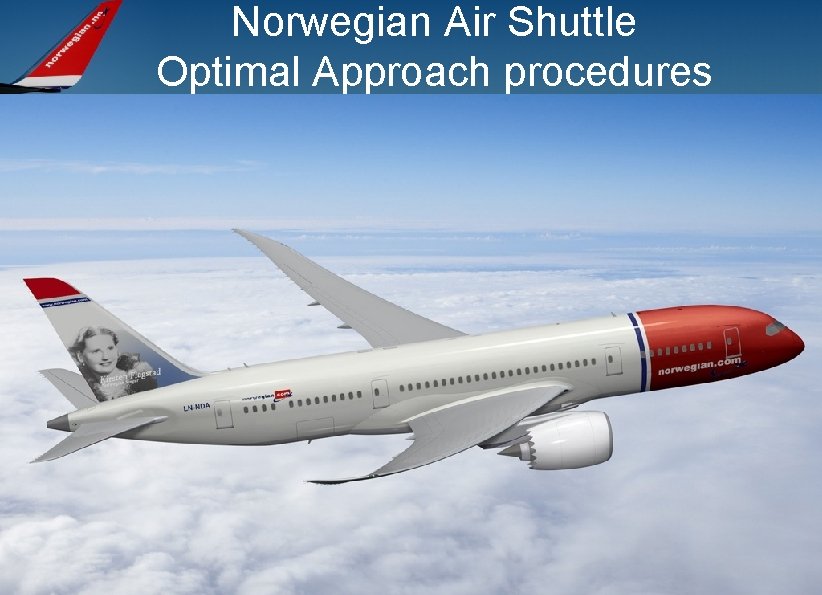
Norwegian Air Shuttle Optimal Approach procedures Introduction Key

- Slides: 18
Norwegian Air Shuttle Optimal Approach procedures
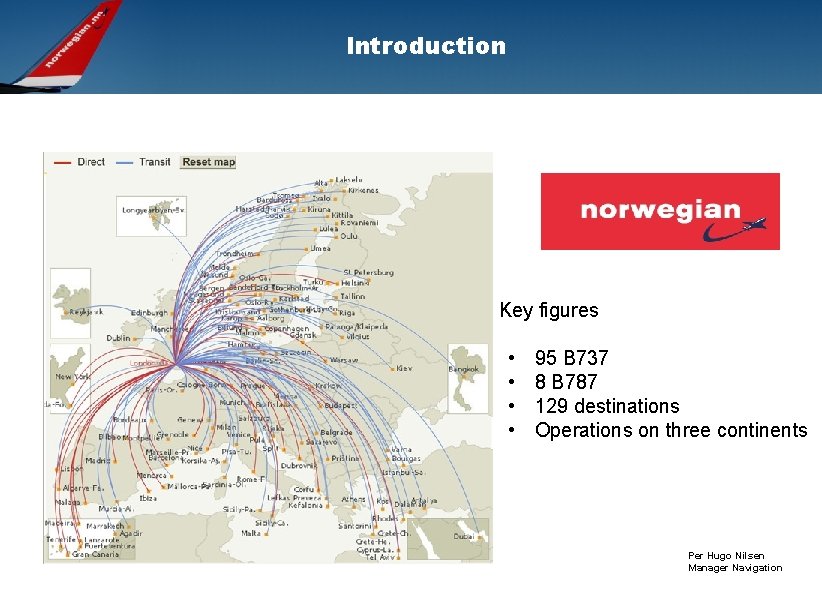
Introduction • Key figures • • 95 B 737 8 B 787 129 destinations Operations on three continents Per Hugo Nilsen Manager Navigation
Topics • Introduction • Prerequisits for an optimum approach • Enroute optimization • Terminal Airspace design selection • Optimization through design & planning • Safety • Savings • Terminal Area and approach development • Current & future PBN activities. • Visual RNAV • Current ENGM/Oslo TMA design • ENGM PBN TMA & approach development • Partners
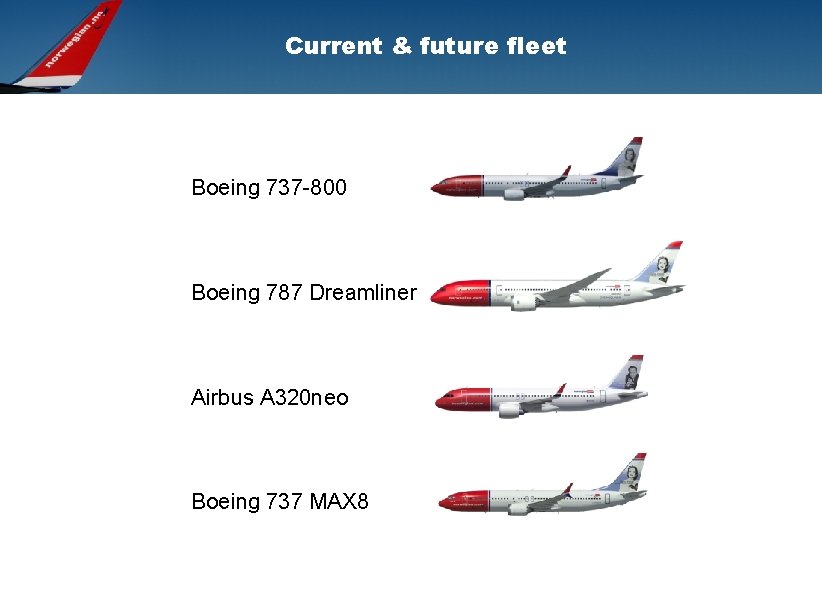
Current & future fleet Boeing 737 -800 Boeing 787 Dreamliner Airbus A 320 neo Boeing 737 MAX 8
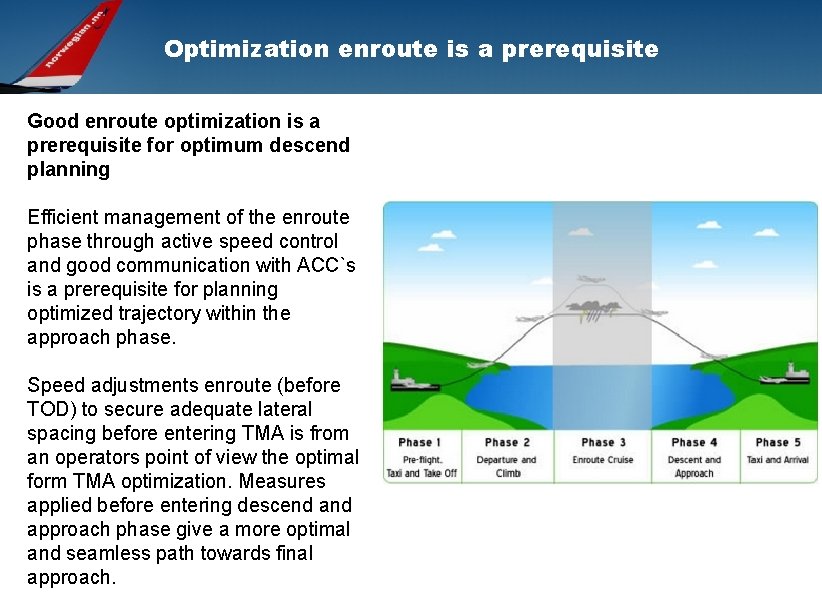
Optimization enroute is a prerequisite Good enroute optimization is a prerequisite for optimum descend planning Efficient management of the enroute phase through active speed control and good communication with ACC`s is a prerequisite for planning optimized trajectory within the approach phase. Speed adjustments enroute (before TOD) to secure adequate lateral spacing before entering TMA is from an operators point of view the optimal form TMA optimization. Measures applied before entering descend approach phase give a more optimal and seamless path towards final approach.
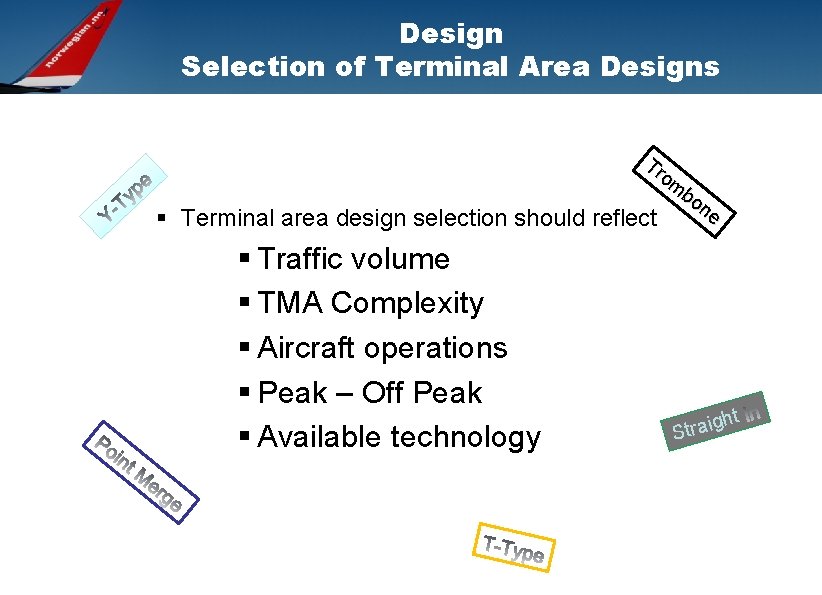
Design Selection of Terminal Area Designs § Terminal area design selection should § Traffic volume § TMA Complexity § Aircraft operations § Peak – Off Peak § Available technology Tr om bo ne reflect ht g i a r St
Descend A flight phase with safety in mind. A well designed & planned descent/approach increase safety levels § § § § Predictability. Reduced descend planning complexity. Automation through use of sophisticated RNAV onboard avionics. Flight crew workload reduction. Terrain clearance (CFIT). Eases energy management (stored kinetic energy). Controller workload & predictability.
Descend A flight phase with high saving potential. A well designed & planned descent/approach can save a lot…. . More than 250 Kgs. for a single optimized approach. Economy Why • With a meager overall net profit margin of 1. 8% for European airlines Saving potenstial • Boeing estimates that a 1 percent reduction in fuel used per flight can result in fuel savings of up to 515 Tons per airplane per year. (Boeing, 2004).
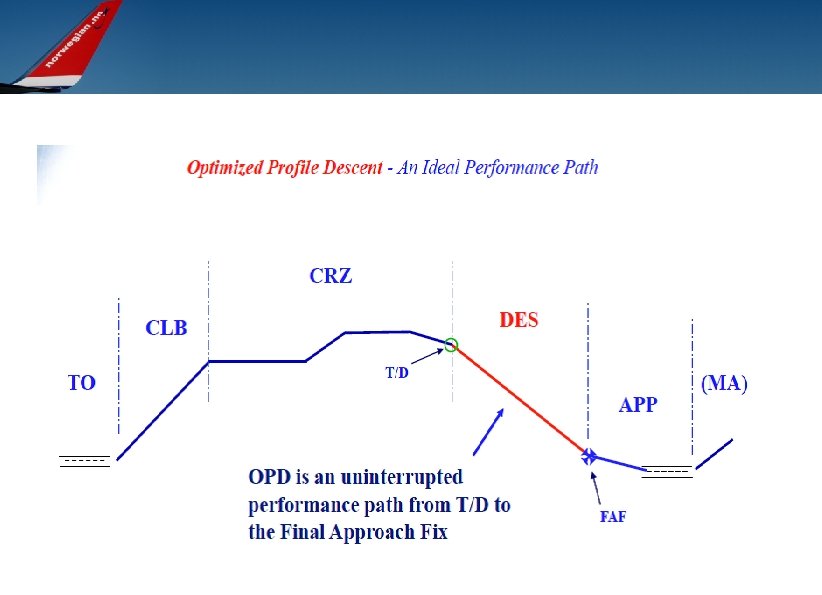
Terminal Approach procedures design «Optimization through design & planning» • An optimal Approach procedure design should secure a descend trajectory primarily using the kinetic energy already stored in the aircraft at TOD. • Reduced fuel-burn. • Reduced noise and emissions footprint. • Secure optimal lateral & vertical profiles. • Approach designs based on economical speed scenarios suited for leading operators. • Few or no vertical constraints within TMA design. • Secure enhanced predictability & reduced workload for Flight Crews through use of RNAV (GNSS technology). • Enhanced use of sophisticated aircraft automation through FMS coded arrival & approach procedures. • Improved predictability for Air Traffic Control. • Reduced controller workload by reducing the need to devise and provide. clearances for each arriving aircraft in order to build the required arrival stream. • RT reduction through self navigation.
Approach & Airspace design development «Current & future PBN activities» • Utilizing GNSS technology – GBAS/GLS • Precision approach with CATIII potensial • Multiple VPA • Displaced thresholds – RNP APCH and RNP AR APCH • Safety • Accessibility • Shorter approach distance (time/fuel saving) • RNP AR to secure independent parallel operations – Combining technologies • RNP to XLS (GBAS/ILS)
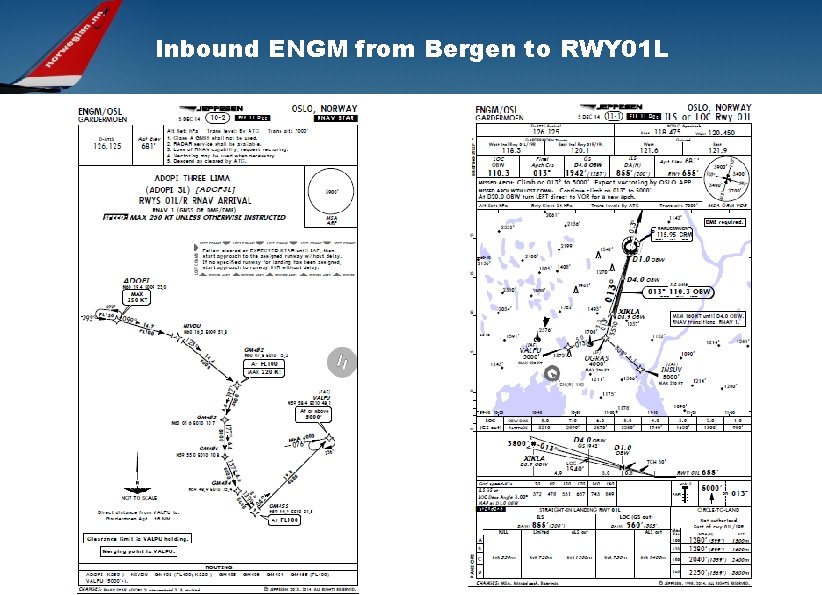
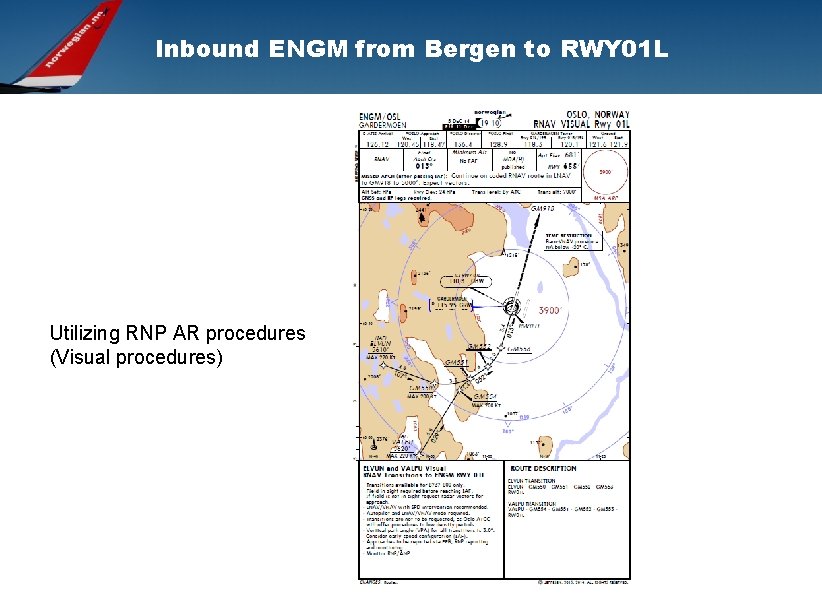
Inbound ENGM from Bergen to RWY 01 L
Inbound ENGM from Bergen to RWY 01 L Utilizing RNP AR procedures (Visual procedures)
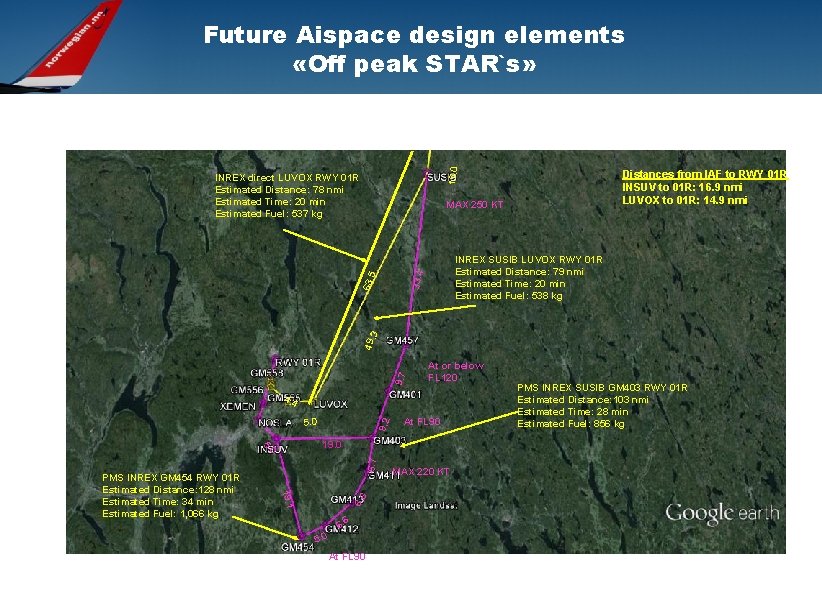
15. 0 Future Aispace design elements «Off peak STAR`s» INREX direct LUVOX RWY 01 R Estimated Distance: 78 nmi Estimated Time: 20 min Estimated Fuel: 537 kg Distances from IAF to RWY 01 R INSUV to 01 R: 16. 9 nmi LUVOX to 01 R: 14. 9 nmi MAX 250 KT 9. 7 49. 3 63. 5 33. 4 INREX SUSIB LUVOX RWY 01 R Estimated Distance: 79 nmi Estimated Time: 20 min Estimated Fuel: 538 kg At or below FL 120 4. 4 5. At FL 90 19. 0 6. 7 0 6. 6 19. 1 PMS INREX GM 454 RWY 01 R Estimated Distance: 128 nmi Estimated Time: 34 min Estimated Fuel: 1, 066 kg 9. 2 5. 0 6. 6 At FL 90 MAX 220 KT PMS INREX SUSIB GM 403 RWY 01 R Estimated Distance: 103 nmi Estimated Time: 28 min Estimated Fuel: 856 kg
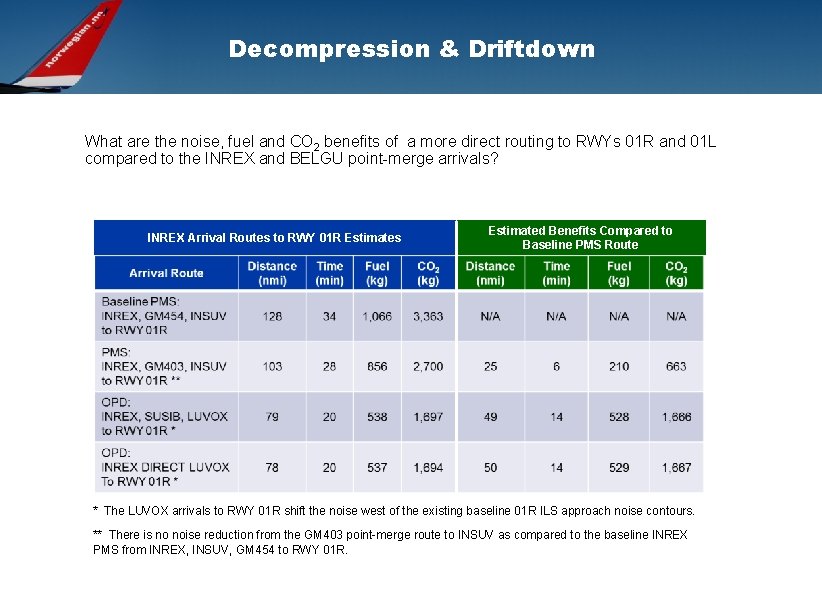
Decompression & Driftdown What are the noise, fuel and CO 2 benefits of a more direct routing to RWYs 01 R and 01 L compared to the INREX and BELGU point-merge arrivals? INREX Arrival Routes to RWY 01 R Estimates Estimated Benefits Compared to Baseline PMS Route * The LUVOX arrivals to RWY 01 R shift the noise west of the existing baseline 01 R ILS approach noise contours. ** There is no noise reduction from the GM 403 point-merge route to INSUV as compared to the baseline INREX PMS from INREX, INSUV, GM 454 to RWY 01 R.
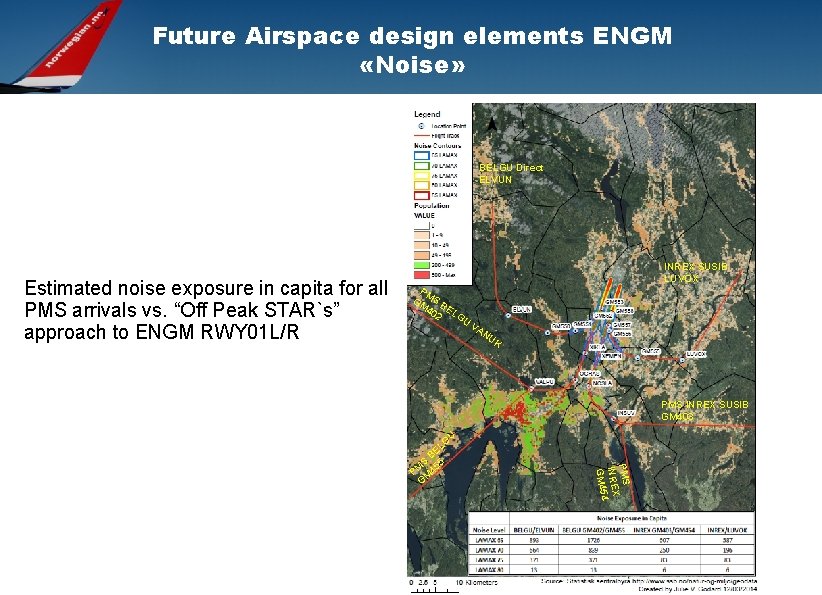
Future Airspace design elements ENGM «Noise» BELGU Direct ELVUN Estimated noise exposure in capita for all PMS arrivals vs. “Off Peak STAR`s” approach to ENGM RWY 01 L/R PM GM S B 40 EL 2 G INREX SUSIB LUVOX U VA NU K PMS INREX SUSIB GM 403 U PMS INREX 4 GM 45 LG BE S 55 PM M 4 G
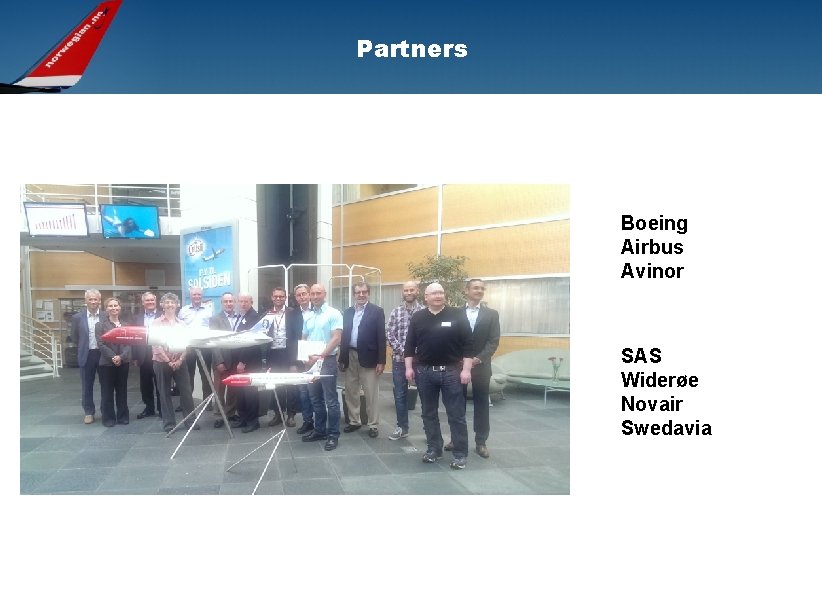
Partners Boeing Airbus Avinor SAS Widerøe Novair Swedavia
Thank you!