
NORTHWEST FUR TRADE THE HUDSONS BAY COMPANY In
NORTHWEST FUR TRADE
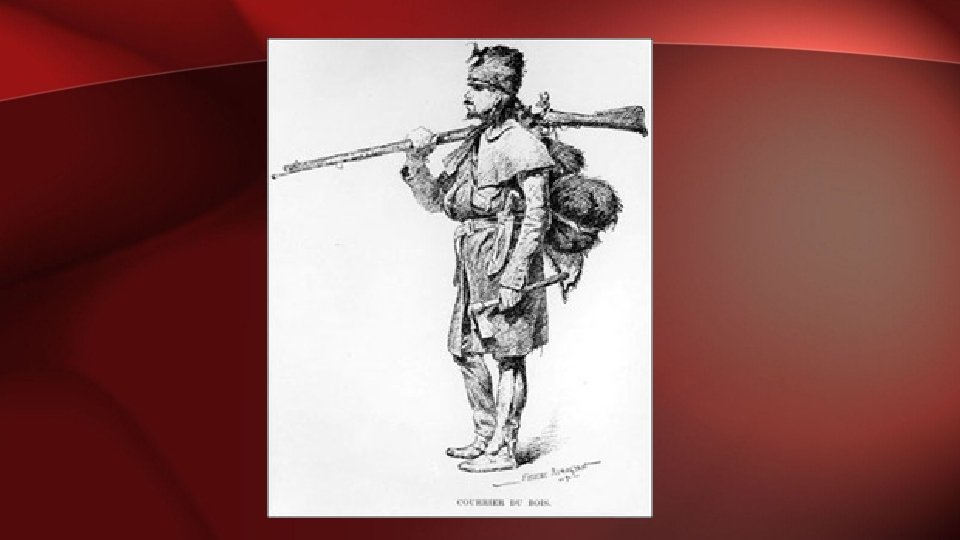
THE HUDSON’S BAY COMPANY • In 1654, Médard Chouart Des Groseilliers and his brother-in- law Pierre Esprit Radisson made a trip from Québec to the interior. – The two coureurs de bois built a trading post on Lake Superior. • It was the first trading post at the site. • First Nations people in the area told them of the vast fur- trading regions to the north and west, around Hudson Bay.
• In 1659, Radisson and Groseilliers returned to Montreal. Along with thousands of furs, they had a play to set up a trading post on Hudson Bay, which would reduce the cost of transporting furs from the Northwest to Europe. • They hoped the French king would sponsor their scheme, however they did not receive the warm welcome they expected, and they decided to try their idea with the British authorities. • King Charles II agreed to support their quest for furs. – The king’s cousin, Prince Rupert of the Rhine, helped organize finances for the journey.
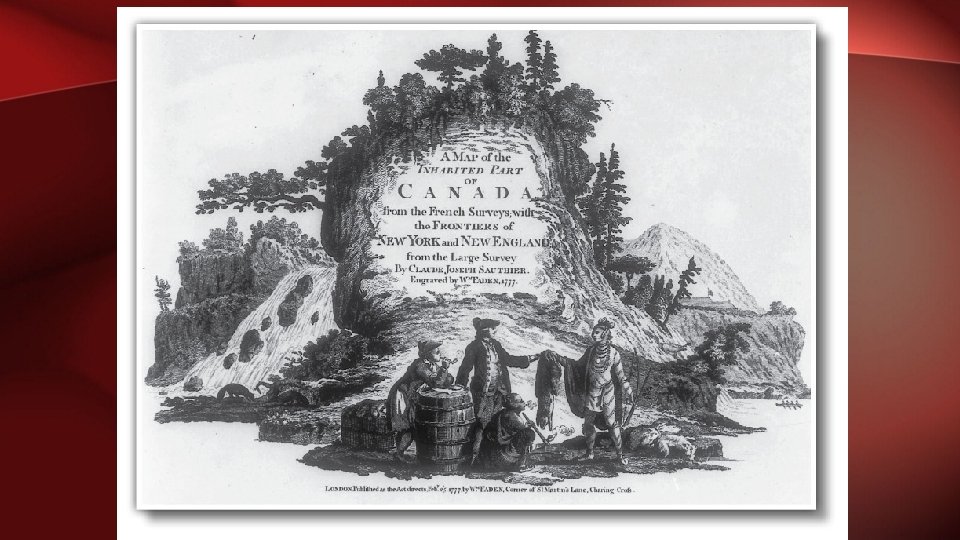
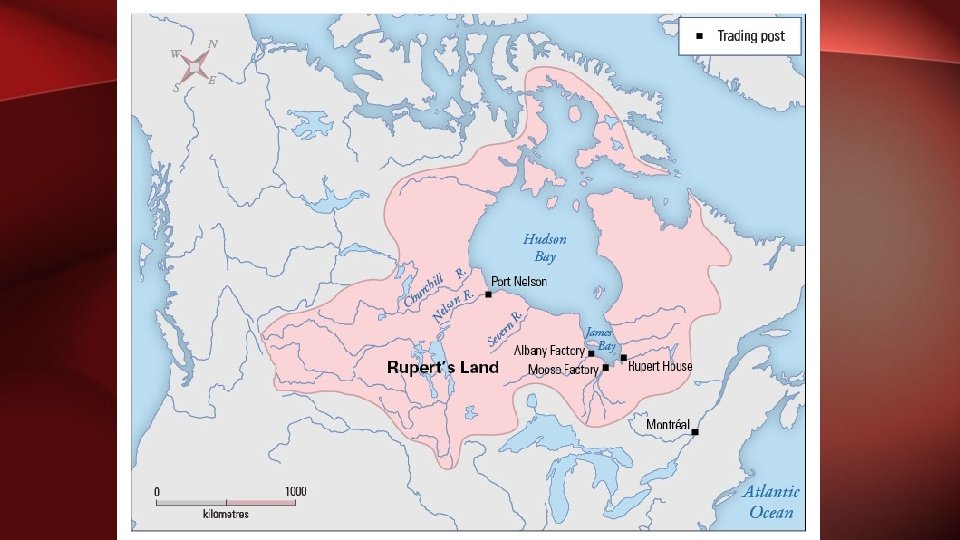
• In 1670, the King of England granted the Hudson’s Bay Company a monopoly of trade in Rupert’s Land, a vast region defined by the Hudson Bay drainage area. • At first, both First Peoples and Europeans benefited from the resulting exchange of trade goods and technologies (e. g. , guns, furs, metal goods, pemmican, canoes, moccasins, etc. ).
• As a result of the fur trade, the West saw the creation of a new nation of mixed First Nations and European ancestry called the Métis. • The Métis played an important role in the fur trade in the West. Métis men and women made pemmican, moccasins, and other supplies. – They hunted and fished, and helped build and work the canoes and boats used in the fur trade. • The Métis helped maintain the trading posts, served as guides, acted as intermediaries between First Nations hunters and trappers and European traders, and became traders in their own right. • As the Métis population grew, fur traders increasingly chose Métis women as partners in marriage.
• Although geographically far removed from central Canada, the events and peoples of the Northwest were inextricably linked to the French-English struggle for territorial control and to the expansion of British North America and, later, of Canada.
HUDSON’S BAY COMPANY • Appointed a governor and committee to organize fur auctions, order trade goods, hire men, and make shipping arrangements • Headquartered in London • By 1685, trading forts were operating at Rupert River, Moose Factory, Albany Factory and Port Nelson
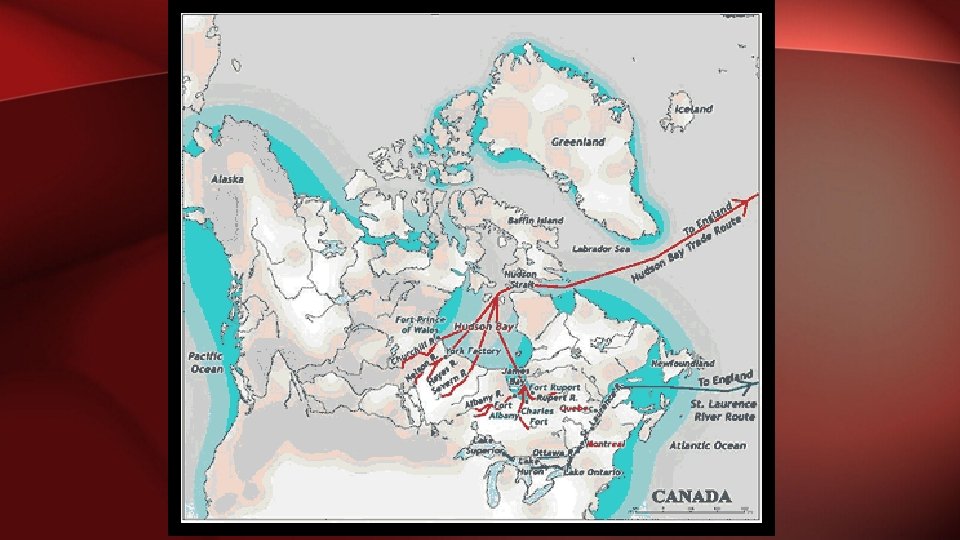
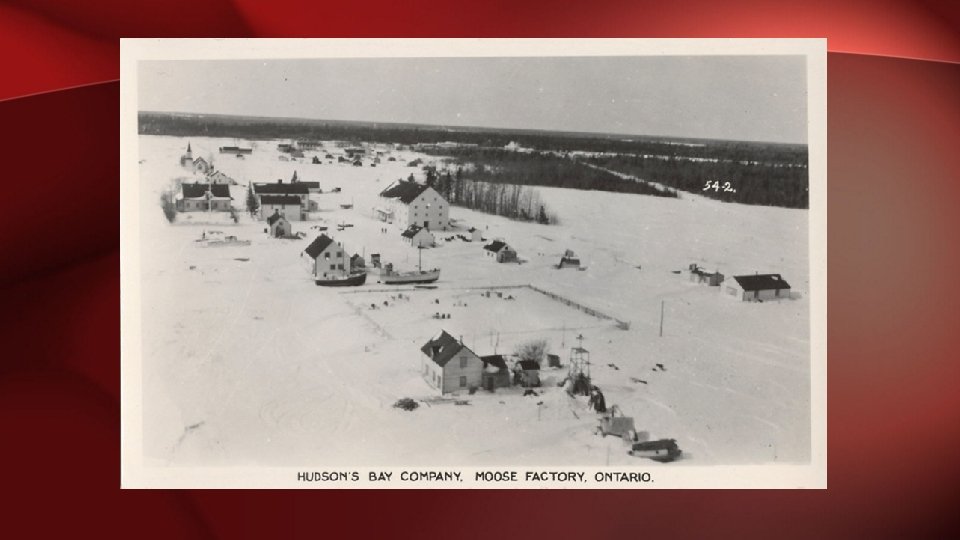
TRADING POST LOCATIONS Rupert House – Located at tip of James Bay on Rupert River – Oldest trading post – Was captured by France until Treaty of Utrecht gave HBC permanent rights to the post. Moose Factory -Located at tip of James Bay on Moose River -The name "Factory" comes from the title for the person in charge of the fur trading post which was "Factor - Was captured by France, 10 years later Britain recaptured it.
TRADING POST LOCATIONS Albany Factory -Located at tip of James Bay on Albany River Port Nelson -Located at tip of James Bay on Nelson River -first post set in 1682 by the English -was destroyed by the French -then rebuilt by the English and re-named ‘York Factory’ -then re-captured by the French in 1697
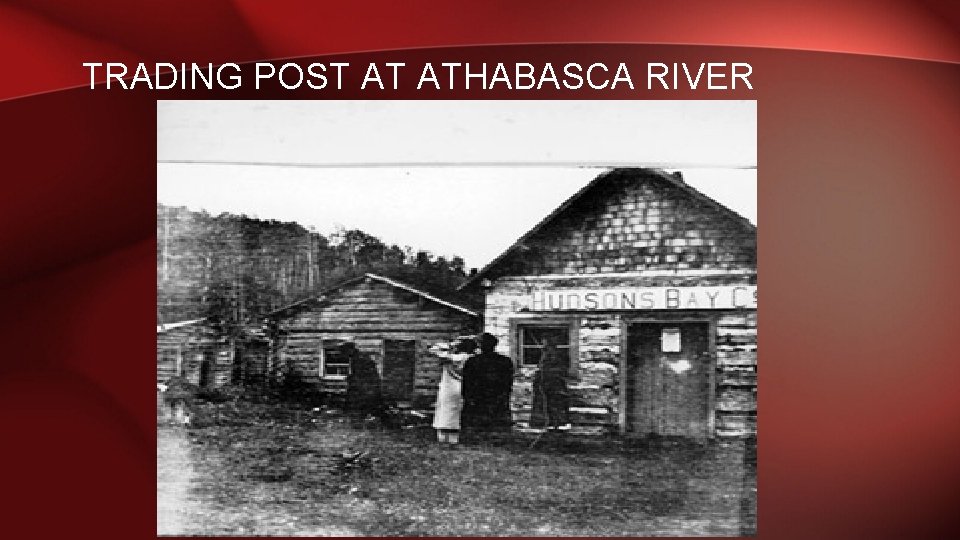
TRADING POST AT ATHABASCA RIVER

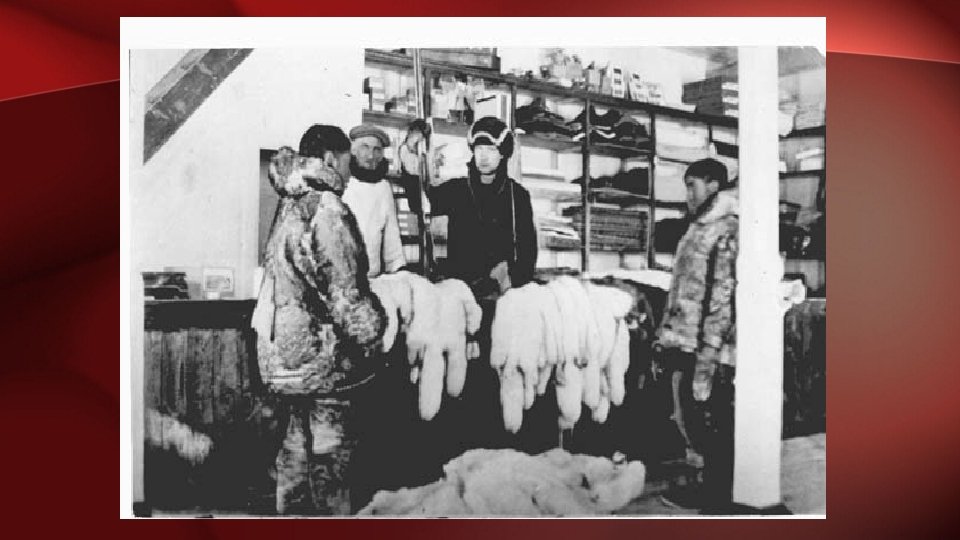
INSIDE A TRADING POST
FRENCH-BRITISH RIVALRY PART 1 • When HBC was created, the French felt the impact when they noticed the number of furs reaching Montreal dropped. • French responded with negotiations with First Nations to win back their trade • French and Britain competed with each other to win over more First Nations trading partners than their rivals.
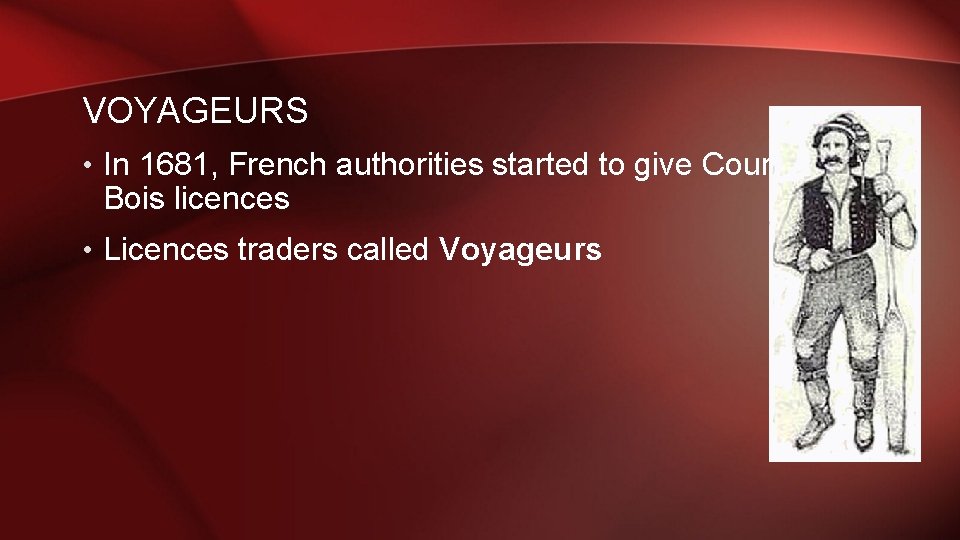
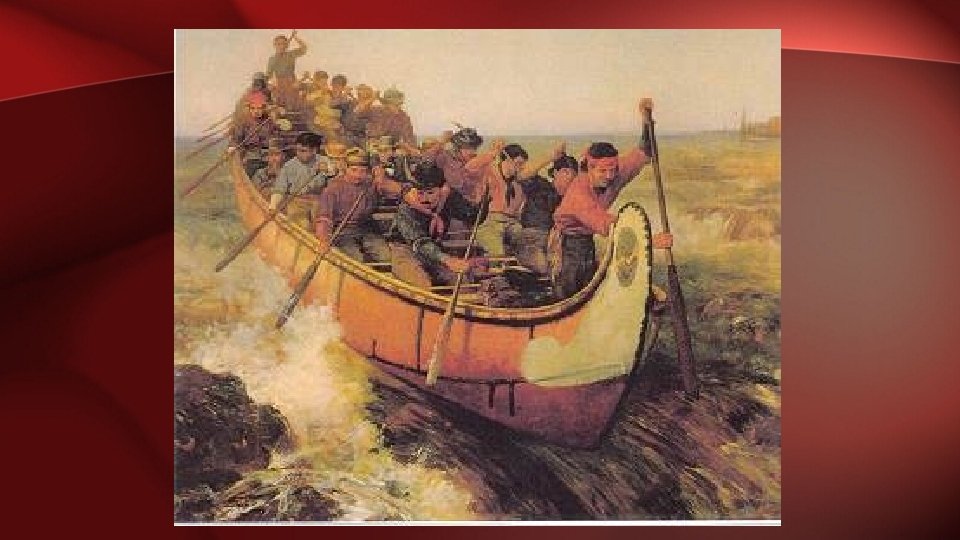
VOYAGEURS • In 1681, French authorities started to give Coureurs de Bois licences • Licences traders called Voyageurs
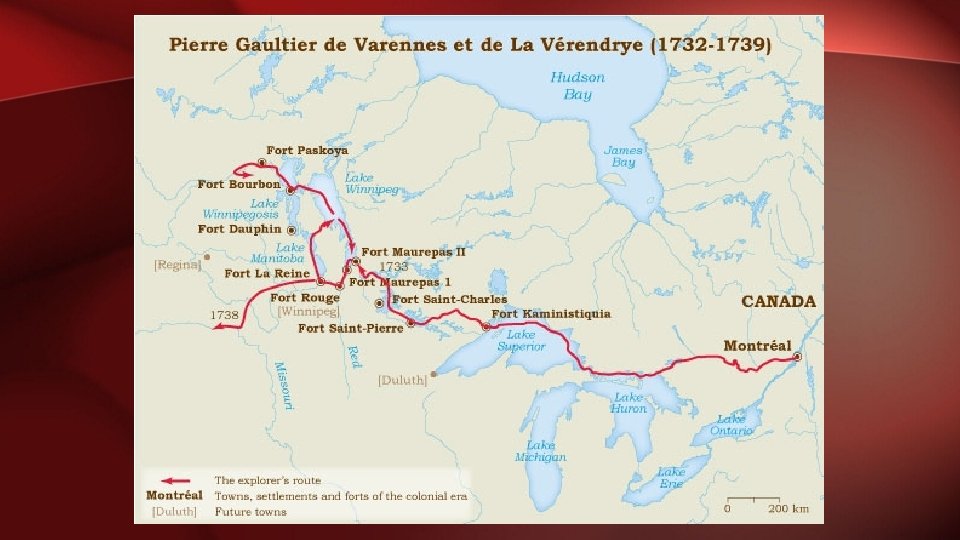
FRENCH-BRITISH RIVALRY PART 2 • In 1730, government of Nouvelle-France funded an expedition by Pierre La Vérendrye to explore the west in search of a route to the Pacific Ocean • French still wanted to find a trade route to Asia as well as extend the fur trade into the interior of the continent.
Where have you seen the name “La Vérendrye”? ? ?
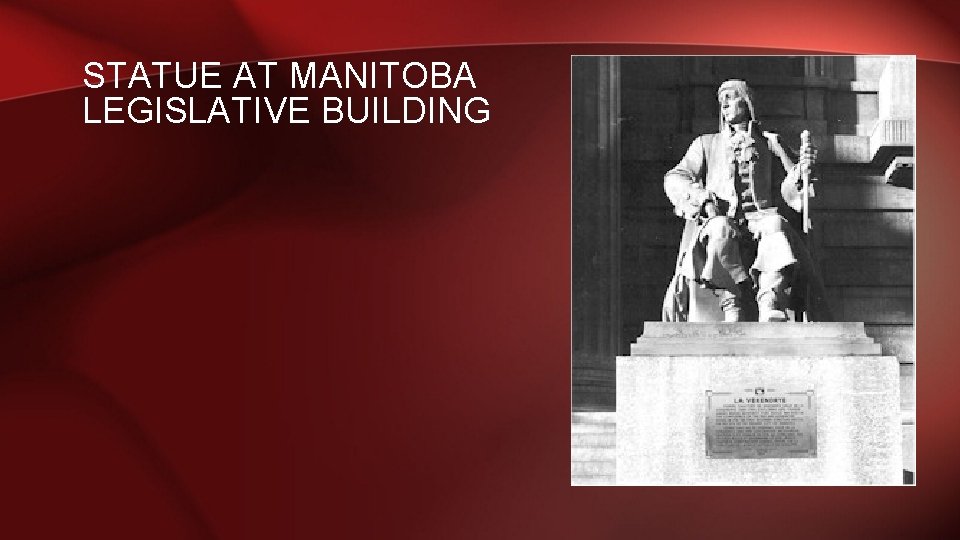
STATUE AT MANITOBA LEGISLATIVE BUILDING
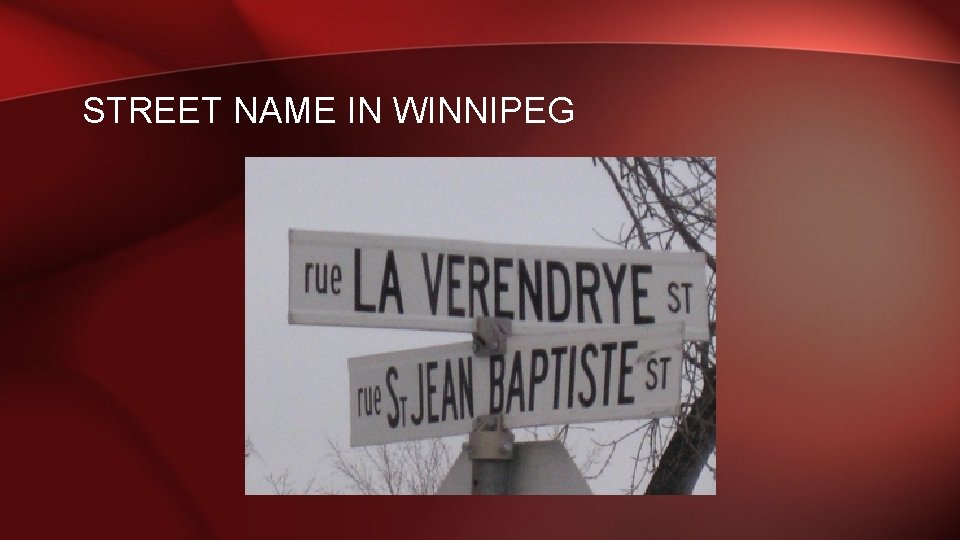
STREET NAME IN WINNIPEG
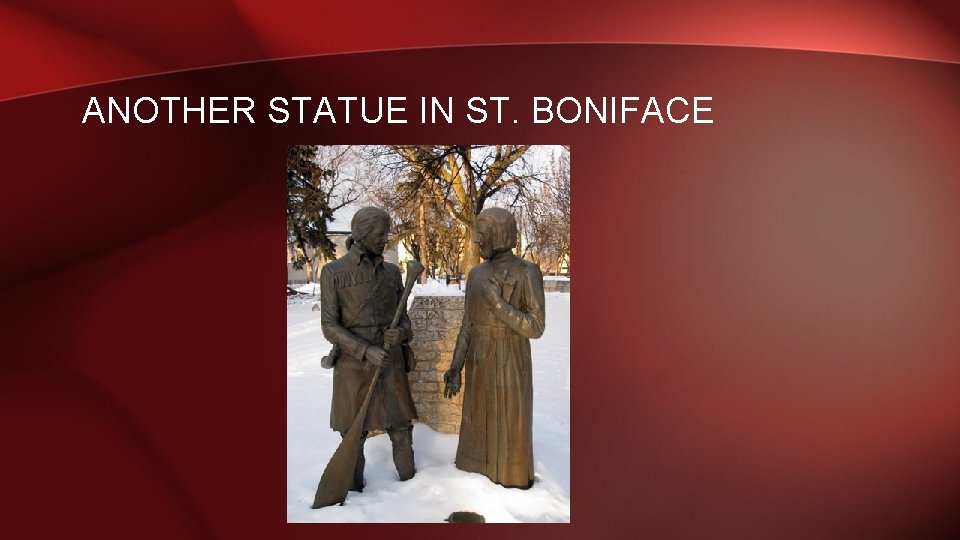
ANOTHER STATUE IN ST. BONIFACE
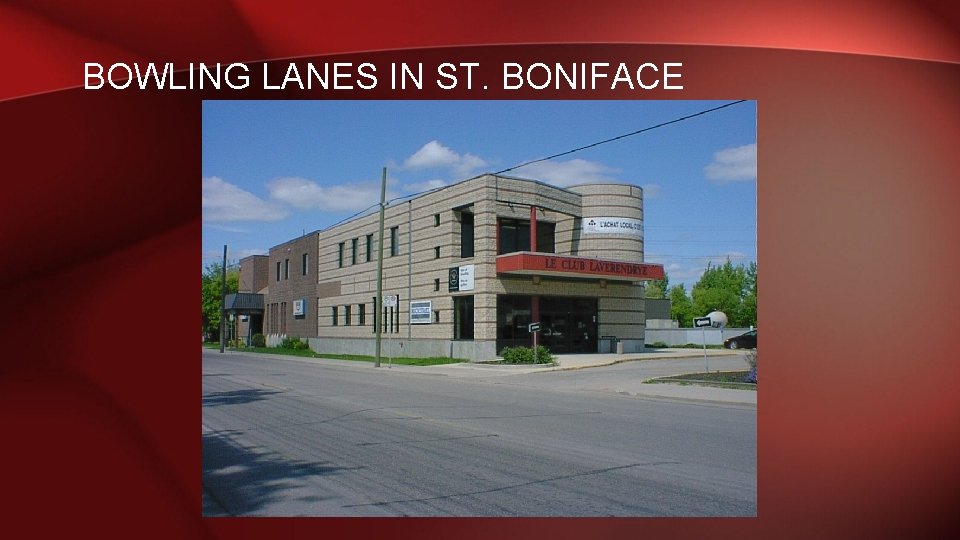
BOWLING LANES IN ST. BONIFACE
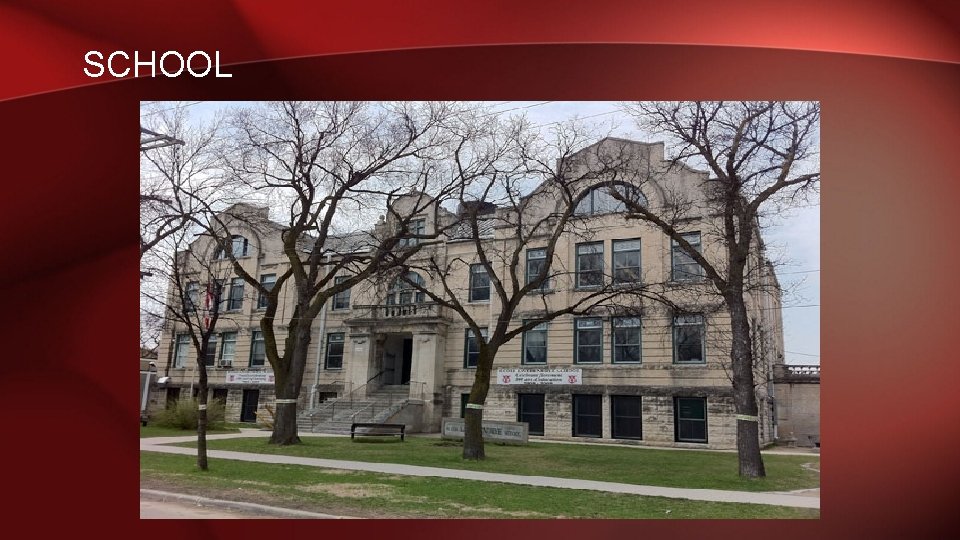
SCHOOL
WHY IS HIS NAME EVERYWHERE IN WINNIPEG AND MANITOBA? ? • He was the first voyageur to reach the region of present day Winnipeg • In 1738, he established two forts in present-day Manitoba: one at Fort Rouge (Wpg) and the other at Fort La Reine (Portage la Prairie) • From Fort La Reine, he made his way to Lake Manitoba, Lake Winnipegosis, Lake Winnipeg and the Saskatchewan River
AS THE FRENCH MOVED INLAND… • They caused competition for the British • The French also had a different trading style than the British • Rather than waiting at their posts for First Nations people to bring furs to them, the French sought out First Nations in their own territory • First Nations didn’t have to haul furs this way
HBC REALIZED… • Voyageurs diverted many furs on their way to the bay by intercepting First Nations traders on their journey north • HBC dropped in profits • Could no longer wait for furs • Needed to move inland
HBC CHANGED THEIR WAYS • HBC built first inland post near Albany River • Attacked twice by French • Also tried to make a journey inland to invite First Nations to trade at British forts, but could not convince them.
- Slides: 33