
Northwest Coniferous Forest Seattle WA Jenni Peck December
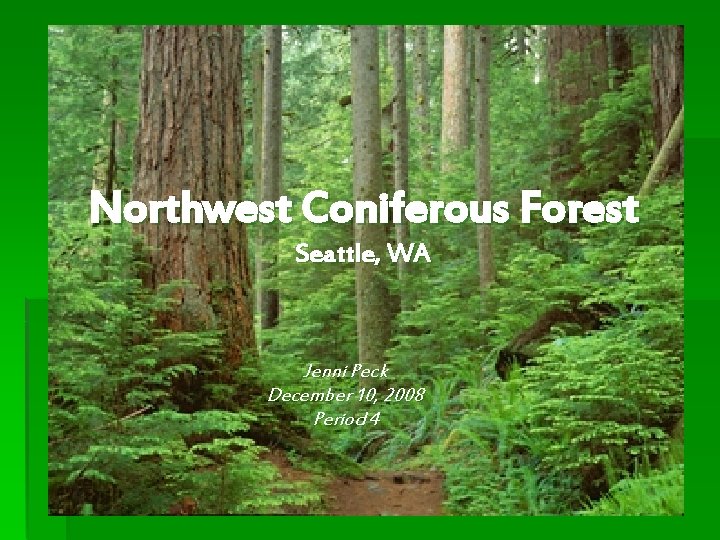
Northwest Coniferous Forest Seattle, WA Jenni Peck December 10, 2008 Period 4
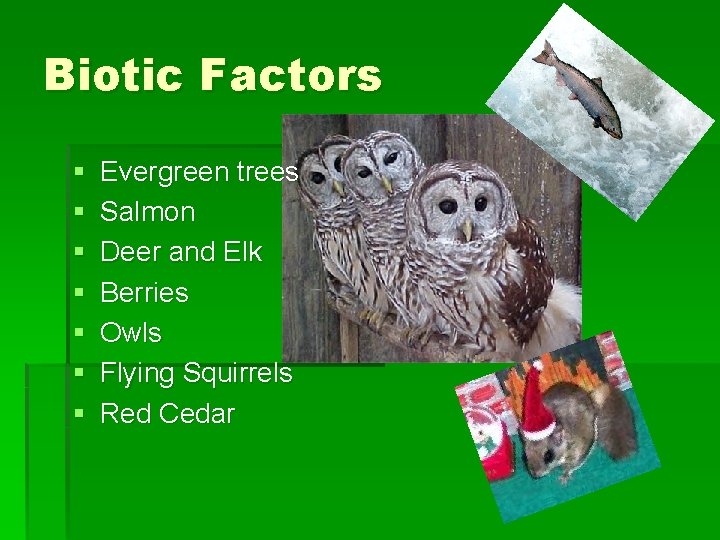
Biotic Factors § § § § Evergreen trees Salmon Deer and Elk Berries Owls Flying Squirrels Red Cedar
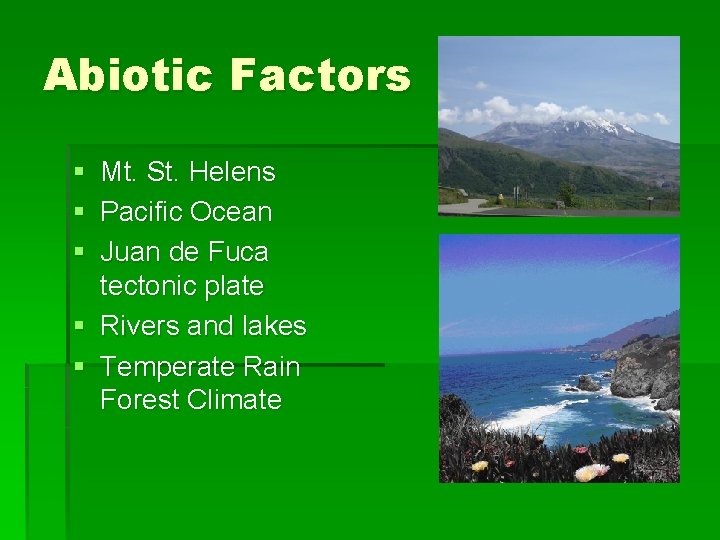
Abiotic Factors § Mt. St. Helens § Pacific Ocean § Juan de Fuca tectonic plate § Rivers and lakes § Temperate Rain Forest Climate
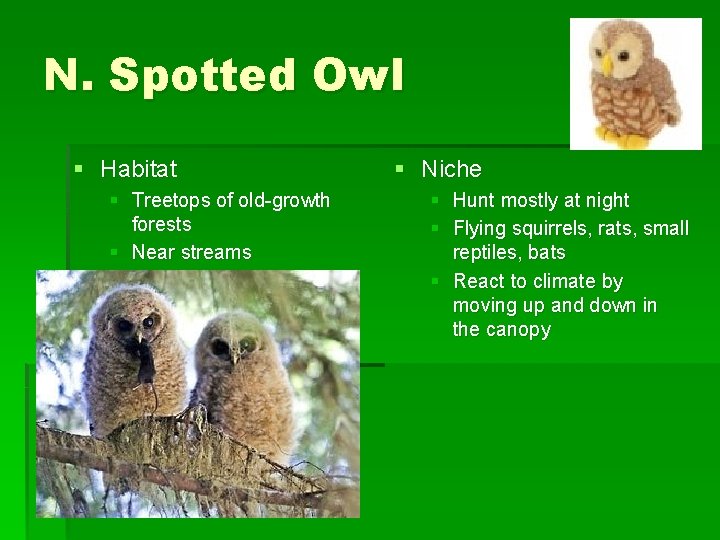
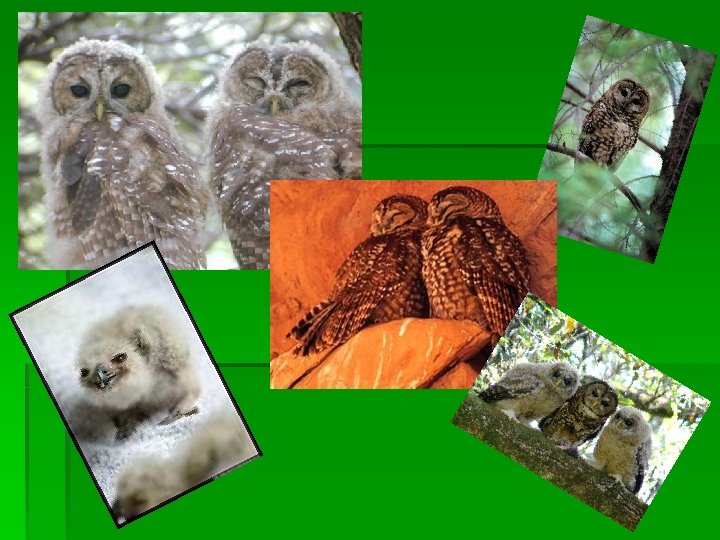
N. Spotted Owl § Habitat § Treetops of old-growth forests § Near streams § Niche § Hunt mostly at night § Flying squirrels, rats, small reptiles, bats § React to climate by moving up and down in the canopy
Community Interactions § Commensalism § Owls and trees § Mutualism § Trees and flying squirrels § Competition § Spotted owl and Barred owl
Food Chain
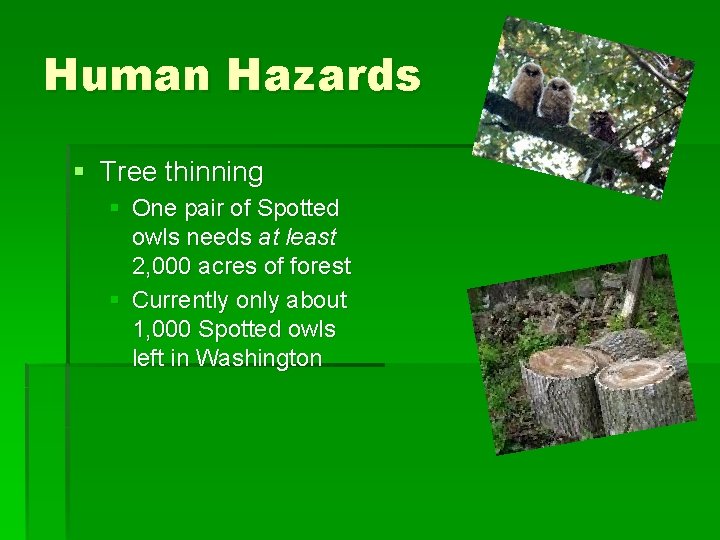
Human Hazards § Tree thinning § One pair of Spotted owls needs at least 2, 000 acres of forest § Currently only about 1, 000 Spotted owls left in Washington
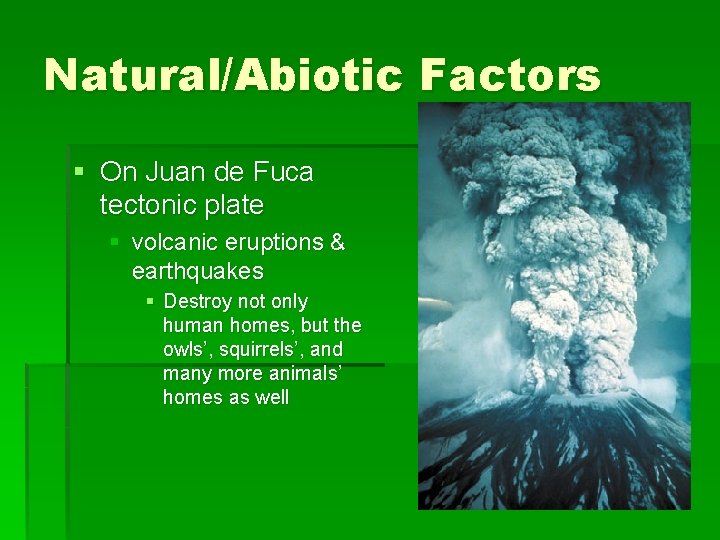
Natural/Abiotic Factors § On Juan de Fuca tectonic plate § volcanic eruptions & earthquakes § Destroy not only human homes, but the owls’, squirrels’, and many more animals’ homes as well
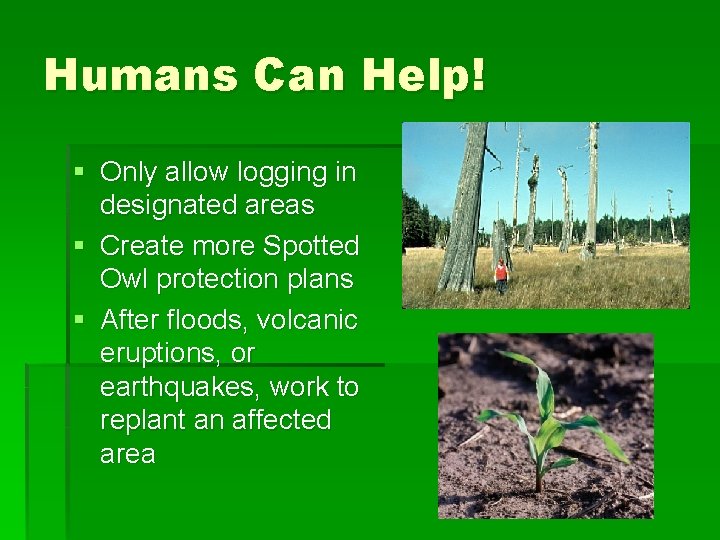
Humans Can Help! § Only allow logging in designated areas § Create more Spotted Owl protection plans § After floods, volcanic eruptions, or earthquakes, work to replant an affected area
Bibliography § Lachowsky, Richard. "The Land that Time Forgot: The Temperate Rain Forest. " 2001 Out West. Sierra Club. 9 Dec 2008 <http: //www. scsc. k 12. ar. us/2001 Outwest/P acific. Natural. History/Projects/Lachowsky. R/ Default. htm>. § "Species at Risk: Northern Spotted Owl. " In the Footsteps of Lewis and Clark. Sierra Club. 8 Dec 2008 <http: //www. sierraclub. org/lewisandclark/s pecies/owl. asp>. § "Spotted Owl. " Bird Web. Seattle Audubon Society. 7 Dec 2008 <http: //www. birdweb. org/birdweb/bird_deta ils. aspx? id=248>.
- Slides: 11