
Northumbria Primary Mental Health Worker Team presentation Newcastle
Northumbria Primary Mental Health Worker Team presentation Newcastle & Durham Diocese of schools Mental Health in Schools Conference 5. 7. 17
Aims of presentation - To provide an over view of the Emotional Health & Well Being Transformation plans across Northumbria Health Care Trust - To explain the PMHW role in supporting schools in this agenda - To provide a summary of the Northumbria PMHW core offers - To discuss the teams acceptance criteria & referral pathways
National challenges for schools • • • Lack of information Complex referral systems Increasing demands Escalating waiting times Inequalities according to need & post code Lack of information on numbers of children seen, costs and outcomes Children falling through the net Duplication of provision Large ‘hidden demand’ Investment focussed on specialist services Services chronically underfunded & under resourced
What are children & young people saying. . • • • To be able to turn to those adults they know for help Some lack confidence or skills More preventative & lower level support before the crisis Reduced waiting times Less travel to support More anonymity GPs don’t understand or take them seriously Don’t want to tell their story more than once Want easy access to advice , guidance & support
Key messages from parents /carers • • Lack of information and understanding Recognition of help needed or what’s available Professional help not consistently available Experiences of stigma & shame Isolation Worry about future impact e. g. employment/university Negative impact of parents exclusion from assessment and treatments Stigmatising venues
Local challenges in Northumberland & North Tyneside Northumberland • significant resources invested into more specialist services • fewer resources in universal and preventative services • access to the specialist services was poor • children waiting for long periods • fragmentation of services North Tyneside – • gaps identified in universal services • pressue identified on specialist CAMHS • needs could be more appropriately managed in universal • access to CAMHS service identified as an issue (NT Youth Council) • a recognition of need to reduce waiting times from 12 weeks to 6
Developing a national sustainable model • Resource is currently limited • Reduce demand on current systems • To reduce the burden of mental and physical ill health • Need for effective planning, development & monitoring across sectors • Increase capacity in the system • Recognising ‘untapped potential’ : parents, schools , youth workers, residential staff
Resilience, prevention and early intervention • Promoting healthy lifestyles for C&YP • CYP need to be kept healthy • Tackling risk factors that lead to problems • Investment in primary prevention • Community psychology
A way forward : Future in Mind (2015) • An integrated whole system • Promoting resilience, good mental health and wellbeing • Prevention and early intervention • Improving access to effective support –a system without tiers • Care for the most vulnerable • Joined up with clear pathways of care • Development of the workforce - skills, competencies and experience • Transparency and accountability of resources
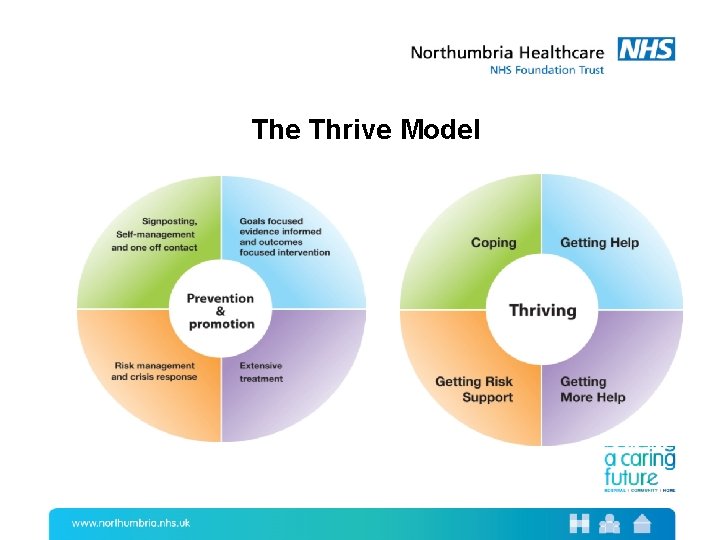
The Thrive Model
Links with other statutory guidance for schools Mental health & behaviour in schools Departmental advice for school staff (March 2016) It provides advice on how to : - • • • Promote positive mental health Identify pupils likely to need extra support Strengthen pupil resilience Support children with emotional and behavioural difficulties Where and how to access community support How and when to refer to the Child and Adolescent Mental Health Services (CAMHS)
SEND Code of Practice: 0 to 25 years Social, Emotional & Mental Health (also called SEMH) is one of twelve kinds of Special Educational Need & Disability identified in the new national SEND Code of Practice 2014. ‘The 2014 Code says: ‘ Children and young people may experience a wide range of social and emotional difficulties which manifest themselves in many ways. These may include becoming withdrawn or isolated, as well as displaying challenging, disruptive or disturbing behaviour. These behaviours may reflect underlying mental health difficulties such as anxiety or depression, self -harming, substance misuse, eating disorders or physical symptoms that are medically unexplained. Other children and young people may have disorders such as attention deficit disorder, attention deficit hyperactive disorder or attachment disorder’.
A vision for services Northumberland & North Tyneside Emotional Health & Well Being Strategy Northumberland • We will promote & improve the emotional health & well being of children & young people by building reliance, realising potential & providing easy access to the right service when required. North Tyneside – • We aim to establish prevention & early intervention at the heart of the Boroughs family & children's services & this will address the critical challenge of rising demand for services & reducing resources.
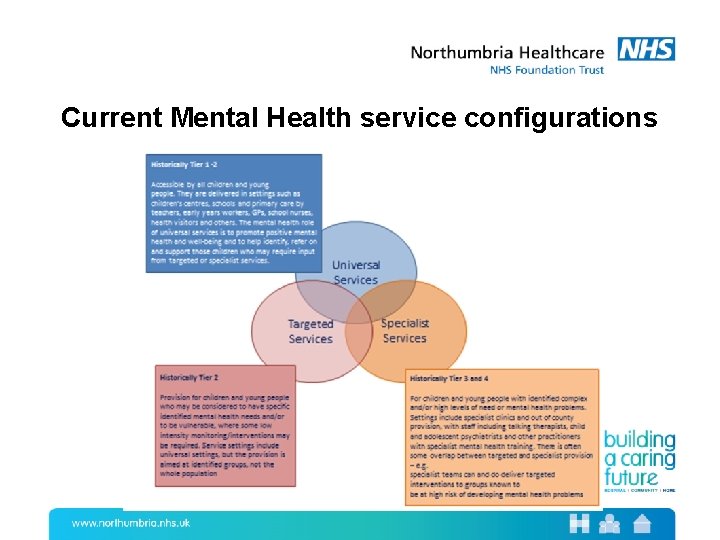
Current Mental Health service configurations
The PMHW role in the Transformation plans • To raise awareness of the emotional health and well-being of children and young people across the children’s workforce. • To deliver training & up skilling the workforce in promotion & prevention approaches • To act as a visible link between schools & specialist mental health services • To facilitate improved access to most appropriate service to meet needs • To provide early interventions and support to universal services
The role of schools in the Transformation plan North Tyneside • • Emotionally Healthy Schools Resource Pack –includes what difference can schools make. How can children and young people look after themselves. What skills and training do staff need. Where can you go for help and support. Mental Health champions in schools Northumberland • • Funding is available to support educational setting programmes Support to the ‘Thrive’ programme focussing on attachment in schools Mental health champions in schools Improved access to information on self help & services for pupils & staff
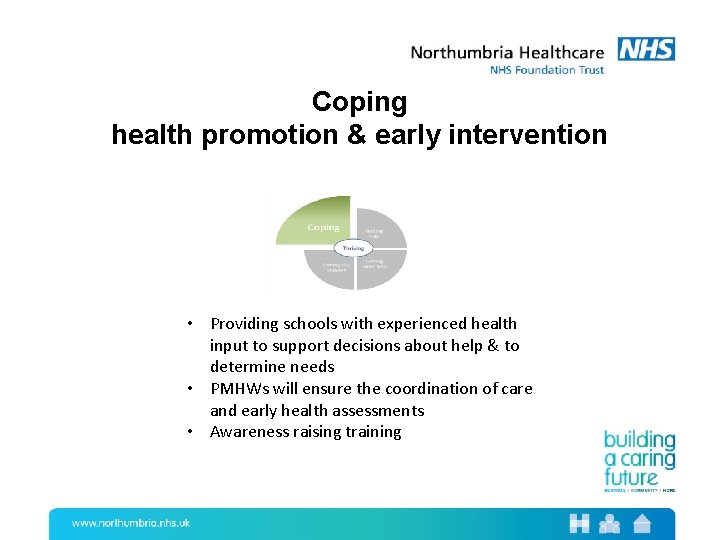
Coping health promotion & early intervention • Providing schools with experienced health input to support decisions about help & to determine needs • PMHWs will ensure the coordination of care and early health assessments • Awareness raising training
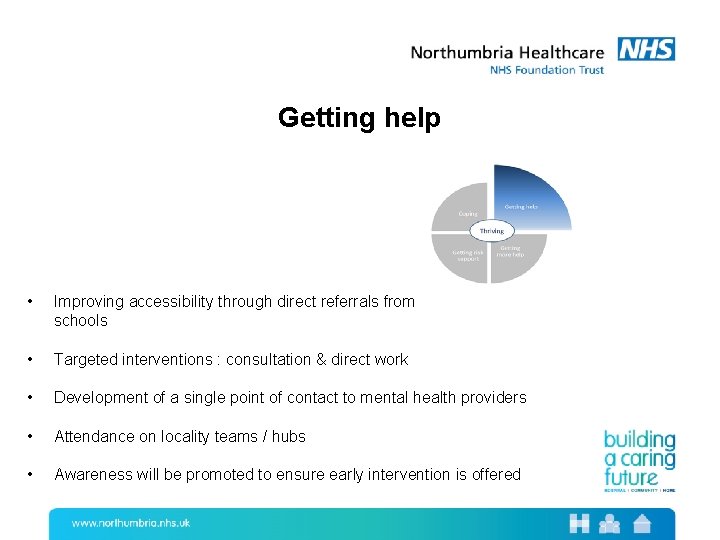
Getting help • Improving accessibility through direct referrals from schools • Targeted interventions : consultation & direct work • Development of a single point of contact to mental health providers • Attendance on locality teams / hubs • Awareness will be promoted to ensure early intervention is offered
The Northumberland PMHW team Multi disciplinary team Professional backgrounds (social work , mental health nursing , Occupational Therapy, Paediatric Nursing) Extensive CAMHS /Post qualifying experience Designated locality posts across 4 areas 1 FT band 7 PMHW Lead 4 FT band 6 PMHWs 2 PT administrators 1 PT & 1 FT PMHW appointed Recruitment plans – 2 further FT PMHW posts
The North Tyneside PMHW team Multi disciplinary team Professional backgrounds (social work , mental health nursing , Paediatric Nursing) Extensive CAMHS /Post qualifying experience 1 ft band 7 lead 1 ft band 6 PMHW 2 pt band 6 PMHWs Recruitment plans for 1 vacant post
Acceptance Criteria in Northumberland Our remit -mild to moderate emotional wellbeing and mental health problems The following presentations would be eligible for input from the Service: - Anxiety, depression, stress and or other mood disorders, e. g. low self-esteem - Simple Phobias - Self harm – where this is mild to moderate - Adjustment reactions - Mild to moderate emotional / behavioural disorders (impacting across all areas of child's life) Referrals will be accepted when: - The issues are resolving despite first level interventions from universal services - The problem is mental health focussed - It is having a significant impact on the child’s general functioning - The difficulties are present across different settings
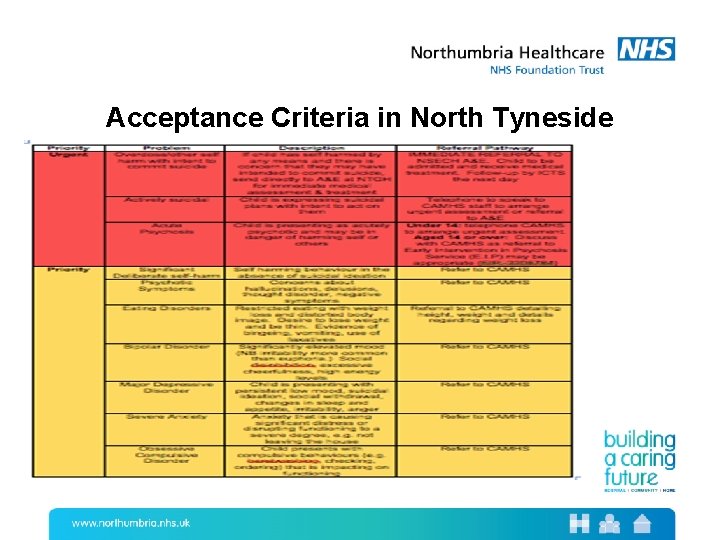
Acceptance Criteria in North Tyneside
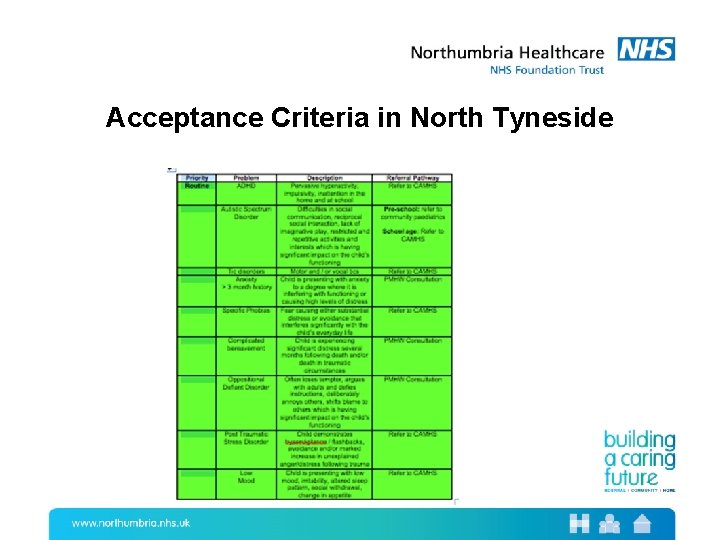
Acceptance Criteria in North Tyneside
Referral Pathways Who can refer: GPs, PHSNs, Health visitors, Schools (Head teachers /SENCOs) , Educational Psychologists, Paediatricians, Social Workers, Early Help workers, Family Support workers, Voluntary organisations in Northumberland only Refer to us direct: Referrals are accepted from professionals currently working with young children and adolescents Service referral form to be completed by the referrer Via multi-health agency referrals meeting: In North Tyneside daily referrals meetings In Northumberland weekly with team & School Nursing Service & CYPS Via the Hub: A member of the PMHW team attend the Hub Meetings and the Hub Triage Meetings and accept referrals that are appropriate to a targeted mental health service
The aims of consultation • A dedicated named contact point for every school , primary & social care provider • To improve understanding of children & young peoples mental health needs by promoting the use of positive mental heath strategies • To support our partners to identify appropriate pathways of care to meet the mental health needs of a child/young person • To discuss & provide timely advice on the management of cases, including consultation, co-working or liaison School development plans – The role of the mental health in schools champion – • A specific individual responsible for mental health in schools • to provide a link to expertise and support to discuss concerns • To identify issues & make effective referrals
Consultation Role • • Northumbria Trust have complied service consultation arrangements agreed at Child Health Board & CAMHS Operational board North Tyneside Benefits, definition, responsibilities, when to consult, booking in systems, who can access, expectations of all parties. An agreed pre-consultation preparation tool for consultees Agreed recording & data collection systems • • In North Tyneside – Daily telephone consultation Face to face with professionals based in clinics & locality hubs Advance face to face with professionals , child & family if required (joint appointments) • • In Northumberland - • Weekly telephone consultations • Future plans to develop the face to face roles as above
Direct clinical role • • Children and young people aged up to 18 years who fit our acceptance criteria Early intervention / prevention focus Delivered in a variety of community settings Duty system in North Tyneside Initial mental health assessments Brief Interventions based on best available evidence in Northumberland Outcome measures & patients satisfaction questionnaires Discharge or signpost to appropriate agency
Teaching & Training Aims – To improve the skills , knowledge & skills of the universal workforce To help to identify problems early To be aware of how to help /intervene When to worry How to refer on to targeted & specialist services Current sessions – • • Mental Health Awareness Child and adolescent development (brain development) Child and adolescent mental health and wellbeing Attachment –healthy relationships Exam stress Worries & anxiety Low mood & Depression • Self harm
Liaison Role • • • PMHWs attend multi agency Locality Hub meetings Supporting schools to develop a whole –system approach to resilience Support with the development of the Mental Health Champions Ensuring awareness of early intervention services available Presence on Early Help /TAF /Core group Meetings
Resources for schools www. youngminds. org. uk. www. moodjuice. scot. nhs. uk/ https: //www. minded. org/ www. minded. e-lfh. org. uk/families/ www. rcpsych. ac. uk Family lives. org. uk www. fivewaysofwellbeing. org www. epicfriends. org. uk www. moodcafe. co. uk https: //www. youtube. com/watch? v=aa. TDNYjk-Gw https: //www. youtube. com/watch? v=UPQak 4 vxo. RE www. mental. health. org. uk www. mind. org. uk www. time-to-change. org. uk

Thank you for your time – any questions?
- Slides: 31