
Northern Economy Industrial Revolution Industrial Revolution Period of
- Slides: 21
Northern Economy & Industrial Revolution
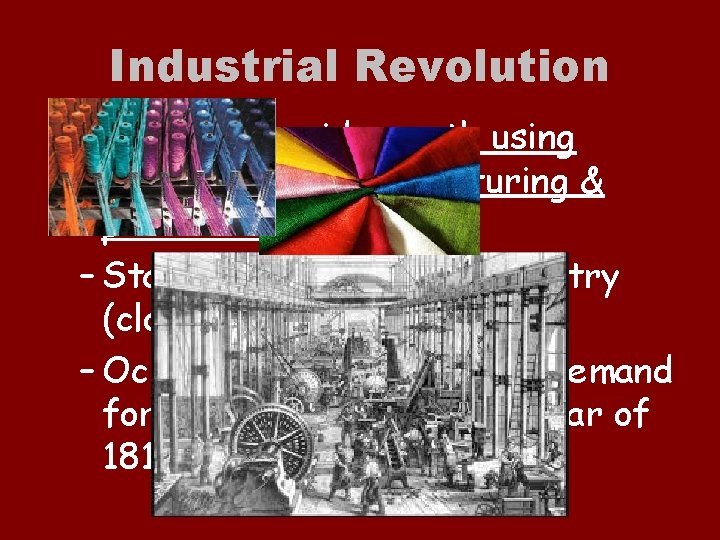
Industrial Revolution – Period of rapid growth using machines for manufacturing & production – Started in the textile industry (cloth) – Occurred in response to a demand for manufactured goods (War of 1812)
Industrial Revolution • Started in Great Britain but manufacturing grew slowly in the U. S. • Factors: – High price of labor – Lack of capital
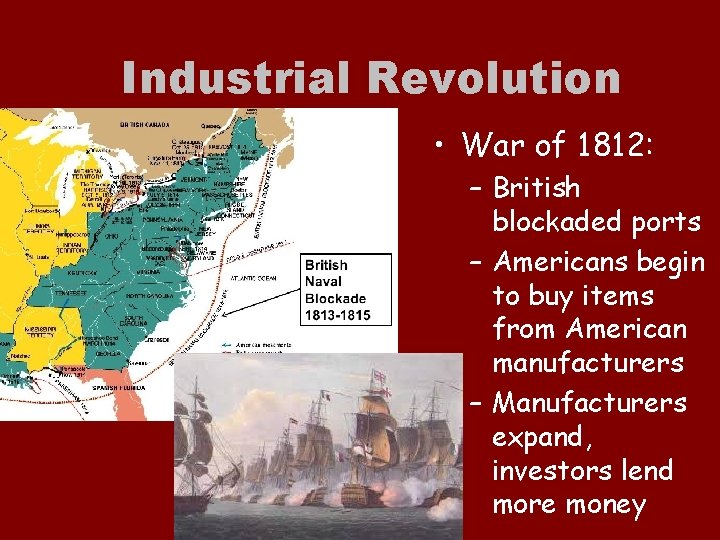
Industrial Revolution • War of 1812: – British blockaded ports – Americans begin to buy items from American manufacturers – Manufacturers expand, investors lend more money
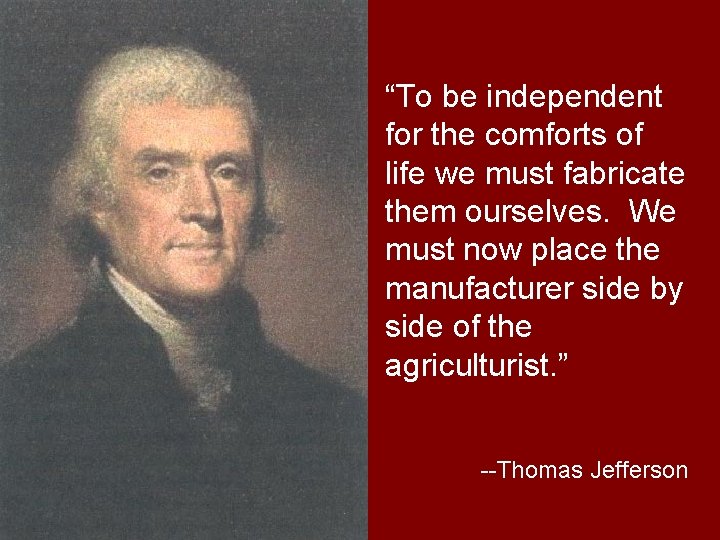
“To be independent for the comforts of life we must fabricate them ourselves. We must now place the manufacturer side by side of the agriculturist. ” --Thomas Jefferson
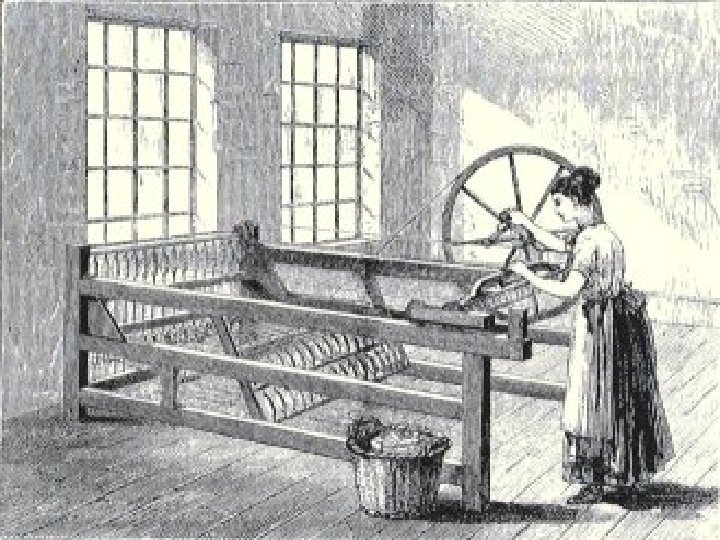
Manufacturing Breakthrough • New technology: – James Hargreaves’ spinning jenny produced many threads at the same time. – Richard Arkwright’s water frame created high quality thread using water power! – New inventions increased production and lowered costs!!
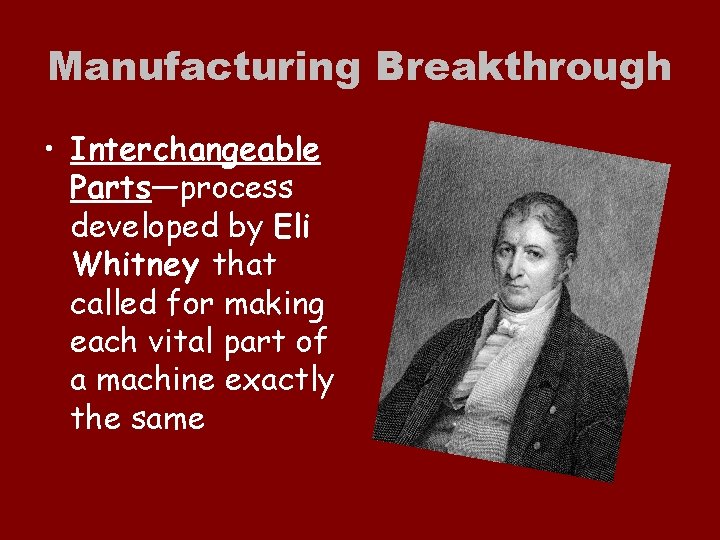
Manufacturing Breakthrough • Interchangeable Parts—process developed by Eli Whitney that called for making each vital part of a machine exactly the same
Manufacturing Breakthrough • Mass Production— efficiently making large numbers of identical goods
Manufacturing Breakthrough 3 Elements of Mass Production: • • • Interchangeable parts Machines to make the parts Division of Labor- each worker does the same task over and over
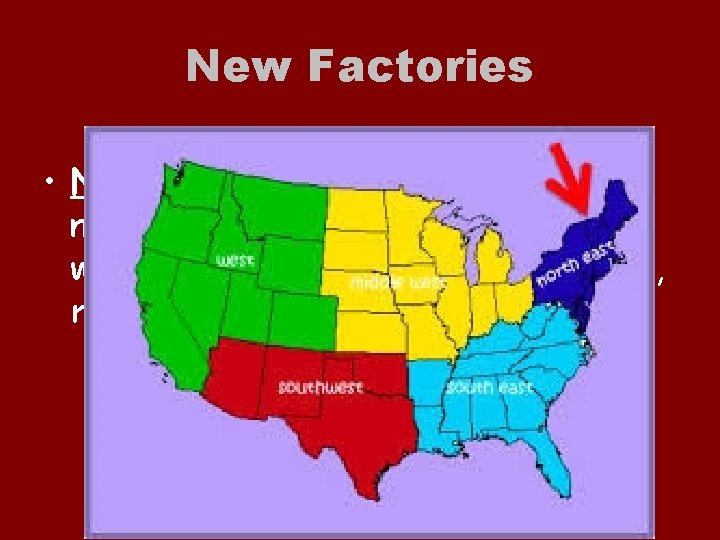
New Factories • Northeast was the home of the nation’s industry- more rivers for water powered factories/machines, more money to invest.
New Factories • Eventually steam-powered factories replaced water-powered factories – Built closer to cities because they didn’t need to stay by a river. • Closer to labor, transportation • People flock to cities for jobspopulation boom
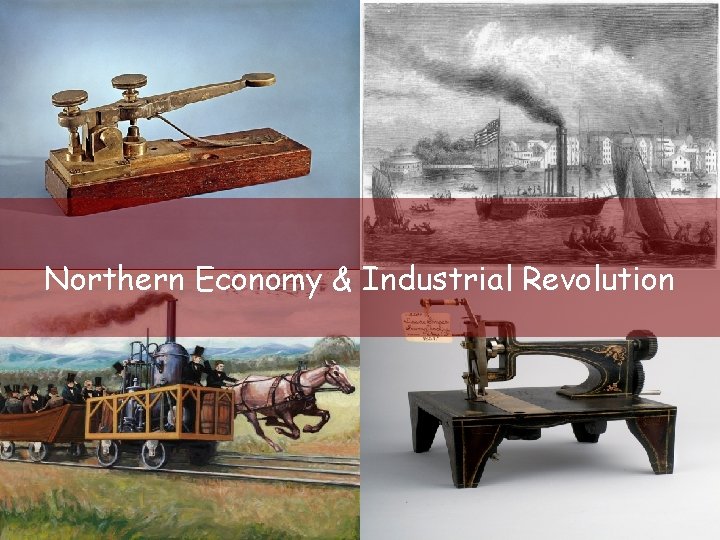
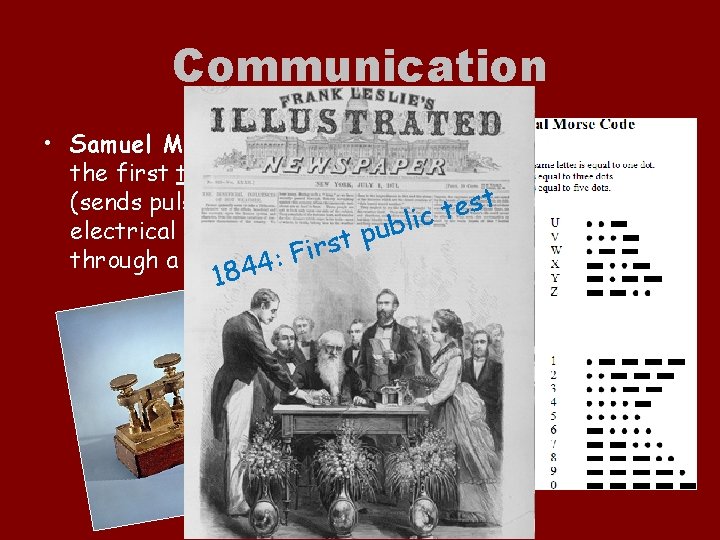
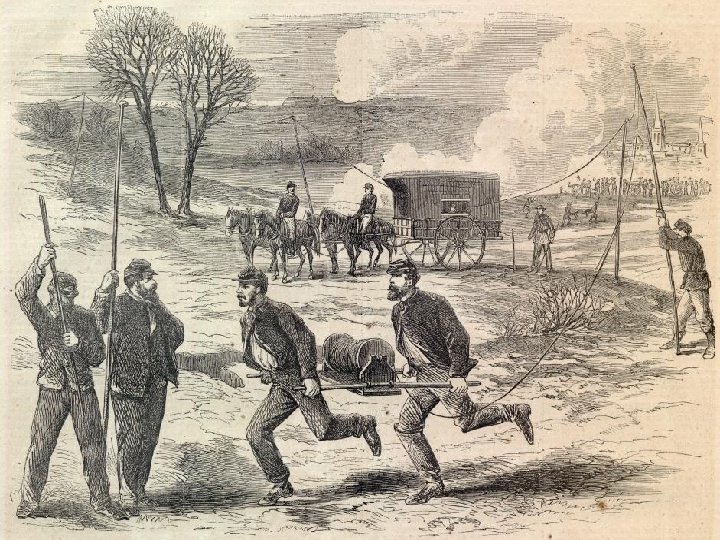
Communication • Samuel Morse invented the first telegraph (sends pulses of st e t ic l b electrical current u p t s through a wire) 44: Fir 18
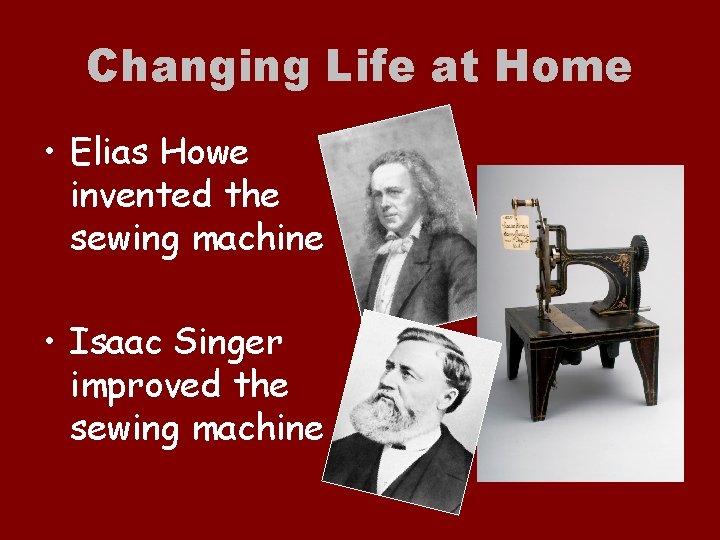
Changing Life at Home • Elias Howe invented the sewing machine • Isaac Singer improved the sewing machine
Changing Life at Home • Other inventions/improvements: – Iceboxes – Iron cookstove – Public water systems & indoor plumbing – Matches – Safety pin – Mass production of old items
Transportation Revolution • Period of rapid growth in the speed & convenience in travel – More roads and canals built – New inventions (steamboat and railroad)
Transportation Revolution • Shipping times reduced – 1817: shipping cargo from Cincinnati, OH to New York, NY took two months – 1850 s: One week • Shipping costs reduced – Overland: $100 to ship a load of goods by land across NY state – Canal: $5 • Made goods cheaper!!
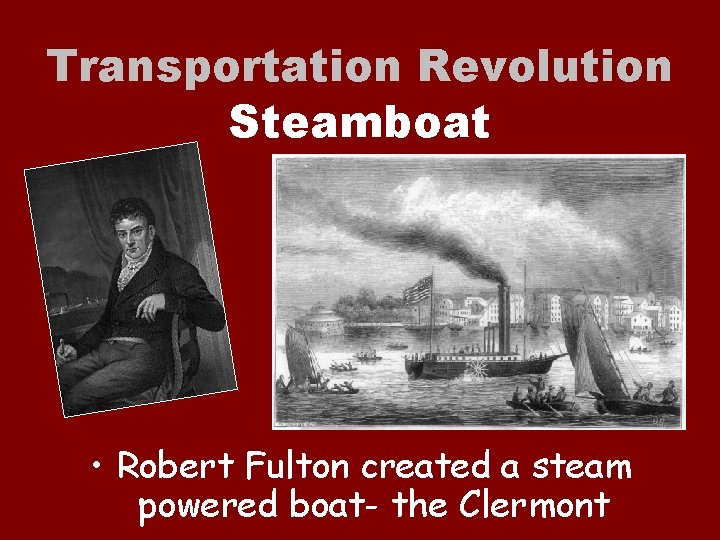
Transportation Revolution Steamboat • Robert Fulton created a steam powered boat- the Clermont
Transportation Revolution Steamboat • Advantages: – Move quickly against the current – Did not rely on wind power – Shorter travel time, reduced costs
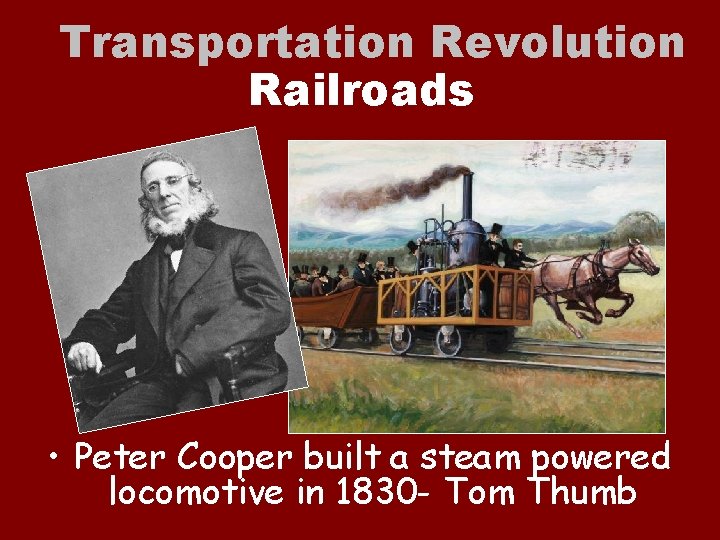
Transportation Revolution Railroads • Peter Cooper built a steam powered locomotive in 1830 - Tom Thumb
Transportation Revolution Railroads • Advantages: – Goods could travel far distances quickly (new markets) – Undeterred by weather conditions – Reduced shipping costs – Helped cities grow