
Northern Blot The northern blot is a technique
Northern Blot The northern blot is a technique used to study gene expression by detection of RNA or m. RNA in a sample. Northern blotting involves the use of electrophoresis to separate RNA samples by size, transfer of the RNA to a membrane and detection with a hybridization probe complementary to part of or the entire target sequence.
Basic Steps: 1. Isolation of total RNA from cells. 2. The RNA sample are then electrophoresed on an agarose gel to separate them by size. An RNA ladder or ribosomal RNA is used as RNA size marker. 3. Transferred RNA to a membrane. 4. The membrane is then exposed to a hybridization probe—a single RNA or c. DNA fragment with a specific sequence whose presence in the target RNA is to be determined. 5. After hybridization, excess probe is washed away from the membrane , and the pattern of hybridization is visualized on radioactive signal (if the probe is labelled with a radioisotope) or on chemiluminescent signal (If the probe is labelled with chemiluminescent substance). In the latter, alkaline phosphatase or horseradish peroxidase breakdowns chemiluminescent substrates producing a detectable emission of light
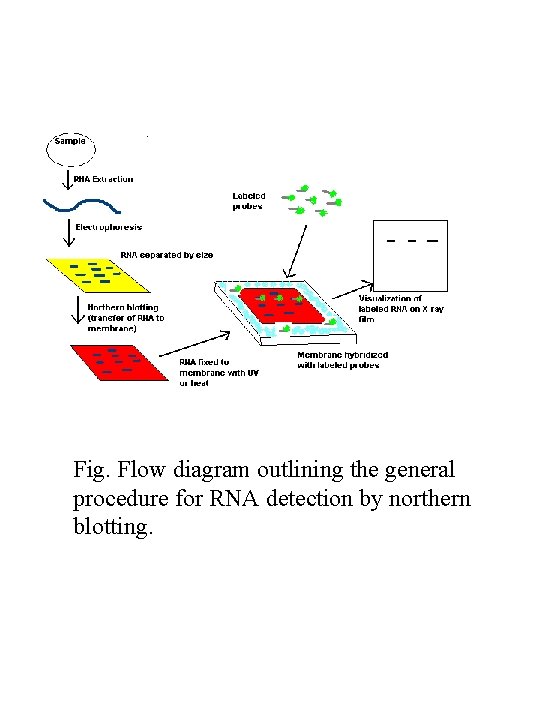
Fig. Flow diagram outlining the general procedure for RNA detection by northern blotting.
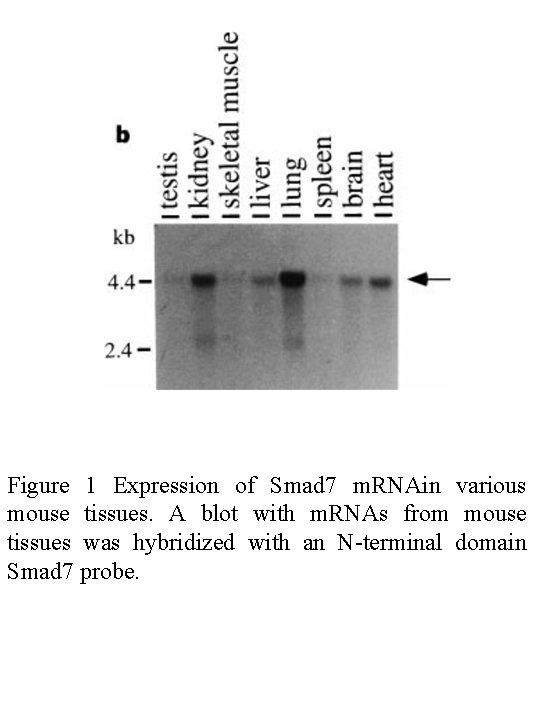
Figure 1 Expression of Smad 7 m. RNAin various mouse tissues. A blot with m. RNAs from mouse tissues was hybridized with an N-terminal domain Smad 7 probe.
- Slides: 4