
NORTH WEST Donor Identification and Referral Dr Huw
- Slides: 30
NORTH WEST Donor Identification and Referral Dr Huw Twamley 21 st May 2013 Organ Donation Past, Present and Future 1
Session Objectives • Understand difficulties with donor identification and referral • Recognise benefits of improving elements of the process – Increased identification and referral – Timely referral – Responsiveness to referral • Consider which of the proposed methods of identification and referral may work in your hospital Organ Donation Past, Present and Future 2
NORTH WEST Regional Data Organ Donation Past, Present and Future 3
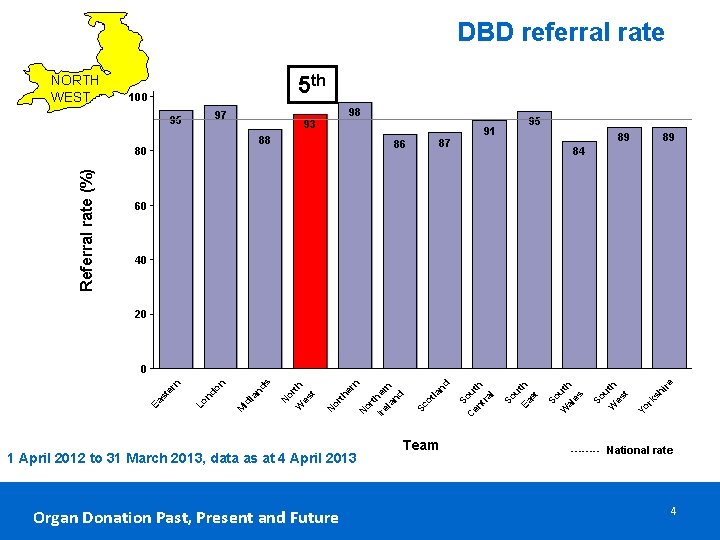
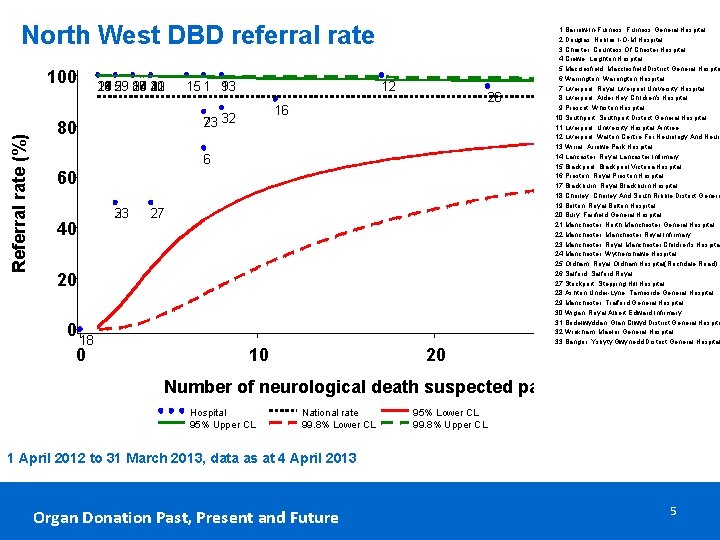
DBD referral rate NORTH WEST 5 th 100 97 95 88 80 Referral rate (%) 98 93 87 86 95 91 89 89 84 60 40 20 1 April 2012 to 31 March 2013, data as at 4 April 2013 Organ Donation Past, Present and Future Team sh ire rk Yo h t ut es W So So u Ea th st So W uth al es C So en uth tr al nd la ot Sc or t Ire her la n nd er n N or th N N o W rth es t s nd la M id on nd Lo Ea st er n 0 ---- National rate 4
North West DBD referral rate Referral rate (%) 100 10 29 14 19 21 25 3 8 5 17 4 24 28 30 11 20 22 31 15 1 9 13 12 23 32 7 80 26 16 6 60 40 33 2 27 20 0 18 0 10 20 1 Barrow-In-Furness, Furness General Hospital 2 Douglas, Nobles I-O-M Hospital 3 Chester, Countess Of Chester Hospital 4 Crewe, Leighton Hospital 5 Macclesfield, Macclesfield District General Hospita 6 Warrington, Warrington Hospital 7 Liverpool, Royal Liverpool University Hospital 8 Liverpool, Alder Hey Children's Hospital 9 Prescot, Whiston Hospital 10 Southport, Southport District General Hospital 11 Liverpool, University Hospital Aintree 12 Liverpool, Walton Centre For Neurology And Neuro 13 Wirral, Arrowe Park Hospital 14 Lancaster, Royal Lancaster Infirmary 15 Blackpool, Blackpool Victoria Hospital 16 Preston, Royal Preston Hospital 17 Blackburn, Royal Blackburn Hospital 18 Chorley, Chorley And South Ribble District Genera 19 Bolton, Royal Bolton Hospital 20 Bury, Fairfield General Hospital 21 Manchester, North Manchester General Hospital 22 Manchester, Manchester Royal Infirmary 23 Manchester, Royal Manchester Children's Hospital 24 Manchester, Wythenshawe Hospital 25 Oldham, Royal Oldham Hospital(Rochdale Road) 26 Salford, Salford Royal 27 Stockport, Stepping Hill Hospital 28 Ashton-Under-Lyne, Tameside General Hospital 29 Manchester, Trafford General Hospital 30 Wigan, Royal Albert Edward Infirmary 31 Bodelwyddan, Glan Clwyd District General Hospita 32 Wrexham, Maelor General Hospital 33 Bangor, Ysbyty Gwynedd District General Hospital 30 Number of neurological death suspected patients Hospital 95% Upper CL National rate 99. 8% Lower CL 95% Lower CL 99. 8% Upper CL 1 April 2012 to 31 March 2013, data as at 4 April 2013 Organ Donation Past, Present and Future 5
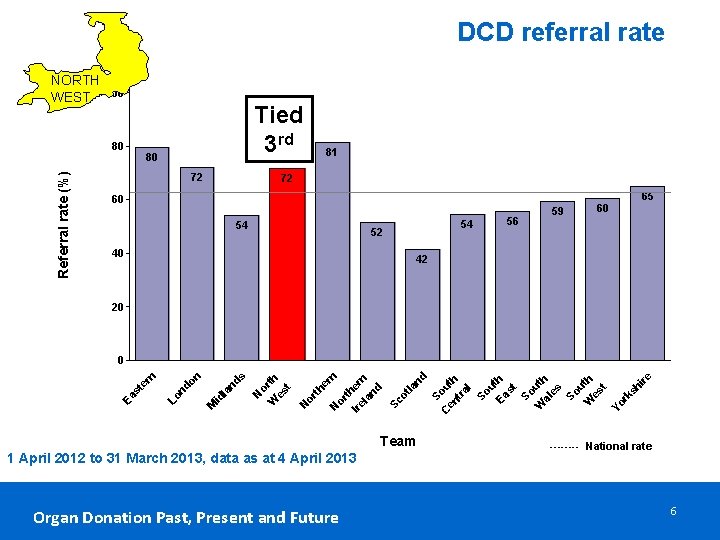
DCD referral rate NORTH WEST 100 Referral rate (%) 80 Tied 3 rd 80 72 81 72 60 54 54 52 40 56 65 60 59 42 20 Team 1 April 2012 to 31 March 2013, data as at 4 April 2013 Organ Donation Past, Present and Future ire rk sh Yo ut h es t W So So en uth tr al So u Ea th st So W uth al es C nd ot la Sc N o W rth es t N or th er n N or th Ire er la n nd M id la nd s on Lo nd Ea st e rn 0 ---- National rate 6
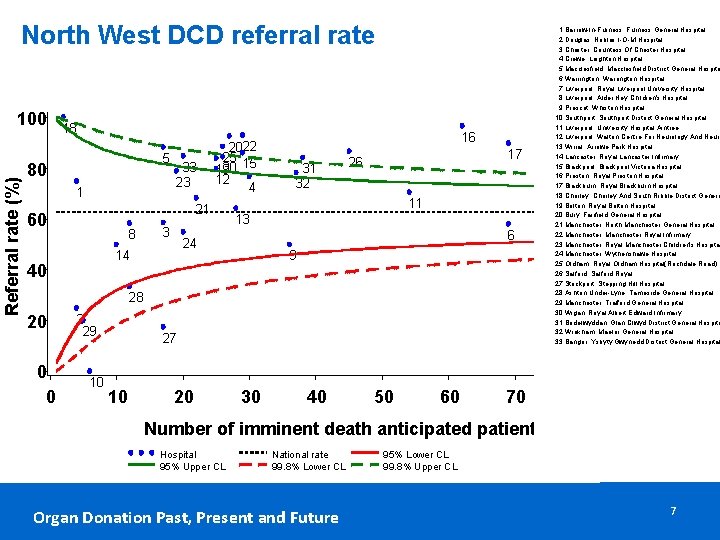
North West DCD referral rate Referral rate (%) 100 18 5 80 1 33 23 2022 25 15 30 19 12 4 21 60 8 3 40 31 32 17 26 11 13 6 24 14 16 9 7 28 20 0 0 2 29 10 27 10 1 Barrow-In-Furness, Furness General Hospital 2 Douglas, Nobles I-O-M Hospital 3 Chester, Countess Of Chester Hospital 4 Crewe, Leighton Hospital 5 Macclesfield, Macclesfield District General Hospita 6 Warrington, Warrington Hospital 7 Liverpool, Royal Liverpool University Hospital 8 Liverpool, Alder Hey Children's Hospital 9 Prescot, Whiston Hospital 10 Southport, Southport District General Hospital 11 Liverpool, University Hospital Aintree 12 Liverpool, Walton Centre For Neurology And Neuro 13 Wirral, Arrowe Park Hospital 14 Lancaster, Royal Lancaster Infirmary 15 Blackpool, Blackpool Victoria Hospital 16 Preston, Royal Preston Hospital 17 Blackburn, Royal Blackburn Hospital 18 Chorley, Chorley And South Ribble District Genera 19 Bolton, Royal Bolton Hospital 20 Bury, Fairfield General Hospital 21 Manchester, North Manchester General Hospital 22 Manchester, Manchester Royal Infirmary 23 Manchester, Royal Manchester Children's Hospital 24 Manchester, Wythenshawe Hospital 25 Oldham, Royal Oldham Hospital(Rochdale Road) 26 Salford, Salford Royal 27 Stockport, Stepping Hill Hospital 28 Ashton-Under-Lyne, Tameside General Hospital 29 Manchester, Trafford General Hospital 30 Wigan, Royal Albert Edward Infirmary 31 Bodelwyddan, Glan Clwyd District General Hospita 32 Wrexham, Maelor General Hospital 33 Bangor, Ysbyty Gwynedd District General Hospital 20 30 40 50 60 70 80 Number of imminent death anticipated patients Hospital 95% Upper CL National rate 99. 8% Lower CL Organ Donation Past, Present and Future 95% Lower CL 99. 8% Upper CL 7
Timely Identification and Referral of Potential Organ Donors Huw Twamley Regional CLOD North West Region Organ Donation Past, Present and Future
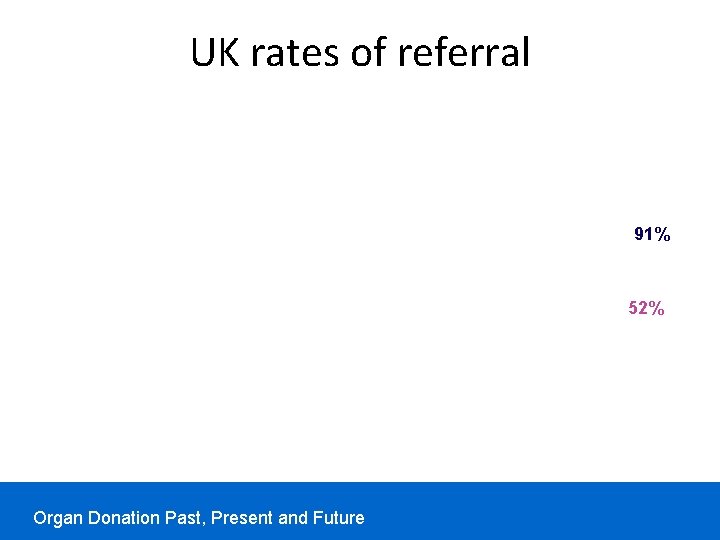
UK rates of referral 91% 52% Organ Donation Past, Present and Future
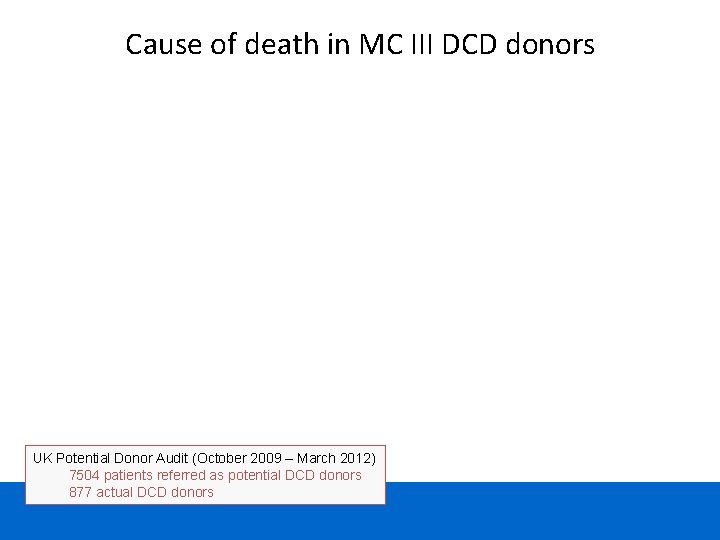
Cause of death in MC III DCD donors UK Potential Donor Audit (October 2009 – March 2012) 7504 patients referred as potential DCD donors 877 actual DCD donors
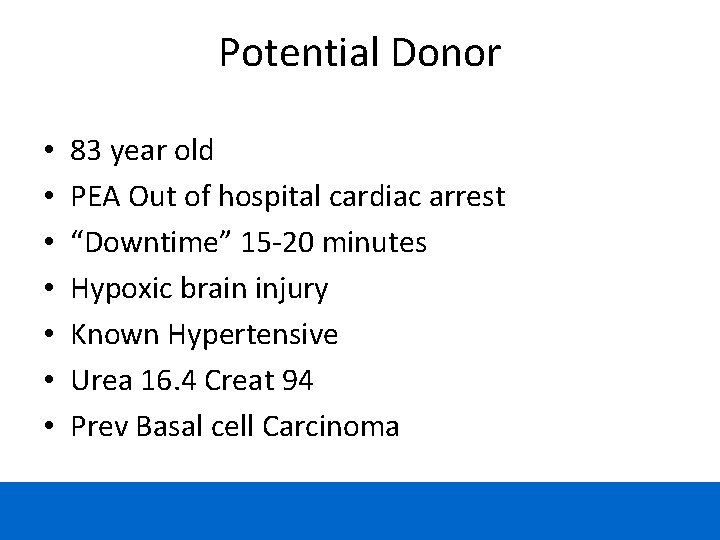
Potential Donor • • 83 year old PEA Out of hospital cardiac arrest “Downtime” 15 -20 minutes Hypoxic brain injury Known Hypertensive Urea 16. 4 Creat 94 Prev Basal cell Carcinoma
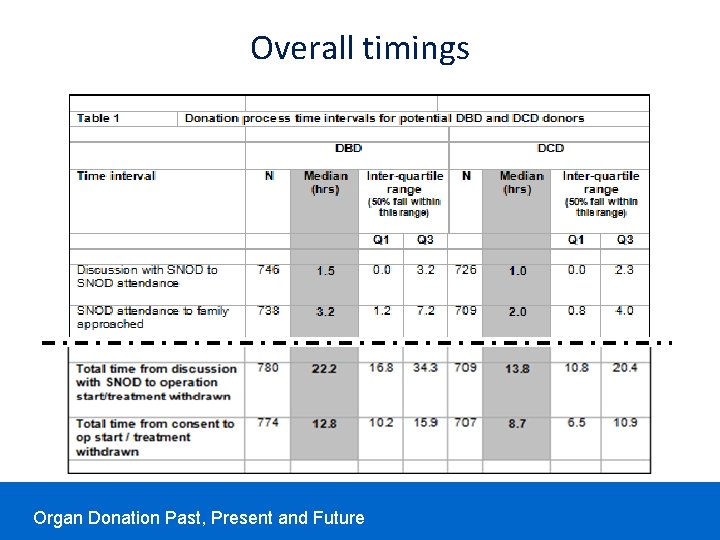
Overall timings Organ Donation Past, Present and Future
Aims of Strategy • 100% Identification of potential Donors • 100% Referral of Potential Donors • 100% Timely Referral • Implement NICE Guidance The consideration of donation should be core ICU / ED and part of all end of life care plans. Timely referral promotes this possibility Organ Donation Past, Present and Future
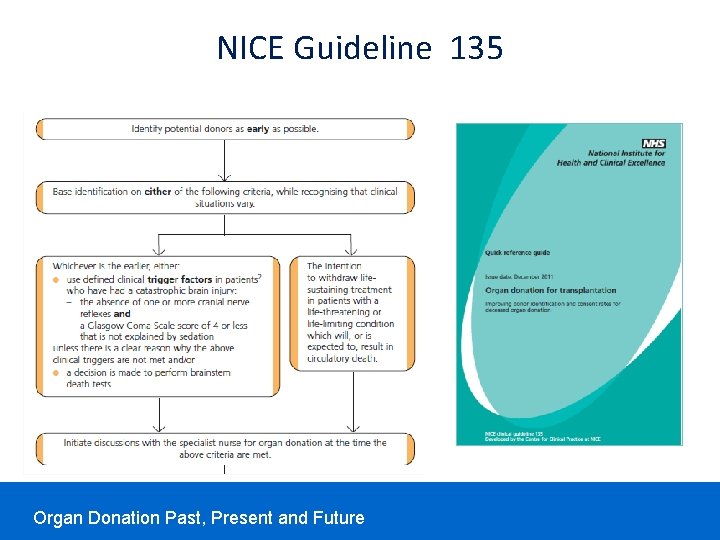
NICE Guideline 135 Organ Donation Past, Present and Future
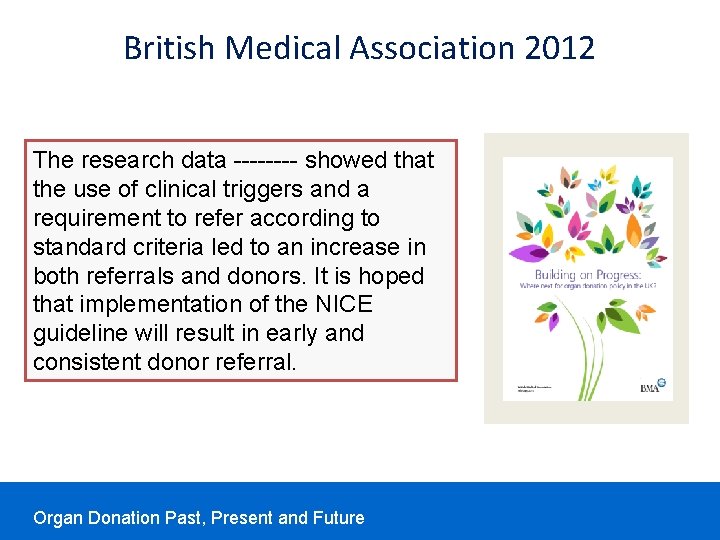
British Medical Association 2012 The research data ---- showed that the use of clinical triggers and a requirement to refer according to standard criteria led to an increase in both referrals and donors. It is hoped that implementation of the NICE guideline will result in early and consistent donor referral. Organ Donation Past, Present and Future
General Medical Council 2010 I”f a patient is close to death and their views cannot be determined, you should be prepared to explore with those close to them whether they had expressed any views about organ or tissue donation, if donation is likely to be a possibility. ” “You should follow any national procedures for identifying potential organ donors and, in appropriate cases, for notifying the local transplant coordinator. ” Organ Donation Past, Present and Future Decisions to limit or withdraw treatments in potential DCD donors MUST be in compliance with national End of Life Care policy.
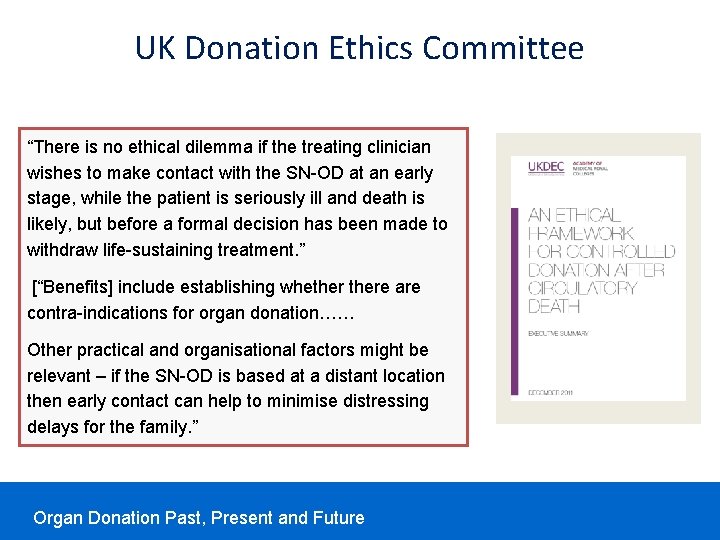
UK Donation Ethics Committee “There is no ethical dilemma if the treating clinician wishes to make contact with the SN-OD at an early stage, while the patient is seriously ill and death is likely, but before a formal decision has been made to withdraw life-sustaining treatment. ” [“Benefits] include establishing whethere are contra-indications for organ donation…… Other practical and organisational factors might be relevant – if the SN-OD is based at a distant location then early contact can help to minimise distressing delays for the family. ” Organ Donation Past, Present and Future
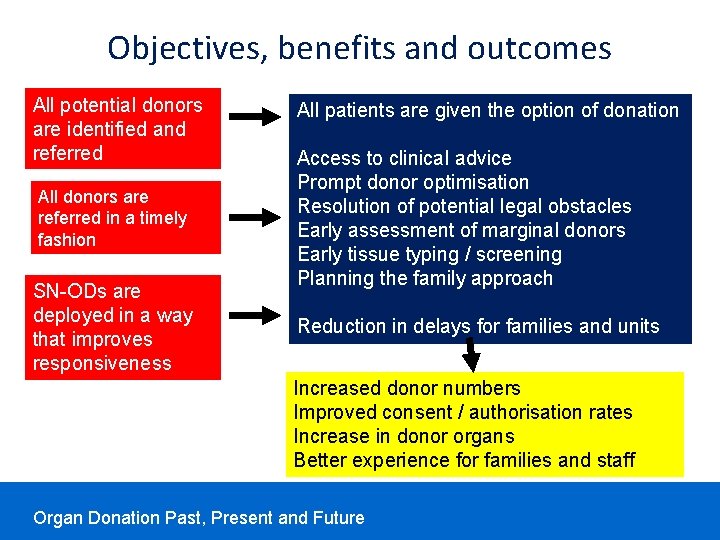
Objectives, benefits and outcomes All potential donors are identified and referred All donors are referred in a timely fashion SN-ODs are deployed in a way that improves responsiveness All patients are given the option of donation Access to clinical advice Prompt donor optimisation Resolution of potential legal obstacles Early assessment of marginal donors Early tissue typing / screening Planning the family approach Reduction in delays for families and units Increased donor numbers Improved consent / authorisation rates Increase in donor organs Better experience for families and staff Organ Donation Past, Present and Future
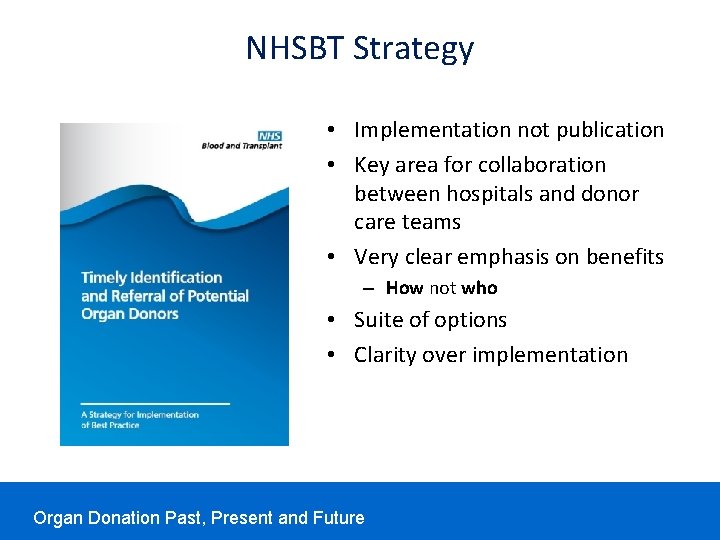
NHSBT Strategy • Implementation not publication • Key area for collaboration between hospitals and donor care teams • Very clear emphasis on benefits – How not who • Suite of options • Clarity over implementation Organ Donation Past, Present and Future
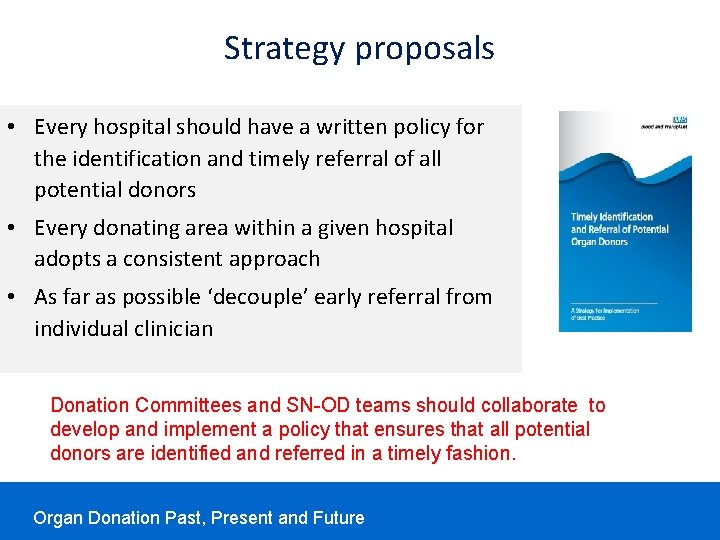
Strategy proposals • Every hospital should have a written policy for the identification and timely referral of all potential donors • Every donating area within a given hospital adopts a consistent approach • As far as possible ‘decouple’ early referral from individual clinician Donation Committees and SN-OD teams should collaborate to develop and implement a policy that ensures that all potential donors are identified and referred in a timely fashion. Organ Donation Past, Present and Future
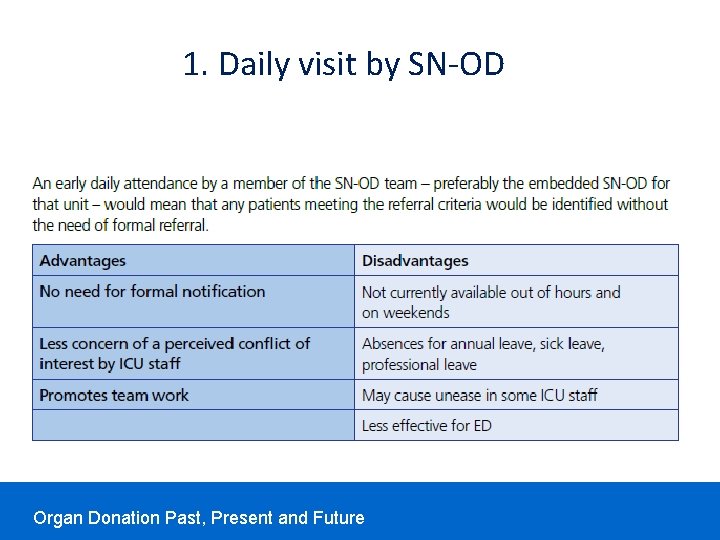
1. Daily visit by SN-OD Organ Donation Past, Present and Future
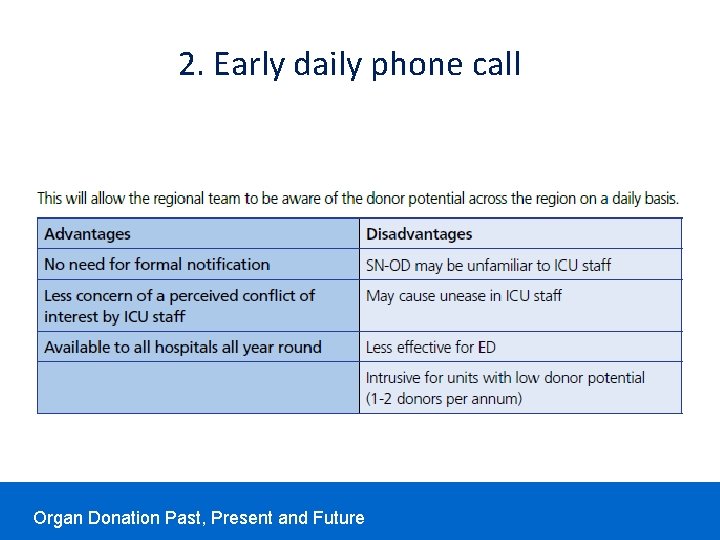
2. Early daily phone call Organ Donation Past, Present and Future
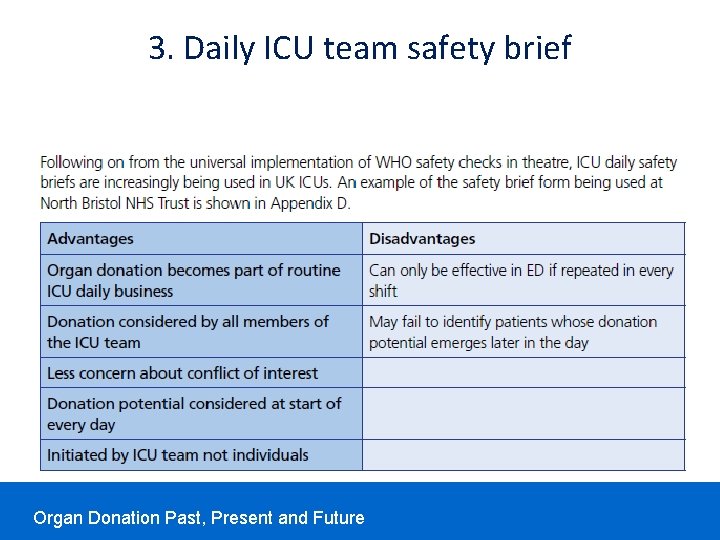
3. Daily ICU team safety brief Organ Donation Past, Present and Future
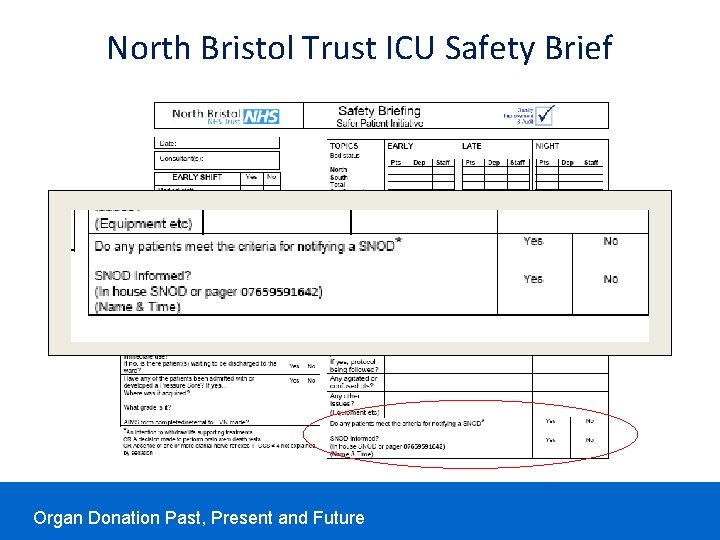
North Bristol Trust ICU Safety Brief Organ Donation Past, Present and Future
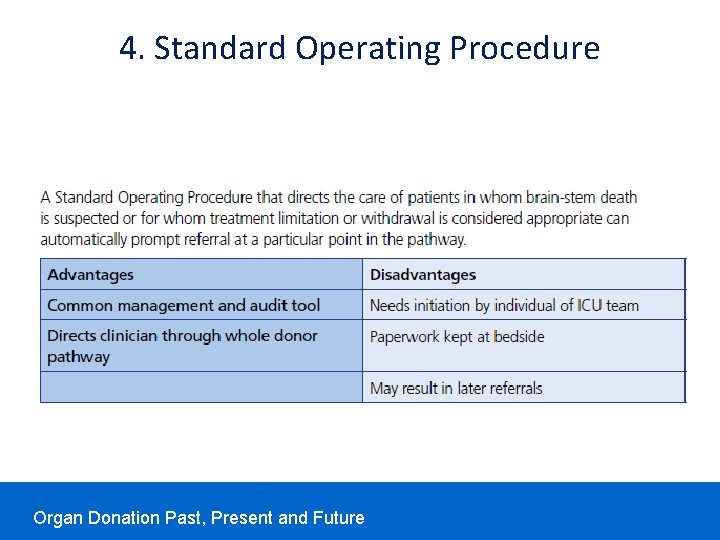
4. Standard Operating Procedure Organ Donation Past, Present and Future
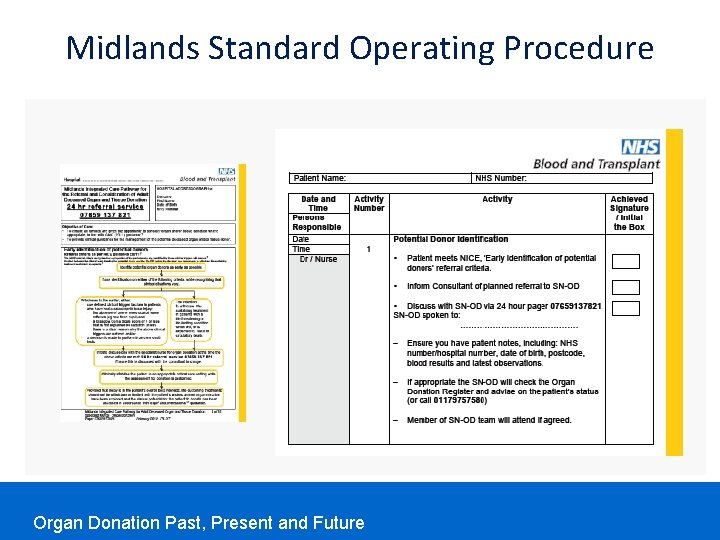
Midlands Standard Operating Procedure Organ Donation Past, Present and Future
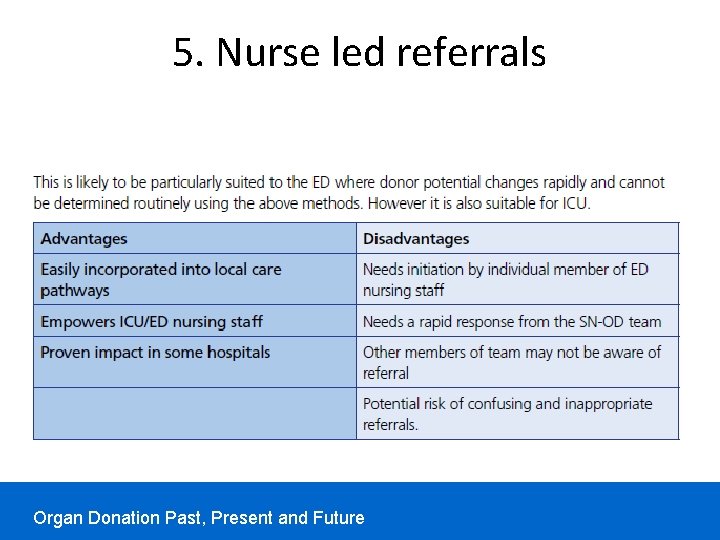
5. Nurse led referrals Organ Donation Past, Present and Future
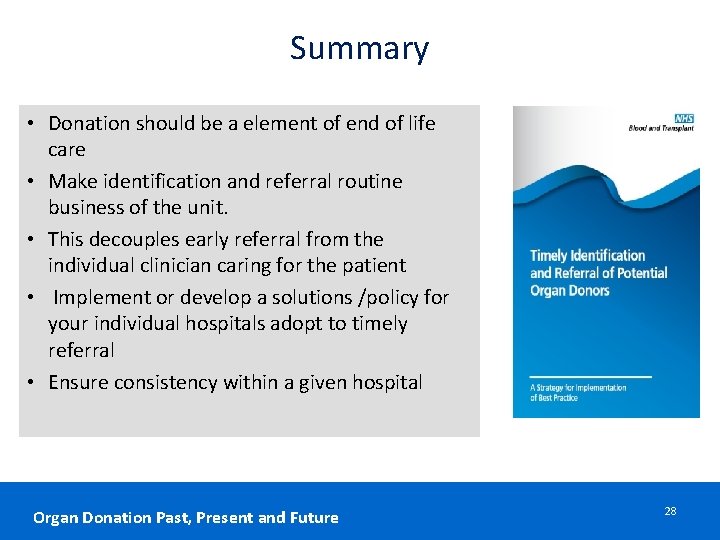
Summary • Donation should be a element of end of life care • Make identification and referral routine business of the unit. • This decouples early referral from the individual clinician caring for the patient • Implement or develop a solutions /policy for your individual hospitals adopt to timely referral • Ensure consistency within a given hospital Organ Donation Past, Present and Future 28
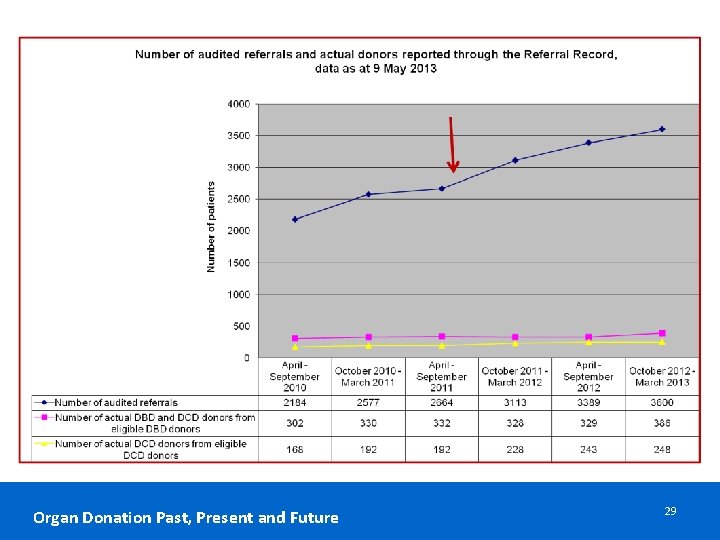
Organ Donation Past, Present and Future 29
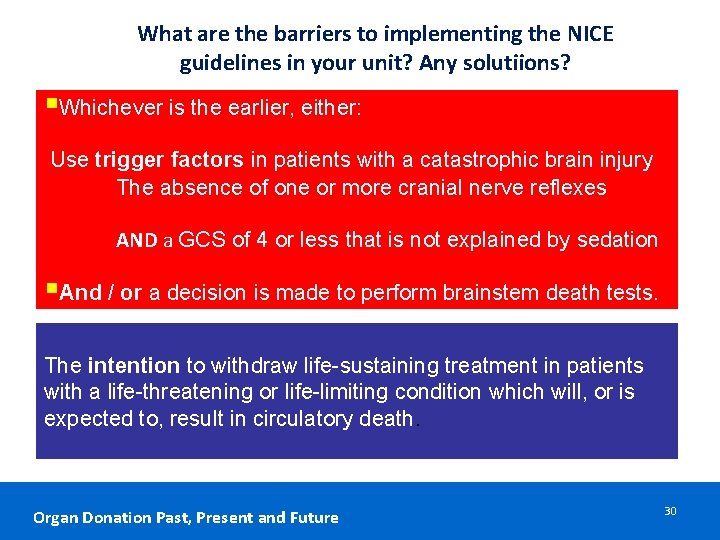
What are the barriers to implementing the NICE guidelines in your unit? Any solutiions? §Whichever is the earlier, either: Use trigger factors in patients with a catastrophic brain injury The absence of one or more cranial nerve reflexes AND a GCS of 4 or less that is not explained by sedation §And / or a decision is made to perform brainstem death tests. The intention to withdraw life-sustaining treatment in patients with a life-threatening or life-limiting condition which will, or is expected to, result in circulatory death. Organ Donation Past, Present and Future 30