
North Vancouver City Fire Department Firefighter Down R
- Slides: 29
North Vancouver City Fire Department Firefighter Down! R. I. T. Rope Rescue The Big ‘W’ ‘Dirty Rescue’
RIT Rescue – n n n It Ain’t Meant to be Pretty RIT Rescue and Firefighter Survival Techniques do not follow generally recognized performance standards These procedures are inherently dangerous by their very nature but must be practiced if they are to be effective Seconds literally count when a firefighter has gone through a floor or roof
Attempting a Rescue from the floor below may take longer if : n n n It happens to be the fire floor The floor plan is considerably different than the floor above No additional resources are available on the floor below n n The firefighter has fallen into a secured area which may require considerable forcible entry The downed firefighter cannot be otherwise easily located
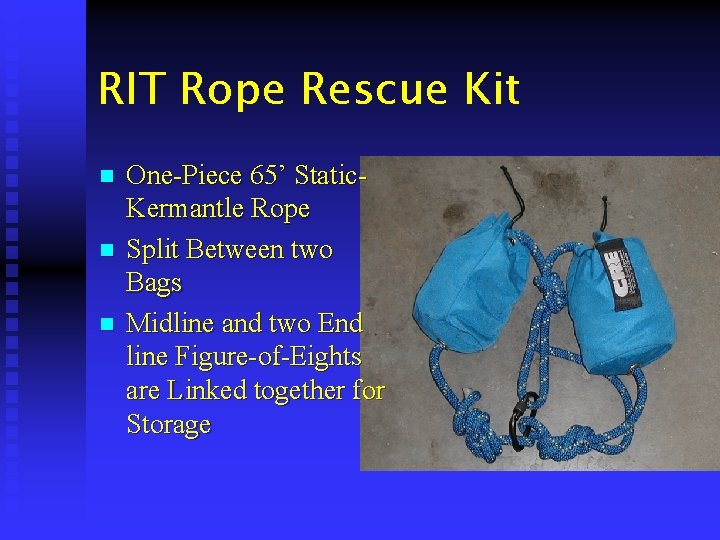
RIT Rope Rescue Kit n n n One-Piece 65’ Static. Kermantle Rope Split Between two Bags Midline and two End line Figure-of-Eights are Linked together for Storage
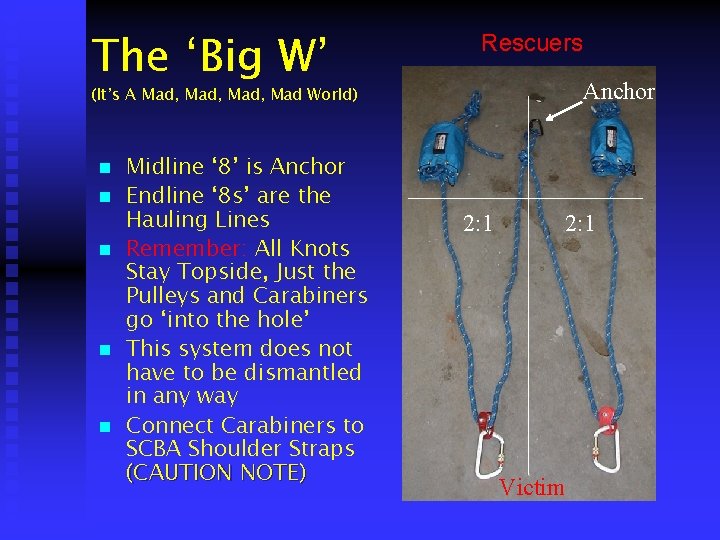
The ‘Big W’ Rescuers Anchor (It’s A Mad, Mad World) n n n Midline ‘ 8’ is Anchor Endline ‘ 8 s’ are the Hauling Lines Remember: All Knots Stay Topside, Just the Pulleys and Carabiners go ‘into the hole’ This system does not have to be dismantled in any way Connect Carabiners to SCBA Shoulder Straps (CAUTION NOTE) 2: 1 Victim
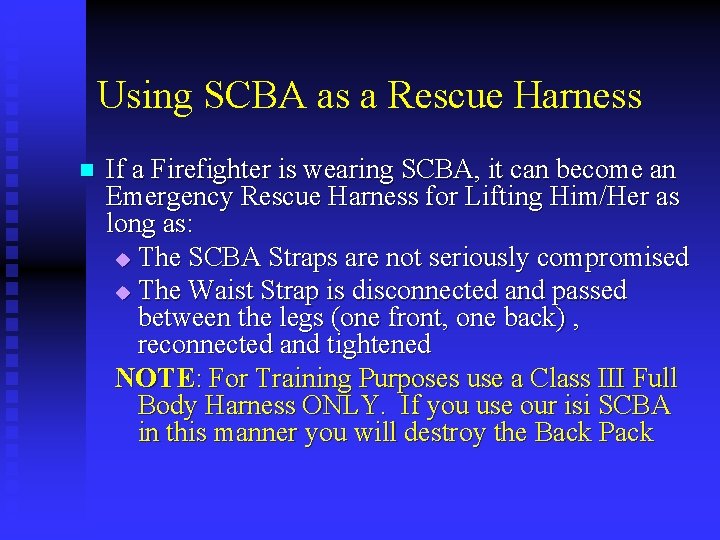
Using SCBA as a Rescue Harness n If a Firefighter is wearing SCBA, it can become an Emergency Rescue Harness for Lifting Him/Her as long as: u The SCBA Straps are not seriously compromised u The Waist Strap is disconnected and passed between the legs (one front, one back) , reconnected and tightened NOTE: For Training Purposes use a Class III Full Body Harness ONLY. If you use our isi SCBA in this manner you will destroy the Back Pack
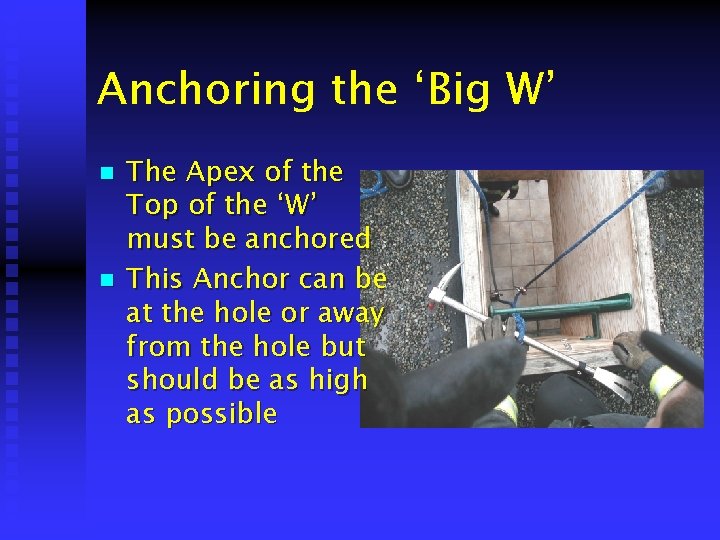
Anchoring the ‘Big W’ n n The Apex of the Top of the ‘W’ must be anchored This Anchor can be at the hole or away from the hole but should be as high as possible
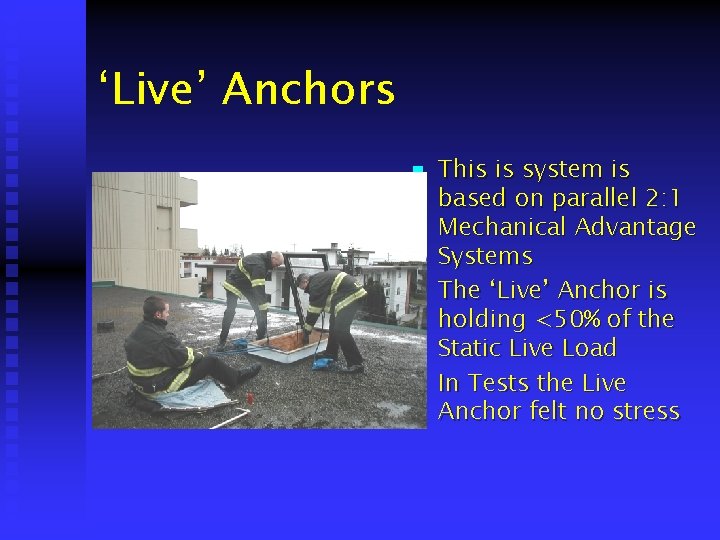
‘Live’ Anchors n n n This is system is based on parallel 2: 1 Mechanical Advantage Systems The ‘Live’ Anchor is holding <50% of the Static Live Load In Tests the Live Anchor felt no stress
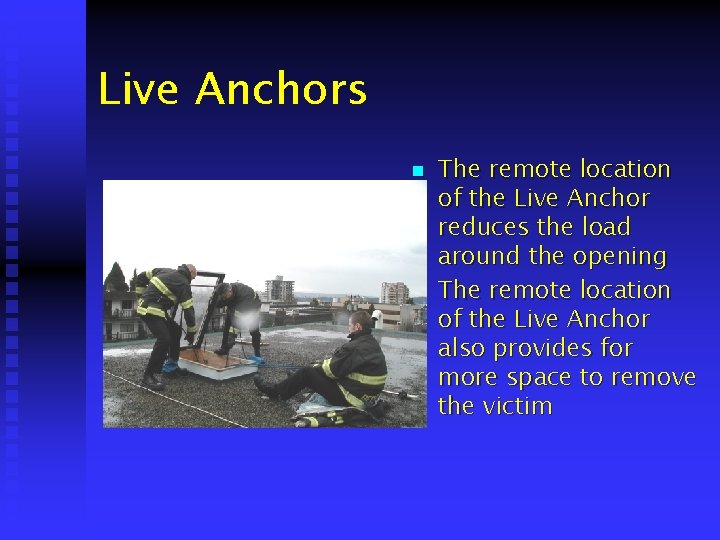
Live Anchors n n The remote location of the Live Anchor reduces the load around the opening The remote location of the Live Anchor also provides for more space to remove the victim
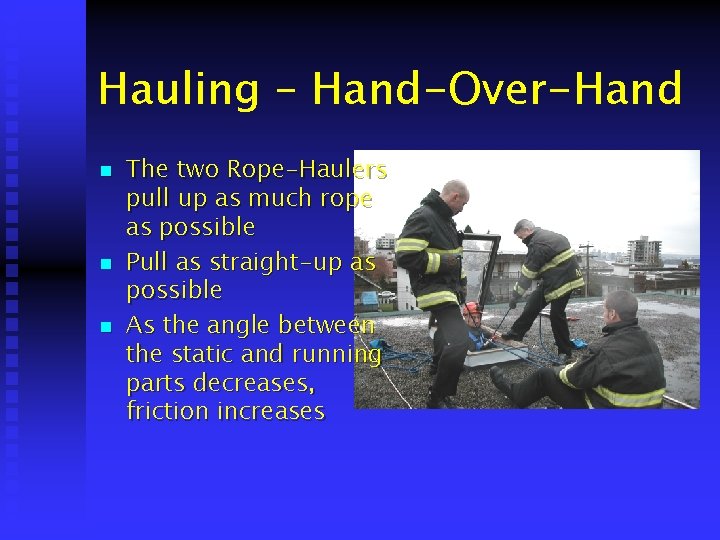
Hauling – Hand-Over-Hand n n n The two Rope-Haulers pull up as much rope as possible Pull as straight-up as possible As the angle between the static and running parts decreases, friction increases
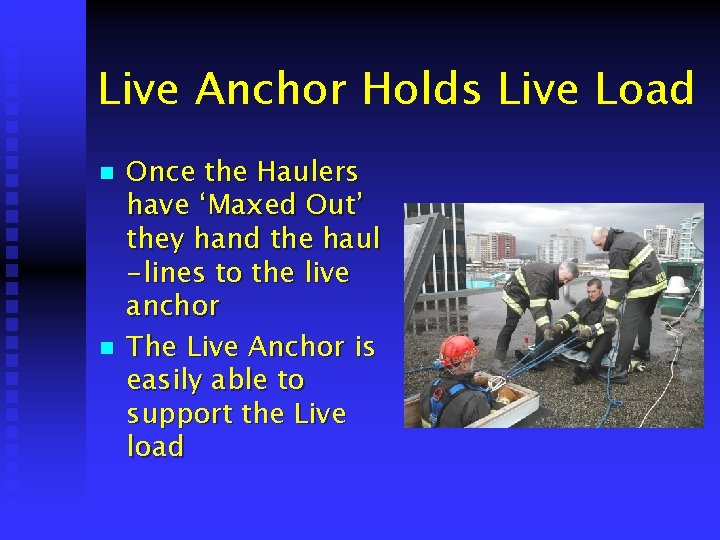
Live Anchor Holds Live Load n n Once the Haulers have ‘Maxed Out’ they hand the haul -lines to the live anchor The Live Anchor is easily able to support the Live load
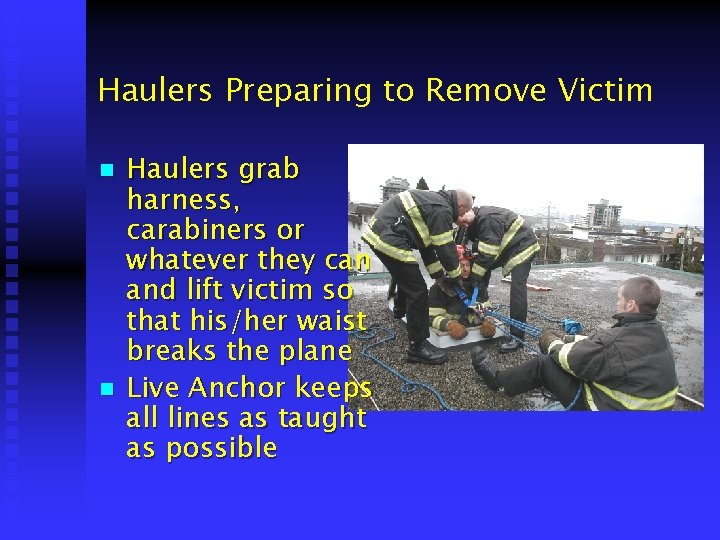
Haulers Preparing to Remove Victim n n Haulers grab harness, carabiners or whatever they can and lift victim so that his/her waist breaks the plane Live Anchor keeps all lines as taught as possible
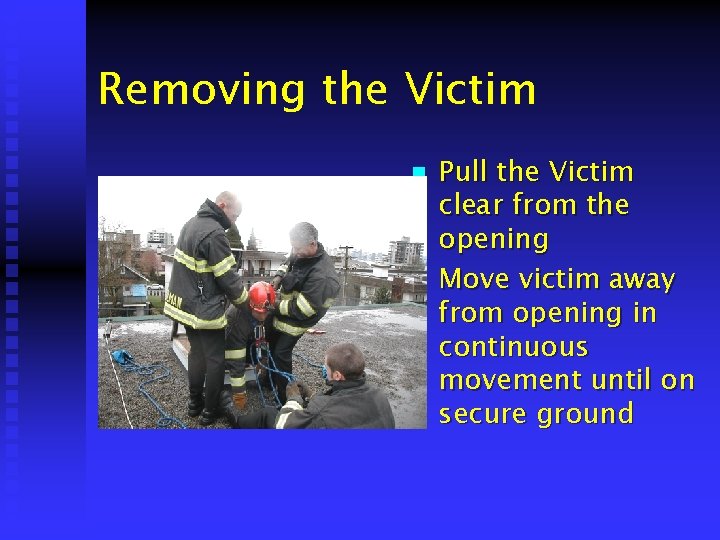
Removing the Victim n n Pull the Victim clear from the opening Move victim away from opening in continuous movement until on secure ground
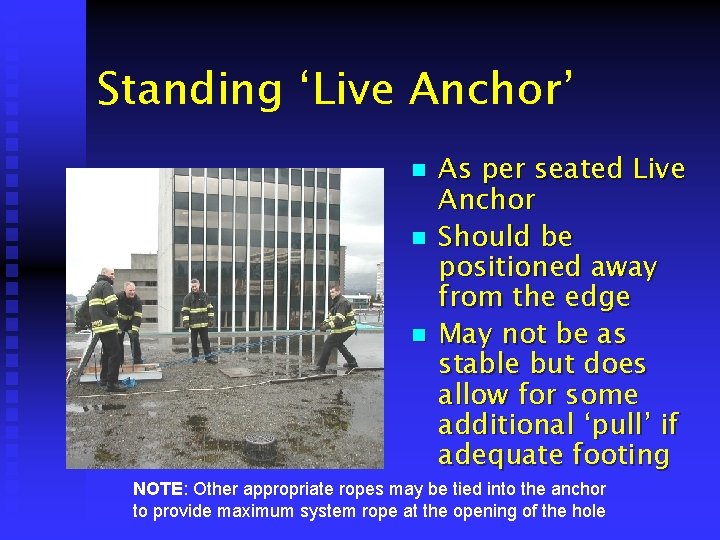
Standing ‘Live Anchor’ n n n As per seated Live Anchor Should be positioned away from the edge May not be as stable but does allow for some additional ‘pull’ if adequate footing NOTE: Other appropriate ropes may be tied into the anchor to provide maximum system rope at the opening of the hole
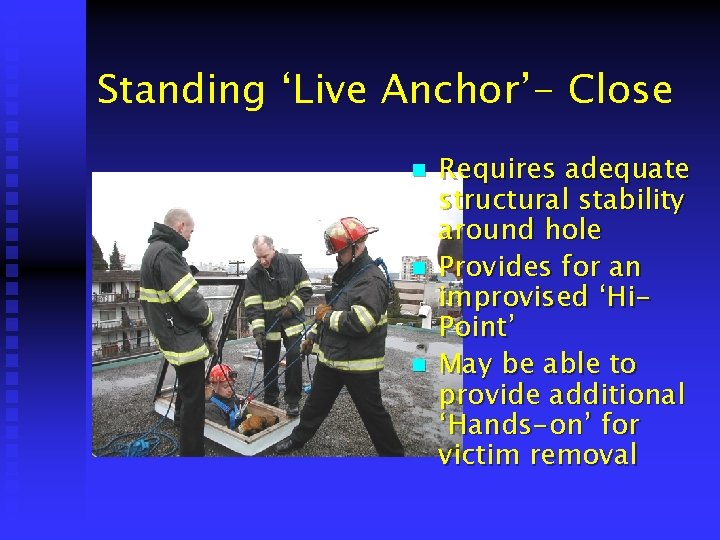
Standing ‘Live Anchor’- Close n n n Requires adequate structural stability around hole Provides for an improvised ‘Hi. Point’ May be able to provide additional ‘Hands-on’ for victim removal
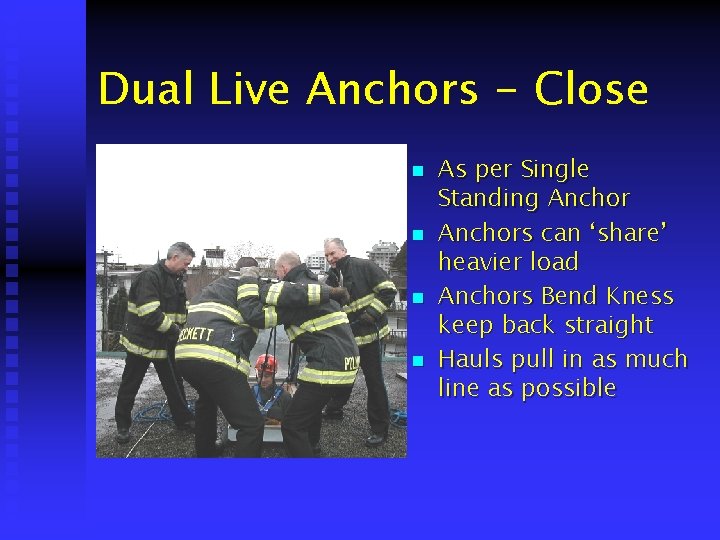
Dual Live Anchors - Close n n As per Single Standing Anchors can ‘share’ heavier load Anchors Bend Kness keep back straight Hauls pull in as much line as possible
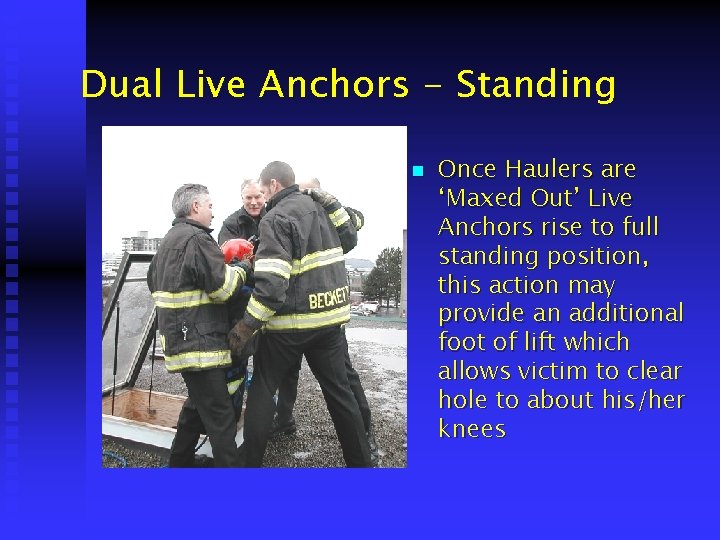
Dual Live Anchors - Standing n Once Haulers are ‘Maxed Out’ Live Anchors rise to full standing position, this action may provide an additional foot of lift which allows victim to clear hole to about his/her knees
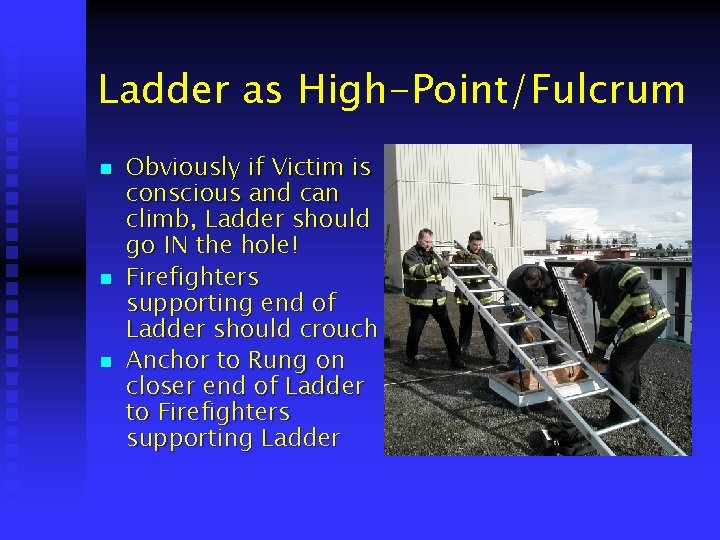
Ladder as High-Point/Fulcrum n n n Obviously if Victim is conscious and can climb, Ladder should go IN the hole! Firefighters supporting end of Ladder should crouch Anchor to Rung on closer end of Ladder to Firefighters supporting Ladder
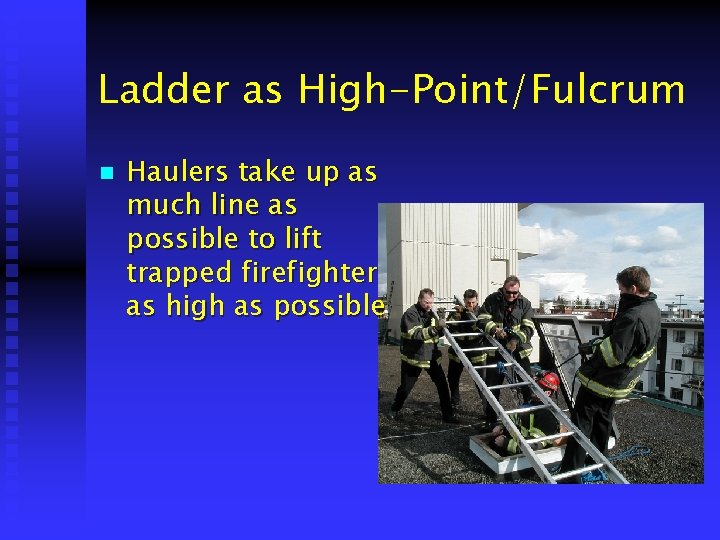
Ladder as High-Point/Fulcrum n Haulers take up as much line as possible to lift trapped firefighter as high as possible
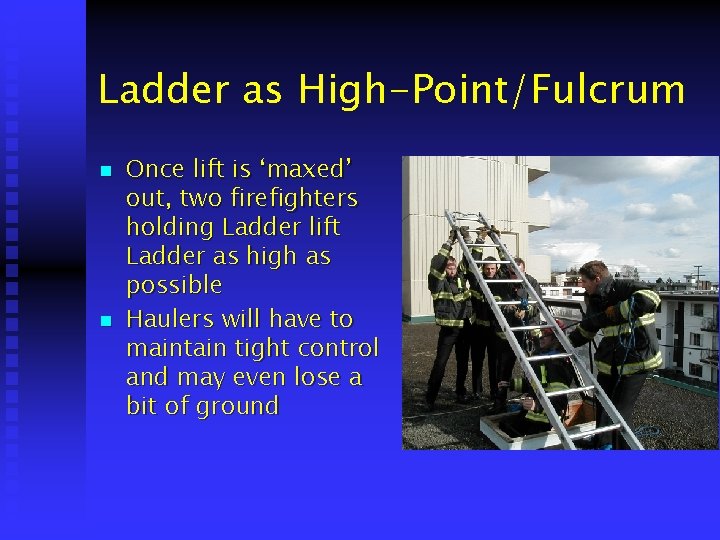
Ladder as High-Point/Fulcrum n n Once lift is ‘maxed’ out, two firefighters holding Ladder lift Ladder as high as possible Haulers will have to maintain tight control and may even lose a bit of ground
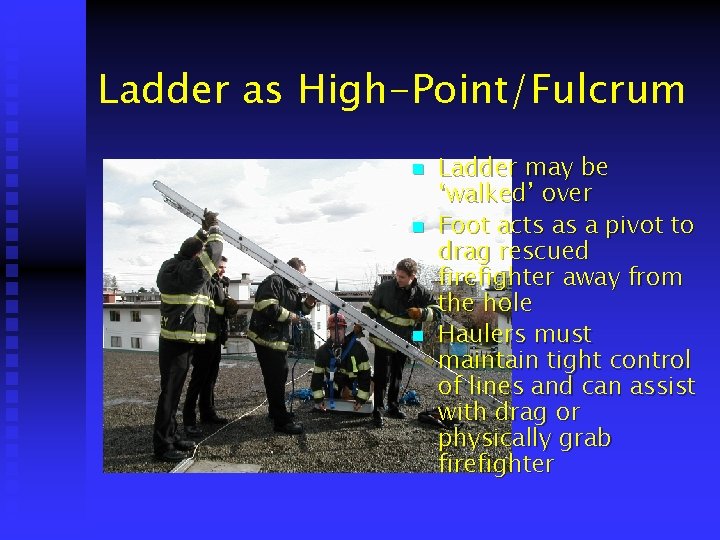
Ladder as High-Point/Fulcrum n n n Ladder may be ‘walked’ over Foot acts as a pivot to drag rescued firefighter away from the hole Haulers must maintain tight control of lines and can assist with drag or physically grab firefighter
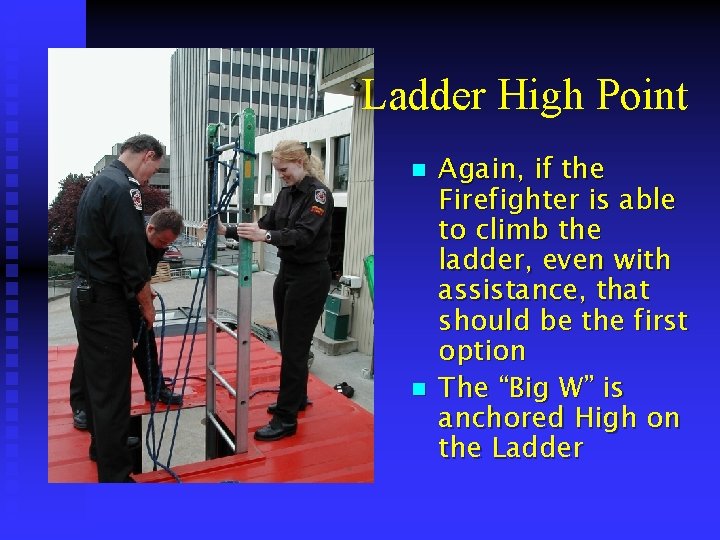
Ladder High Point n n Again, if the Firefighter is able to climb the ladder, even with assistance, that should be the first option The “Big W” is anchored High on the Ladder
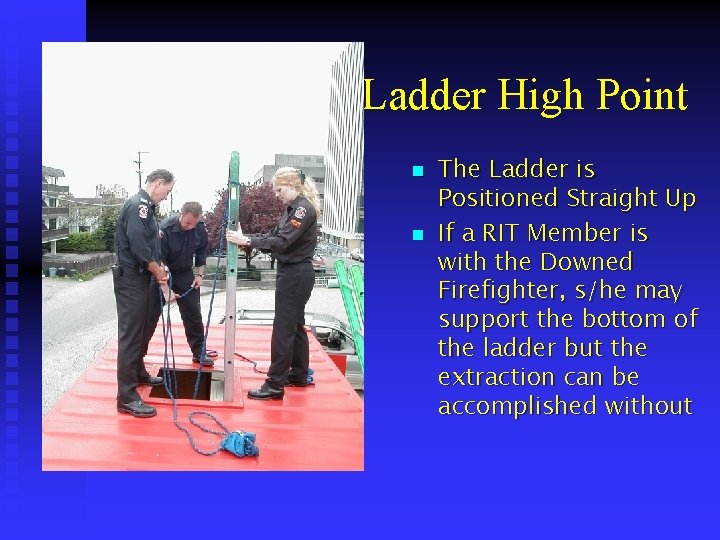
Ladder High Point n n The Ladder is Positioned Straight Up If a RIT Member is with the Downed Firefighter, s/he may support the bottom of the ladder but the extraction can be accomplished without
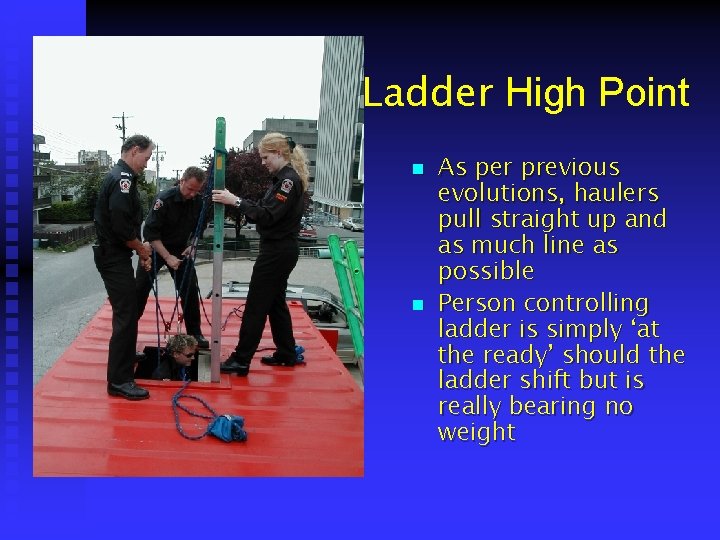
Ladder High Point n n As per previous evolutions, haulers pull straight up and as much line as possible Person controlling ladder is simply ‘at the ready’ should the ladder shift but is really bearing no weight
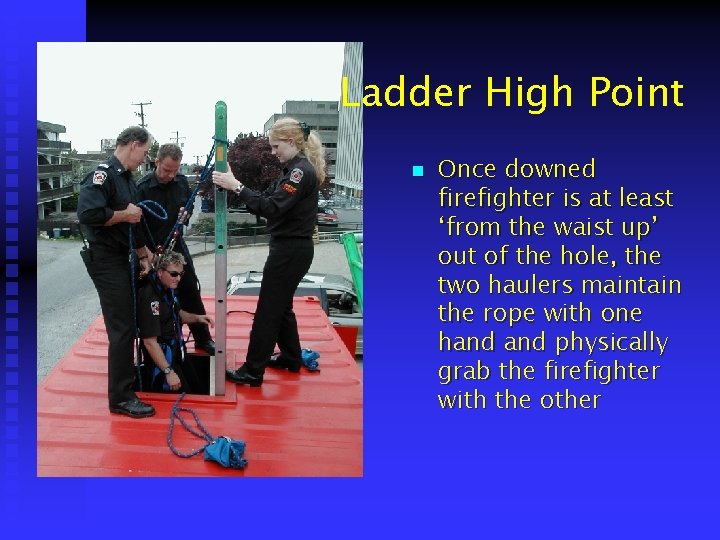
Ladder High Point n Once downed firefighter is at least ‘from the waist up’ out of the hole, the two haulers maintain the rope with one hand physically grab the firefighter with the other
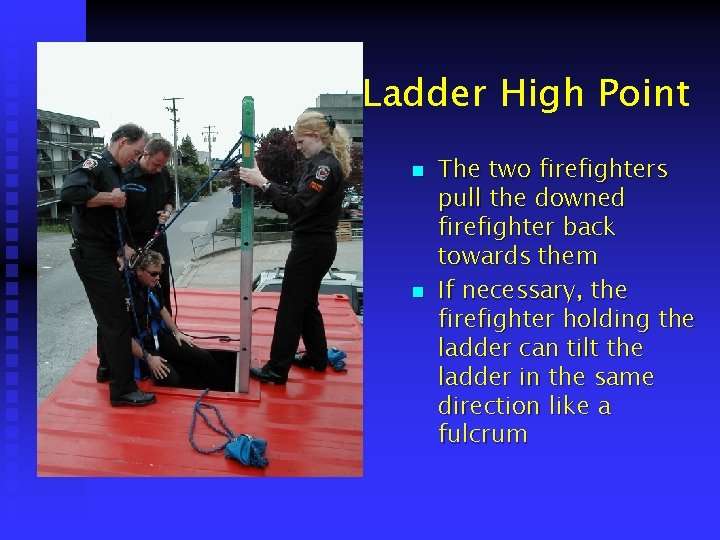
Ladder High Point n n The two firefighters pull the downed firefighter back towards them If necessary, the firefighter holding the ladder can tilt the ladder in the same direction like a fulcrum
Ladder High Point n n In every case the higher the downed firefighter can be raised above the ‘plane’, the easier the actual removal becomes The final removal will always be an exercise in brute strength, therefore movements must be coordinated, explosive and purposeful… you do not want to clear the hole by mere inches but rather by feet!
Ladder as a Windlass n n n This involves securing both the Anchor Point and the Hauling Ends of the Rope to the Beams of the Ladder The Ladder is then rolled, side-over-side until the firefighter is raised as high as possible The Ladder is then lifted from either end (using an appropriate number of firefighters) to clear the firefighter from the hole and move him/her to safety.
Final Thoughts – Retrieval through a Hole n n The Big ‘W’ is one option for a limited manpower situation, if sufficient manpower exists a single rope or even a hoseline may be used to extract a firefighter If a firefighter is conscious and able, a ground ladder into the hole may be the quickest method, however, trying to pull an unconscious firefighter up a ladder may be extremely difficult versus a rope lifting method Do not send another firefighter into a hole unless an immediate retrieval capability has been established With any lifting operation around an area of questionable strength/support, always use bulky material to distribute load Stay Safe!!