
NORTH CAROLINA TEACHER EVALUATION PROCESS TRAINING http wikicentral
- Slides: 72
NORTH CAROLINA TEACHER EVALUATION PROCESS TRAINING
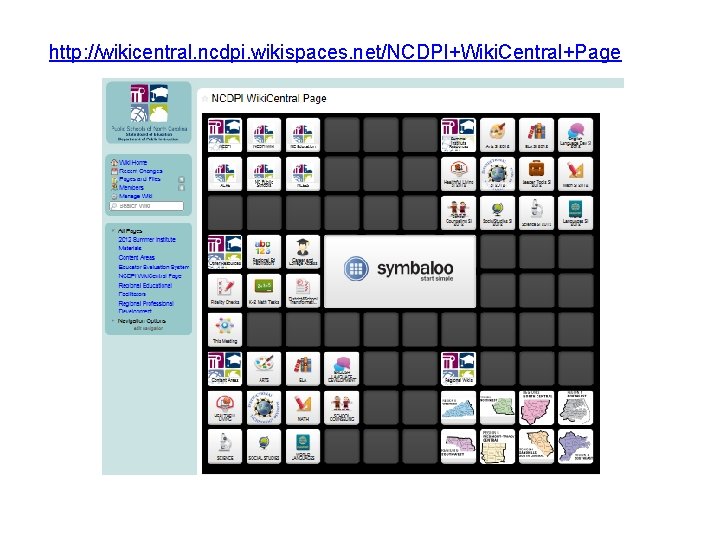
http: //wikicentral. ncdpi. wikispaces. net/NCDPI+Wiki. Central+Page
Norms • • To be actively involved Value differences Agree to disagree Listen Don’t take it personally Be honest Stay focused on established purpose and goals • Refrain from conducting ‘sidebar’ conversations www. peoplequiz. com/norm_perterson *
Introductions • Your Name • School • Your Role • Identify 1 Professional Learning Goal for this Session
Housekeeping • Parking Lot • Penzu. com • Breaks • Reflection - Your input is essential and valued!
Our Agenda • Our State School Board’s Mission • Teacher Evaluation Process • A Look at the Standards • Answer Questions • Reflection *
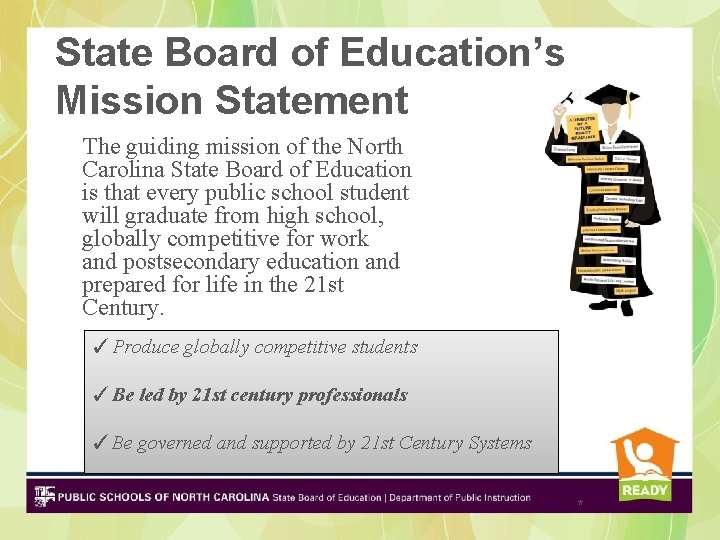
State Board of Education’s Mission Statement The guiding mission of the North Carolina State Board of Education is that every public school student will graduate from high school, globally competitive for work and postsecondary education and prepared for life in the 21 st Century. ✓Produce globally competitive students ✓Be led by 21 st century professionals ✓Be governed and supported by 21 st Century Systems *
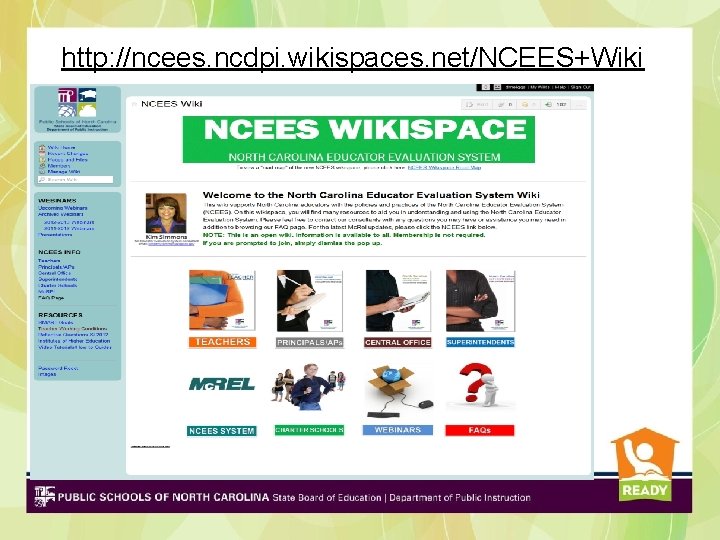
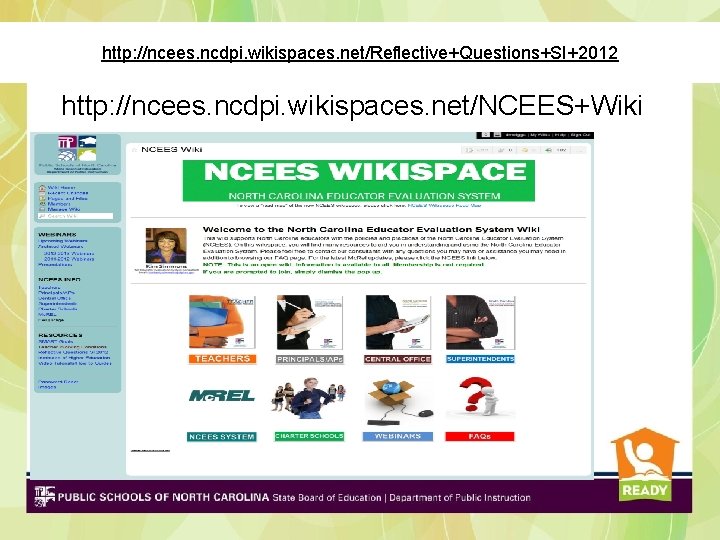
http: //ncees. ncdpi. wikispaces. net/NCEES+Wiki
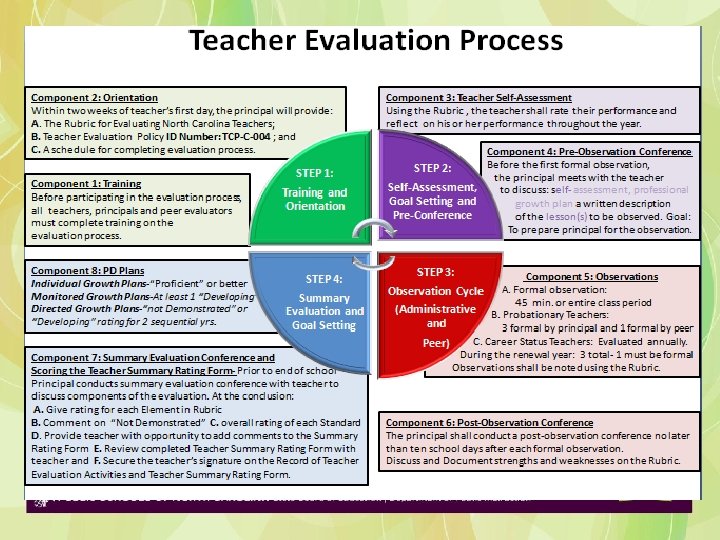
Let’s Review the Teacher Evaluation Process
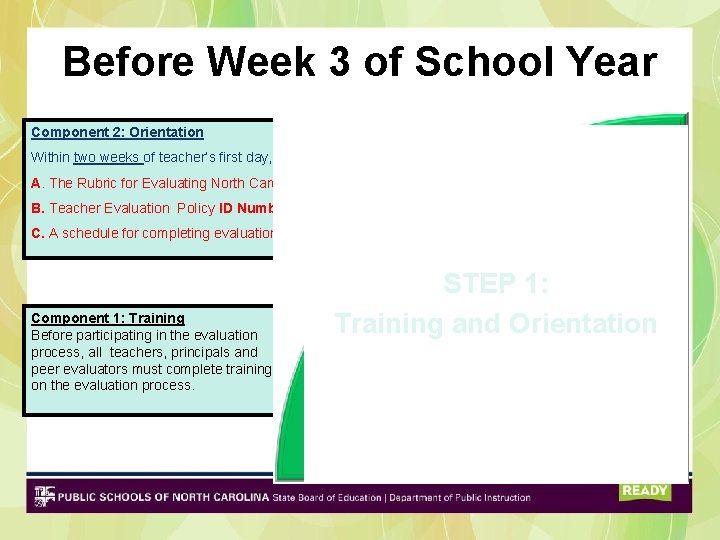
Before Week 3 of School Year Component 2: Orientation Within two weeks of teacher’s first day, the principal will provide: A. The Rubric for Evaluating North Carolina Teachers; B. Teacher Evaluation Policy ID Number: TCP-C-004 C. A schedule for completing evaluation process. Component 1: Training Before participating in the evaluation process, all teachers, principals and peer evaluators must complete training on the evaluation process. STEP 1: Training and Orientation
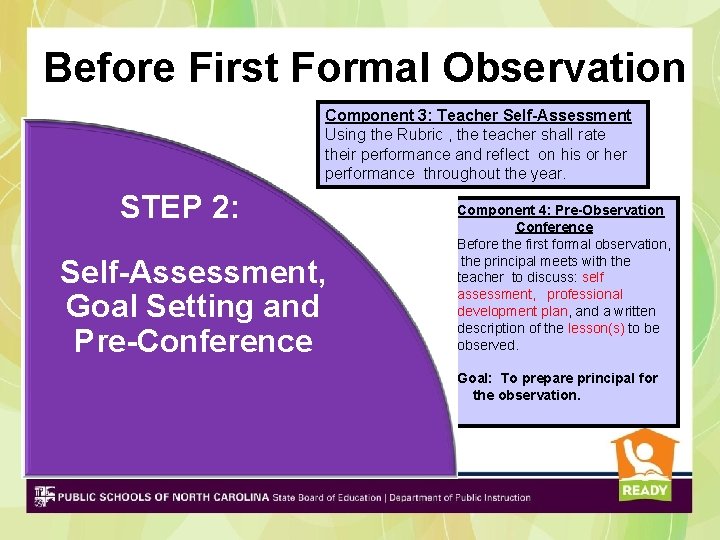
Before First Formal Observation Component 3: Teacher Self-Assessment Using the Rubric , the teacher shall rate their performance and reflect on his or her performance throughout the year. STEP 2: Self-Assessment, Goal Setting and Pre-Conference Component 4: Pre-Observation Conference Before the first formal observation, the principal meets with the teacher to discuss: self assessment, professional development plan, and a written description of the lesson(s) to be observed. Goal: To prepare principal for the observation.
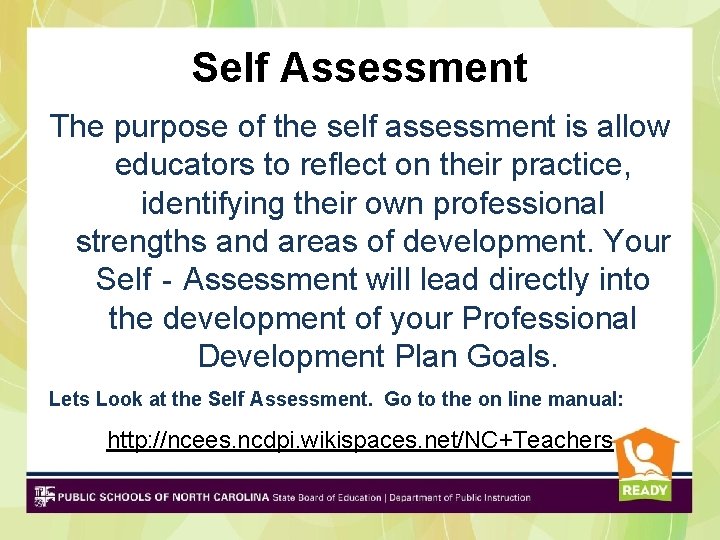
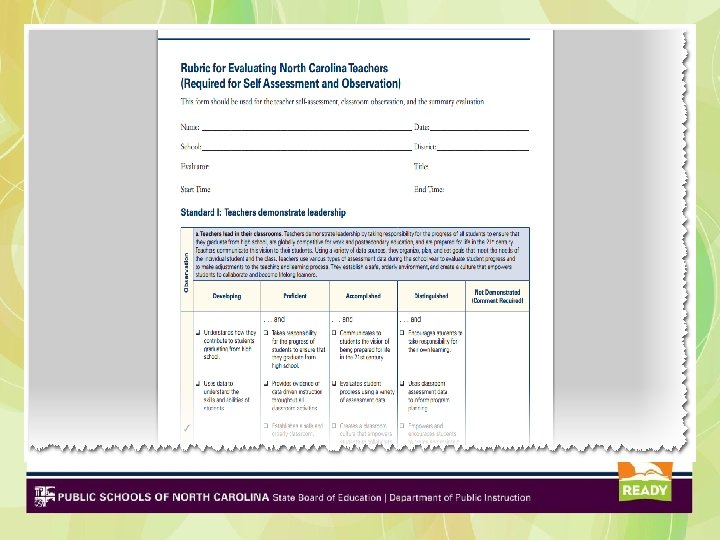
Self Assessment The purpose of the self assessment is allow educators to reflect on their practice, identifying their own professional strengths and areas of development. Your Self‐Assessment will lead directly into the development of your Professional Development Plan Goals. Lets Look at the Self Assessment. Go to the on line manual: http: //ncees. ncdpi. wikispaces. net/NC+Teachers
Professional Development Plans ➢The New Preliminary Professional Development Plan is created by the teacher. ➢The teacher and the administrator have the ability to add content to the form. ➢You will meet THREE times per year with your administrator and mentor to review your PDP goals and sign off (Beginning, Middle, and End of year)
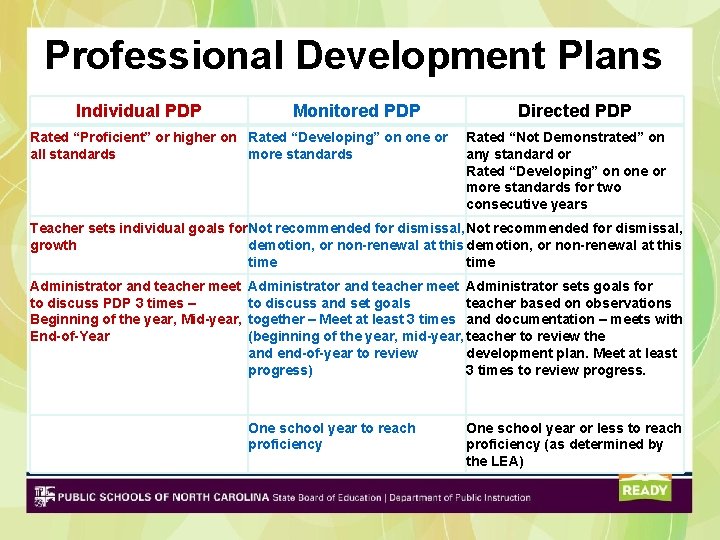
Professional Development Plans Individual PDP Monitored PDP Rated “Proficient” or higher on Rated “Developing” on one or all standards more standards Directed PDP Rated “Not Demonstrated” on any standard or Rated “Developing” on one or more standards for two consecutive years Teacher sets individual goals for. Not recommended for dismissal, growth demotion, or non-renewal at this time Administrator and teacher meet to discuss PDP 3 times – Beginning of the year, Mid-year, End-of-Year Administrator and teacher meet Administrator sets goals for to discuss and set goals teacher based on observations together – Meet at least 3 times and documentation – meets with (beginning of the year, mid-year, teacher to review the and end-of-year to review development plan. Meet at least progress) 3 times to review progress. One school year to reach proficiency One school year or less to reach proficiency (as determined by the LEA)
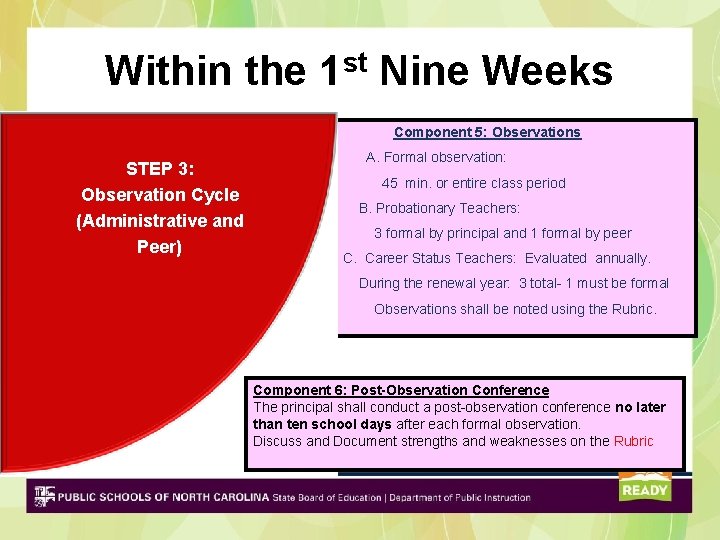
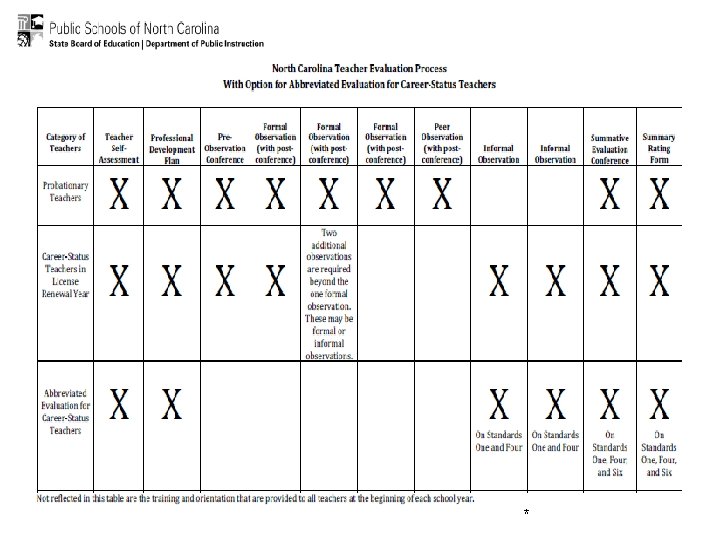
Within the 1 st Nine Weeks Component 5: Observations STEP 3: Observation STEPCycle 3: (Administrative Observation and Cycle Peer) (Administrative and Peer) A. Formal observation: 45 min. or entire class period B. Probationary Teachers: 3 formal by principal and 1 formal by peer C. Career Status Teachers: Evaluated annually. During the renewal year: 3 total- 1 must be formal Observations shall be noted using the Rubric. Component 6: Post-Observation Conference The principal shall conduct a post-observation conference no later than ten school days after each formal observation. Discuss and Document strengths and weaknesses on the Rubric
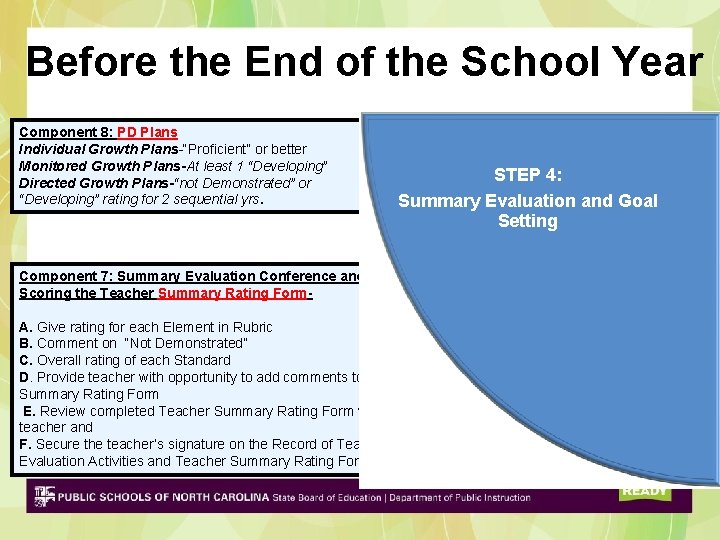
Before the End of the School Year Component 8: PD Plans Individual Growth Plans-“Proficient” or better Monitored Growth Plans-At least 1 “Developing” Directed Growth Plans-“not Demonstrated” or “Developing” rating for 2 sequential yrs. Component 7: Summary Evaluation Conference and Scoring the Teacher Summary Rating Form. A. Give rating for each Element in Rubric B. Comment on “Not Demonstrated” C. Overall rating of each Standard D. Provide teacher with opportunity to add comments to the Summary Rating Form E. Review completed Teacher Summary Rating Form with teacher and F. Secure the teacher’s signature on the Record of Teacher Evaluation Activities and Teacher Summary Rating Form. STEP 4: Summary Evaluation and Goal Setting
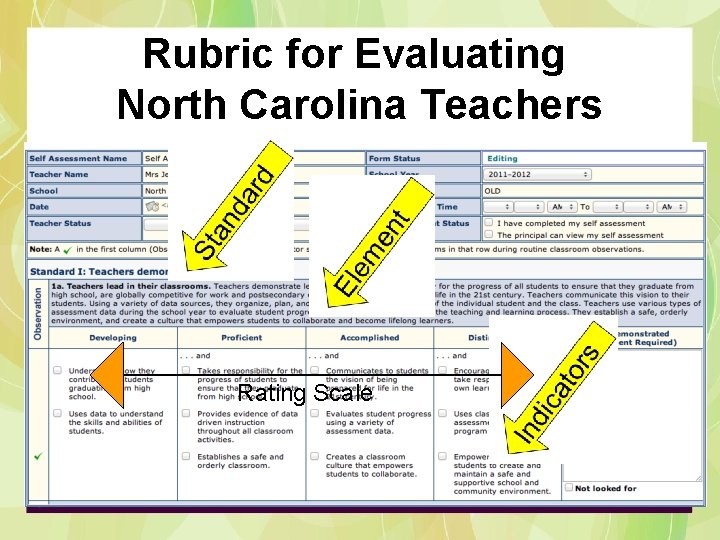
Rubric for Evaluating North Carolina Teachers Rating Scale
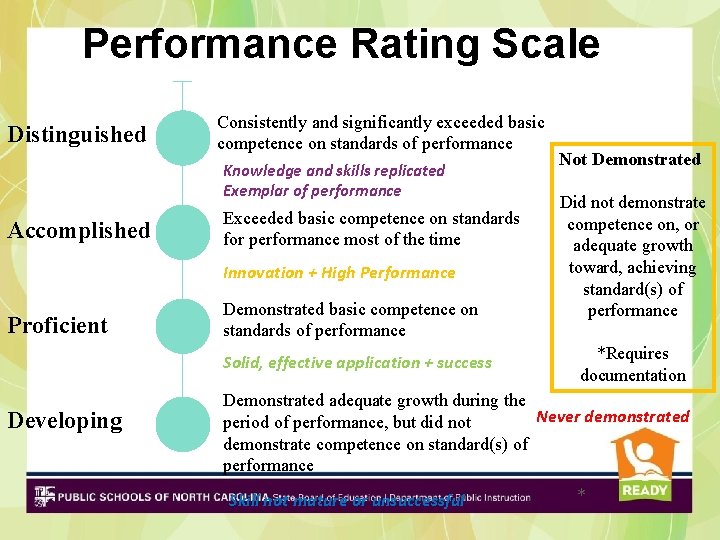
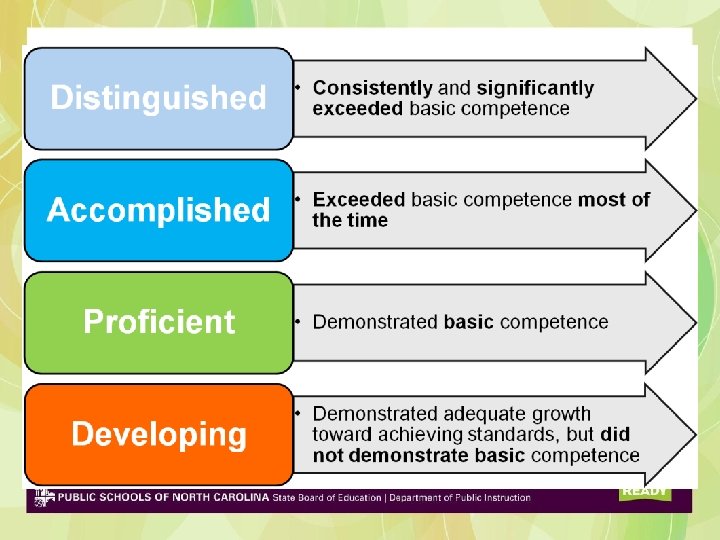
Performance Rating Scale Distinguished Consistently and significantly exceeded basic competence on standards of performance Knowledge and skills replicated Exemplar of performance Accomplished Exceeded basic competence on standards for performance most of the time Innovation + High Performance Proficient Demonstrated basic competence on standards of performance Solid, effective application + success Developing Not Demonstrated Did not demonstrate competence on, or adequate growth toward, achieving standard(s) of performance *Requires documentation Demonstrated adequate growth during the Never demonstrated period of performance, but did not demonstrate competence on standard(s) of performance Skill not mature or unsuccessful *
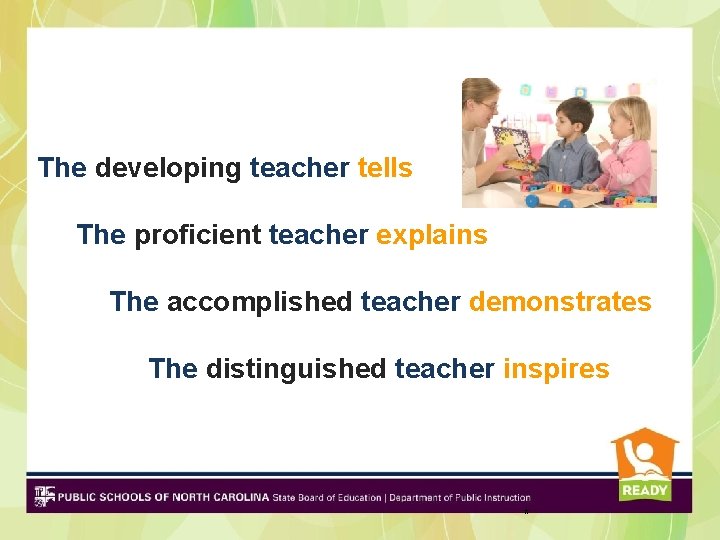
The developing teacher tells The proficient teacher explains The accomplished teacher demonstrates The distinguished teacher inspires *
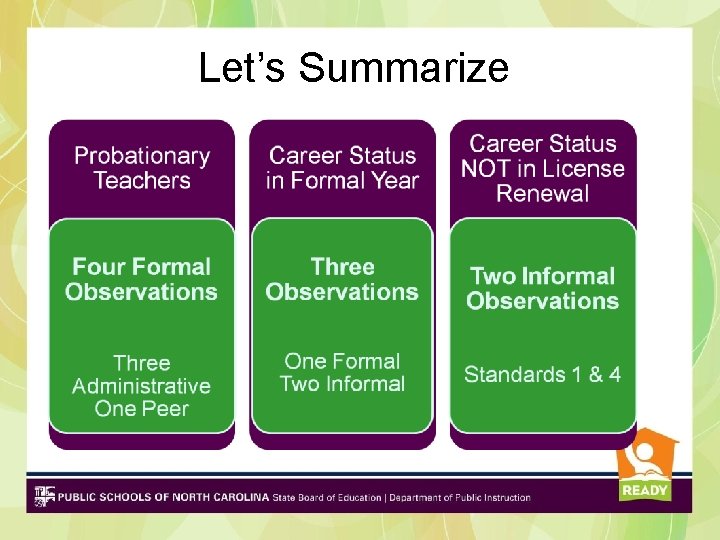
Let’s Summarize
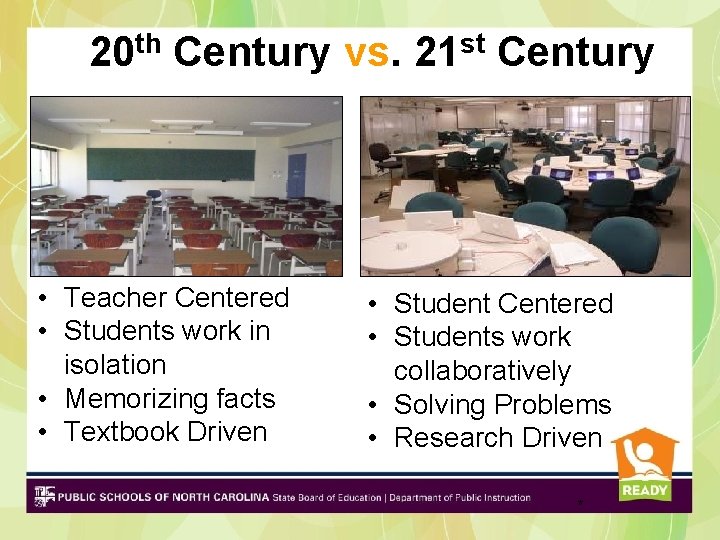
20 th Century vs. 21 st Century • Teacher Centered • Students work in isolation • Memorizing facts • Textbook Driven • Student Centered • Students work collaboratively • Solving Problems • Research Driven *
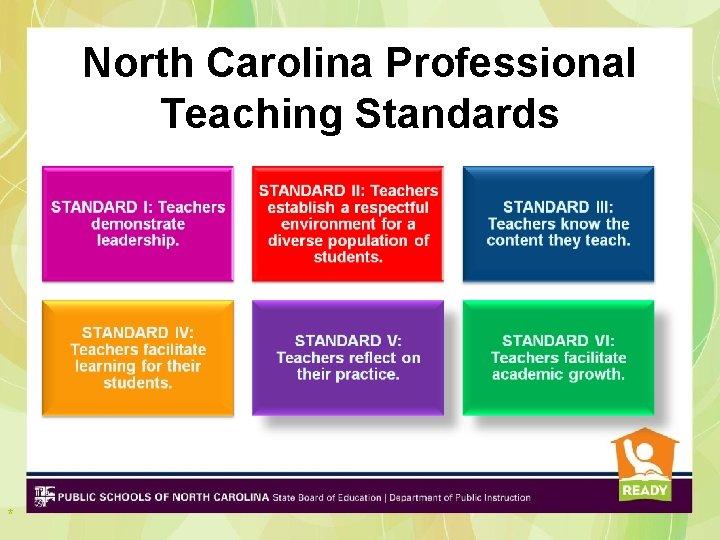
North Carolina Professional Teaching Standards *
Focusing on the “Why” NC has implemented a new curriculum, new assessments, new technology tools to improve instruction, new ways of engaging students, and the list goes on So why is the State focusing on educator effectiveness in the face of so many other changes? Because all our efforts in other areas depend on an effective teacher in every classroom and an effective leader in every school building!
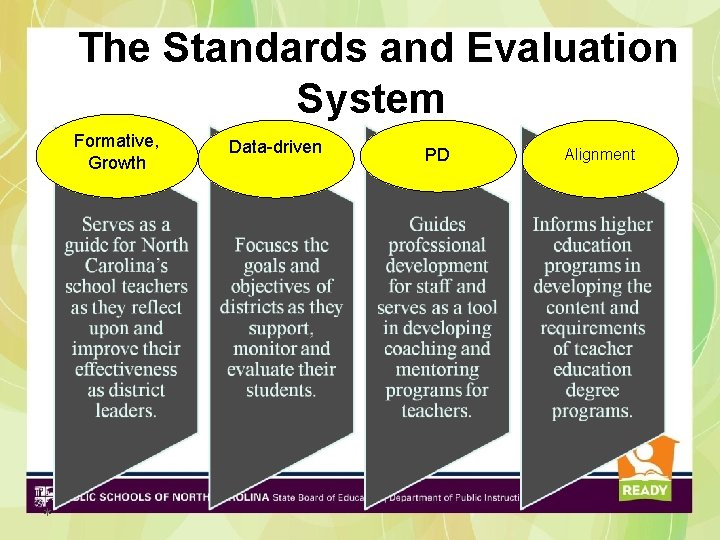
The Standards and Evaluation System Formative, Growth * Data-driven PD Alignment
Standard I Teachers Demonstrate Leadership
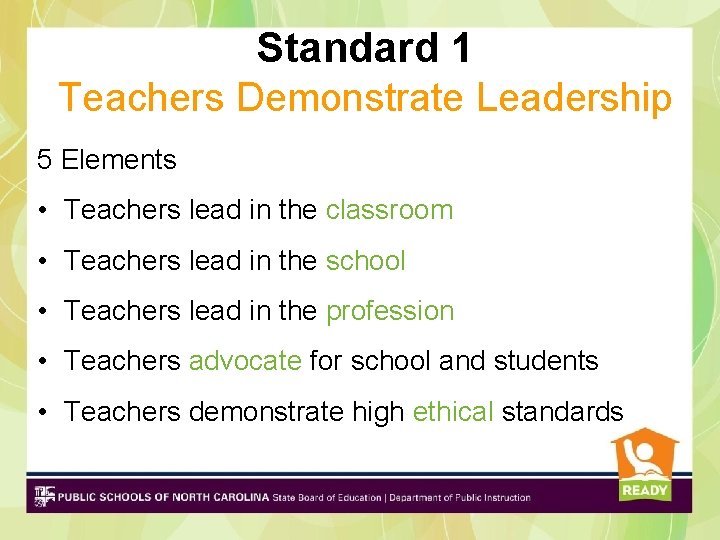
Standard 1 Teachers Demonstrate Leadership 5 Elements • Teachers lead in the classroom • Teachers lead in the school • Teachers lead in the profession • Teachers advocate for school and students • Teachers demonstrate high ethical standards
Carousel Assessment In what ways can a teacher model or demonstrate teacher leadership in the classroom, school and the teaching profession? ➢Go to the numbered poster ➢Identify a recorder ➢Record your answer to the question above ➢Move to the next poster when you hear the signal *
Ms. Noonan Managing Transitions https: //www. teachingchannel. org/videos/managing-transitions
Standard II Teachers Establish a Respectful Environment for a Diverse Population of Students
Standard 2 Teachers Establish a Respectful Environment for a Diverse Population of Students 5 Elements • Teachers provide an environment with a positive, nurturing relationship • Teachers embrace diversity in school and world • Teachers treat students as individuals • Teachers adapt their teaching for the benefit of students with special needs • Teachers work collaboratively with families
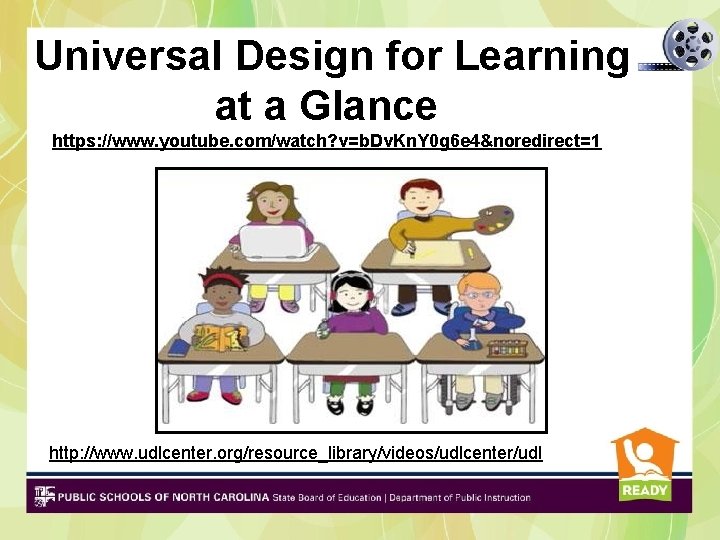
Universal Design for Learning at a Glance https: //www. youtube. com/watch? v=b. Dv. Kn. Y 0 g 6 e 4&noredirect=1 http: //www. udlcenter. org/resource_library/videos/udlcenter/udl
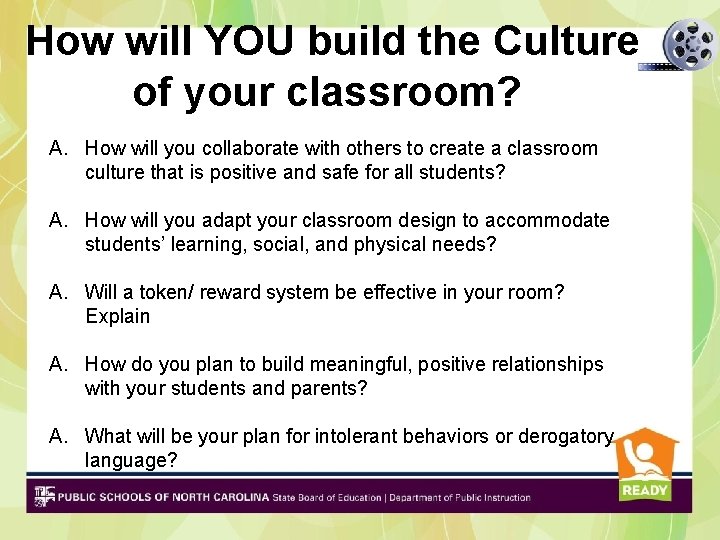
How will YOU build the Culture of your classroom? A. How will you collaborate with others to create a classroom culture that is positive and safe for all students? A. How will you adapt your classroom design to accommodate students’ learning, social, and physical needs? A. Will a token/ reward system be effective in your room? Explain A. How do you plan to build meaningful, positive relationships with your students and parents? A. What will be your plan for intolerant behaviors or derogatory language?
Six-Step Partner Share • Walk 6 steps, find a colleague: ➢ Share one strategy you have seen or done that models an environment that is inviting, respectful, supportive, inclusive and flexible. • When time is called, go to a second person: ➢ Share one strategy for maintaining high expectations for students. http: //goo. gl/Vb 2 g 8
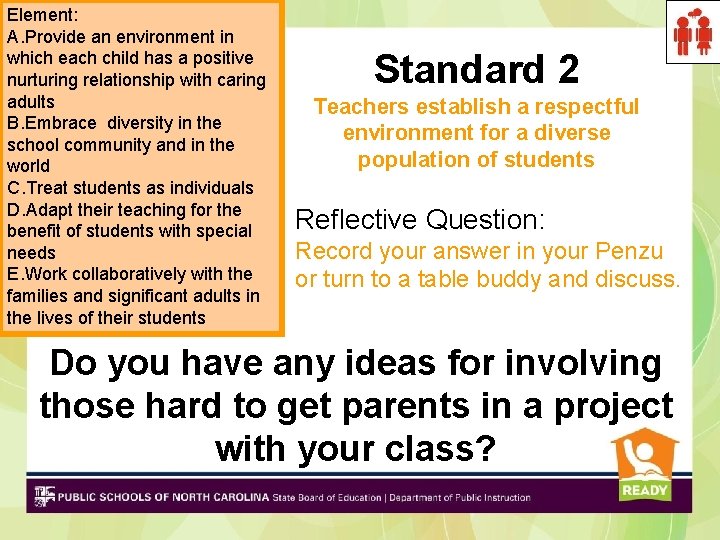
Element: A. Provide an environment in which each child has a positive nurturing relationship with caring adults B. Embrace diversity in the school community and in the world C. Treat students as individuals D. Adapt their teaching for the benefit of students with special needs E. Work collaboratively with the families and significant adults in the lives of their students Standard 2 Teachers establish a respectful environment for a diverse population of students Reflective Question: Record your answer in your Penzu or turn to a table buddy and discuss. Do you have any ideas for involving those hard to get parents in a project with your class?
Standard III Teachers know the content they teach
Standard 3 Teachers Know the Content they Teach 4 Elements • Teachers align their instruction with the NCSCS • Teachers know the content appropriate to their teaching specialty • Teachers recognize the interconnectedness of content areas/ disciplines • Teachers make instruction relevant to students
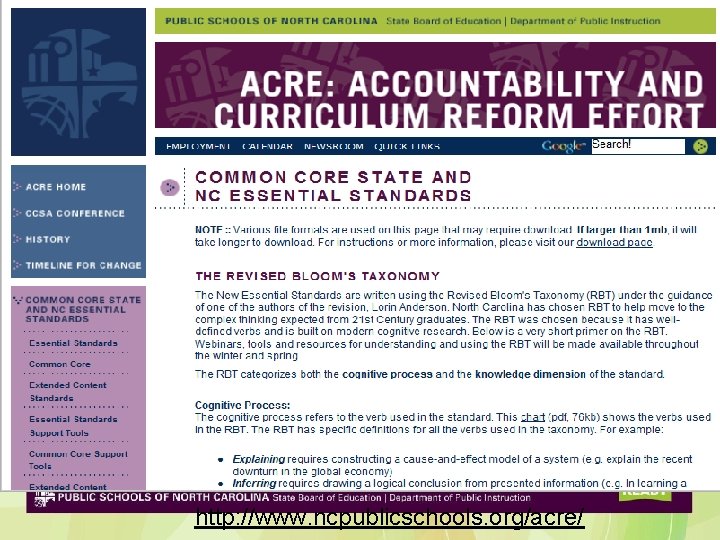
http: //www. ncpublicschools. org/acre/
Element: A. Align their instruction with the NCSCS B. Know the content appropriate to their teaching specialty C. Recognize the interconnectedness of content areas/ disciplines D. Make instruction relevant to students Standard 3 Teachers know the content they teach Reflective Question: Record your answer in your Penzu or turn to a table buddy and discuss. How will you integrate literacy and technology skills into all content areas?
Standard IV Teachers Facilitate Learning for their Students
Standard 4 Teachers Facilitate Learning for their Students 8 Elements • Teachers know the ways in which learning takes place, and they know the appropriate levels of intellectual, physical, social, and emotional development of their students • Teachers plan instruction appropriate for their students • Teachers use a variety of instructional methods • Teachers integrate and utilize technology in their instruction
Continued Standard 4 • Teachers help students develop critical thinking and problem solving skills • Teachers help students work in teams and develop leadership qualities • Teachers communicate effectively • Teachers use a variety of methods to assess what each student has learned
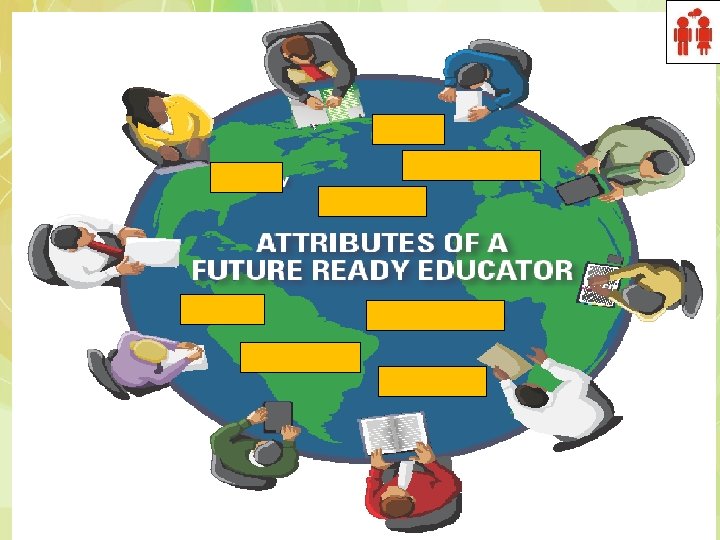
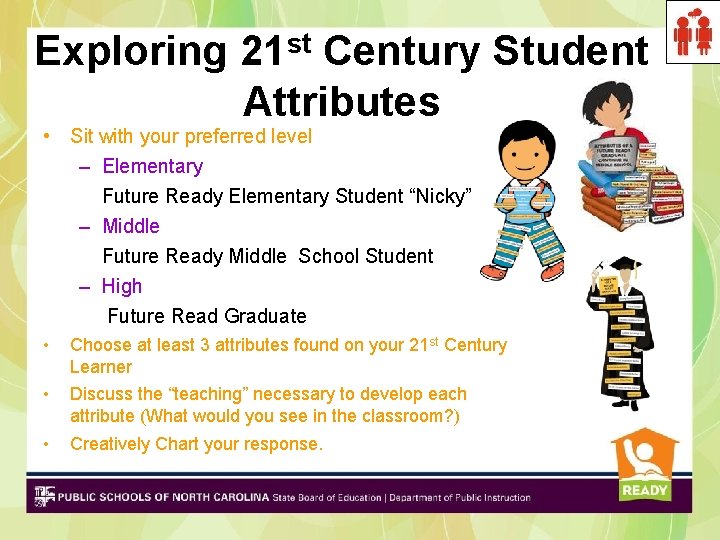
Exploring 21 st Century Student Attributes • Sit with your preferred level – Elementary Future Ready Elementary Student “Nicky” – Middle Future Ready Middle School Student – High Future Read Graduate • Choose at least 3 attributes found on your 21 st Century Learner • Discuss the “teaching” necessary to develop each attribute (What would you see in the classroom? ) • Creatively Chart your response.
Standard IV: Group Activity • Count off a-h • Meet with your element partners • Using your corresponding element (a - h) for your group, select 2 of the indicators under your element (page 9 or 10 in your manual) • Brainstorm 2 -3 specific behaviors a teacher might use to demonstrate each of the items selected (What would the students be doing? ) • Pick one of the two items and be prepared to report out to the group *
Standard V Teachers Reflect on their Practice https: //www. teachingchannel. org/videos/unique-classculture
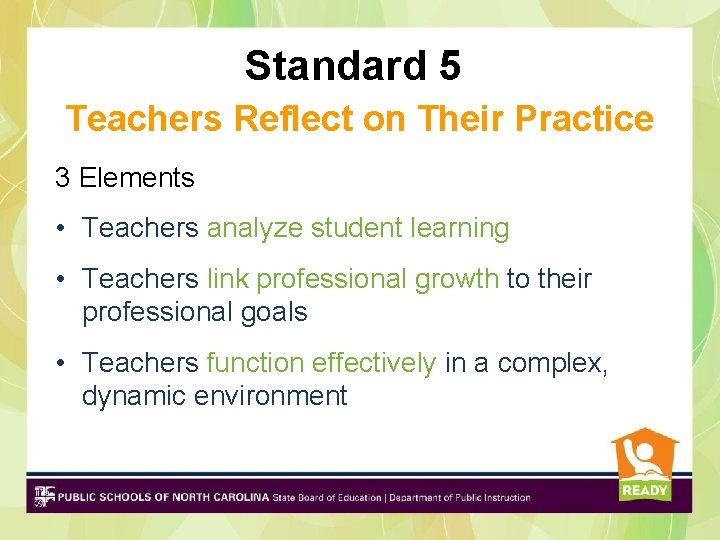
Standard 5 Teachers Reflect on Their Practice 3 Elements • Teachers analyze student learning • Teachers link professional growth to their professional goals • Teachers function effectively in a complex, dynamic environment
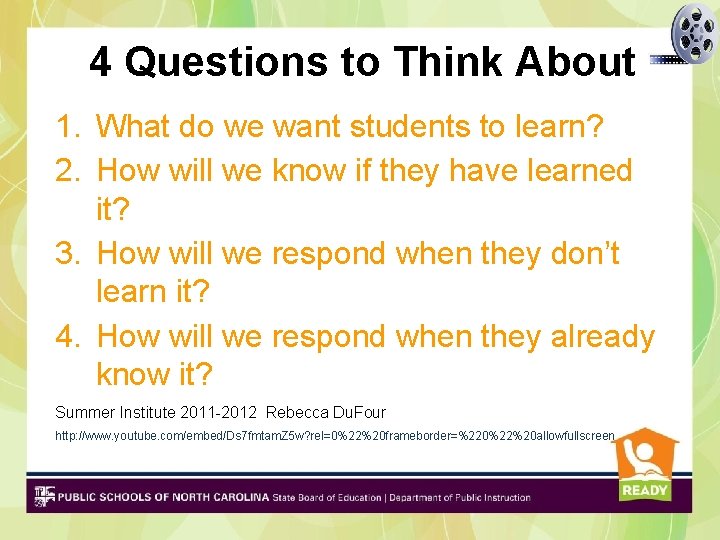
4 Questions to Think About 1. What do we want students to learn? 2. How will we know if they have learned it? 3. How will we respond when they don’t learn it? 4. How will we respond when they already know it? Summer Institute 2011 -2012 Rebecca Du. Four http: //www. youtube. com/embed/Ds 7 fmtam. Z 5 w? rel=0%22%20 frameborder=%220%22%20 allowfullscreen
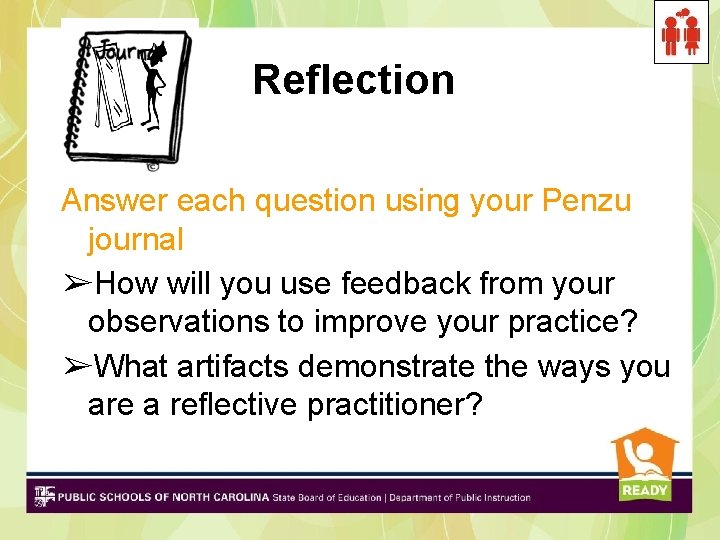
Reflection Answer each question using your Penzu journal ➢How will you use feedback from your observations to improve your practice? ➢What artifacts demonstrate the ways you are a reflective practitioner?
Standard VI Teachers Contribute to the Academic Success of Students
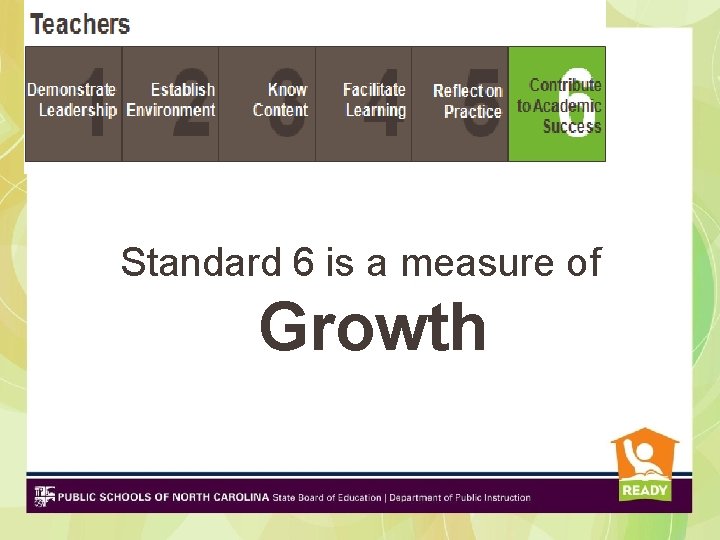
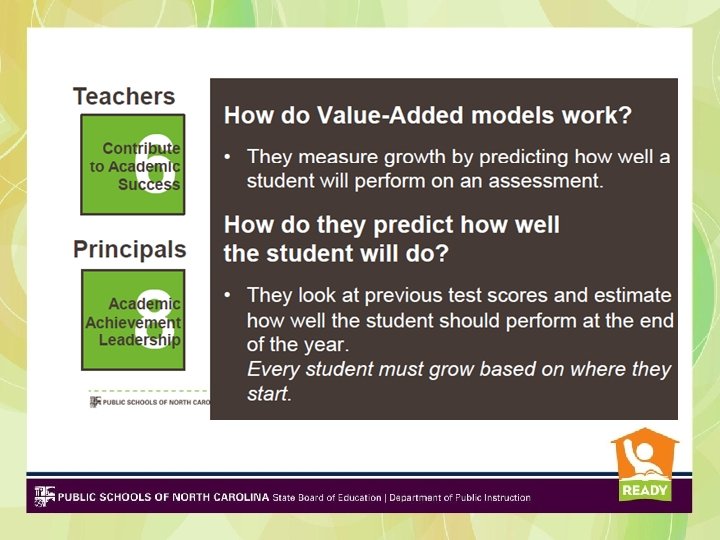
Standard 6 is a measure of Growth
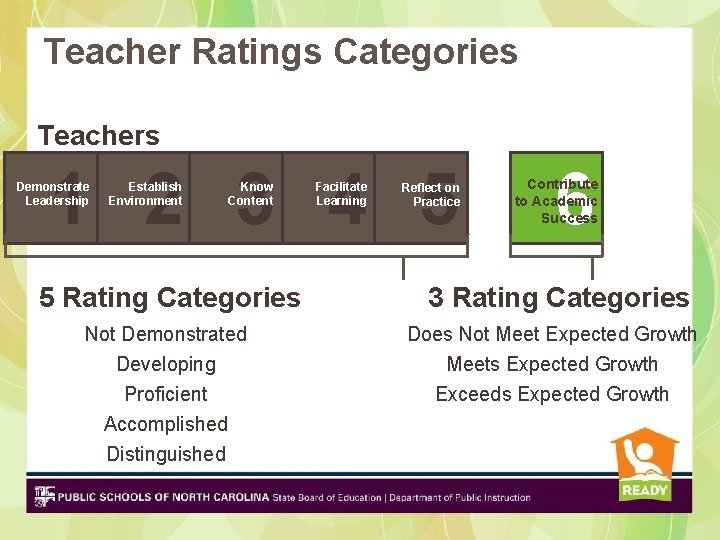
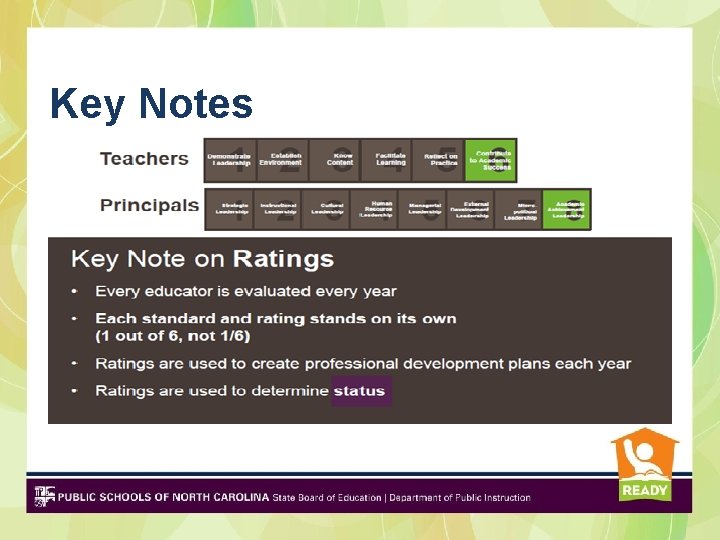
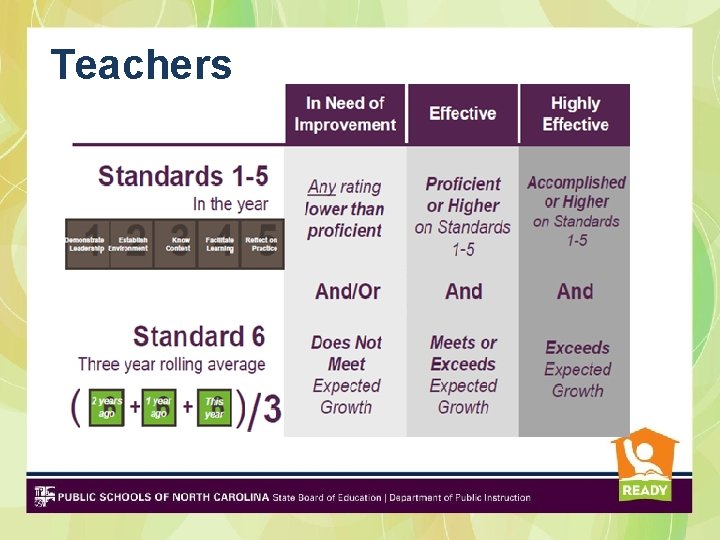
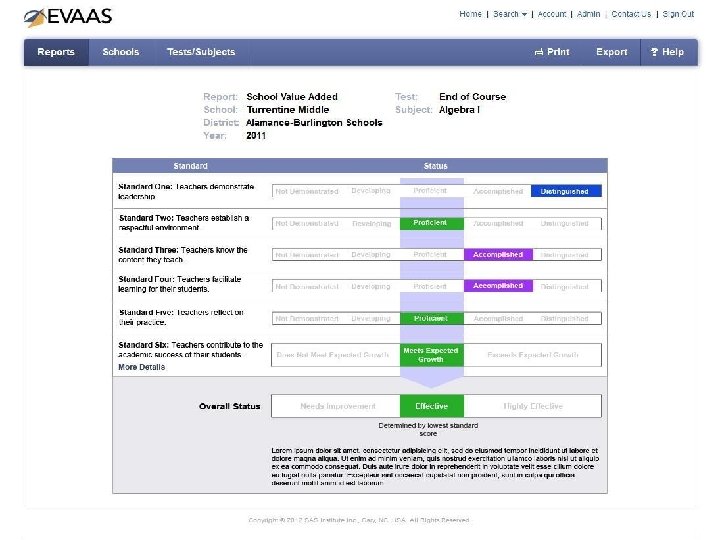
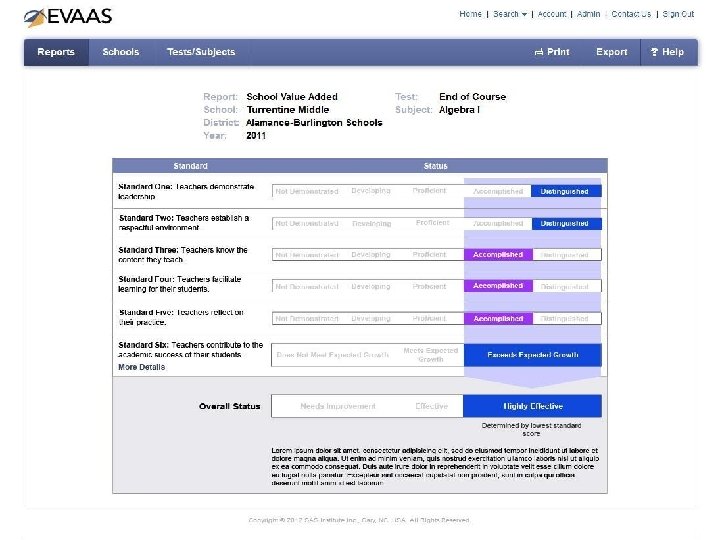
Teacher Ratings Categories Teachers 1 2 3 4 5 Demonstrate Leadership Establish Environment Know Content 5 Rating Categories Facilitate Learning Reflect on Practice 6 Contribute to Academic Success 3 Rating Categories Not Demonstrated Developing Does Not Meet Expected Growth Meets Expected Growth Proficient Accomplished Distinguished Exceeds Expected Growth
Key Notes
What is the difference between ratings and a status?
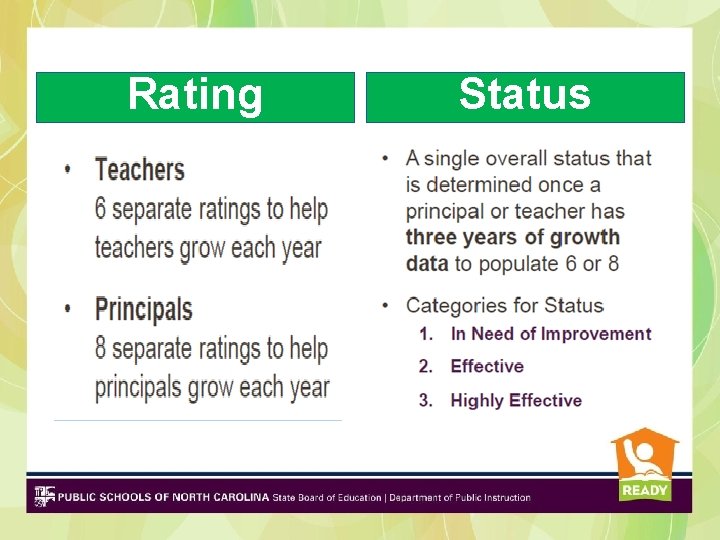
Rating Status
Teachers
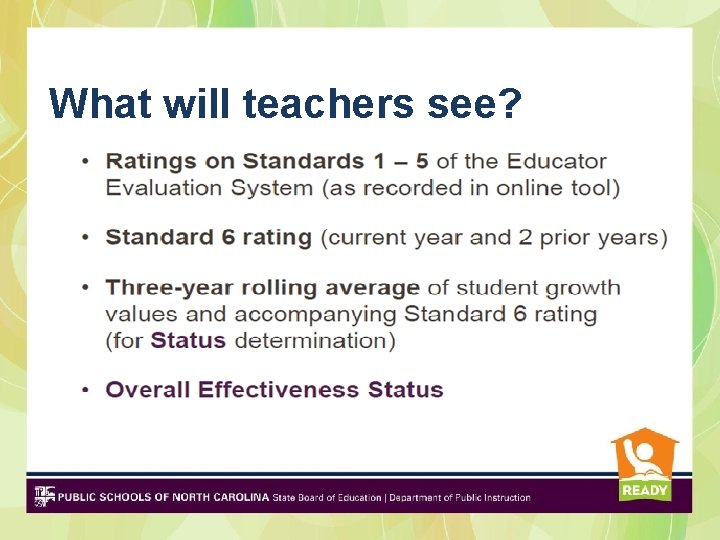
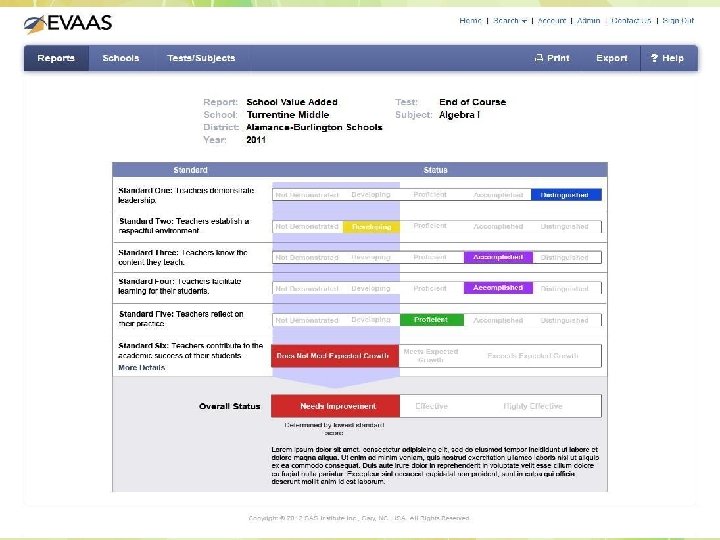
What will teachers see?
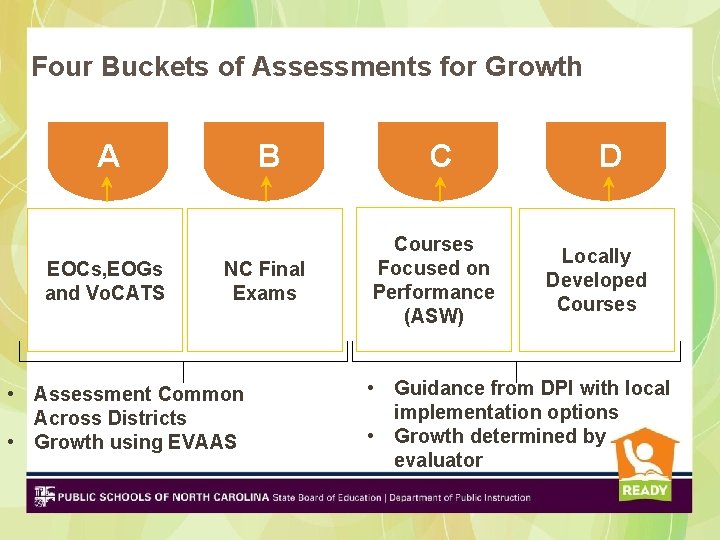
Four Buckets of Assessments for Growth A EOCs, EOGs and Vo. CATS B NC Final Exams • Assessment Common Across Districts • Growth using EVAAS C Courses Focused on Performance (ASW) D Locally Developed Courses • Guidance from DPI with local implementation options • Growth determined by evaluator
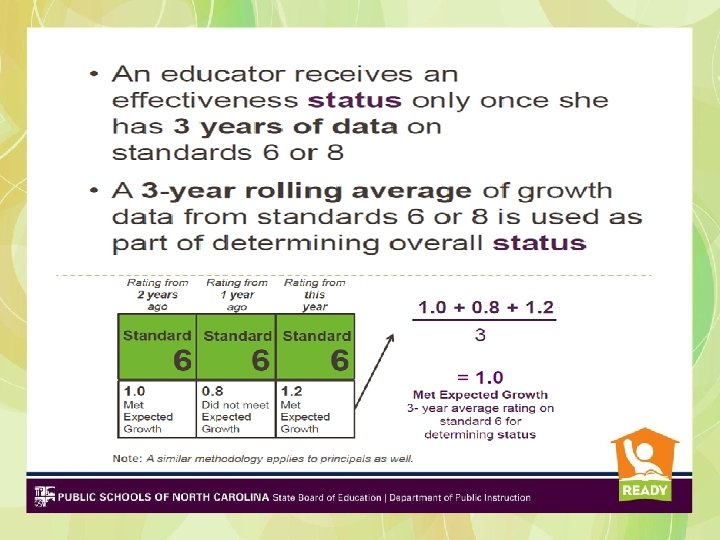
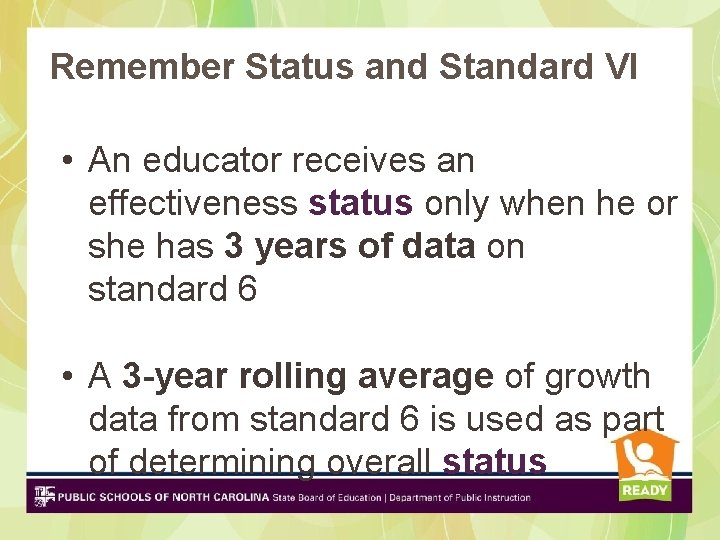
Remember Status and Standard VI • An educator receives an effectiveness status only when he or she has 3 years of data on standard 6 • A 3 -year rolling average of growth data from standard 6 is used as part of determining overall status
New Resources for Teacher Effectiveness “Rapid Response” Email Address: educatoreffectiveness@dpi. nc. gov New Educator Effectiveness Website: http: //www. ncpublicschools. org/effectivenessmodel/
Beginning Teachers Effective 2010– 2011, beginning teachers must be rated “Proficient” on all five North Carolina Professional Teaching Standards on the most recent Teacher Summary Rating Form in order to be eligible for the Standard Professional 2 License.
http: //ncees. ncdpi. wikispaces. net/Reflective+Questions+SI+2012 http: //ncees. ncdpi. wikispaces. net/NCEES+Wiki
Follow Up Questions? Concerns? Sonya Rinehart: srinehart@ecps. k 12. nc. us Regional Education Facilitator