
North Bergen Liberty Generating Project Ridgefield NJ City
North Bergen Liberty Generating Project Ridgefield, NJ City Council June 6, 2018
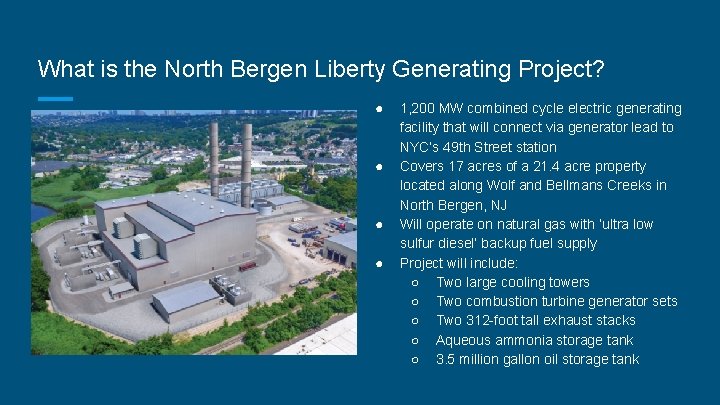
What is the North Bergen Liberty Generating Project? ● ● 1, 200 MW combined cycle electric generating facility that will connect via generator lead to NYC’s 49 th Street station Covers 17 acres of a 21. 4 acre property located along Wolf and Bellmans Creeks in North Bergen, NJ Will operate on natural gas with ‘ultra low sulfur diesel’ backup fuel supply Project will include: ○ Two large cooling towers ○ Two combustion turbine generator sets ○ Two 312 -foot tall exhaust stacks ○ Aqueous ammonia storage tank ○ 3. 5 million gallon oil storage tank
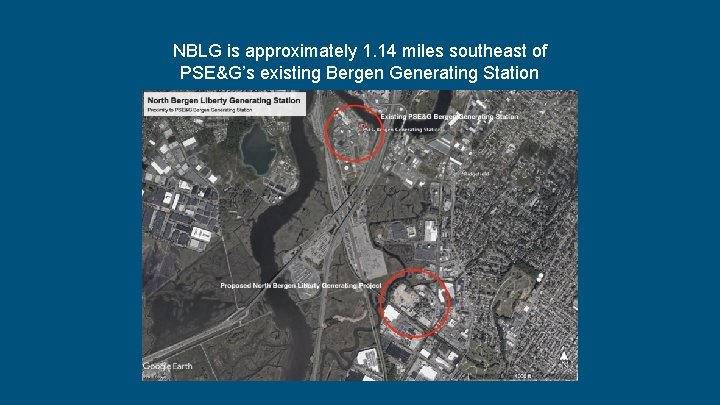
NBLG is approximately 1. 14 miles southeast of PSE&G’s existing Bergen Generating Station
Waterways at Risk ● The proposed project sits on a site that ranges from 3 feet to 20 feet above sea level adjacent to a wetland area at risk from sea level rise ● The site is adjacent to a CSX railway, placing the facility within yards of potential disaster should a freight accident occur ● The project proposes to add two stormwater outfalls to the creeks and utilize BCUA infrastructure, some of which has not yet been constructed ● The construction on the property adds unnecessary risks to the adjacent waterways from soil compaction, stormwater runoff, tank failure, and increased impervious surface
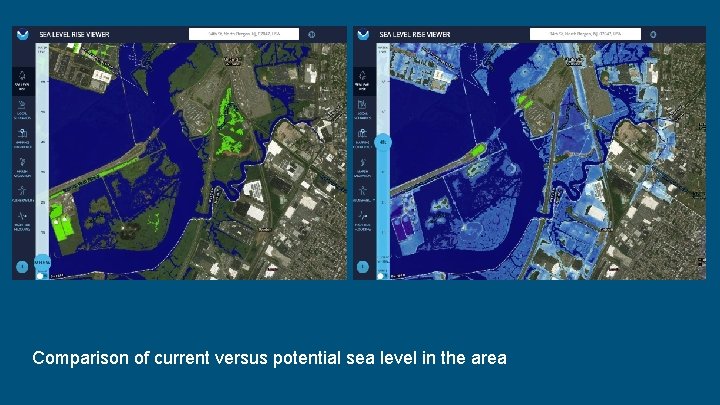
Comparison of current versus potential sea level in the area
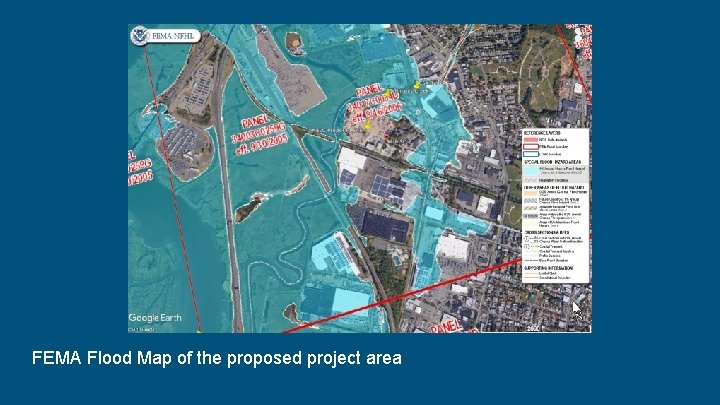
FEMA Flood Map of the proposed project area
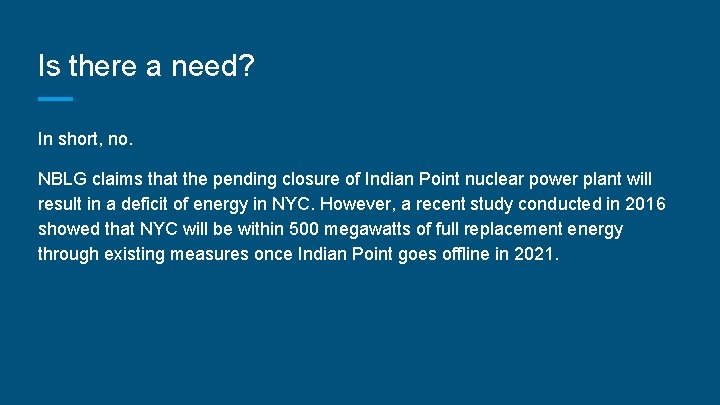
Is there a need? In short, no. NBLG claims that the pending closure of Indian Point nuclear power plant will result in a deficit of energy in NYC. However, a recent study conducted in 2016 showed that NYC will be within 500 megawatts of full replacement energy through existing measures once Indian Point goes offline in 2021.
![Debunking the Clean Energy Myth NBLG claims that “[t]he NBLG plant will be among](http://slidetodoc.com/presentation_image_h2/616f2b3be9fddf87a01abf70cf8aeab5/image-8.jpg "Debunking the Clean Energy Myth NBLG claims that “[t]he NBLG plant will be among")
Debunking the Clean Energy Myth NBLG claims that “[t]he NBLG plant will be among the cleanest, most efficient facility of its kind in the region” While it is technically true that natural gas is cleaner burning than oil, coal, or nuclear, it is far from being a clean energy source. Natural gas is among the top three greenhouse gas emissions contributors and because of its low cost, a key roadblock to renewable energies gaining a foothold in the energy market.
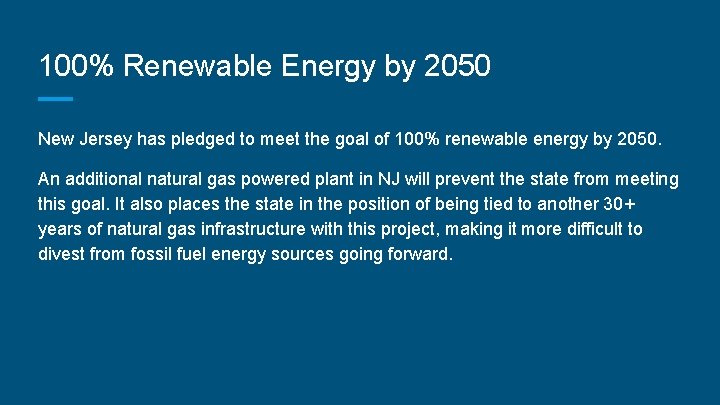
100% Renewable Energy by 2050 New Jersey has pledged to meet the goal of 100% renewable energy by 2050. An additional natural gas powered plant in NJ will prevent the state from meeting this goal. It also places the state in the position of being tied to another 30+ years of natural gas infrastructure with this project, making it more difficult to divest from fossil fuel energy sources going forward.
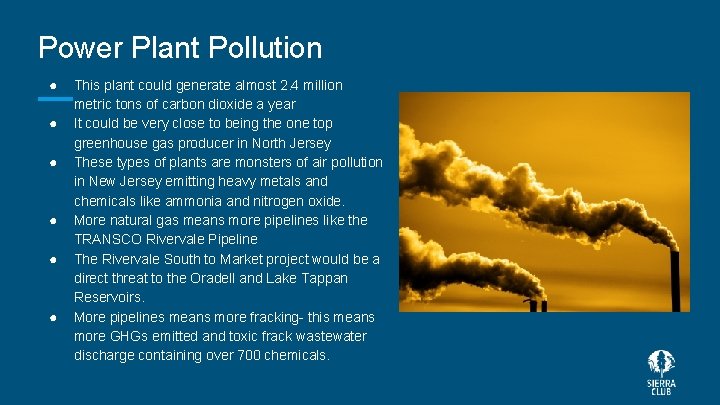
Power Plant Pollution ● ● ● This plant could generate almost 2. 4 million metric tons of carbon dioxide a year It could be very close to being the one top greenhouse gas producer in North Jersey These types of plants are monsters of air pollution in New Jersey emitting heavy metals and chemicals like ammonia and nitrogen oxide. More natural gas means more pipelines like the TRANSCO Rivervale Pipeline The Rivervale South to Market project would be a direct threat to the Oradell and Lake Tappan Reservoirs. More pipelines means more fracking- this means more GHGs emitted and toxic frack wastewater discharge containing over 700 chemicals.
Greenhouse gases Top polluters statewide, in metric tons: 1. PSEG’s Bergen Generating Station: 2. 6 million 2. Phillips 66 Bayway Refinery: 2. 5 million 3. Quixx Power Services Inc: 2. 3 million 4. ***Meadowlands Natural Gas Power Station: 2. 3 million *** 5. Linden Generating Station: 2. 28 million New Jersey GHG Emission have increased in recent years by 3 -5% source: https: //www. mycentraljersey. com/story/news/local/land-environment/2016/10/11/study-finds-100 -super-polluters-fouling-air-we-breathe/91908548/ Source: http: //www. nj. gov/dep/dsr/trends/pdfs/ghg. pdf
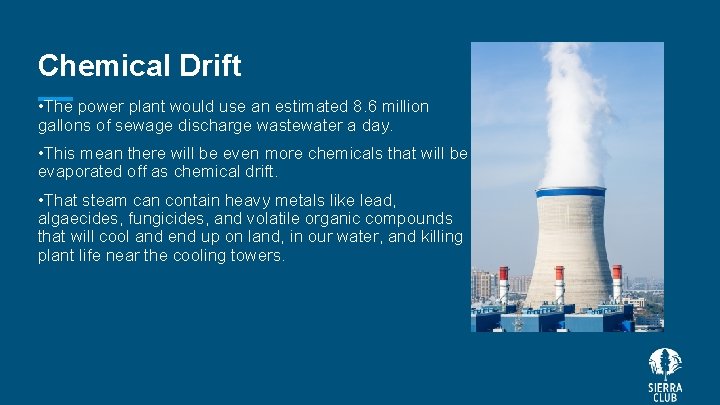
Chemical Drift • The power plant would use an estimated 8. 6 million gallons of sewage discharge wastewater a day. • This mean there will be even more chemicals that will be evaporated off as chemical drift. • That steam can contain heavy metals like lead, algaecides, fungicides, and volatile organic compounds that will cool and end up on land, in our water, and killing plant life near the cooling towers.
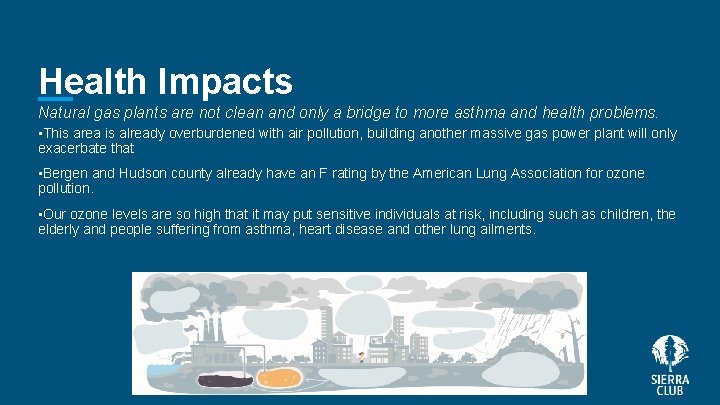
Health Impacts Natural gas plants are not clean and only a bridge to more asthma and health problems. • This area is already overburdened with air pollution, building another massive gas power plant will only exacerbate that • Bergen and Hudson county already have an F rating by the American Lung Association for ozone pollution. • Our ozone levels are so high that it may put sensitive individuals at risk, including such as children, the elderly and people suffering from asthma, heart disease and other lung ailments.
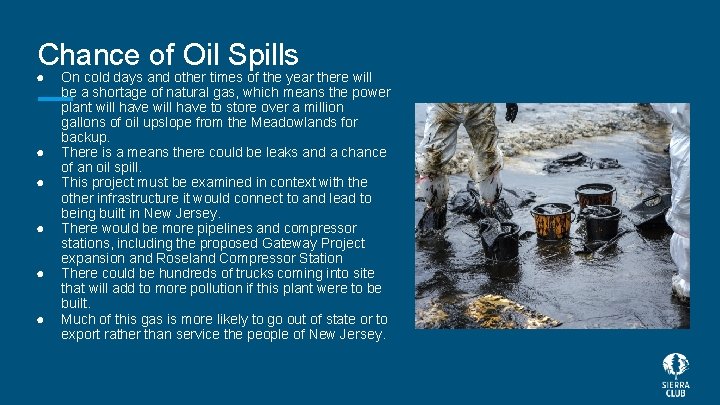
Chance of Oil Spills ● ● ● On cold days and other times of the year there will be a shortage of natural gas, which means the power plant will have to store over a million gallons of oil upslope from the Meadowlands for backup. There is a means there could be leaks and a chance of an oil spill. This project must be examined in context with the other infrastructure it would connect to and lead to being built in New Jersey. There would be more pipelines and compressor stations, including the proposed Gateway Project expansion and Roseland Compressor Station There could be hundreds of trucks coming into site that will add to more pollution if this plant were to be built. Much of this gas is more likely to go out of state or to export rather than service the people of New Jersey.
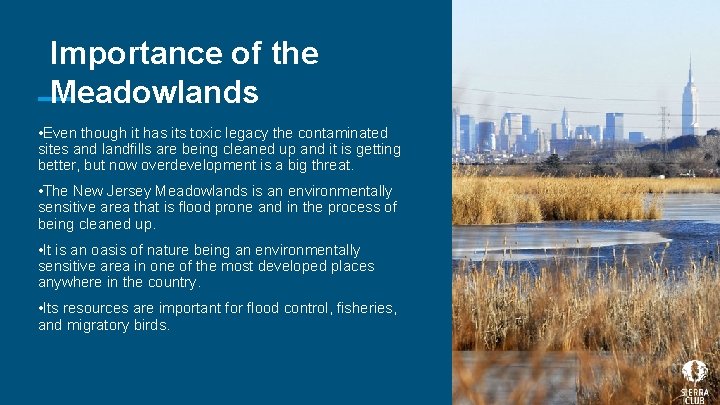
Importance of the Meadowlands • Even though it has its toxic legacy the contaminated sites and landfills are being cleaned up and it is getting better, but now overdevelopment is a big threat. • The New Jersey Meadowlands is an environmentally sensitive area that is flood prone and in the process of being cleaned up. • It is an oasis of nature being an environmentally sensitive area in one of the most developed places anywhere in the country. • Its resources are important for flood control, fisheries, and migratory birds.
Economic Impacts on our Green Economy • This power plant would pay about 10% for their property taxes because they are exempted under a NJ law that exempts energy utility facilities. • The Power plant proposal is a $1. 5 billion plan- but it will be taxed under normal rate. This means instead of getting $500 million a year from the plant, we will only be getting $5 million. • We should not be building more natural gas infrastructure if we want to reach Governor Murphy’s strong environmental and clean energy goals for New Jersey. • We could create over 1, 000 s more jobs building renewable energy projects like offshore windmills. • If we want to get to 100% green energy by 2050 we need to focus on renewable energy such as solar and wind.
Why We Don’t Need Another Natural Gas Power Plant ● Much of this gas is more likely to go out of state or to export rather than service the people of New Jersey. ● While New Jersey gets the pollution, New York gets the electricity. ● We’re already seeing setbacks with the current nuclear subsidy law and this power plant would be a one-two punch to clean energy and creating green jobs. ● The Nuclear Subsidy Law just signed by Governor Murphy requires consumers to buy 40% or 480 MW of electricity. If we expand more natural gas power plants, we will end up buying even more out-of-state nuclear power to make up for it. ● The Sierra Club has asked Governor Murphy to sign an executive order on a moratorium on fossil fuel electrical generation plants until New Jersey reaches its renewable energy goals.
- Slides: 17