
North Africa The Middle East What is North


- Slides: 44
North Africa & The Middle East
What is North Africa and the Middle East? Why is it important? What: North Africa and the Middle East (or Mid. East) is the nations of the northern part of Africa, the Arabian peninsula and the western part of Asia. Why: Familiarity with the culture and beliefs of this region will help our understanding of its current issues Ancient African civilizations flourished at a time when Europe was in decline with the ending of the Roman Empire
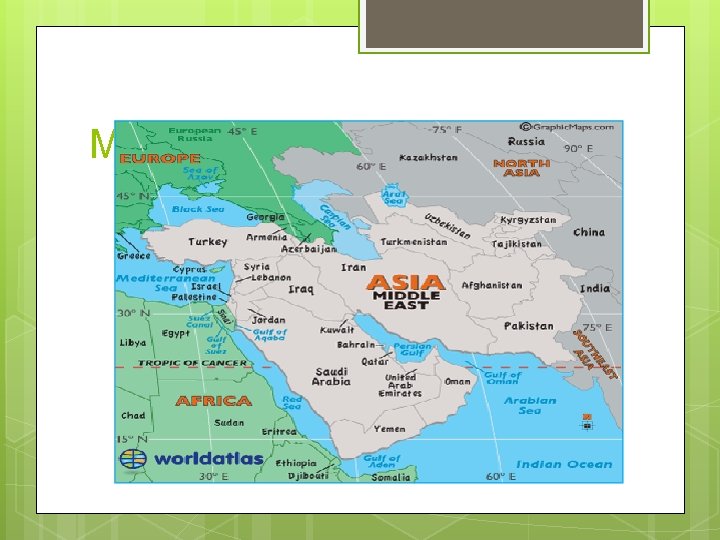
Middle East
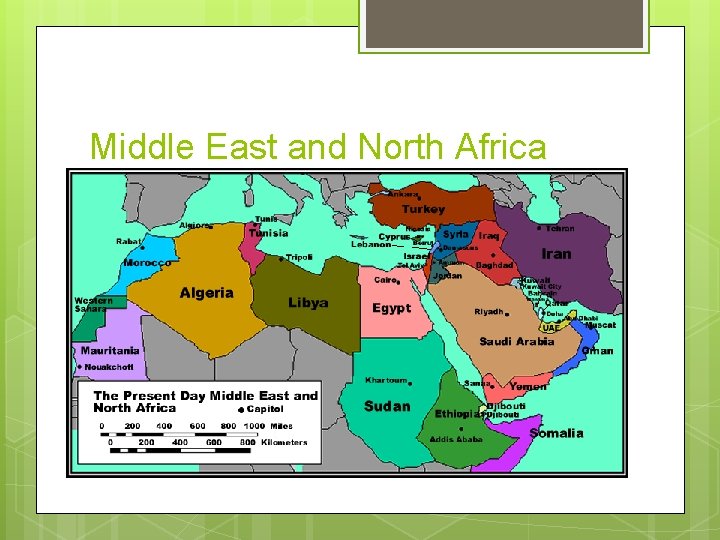
Middle East and North Africa
www. maps. com/games/quiz-middle. aspx http: //www. rethinkingschools. org/just_fun/gam es/mapgame. html http: //www. youtube. com/watch? v=y. AL 7 Qqw. It Gk
Vocabulary Make certain that you have the Essential Vocabulary done-posted on my website. Do Chapter 11 Vocabulary. List on page 395. Must do all 3 sections (12 words). Look up definitions in the glossary.
Let’s Refresh Our Memory The Roman Empire (western) fell in 476 AD. By 550 AD, the Western Roman Empire had completely faded away. With the fall of Rome, trade with the East-China, India, etc. - was cut off. With the cutting off of major trading routes between East and West, information and knowledge shared between the two spheres began to disappear. European civilization went into decline (more about this later); Eastern civilization thrived. We have already looked at China-now we will look at North Africa and the Middle East.
Pre-Islamic Arabian Civilizations One of the areas in which diverse civilizations took root was the Arabian Peninsula. The Arabian Peninsula is the Peninsula which lies between Africa and Asia. Notice that we call it a Peninsula because it is surrounded by water on 3 sides and connects Africa and Asia. The western side is bordered by the Red Sea, the eastern side by the Persian Gulf and the southern side by the Arabian Sea (Indian Ocean)
Life in Early Arabia Most of the Arabian peninsula is desert with very intense heat, water found only in oases, and very often blinding sandstorms Survival dictated that people band together to face the elements-and criminal elements Groups to clans to tribes loyal to one another and headed by a sheikh
Life In Early Arabia Bedouins- desert herders who constantly traveled the desert, going from oasis to oasis Trade & Towns Many people lived in small villages near sources of waterwhich allowed for farming and raising animals Some people were merchants which transported goods across the desert in caravans Eventually, they handled all the trade between India and the Mediterranean Sea and built towns along the trade routes Richest town/city was Makkah (Mecca)-crossroads for traders and the center of early Arabian religious life
Religion in Early Arabia Polytheistic-worshipped Most many gods important was Allah Makkah-the Home center of religion in early Arabia of the Kaaba- a low stone building surrounded by statues of gods and goddesses with a great stone inside that they believed came from heaven Many people traveled to Makkah to pay homage at the Kaaba
Teachings of Islam Muslims believe in one God Muslims believe this one God holds all power and created the universe Believe God determines right and wrong People are expected to obey God’s law if they want to be blessed in afterlife Mohammad is seen as the last prophet (after Abraham, Moses, etc. ); he is not seen as divine.
The Quran Messages that Muhammad said he received from Allah are written down in the Quran-the Muslim holy book Contains moral teachings that instruct Muslims how to live Must be honest, treat others fairly Honor parents, show kindness to neighbors Give generously to poor Murder, lying, stealing prohibited Should not eat pork, drink liquor, or gamble Also contains rules for family life, business practices, and property rights
Five Pillars of Islam Muslims must fulfill the Five Pillars of Islamthe main acts of worship required of all Muslims Belief-Muslims must declare that there is no god but Allah and that Mohammad is his prophet Prayer-Muslims must pray five times a day facing toward Makkah Charity-Muslims must give to the poor Fasting-Muslims must not eat from dawn to dusk during the month of Ramadan Pilgrimage-Muslims must visit Makkah once in their life
The Night Journey According to Islamic tradition, Mohammad took a journey sometime in the year 621 AD in one single night. Mohammad is said to have taken a trip on a magical (flying) animal that took him from Mecca to the temple at Jerusalem (some 766 miles). Once he worshipped at the temple, his faithful steed took him to heaven, where he meets other prophets and received instruction from God.
The Night Journey According to Islamic tradition, God tells Mohammad to pray 50 times a day. As Mohammad leaves, he talks to Moses who tells him to go back and ask for a reduction which is granted (10). This happens several times until the number of daily prayers is reduced to 5. This is where the Muslim tradition of praying 5 times a day comes from Mohammad also receives the instruction that Muslims are to wash before praying.
Veteran’s Day Why is Veteran’s Day celebrated on November 11? What is the difference between Memorial Day and Veteran’s Day?
Veteran’s Day Set aside to honor all veterans- all those who have ever served in our nation’s Armed Forces Originally was called Armistice Day Armistice signed between Germany and the Allied Powers to end World War I Went into effect on the 11 th hour of the 11 th day of the 11 th month of 1918
Questions When was the Armistice signed? When did it go into effect? What was the attitude of Allied commanders towards the Germans? Who was the last American casualty of World War 1? When did he die? How many lives were lost on the last day? Why?
Essential Questions What ways did Muslims use to spread their religion? Which way was the most successful? Were Muslims united after the death of Mohammad?
Suppose… …that a member of your family built a powerful business empire. Upon their death, a sharp division occurred among members of the family over who should be the rightful successor and control this business empire. What do you think would happen to the empire? To the family?
Division of Islam After Mohammad’s death, Muslims had a major disagreement over who should be caliph. Eventually this lead to the division of Islam-which continues to this day. Shiite-believed that Ali, Mohammad’s son-inlaw, should succeed him and that all future caliphs should be Ali’s descendants. They rejected the Umayyad caliphs in Damascus Sunni-accepted the Umayyad caliphs as rightful rulers of Islam. Sunni more numerous than Shiite Over time the Sunni and Shiite developed different religious practices and customs
Further Struggles Within Islam The Abbasids Dynasty that ruled the Muslim world after the Umayyads, from 750 -1258 Built new capital at Baghdad (Iraq) Brought Persian influence into the empire The Seljuk Turks Nomads from central Asia, first hired as soldiers by the Abbasids who then took power for themselves. Were content to let the Abbasid caliph remain as religious leader Became sultan-the holder of government and military power
Later Muslim Empires-Read &Respond Read Pages 384 -386 Create a T-chart or Venn diagram contrasting the Ottoman Empire and the Mogul Empire Must have a minimum of 5 facts for each; the more, the better What are the main features of each (life, government)? Are there things in common? What are the main differences? Write a 1 page (3 -5 paragraphs) response: What would a visitor to the Ottoman Empire observe? To the Mogul Empire? Are all people treated equally? Are there any injustices (wrongs) being committed against any group of people? What are they? What is the purpose? Why is this accepted? Due at beginning of class tomorrow (25 points)
Word Bank Egypt Saudi Arabia Israel Lebanon Syria Jordan Cyprus Turkey Iraq Armenia Azerbaijan Iran Yemen Oman Kuwait Qatar Turkmenistan Pakistan Afghanistan Uzbekistan United Arab Emirates (UAE) Tajikistan Kyrgyzstan
Focus Question What impact did Islam have on Hinduism? What are some examples of the impact Islam had on Hinduism?
Islam vs. Hinduism As we have already discussed, Islam spread rapidly because of conquests. As you have learned, this led to the establishment of Muslim Empires. As you have also learned, Muslims used a variety of methods to persuade non-Muslims to convert in the areas they conquered. Some of these methods included: higher taxes, marrying of non-Muslim princesses (& other young ladies) to Muslim men and princes, forcing young Christian men to convert to Islam and become soldiers, etc.
Islam vs. Hinduism When the Mogul Empire conquered India, it came into contact with Hinduism. At first, the same tactics were used Akbar the Great, whom you have learned about, removed a lot of the discriminatory practices against non-Muslims Akbar believed and treated all religions as equals. His views were not widely accepted, and the Mogul Empire returned to its prior treatment of non-Muslims
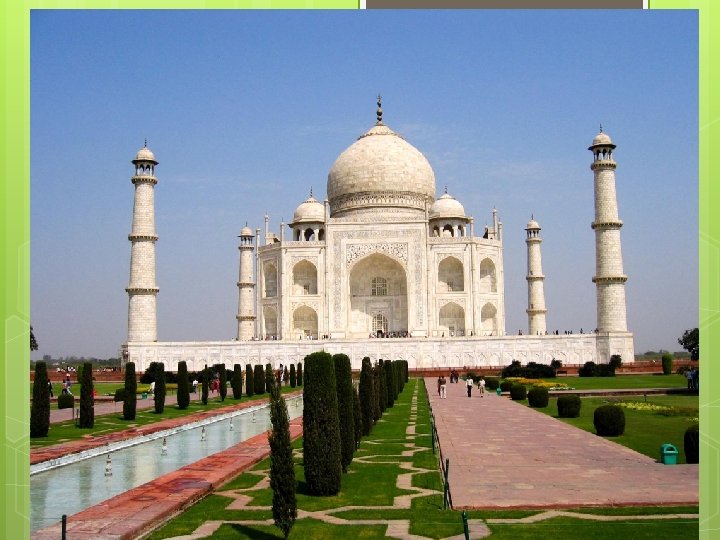
Islam’s Impact on Hinduism Akbar’s influence, however, is still felt within Hinduism today. 2 examples: The Taj Majal The division of India into India and Pakistan India is Hindu, Pakistan is Muslim
Focus Questions: How was early Muslim society organized? What are the main reasons for this type of societal organization? How is this societal organization represented in the modern world?
Early Muslim Society Pyramid structure based on wealth and power Government leaders, landowners, and tradersmost wealth and power Government and religious leaders could be the same, but could also be separate. Artisans, farmers, and workers- common people with little access to wealth or power Slaves. Muslims could not be enslaved, so non. Muslims were brought from other areas, often as prisoners of war.
Early Muslim Society Important Things To Know Generally, the Quran teaches equality-all Muslims are treated the same. Distinctions are made for the following: Non-Muslims- are not considered equal with Muslims. There are different passages within the Quran which state seemingly contradictory ways in which non-Muslims were to be treated, from acceptance to violence Women-are seen as equal in some ways, nonequal in others. Basically, men are seen as stronger, women as weaker.
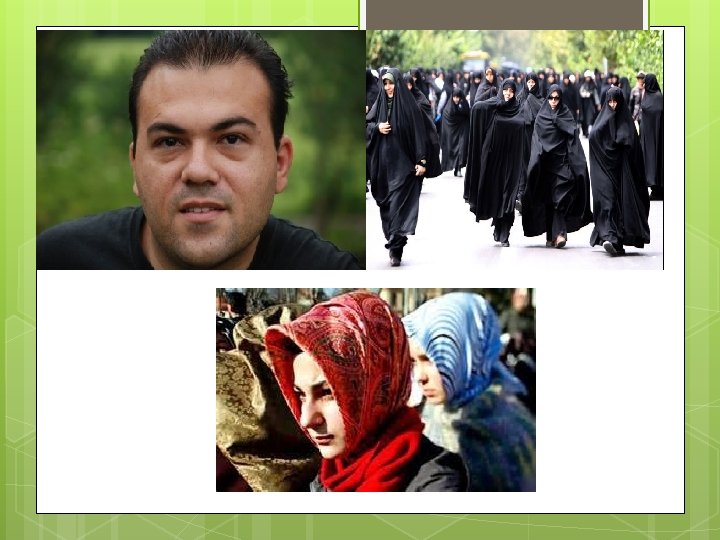
Early Muslim Society Men Ran government, were in charge of business and society Women Helped run Muslim families, could inherit wealth and own property. Many places also had laws requiring women to cover their faces and wear long robes in publichijab.
Focus Questions How does the use of Sharia law help to create order in Islamic nations? Think back to our study of China; how did both ancient Chinese society and Islamic society use religion to help create order in society?
Sharia Law What is Sharia Law? What are some examples of Sharia Law? Who uses Sharia Law? Who doesn’t? What is the reasoning for either using or not using Sharia law?
Sharia Law is the moral code and religious law of Islam. Sharia Law deals with practically all matterscrime, politics, economics, personal hygiene, diet, prayer, and fasting. Often considered the infallible word of God, although the interpretation is not. Where strictly implemented, Sharia is essentially religious law, with court officials often being high officials from the local mosque
Examples of Sharia Law Five Pillars of Islam- no pork, prayer, fasting Non-Muslims -not equal to Muslims, may not display pork, display/recite scriptures, openly celebrate their religious holidays, attempt to convert Muslims Leaving the Muslim faith is the crime of apostasy and is punishable by death Blasphemy-speaking against the Muslim faithis also punishable by death Requires the wearing of hijab by women Thieves can be punished by flogging (public beating) and even amputation of limbs
Countries Implementing Sharia Law Historically, all Muslim countries used Sharia law Today, most Muslim countries apply only a few aspects of Sharia Law-generally in the area of family law. A few countries employ the entire code. Sudan, Saudi Arabia, Yemen, Iraq, Iran, Afghanistan, and Pakistan Some nations have chosen to no longer employ Sharia at all Turkey, Azerbaijan, Turkmenistan, Uzbekistanamong others
Reasons for Using Sharia Law Cultural and historical connection with Islamic history Helps to create order in society Hierarchy Used of order, stability and control as a hedge against the changing nature of the modern world
Reasons for Not Using Sharia Law Pressure from western nations Observation that the Sharia code is unfair in many ways Realization that Sharia often does not provide stability and security-the opposite is often true Desire to be like and accepted by western nations
African Geography When done with the Sharia Law Activity: Read pp. 445 -446 Complete the “Understanding Charts” Activity on pg. 446 Keep until tomorrow
Examples of Sharia Law Thieves can be punished by flogging (public beating) and even amputation of limbs Consumption of alcoholic beverages are expressly forbidden Some interpretations of Sharia law prescribe jihad (holy war) against all non-Muslims. Killing non-Muslims in a jihad is not a crime. Sharia also dictates marriage and divorce laws- a woman in violation can face death by stoning