
Normal Ob Gyne Ultrasound Only the Basics Jennifer
Normal Ob Gyne Ultrasound: Only the Basics Jennifer Lim-Dunham, MD Dept of Radiology Loyola University Stritch School of Medicine and American Institute for Ultrasound in Medicine AIUM ©AIUM
Overview Pelvic sonography is the imaging modality of choice for evaluating the female pelvis. US uses NO ionizing radiation (which can cause cancer and birth defects in fetus) ©AIUM
GOALS&OBJECTIVES • Be familiar with how US images are obtained, US image orientation, US terminology, how sound waves travel • Be familiar with appearance of normal uterine and ovarian anatomy • Be familiar with first and second trimester pregnancy normal appearance and measurements used for dating • This is NOT intended to cover all Ob Gyne pathology ©AIUM

US terminology Isoechoic- Same brightness as surrounding soft tissue structures Hyperechoic- Brighter than surrounding soft tissue, “whiter” Hypoechoic- Darker than surrounding soft tissue, “blacker” Anechoic- Completely black, no echoes. This is what fluid looks like. ©AIUM
Sound waves • Ultrasound transducer sends sound waves through the body. Sound waves are reflected differently by various types of tissue, and sent back to transducer where signal is transformed into visible image • Sound waves travel through soft tissue or fluid. These types of structures are used as “windows” for US scanning • Sound waves do not travel through and are reflected by air or bone (calcium), resulting in shadowing behind these structures ©AIUM
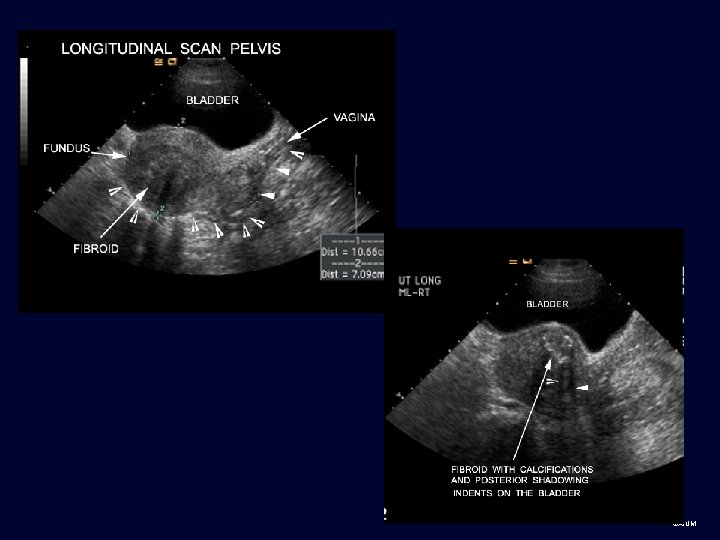
©AIUM
Technique • The standard pelvic examination • Composed of the traditional transabdominal approach (TAS) • Combined with transvaginal sonography (TVS) • Frequently using Doppler sonography ©AIUM
Technique • Transabdominal sonography uses a distended bladder as window to pelvic structures for a global view. ©AIUM
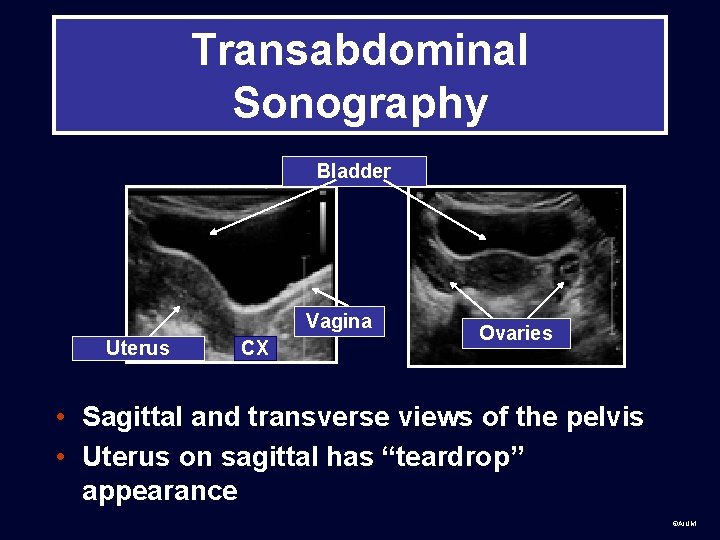
Transabdominal Sonography Bladder Vagina Uterus CX Ovaries • Sagittal and transverse views of the pelvis • Uterus on sagittal has “teardrop” appearance ©AIUM

Technique • Transvaginal sonography gives a more detailed evaluation of pelvic architecture using higher-frequency transducers at closer proximity to pelvic structures. ©AIUM
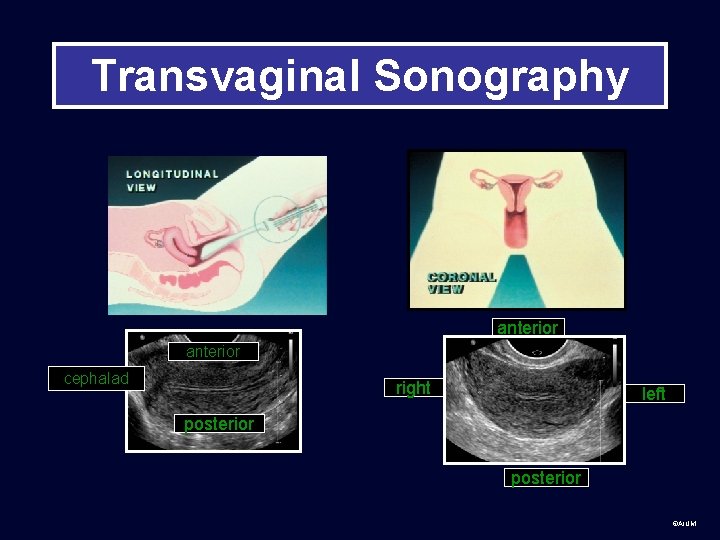
Transvaginal Sonography anterior cephalad right left posterior ©AIUM
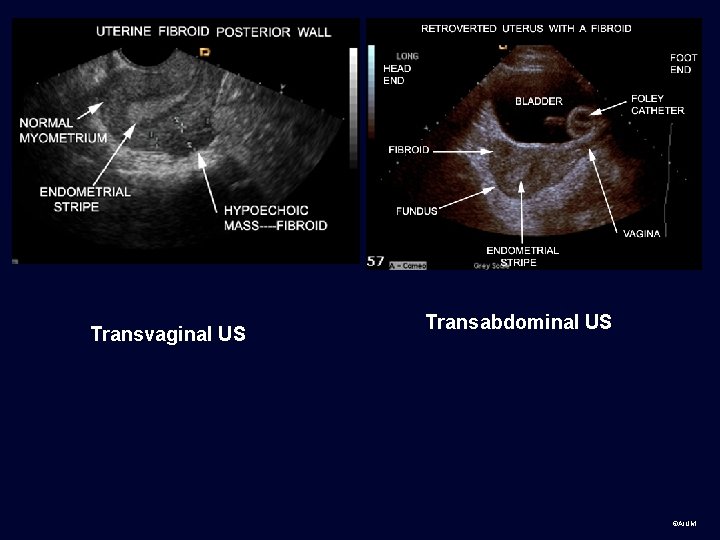
Transvaginal US Transabdominal US ©AIUM
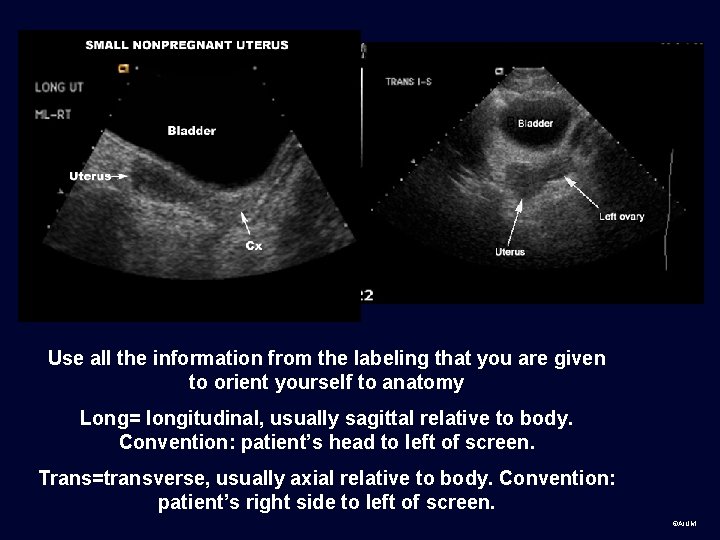
Use all the information from the labeling that you are given to orient yourself to anatomy Long= longitudinal, usually sagittal relative to body. Convention: patient’s head to left of screen. Trans=transverse, usually axial relative to body. Convention: patient’s right side to left of screen. ©AIUM
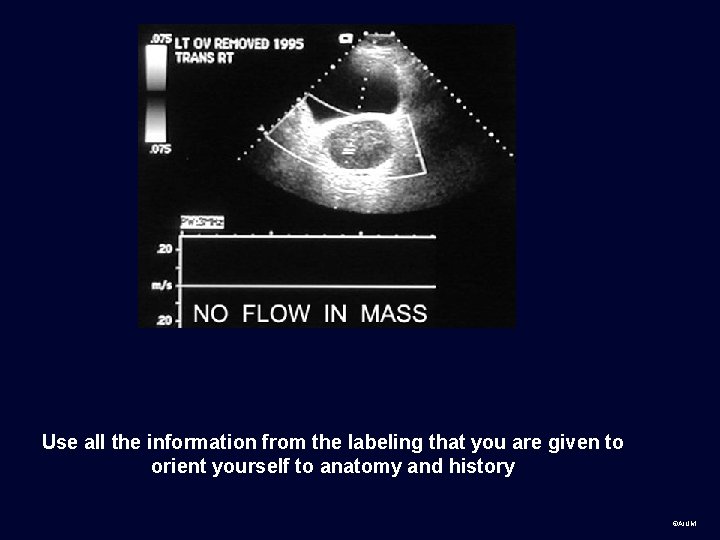
Use all the information from the labeling that you are given to orient yourself to anatomy and history ©AIUM

The Normal Sonographic Appearance of the Nongravid Genital Tract ©AIUM
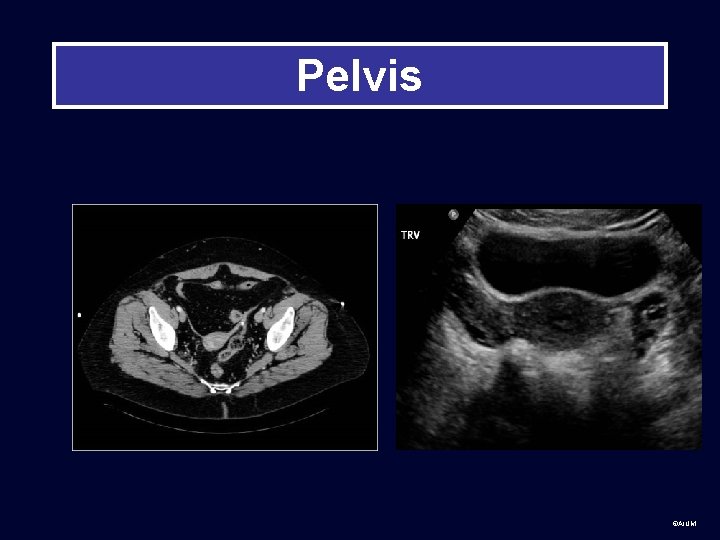
Pelvis ©AIUM
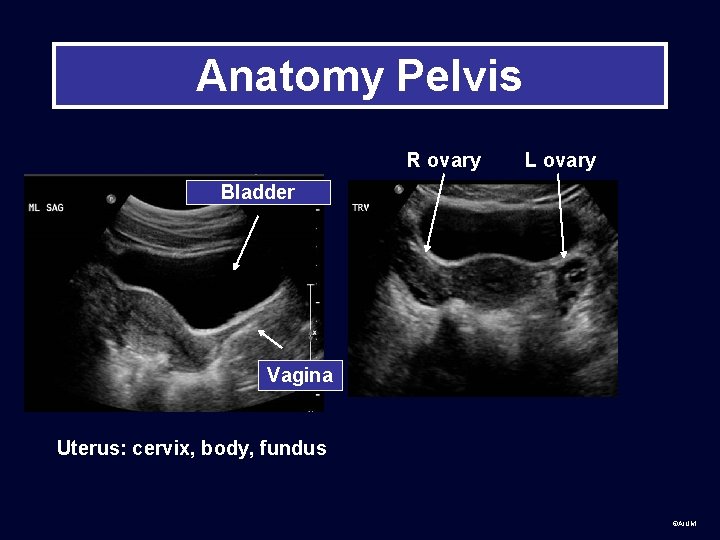
Anatomy Pelvis R ovary L ovary Bladder Vagina Uterus: cervix, body, fundus ©AIUM
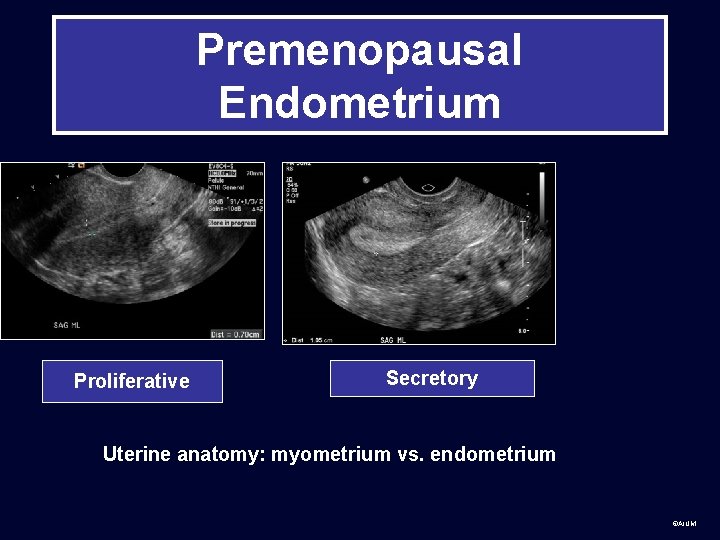
Premenopausal Endometrium Proliferative Secretory Uterine anatomy: myometrium vs. endometrium ©AIUM
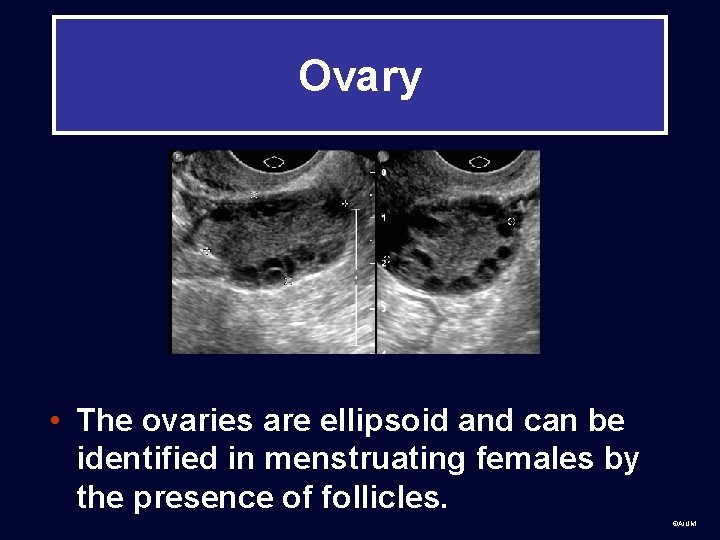
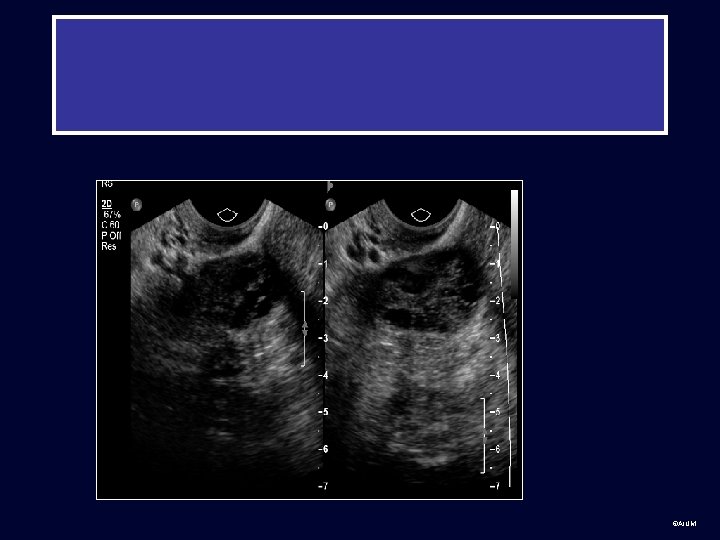
Ovary • The ovaries are ellipsoid and can be identified in menstruating females by the presence of follicles. ©AIUM
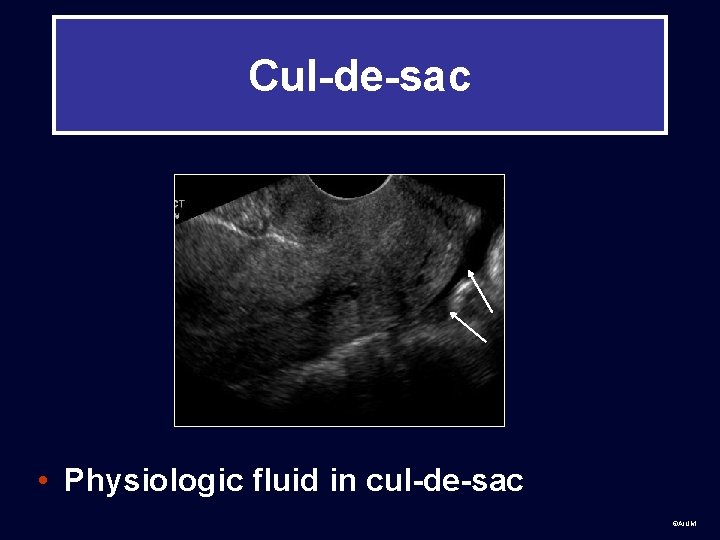
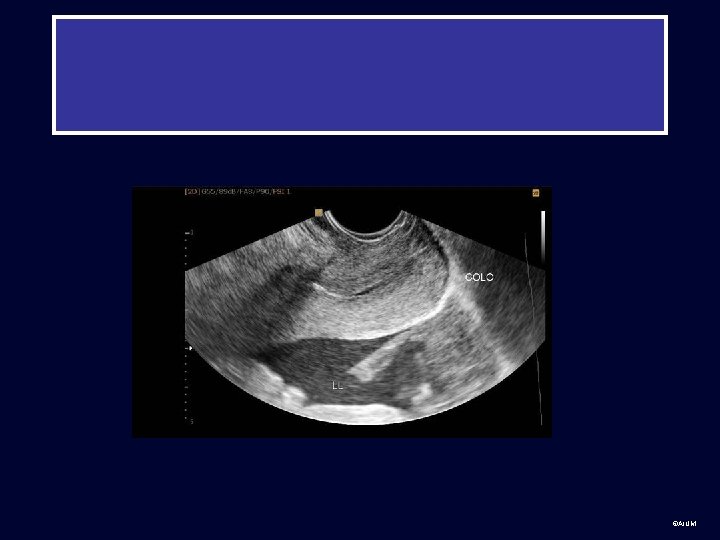
Cul-de-sac • Physiologic fluid in cul-de-sac ©AIUM

Basic obstetrical ultrasound ©AIUM

LMP? Pregnant? • In the female in the reproductive years, the physiologic as well as the pathologic processes are driven by the menstrual cycle and hormonal stimulation. • Therefore, know the day of your patients’ day of the cycle, therefore… • Know if your patient has a positive pregnancy test, and if so, what the quantitative serum beta h. CG is. ©AIUM
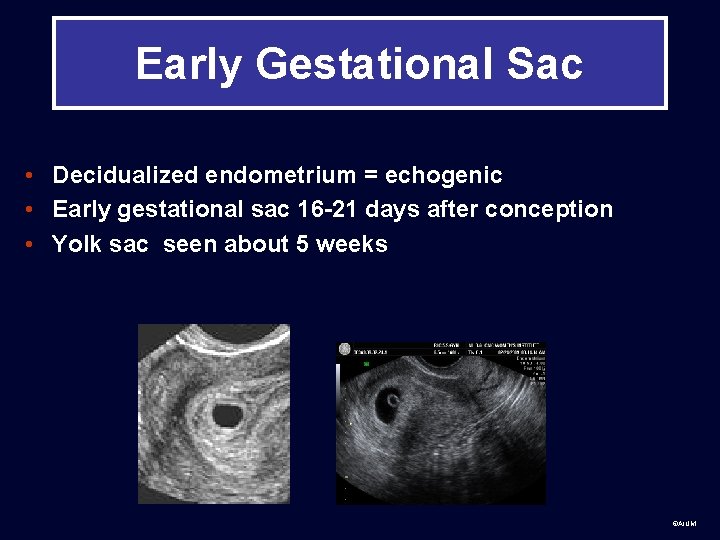
Early Gestational Sac • Decidualized endometrium = echogenic • Early gestational sac 16 -21 days after conception • Yolk sac seen about 5 weeks ©AIUM
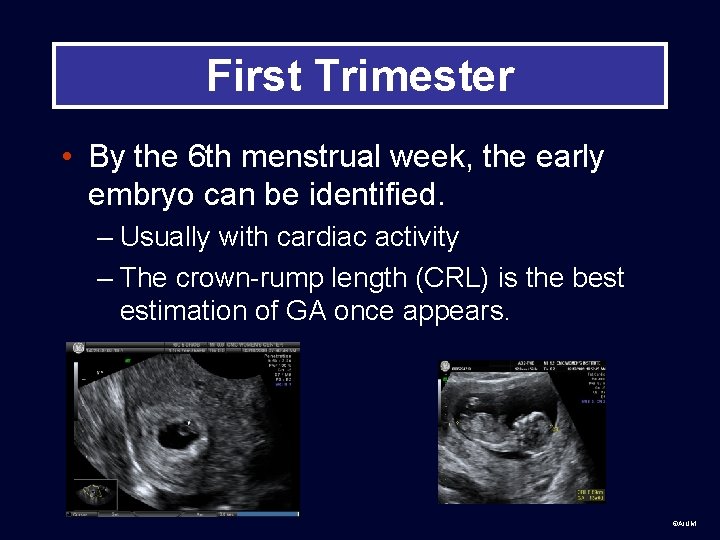
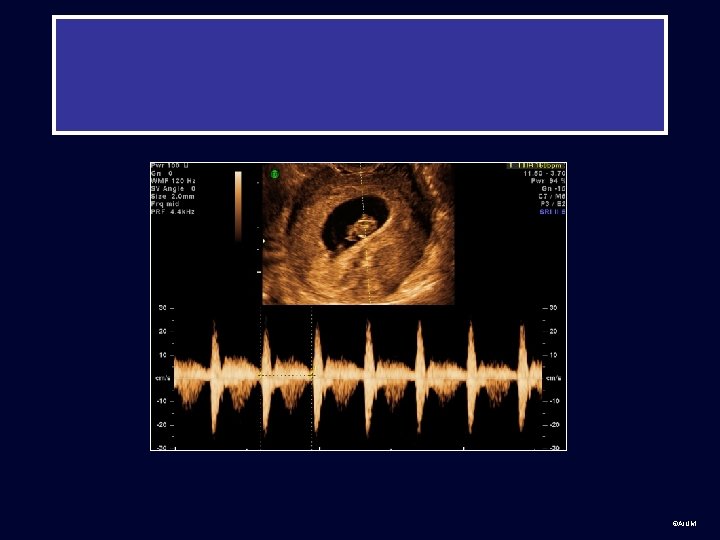
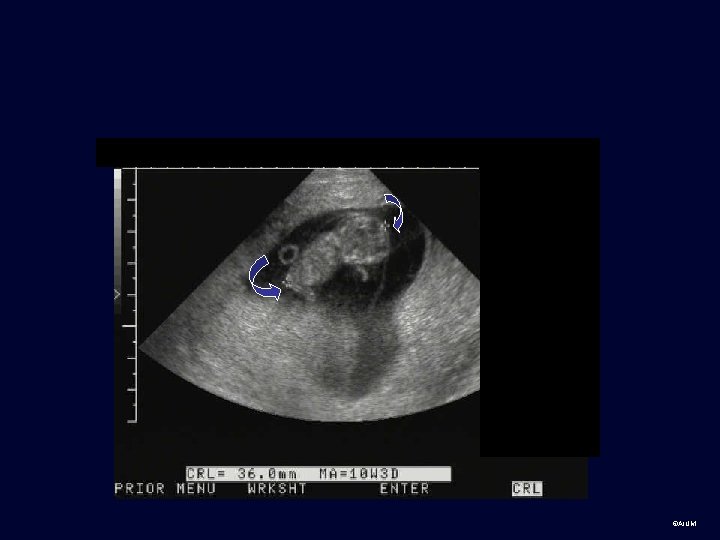
First Trimester • By the 6 th menstrual week, the early embryo can be identified. – Usually with cardiac activity – The crown-rump length (CRL) is the best estimation of GA once appears. ©AIUM
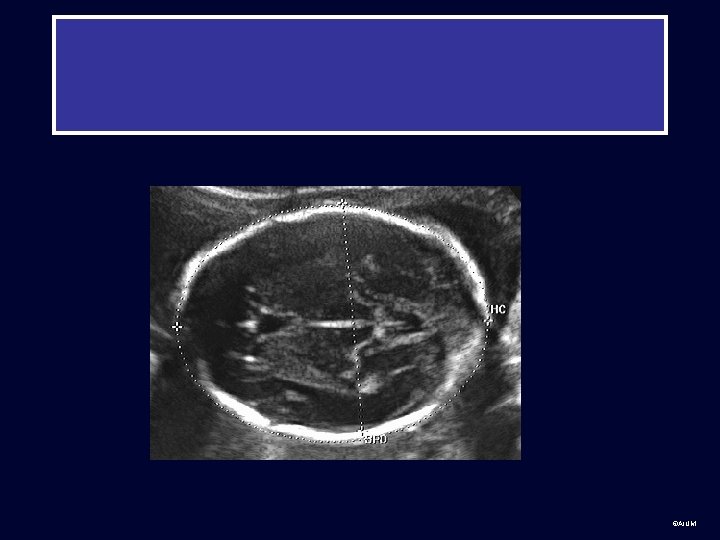
Second Trimester • After 13 -14 weeks, measurements used for dating are: biparietal diameter (BPD), head circumference (HC), abdominal circumference (AC), and femur length (FL) ©AIUM
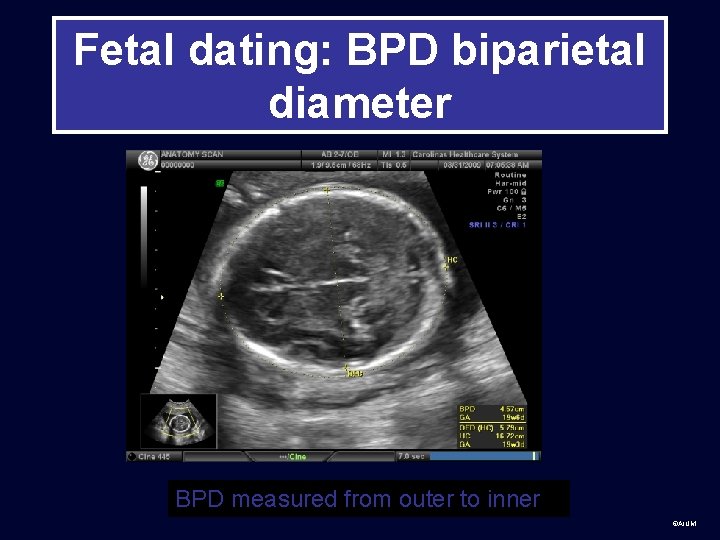
Fetal dating: BPD biparietal diameter BPD measured from outer to inner ©AIUM

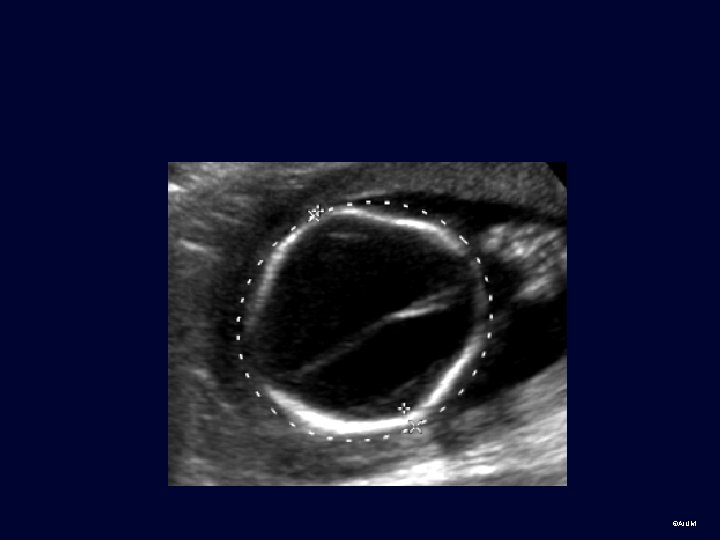
Fetal dating: HC head circumference Note: HC measured on the outside ©AIUM

Fetal dating: FL femur length Only ossified bone is measured ©AIUM

Fetal dating: AC abdominal circumference Note: AC is measured on outer circumference ©AIUM
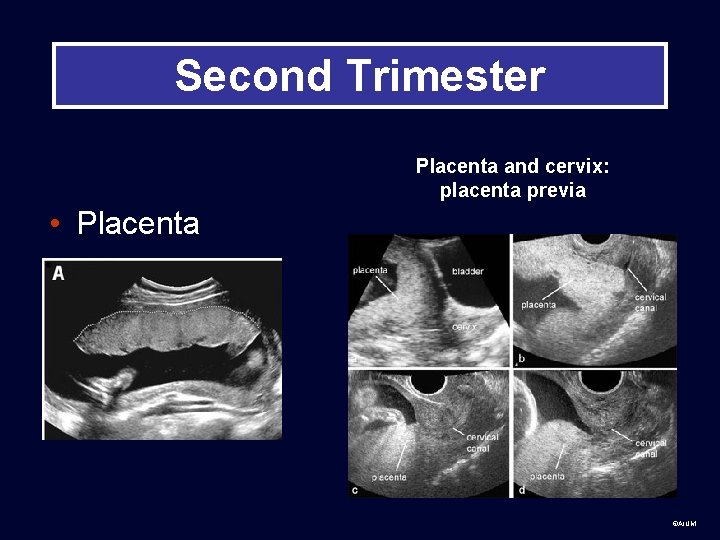
Second Trimester Placenta and cervix: placenta previa • Placenta ©AIUM
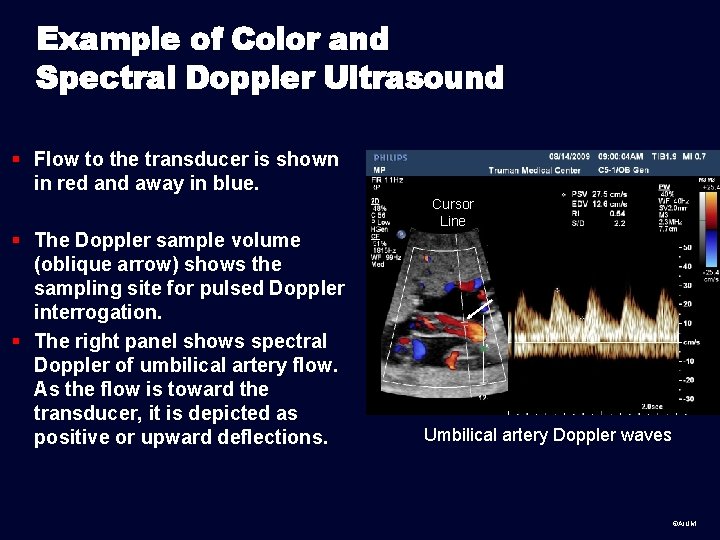
Example of Color and Spectral Doppler Ultrasound § Flow to the transducer is shown in red and away in blue. Cursor Line § The Doppler sample volume (oblique arrow) shows the sampling site for pulsed Doppler interrogation. § The right panel shows spectral Doppler of umbilical artery flow. As the flow is toward the transducer, it is depicted as positive or upward deflections. Umbilical artery Doppler waves ©AIUM
Take Home Points • US is first line modality to examine female pelvis and gravid female pelvis • US uses no ionizing radiation • US uses sound waves, which travel best through soft tissue or fluid • US can be performed transabdominally or transvaginally • Conventional orientation for US images is used ©AIUM

Take Home Points • Use terminology “hyperechoic” and “hypoechoic” • Fluid is black or anechoic on US • We reviewed appearance of normal uterine and ovarian anatomy • We reviewed first and second trimester pregnancy normal appearance • Measurements used for fetal dating: BPD, HC, AC, FL ©AIUM

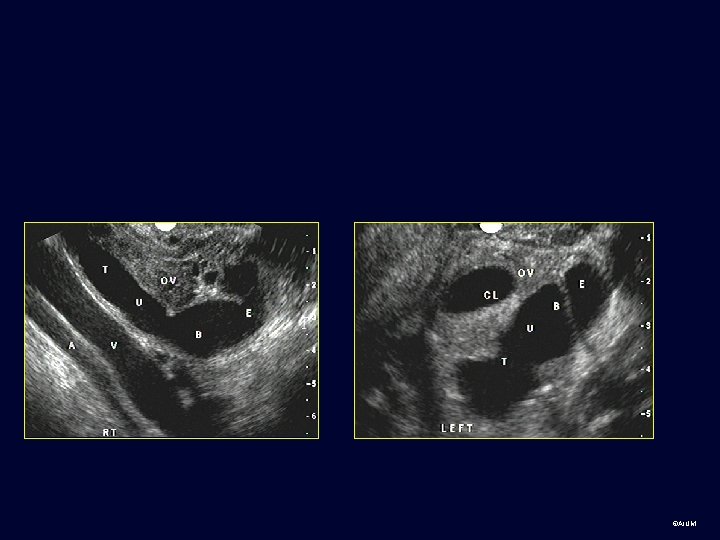
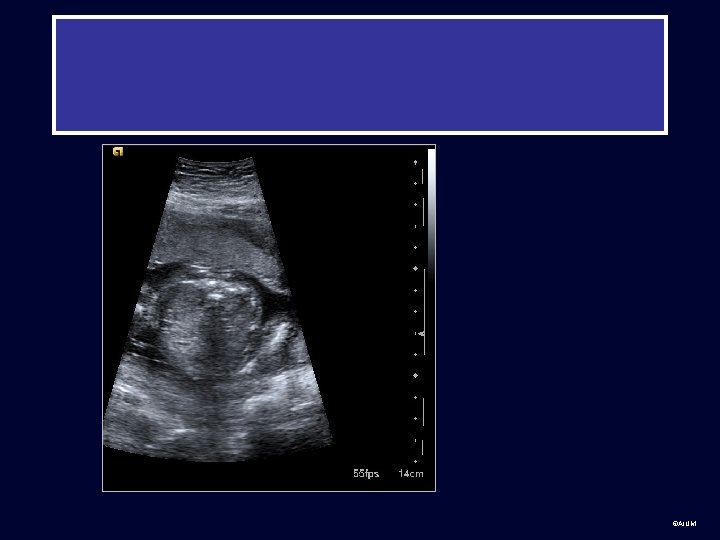
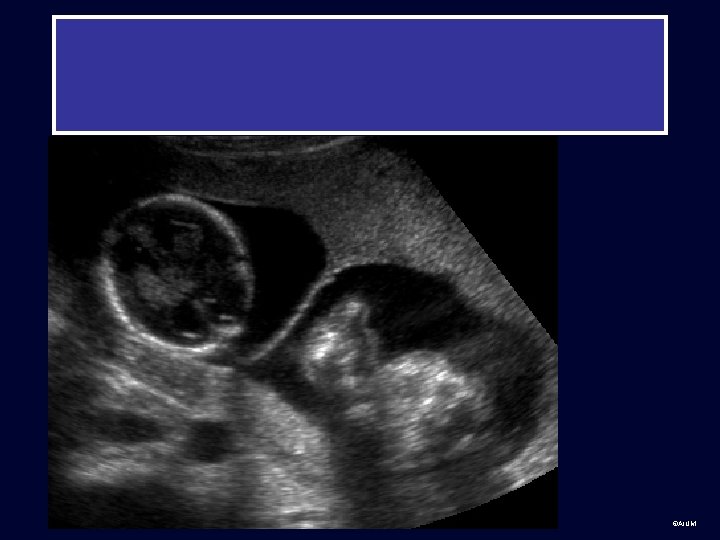
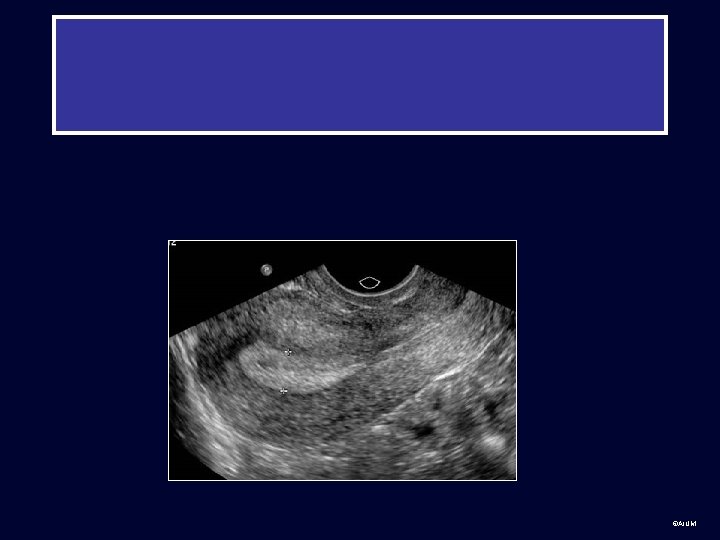
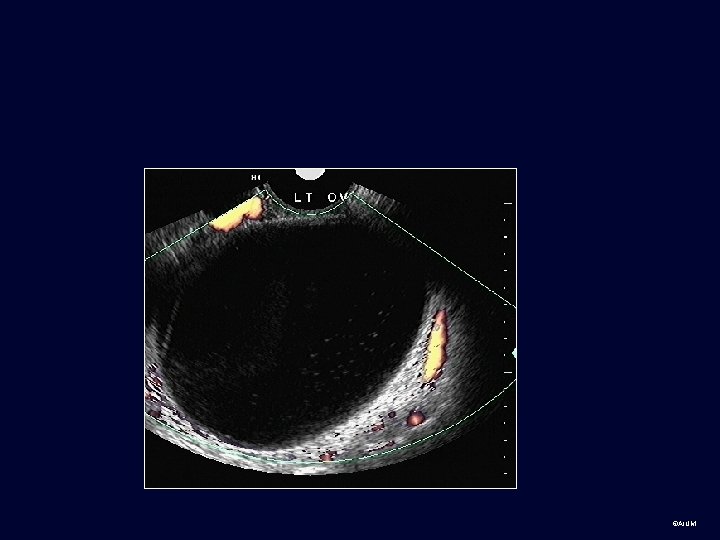
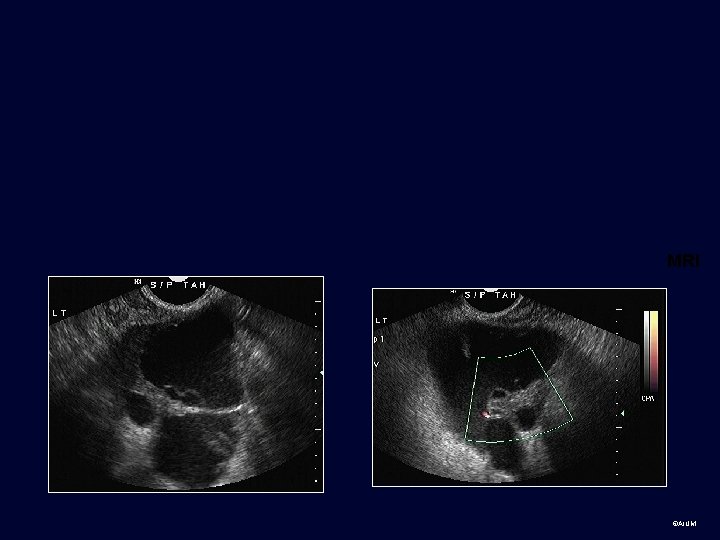
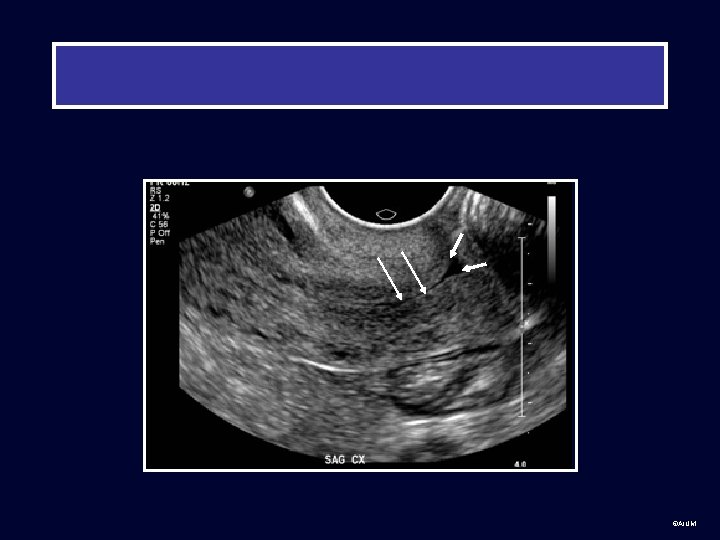
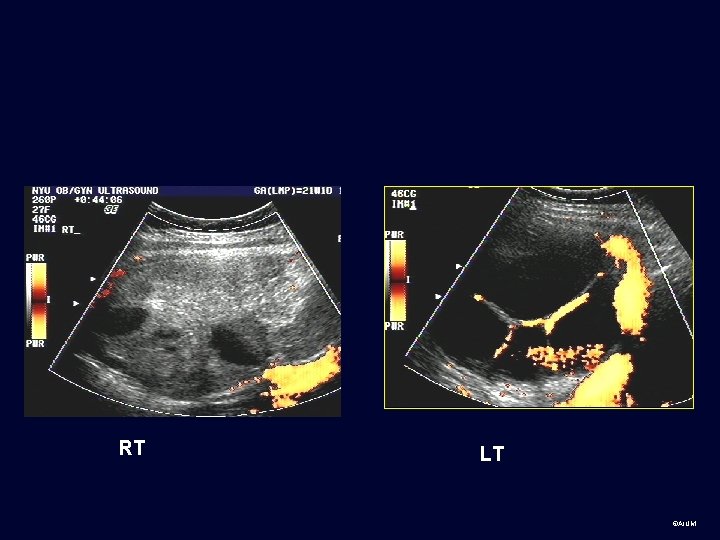
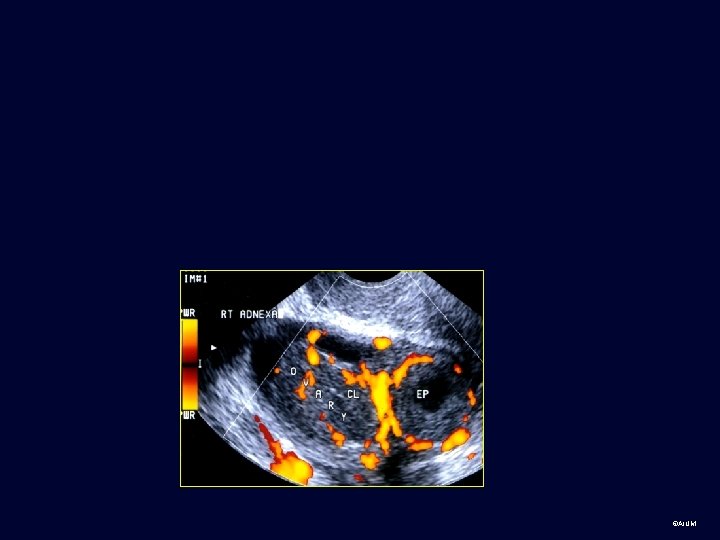
Practice cases for students: Normal and abnormal • Transabdominal, transvaginal or can’t tell? • Body part? • Normal or abnormal (provide diagnosis or Ddx if possible) ©AIUM

Group 1 ©AIUM
©AIUM
©AIUM
©AIUM
©AIUM
©AIUM

Group 2 ©AIUM
©AIUM
• ©AIUM
©AIUM
©AIUM
MRI ©AIUM

Group 3 ©AIUM
©AIUM
©AIUM
©AIUM
RT LT ©AIUM
©AIUM
- Slides: 52