
Normal Newborn care Neonatal care Islamic University Nursing
Normal Newborn care Neonatal care Islamic University Nursing College 1
Introduction: 1. Definition of neonatal period: A period from birth 4 weeks postnatal. After the initial observation for neonatal condition requiring immediate intervention, the baby is sent to the normal newborn nursery or maternity floor for the purpose of follow up and stabilization. 2
The role of the neonatal nurse inside the normal newborn nursery or maternity floor: 3
Ø Admission Care: The role of the nurse is: - To carry out good interpersonal communication. - To take complete history about the mother and neonate. - To be sure that the neonate has identification band. - To perform complete physical assessment (General appearance, V. S, Gestational age assessment). - Prevention of hemorrhage (administer vit K if not given in the delivery room). - Documentation. 4
Ø Assessment: The initial assessment: APGAR scoring system Purpose: Is to assess the newborn´s immediate adjustment to extra uterine life. To be done at 1 & 5 minutes. 5

Transitional assessment (Periods of reactivity): I) First period of reactivity: Stage 1: during the first 30 min. through which the baby is characterized as Physiologically unstable ( ), very alert, cries vigorously, may suck a fist greedily, & appears very interested in the environment. 6
Stage 2: It lasts for about 2 -4 hours, through this period; all V. S & mucus production are decreased. The newborn is in state of sleep and relative calm. 7
II) Second period of reactivity: It lasts for about 2 -5 hours, through which the newborn is alert and responsive, heart & respiratory rate, gastric & respiratory secretions are increased & passage of meconium commonly occurs. Following this stage is a period of stabilization through which the baby becomes physiologically stable & a hesitant pattern of sleep and activity. 8
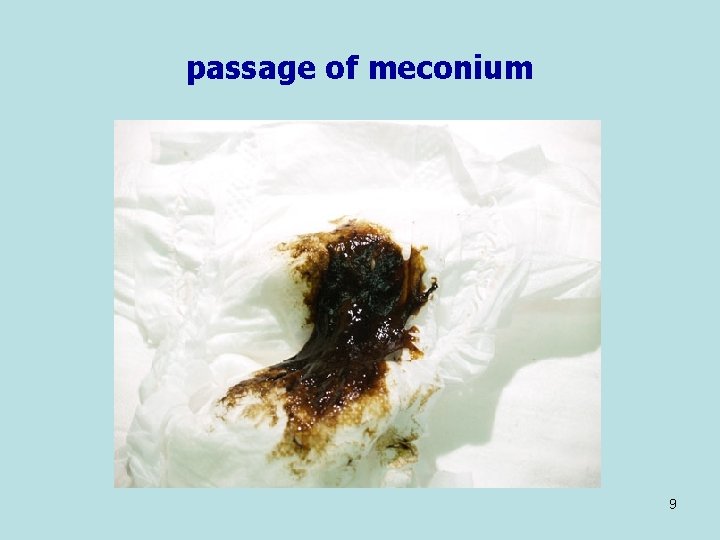
passage of meconium 9
Assessment of Gestational age: (High-risk neonate) 10
Systematic Physical examination: - Growth measurements - Vital Signs - General appearance: . Posture: Flexion of head & extremities, taking them toward chest & abdomen 11
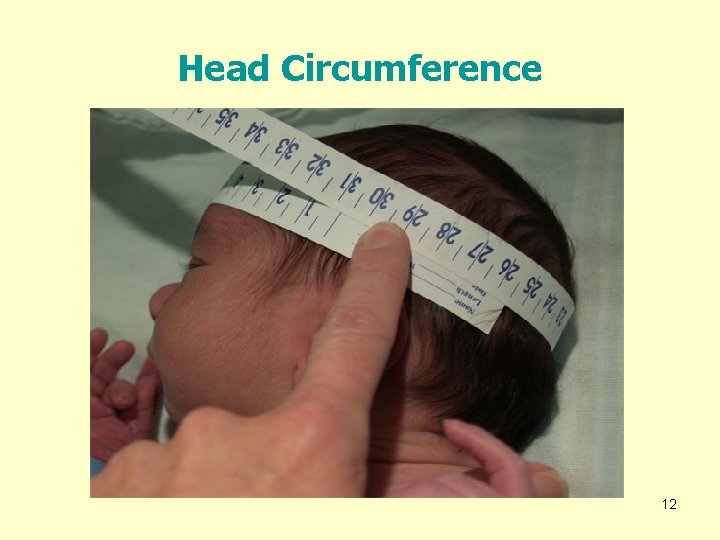
Head Circumference 12
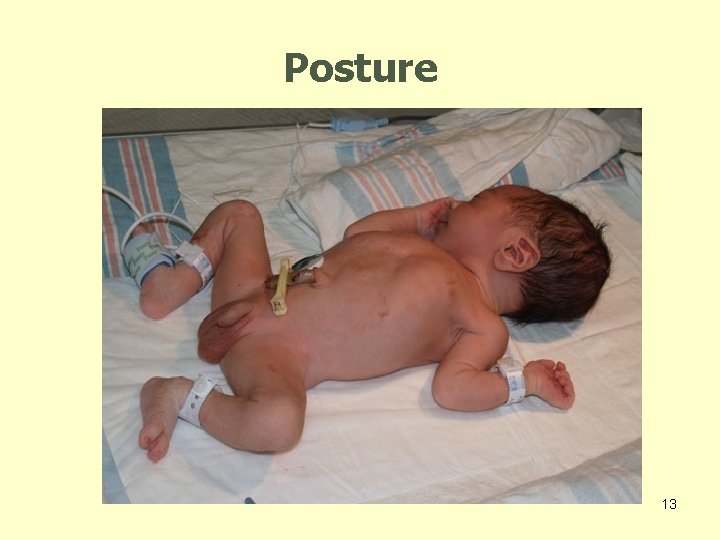
Posture 13
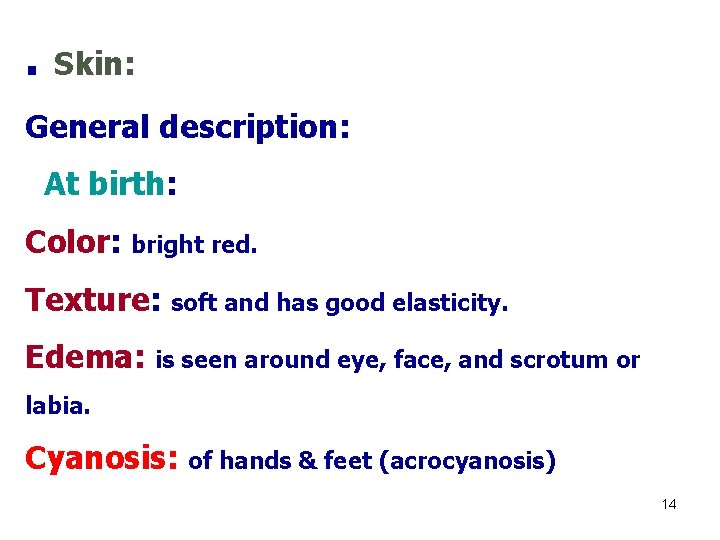
. Skin: General description: At birth: Color: bright red. Texture: soft and has good elasticity. Edema: is seen around eye, face, and scrotum or labia. Cyanosis: of hands & feet (acrocyanosis) 14
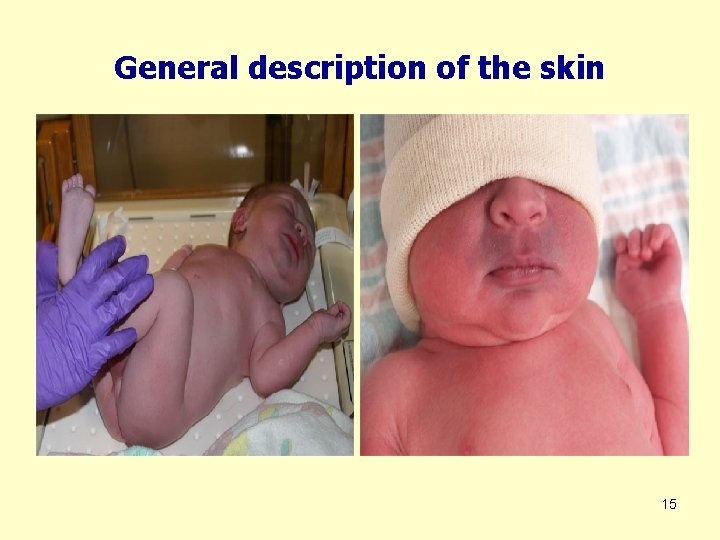
General description of the skin 15
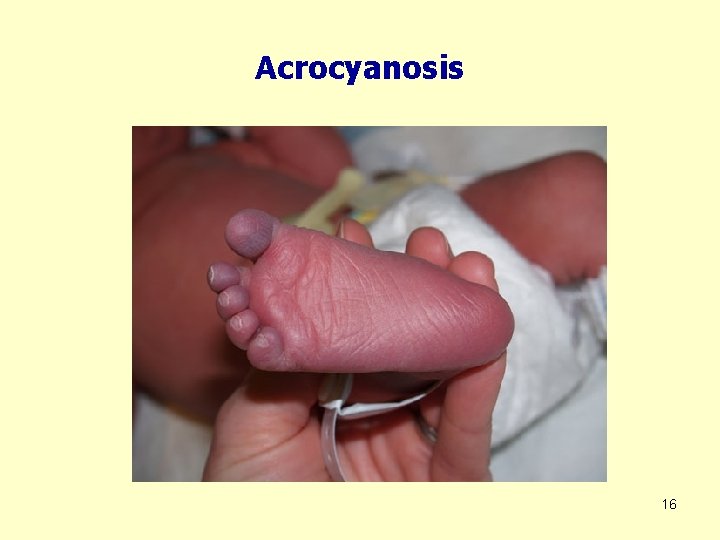
Acrocyanosis 16

1. Vernix Caseosa: Soft yellowish cream layer that may thickly cover the skin of the newborn, or it may be found only in the body creases and between the labia. The debate of wash it off or to keep it. 17
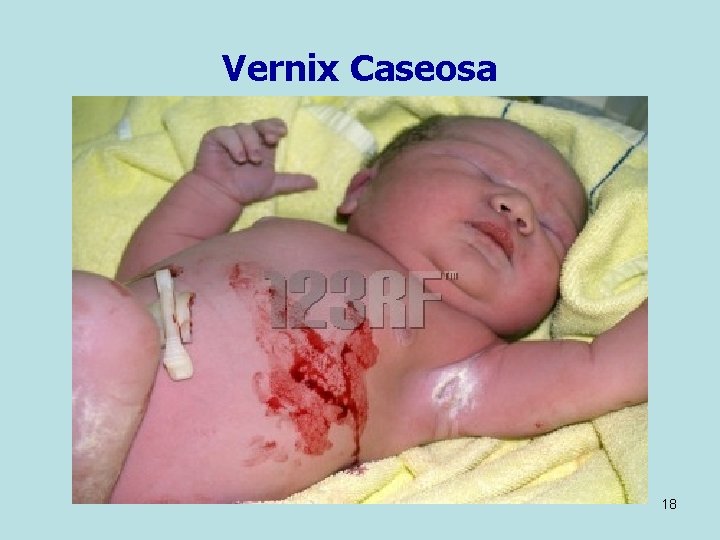
Vernix Caseosa 18

2. Lanugo hair: - Distribution: The more premature baby is, the heavier the presence of lanugo is. - It disappears during the first weeks of life 19
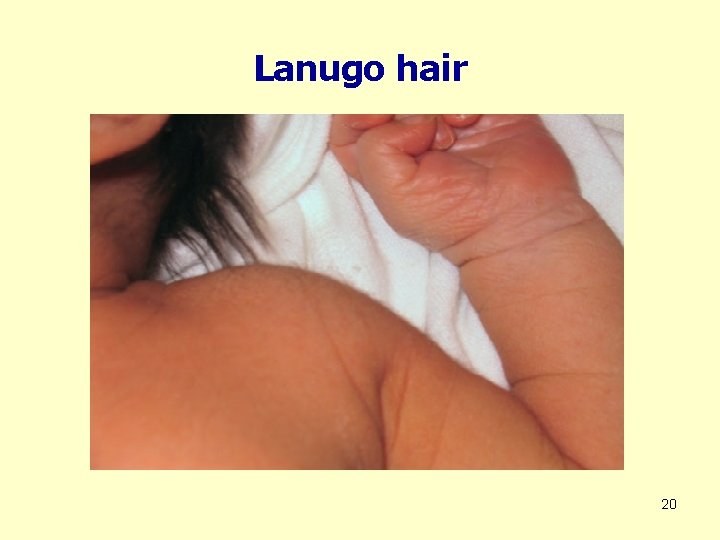
Lanugo hair 20
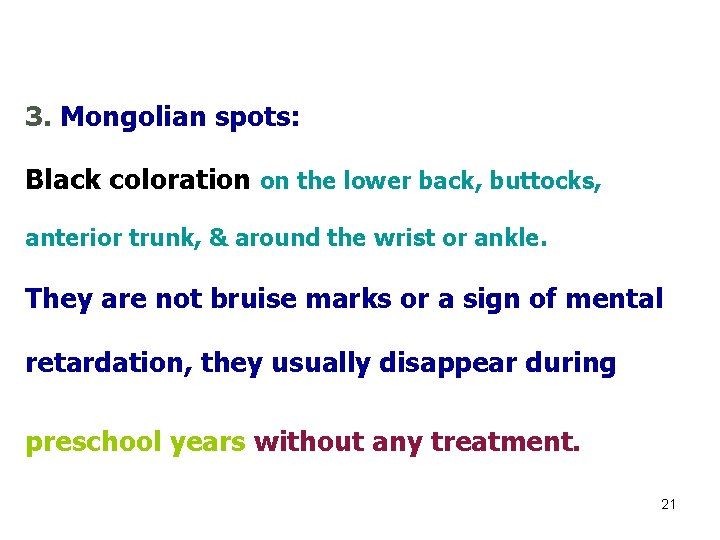
3. Mongolian spots: Black coloration on the lower back, buttocks, anterior trunk, & around the wrist or ankle. They are not bruise marks or a sign of mental retardation, they usually disappear during preschool years without any treatment. 21
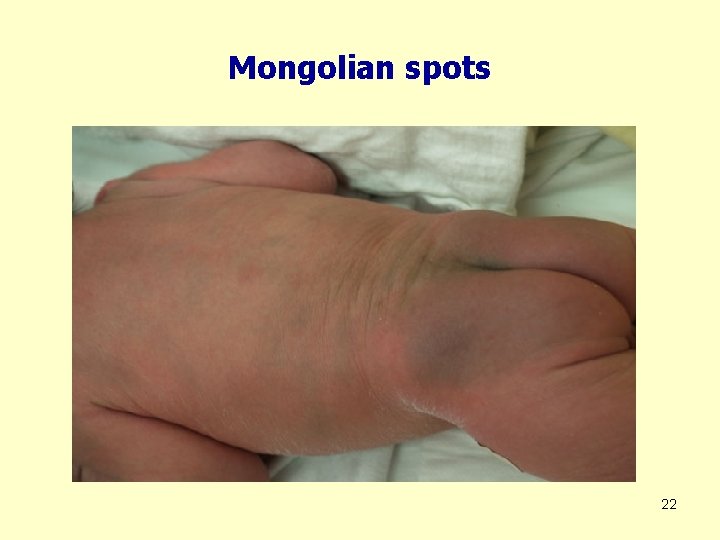
Mongolian spots 22
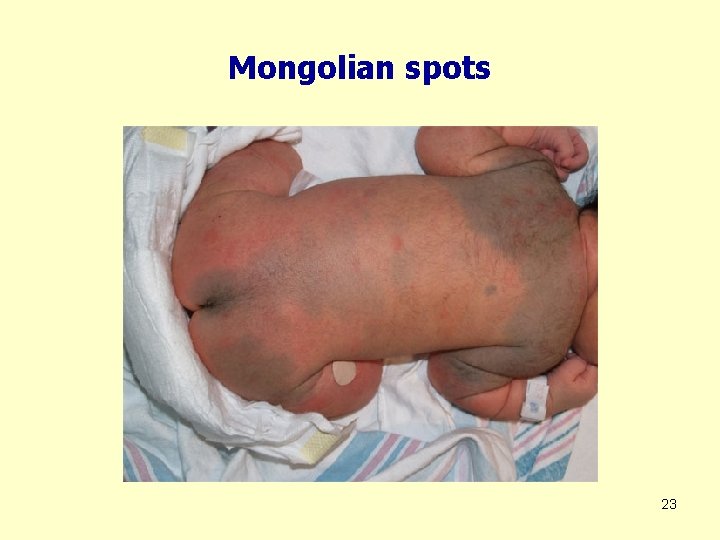
Mongolian spots 23
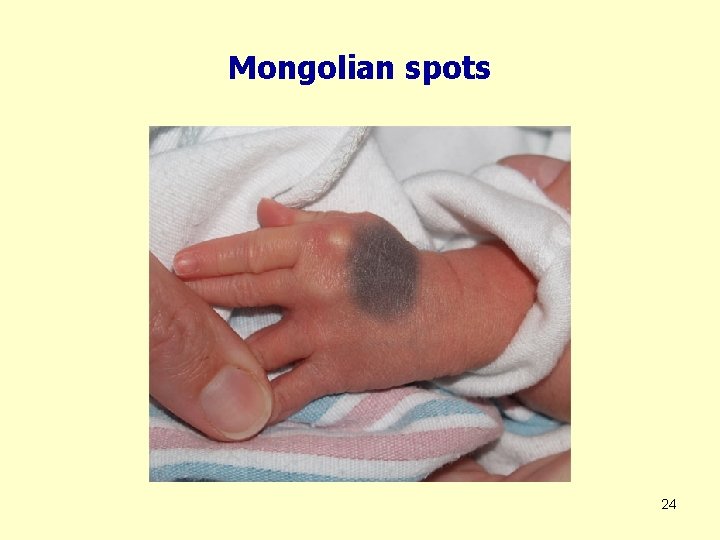
Mongolian spots 24
4. Physiological Jaundice: will discussed later in details. 5. Milia: - Small white or yellow pinpoint spots. - Common on the nose, forehead, & chin of the newborn infants due to accumulations of secretions from the sweat & sebaceous glands that have not yet drain normally. They will disappear within 1 -2 weeks, they should not expressed. 25
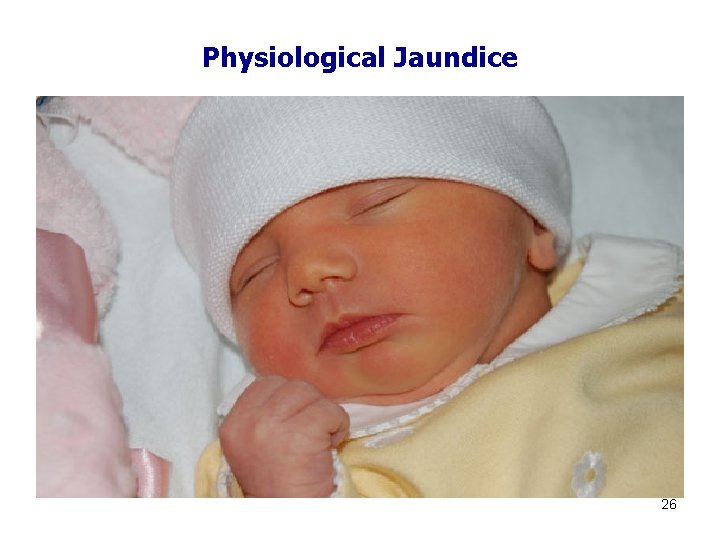
Physiological Jaundice 26
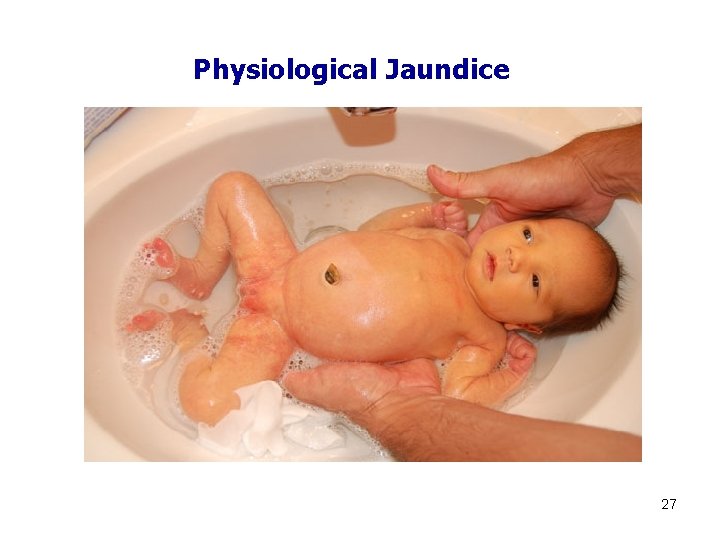
Physiological Jaundice 27

Milia 28

6. Head: The Anterior fontanel: is diamond in shape, located at the junction of 2 parietal & frontal bones. It is 2 -3 cm in width & 3 -4 cm in length. It closes between 12 -18 months of age. The posterior fontanel: is triangular in shape, located between the parietal & occipital bones. It closes by the 2 nd month of age. 29

Fontanels should be flat, soft, & firm. It bulge when the baby cries or if there is increased in ICP. Two conditions may appear in the head: Caput succedaneum & Cephalhematoma 30
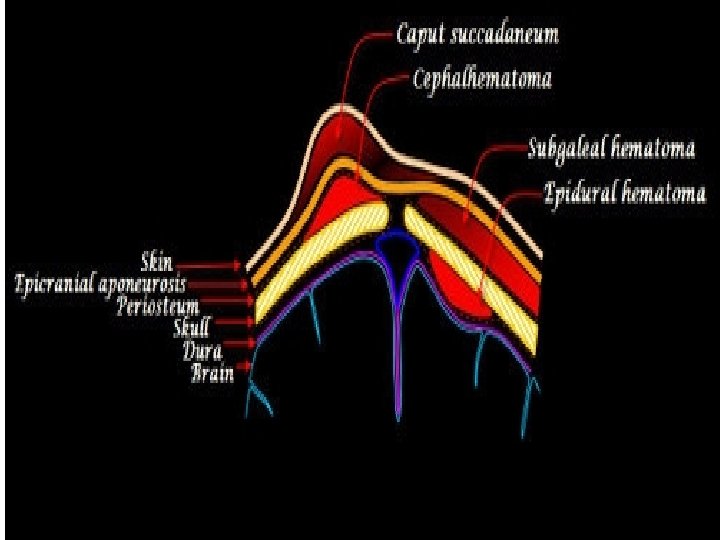
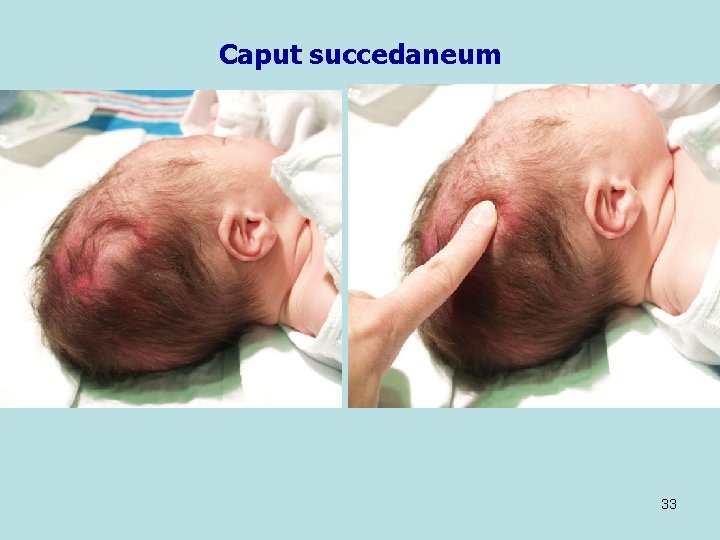
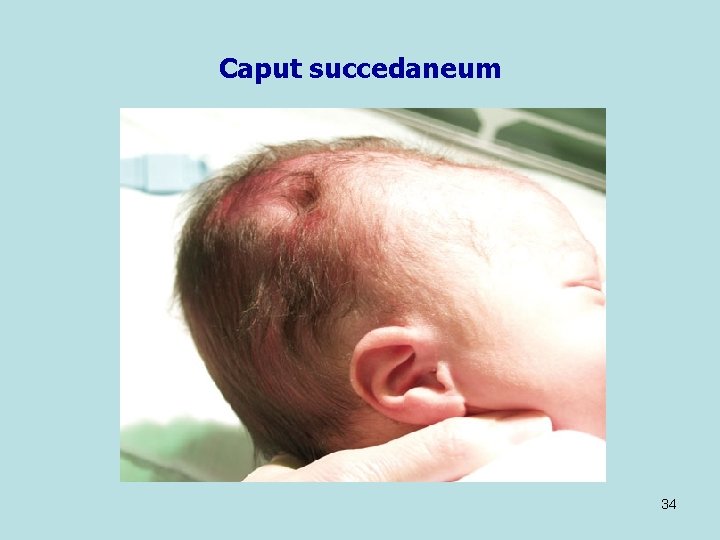
Caput succedaneum • An edematous swelling on the presenting portion of the scalp of an infant during birth, caused by the pressure of the presenting part against the dilating cervix. The effusion overlies the periosteum with poorly defined margins. • Caput succedaneum extends across the midline and over suture lines. Caput succedaneum does not usually cause complications and usually resolves over the first few days. • Management consists of observation only. 31
32
Caput succedaneum 33
Caput succedaneum 34
Cephalhematoma: Cephalhematoma is a subperiosteal collection of blood secondary to rupture of blood vessels between the skull and the periosteum, in which bleeding is limited by suture lines (never cross the suture lines). 35
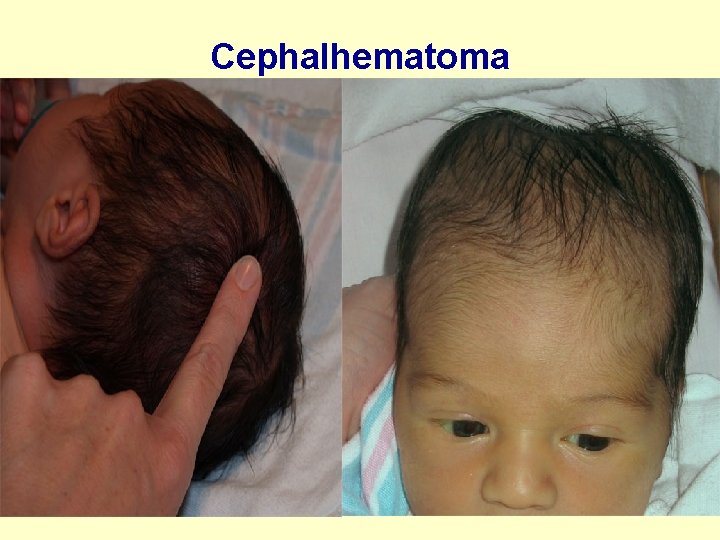
Cephalhematoma 36

7. Eyes: - Usually edematous eye lids - Gray in color. True color is not determined until the age of 3 -6 months. - Pupil: React to light - Absence of tears - Blinking reflex is present in response to touch - Can not follow an object (simple fixation on objects). 37
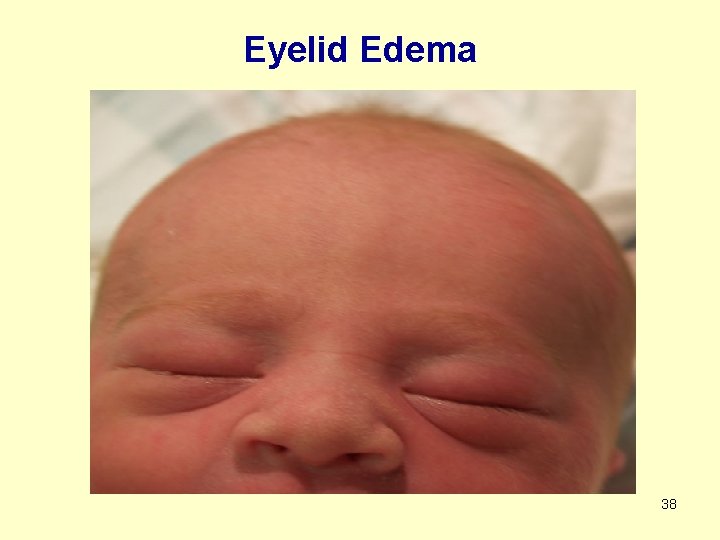
Eyelid Edema 38

Dysconjugate Eye Movements 39

Subconjunctival Hemorrhage 40
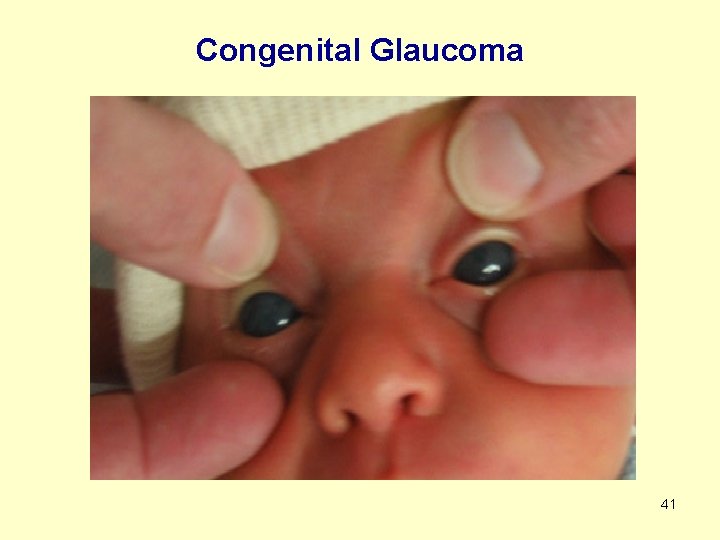
Congenital Glaucoma 41
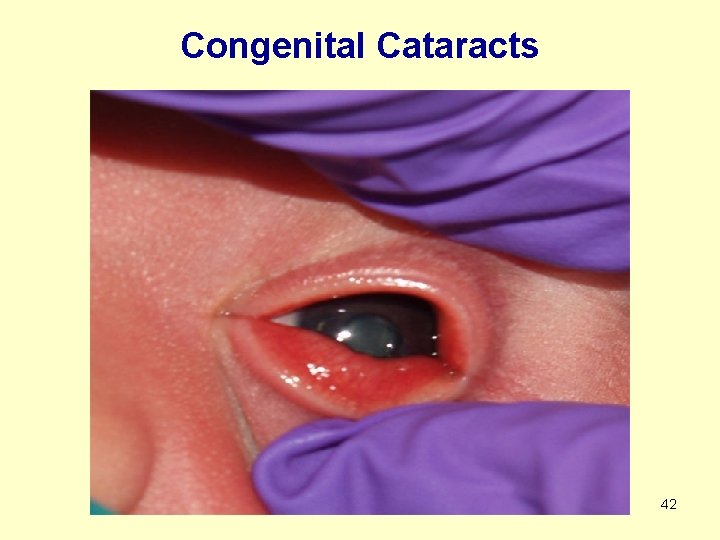
Congenital Cataracts 42
8. Ears: Position: Startle Reflex: Pinna ( )ﺻﻴﻮﺍﻥ ﺍﻻﺩﻥ flexible, cartilage present. 43
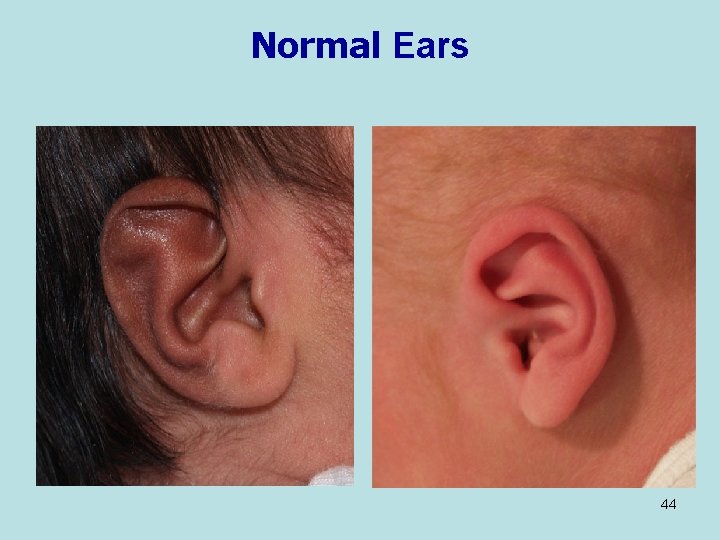
Normal Ears 44
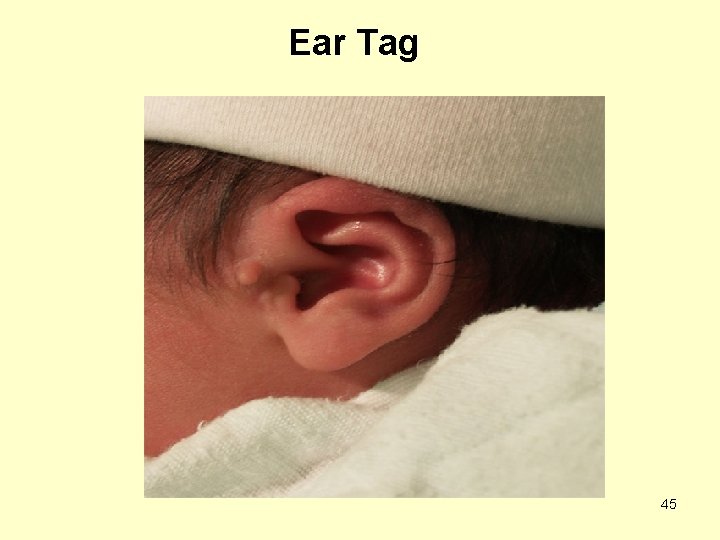
Ear Tag 45
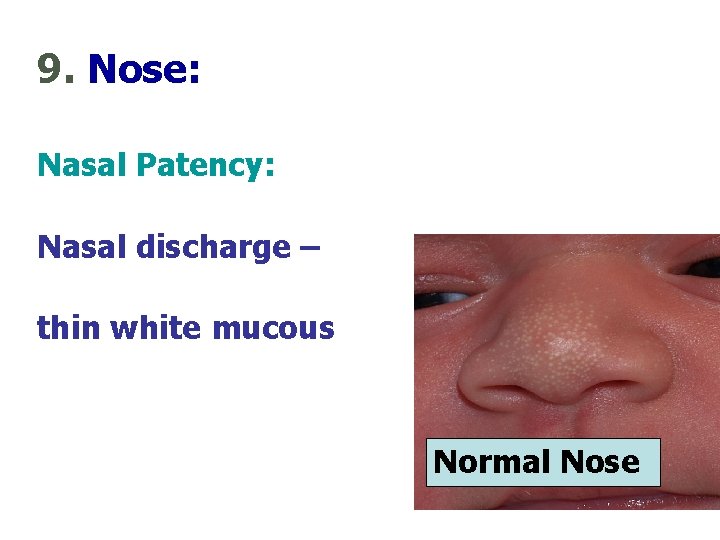
9. Nose: Nasal Patency: Nasal discharge – thin white mucous Normal Nose 46
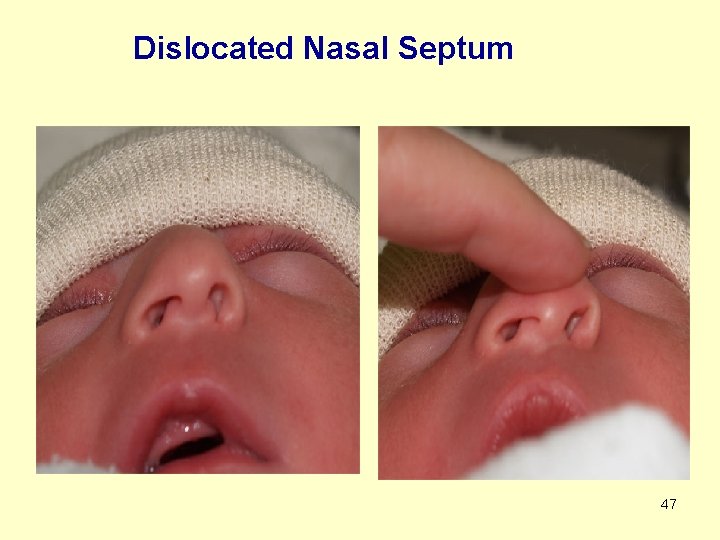
Dislocated Nasal Septum 47

10. Mouth & Throat: - Intact, high arched palate. - Sucking reflex – strong and coordinated - Rooting reflex - Gag reflex - Minimal salivation 48
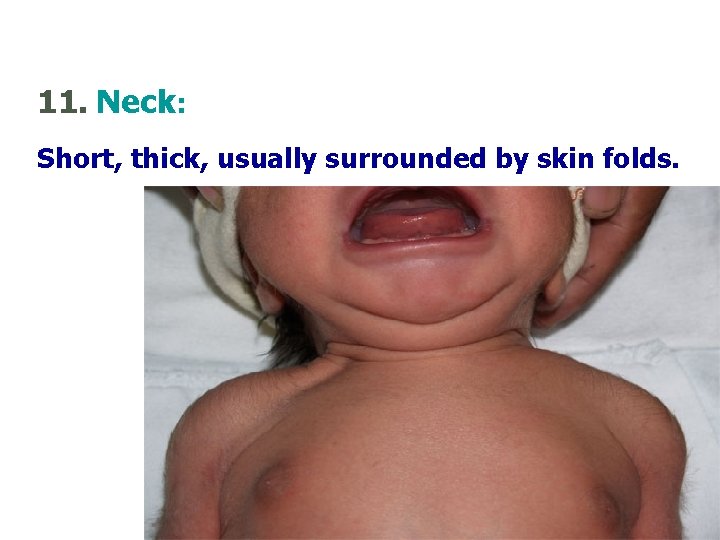
11. Neck: Short, thick, usually surrounded by skin folds. 49
v System assessment of the neonates: 1. Gastrointestinal System: Mouth should be examined for abnormalities such as cleft lip and/or cleft palate. Epstein pearls are brittle, white, shine spots near the center of the hard palate. They mark the fusion of the 2 hollows of the palate. If any; it will disappear in time. 50
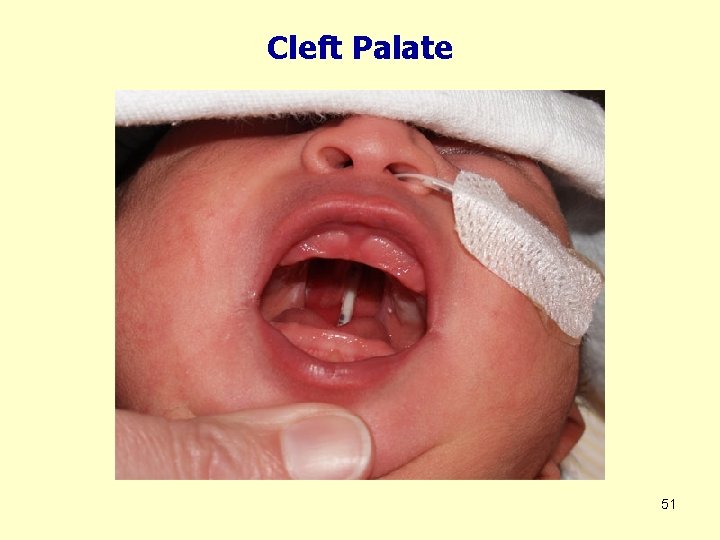
Cleft Palate 51
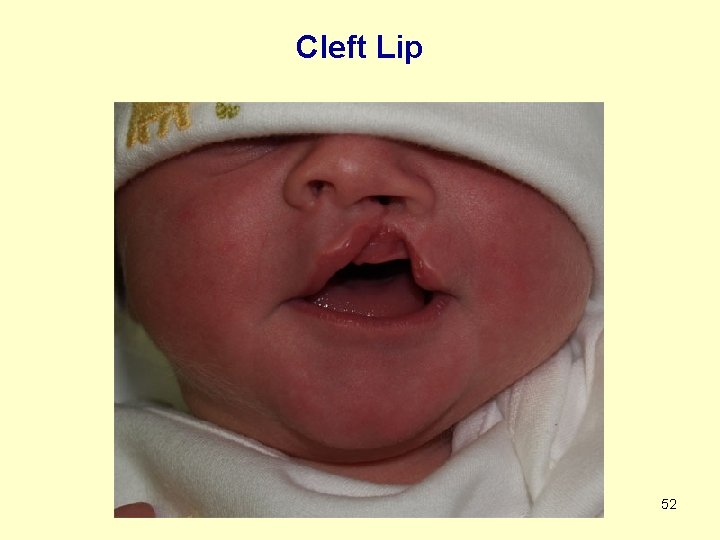
Cleft Lip 52
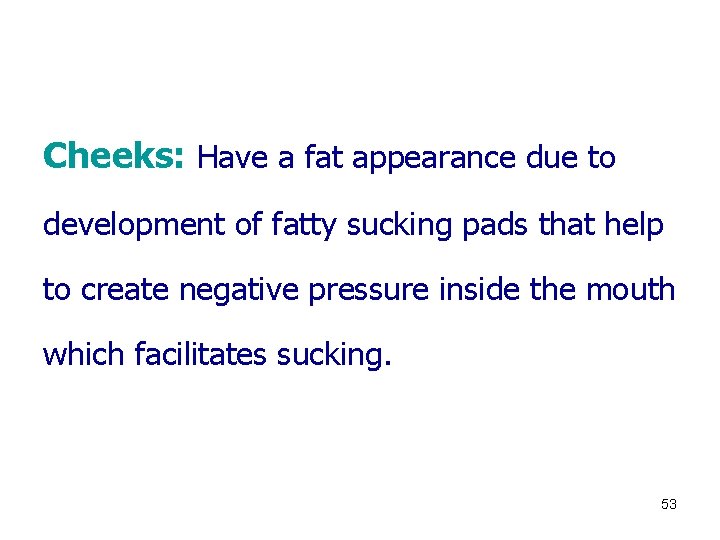
Cheeks: Have a fat appearance due to development of fatty sucking pads that help to create negative pressure inside the mouth which facilitates sucking. 53
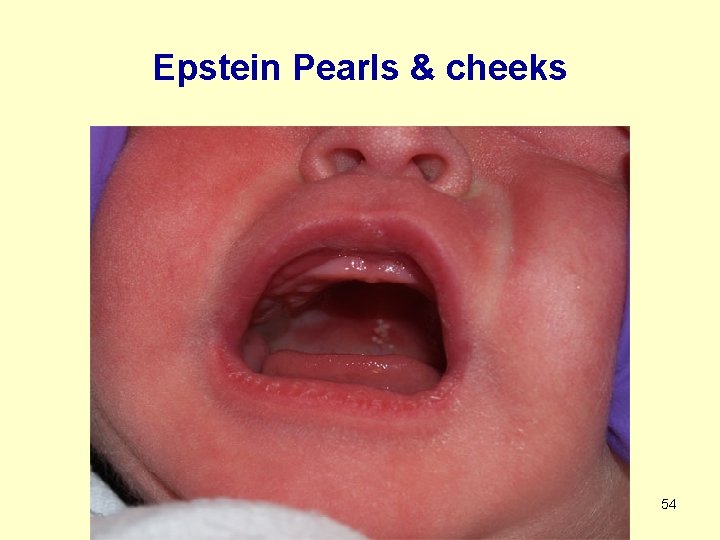
Epstein Pearls & cheeks 54
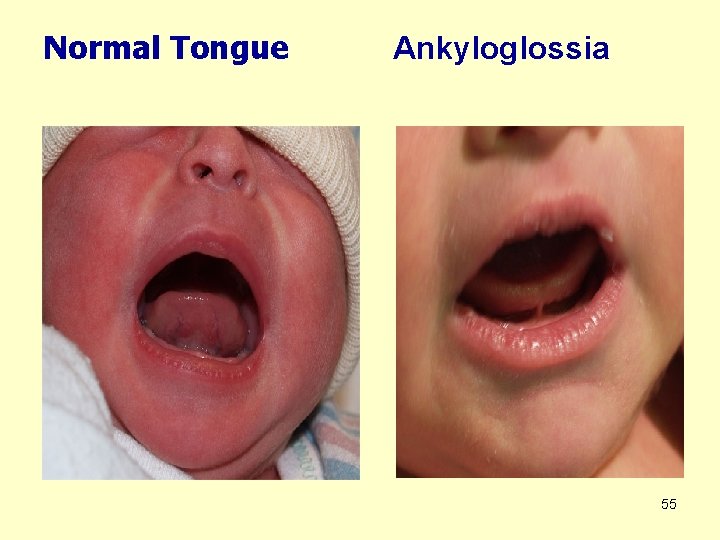
Normal Tongue Ankyloglossia 55
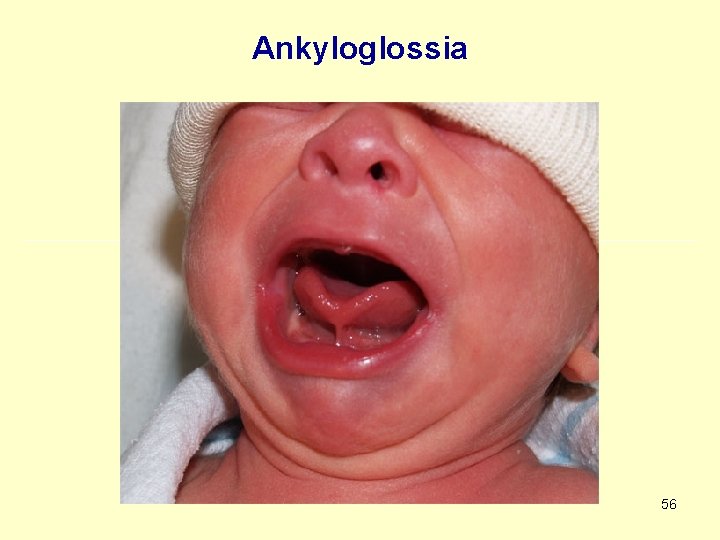
Ankyloglossia 56
Gum: May appear with a quite irregular edge. Sometimes the back of gums contain whitish deciduous teeth that are semi-formed, but not erupted 57
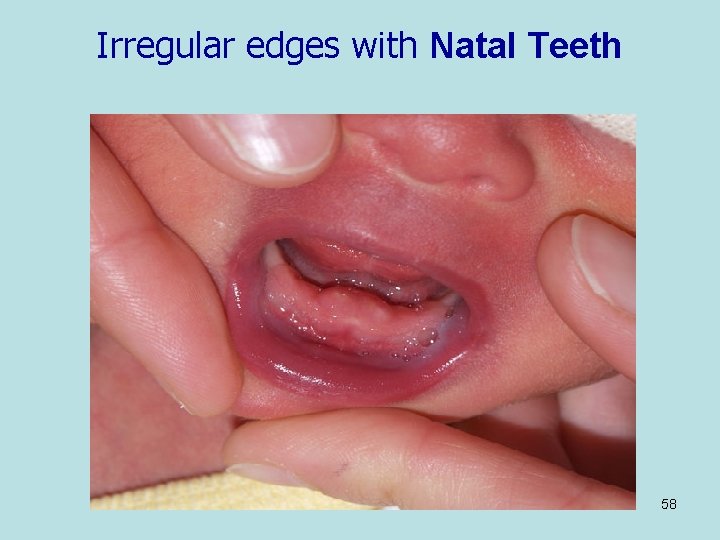
Irregular edges with Natal Teeth 58

Natal Tooth 59

12 - Abdomen • Cylindrical in Shape 60
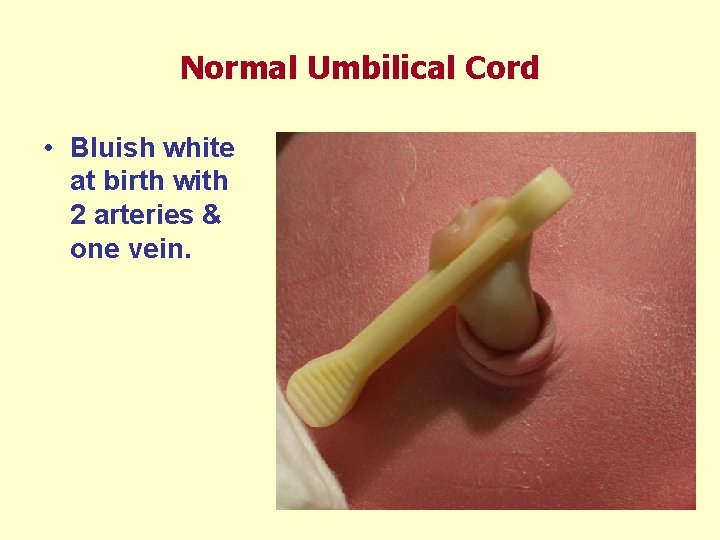
Normal Umbilical Cord • Bluish white at birth with 2 arteries & one vein. 61
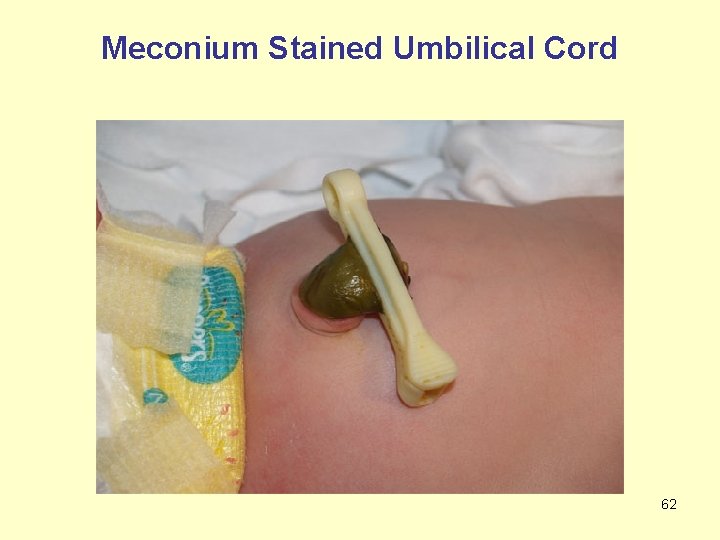
Meconium Stained Umbilical Cord 62

13. Circulatory system: Heart: Apex- lies between 4 th & 5 th inter-costal space, lateral to left sternal border. 63

14. Respiratory system: • Slight substernal retraction evident during inspiration 64
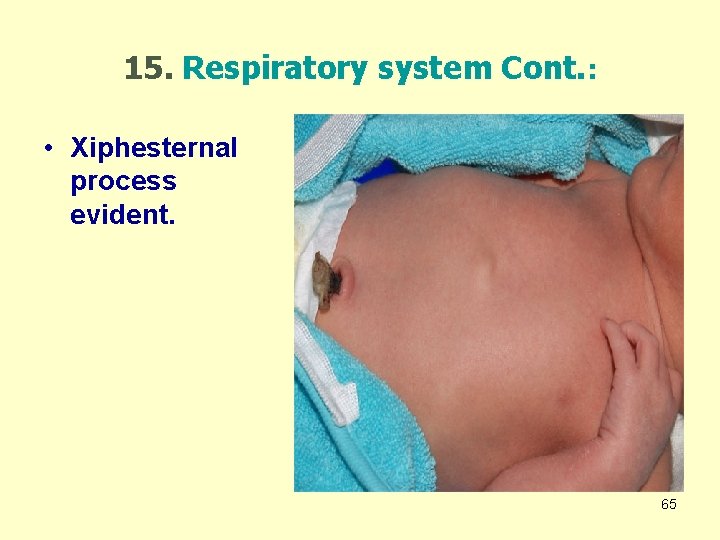
15. Respiratory system Cont. : • Xiphesternal process evident. 65
16. Respiratory system Cont. : Respiratory is chiefly abdominal Cough reflex is absent at birth, present by 1 -2 days postnatal. Possible signs of RDS are: - Cyanosis other than hands & feet. - Flaring of nostrils. - Expiratory grunt-heard with or without stethoscope. 66

17. Urinary System: Normally, the newborn has urine in the bladder and voids at birth or some hours later. 67
Female genitalia Cont. • Labia & Clitoris are usually edematous. • Urethral meatus is located behind the clitoris. • Vernix caseosa is present between labia 68
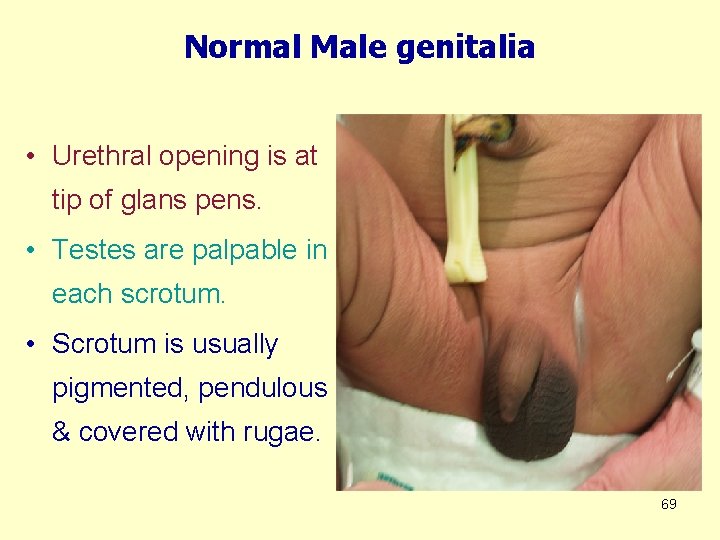
Normal Male genitalia • Urethral opening is at tip of glans pens. • Testes are palpable in each scrotum. • Scrotum is usually pigmented, pendulous & covered with rugae. 69
18. Endocrine system: Swollen breasts: Appears on 3 rd day in both sex, & lasts for 2 -3 weeks and gradually disappears without treatment. N. B: The breasts should not be expressed as this may result in infection or tissue damage. 70
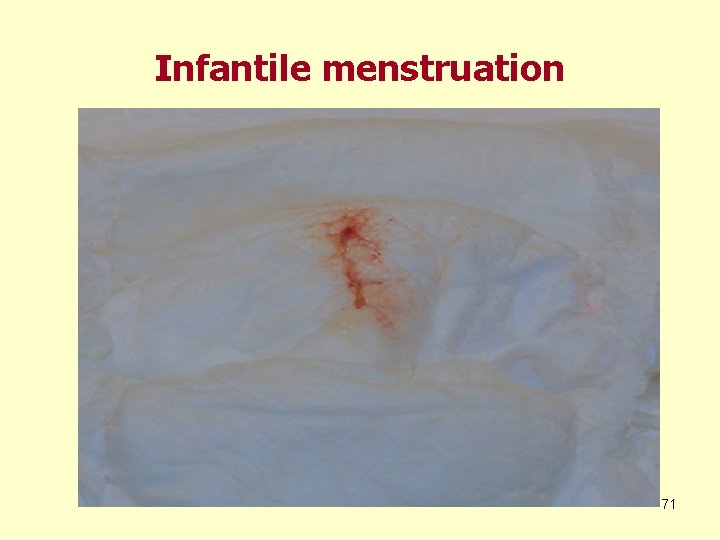
Infantile menstruation 71

19. The Central Nervous system: Reflexes: Successful use of reflex mechanism is a strong evidence of normal functioning CNS. 72
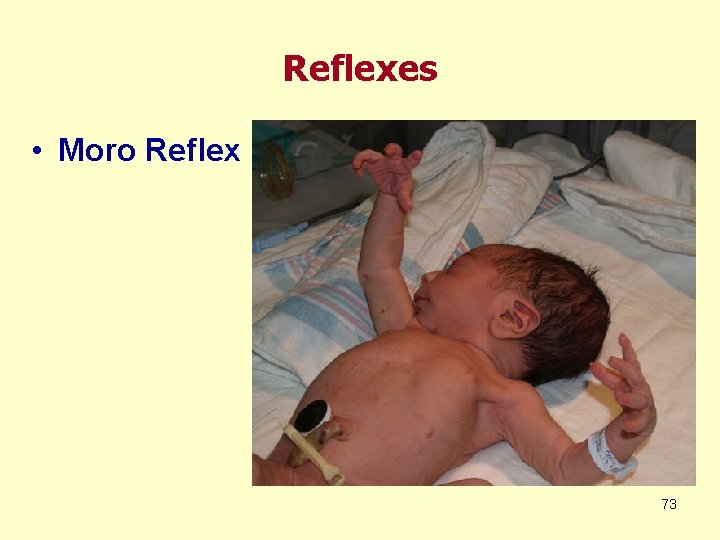
Reflexes • Moro Reflex 73
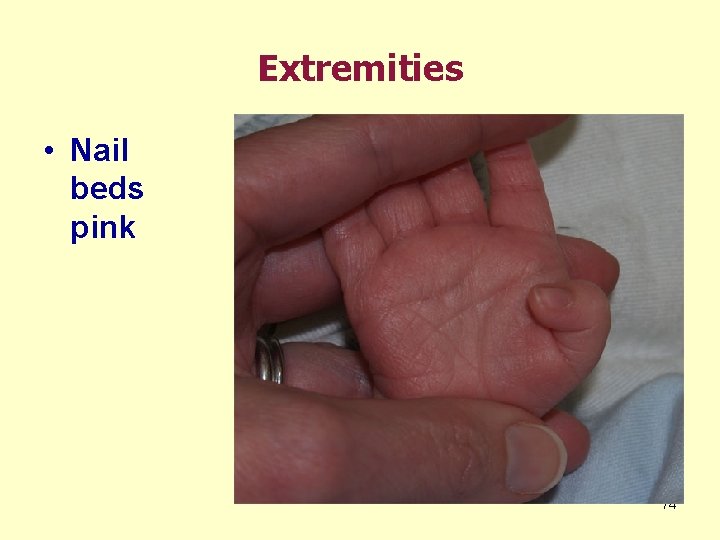
Extremities • Nail beds pink 74
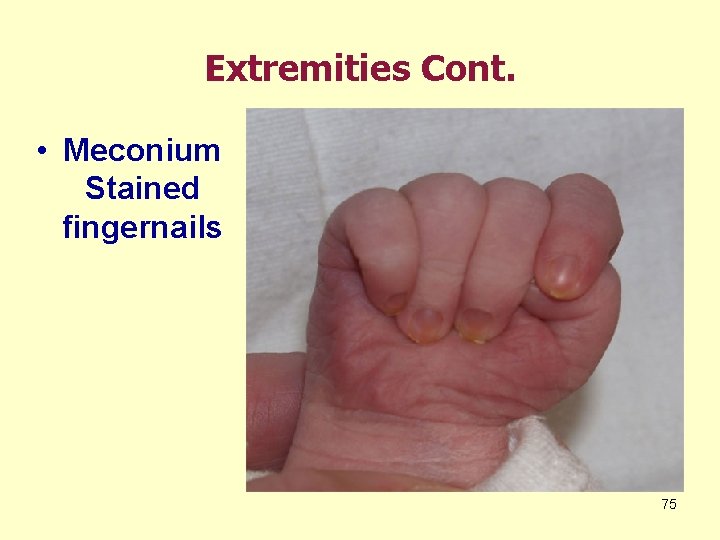
Extremities Cont. • Meconium Stained fingernails 75
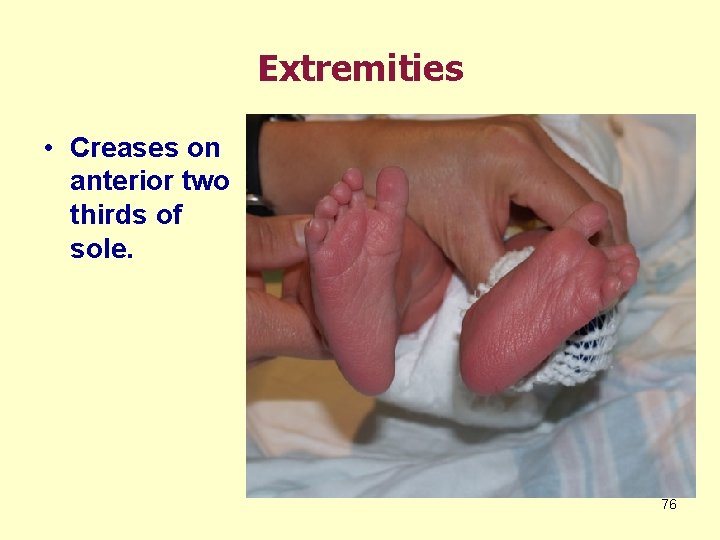
Extremities • Creases on anterior two thirds of sole. 76
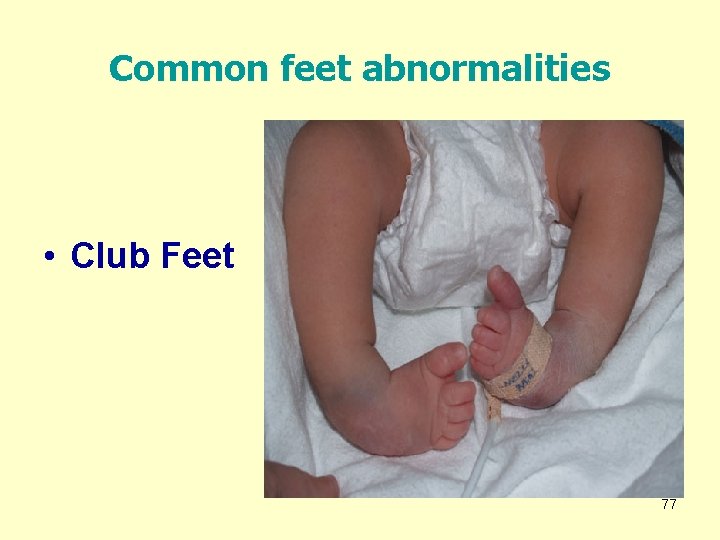
Common feet abnormalities • Club Feet 77
Immediate Care of the Newborn: 78
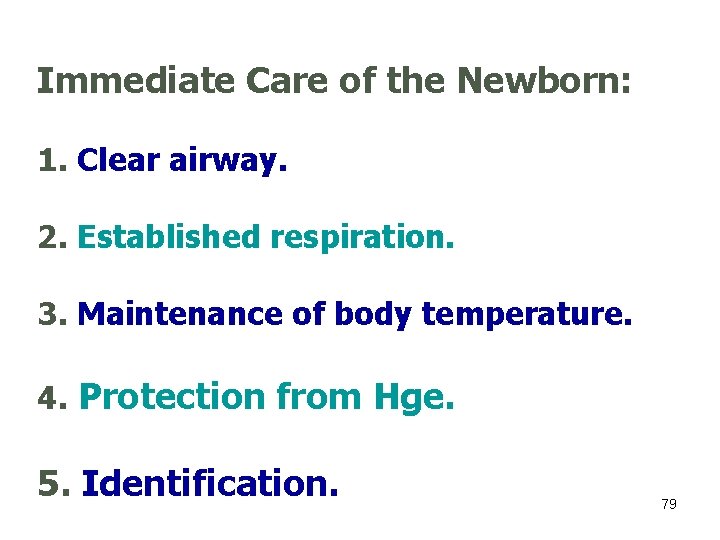
Immediate Care of the Newborn: 1. Clear airway. 2. Established respiration. 3. Maintenance of body temperature. 4. Protection from Hge. 5. Identification. 79
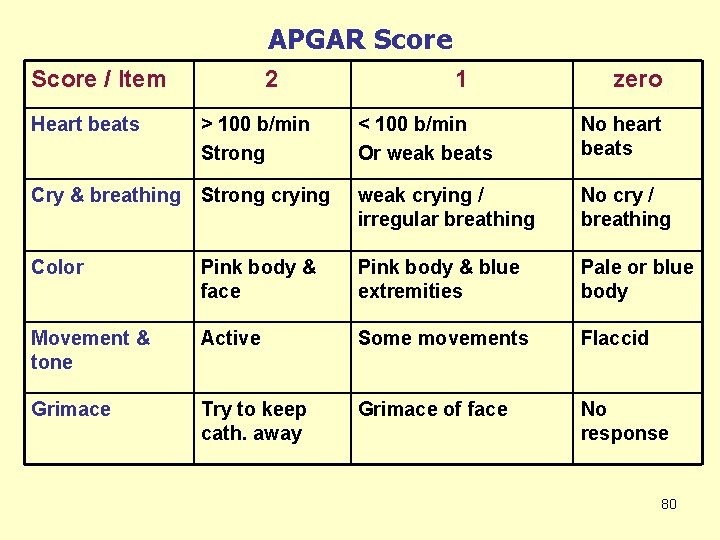
APGAR Score / Item Heart beats 2 > 100 b/min Strong 1 zero < 100 b/min Or weak beats No heart beats Cry & breathing Strong crying weak crying / irregular breathing No cry / breathing Color Pink body & face Pink body & blue extremities Pale or blue body Movement & tone Active Some movements Flaccid Grimace Try to keep cath. away Grimace of face No response 80
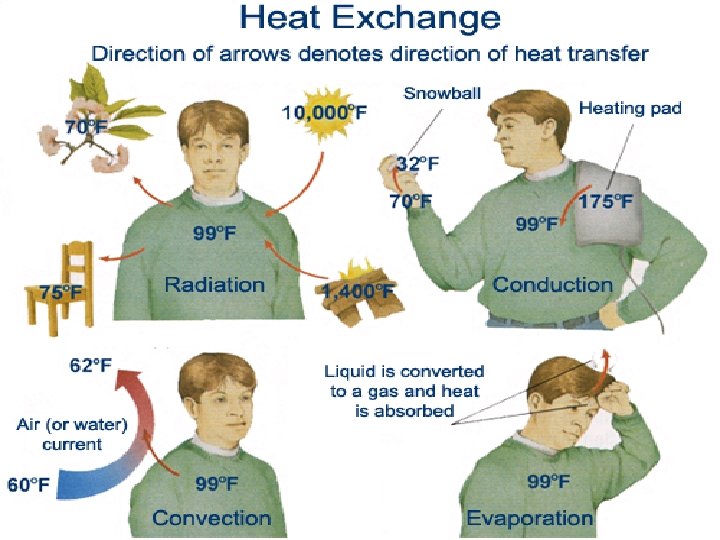
The Four modalities by which the infant lost his/her body temperature: 1 - Evaporation: Heat loss that resulted from expenditure of internal thermal energy to convert liquid on an exposed surface to gases, e. g. : amniotic fluid, sweat. Prevention: Carefully dry the infant after delivery or after bathing. 81
2 - Conduction: Heat loss occurred from direct contact between body surface and cooler solid object. Prevention: Warm all objects before the infant comes into contact with them. 82
3 - Convection: Heat loss is resulted from exposure of an infant to direct source of air draft. Prevention: · Keep infant out of drafts · Close one end of heat shield in incubator to reduce velocity of air. 4 - Radiation: It occurred from body surface to relatively distant objects that are cooler than skin temperature. 83
*) General management: 1 - Infant should be warmed quickly by wrapping in a warm towel. 2 - Uses extra clothes or blankets to keep the baby warm. 3 - If the infant is in incubator, increase the incubator’s temperature. 4 - Use hot water bottle (its temperature 50 °C). 5 - Food given or even intravenous solution should be warm. 6 - Avoid exposure to direct source of air drafts. 7 - Check body temperature frequently. 8 - Give antibiotic if infection is present. 85

Thank you 86
- Slides: 86