
Normal Human Microbiota Learning objectives At the end
Normal Human Microbiota
Learning objectives At the end of the session, the students will be able to understand: ▰ Microbiology of Normal Flora ▰ Role of Normal Microbiota, its beneficial and harmful effects ▰ Probiotics ▰ Prebiotics Essentials of Medical Microbiology 2
INTRODUCTION ▰ Normal microbial flora ( “indigenous microbiota”) refers to the diverse group of microbial population that every human being harbors on his/her skin and mucous membranes. ▰ In humans - normal flora is located in various sites – GIT, respiratory tract, genitourinary tract and skin ▰ Two categories: resident flora and transient flora. Essentials of Medical Microbiology 3
Resident Flora ▰ Life-long members of the body’s normal microbial community. ▰ Very closely associated with a particular area. ▰ When disturbed, they again re-establish themselves. ▰ Example - Escherichia coli is a resident flora of the intestine - they do not cause harm; rather they have beneficiary effect on the host. Essentials of Medical Microbiology 4

Transient Flora ▰ Inhabit the body surface or mucous membranes temporarily for a short interval. ▰ Transient flora do not produce disease as long as the resident flora remains intact. ▰ If the resident flora gets disturbed due to any reasons, transient flora may colonize and produce disease, e. g. pneumococcus and meningococcus in nasopharynx. Essentials of Medical Microbiology 5
Transient Flora (Cont. . ) ▰ In hospitals, patients may acquire many resistant organisms as transient flora from the HCWs and hospital environment. ▰ For examples, MRSA (Methicillin-resistant Staphylococcus aureus) in nose and skin, MDROs such as Klebsiella, Escherichia coli, Pseudomonas, Acinetobacter in respiratory tract Essentials of Medical Microbiology 6

Transient Flora (Cont. . ) ▰ In contrast to resident flora, they can be easily eliminated from the body surface by following proper hand hygiene and other infection control practices. Essentials of Medical Microbiology 7
MICROBIOLOGY OF NORMAL FLORA Essentials of Medical Microbiology 8
MICROBIOLOGY OF NORMAL FLORA ▰ Humans acquire the normal flora soon after the birth and then continue to harbor until death. ▰ The presence of the normal microbial flora in a given body site depends upon various factors such as: Local temperature, moisture, p. H, environmental flora (hospital or community), immunity, and anatomical site (skin or mucosa. ) Essentials of Medical Microbiology 9
MICROBIOLOGY OF NORMAL FLORA (Cont. . ) ▰ Most of the normal flora predominantly contain bacteria and to a less extent some fungi and parasites. ▰ The existence of viruses as normal flora is recently gained importance. Essentials of Medical Microbiology 10
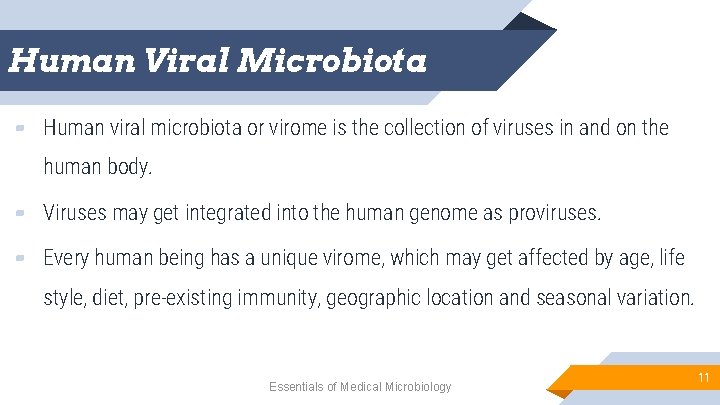
Human Viral Microbiota ▰ Human viral microbiota or virome is the collection of viruses in and on the human body. ▰ Viruses may get integrated into the human genome as proviruses. ▰ Every human being has a unique virome, which may get affected by age, life style, diet, pre-existing immunity, geographic location and seasonal variation. Essentials of Medical Microbiology 11

Human Viral Microbiota (Cont. . ) ▰ With the advancement of deep sequencing technique, it is now possible to gather information of human viral microbiota. ▰ Many viruses colonize the human skin, called as skin virome. ▰ Examples - human papillomavirus and bacteriophages that infect the commensal skin bacteria such as staphylococci. Essentials of Medical Microbiology 12
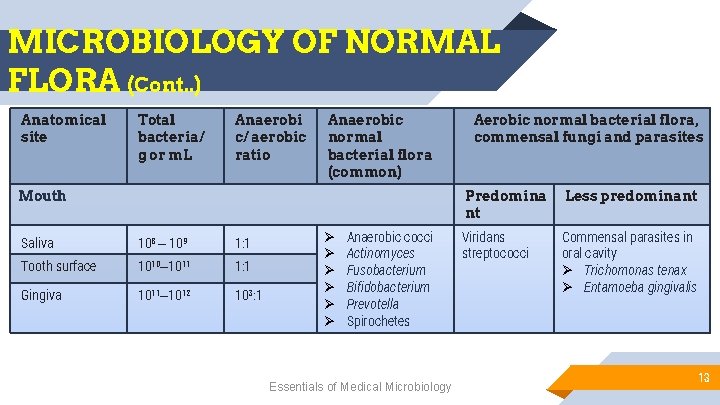
MICROBIOLOGY OF NORMAL FLORA (Cont. . ) Anatomical site Total bacteria/ g or m. L Anaerobi c/ aerobic ratio Anaerobic normal bacterial flora (common) Mouth Saliva 108 – 109 1: 1 Tooth surface 1010– 1011 1: 1 Gingiva 1011– 1012 103: 1 Ø Ø Ø Anaerobic cocci Actinomyces Fusobacterium Bifidobacterium Prevotella Spirochetes Essentials of Medical Microbiology Aerobic normal bacterial flora, commensal fungi and parasites Predomina nt Less predominant Viridans streptococci Commensal parasites in oral cavity Ø Trichomonas tenax Ø Entamoeba gingivalis 13

MICROBIOLOGY OF NORMAL FLORA (Cont. . ) Anatomic al site Total bacteria/ g or m. L Anaero bic/ aerobic ratio Anaerobic normal bacterial flora (common) Nasopharynx Saliva Tooth surface Gingiva Ø Prevotella species Ø Anaerobic cocci Ø Fusobacterium Aerobic normal bacterial flora, com mensal fungi and parasites Predominant Less predominant Ø Streptococci (α and nonhemolytic) Ø Neisseria (nonpathogenic species) Ø Diphtheroids Ø Staphylococcus epidermidis Ø Ø Essentials of Medical Microbiology Haemophilus Meningococcus Pneumococcus Staphylococcus aureus Ø Gram-negative rods Ø Yeasts 14
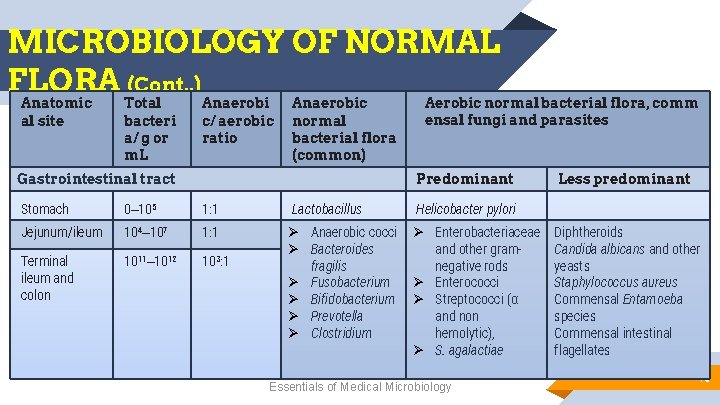
MICROBIOLOGY OF NORMAL FLORA (Cont. . ) Anatomic al site Total bacteri a/ g or m. L Anaerobi c/ aerobic ratio Anaerobic normal bacterial flora (common) Gastrointestinal tract Aerobic normal bacterial flora, comm ensal fungi and parasites Predominant Stomach 0– 105 1: 1 Lactobacillus Helicobacter pylori Jejunum/ileum 104– 107 1: 1 Terminal ileum and colon 1011– 1012 103: 1 Ø Anaerobic cocci Ø Bacteroides fragilis Ø Fusobacterium Ø Bifidobacterium Ø Prevotella Ø Clostridium Ø Enterobacteriaceae and other gramnegative rods Ø Enterococci Ø Streptococci (α and non hemolytic), Ø S. agalactiae Essentials of Medical Microbiology Less predominant Diphtheroids Candida albicans and other yeasts Staphylococcus aureus Commensal Entamoeba species Commensal intestinal flagellates 15

MICROBIOLOGY OF NORMAL FLORA (Cont. . ) Anatomic al site Total bacteri a/ g or m. L Anaero bic/ aerobi c ratio Anaerobic normal bacterial flora (common) Female genital tract Vagina 107– 109 10: 1 Ø Ø Ø Anaerobic cocci Lactobacillus Prevotella Bifidobacterium Clostridium Aerobic normal bacterial flora, commen sal fungi and parasites Predominant Less predominant Ø Corynebacterium species Ø Lactobacillus species Ø Streptococci (α, nonhemolytic and Ø S. agalactiae) Ø Neisseria (nonpathogenic species Ø Enterococci Ø Enterobacteriaceae and other gramnegative rods Ø S. epidermidis Ø Candida species Essentials of Medical Microbiology 16
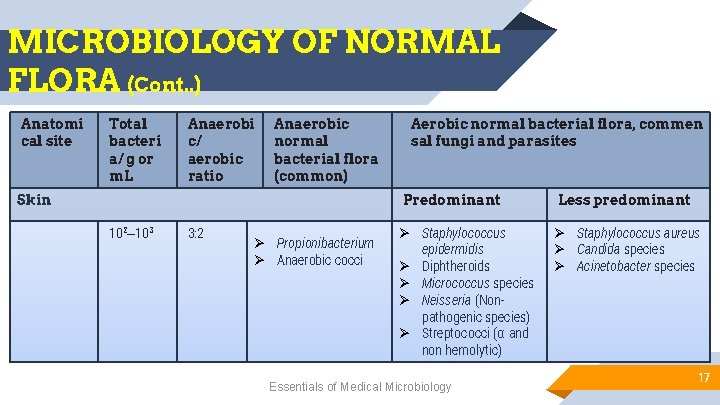
MICROBIOLOGY OF NORMAL FLORA (Cont. . ) Anatomi cal site Total bacteri a/ g or m. L Anaerobi c/ aerobic ratio Anaerobic normal bacterial flora (common) Skin 102– 103 3: 2 Ø Propionibacterium Ø Anaerobic cocci Aerobic normal bacterial flora, commen sal fungi and parasites Predominant Less predominant Ø Staphylococcus epidermidis Ø Diphtheroids Ø Micrococcus species Ø Neisseria (Nonpathogenic species) Ø Streptococci (α and non hemolytic) Ø Staphylococcus aureus Ø Candida species Ø Acinetobacter species Essentials of Medical Microbiology 17
ROLE OF NORMAL FLORA Essentials of Medical Microbiology 18
ROLE OF NORMAL FLORA Various microorganisms present in the normal flora have different relationship with the host. ▰ They may have beneficiary effect on the host ▰ They may be harmful to the host ▰ They may exist as commensals Essentials of Medical Microbiology 19
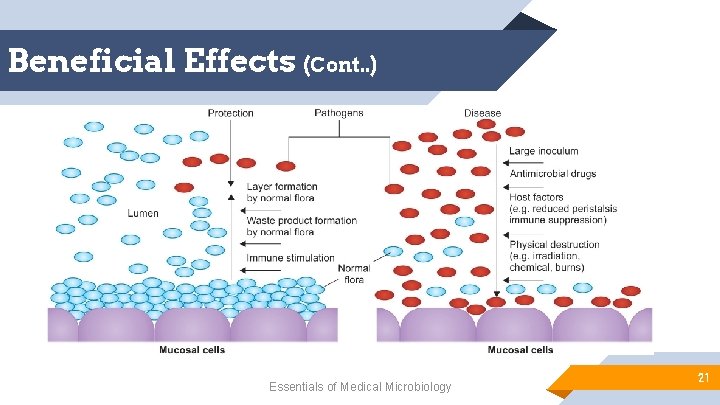
Beneficial Effects ▰ Prevent colonization of pathogen: ▰ Synthesize vitamin ▰ Waste produced antagonize other bacteria ▰ Immune stimulation ▰ Prevent allergic diseases (Hygiene hypothesis) ▰ Complement activation Essentials of Medical Microbiology 20
Beneficial Effects (Cont. . ) Essentials of Medical Microbiology 21
Disturbed Normal Flora Promote Infection ▰ Injudicious use of broad spectrum antimicrobial agent ▰ Host factors such as immune suppression, reduced peristalsis may promote the pathogen to grow. ▰ Physical destruction of the normal flora: by irradiations, chemicals, burns, etc. ▰ If the inoculum size of the entering pathogen is high then it can dominate over the normal flora. ▰ Minor trauma Essentials of Medical Microbiology 22
Harmful Effects May be agents of disease: ▰ Members of the normal flora may cause various endogenous disease. ▰ When the host immunity is lowered, the transient flora may invade and produce disease, e. g. gram -negative organisms (E. coli) colonizing the respiratory tract can cause pneumonia. Essentials of Medical Microbiology 23
Harmful Effects (Cont. . ) May be agents of disease (Cont. . ): ▰ If they enter a wrong site or tissue (e. g. blood, sterile body cavities)—then even the resident flora can produce disease. Essentials of Medical Microbiology 24
Harmful Effects (Cont. . ) ▰ Transfer to susceptible hosts: Some pathogens of humans that are members of the normal flora for one host can produce disease if transferred to the other host. ▰ Bacterial synergism ▰ Contribute to the drug resistance of pathogens ▰ Competition for host nutrients Essentials of Medical Microbiology 25
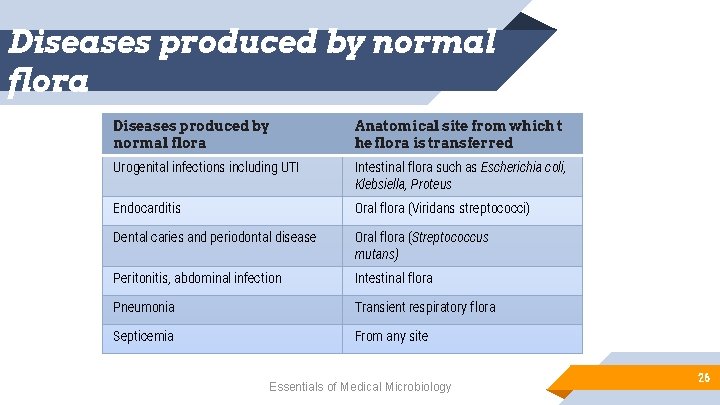
Diseases produced by normal flora Anatomical site from which t he flora is transferred Urogenital infections including UTI Intestinal flora such as Escherichia coli, Klebsiella, Proteus Endocarditis Oral flora (Viridans streptococci) Dental caries and periodontal disease Oral flora (Streptococcus mutans) Peritonitis, abdominal infection Intestinal flora Pneumonia Transient respiratory flora Septicemia From any site Essentials of Medical Microbiology 26
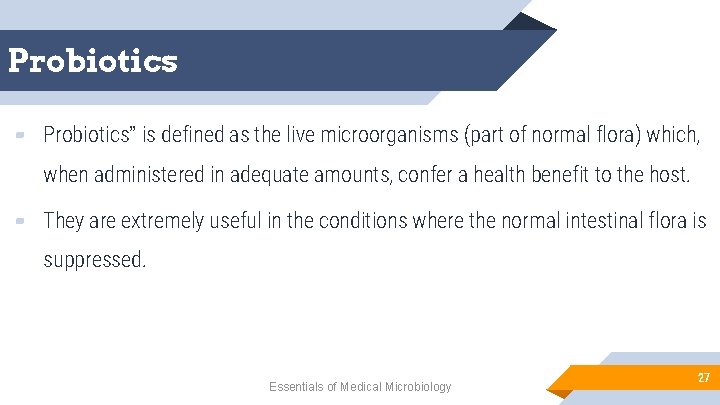
Probiotics ▰ Probiotics” is defined as the live microorganisms (part of normal flora) which, when administered in adequate amounts, confer a health benefit to the host. ▰ They are extremely useful in the conditions where the normal intestinal flora is suppressed. Essentials of Medical Microbiology 27
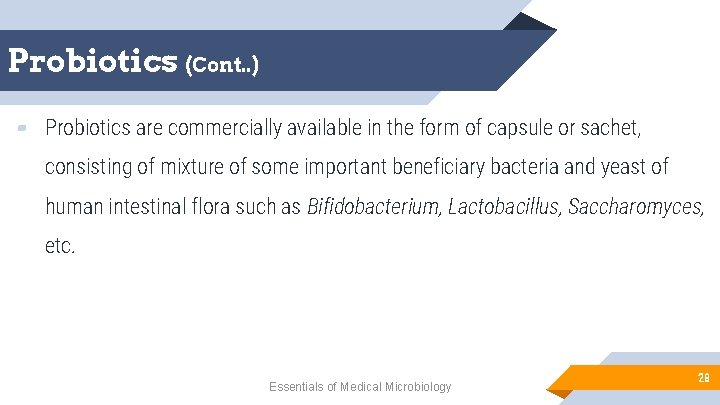
Probiotics (Cont. . ) ▰ Probiotics are commercially available in the form of capsule or sachet, consisting of mixture of some important beneficiary bacteria and yeast of human intestinal flora such as Bifidobacterium, Lactobacillus, Saccharomyces, etc. Essentials of Medical Microbiology 28
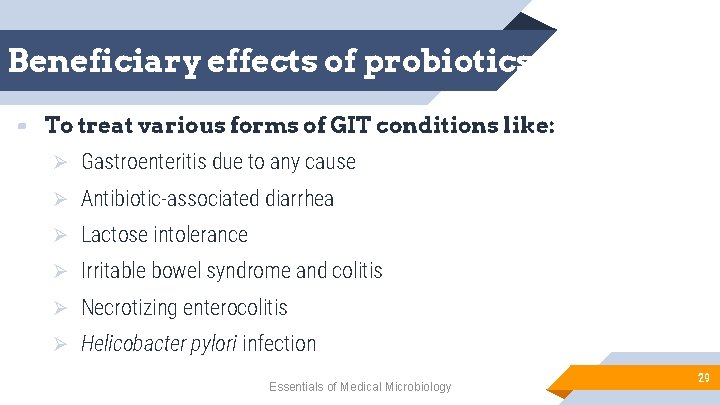
Beneficiary effects of probiotics ▰ To treat various forms of GIT conditions like: Ø Gastroenteritis due to any cause Ø Antibiotic-associated diarrhea Ø Lactose intolerance Ø Irritable bowel syndrome and colitis Ø Necrotizing enterocolitis Ø Helicobacter pylori infection Essentials of Medical Microbiology 29
Beneficiary effects of probiotics (Cont. . ) ▰ Reducing serum cholesterol level by breaking down bile in the gut - inhibiting its reabsorption. ▰ Reducing blood pressure (by producing ACE inhibitorlike peptides during fermentation). ▰ Immune function restoration and preventing infections. ▰ Bacterial vaginosis (restoring the acid p. H of vagina by lactic acid producing bacteria). Essentials of Medical Microbiology 30
Prebiotics ▰ Prebiotics are the dietary nondigestible fibers which when administered, stimulate the growth and activity of commensal microorganisms and thereby exert beneficiary effect to the host indirectly. Essentials of Medical Microbiology 31
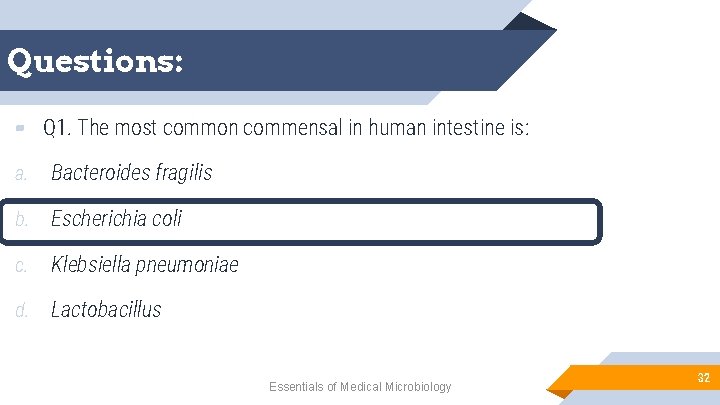
Questions: ▰ Q 1. The most common commensal in human intestine is: a. Bacteroides fragilis b. Escherichia coli c. Klebsiella pneumoniae d. Lactobacillus Essentials of Medical Microbiology 32
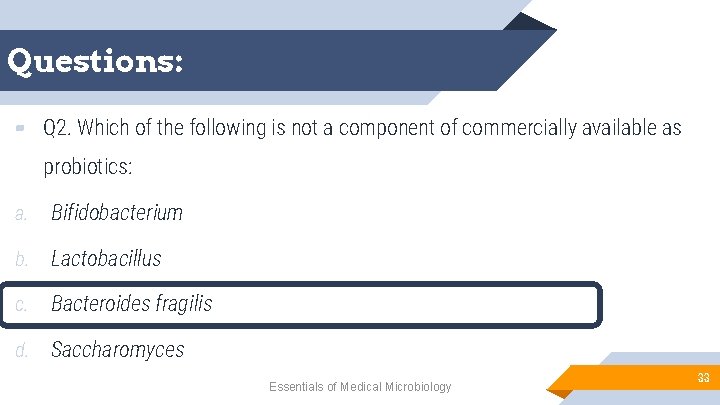
Questions: ▰ Q 2. Which of the following is not a component of commercially available as probiotics: a. Bifidobacterium b. Lactobacillus c. Bacteroides fragilis d. Saccharomyces Essentials of Medical Microbiology 33
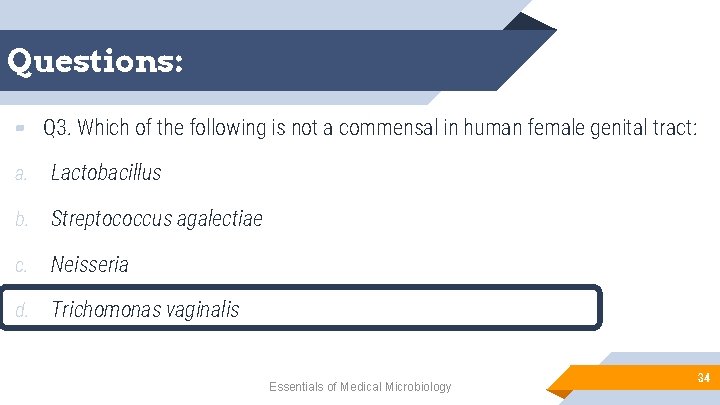
Questions: ▰ Q 3. Which of the following is not a commensal in human female genital tract: a. Lactobacillus b. Streptococcus agalectiae c. Neisseria d. Trichomonas vaginalis Essentials of Medical Microbiology 34
- Slides: 34