
Normal distribution curve eg for height of people
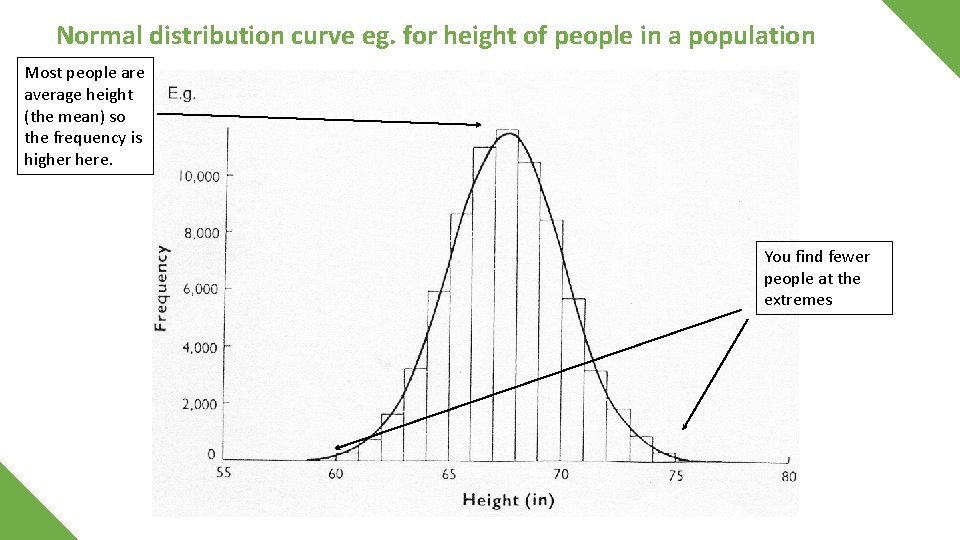
Normal distribution curve eg. for height of people in a population Most people are average height (the mean) so the frequency is higher here. You find fewer people at the extremes
Types of selection eg. what can happen if the environment changes. Directional Selection: Favours individuals that vary in one direction from the mean of the population Stabilising Selection: Favours the average individuals (the mean/average) This one is not on your specification – extra information but unlikely to be used as an answer to an exam question. Disruptive selection: Favours extreme phenotypes and not the average individuals
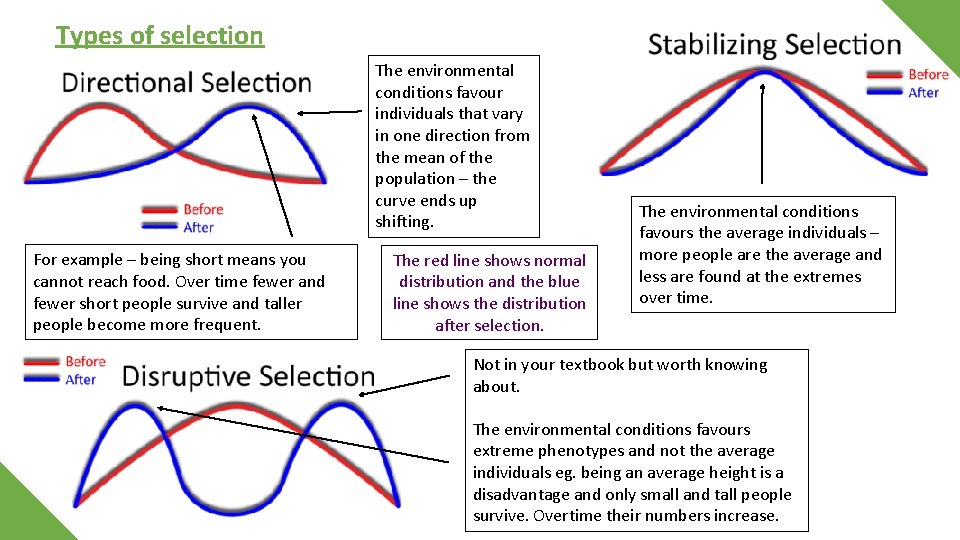
Types of selection The environmental conditions favour individuals that vary in one direction from the mean of the population – the curve ends up shifting. For example – being short means you cannot reach food. Over time fewer and fewer short people survive and taller people become more frequent. The red line shows normal distribution and the blue line shows the distribution after selection. The environmental conditions favours the average individuals – more people are the average and less are found at the extremes over time. Not in your textbook but worth knowing about. The environmental conditions favours extreme phenotypes and not the average individuals eg. being an average height is a disadvantage and only small and tall people survive. Overtime their numbers increase.

Directional Selection - example Spontaneous mutation – some bacteria produce enzymes that broke down penicillin If an individual was being treated with penicillin these bacteria had an advantage and survived/divided Small penicillin-resistant population increased – frequency of the allele increased in the population The population’s normal distribution curve shifted – more bacteria are resistant

A good clip to watch which summarises and gives further examples. https: //www. youtube. com/watch? v=64 JUJd. Zd. DQo
- Slides: 6