
Nonviolent Resistance Organizations Birmingham and the March on
Nonviolent Resistance Organizations, Birmingham, and the March on Washington
Nonviolent Resistance Inspired by ideas and protests of Mahatma Gandhi in India Civil Rights leaders relied on the media to show the world how much violence was directed at them Strategies: Nonviolence in the FACE of violence. If you are hit, you do not hit back. Power of nonviolence came from the brutality and force of the opposing side Peaceful protests Civil disobedience Economic boycotts Not all leaders agreed with this idea, and in the late 1960 s and early 1970 s nonviolent strategies become less common MLK most prominent advocate of non-violence Later, Malcolm X leader of “by any means necessary” approach
Nonviolent Civil Rights Organizations National Association for the Advancement of Colored People (NAACP) Founded in 1909, grew during Great Migration Focused on LEGAL ACTION- court challenges, fighting for laws Thurgood Marshall most famous NAACP lawyer, successful at challenging the courts (won 29/32 cases) Southern Christian Leadership Conference (SCLC) Founded 1957 after MBB by MLK and ministers Planned protests and demonstrations Ella Baker, first director of SCLC, helped organization grow Planned/organized Birmingham and Selma campaigns
Nonviolent Civil Rights Organizations Student Nonviolent Coordinating Committee (SNCC) Founded at Shaw University at Raleigh, 1960 Nonviolent ideas but new strategies (sit-ins, support Freedom Riders) Helped found Mississippi Freedom Democratic Party, political party to push for Civil Rights Congress of Racial Equality (CORE) Staged first sit-ins Organized Freedom Riders’ historic bus trip to challenge Segregation in the South SNCC and CORE launched Freedom Summer in 1964, registering African Americans to Vote
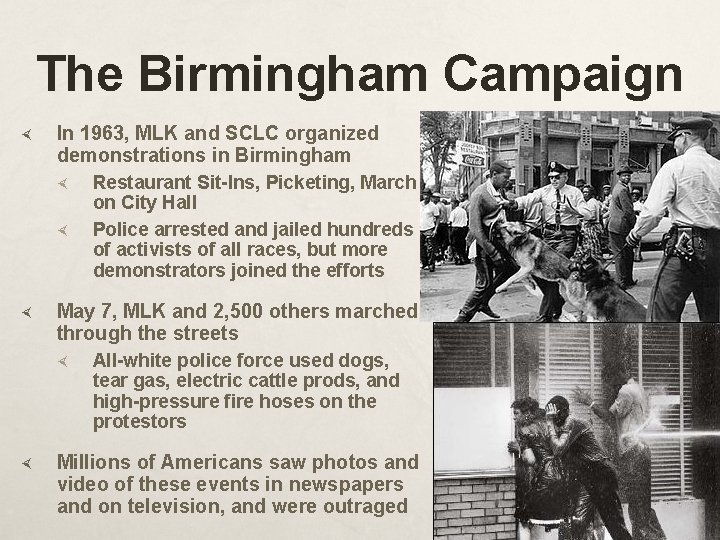
The Birmingham Campaign In 1963, MLK and SCLC organized demonstrations in Birmingham May 7, MLK and 2, 500 others marched through the streets Restaurant Sit-Ins, Picketing, March on City Hall Police arrested and jailed hundreds of activists of all races, but more demonstrators joined the efforts All-white police force used dogs, tear gas, electric cattle prods, and high-pressure fire hoses on the protestors Millions of Americans saw photos and video of these events in newspapers and on television, and were outraged
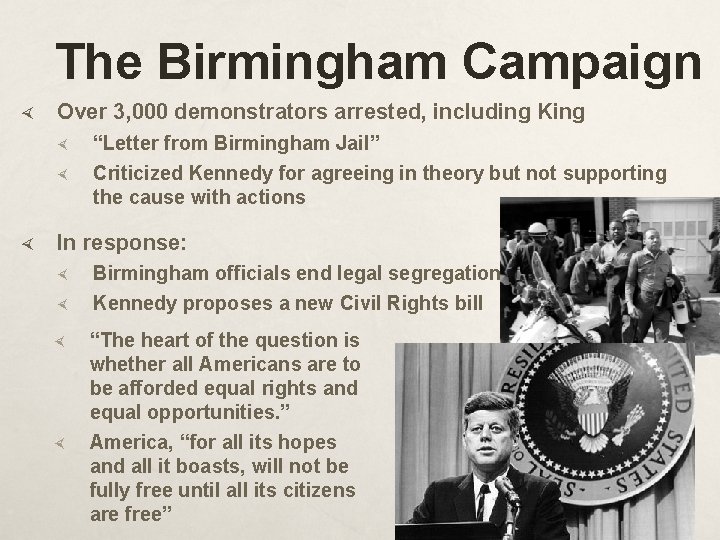
The Birmingham Campaign Over 3, 000 demonstrators arrested, including King “Letter from Birmingham Jail” Criticized Kennedy for agreeing in theory but not supporting the cause with actions In response: Birmingham officials end legal segregation Kennedy proposes a new Civil Rights bill “The heart of the question is whether all Americans are to be afforded equal rights and equal opportunities. ” America, “for all its hopes and all it boasts, will not be fully free until all its citizens are free”
Momentum Builds Violent attacks in Birmingham built momentum for a mass protest in Washington Kennedy’s Civil Rights bill was blocked by Southern Democrats in Congress for weeks A. Phillip Randolph had pushed for a March on Washington in 1941 during WWII In 1963, Randolph planned a march in Washington focusing on gaining jobs for African Americans Randolph met with Martin Luther King, Jr. and the Southern Christian Leadership Conference to merge their efforts into one mass protest
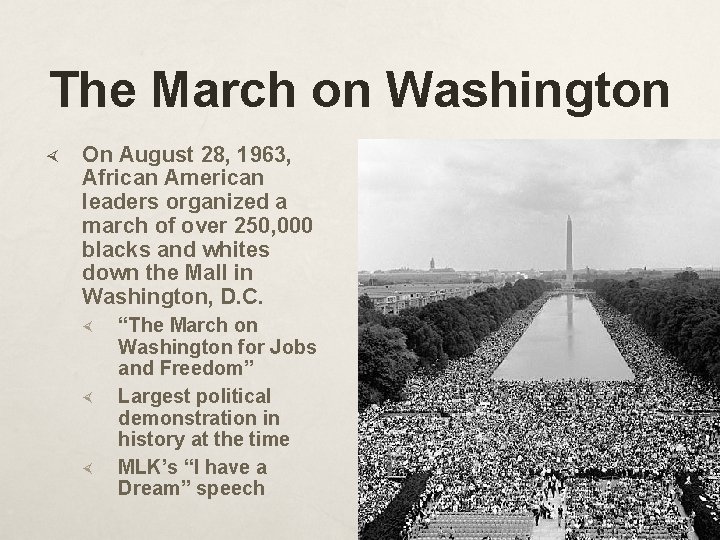
The March on Washington On August 28, 1963, African American leaders organized a march of over 250, 000 blacks and whites down the Mall in Washington, D. C. “The March on Washington for Jobs and Freedom” Largest political demonstration in history at the time MLK’s “I have a Dream” speech
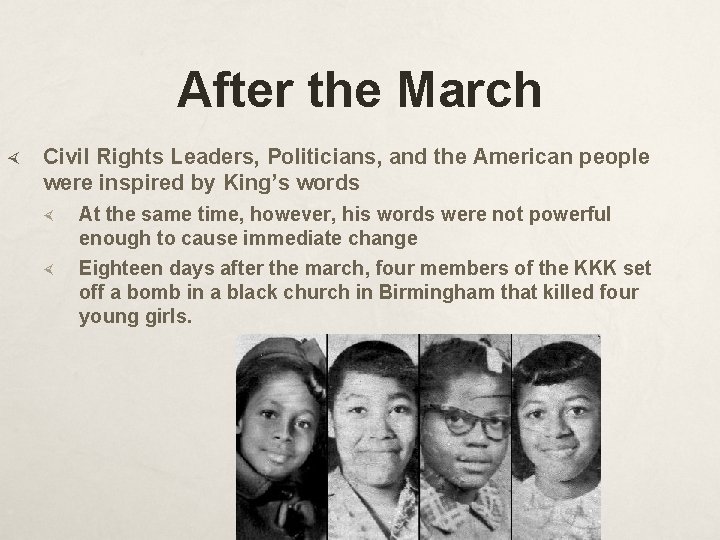
After the March Civil Rights Leaders, Politicians, and the American people were inspired by King’s words At the same time, however, his words were not powerful enough to cause immediate change Eighteen days after the march, four members of the KKK set off a bomb in a black church in Birmingham that killed four young girls.
Civil Rights Act of 1964 In November, President JFK was assassinated New President Lyndon B. Johnson took up the cause of Civil Rights quickly Civil Rights bill was first blocked by Senate Democrats In July 1964, Johnson signed the Civil Rights Act into law Banned segregation based on race, religion, or national origin in all public places Barred discrimination based on race, religion, or national origin by employers and labor unions Forbade the use of federal funds for any discriminatory program
- Slides: 11