
Nonverbal Communication Take Away Points From the reading
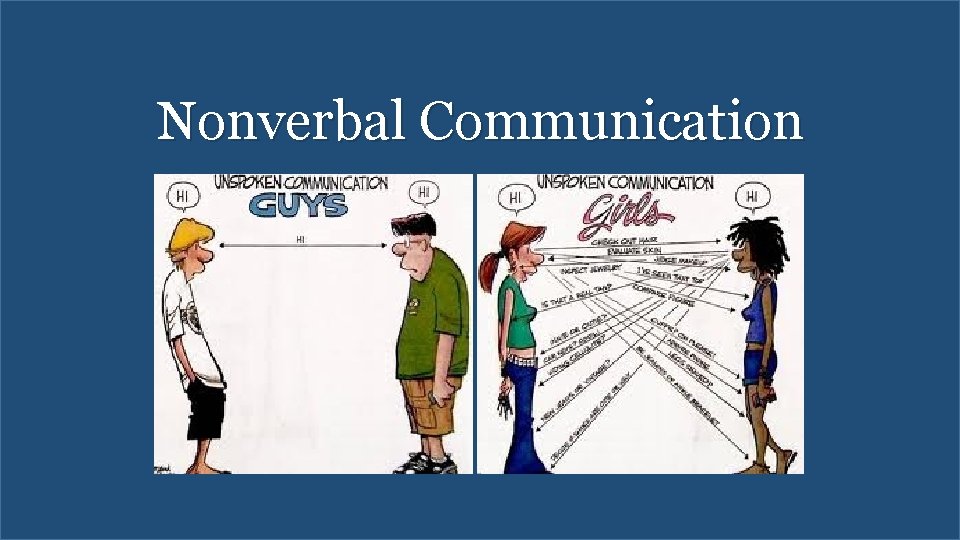
Nonverbal Communication
Take Away Points • From the reading: • Visual, auditory, and invisible communication system – know the definitions of these terms and their subpoints (Proxemics, Kinesics, Artifacts, Vocalics, Chronemics, Olfactics, and Haptics) • By the definition we gave in class, what three things are required for something to be considered nonverbal communication? • Hint: see slide 4 • What is spontaneous vs. symbolic nonverbal communication? If I give you an example, can you tell me which one it is? • Know the “three things of import about nonverbals” and be able to recognize an example • What are the various functions of nonverbal codes? • Be able to define and recognize examples of the vocabulary words from slide 8
Overview of Class • Nonverbal Communication • • • From readings: visual, auditory, and invisible communication system What is it? Spontaneous vs. Symbolic 3 Aspects of Non-verbal Codes Functions of non-verbal codes • Class Activity
Three Communication Systems • Visual • Proxemics • Kinesics*** • Artifacts • Auditory • Vocalics • Invisible • Chronemics • Olfactics • Haptics

What is Nonverbal Communication? • Nonverbal communication must be… • Perceived consciously by either the sender or the receiver • Intended as a message by the sender, OR • Interpreted by the receiver as intended • Do you agree that nonverbal communication must always be these things? Why limit it?
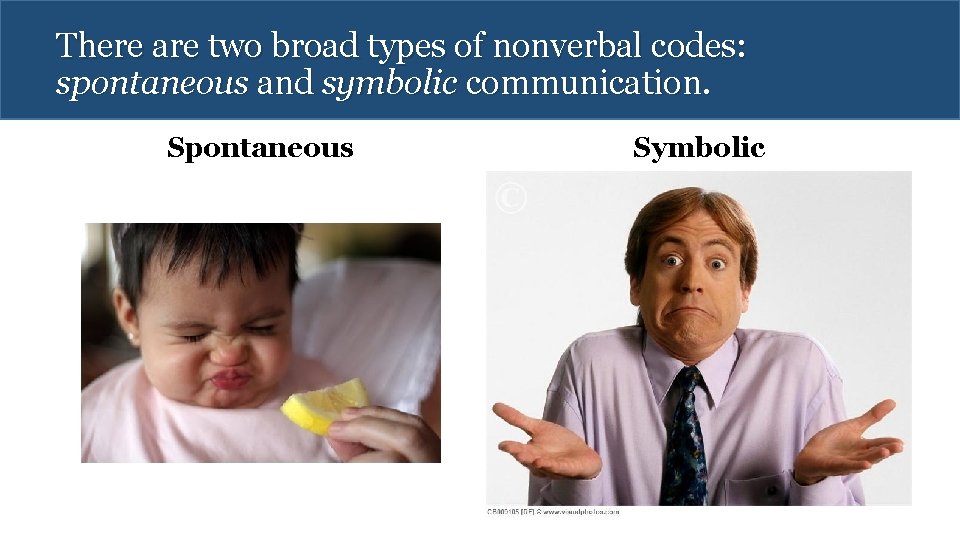
There are two broad types of nonverbal codes: spontaneous and symbolic communication. Spontaneous Symbolic
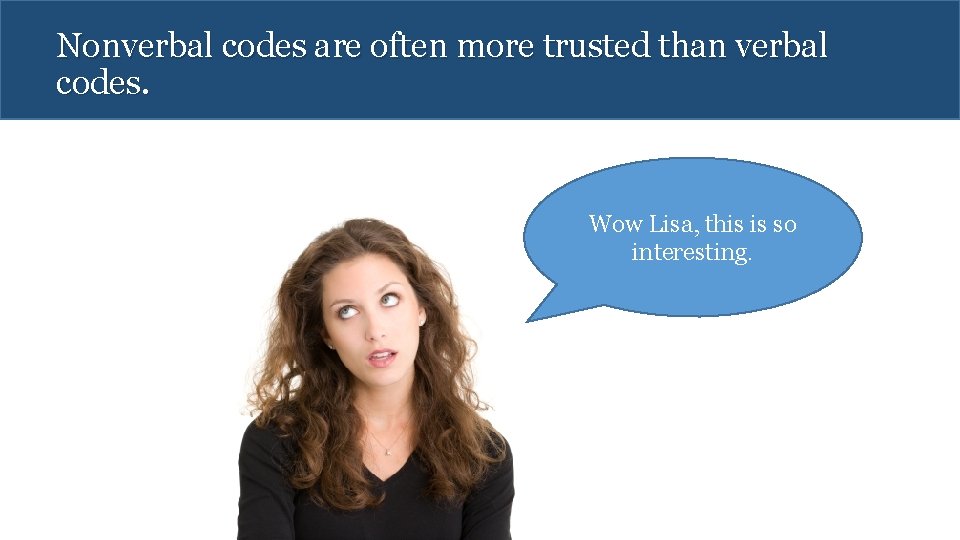
Nonverbal codes are often more trusted than verbal codes. Wow Lisa, this is so interesting.
Discussion Question • When (if at all) would verbal communication be more trusted than non-verbal communication?
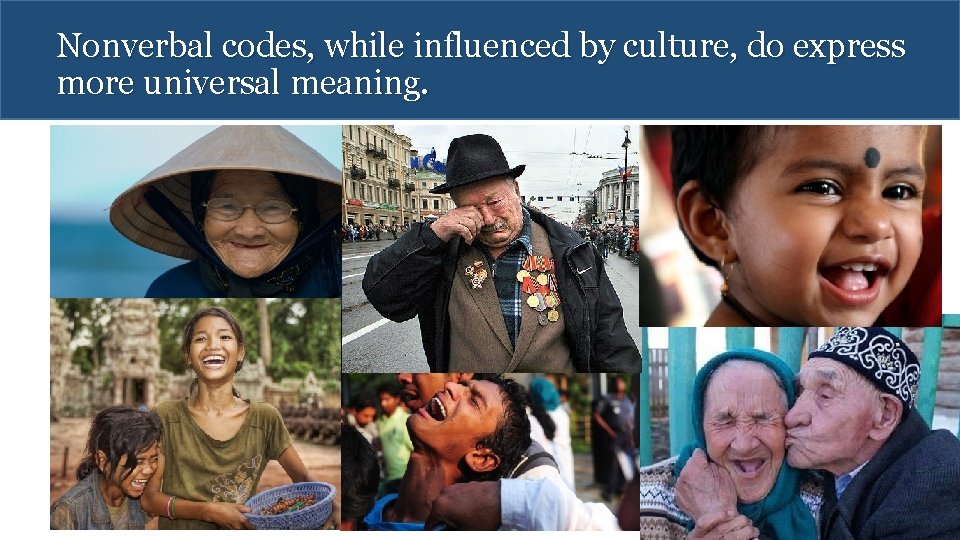
Nonverbal codes, while influenced by culture, do express more universal meaning.
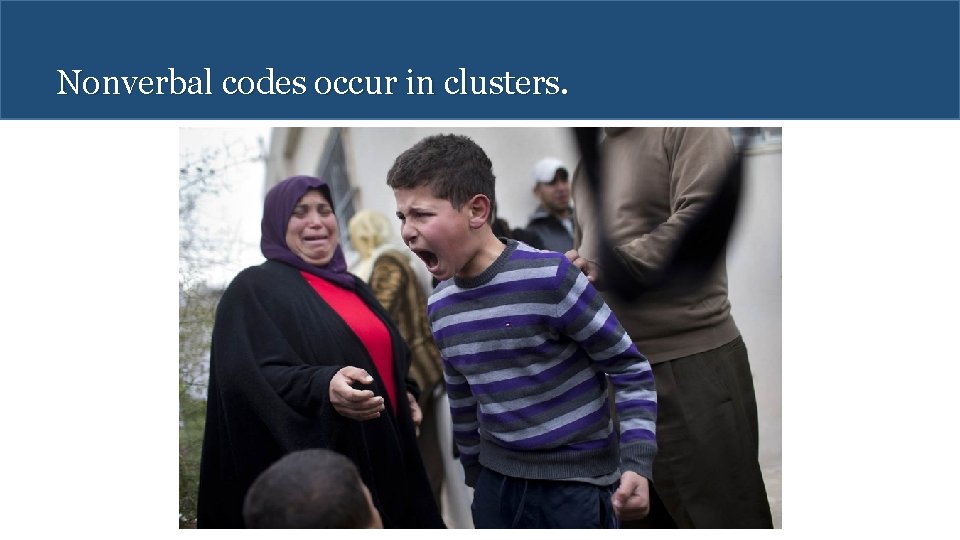
Nonverbal codes occur in clusters.
Three things of import about nonverbal communication • Nonverbal codes are often more trusted than verbal codes • Nonverbal codes, while influenced by culture, do express more universal meaning • Nonverbal codes occur in clusters

The Functions of Nonverbal Codes • Expressing meaning • Liking, status, responsiveness • Modifying verbal messages. • • • complimenting accenting repeating substituting contradicting • Regulating the flow of interaction
Class Activity: Demonstrating Nonverbal Functions • Get in groups of three • Must have one phone that can take pictures or video and has internet connection • Take pictures or very short videos following instructions • Email to Lisa • lguntzviller@gmail. com
Debriefing Questions • How did the pictures/videos demonstrate: • Proxemics, Kinesics, Artifacts, Vocalics, Chronemics, Olfactics, and Haptics • Clusters of nonverbal behaviors • How can this activity help you in thinking about your own nonverbal behavior?
Fun Fact • Mirroring, or repeating someone’s body language, often impresses a date because it subtly conveys interest to the other person. However, one should avoid copying every move.
Take Away Points • From the reading: • Visual, auditory, and invisible communication system – know the definitions of these terms and their subpoints (Proxemics, Kinesics, Artifacts, Vocalics, Chronemics, Olfactics, and Haptics) • By the definition we gave in class, what three things are required for something to be considered nonverbal communication? • Hint: see slide 4 • What is spontaneous vs. symbolic nonverbal communication? If I give you an example, can you tell me which one it is? • Know the “three things of import about nonverbals” and be able to apply them to a situation • What are the various functions of nonverbal codes? • Be able to define and recognize examples of the vocabulary words from slide 8
- Slides: 16