
Nonsurgical interventions for the nonoperated back pain patient
Non-surgical interventions for the non-operated back pain patient An update for primary care providers "Lumbar Spine X-Ray L 4 L 5 S 1" by planetc 1 is licensed under CC
Mehul J. Desai, MD, MPH Medical Director, International Spine, Pain & Performance Center Chief, Division of Pain Medicine, Virginia Hospital Center Director, Interventional Spine and Musculoskeletal Medicine Fellowship (NASS) Medical Director, the Performance Lab President, Monument Research Institute Clinical Assistant Professor, Department of Anesthesiology & Critical Care, George Washington University, School of Medicine
Disclosures
Agenda Epidemiology and prognosis Treatment challenges and limitations of common therapies Newer minimally invasive interventions for virgin (non-operated) back pain Patient treatment preferences LBP treatment algorithm
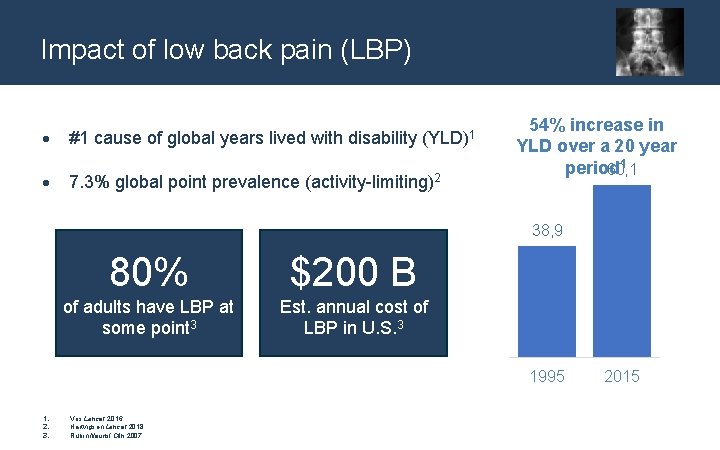
Impact of low back pain (LBP) #1 cause of global years lived with disability 7. 3% global point prevalence (activity-limiting)2 (YLD)1 54% increase in YLD over a 20 year 1 period 60, 1 38, 9 80% $200 B of adults have LBP at some point 3 Est. annual cost of LBP in U. S. 3 1995 1. 2. 3. Vos Lancet 2016 Hartvigsen Lancet 2018 Rubin Neurol Clin 2007 2015
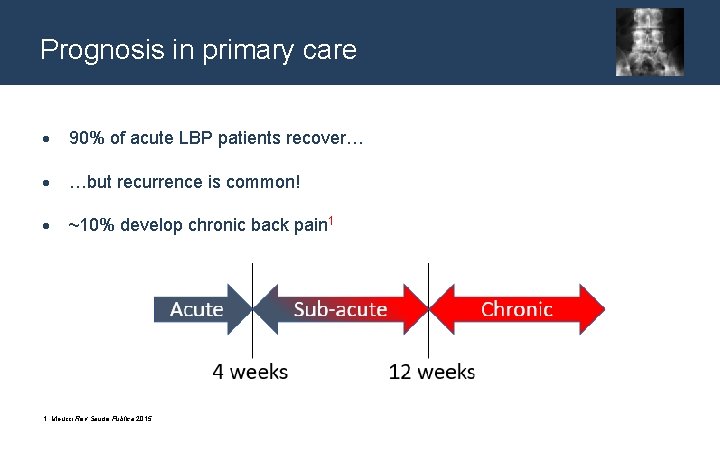
Prognosis in primary care 90% of acute LBP patients recover… …but recurrence is common! ~10% develop chronic back pain 1 1. Meucci Rev Saude Publica 2015
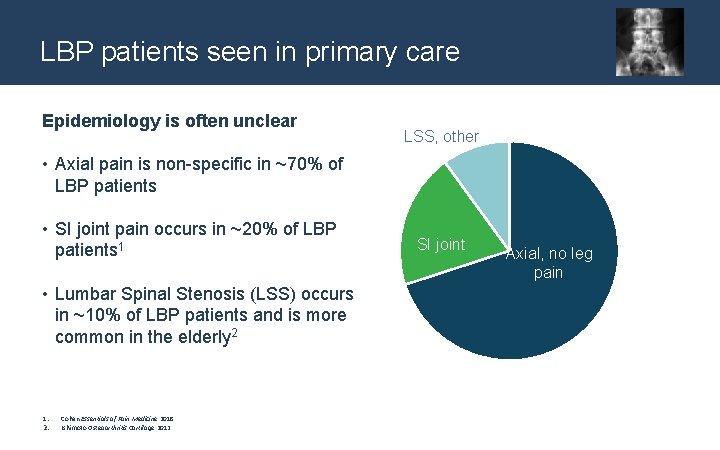
LBP patients seen in primary care Epidemiology is often unclear LSS, other • Axial pain is non-specific in ~70% of LBP patients • SI joint pain occurs in ~20% of LBP patients 1 • Lumbar Spinal Stenosis (LSS) occurs in ~10% of LBP patients and is more common in the elderly 2 1. 2. Cohen Essentials of Pain Medicine 2018 Ishimoto Osteoarthritis Cartilage 2012 SI joint Axial, no leg pain
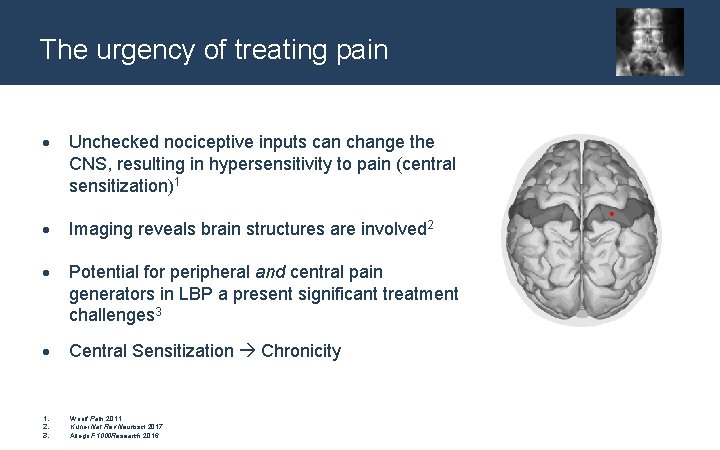
The urgency of treating pain Unchecked nociceptive inputs can change the CNS, resulting in hypersensitivity to pain (central sensitization)1 Imaging reveals brain structures are involved 2 Potential for peripheral and central pain generators in LBP a present significant treatment challenges 3 Central Sensitization Chronicity 1. 2. 3. Woolf Pain 2011 Kuner Nat Rev Neurosci 2017 Allegri F 1000 Research 2016
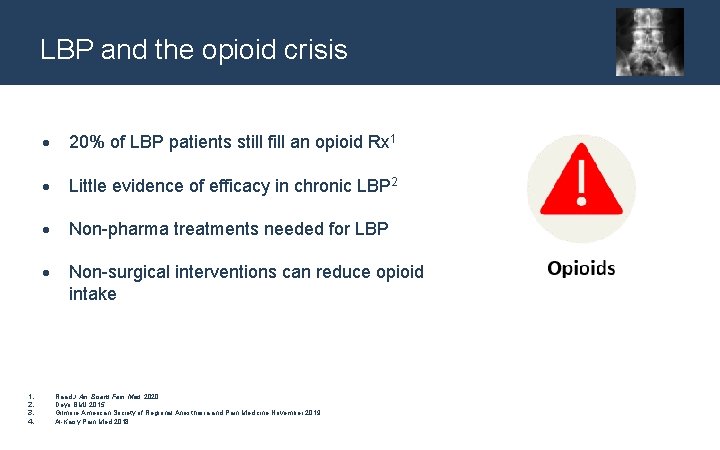
LBP and the opioid crisis 1. 2. 3. 4. 20% of LBP patients still fill an opioid Rx 1 Little evidence of efficacy in chronic LBP 2 Non-pharma treatments needed for LBP Non-surgical interventions can reduce opioid intake Raad J Am Board Fam Med 2020 Deyo BMJ 2015 Gilmore American Society of Regional Anesthesia and Pain Medicine November 2019. Al-Kaisy Pain Med 2018
Bottom Line We need novel interventional treatments that are patient friendly and effective!
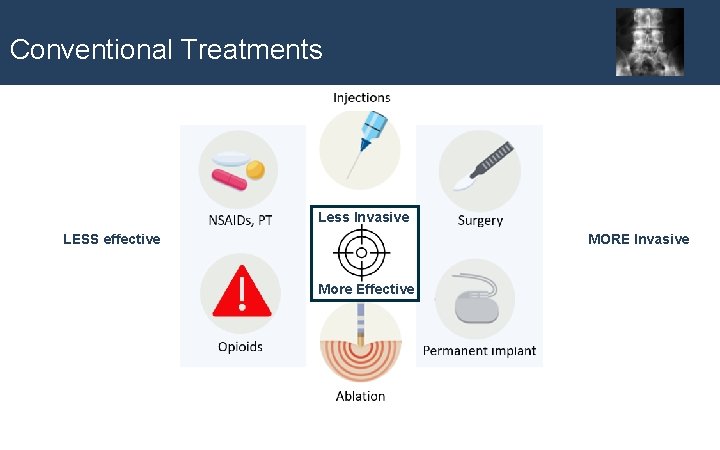
Conventional Treatments Less Invasive MORE Invasive LESS effective More Effective
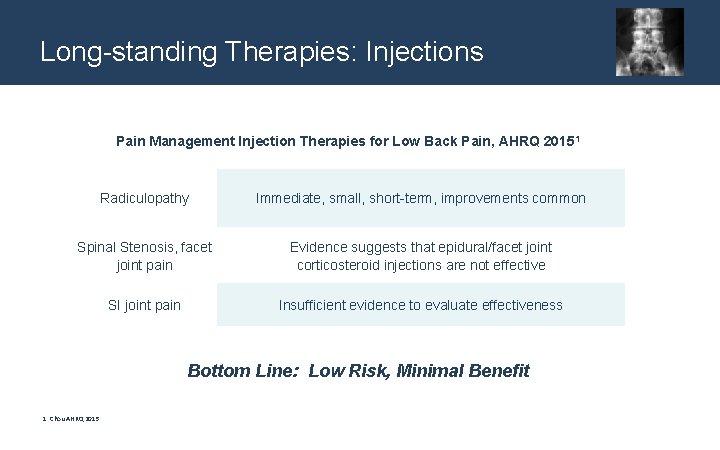
Long-standing Therapies: Injections Pain Management Injection Therapies for Low Back Pain, AHRQ 2015 1 Radiculopathy Immediate, small, short-term, improvements common Spinal Stenosis, facet joint pain Evidence suggests that epidural/facet joint corticosteroid injections are not effective SI joint pain Insufficient evidence to evaluate effectiveness Bottom Line: Low Risk, Minimal Benefit 1. Chou AHRQ 2015

Long-standing therapies: RFA = Radiofrequency Ablation Used for >20 years Denervates select peripheral nerves with heated needle probe Typically involves repeated procedures Medial Branch Nerve Medial Branch RFA/Denervation Adapted from: https: //anatomia-fisioterapia. es/en/lumbar/articles/systems/musculoskeletal/spine/lumbar/analysis-of-the-posterior-ramusof-the-lumbar-spinal-nerve-the-structure-of-the-posterior-ramus-of-the-spinal-nerve
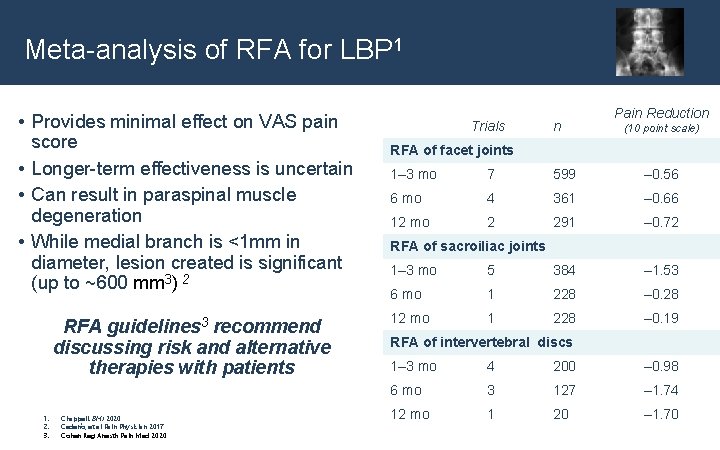
Meta-analysis of RFA for LBP 1 • Provides minimal effect on VAS pain score • Longer-term effectiveness is uncertain • Can result in paraspinal muscle degeneration • While medial branch is <1 mm in diameter, lesion created is significant (up to ~600 mm 3) 2 RFA guidelines 3 recommend discussing risk and alternative therapies with patients 1. 2. 3. Chappell. BMJ 2020 Ceden o, et al Pain Physician 2017 Cohen Reg Anesth Pain Med 2020 Trials n Pain Reduction (10 point scale) RFA of facet joints 1– 3 mo 7 599 – 0. 56 6 mo 4 361 – 0. 66 12 mo 2 291 – 0. 72 RFA of sacroiliac joints 1– 3 mo 5 384 – 1. 53 6 mo 1 228 – 0. 28 12 mo 1 228 – 0. 19 RFA of intervertebral discs 1– 3 mo 4 200 – 0. 98 6 mo 3 127 – 1. 74 12 mo 1 20 – 1. 70
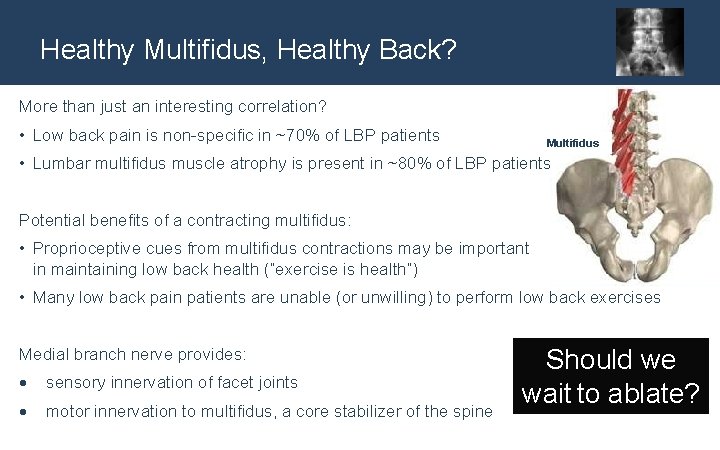
Healthy Multifidus, Healthy Back? More than just an interesting correlation? • Low back pain is non-specific in ~70% of LBP patients Multifidus • Lumbar multifidus muscle atrophy is present in ~80% of LBP patients Potential benefits of a contracting multifidus: • Proprioceptive cues from multifidus contractions may be important in maintaining low back health (“exercise is health”) • Many low back pain patients are unable (or unwilling) to perform low back exercises Medial branch nerve provides: sensory innervation of facet joints motor innervation to multifidus, a core stabilizer of the spine Should we wait to ablate?
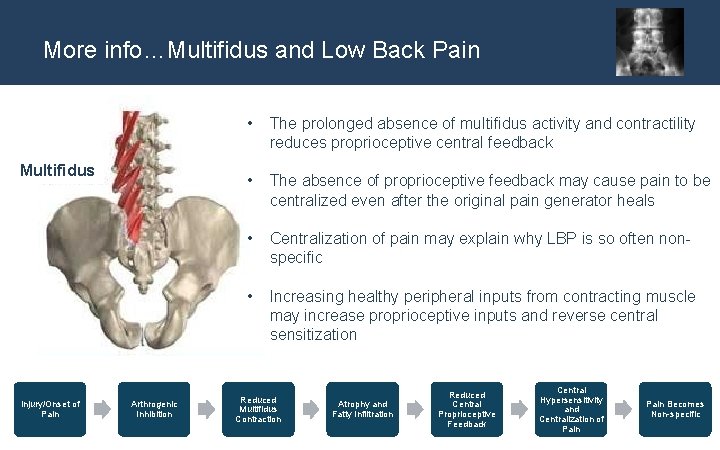
More info…Multifidus and Low Back Pain Multifidus Injury/Onset of Pain Arthrogenic Inhibition • The prolonged absence of multifidus activity and contractility reduces proprioceptive central feedback • The absence of proprioceptive feedback may cause pain to be centralized even after the original pain generator heals • Centralization of pain may explain why LBP is so often nonspecific • Increasing healthy peripheral inputs from contracting muscle may increase proprioceptive inputs and reverse central sensitization Reduced Multifidus Contraction Atrophy and Fatty Infiltration Reduced Central Proprioceptive Feedback Central Hypersensitivity and Centralization of Pain Becomes Non-specific
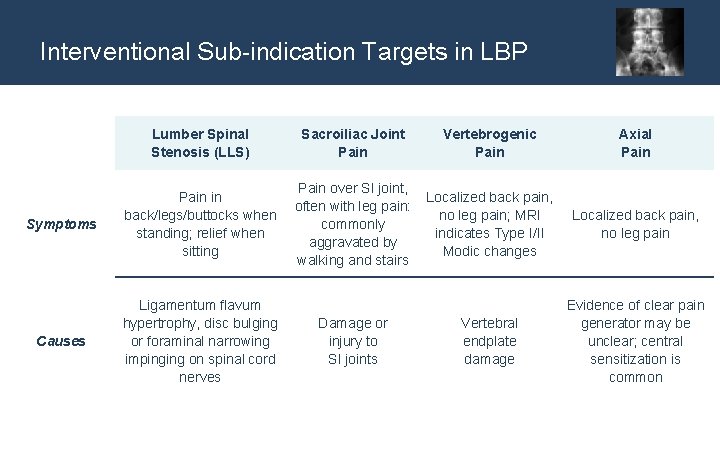
Interventional Sub-indication Targets in LBP Lumber Spinal Stenosis (LLS) Sacroiliac Joint Pain Vertebrogenic Pain Axial Pain Symptoms Pain in back/legs/buttocks when standing; relief when sitting Pain over SI joint, often with leg pain: commonly aggravated by walking and stairs Localized back pain, no leg pain; MRI indicates Type I/II Modic changes Localized back pain, no leg pain Causes Ligamentum flavum hypertrophy, disc bulging or foraminal narrowing impinging on spinal cord nerves Vertebral endplate damage Evidence of clear pain generator may be unclear; central sensitization is common Damage or injury to SI joints
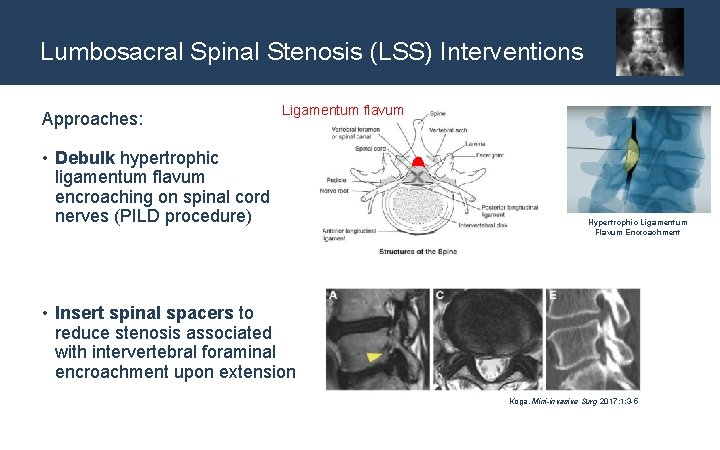
Lumbosacral Spinal Stenosis (LSS) Interventions Approaches: Ligamentum flavum • Debulk hypertrophic ligamentum flavum encroaching on spinal cord nerves (PILD procedure) Hypertrophic Ligamentum Flavum Encroachment • Insert spinal spacers to reduce stenosis associated with intervertebral foraminal encroachment upon extension Koga, Mini-invasive Surg 2017; 1: 3 -5
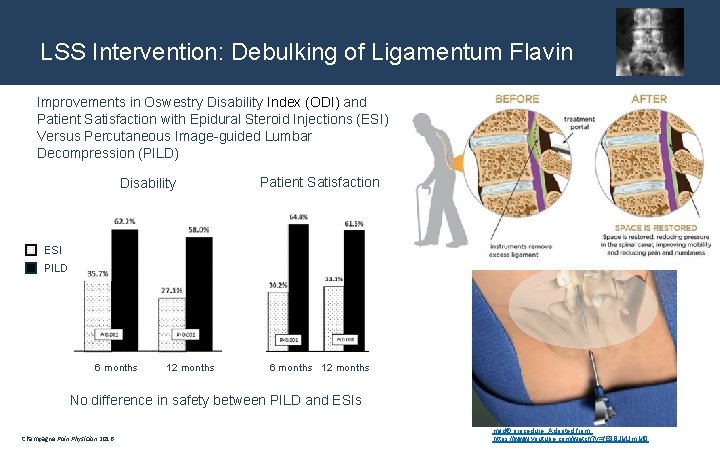
LSS Intervention: Debulking of Ligamentum Flavin Improvements in Oswestry Disability Index (ODI) and Patient Satisfaction with Epidural Steroid Injections (ESI) Versus Percutaneous Image-guided Lumbar Decompression (PILD) Disability Patient Satisfaction ESI PILD 6 months 12 months No difference in safety between PILD and ESIs Champagne Pain Physician 2016 mild® procedure. Adopted from: https: //www. youtube. com/watch? v=f. E 8 BJMJmj. M 0
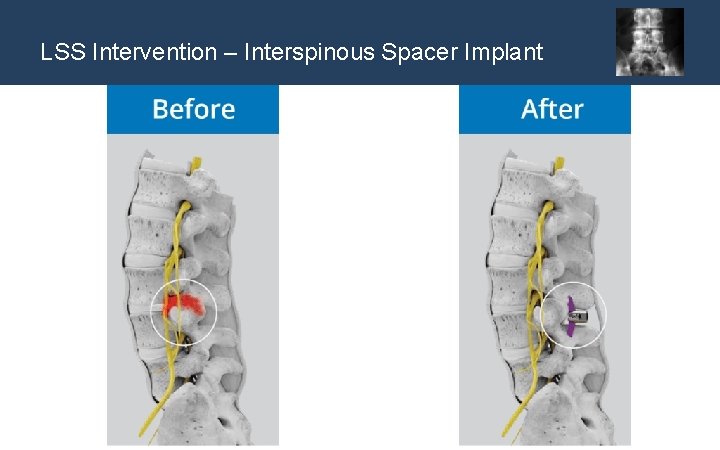
LSS Intervention – Interspinous Spacer Implant spacer
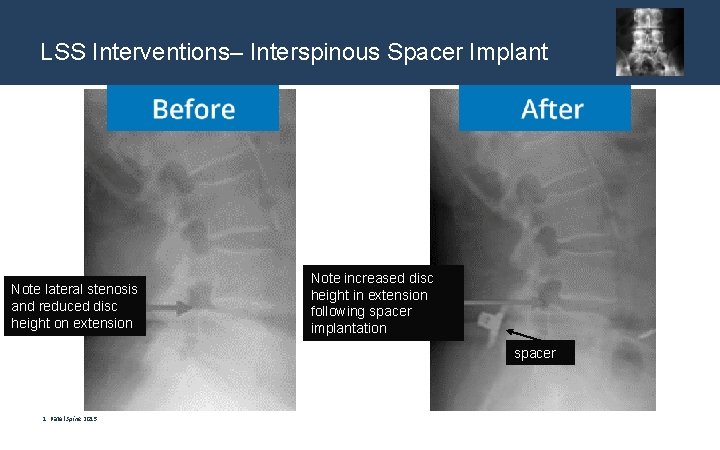
LSS Interventions– Interspinous Spacer Implant Note lateral stenosis and reduced disc height on extension Note increased disc height in extension following spacer implantation spacer 1. Patel Spine 2015
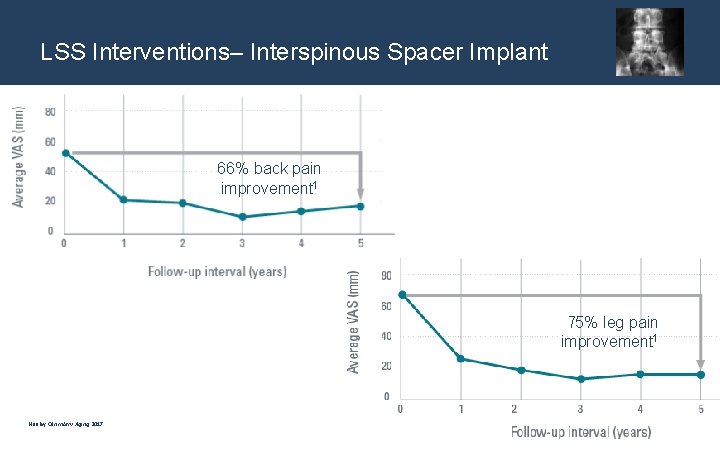
LSS Interventions– Interspinous Spacer Implant 66% back pain improvement 1 75% leg pain improvement 1 Nunley Clin Interv Aging 2017
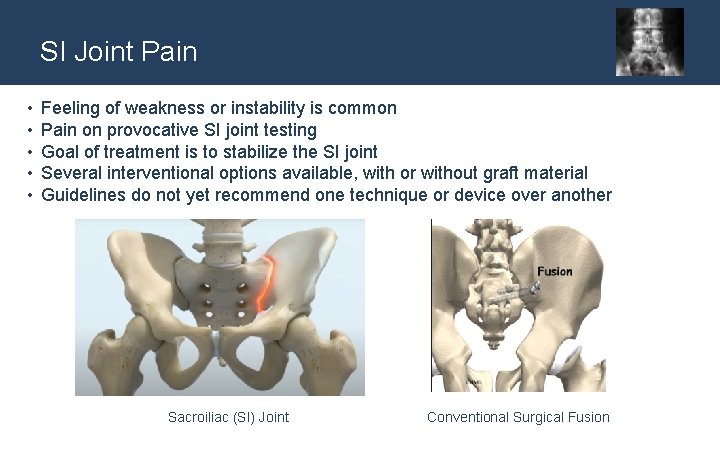
SI Joint Pain • • • Feeling of weakness or instability is common Pain on provocative SI joint testing Goal of treatment is to stabilize the SI joint Several interventional options available, with or without graft material Guidelines do not yet recommend one technique or device over another Sacroiliac (SI) Joint Conventional Surgical Fusion
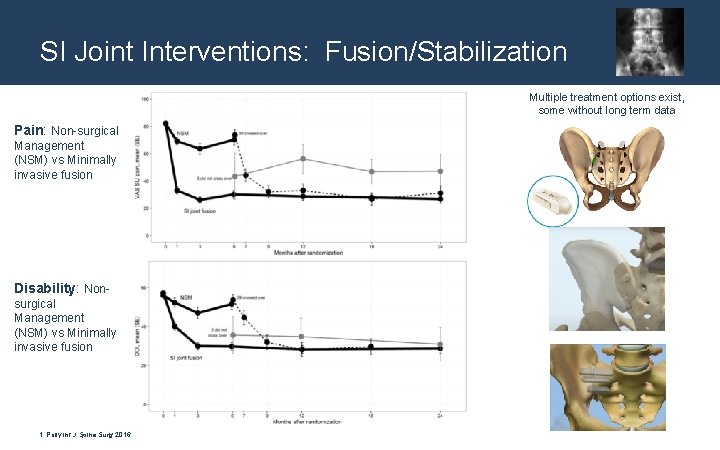
SI Joint Interventions: Fusion/Stabilization Multiple treatment options exist, some without long term data Pain: Non-surgical Management (NSM) vs Minimally invasive fusion Disability: Nonsurgical Management (NSM) vs Minimally invasive fusion 1. Polly Int J Spine Surg 2016
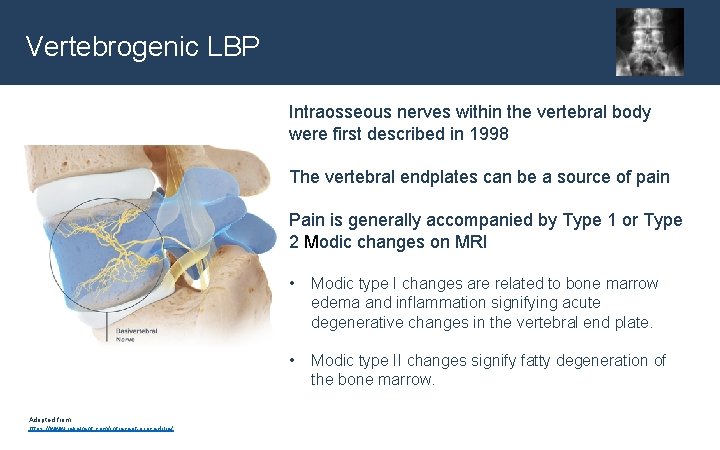
Vertebrogenic LBP Intraosseous nerves within the vertebral body were first described in 1998 The vertebral endplates can be a source of pain Pain is generally accompanied by Type 1 or Type 2 Modic changes on MRI Adopted from: https: //www. relievant. com/intracept-procedure/ • Modic type I changes are related to bone marrow edema and inflammation signifying acute degenerative changes in the vertebral end plate. • Modic type II changes signify fatty degeneration of the bone marrow.
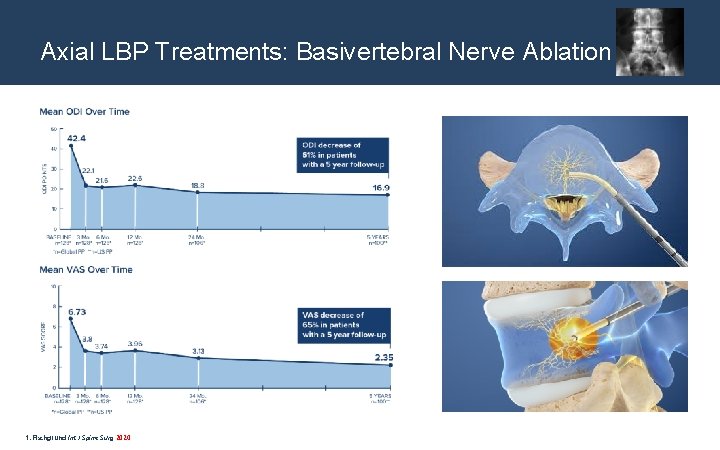
Axial LBP Treatments: Basivertebral Nerve Ablation 1. Fischgrund Int J Spine Surg 2020
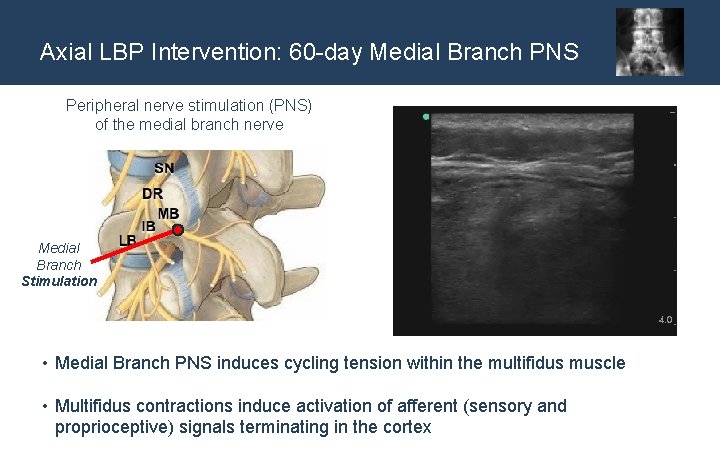
Axial LBP Intervention: 60 -day Medial Branch PNS Peripheral nerve stimulation (PNS) of the medial branch nerve Medial Branch Stimulation • Medial Branch PNS induces cycling tension within the multifidus muscle • Multifidus contractions induce activation of afferent (sensory and proprioceptive) signals terminating in the cortex
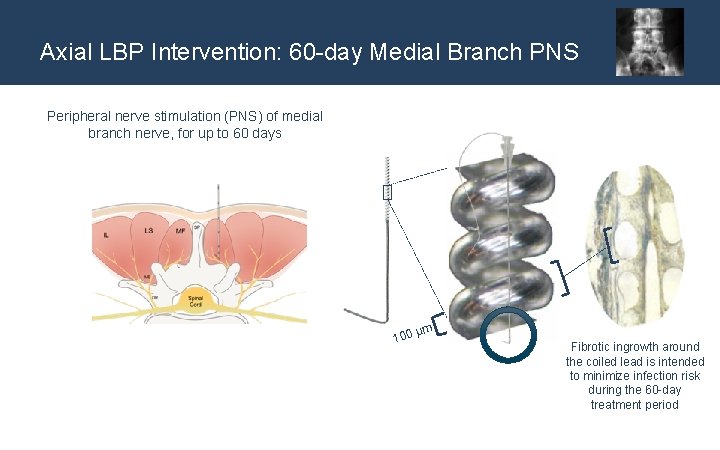
Axial LBP Intervention: 60 -day Medial Branch PNS Peripheral nerve stimulation (PNS) of medial branch nerve, for up to 60 days m µ 100 Fibrotic ingrowth around the coiled lead is intended to minimize infection risk during the 60 -day treatment period
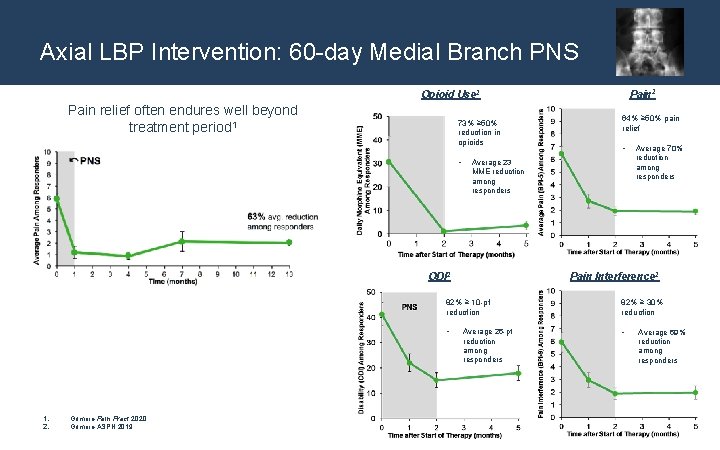
Axial LBP Intervention: 60 -day Medial Branch PNS Pain 2 Opioid Use 2 Pain relief often endures well beyond treatment period 1 73% ≥ 50% reduction in opioids • Gilmore Pain Pract 2020 Gilmore ASPN 2019 • Average 23 MME reduction among responders ODI 2 1. 2. 64% ≥ 50% pain relief Average 70% reduction among responders Pain Interference 2 82% ≥ 10 -pt reduction 82% ≥ 30% reduction • • Average 26 -pt reduction among responders Average 69% reduction among responders
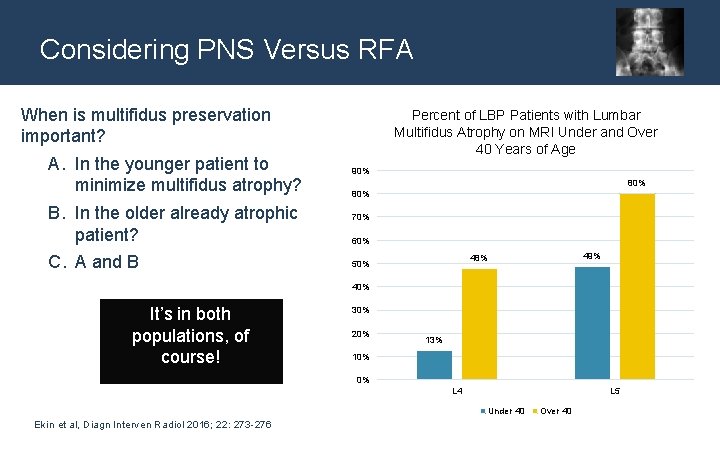
Considering PNS Versus RFA When is multifidus preservation important? A. In the younger patient to minimize multifidus atrophy? B. In the older already atrophic patient? C. A and B Percent of LBP Patients with Lumbar Multifidus Atrophy on MRI Under and Over 40 Years of Age 90% 80% 70% 60% 49% 48% 50% 40% It’s in both populations, of course! 30% 20% 13% 10% 0% L 4 L 5 Under 40 Ekin et al, Diagn Interven Radiol 2016; 22: 273 -276 Over 40
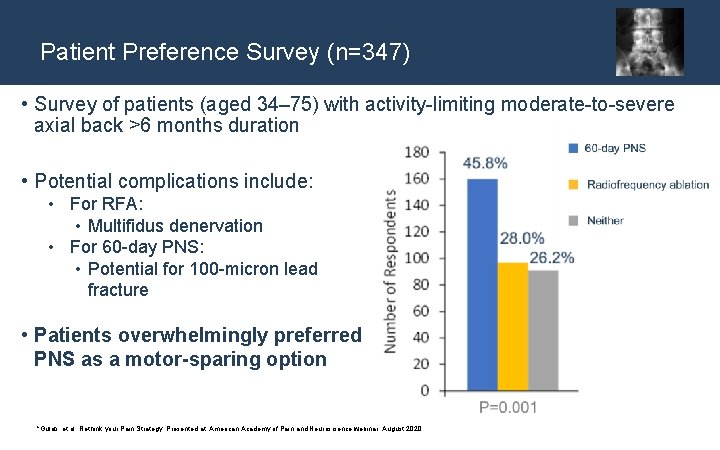
Patient Preference Survey (n=347) • Survey of patients (aged 34– 75) with activity-limiting moderate-to-severe axial back >6 months duration • Potential complications include: • For RFA: • Multifidus denervation • For 60 -day PNS: • Potential for 100 -micron lead fracture • Patients overwhelmingly preferred PNS as a motor-sparing option *Gulati, et al. Rethink your Pain Strategy. Presented at: American Academy of Pain and Neuroscience webinar, August 2020.
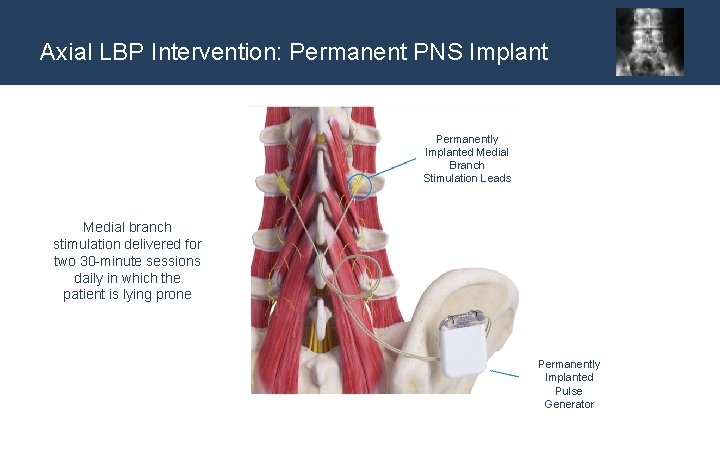
Axial LBP Intervention: Permanent PNS Implant Permanently Implanted Medial Branch Stimulation Leads Medial branch stimulation delivered for two 30 -minute sessions daily in which the patient is lying prone Permanently Implanted Pulse Generator
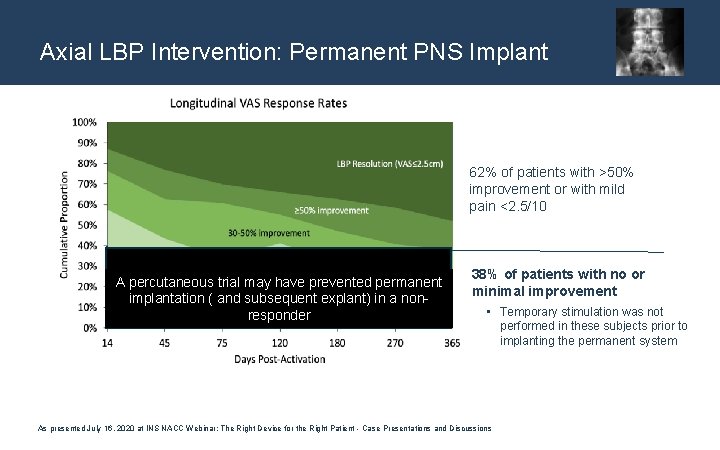
Axial LBP Intervention: Permanent PNS Implant 62% of patients with >50% improvement or with mild pain <2. 5/10 A percutaneous trial may have prevented permanent implantation ( and subsequent explant) in a nonresponder 38% of patients with no or minimal improvement • Temporary stimulation was not performed in these subjects prior to implanting the permanent system As presented July 16, 2020 at INS NACC Webinar: The Right Device for the Right Patient - Case Presentations and Discussions
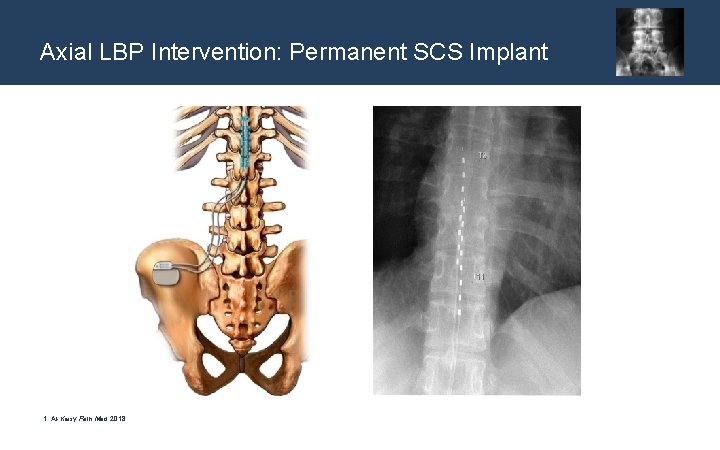
Axial LBP Intervention: Permanent SCS Implant 1. Al-Kaisy Pain Med 2018
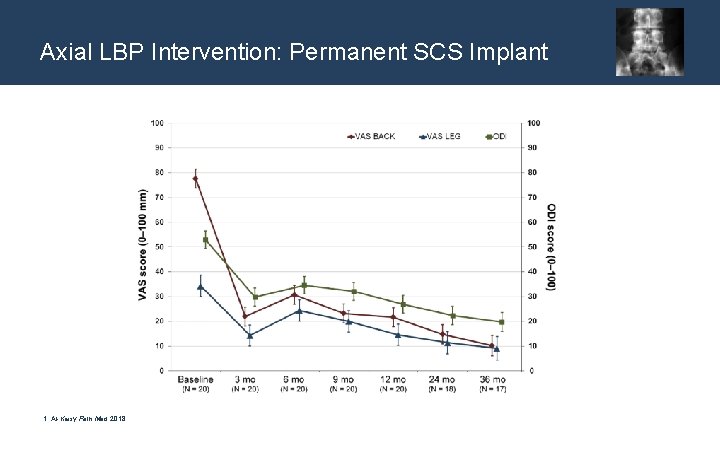
Axial LBP Intervention: Permanent SCS Implant 1. Al-Kaisy Pain Med 2018
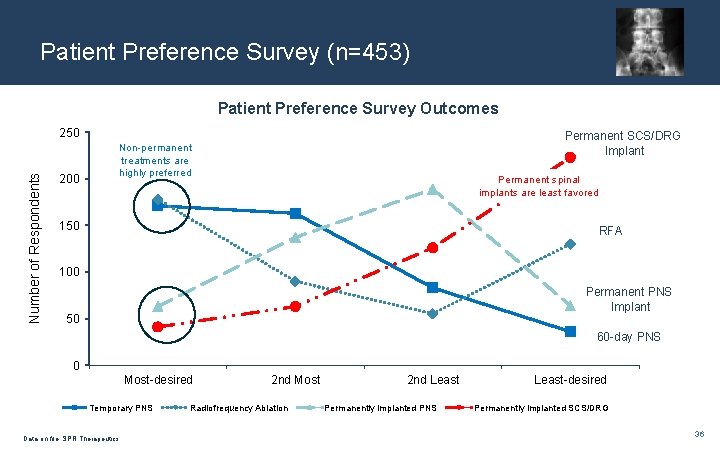
Patient Preference Survey (n=453) Patient Preference Survey Outcomes Number of Respondents 250 200 Permanent SCS/DRG Implant Non-permanent treatments are highly preferred Permanent spinal implants are least favored 150 RFA 100 Permanent PNS Implant 50 60 -day PNS 0 Most-desired Temporary PNS Data on file, SPR Therapeutics 2 nd Most Radiofrequency Ablation 2 nd Least Permanently implanted PNS Least-desired Permanently implanted SCS/DRG 36
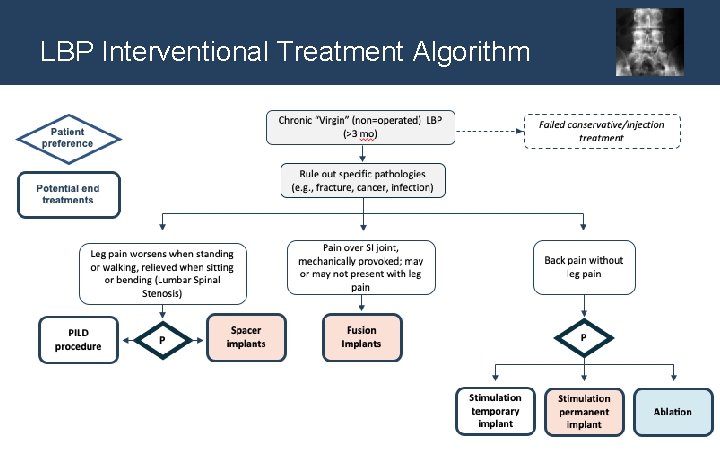
LBP Interventional Treatment Algorithm
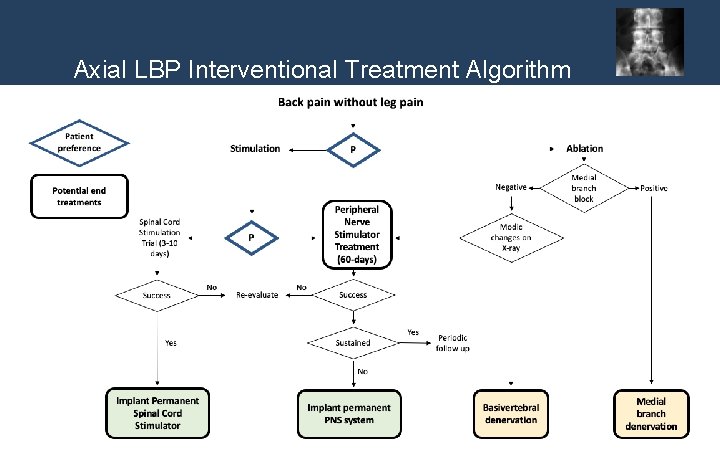
Axial LBP Interventional Treatment Algorithm
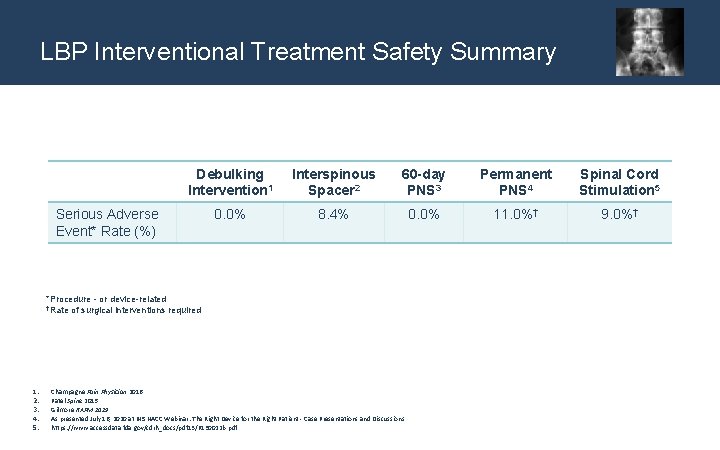
LBP Interventional Treatment Safety Summary Debulking Intervention 1 Interspinous Spacer 2 60 -day PNS 3 Permanent PNS 4 Spinal Cord Stimulation 5 0. 0% 8. 4% 0. 0% 11. 0%† 9. 0%† Serious Adverse Event* Rate (%) *Procedure - or device-related †Rate of surgical interventions required 1. 2. 3. 4. 5. Champagne Pain Physician 2016 Patel Spine 2015 Gilmore RAPM 2019 As presented July 16, 2020 at INS NACC Webinar: The Right Device for the Right Patient - Case Presentations and Discussions https: //www. accessdata. fda. gov/cdrh_docs/pdf 13/P 130022 b. pdf
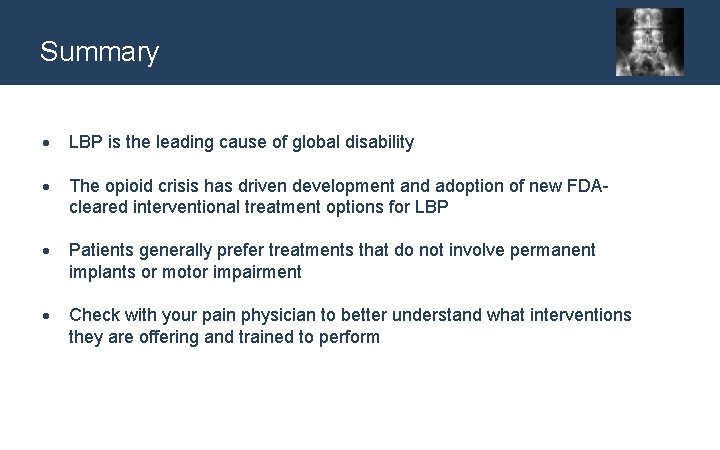
Summary LBP is the leading cause of global disability The opioid crisis has driven development and adoption of new FDAcleared interventional treatment options for LBP Patients generally prefer treatments that do not involve permanent implants or motor impairment Check with your pain physician to better understand what interventions they are offering and trained to perform
References • Vos T, Allen C, Arora M, et al. Global, regional, and national incidence, prevalence, and years lived with disability for 310 diseases and injuries, 1990– 2015: a systematic analysis for the Global Burden of Disease Study 2015. Lancet. 2016; 388(10053): 1545 -1602. • Hartvigsen J, Hancock MJ, Kongsted A, et al. What low back pain is and why we need to pay attention. Lancet. 2018; 391(10137): 2356 -2367. • Rubin DI. Epidemiology and risk factors for spine pain. Neurol Clin. 2007; 25(2): 353 -371. • Meucci RD, Fassa AG, Faria NMX. Prevalence of chronic low back pain: systematic review. Rev Saude Publica. 2015; 49: 73. • Cohen SP. Sacroiliac joint pain. In: Essentials of Pain Medicine. Elsevier; 2018: 601 -612. e 602. • Ishimoto Y, Yoshimura N, Muraki S, et al. Prevalence of symptomatic lumbar spinal stenosis and its association with physical performance in a population-based cohort in Japan: the Wakayama Spine Study. Osteoarthritis Cartilage. 2012; 20(10): 1103 -1108. • Woolf CJ. Central sensitization: implications for the diagnosis and treatment of pain. Pain. 2011; 152(3 Suppl): S 2 -15. • Kuner R, Flor H. Structural plasticity and reorganisation in chronic pain. Nat Rev Neurosci. 2017; 18(1): 20. • Allegri M, Montella S, Salici F, et al. Mechanisms of low back pain: a guide for diagnosis and therapy. F 1000 Research. 2016; 5. • Raad M, Pakpoor J, Harris AB, et al. Opioid Prescriptions for New Low Back Pain: Trends and Variability by State. J Am Board Fam Med. 2020; 33(1): 138 -142. • Deyo RA, Von Korff M, Duhrkoop D. Opioids for low back pain. BMJ. 2015; 350. • Gilmore C, Kapural L, Hopkins T, et al. Reductions in Opioid Consumption with Percutaneous Nerve Stimulation (PNS) for Chronic Low Back Pain. Poster presented at: 18 th Annual Meeting of the American Society of Regional Anesthesia and Pain Medicine, 2019 Nov 14 -16, New Orleans, LA. • Al-Kaisy A, Palmisani S, Smith TE, et al. Long-term improvements in chronic axial low back pain patients without previous spinal surgery: a cohort analysis of 10 -k. Hz high-frequency spinal cord stimulation over 36 months. Pain Med. 2018; 19(6): 1219 -1226. • Chou R, Hashimoto R, Friedly J, et al. Pain management injection therapies for low back pain [Internet]. Rockville (MD): Agency for Healthcare Research and Quality (US); 2016 Feb. (Comparative Effectiveness Reviews, No. 169. ) • Chappell ME, Lakshman R, Trotter P, Abrahams M, Lee M. Radiofrequency denervation for chronic back pain: a systematic review and meta-analysis. BMJ open. 2020; 10(7): e 035540. • Cedeno DL, Vallejo A, Kelley CA, Tilley DM, Kumar N. Comparisons of lesion volumes and shapes produced by a radiofrequency system with a cooled, a protruding, or a monopolar probe. Pain Physician. 2017; 20(6): E 915 -E 922.
References • Cohen SP, Bhaskar A, Bhatia A, et al. Consensus practice guidelines on interventions for lumbar facet joint pain from a Multispecialty, International Working group. Reg Anesth Pain Med. 2020; 45(6): 424 -467. • Koga H. Improved percutaneous endoscopic translaminar approach for lumbar foraminal stenosis at L 5/S 1. Mini-invasive Surg. 2017; 1: 3 -5. • Champagne I, Centers P, Shrewsbury N, Hopkins J, Benyamin R. MILD® is an effective treatment for lumbar spinal stenosis with neurogenic claudication: Mi. DAS ENCORE randomized controlled trial. Pain Physician. 2016; 19: 229 -242. • Patel VV, Whang PG, Haley TR, et al. Superion interspinous process spacer for intermittent neurogenic claudication secondary to moderate lumbar spinal stenosis: two-year results from a randomized controlled FDA-IDE pivotal trial. Spine (Phila Pa 1976). 2015; 40(5): 275 -282. • Polly DW, Swofford J, Whang PG, et al. Two-year outcomes from a randomized controlled trial of minimally invasive sacroiliac joint fusion vs. nonsurgical management for sacroiliac joint dysfunction. International journal of spine surgery. 2016; 10. • Fischgrund JS, Rhyne A, Franke J, et al. Intraosseous basivertebral nerve ablation for the treatment of chronic low back pain: 2 -year results from a prospective randomized double-blind sham-controlled multicenter study. Int J Spine Surg. 2019; 13(2): 110 -119. • Gilmore CA, Kapural L, Mc. Gee MJ, Boggs JW. Percutaneous Peripheral Nerve Stimulation for Chronic Low Back Pain: Prospective Case Series With 1 Year of Sustained Relief Following Short‐Term Implant. Pain Pract. 2020; 20(3): 310 -320. • Ekin EE, Yıldız HK, Mutlu H. Age and sex-based distribution of lumbar multifidus muscle atrophy and coexistence of disc hernia: an MRI study of 2028 patients. Diagn Interv Radiol. 2016; 22(3): 273. • Gulati, et al. Rethink your Pain Strategy. Presented at: American Academy of Pain and Neuroscience webinar, August 2020. • Gilmore CA, Ilfeld BM, Rosenow JM, Li S, Desai MJ, Hunter CW, Rauck RL, Nader A, Mak J, Cohen SP, Crosby ND, Boggs JW. Percutaneous 60 -day Peripheral Nerve Stimulation Implant Provides Sustained Relief of Chronic Pain Following Amputation: 12 -month Follow-Up of a Randomized, Double. Blind, Placebo-Controlled Trial. Regional Anesthesia and Pain Medicine, 2019. • https: //www. accessdata. fda. gov/cdrh_docs/pdf 13/P 130022 b. pdf
Thank you! "Lumbar Spine X-Ray L 4 L 5 S 1" by planetc 1 is licensed under CC BY-SA 2. 0
- Slides: 43