
Nonsteroidal antiinflammatory drugs NSAIDs OBJECTIVES At the end
Non-steroidal anti-inflammatory drugs NSAIDs
OBJECTIVES At the end of this work you should : • Define NSAIDs • Describe the classification of this group of drugs • Describe the general mechanism of actions • Define the following terms : – – • • • Analgesic Antipyretics Anti-inflammatory Anti-platelet Describe the general pharmacological actions Describe the general therapeutic uses Describe the general adverse effects Describe the general contraindications Know some examples of each group of NSAIDs Know the difference between the selective & non-selective NSAIDs
NSAIDs & Terms • Non-steroidal anti-inflammatory drugs ( NSAIDs ): – • ANALGESIC: – • Drug that lower the elevated body temperature to normal. Anti-inflammatory – • Drug that relieve pain. ANTIPYRETIC – • are group of drugs that have analgesic , antipyretic , anti-platelet & antiinflammatory effects. Refers to the property of a substance or treatment that reduces inflammation or swelling. Anti-platelet – Is a member of a class of pharmaceuticals that decrease platelet aggregation and inhibit thrombus formation.

Classification of NSAIDs Non-Selective COXs Inhibitor: Group of drugs that sharing the capacity to induce the following pharmacological actions: • • • Analgesic Antipyretic Anti-inflammatory Anti-platelet Effect on the kidney function Selective COX 2 Inhibitor.

MECHANISM OF ACTION OF NSAIDS Phospholipid From Cell Membrane Phospholipase Arachidonic acid Cyclo. Oxygenase 1 Cyclo. Oxygenase 2 Prostaglandin Thromboxane Prostaglandin Prostacyclin Phospholipase Cyclo. Oxygenase 1 Cyclo. Oxygenase 2 inhibitor. can be inhibit by Corticosteroid. can be inhibit by NSAIDs and COX-2
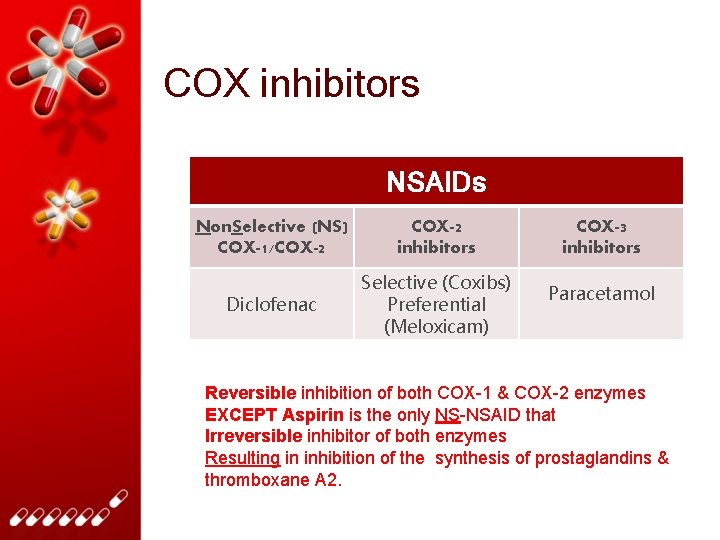
COX inhibitors NSAIDs Non. Selective (NS) COX-1/COX-2 inhibitors Diclofenac Selective (Coxibs) Preferential (Meloxicam) COX-3 inhibitors Paracetamol Reversible inhibition of both COX-1 & COX-2 enzymes EXCEPT Aspirin is the only NS-NSAID that Irreversible inhibitor of both enzymes Resulting in inhibition of the synthesis of prostaglandins & thromboxane A 2.

Pharmacokinetics Oral administration Most NSAIDs are weak acid (absorbed well in stomach and intestinal mucosa) Most metabolized in liver (oxidation & conjugation) 95% bound to plasma-protein (high bioavailability)
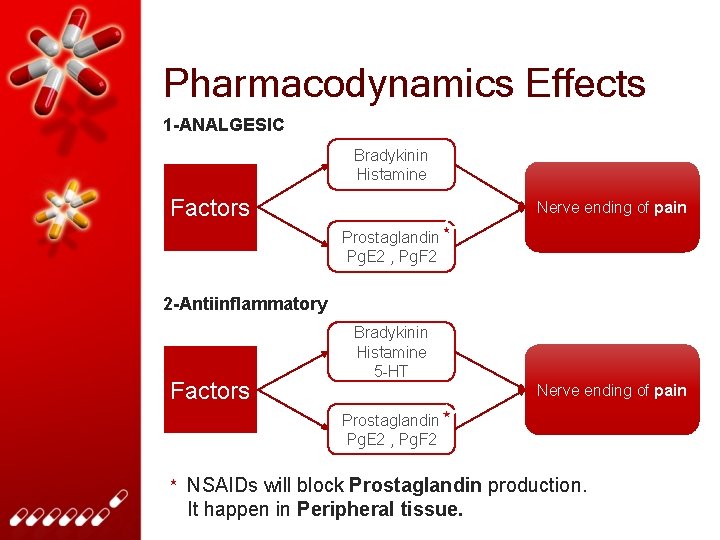
Pharmacodynamics Effects 1 -ANALGESIC Bradykinin Histamine Factors Nerve ending of pain Prostaglandin Pg. E 2 , Pg. F 2 2 -Antiinflammatory Factors Bradykinin Histamine 5 -HT Nerve ending of pain Prostaglandin Pg. E 2 , Pg. F 2 NSAIDs will block Prostaglandin production. It happen in Peripheral tissue.
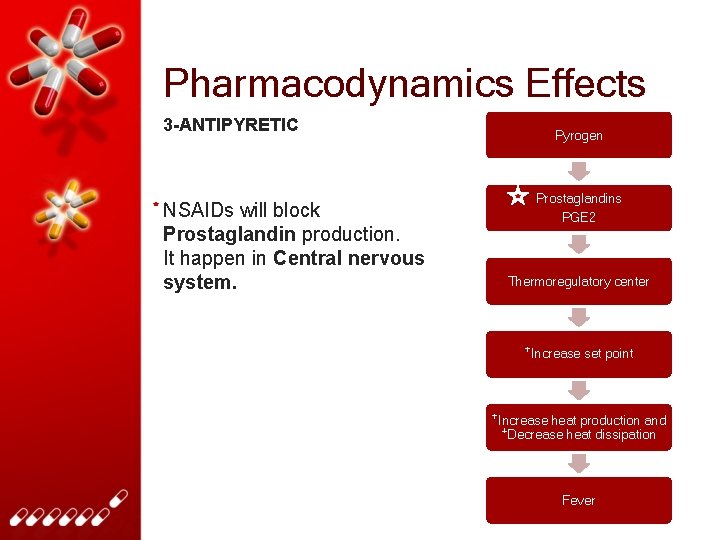
Pharmacodynamics Effects 3 -ANTIPYRETIC NSAIDs will block Prostaglandin production. It happen in Central nervous system. Pyrogen Prostaglandins PGE 2 Thermoregulatory center ꜛIncrease set point ꜛIncrease heat production and ꜜDecrease heat dissipation Fever
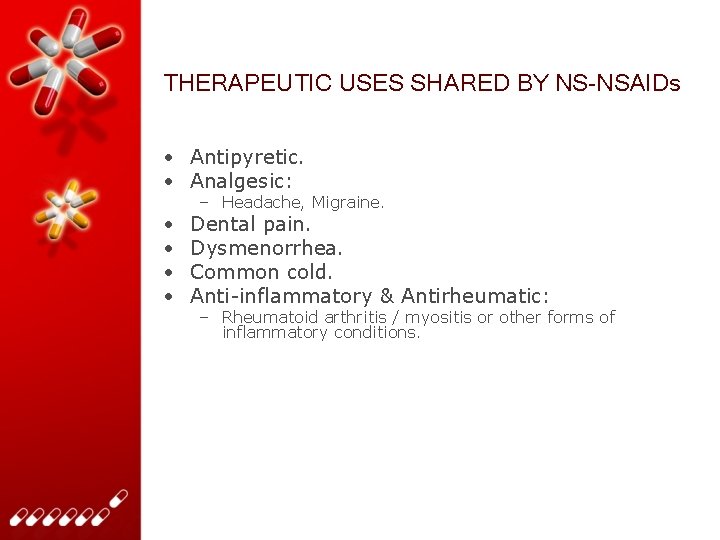
THERAPEUTIC USES SHARED BY NS-NSAIDs • Antipyretic. • Analgesic: • • – Headache, Migraine. Dental pain. Dysmenorrhea. Common cold. Anti-inflammatory & Antirheumatic: – Rheumatoid arthritis / myositis or other forms of inflammatory conditions.
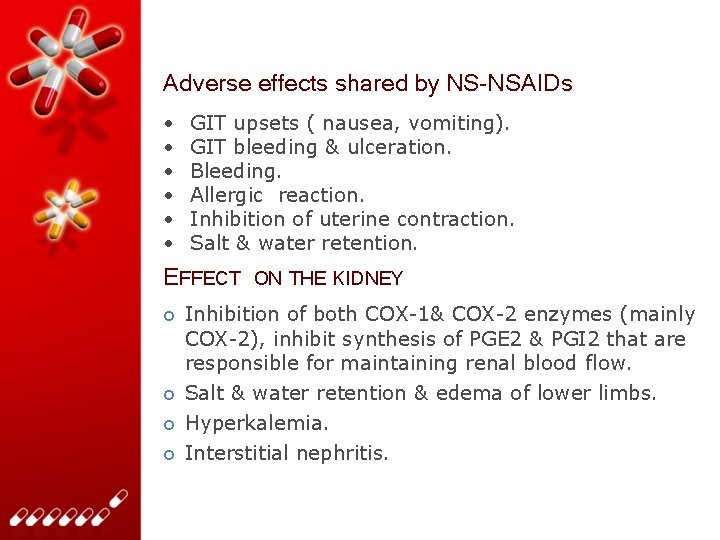
Adverse effects shared by NS-NSAIDs • • • GIT upsets ( nausea, vomiting). GIT bleeding & ulceration. Bleeding. Allergic reaction. Inhibition of uterine contraction. Salt & water retention. EFFECT ON THE KIDNEY Inhibition of both COX-1& COX-2 enzymes (mainly COX-2), inhibit synthesis of PGE 2 & PGI 2 that are responsible for maintaining renal blood flow. Salt & water retention & edema of lower limbs. Hyperkalemia. Interstitial nephritis.
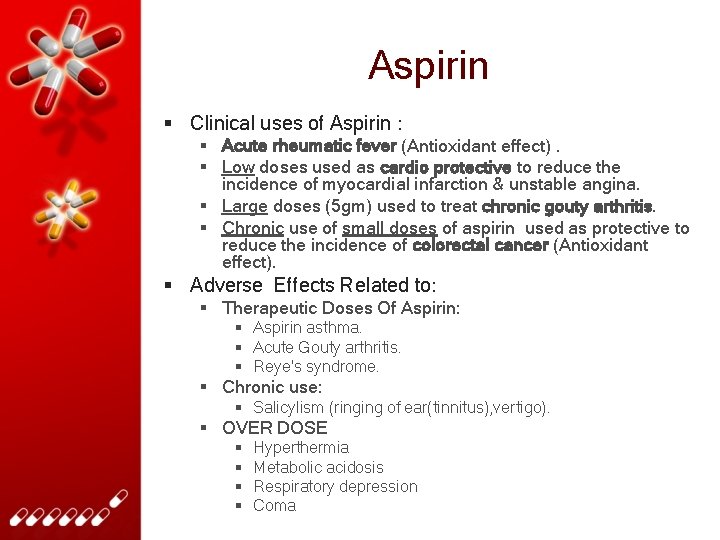
Aspirin § Clinical uses of Aspirin : § Acute rheumatic fever (Antioxidant effect). § Low doses used as cardio protective to reduce the incidence of myocardial infarction & unstable angina. § Large doses (5 gm) used to treat chronic gouty arthritis. § Chronic use of small doses of aspirin used as protective to reduce the incidence of colorectal cancer (Antioxidant effect). § Adverse Effects Related to: § Therapeutic Doses Of Aspirin: § Aspirin asthma. § Acute Gouty arthritis. § Reye's syndrome. § Chronic use: § Salicylism (ringing of ear(tinnitus), vertigo). § OVER DOSE § § Hyperthermia Metabolic acidosis Respiratory depression Coma
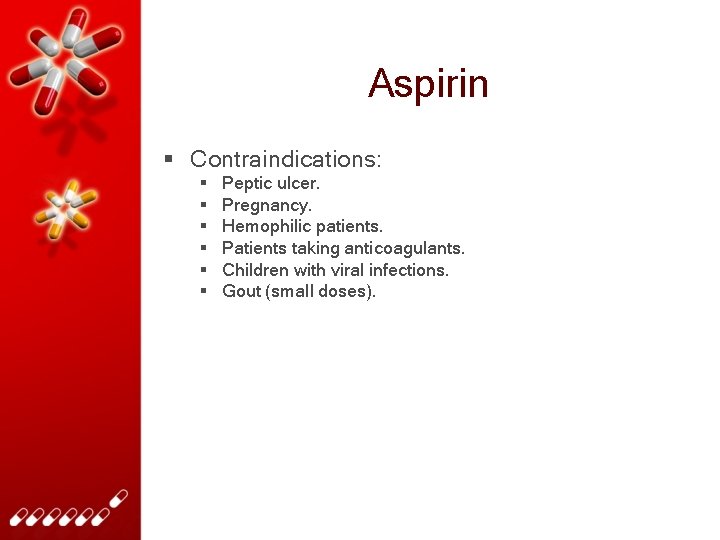
Aspirin § Contraindications: § § § Peptic ulcer. Pregnancy. Hemophilic patients. Patients taking anticoagulants. Children with viral infections. Gout (small doses).
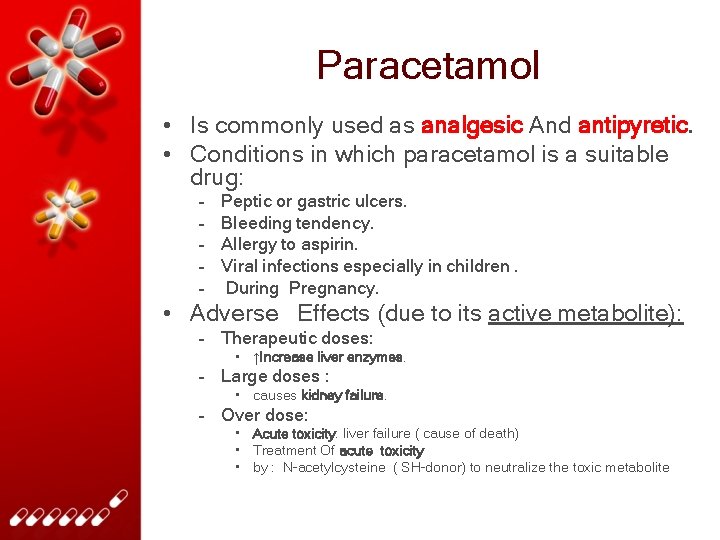
Paracetamol • Is commonly used as analgesic And antipyretic. • Conditions in which paracetamol is a suitable drug: – – – Peptic or gastric ulcers. Bleeding tendency. Allergy to aspirin. Viral infections especially in children. During Pregnancy. • Adverse Effects (due to its active metabolite): – Therapeutic doses: • ↑Increase liver enzymes. – Large doses : • causes kidney failure. – Over dose: • Acute toxicity: liver failure ( cause of death) • Treatment Of acute toxicity • by : N-acetylcysteine ( SH-donor) to neutralize the toxic metabolite
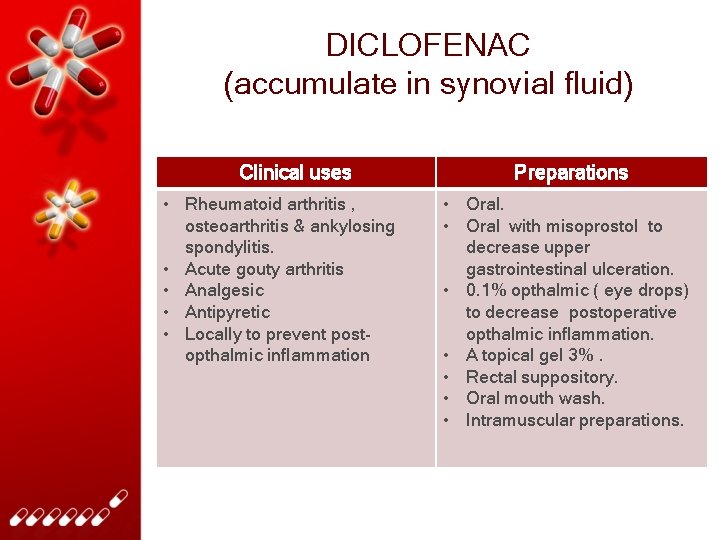
DICLOFENAC (accumulate in synovial fluid) Clinical uses • Rheumatoid arthritis , osteoarthritis & ankylosing spondylitis. • Acute gouty arthritis • Analgesic • Antipyretic • Locally to prevent postopthalmic inflammation Preparations • Oral with misoprostol to decrease upper gastrointestinal ulceration. • 0. 1% opthalmic ( eye drops) to decrease postoperative opthalmic inflammation. • A topical gel 3%. • Rectal suppository. • Oral mouth wash. • Intramuscular preparations.

Selective COX-2 inhibitors General adverse effects General advantages • Potent antiinflammatory. • Antipyretic & analgesic. • Lower incidence of gastric upset (recommneded in patients with a history of gastric ulceration). • No effect on platelet aggregation. ( Have no inhibitory effect on (COX-1) so can be given in hemophilic patients). • • Renal toxicity. Dyspepsia & heartburn. Allergy. Increase incidence of myocardial infarction. CONTRAINDICATIONS In a patient with a history of : • • ( lack cardioprotective effect of NSNSAIDs as they have no effect on COX-1 enzyme) Renal impairment Myocardial infarction GENERAL CLINICAL USES Commonly used as antinflammatory drugs • Rheumatoid arthritis • Osteoarthritis • Acute gouty arthritis • Acute musculoskeletal pain • Ankylosing spondylitis • Dysmenorrhea
Example: Celecoxib o Example: Celecoxib • Half-life 11 hours (twice/day). • Food decrease its absorption. • Highly bound to plasma proteins. • Clinical uses & Adverse effects: • Discussed before with general uses and general adverse effects of selective COX-2 inhibitors.
Summary ü NSAIDs are group of drugs that have analgesic, antipyretic, antiplatelet & anti-inflammatory effects. ü They are classified according to their action on COX-enzymes into nonselective that inhibit both COX-1 & COX-2 & selective that inhibit only COX-2 enzymes. ü They are sharing in common therapeutic uses as analgesic to relief mild to moderate pain not visceral pain , reducing high body temperature, preventing clot formation , so aspirin can be used as prophylaxis in ischemic heart disease. ü As anti-inflammatory in rheumatic , rheumatoid arthritis, desmenrrhea and other inflammatory conditions including muscles or bones. ü The common adverse effects includes : ü ü ü gastric upset ( nausea, vomiting , gastric ulceration or bleeding). Allergy. Edema. ü They are contraindicated mainly in patients with peptic ulcer , bleeding tendency or in pregnancy. ü Selective COX-2 inhibitors as celecoxib are potent anti-inflammatory & analgesic , but have no anti-platelet effect & less gastric upset. ü They can be used in patients with gastric ulcer , haemophilia. ü Their common adverse is mainly on kidney & cardiovascular system.
THANK YOU Done By: Fahad Alfahad Mohammed Almozini Quiz pharmacology 434@gmail. com
- Slides: 19