
NonStandard Datenbanken und Data Mining Deep Learning Embedding
Non-Standard Datenbanken und Data Mining Deep Learning Embedding Representations Prof. Dr. Ralf Möller Universität zu Lübeck Institut für Informationssysteme
Übersicht • • • Einführung, Klassifikation vs. Regression, parametrisches und nicht-parametrisches überwachtes Lernen Netze aus differenzierbaren Modulen („neuronale“ Netze), Support-Vektor-Maschinen Häufungsanalysen, Warenkorbanalyse, Empfehlungen Statistische Grundlagen: Stichproben, Schätzer, Verteilung, Dichte, kumulative Verteilung, Skalen: Nominal-, Ordinal-, Intervall- und Verhältnisskala, Hypothesentests, Konfidenzintervalle, Reliabilität, Interne Konsistenz, Cronbach Alpha, Trennschärfe Bayessche Statistik, Bayessche Netze zur Spezifikation von diskreten Verteilungen, Anfragebeantwortung, Lernverfahren für Bayessche Netze bei vollständigen Daten Induktives Lernen: Versionsraum, Informationstheorie, Entscheidungsbäume, Lernen von Regeln Ensemble-Methoden, Bagging, Boosting, Random Forests Clusterbildung, K-Means, Analyse der Variation (Analysis of Variation, ANOVA), Inter-Cluster. Variation, Intra-Cluster-Variation, F-Statistik, Bonferroni-Korrektur, MANOVA Analyse Sozialer Strukturen Deep Learning, Einbettungstechniken Zusammenfassung 2
Word-Word Associations in Document Retrieval Recap bag-of-words approaches • Client profiles, TF-IDF Words are not independent of each other Need to represent some aspects of word semantics Church, K. W. , Hanks, P. : Word association norms mutual information, and lexicography. Comput. Linguist. 1(1), 22– 29, 1990 4
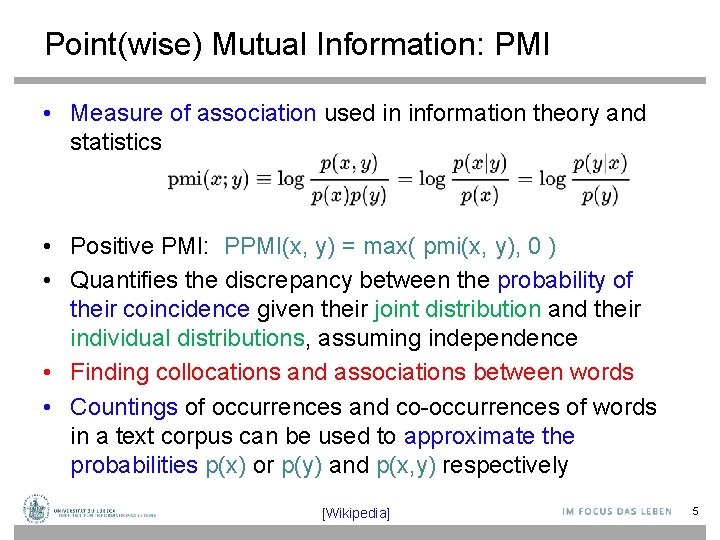
Point(wise) Mutual Information: PMI • Measure of association used in information theory and statistics • Positive PMI: PPMI(x, y) = max( pmi(x, y), 0 ) • Quantifies the discrepancy between the probability of their coincidence given their joint distribution and their individual distributions, assuming independence • Finding collocations and associations between words • Countings of occurrences and co-occurrences of words in a text corpus can be used to approximate the probabilities p(x) or p(y) and p(x, y) respectively [Wikipedia] 5

PMI – Example • Counts of pairs of words getting the most and the least PMI scores in the first 50 millions of words in Wikipedia (dump of October 2015) • Filtering by 1, 000 or more co-occurrences. • The frequency of each count can be obtained by dividing its value by 50, 000, 952. (Note: natural log is used to calculate the PMI values in this example, instead of log base 2) [Wikipedia] 6
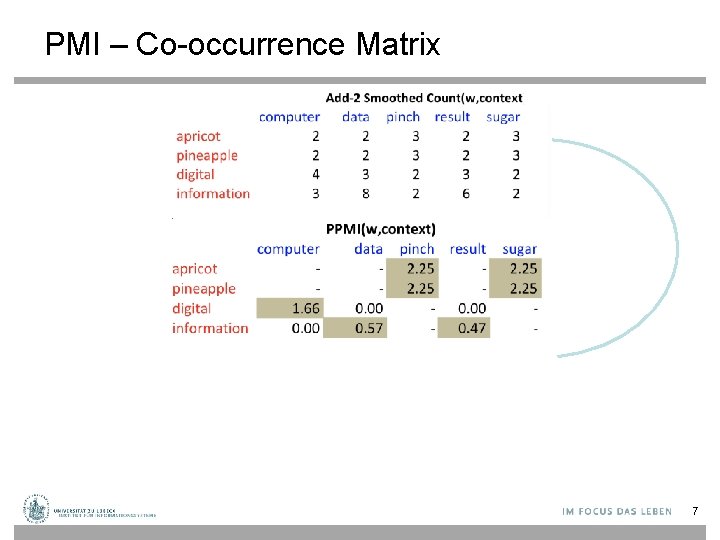
PMI – Co-occurrence Matrix Count(w, context) 7
Embedding Approaches to Word Semantics • Represent each word with a low-dimensional vector • Word similarity = vector similarity • Key idea: Predict surrounding words of every word 8
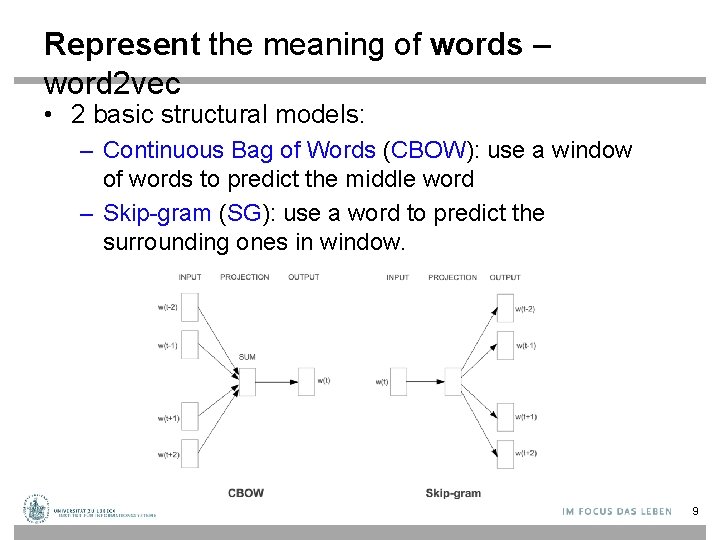
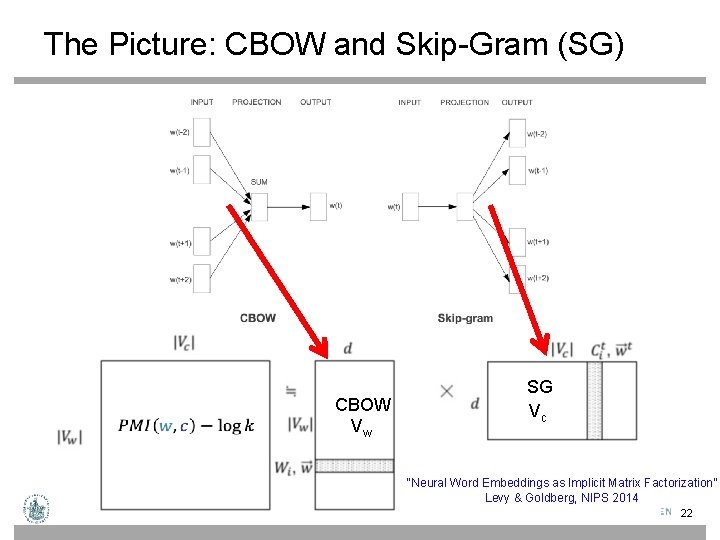
Represent the meaning of words – word 2 vec • 2 basic structural models: – Continuous Bag of Words (CBOW): use a window of words to predict the middle word – Skip-gram (SG): use a word to predict the surrounding ones in window. 9
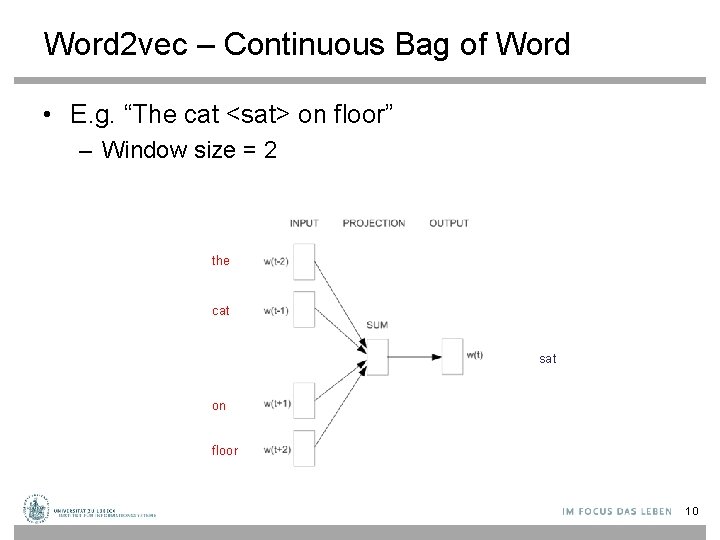
Word 2 vec – Continuous Bag of Word • E. g. “The cat <sat> on floor” – Window size = 2 the cat sat on floor 10
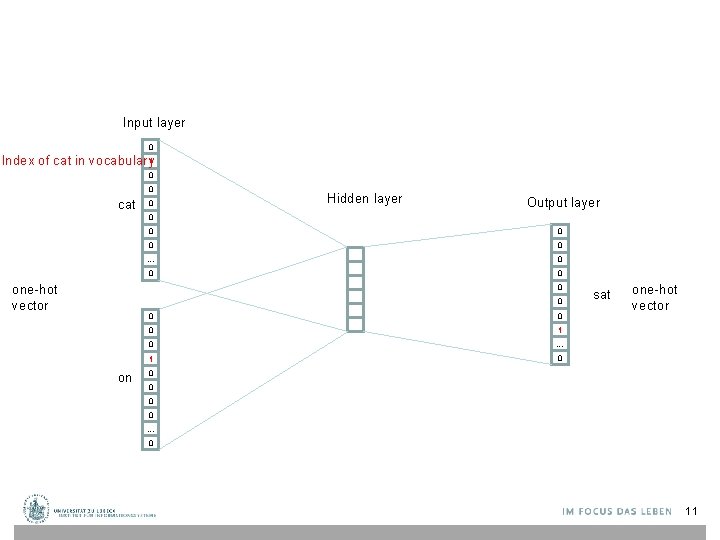
Input layer 0 Index of cat in vocabulary 1 0 0 cat 0 Hidden layer Output layer 0 one-hot vector 0 0 … 0 0 0 on 0 0 1 0 … 1 0 sat one-hot vector 0 0 … 0 11
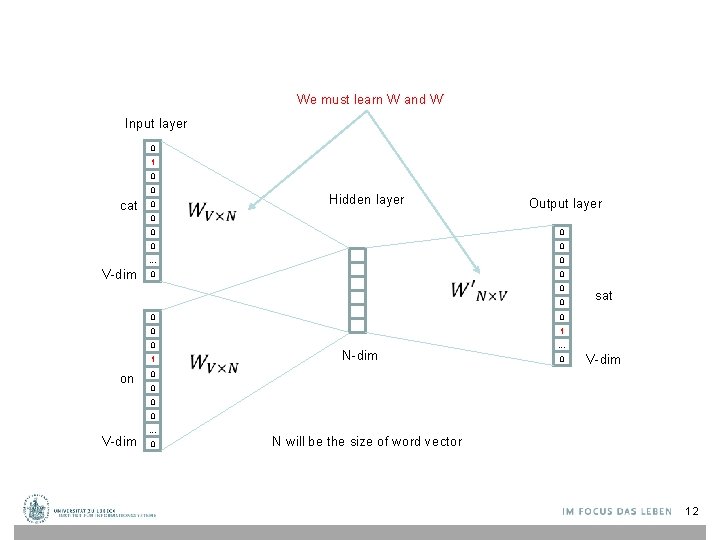
We must learn W and W’ Input layer 0 1 0 0 cat 0 Hidden layer Output layer 0 V-dim 0 0 … 0 0 0 0 1 0 … 1 on sat N-dim 0 V-dim 0 0 V-dim … 0 N will be the size of word vector 12

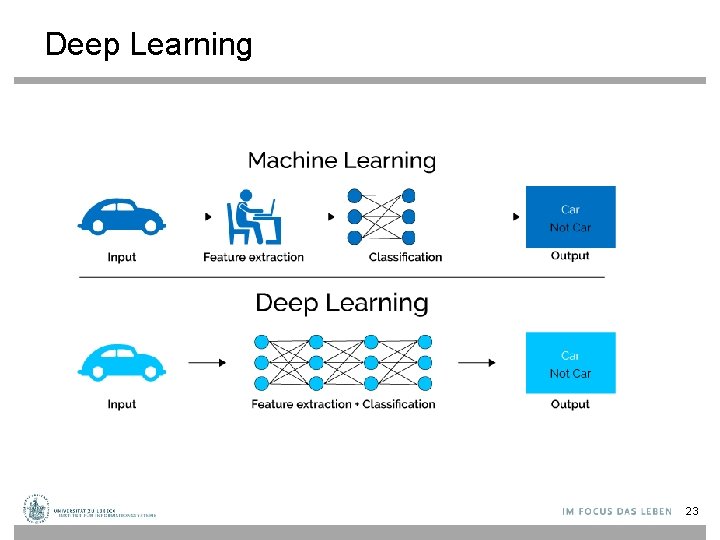
Deep Learning • Hidden layer represents feature space – Making explicit features in the data… – … that are relevant for a certain task • Determine features automatically – Learning suitable mappings into feature space • Deep learning also known as representation learning 13
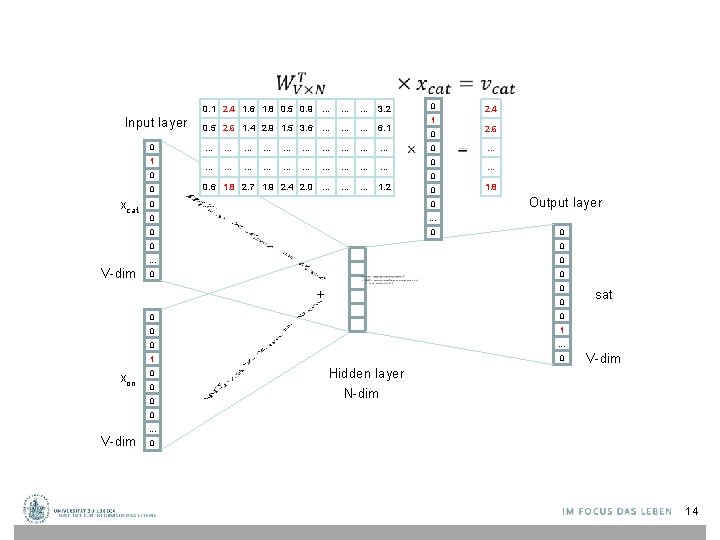
0. 1 2. 4 1. 6 1. 8 0. 5 0. 9 … Input layer 0 1 0 0 xcat V-dim … … 3. 2 0. 5 2. 6 1. 4 2. 9 1. 5 3. 6 … … … 6. 1 … … … … … 0. 6 1. 8 2. 7 1. 9 2. 4 2. 0 … … … 1. 2 1 0 0 0 0 … 0 0 2. 4 2. 6 … … 1. 8 Output layer 0 0 0 … 0 0 + 0 0 1 0 … 1 0 0 sat 0 0 xon 0 Hidden layer V-dim N-dim 0 V-dim … 0 14
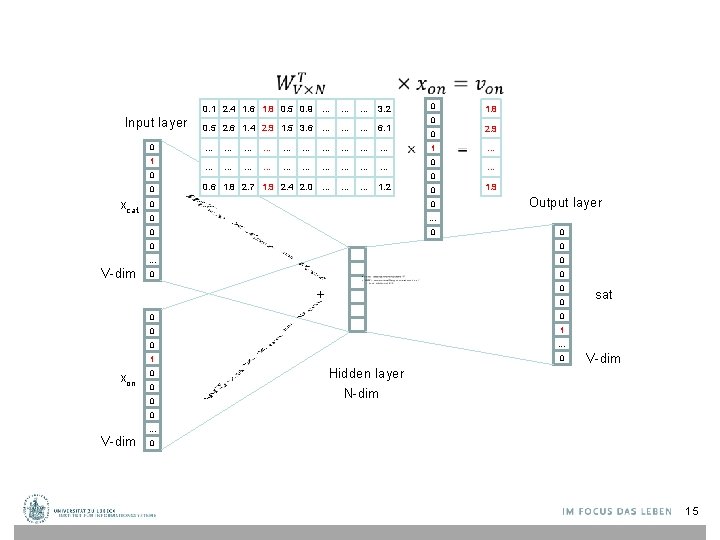
0. 1 2. 4 1. 6 1. 8 0. 5 0. 9 … Input layer 0 1 0 0 xcat V-dim … … 3. 2 0. 5 2. 6 1. 4 2. 9 1. 5 3. 6 … … … 6. 1 … … … … … 0. 6 1. 8 2. 7 1. 9 2. 4 2. 0 … … … 1. 2 0 0 1 0 0 0 … 0 0 1. 8 2. 9 … … 1. 9 Output layer 0 0 0 … 0 0 + 0 0 1 0 … 1 0 0 sat 0 0 xon 0 Hidden layer V-dim N-dim 0 V-dim … 0 15
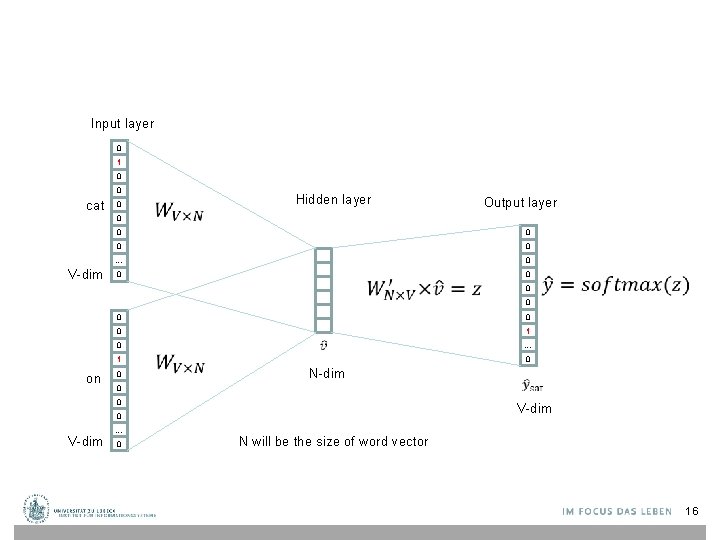
Input layer 0 1 0 0 cat 0 Hidden layer Output layer 0 V-dim 0 0 … 0 0 0 0 on 0 1 0 … 1 0 0 N-dim 0 0 V-dim … 0 N will be the size of word vector 16
![Logistic function [Wikipedia] 17](http://slidetodoc.com/presentation_image_h2/95f6a617ba97213e5fc31e6b2fc8eb21/image-16.jpg "Logistic function [Wikipedia] 17")
Logistic function [Wikipedia] 17
![softmax(z) The [Wikipedia] 18](http://slidetodoc.com/presentation_image_h2/95f6a617ba97213e5fc31e6b2fc8eb21/image-17.jpg "softmax(z) The [Wikipedia] 18")
softmax(z) The [Wikipedia] 18
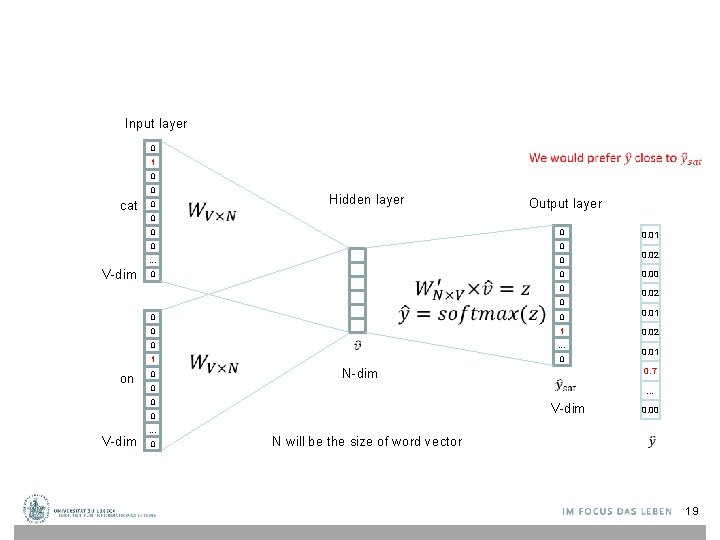
Input layer 0 1 0 0 cat 0 Hidden layer Output layer 0 V-dim 0 0 … 0 0 0. 00 0. 02 0. 01 0 1 0. 02 0 … 1 0 0 0 … V-dim 0 … 0 0. 01 0. 7 N-dim 0 V-dim 0. 02 0 0 on 0. 01 0. 00 N will be the size of word vector 19
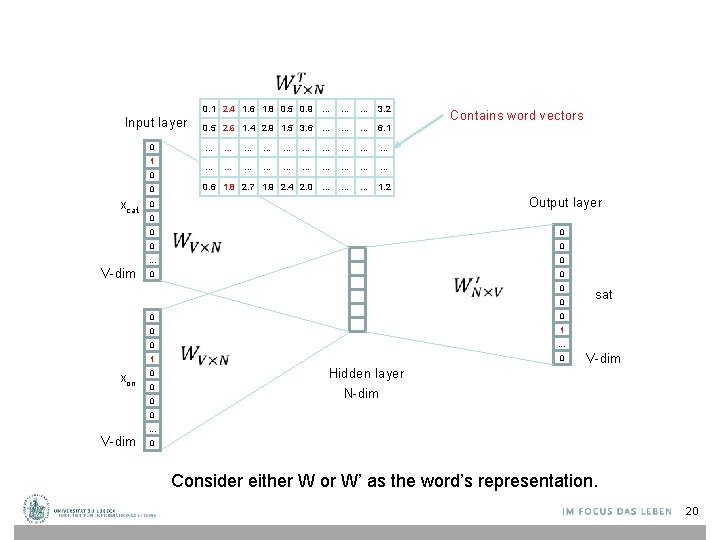
Input layer 0 1 0 0 xcat V-dim 0. 1 2. 4 1. 6 1. 8 0. 5 0. 9 … … … 3. 2 0. 5 2. 6 1. 4 2. 9 1. 5 3. 6 … … … 6. 1 … … … … … 0. 6 1. 8 2. 7 1. 9 2. 4 2. 0 … … … 1. 2 Contains word vectors Output layer 0 0 0 … 0 0 0 0 xon 0 1 0 … 1 0 0 sat Hidden layer V-dim N-dim 0 V-dim … 0 Consider either W or W’ as the word’s representation. 20
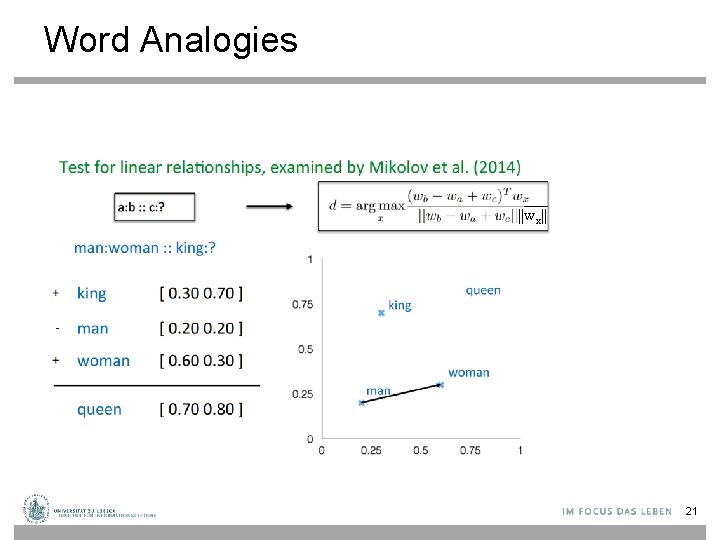
Word Analogies ||wx|| 21
The Picture: CBOW and Skip-Gram (SG) CBOW Vw SG Vc “Neural Word Embeddings as Implicit Matrix Factorization” Levy & Goldberg, NIPS 2014 22
Deep Learning 23
- Slides: 22