
Nonspecific Immunity 1 st Line of Defense Nonspecific
- Slides: 16
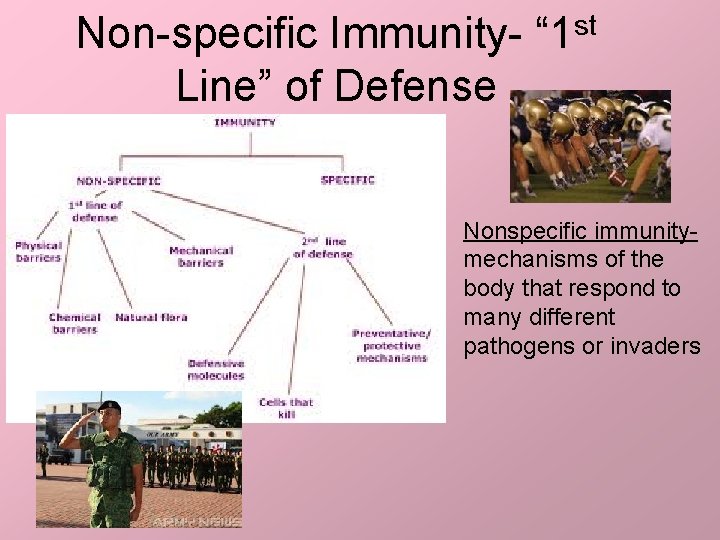
Non-specific Immunity- “ 1 st Line” of Defense Nonspecific immunitymechanisms of the body that respond to many different pathogens or invaders
Nonspecific Immunity • Prevent or destroy pathogens • Attacks anything that is considered “not self”- viruses, bacteria, prions • Attacks pathogen immediately • General defense
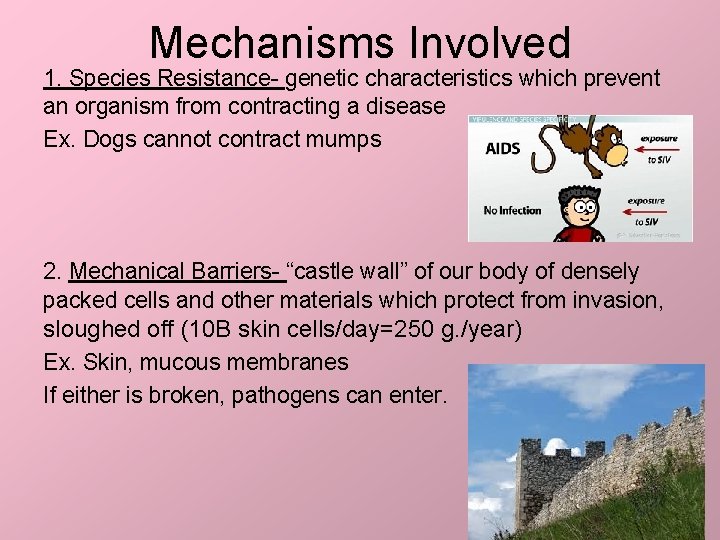
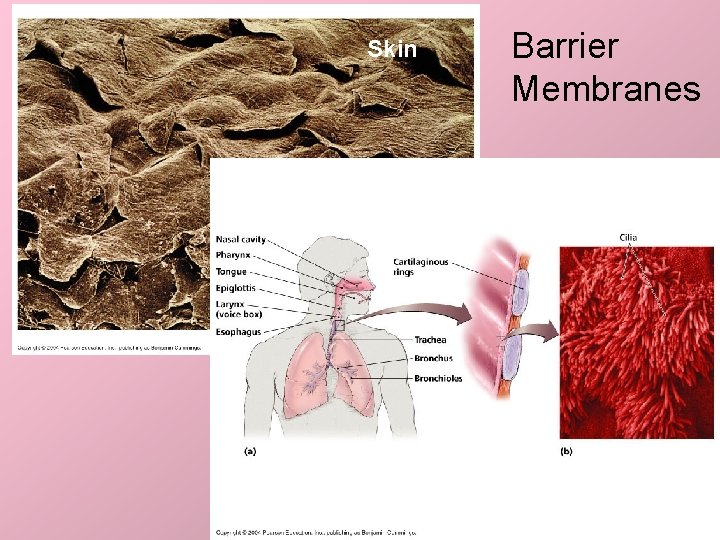
Mechanisms Involved 1. Species Resistance- genetic characteristics which prevent an organism from contracting a disease Ex. Dogs cannot contract mumps 2. Mechanical Barriers- “castle wall” of our body of densely packed cells and other materials which protect from invasion, sloughed off (10 B skin cells/day=250 g. /year) Ex. Skin, mucous membranes If either is broken, pathogens can enter.
“First Line” of Defense • Mechanical barrier on all surfaces of body exposed to external world • What are they? – Skin – Mucous membranes—nasal, respiratory – Lining of mouth – Lining of gut – Lining of vagina/urethra – Surface of eye
Skin Barrier Membranes
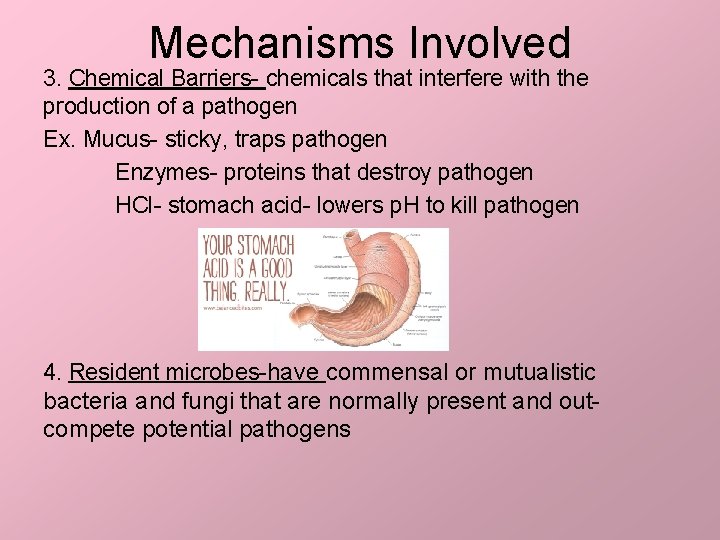
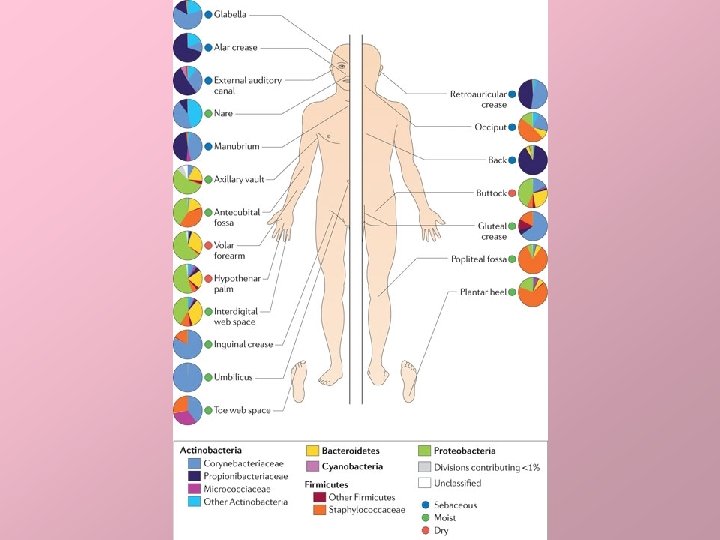
Mechanisms Involved 3. Chemical Barriers- chemicals that interfere with the production of a pathogen Ex. Mucus- sticky, traps pathogen Enzymes- proteins that destroy pathogen HCl- stomach acid- lowers p. H to kill pathogen 4. Resident microbes-have commensal or mutualistic bacteria and fungi that are normally present and outcompete potential pathogens
Lymphatic/1 st Line of Defense Review 1. List 2 of the 4 mechanisms that make up the 1 st line of defense. 2. Name the 2 mechanical barriers. 3. What organ is responsible for filtering lymph? 4. ________ immunity makes up the 1 st line of defense. 5. The thoracic duct drains what portion of the body? 6. Saliva and enzymes are part of the _______ barriers of the 1 st line of defense.
Second Line of Defense • • Fever Inflammation Phagocytosis NONSpecific- All work tightly with specific immunity
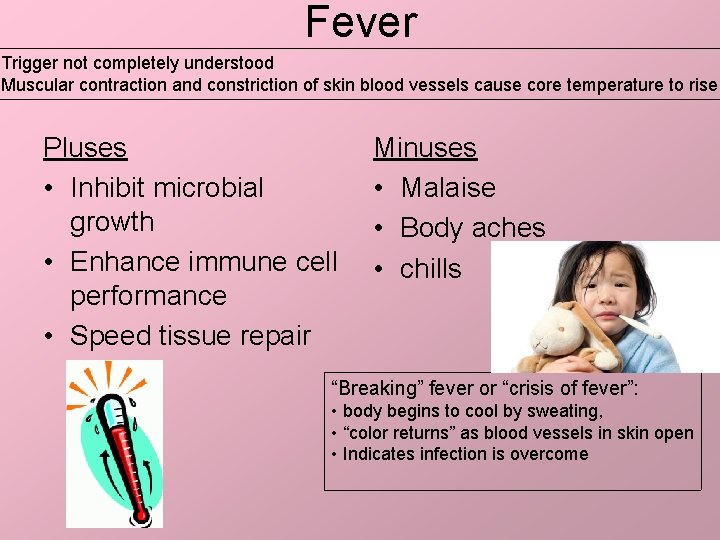
Fever Trigger not completely understood Muscular contraction and constriction of skin blood vessels cause core temperature to rise Pluses • Inhibit microbial growth • Enhance immune cell performance • Speed tissue repair Minuses • Malaise • Body aches • chills “Breaking” fever or “crisis of fever”: • body begins to cool by sweating, • “color returns” as blood vessels in skin open • Indicates infection is overcome
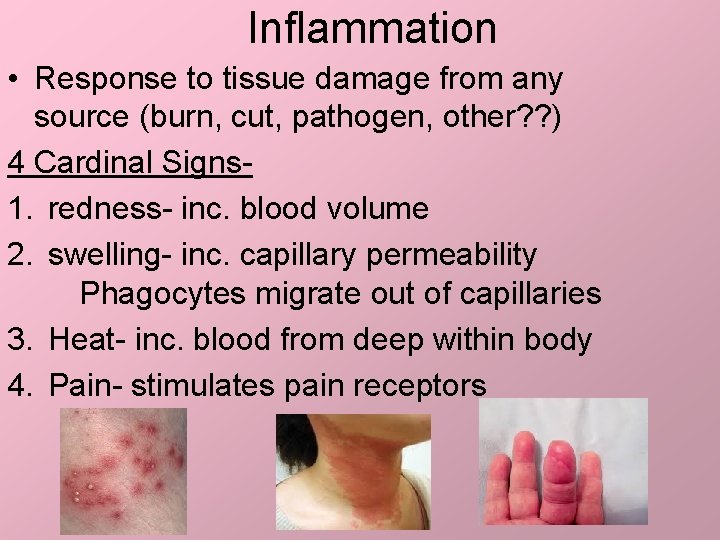
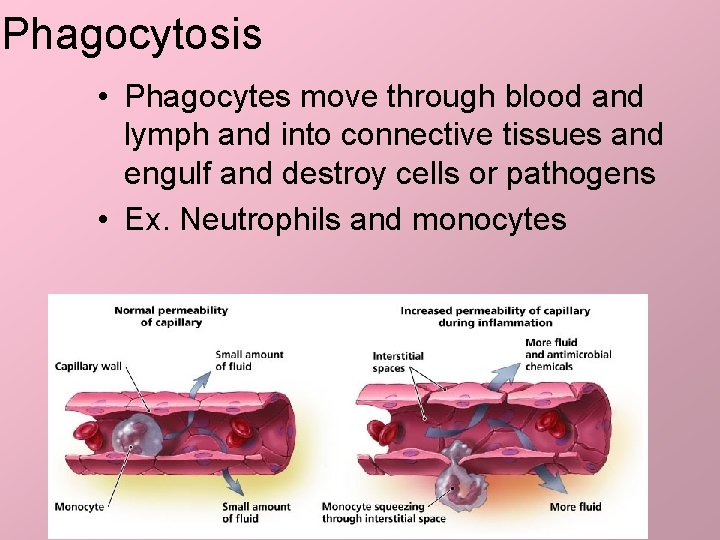
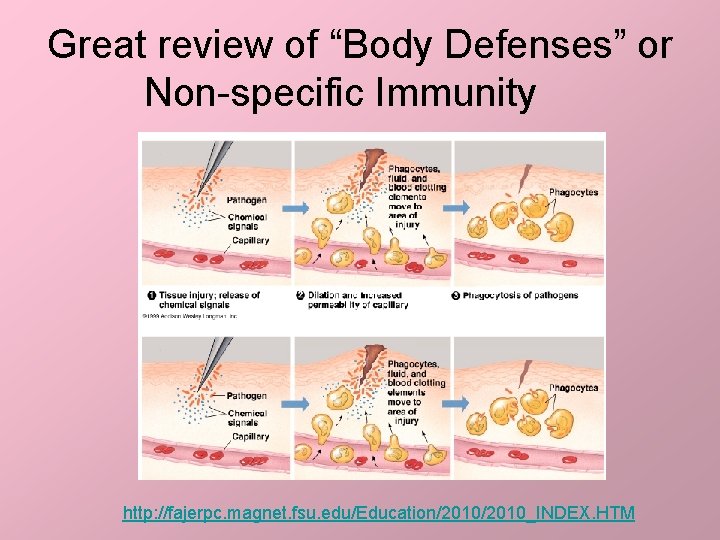
Inflammation • Response to tissue damage from any source (burn, cut, pathogen, other? ? ) 4 Cardinal Signs 1. redness- inc. blood volume 2. swelling- inc. capillary permeability Phagocytes migrate out of capillaries 3. Heat- inc. blood from deep within body 4. Pain- stimulates pain receptors
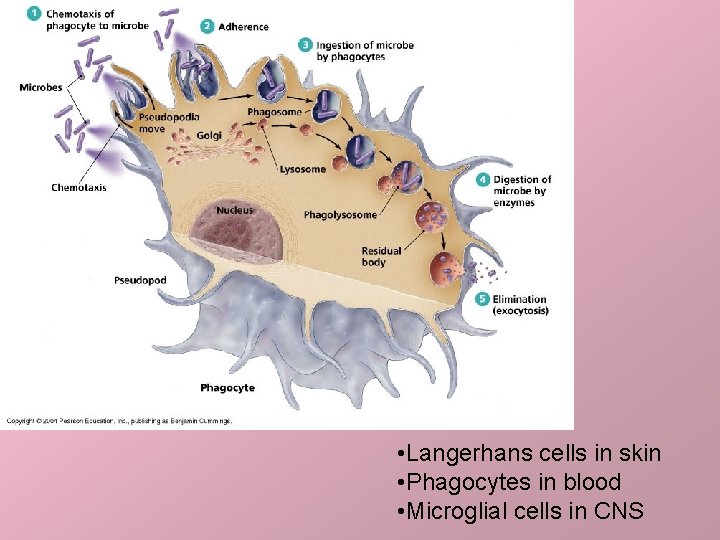
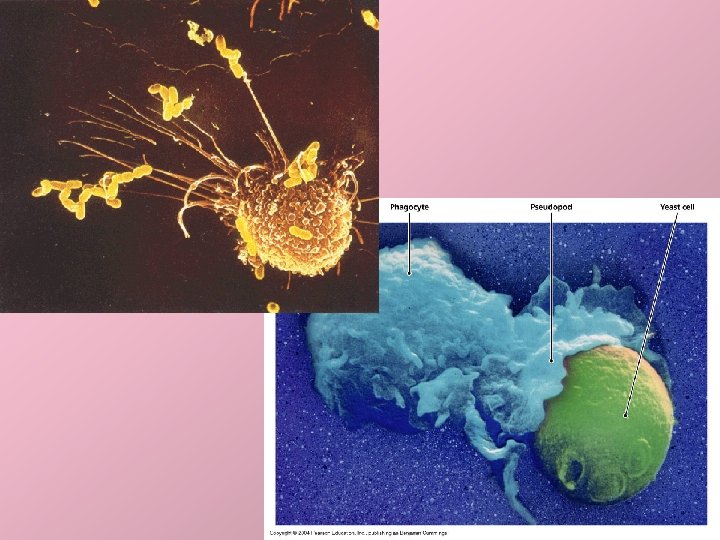
Phagocytosis • Phagocytes move through blood and lymph and into connective tissues and engulf and destroy cells or pathogens • Ex. Neutrophils and monocytes
• Langerhans cells in skin • Phagocytes in blood • Microglial cells in CNS
Great review of “Body Defenses” or Non-specific Immunity http: //fajerpc. magnet. fsu. edu/Education/2010_INDEX. HTM
1. 2. 3. 4. 5. 6. 2 nd line of Defense nd Name the 4 parts of the 2 line of defense. Is the 2 nd line Nonspecific or specific? _____ increases phagocytic cells _____ is the tissue response to injury. 4 signs of inflammation? Increase in ______ volume causes redness, swelling, and heat. 7. Stimulation of _____ receptors cause pain. 8. The process of WBCs to engulf and destroy pathogens is_______. 9. A WBC responsible for phagocytosis is a _____.