
Nonspecific Body Defenses Body surface coverings Intact skin
Nonspecific Body Defenses Body surface coverings Intact skin Mucous membranes Specialized human cells Chemicals produced by the body Copyright © 2003 Pearson Education, Inc. publishing as Benjamin Cummings Slide 12. 16

Surface Membrane Barriers – First Line of Defense The skin Physical barrier to foreign materials p. H of the skin is acidic to inhibit bacterial growth Sebum is toxic to bacteria Vaginal secretions are very acidic Copyright © 2003 Pearson Education, Inc. publishing as Benjamin Cummings Slide 12. 17 a
Surface Membrane Barriers – First Line of Defense Stomach mucosa Secretes hydrochloric acid Has protein-digesting enzymes Saliva and lacrimal fluid contain lysozyme Mucus traps microogranisms in digestive and respiratory pathways Copyright © 2003 Pearson Education, Inc. publishing as Benjamin Cummings Slide 12. 17 b
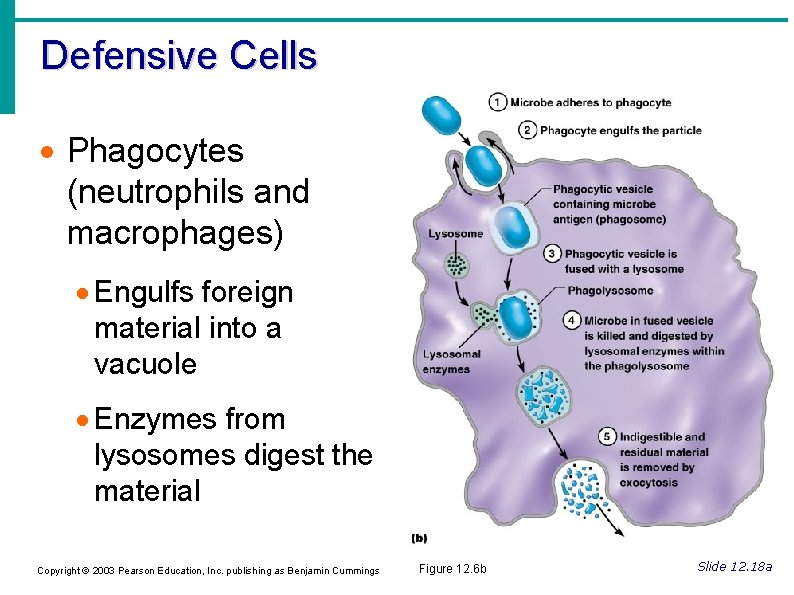
Defensive Cells Phagocytes (neutrophils and macrophages) Engulfs foreign material into a vacuole Enzymes from lysosomes digest the material Copyright © 2003 Pearson Education, Inc. publishing as Benjamin Cummings Figure 12. 6 b Slide 12. 18 a

Defensive Cells Natural killer cells Can lyse and kill cancer cells Can destroy virusinfected cells Copyright © 2003 Pearson Education, Inc. publishing as Benjamin Cummings Figure 12. 6 b Slide 12. 18 b

Inflammatory Response Second Line of Defense Triggered when body tissues are injured Produces four cardinal signs Redness Heat Swelling Pain Results in a chain of events leading to protection and healing Copyright © 2003 Pearson Education, Inc. publishing as Benjamin Cummings Slide 12. 19
Functions of the Inflammatory Response Prevents spread of damaging agents Disposes of cell debris and pathogens Sets the stage for repair Copyright © 2003 Pearson Education, Inc. publishing as Benjamin Cummings Slide 12. 20

Steps in the Inflammatory Response Figure 12. 7 Copyright © 2003 Pearson Education, Inc. publishing as Benjamin Cummings Slide 12. 21
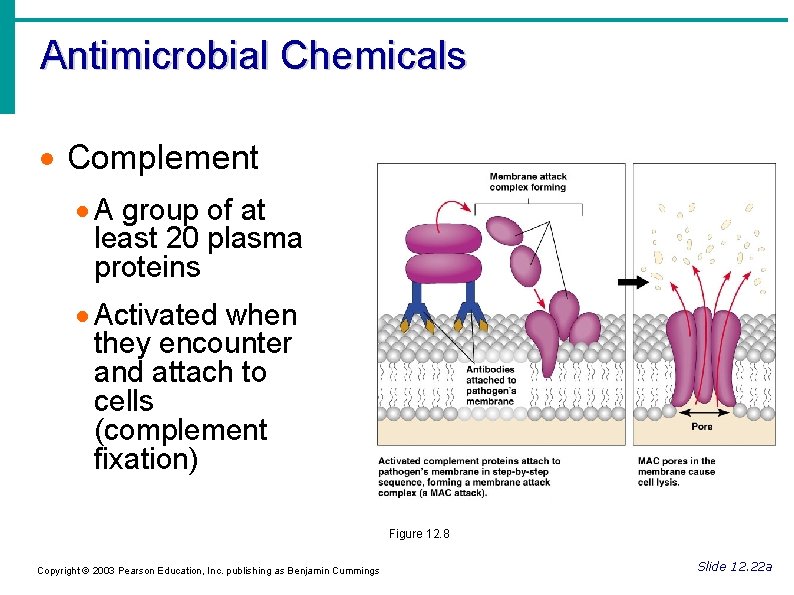
Antimicrobial Chemicals Complement A group of at least 20 plasma proteins Activated when they encounter and attach to cells (complement fixation) Figure 12. 8 Copyright © 2003 Pearson Education, Inc. publishing as Benjamin Cummings Slide 12. 22 a
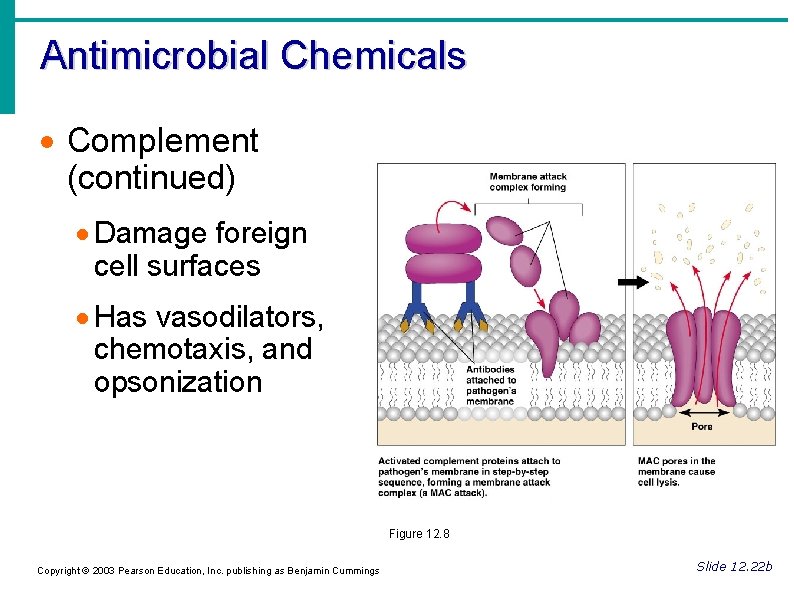
Antimicrobial Chemicals Complement (continued) Damage foreign cell surfaces Has vasodilators, chemotaxis, and opsonization Figure 12. 8 Copyright © 2003 Pearson Education, Inc. publishing as Benjamin Cummings Slide 12. 22 b
Antimicrobial Chemicals Interferon Secreted proteins of virus-infected cells Bind to healthy cell surfaces to inhibit viruses binding Copyright © 2003 Pearson Education, Inc. publishing as Benjamin Cummings Slide 12. 22 c
Fever Abnormally high body temperature Hypothalmus heat regulation can be reset by pyrogens (secreted by white blood cells) High temperatures inhibit the release of iron and zinc from liver and spleen needed by bacteria Fever also increases the speed of tissue repair Copyright © 2003 Pearson Education, Inc. publishing as Benjamin Cummings Slide 12. 23
- Slides: 12