
Nonrenewable Energy Chapter 17 17 1 Energy Resources
Nonrenewable Energy Chapter 17
17 -1 Energy Resources and Fossil Fuels • List five factors that influence the value of a fuel. • Explain how fuels are used to generate electricity in an electric power plant. • Identify patterns of energy consumption and production in the world and in the United States. • Explain how fossil fuels form and how they are used. • Compare the advantages and disadvantages of fossilfuel use. • List three factors that influence predictions of fossilfuel production.
17 -1 Vocabulary • A fossil fuel is a nonrenewable energy resource formed from the remains of organisms that lived long ago; examples include oil, coal, and natural gas. • An electric generator is a device that converts mechanical energy into electrical energy. • Petroleum is a liquid mixture of complex hydrocarbon compounds that is used widely as a fuel source. • Oil reserves are oil deposits that are discovered and are in commercial production.
Fuel! What is it good for? • We use fuels to – Run cars – Run ships – Run planes – Run factories • Most of these are naturally occurring – Natural resources
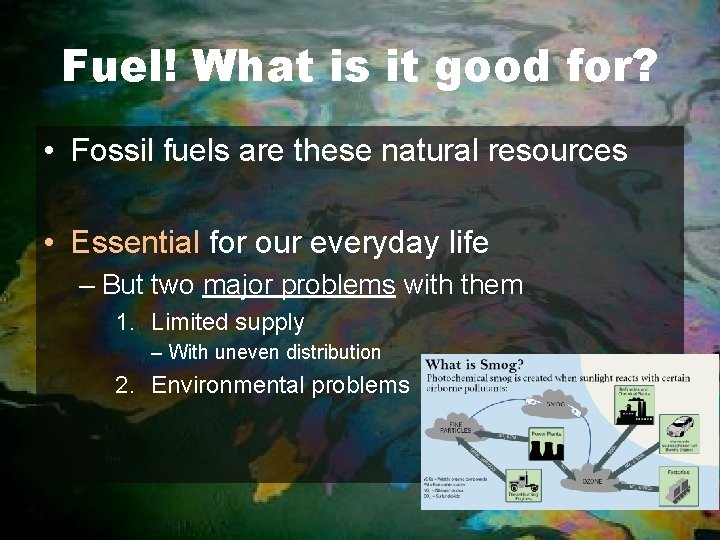
Fuel! What is it good for? • Fossil fuels are these natural resources • Essential for our everyday life – But two major problems with them 1. Limited supply – With uneven distribution 2. Environmental problems
Fuels for Different Uses • List all of the uses you can for fossil fuels INDIVIDUALLY! – Then I’ll stamp • Then, with a group, try to break them into five categories – And I’ll stamp again
Fuels for Different Uses • There are five main uses for fossil fuels 1. 2. 3. 4. 5. Cooking Transportation Manufacturing (making things) Heating and cooling Produce electricity to run stuff
Fuels for Different Uses • Certain fuels are used with certain tasks • We want to look at a fuel’s – Energy output – Content – Cost – Availability – Safety
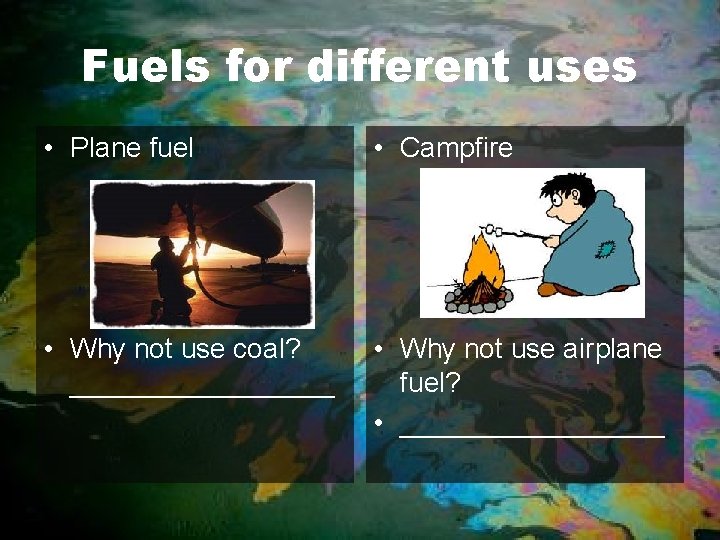
Fuels for different uses • Plane fuel • Campfire • Why not use coal? _________ • Why not use airplane fuel? • _________
Electricity—Power on Demand • Chemical energy stored in fuel can be converted into electrical energy • Electrical energy is convenient – Quick and easy to transport – Can be used over short or long distances
Electricity—Power on Demand • Negatives of electrical energy – Difficult to store – Have to use another energy source to generate it
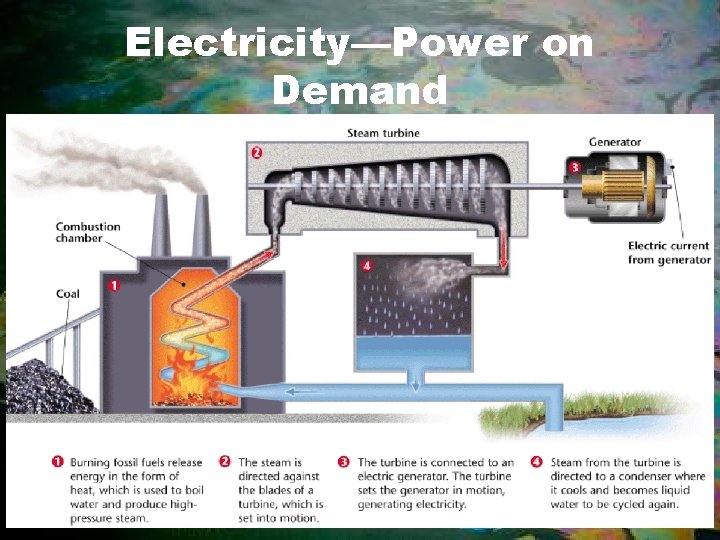
Electricity—Power on Demand
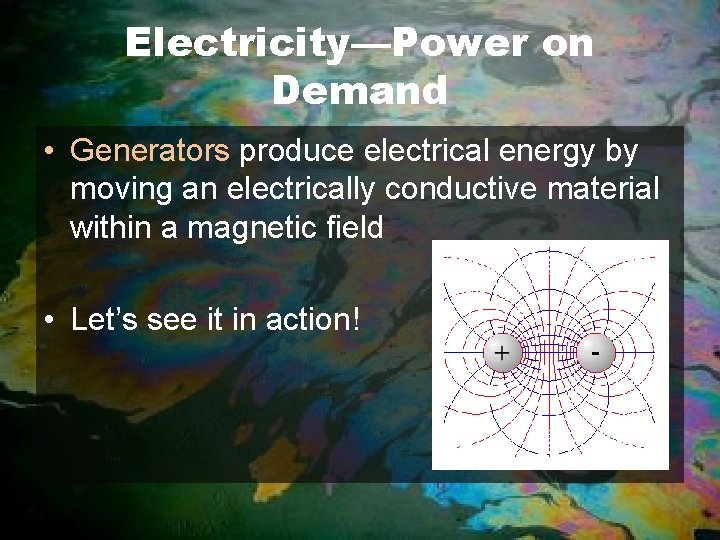
Electricity—Power on Demand • Generators produce electrical energy by moving an electrically conductive material within a magnetic field • Let’s see it in action!
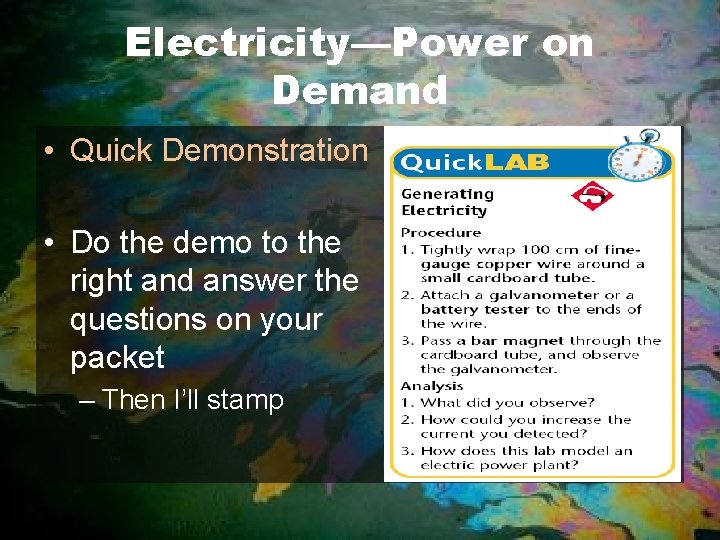
Electricity—Power on Demand • Quick Demonstration • Do the demo to the right and answer the questions on your packet – Then I’ll stamp
Electricity—Power on Demand • Turbines are commonly used in generators – They turn to get energy – Usually water is boiled to make steam • The steam turns the turbine – The water can be heated with all sorts of things • Such as coal, gas, or nuclear energy
Energy Use • Every item requires energy to produce – Most items have that cost built into the price
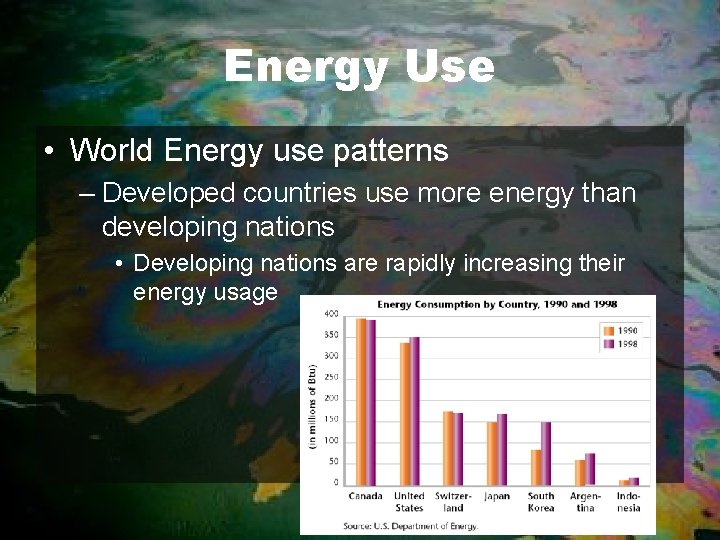
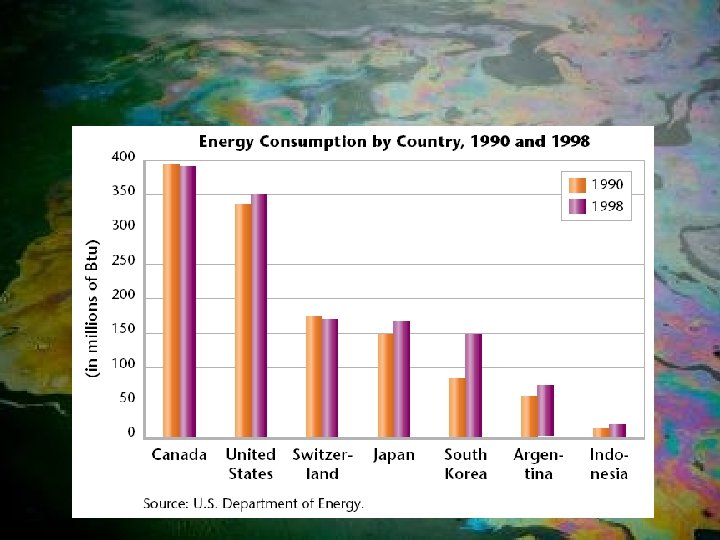
Energy Use • World Energy use patterns – Developed countries use more energy than developing nations • Developing nations are rapidly increasing their energy usage
Energy Use • Varies within developed nations – Japan and Sweden have more income than the US, but they use less energy • WHY? ________________
Energy Use in the US • We are number three in energy usage in the world 1. Canada 2. United Arab Emirates
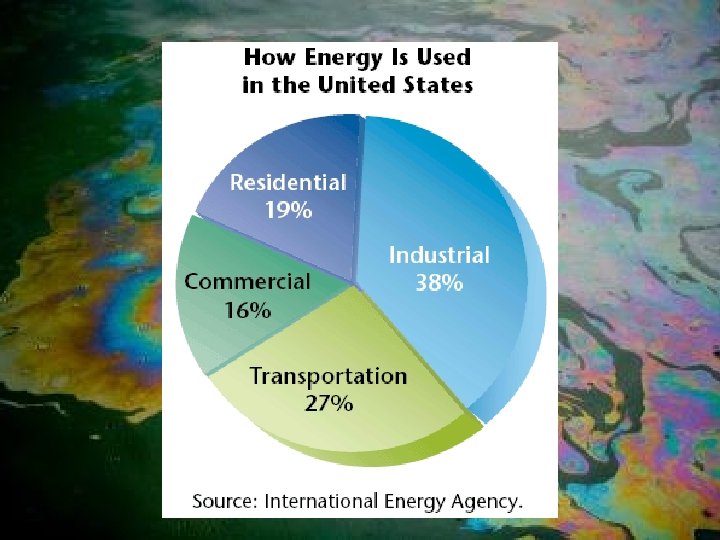
Energy Use in the US • A huge amount of our energy goes into transportation (27%) – We often use inefficient trucks to move goods – Most people do not use public transportation • Low gas taxes / prices – No incentive to switch
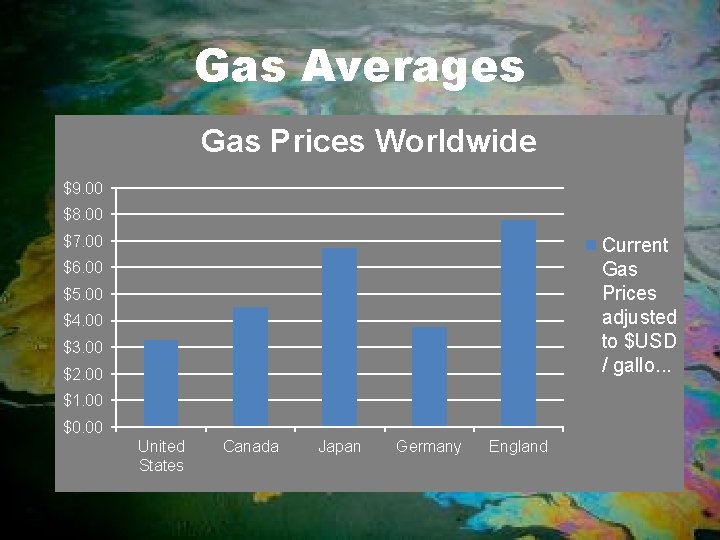
Gas Averages Gas Prices Worldwide $9. 00 $8. 00 $7. 00 Current Gas Prices adjusted to $USD / gallo. . . $6. 00 $5. 00 $4. 00 $3. 00 $2. 00 $1. 00 $0. 00 United States Canada Japan Germany England
Nonrenewable Resources • 3 Main categories – Coal – Petroleum – Natural Gas
Nonrenewable Resources • You will fill out the chart in your notes, including – Formation (3 -5 steps) – Uses (at least 2) – Environmental Effects /Disadvantages (2 -3) – Advantages (2) • Then I’ll stamp
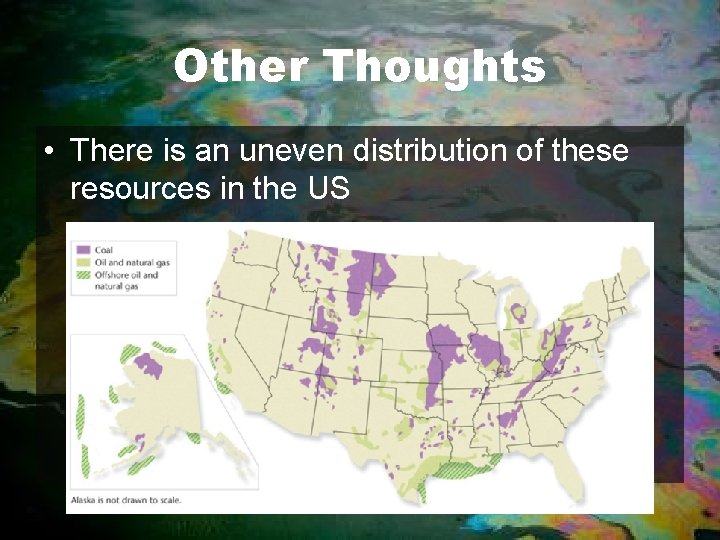
Other Thoughts • There is an uneven distribution of these resources in the US
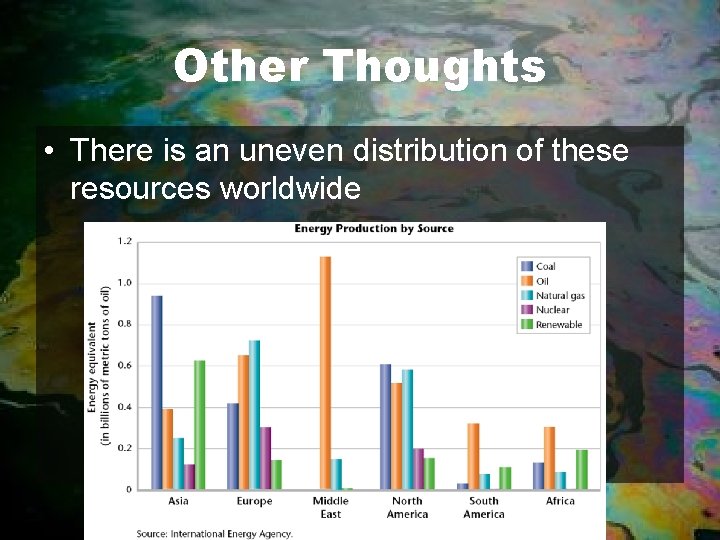
Other Thoughts • There is an uneven distribution of these resources worldwide
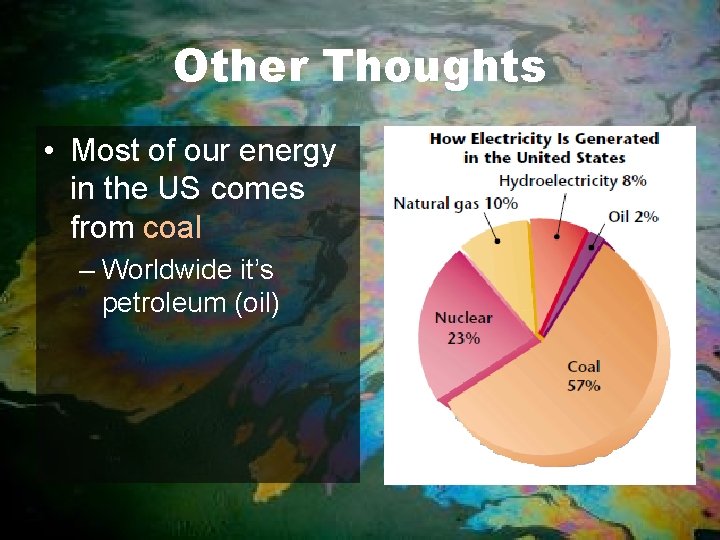
Other Thoughts • Most of our energy in the US comes from coal – Worldwide it’s petroleum (oil)
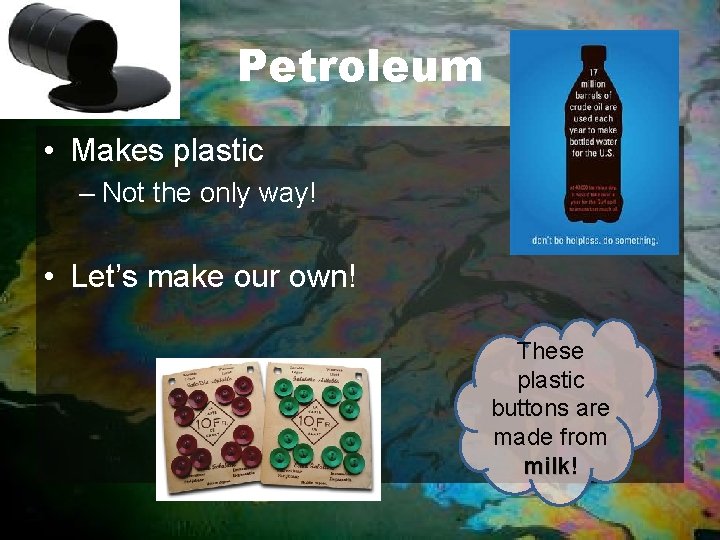
Petroleum • Makes plastic – Not the only way! • Let’s make our own! These plastic buttons are made from milk!
Future energy? • We will read the case study together (p 472). • Then you will answer questions on it. – Then I’ll stamp
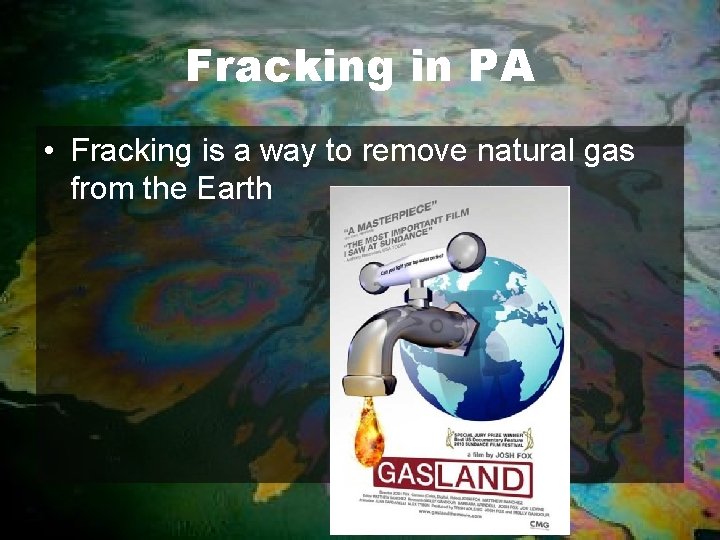
Fracking in PA • Fracking is a way to remove natural gas from the Earth
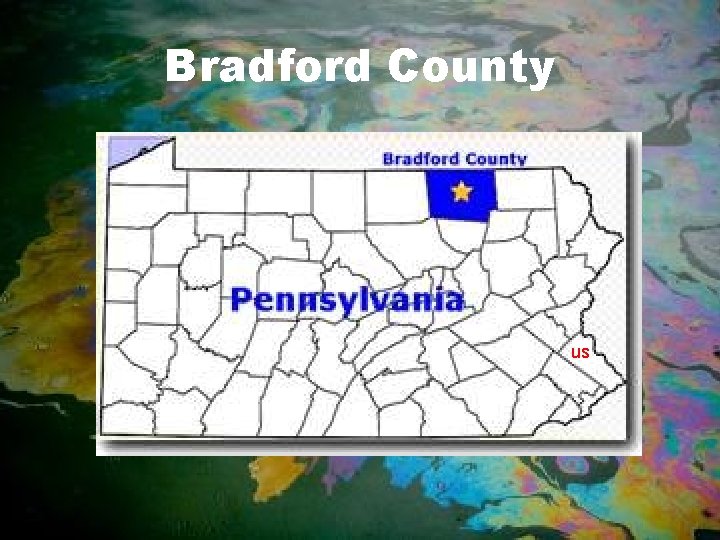
Bradford County us
Bradford County Gas Wells
Fossil Fuels and the Future • Today— 90% of our energy comes from fossil fuels • 2050—the demand will double! – More people – More nations becoming developed
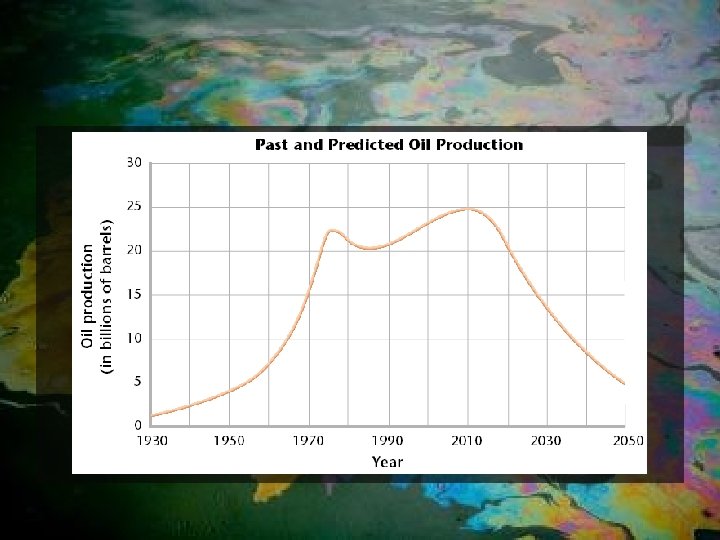
Predicted oil Production • Production is peaked (2010) • With better technology, may be able to extract oil better – Current technology is limited • Are there future deposits not discovered?
17 -1 Energy Resources and Fossil Fuels • List five factors that influence the value of a fuel. • Explain how fuels are used to generate electricity in an electric power plant. • Identify patterns of energy consumption and production in the world and in the United States. • Explain how fossil fuels form and how they are used. • Compare the advantages and disadvantages of fossilfuel use. • List three factors that influence predictions of fossilfuel production.
17 -2 Nuclear Energy • Describe nuclear fission. • Describe how a nuclear power plant works. • List three advantages and three disadvantages of nuclear energy.
17 -2 Vocabulary • Nuclear energy • Nuclear fission • Nuclear fusion
The Nuclear Era • 1950 s and 1960 s – Nuclear energy was thought to be the energy of the future • Clean • Plentiful • 1970 s and 1980 s – 120 planned nuclear power plants were cancelled • Why?
Fission: Splitting Atoms • Nuclear energy is the energy released by a fission or fusion reaction. It represents the binding energy of the atomic nucleus. • Atoms forces within an atoms are a million times stronger than the bonds that hold atoms together – Uranium is the main element we use
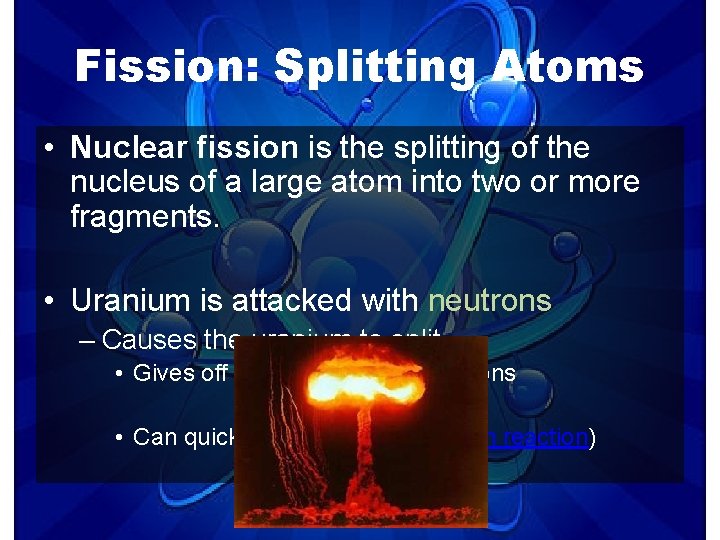
Fission: Splitting Atoms • Nuclear fission is the splitting of the nucleus of a large atom into two or more fragments. • Uranium is attacked with neutrons – Causes the uranium to split • Gives off energy and more neutrons • Can quickly get out of hand (chain reaction)
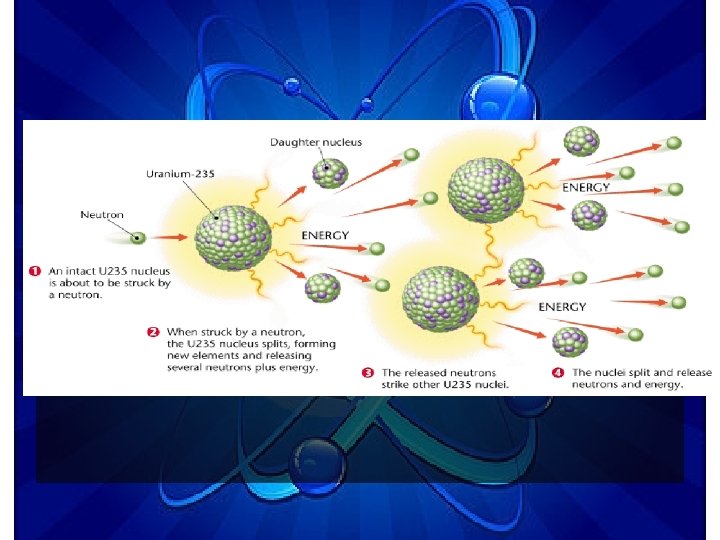
Fission: Splitting Atoms • Why don’t our nuclear power plants get out of hand? – WE make sure they are highly controlled • 90+% Uranium in weapons • 3. 5% Uranium in power plants
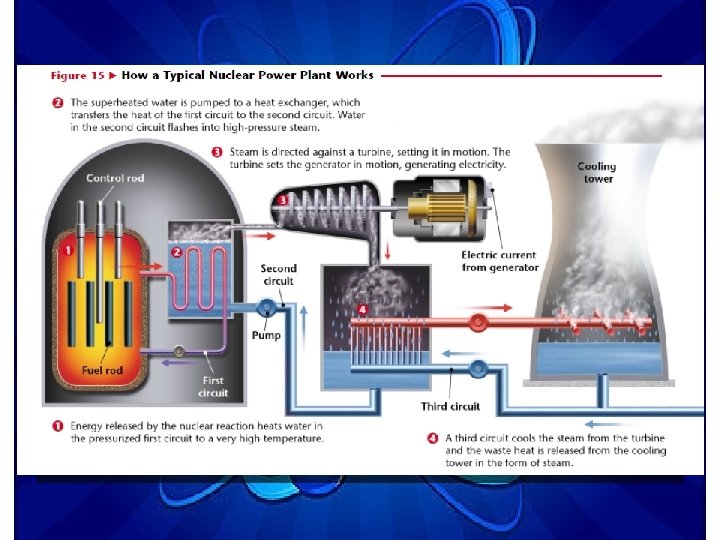
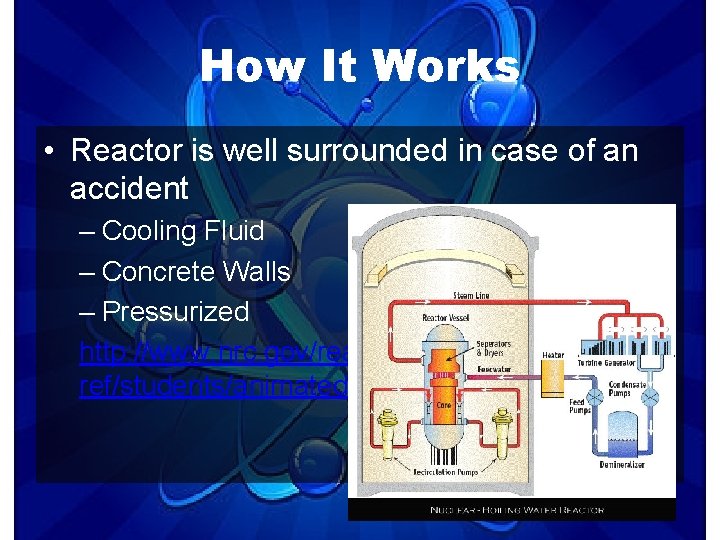
How It Works • Reactor is well surrounded in case of an accident – Cooling Fluid – Concrete Walls – Pressurized http: //www. nrc. gov/reading-rm/basicref/students/animated-pwr. html
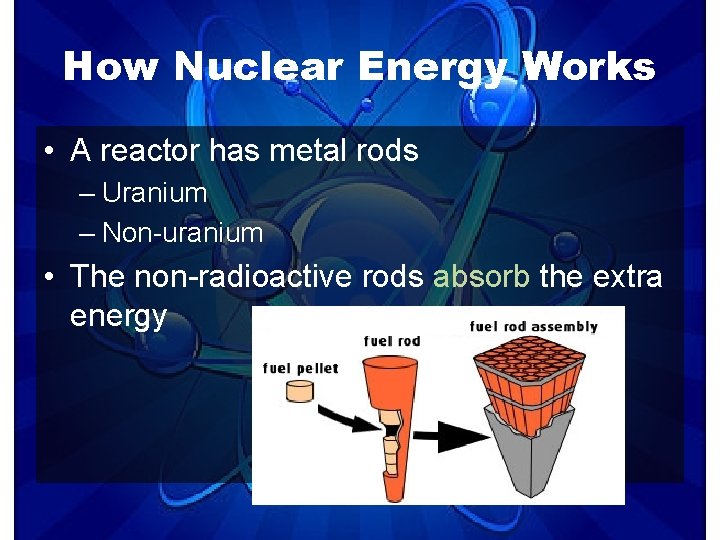
How Nuclear Energy Works • A reactor has metal rods – Uranium – Non-uranium • The non-radioactive rods absorb the extra energy
How Nuclear Energy Works • Heat released from the reaction boils water – Steam turns a turbine • Electricity is generated
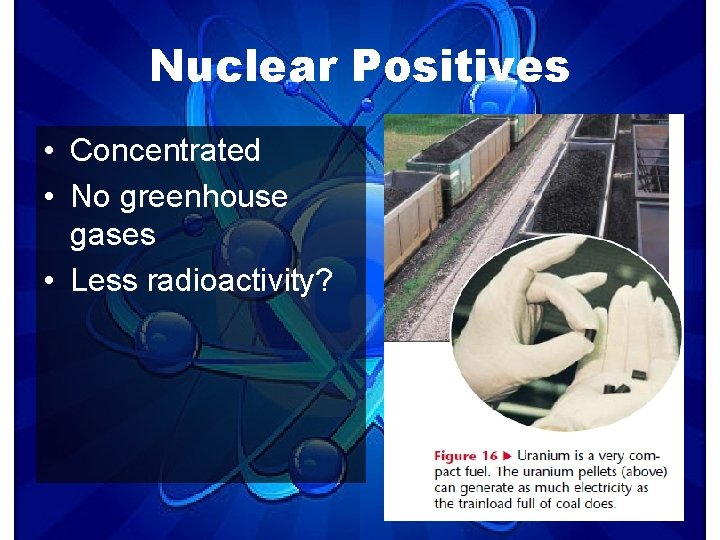
Nuclear Positives • Concentrated • No greenhouse gases • Less radioactivity?
Why don’t we use it? • 75% of France’s electricity comes from nuclear power – They only put out 1/5 the emissions we do
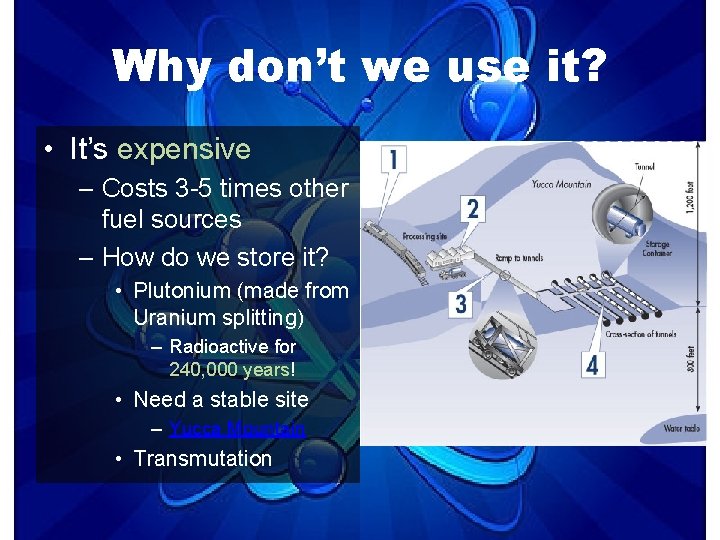
Why don’t we use it? • It’s expensive – Costs 3 -5 times other fuel sources – How do we store it? • Plutonium (made from Uranium splitting) – Radioactive for 240, 000 years! • Need a stable site – Yucca Mountain • Transmutation
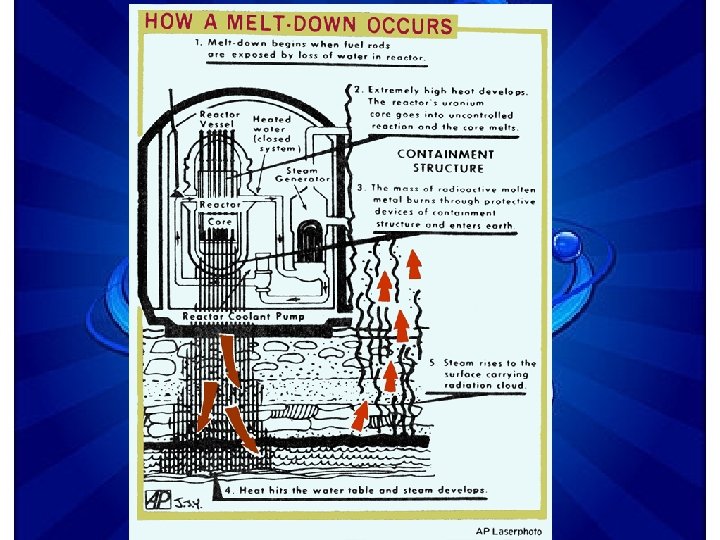
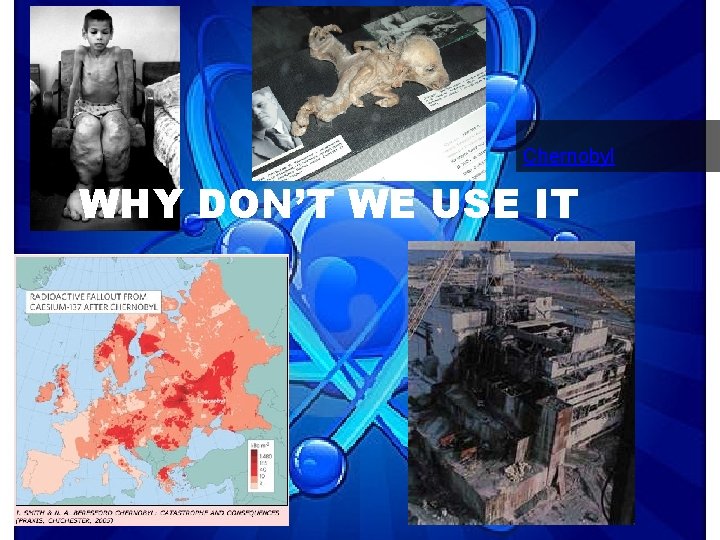
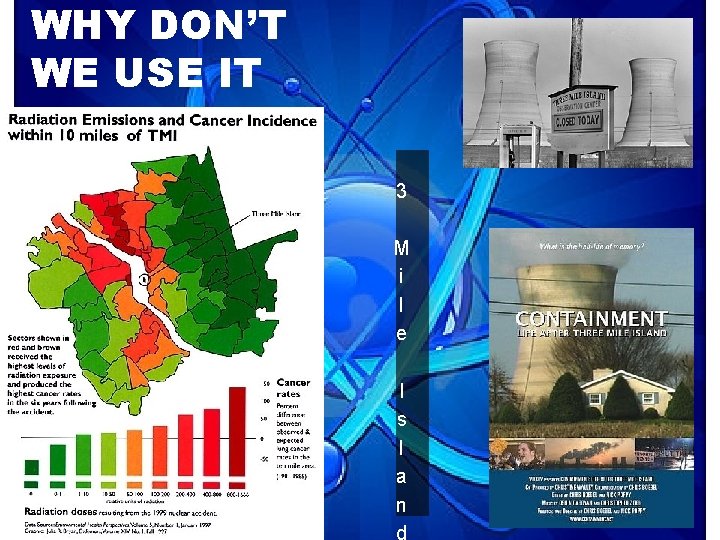
Why don’t we use it? • Safety concerns – Chernobyl (1986) • Engineers turned off most of safety controls for unauthorized test – 3 Mile Island (PA) (1979) • Human error • Blocked valves • Broken pumps
Chernobyl WHY DON’T WE USE IT
WHY DON’T WE USE IT 3 M i l e I s l a n
INDEPENDENTLY, write a 5 -10 sentence summary on a separate page on whether or not you think the US should • Stop using nuclear power completely • Keep using the power we have but not build any more (status quo) • Build additional nuclear power plants and use this source more in the future WHAT DO YOU THINK?
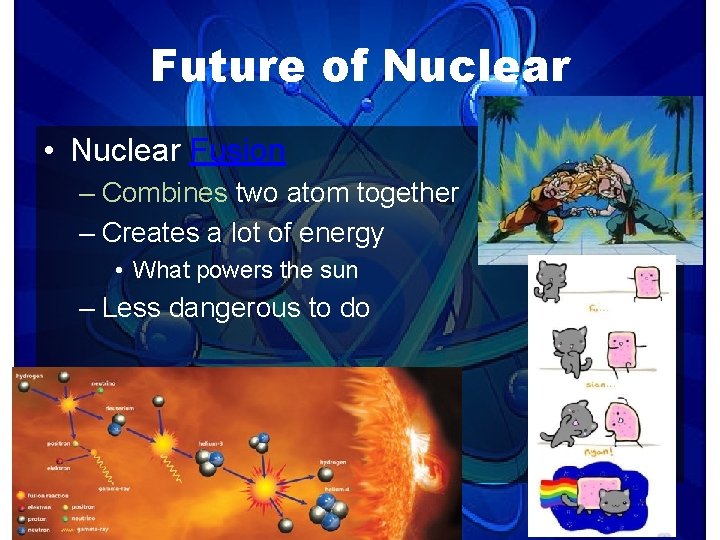
Future of Nuclear • Nuclear Fusion – Combines two atom together – Creates a lot of energy • What powers the sun – Less dangerous to do
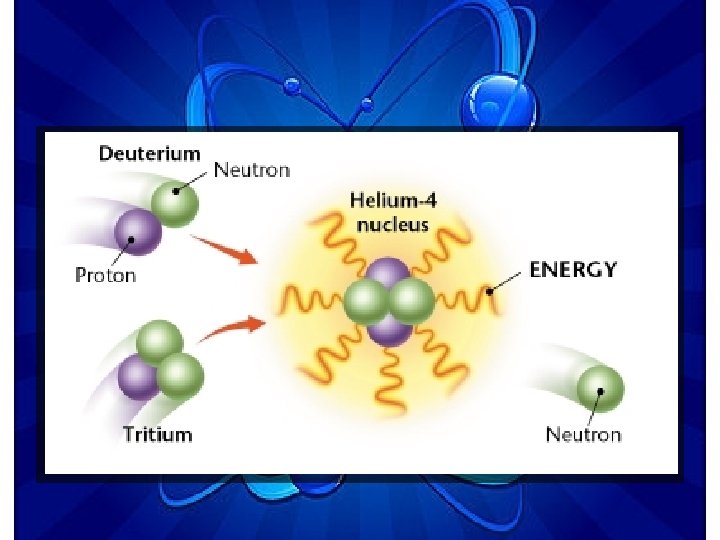
Future of Nuclear • Nuclear Fusion is the combination of the nuclei of small atoms to form a larger nucleus. Fusion releases tremendous amounts of energy. – Hard to do • Need temps above 1, 000 ! • Need high concentrations of atoms • Need a confined area – Never achieved • We’re working on it – Hadron Collider
17 -2 Nuclear Energy • Describe nuclear fission. • Describe how a nuclear power plant works. • List three advantages and three disadvantages of nuclear energy.
Your Exam • You are to conduct research on nuclear energy • You are to create a 3 page, double spaced paper, 12 point font Times New Roman • This is an individual assignment and counts as your test for Chapter 17 • It is due Tuesday, May 28 th • Paper receives a 10% reduction in points for each day late
Your Exam: Topics* • What is the fate of nuclear energy? • What things should be considered when deciding to use nuclear energy? • Compare the value of nuclear energy to other forms of renewable energy sources • Compare the value of nuclear energy to other forms of nonrenewable energy sources • Why is the U. S. “deinvesting” in nuclear energy? • Trace the history of nuclear energy use globally. • *other topics will be considered as up to the discretion of your instructor
- Slides: 63