
Nonparametric Tests Chi Square 2 Lesson 16 Parametric
- Slides: 17
Nonparametric Tests: Chi Square 2 Lesson 16
Parametric vs. Nonparametric Tests Parametric hypothesis test 2 l about population parameter (m or s ) l z, t, F tests l interval/ratio data n Nonparametric tests l do not test a specific parameter l nominal & ordinal data l frequency data ~ n
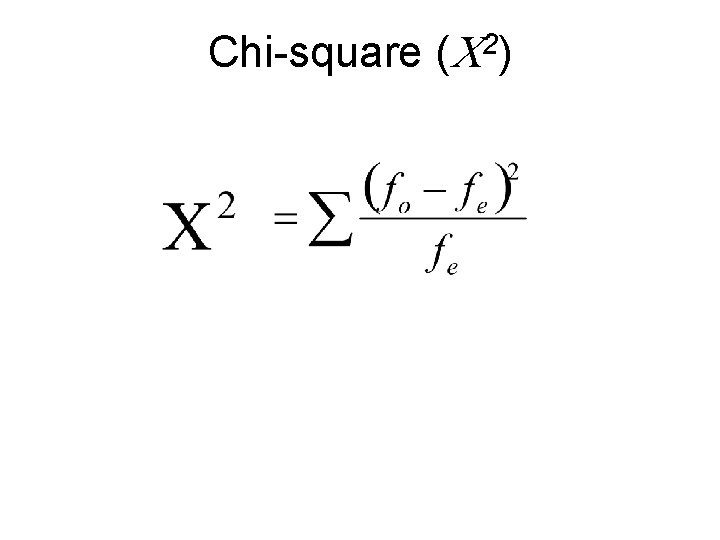
Chi-square ( 2) Nonparametric tests l same 4 steps as parametric tests n Chi-square test for goodness of fit l single variable n Chi-square test for independence l two variables n Same formula for both l degrees of freedom different l fe calculated differently ~ n
Sample Data: 2 Frequency n Expected frequency (fe) l fe = pn n Observed frequency (fo) l S fo = n n Degrees of freedom: Goodness of fit l C-1 l C = number of cells (categories) 2 l C cv from table B. 5, page 364 ~ n
Chi-square ( 2)
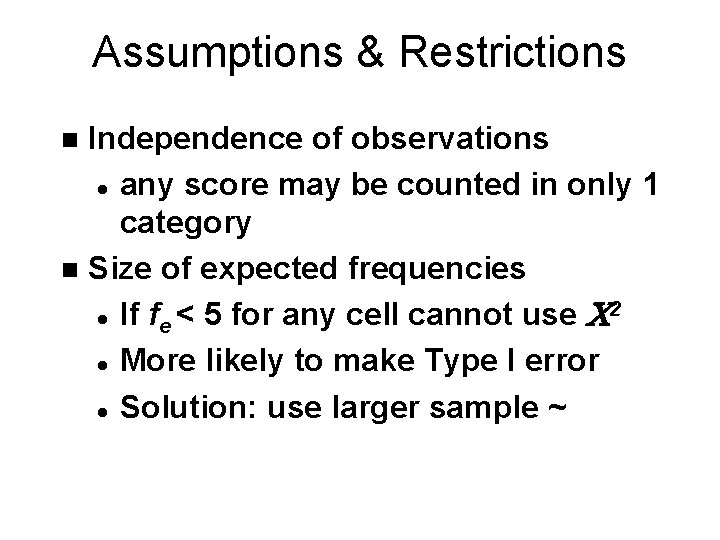
Assumptions & Restrictions Independence of observations l any score may be counted in only 1 category n Size of expected frequencies 2 l If fe < 5 for any cell cannot use C l More likely to make Type I error l Solution: use larger sample ~ n
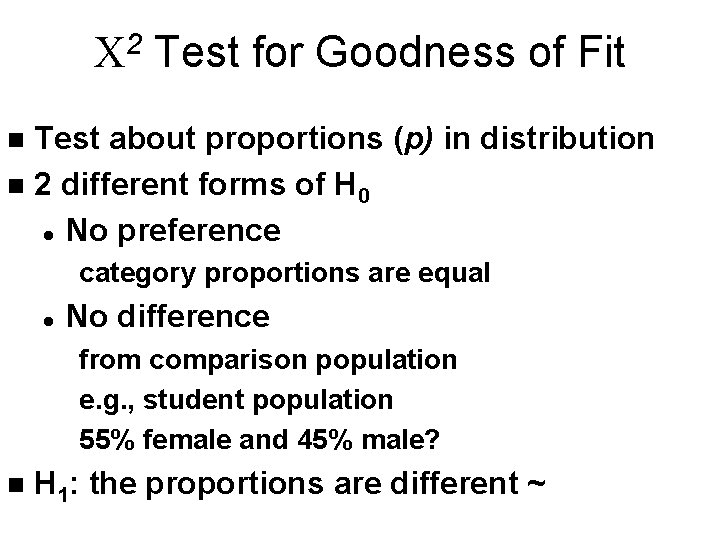
C 2 Test for Goodness of Fit Test about proportions (p) in distribution n 2 different forms of H 0 l No preference n category proportions are equal l No difference from comparison population e. g. , student population 55% female and 45% male? n H 1: the proportions are different ~
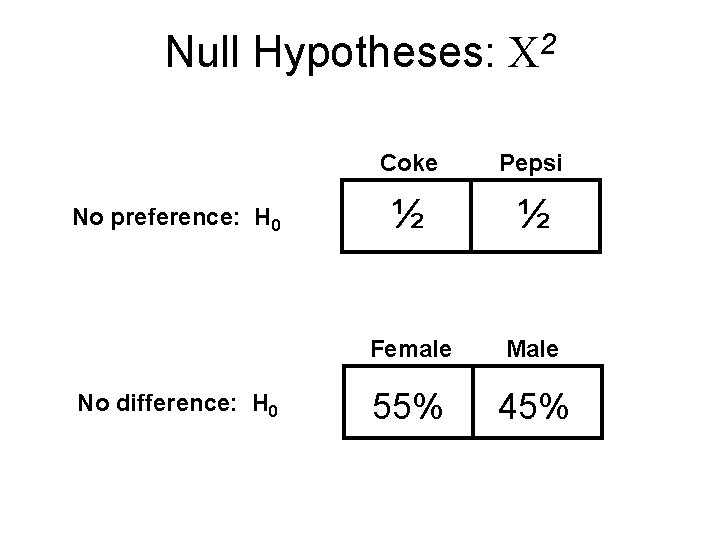
Null Hypotheses: C 2 No preference: H 0 No difference: H 0 Coke Pepsi ½ ½ Female Male 55% 45%
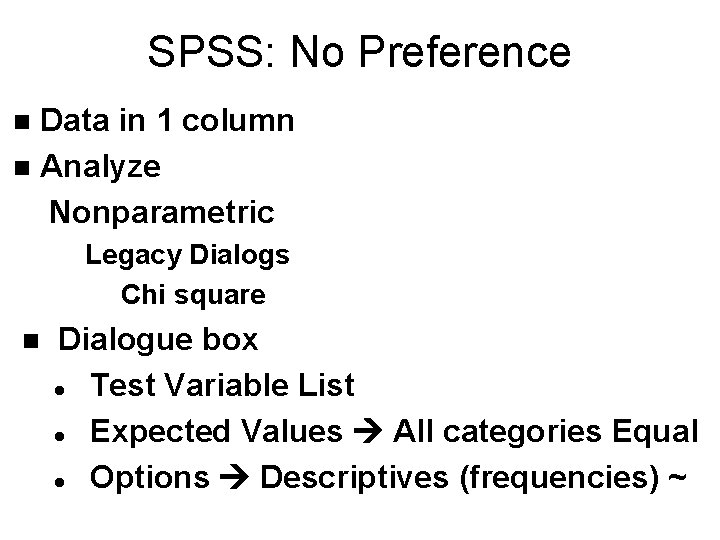
SPSS: No Preference Data in 1 column n Analyze Nonparametric n Legacy Dialogs Chi square n Dialogue box l Test Variable List l Expected Values All categories Equal l Options Descriptives (frequencies) ~
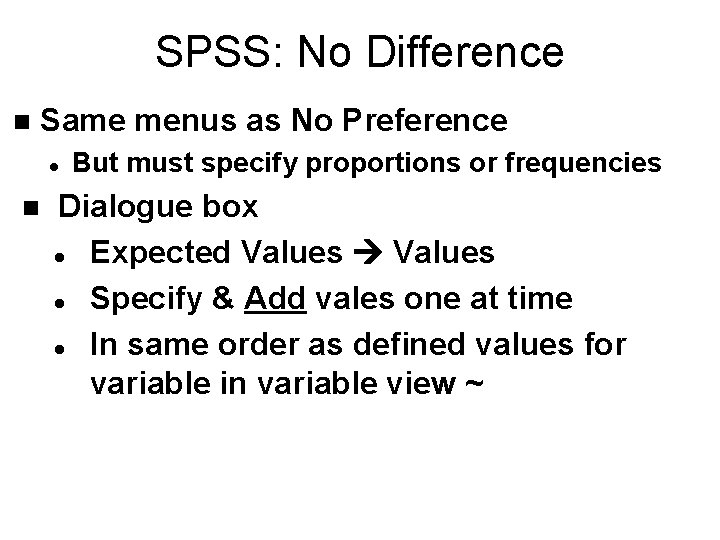
SPSS: No Difference n Same menus as No Preference l n But must specify proportions or frequencies Dialogue box l Expected Values l Specify & Add vales one at time l In same order as defined values for variable in variable view ~
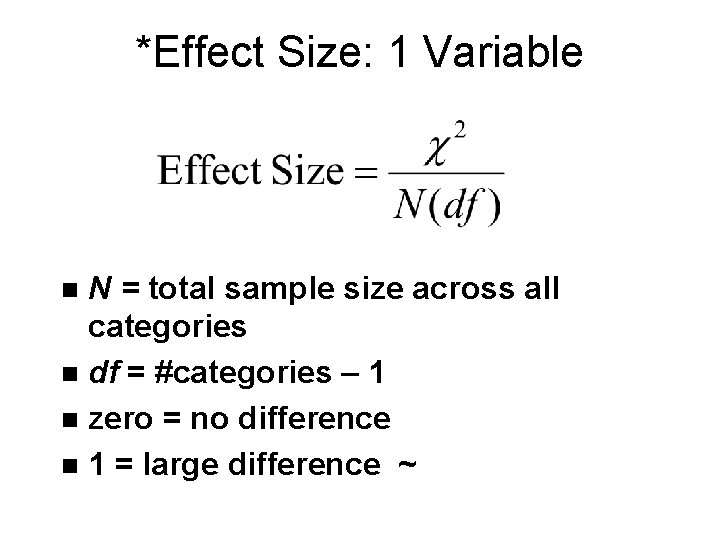
*Effect Size: 1 Variable N = total sample size across all categories n df = #categories – 1 n zero = no difference n 1 = large difference ~ n
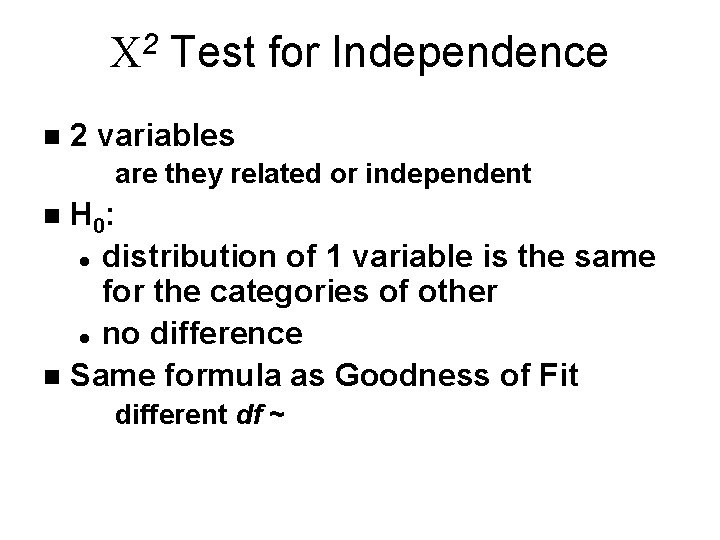
C 2 Test for Independence n 2 variables are they related or independent H 0: l distribution of 1 variable is the same for the categories of other l no difference n Same formula as Goodness of Fit n different df ~
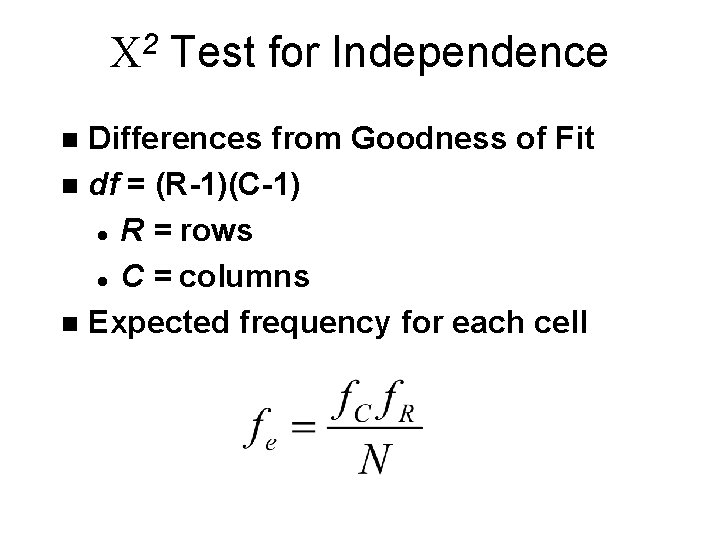
C 2 Test for Independence Differences from Goodness of Fit n df = (R-1)(C-1) l R = rows l C = columns n Expected frequency for each cell n
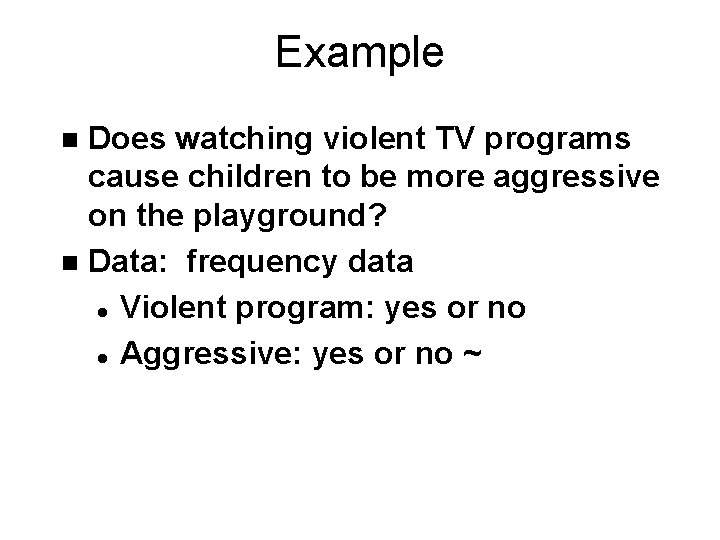
Example Does watching violent TV programs cause children to be more aggressive on the playground? n Data: frequency data l Violent program: yes or no l Aggressive: yes or no ~ n
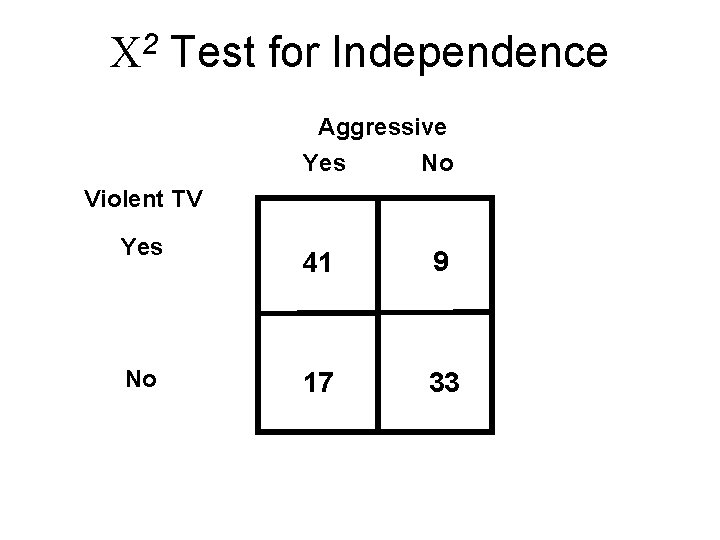
C 2 Test for Independence Aggressive Yes No 41 9 17 33 Violent TV Yes No
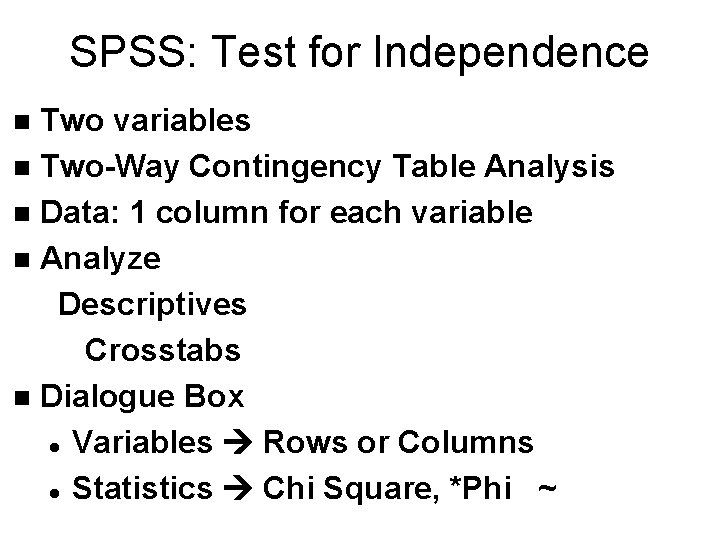
SPSS: Test for Independence Two variables n Two-Way Contingency Table Analysis n Data: 1 column for each variable n Analyze Descriptives Crosstabs n Dialogue Box l Variables Rows or Columns l Statistics Chi Square, *Phi ~ n
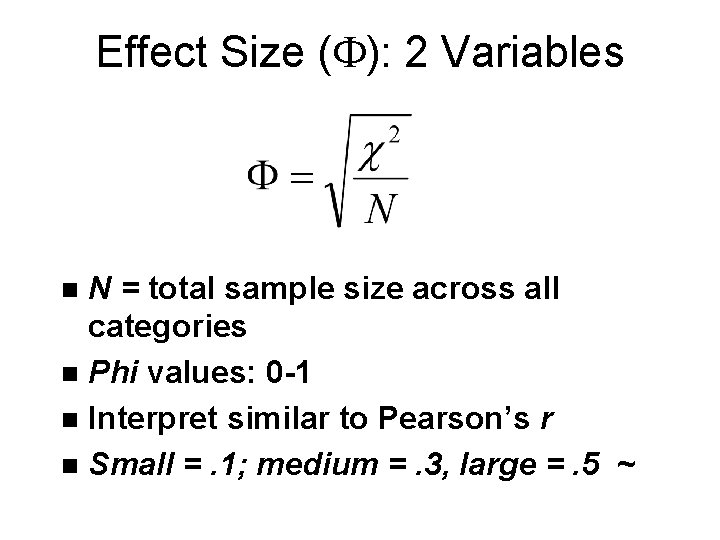
Effect Size ( ): 2 Variables N = total sample size across all categories n Phi values: 0 -1 n Interpret similar to Pearson’s r n Small =. 1; medium =. 3, large =. 5 ~ n