
NonMendelian Inheritanceanother pattern Genes rarely operate in isolation
- Slides: 34
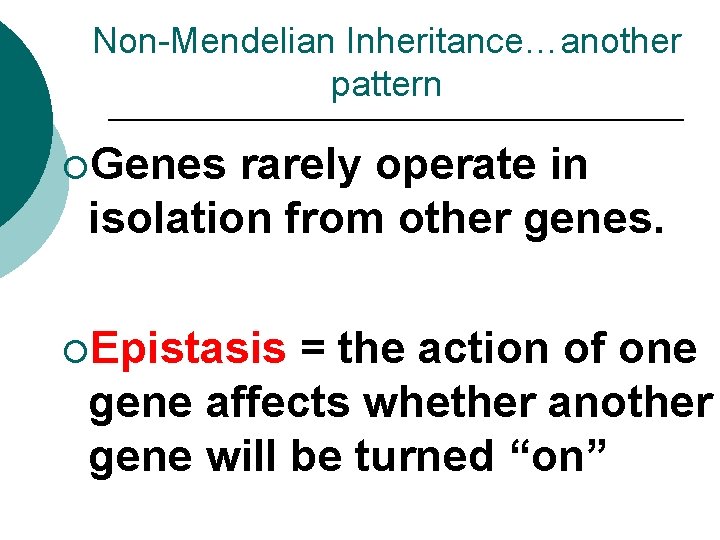
Non-Mendelian Inheritance…another pattern ¡Genes rarely operate in isolation from other genes. ¡Epistasis = the action of one gene affects whether another gene will be turned “on”
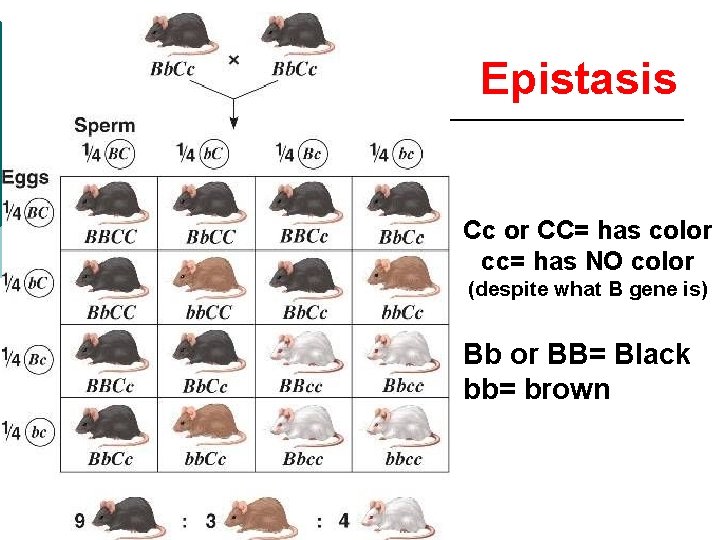
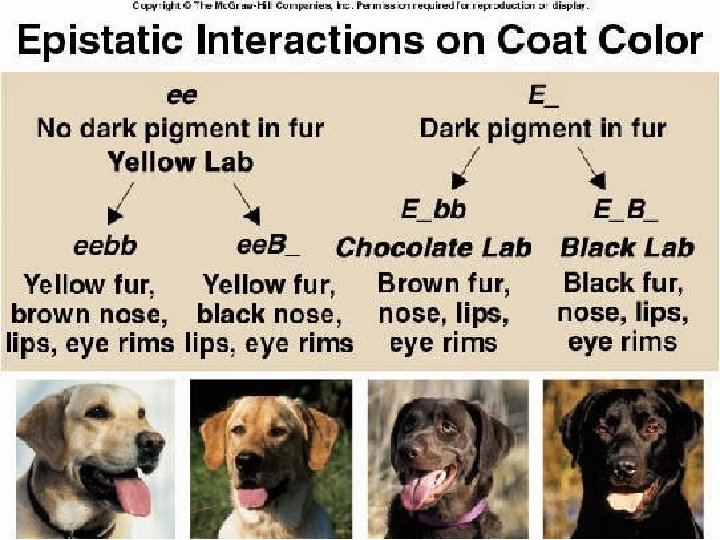
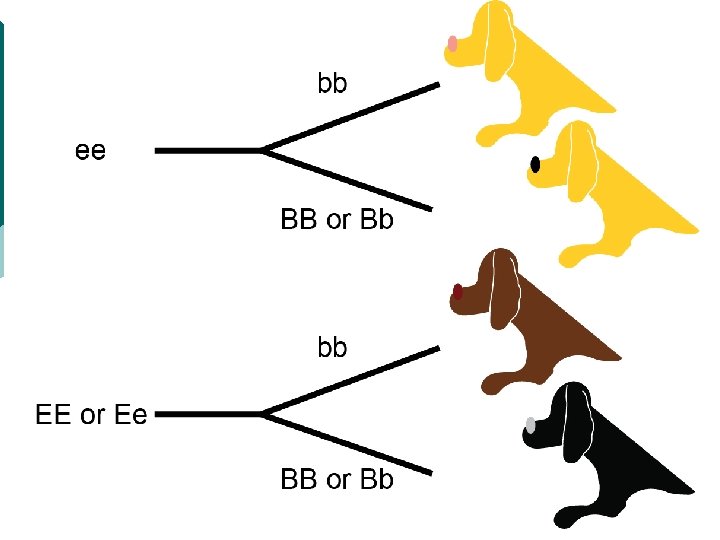
Epistasis Cc or CC= has color cc= has NO color (despite what B gene is) Bb or BB= Black bb= brown
Epistasis
PEDIGREES AP Biology Ms. Gaynor
Many human traits follow Mendelian patterns of inheritance ¡ Humans are not convenient subjects for genetic research l However, l We use pedigrees!
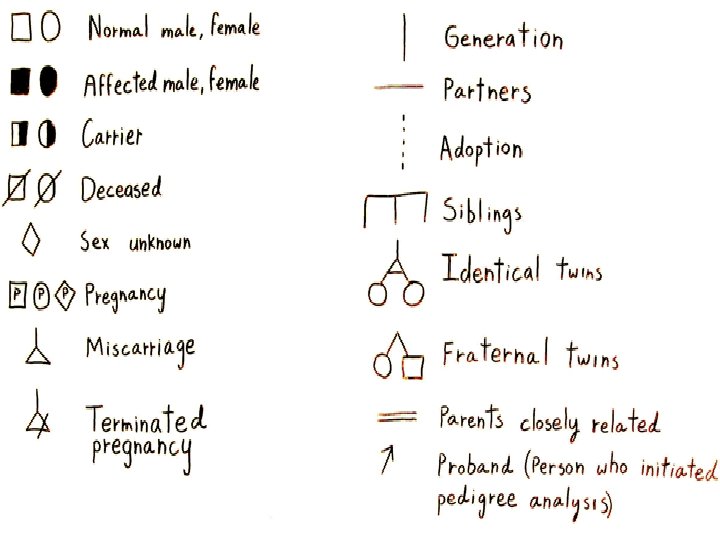
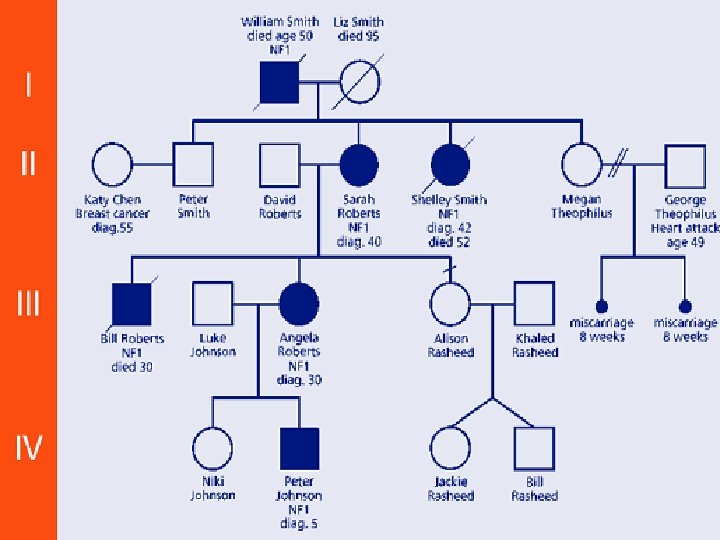
The Study of Human Genetics Continues to Advance… ¡ Can’t use humans ¡ We use pedigrees l A family tree that describes the interrelationships of parents and children across generations l Can also be used to make genetic predictions about future offspring
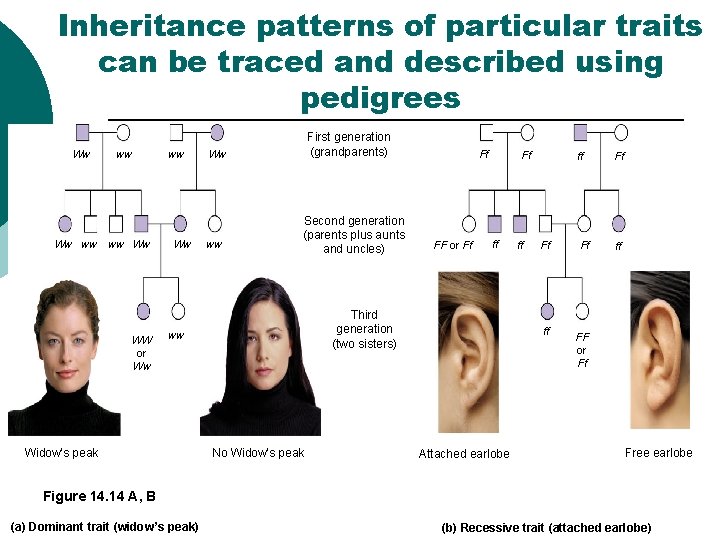
Inheritance patterns of particular traits can be traced and described using pedigrees Ww ww ww Ww WW or Ww ww Ww First generation (grandparents) Ww ww Second generation (parents plus aunts and uncles) FF or Ff Ff ff Third generation (two sisters) ww Widow’s peak Ff No Widow’s peak Attached earlobe ff ff Ff Ff Ff ff ff FF or Ff Free earlobe Figure 14. 14 A, B (a) Dominant trait (widow’s peak) (b) Recessive trait (attached earlobe)
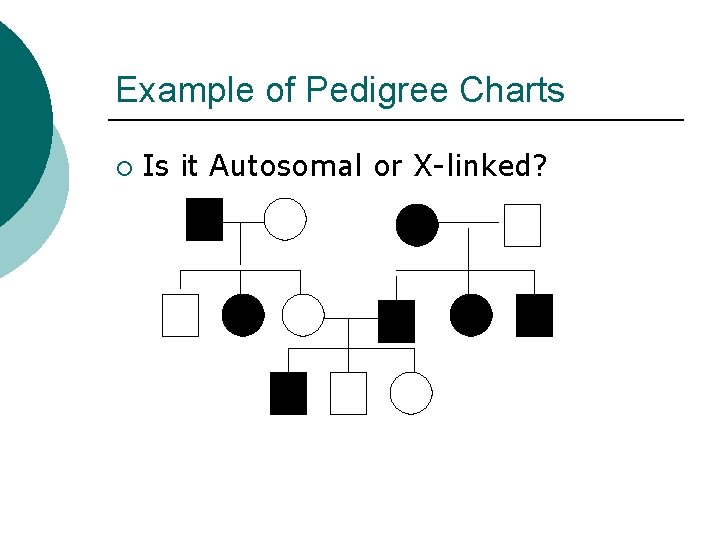
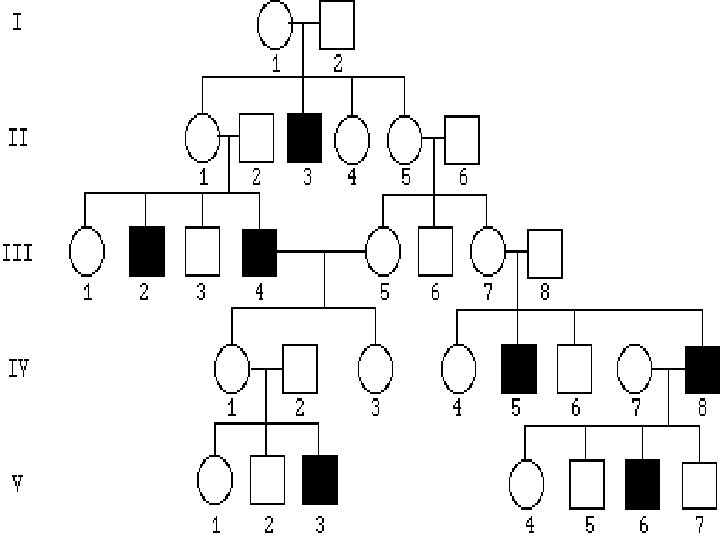
Example of Pedigree Charts ¡ Is it Autosomal or X-linked?
Recessively Inherited Disorders ¡ Many genetic disorders are inherited in a recessive manner l ¡ Need 2 recessive alleles (ex: ff) Some people can be carriers l heterozygous individuals, who carry recessive allele but are show “normal” phenotype l Ff carry the cf gene (“f”) but don’t have the disorder b/c you have to be ff (recessive)
Mating of Close Relatives ¡ Matings between relatives l Can increase the probability of the appearance of a genetic disease…especially recessive traits! l Are called consanguineous matings l Increases changes of inheriting mutated alleles (ex: lethal mutations)
HUMAN DISORDERS AP Biology Ms. Gaynor
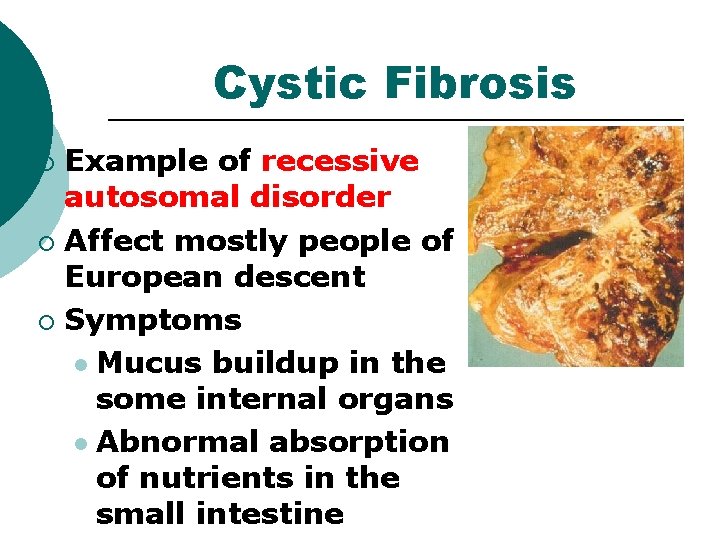
Cystic Fibrosis Example of recessive autosomal disorder ¡ Affect mostly people of European descent ¡ Symptoms l Mucus buildup in the some internal organs l Abnormal absorption of nutrients in the small intestine ¡
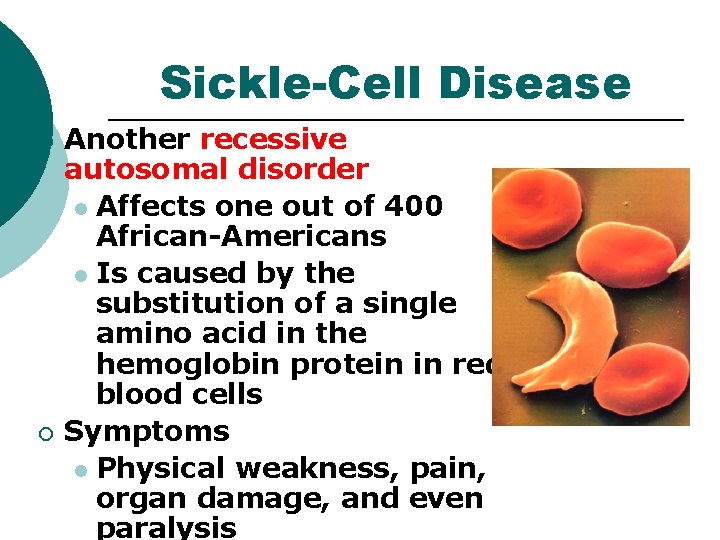
Sickle-Cell Disease ¡ ¡ Another recessive autosomal disorder l Affects one out of 400 African-Americans l Is caused by the substitution of a single amino acid in the hemoglobin protein in red blood cells Symptoms l Physical weakness, pain, organ damage, and even paralysis
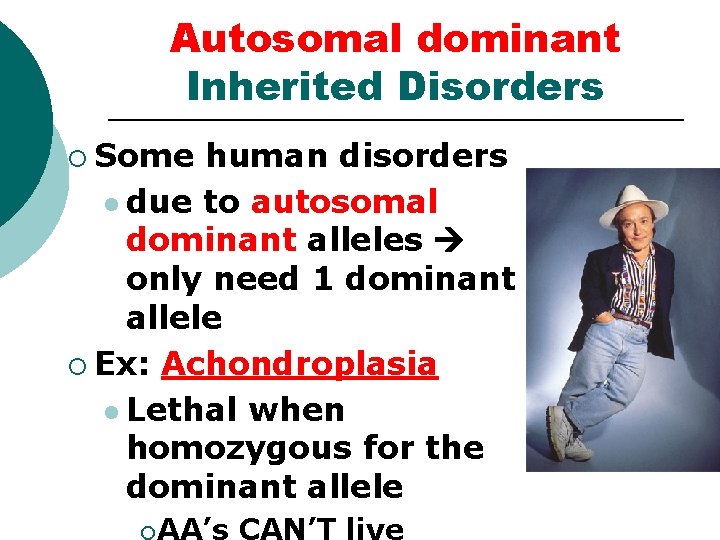
Autosomal dominant Inherited Disorders ¡ Some human disorders l due to autosomal dominant alleles only need 1 dominant allele ¡ Ex: Achondroplasia l Lethal when homozygous for the dominant allele ¡ AA’s CAN’T live
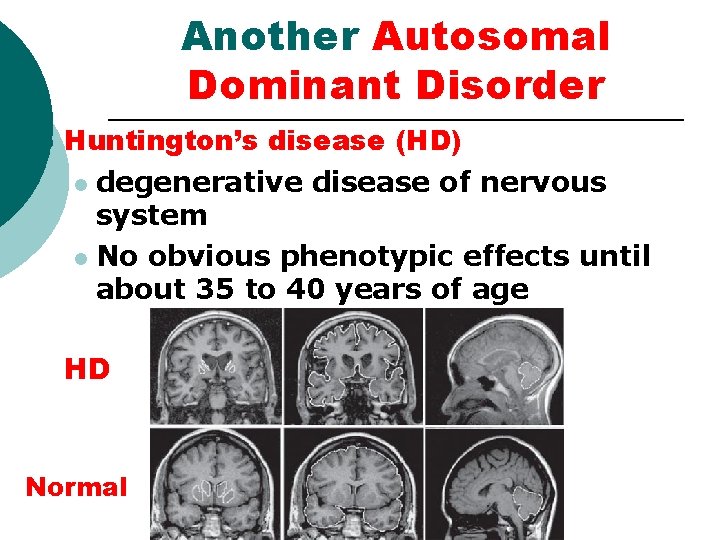
Another Autosomal Dominant Disorder ¡ Huntington’s disease (HD) l degenerative disease of nervous system l No obvious phenotypic effects until about 35 to 40 years of age HD Normal
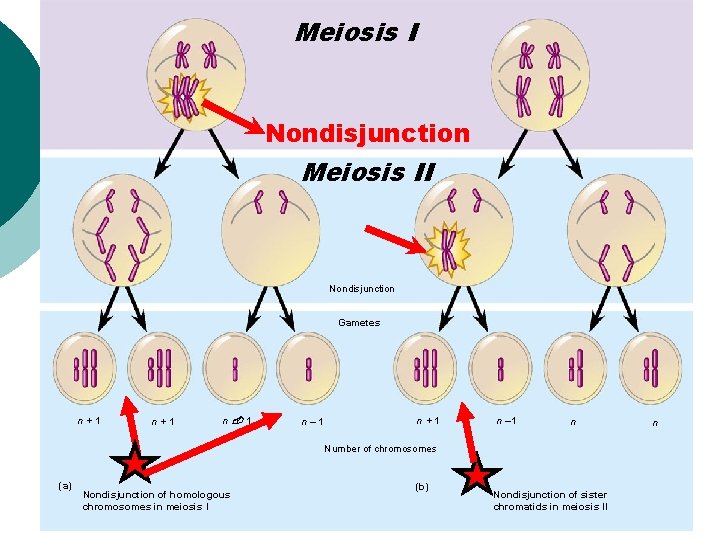
Meiosis I Nondisjunction Meiosis II Nondisjunction Gametes n+1 n 1 n– 1 n+1 n – 1 n Number of chromosomes (a) Nondisjunction of homologous chromosomes in meiosis I (b) Nondisjunction of sister chromatids in meiosis II n
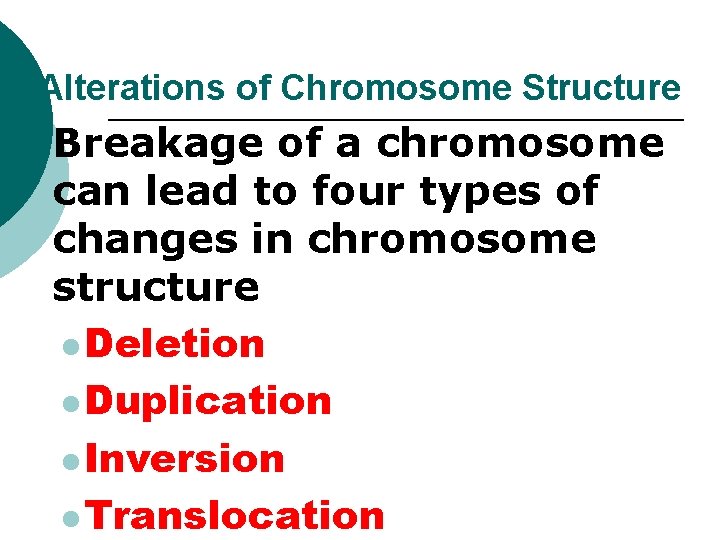
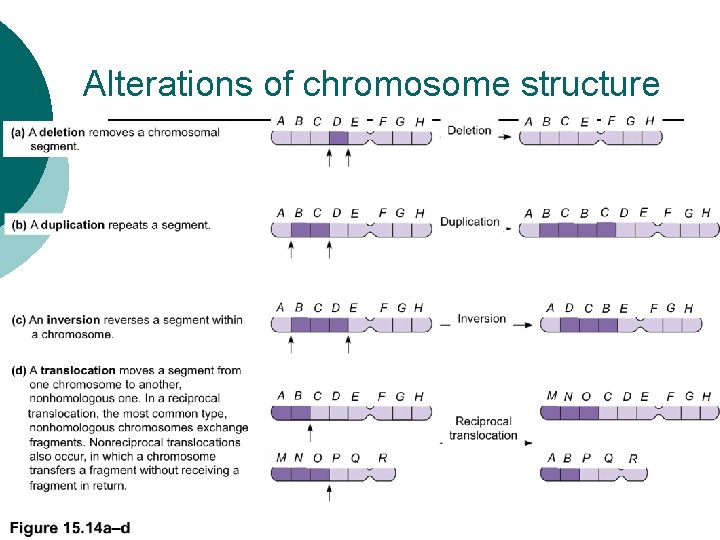
Alterations of Chromosome Structure ¡ Breakage of a chromosome can lead to four types of changes in chromosome structure l Deletion l Duplication l Inversion l Translocation
Alterations of chromosome structure
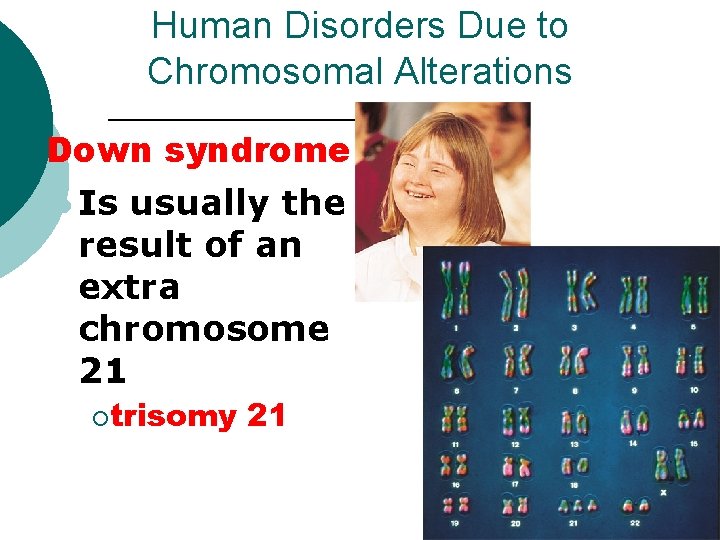
Human Disorders Due to Chromosomal Alterations ¡ Down syndrome l Is usually the result of an extra chromosome 21 ¡trisomy 21
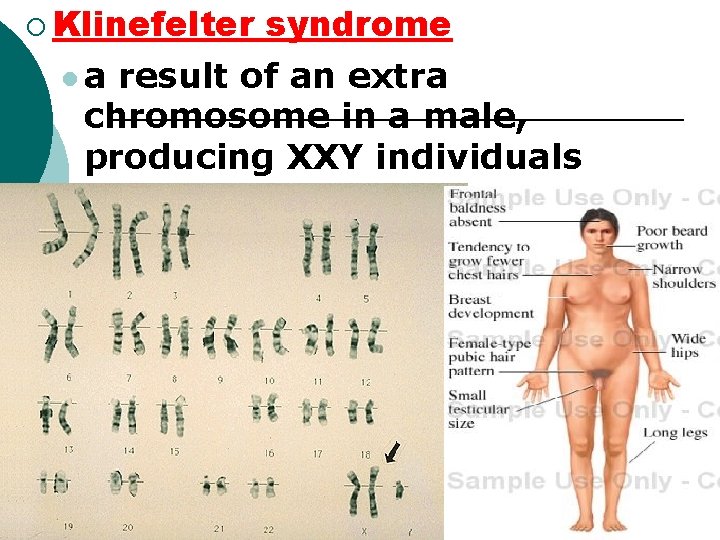
¡ Klinefelter syndrome l a result of an extra chromosome in a male, producing XXY individuals l 1/2000 live births
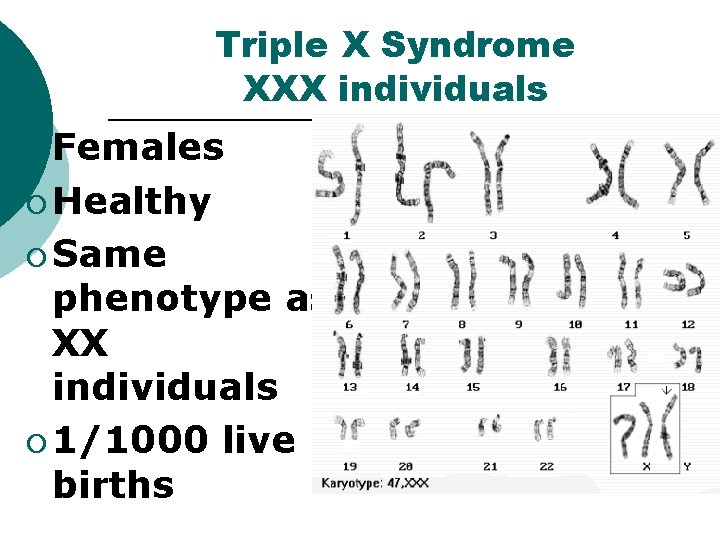
Triple X Syndrome XXX individuals ¡ Females ¡ Healthy ¡ Same phenotype as XX individuals ¡ 1/1000 live births
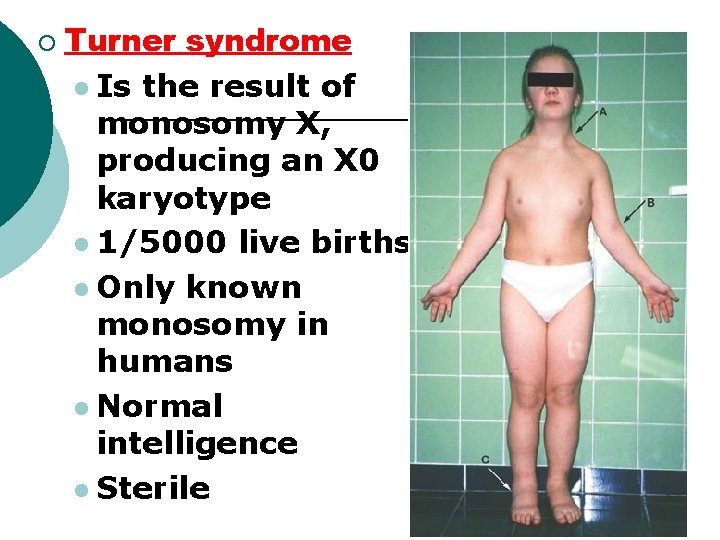
¡ Turner syndrome l Is the result of monosomy X, producing an X 0 karyotype l 1/5000 live births l Only known monosomy in humans l Normal intelligence l Sterile
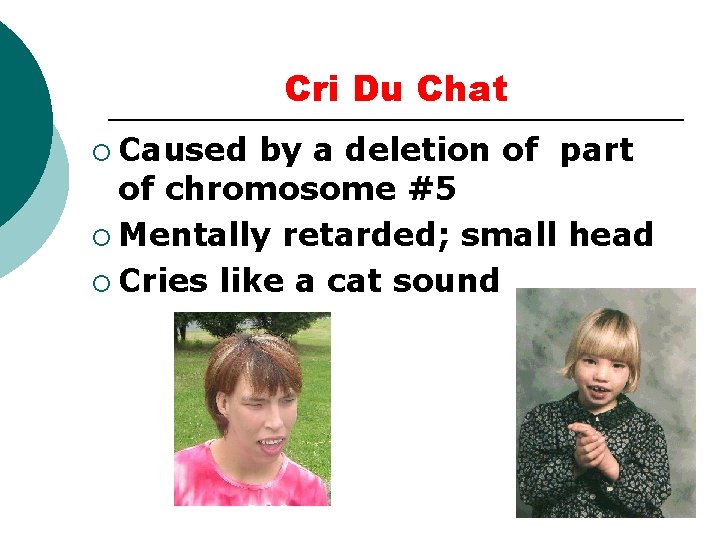
Cri Du Chat ¡ Caused by a deletion of part of chromosome #5 ¡ Mentally retarded; small head ¡ Cries like a cat sound
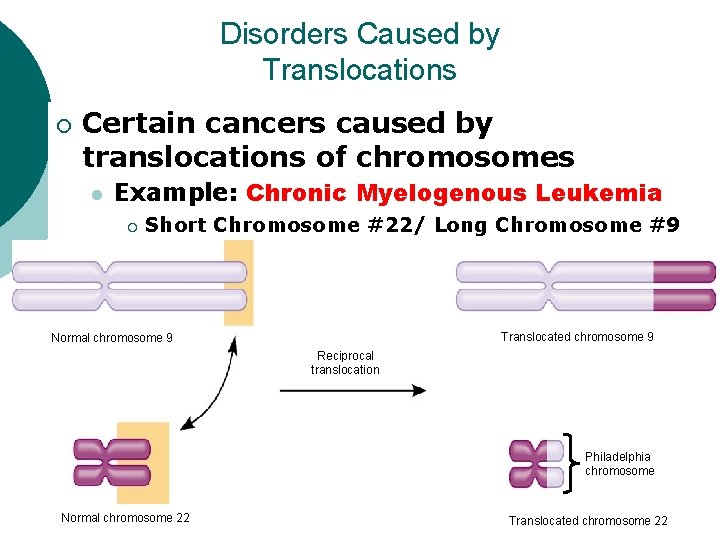
Disorders Caused by Translocations ¡ Certain cancers caused by translocations of chromosomes l Example: Chronic Myelogenous Leukemia ¡ Short Chromosome #22/ Long Chromosome #9 Translocated chromosome 9 Normal chromosome 9 Reciprocal translocation Philadelphia chromosome Normal chromosome 22 Translocated chromosome 22
Genetic Testing and Counseling ¡ Genetic counselors l Can provide information to prospective parents concerned about a family history for a specific disease
Tests for Identifying Carriers ¡ For a growing number of diseases l Tests are available that identify carriers and help define the odds more accurately l Examples ¡Tay Sachs & CF
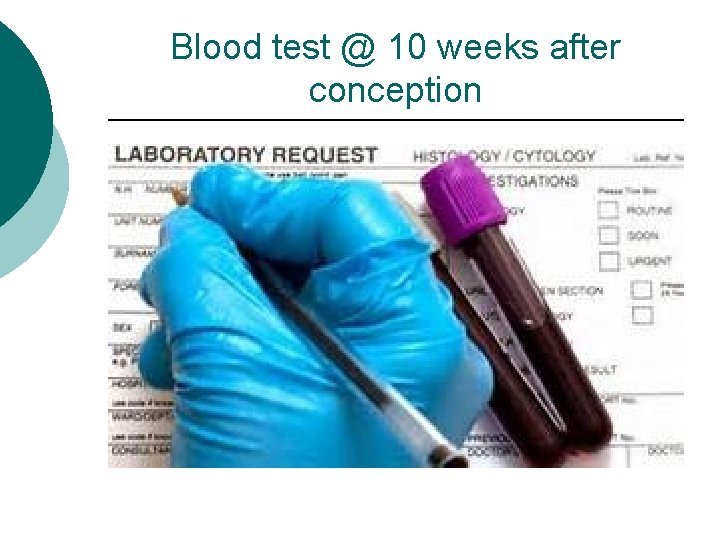
Blood test @ 10 weeks after conception
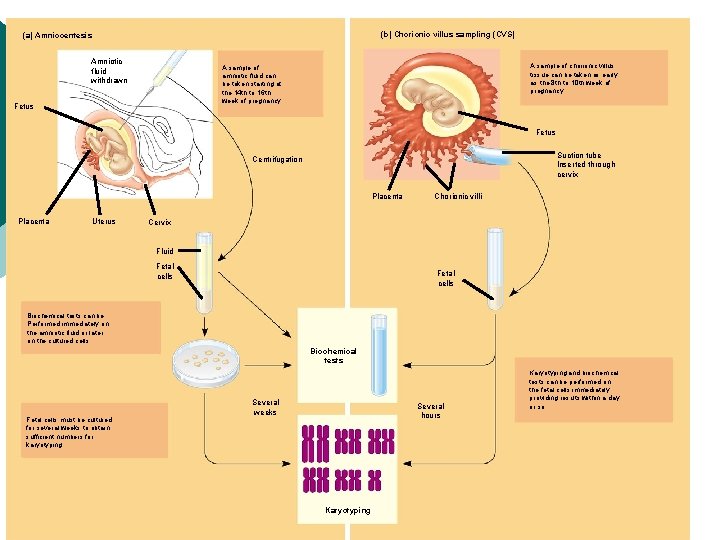
Fetal Testing ¡ In amniocentesis l The liquid that bathes fetus is removed & tested ¡ In chorionic villus sampling (CVS) l A sample of the placenta is removed and tested Can make karyotypes, too!
(b) Chorionic villus sampling (CVS) (a) Amniocentesis Amniotic fluid withdrawn A sample of chorionic villus tissue can be taken as early as the 8 th to 10 th week of pregnancy. A sample of amniotic fluid can be taken starting at the 14 th to 16 th week of pregnancy. Fetus ¡ Fetal testing Suction tube Inserted through cervix Centrifugation Placenta Uterus Chorionic vi. IIi Cervix Fluid Fetal cells Biochemical tests can be Performed immediately on the amniotic fluid or later on the cultured cells. Biochemical tests Fetal cells must be cultured for several weeks to obtain sufficient numbers for karyotyping. Figure 14. 17 A, B Several weeks Several hours Karyotyping and biochemical tests can be performed on the fetal cells immediately, providing results within a day or so.
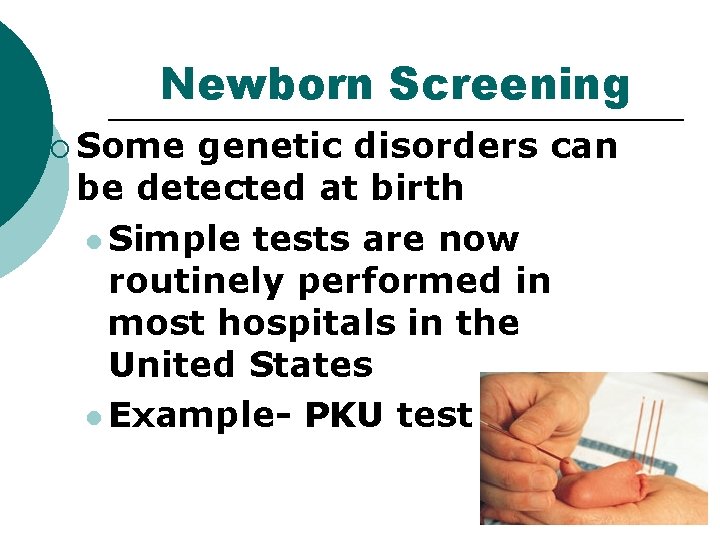
Newborn Screening ¡ Some genetic disorders can be detected at birth l Simple tests are now routinely performed in most hospitals in the United States l Example- PKU test