
Nonlinear effects in internal waves Wave steepness Linear


- Slides: 13
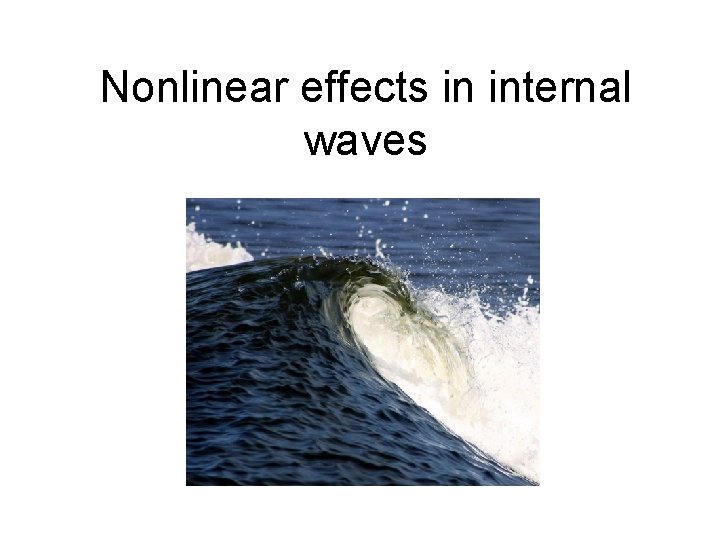
Nonlinear effects in internal waves
Wave steepness Linear wave: h 0<1/m 2 h 0 l/2 2 h 0 Steep wave: h 0 m>1. Regions of overturned isopycnals
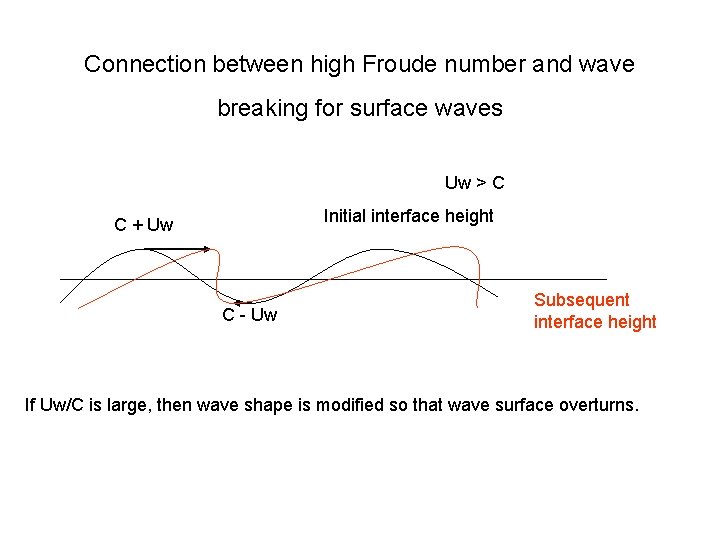
Connection between high Froude number and wave breaking for surface waves Uw > C Initial interface height C + Uw C - Uw Subsequent interface height If Uw/C is large, then wave shape is modified so that wave surface overturns.
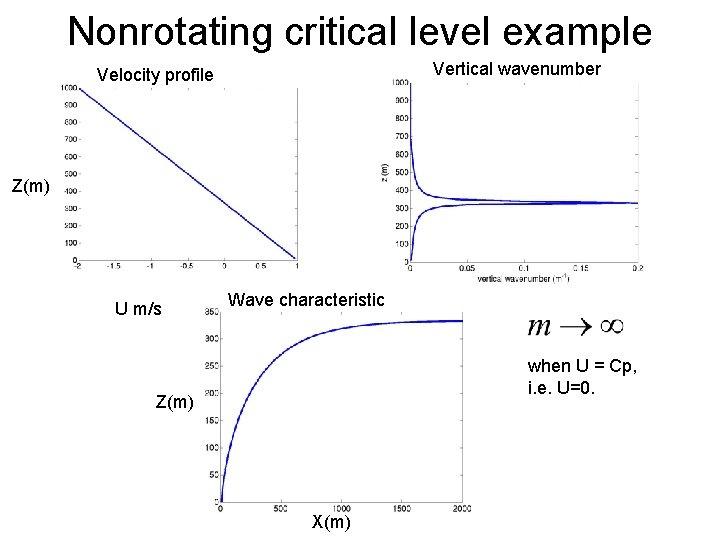
Nonrotating critical level example Vertical wavenumber Velocity profile Z(m) U m/s Wave characteristic when U = Cp, i. e. U=0. Z(m) X(m)
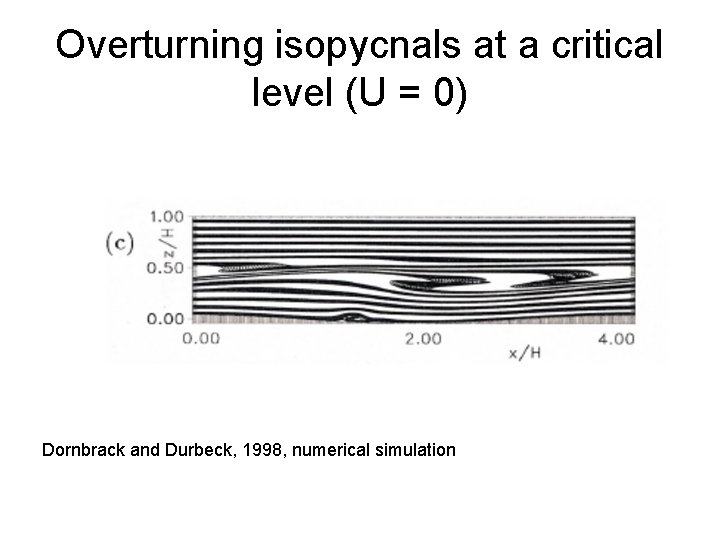
Overturning isopycnals at a critical level (U = 0) Dornbrack and Durbeck, 1998, numerical simulation
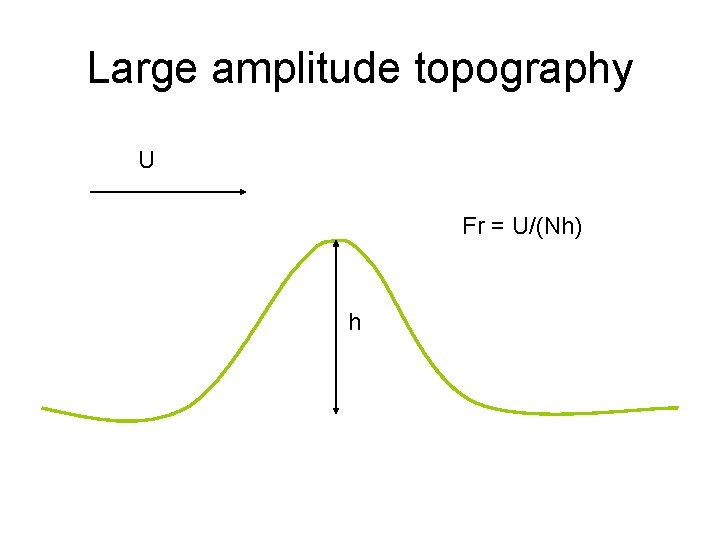
Large amplitude topography U Fr = U/(Nh) h
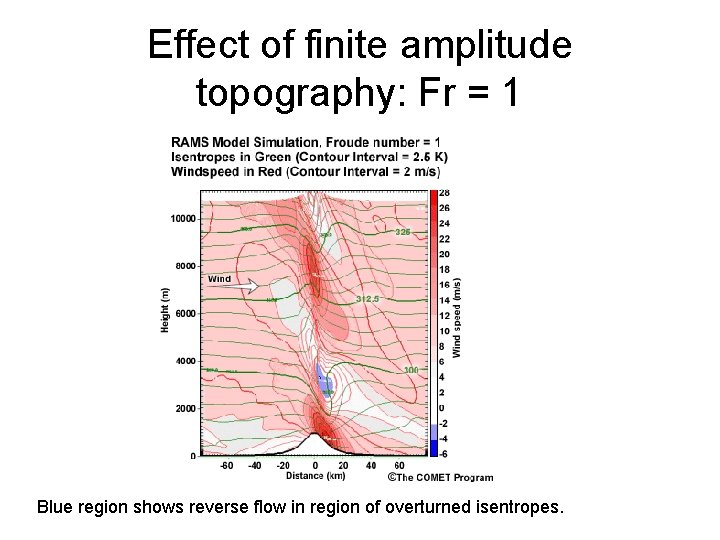
Effect of finite amplitude topography: Fr = 1 Blue region shows reverse flow in region of overturned isentropes.
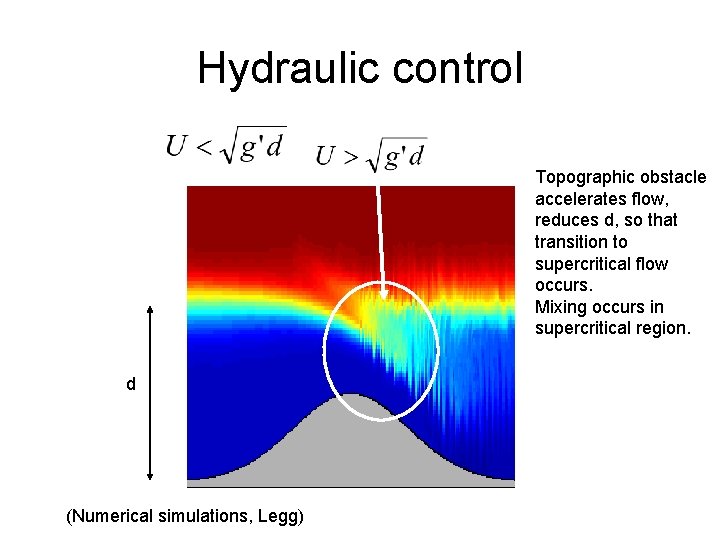
Hydraulic control Topographic obstacle accelerates flow, reduces d, so that transition to supercritical flow occurs. Mixing occurs in supercritical region. d (Numerical simulations, Legg)
Parametric Subharmonic Instability Initial conditions Winters et al, 2004 numerical simulations Subsequent evolution – generation of waves at twice initial frequency
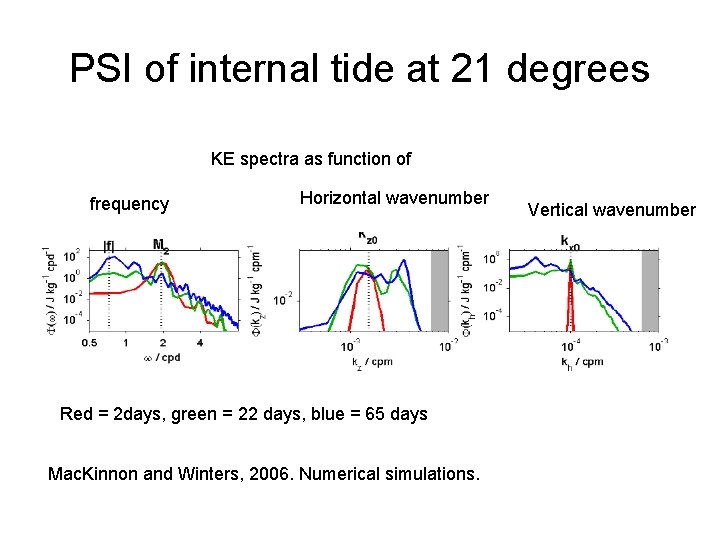
PSI of internal tide at 21 degrees KE spectra as function of frequency Horizontal wavenumber Red = 2 days, green = 22 days, blue = 65 days Mac. Kinnon and Winters, 2006. Numerical simulations. Vertical wavenumber
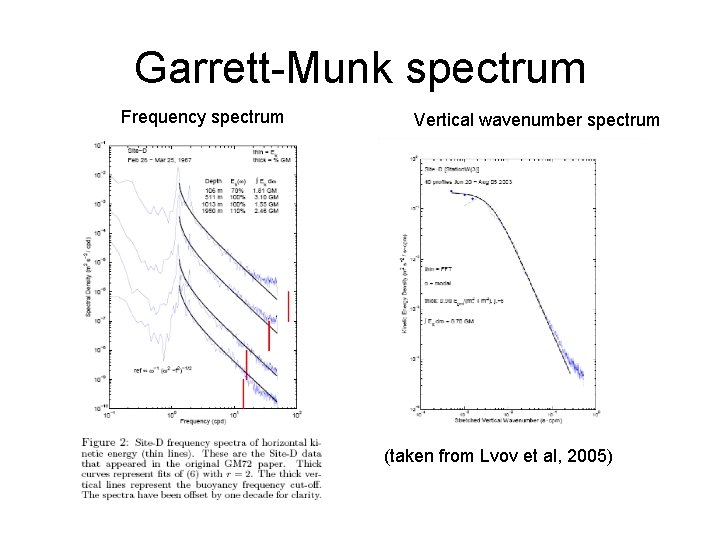
Garrett-Munk spectrum Frequency spectrum Vertical wavenumber spectrum (taken from Lvov et al, 2005)
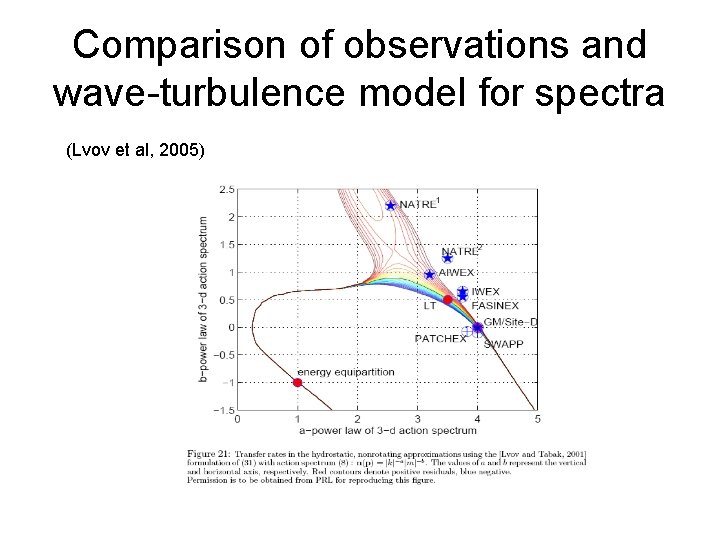
Comparison of observations and wave-turbulence model for spectra (Lvov et al, 2005)
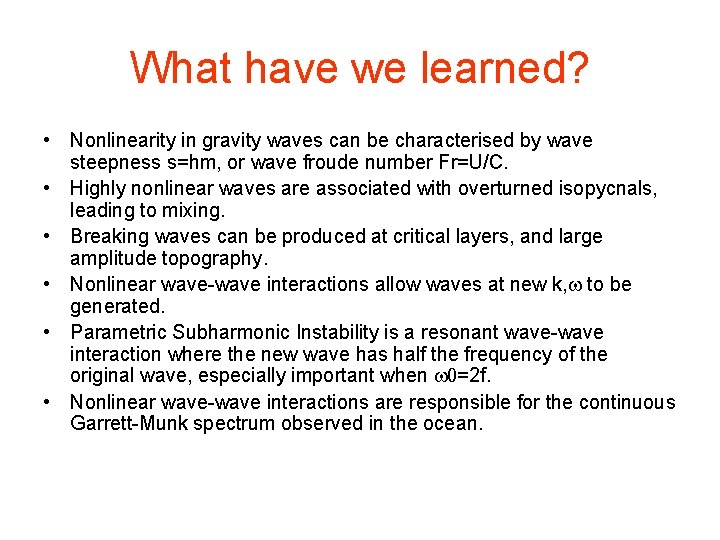
What have we learned? • Nonlinearity in gravity waves can be characterised by wave steepness s=hm, or wave froude number Fr=U/C. • Highly nonlinear waves are associated with overturned isopycnals, leading to mixing. • Breaking waves can be produced at critical layers, and large amplitude topography. • Nonlinear wave-wave interactions allow waves at new k, w to be generated. • Parametric Subharmonic Instability is a resonant wave-wave interaction where the new wave has half the frequency of the original wave, especially important when w 0=2 f. • Nonlinear wave-wave interactions are responsible for the continuous Garrett-Munk spectrum observed in the ocean.