
Nonlinear classifiers biasvariance tradeoff Overview Nonlinear classifiers Kernel
Nonlinear classifiers, bias-variance tradeoff
Overview • Nonlinear classifiers • • Kernel support vector machines (SVMs) Multi-layer neural networks • Controlling classifier complexity • • Hyperparameters Bias-variance tradeoff Overfitting and underfitting Hyperparameter search in practice

From linear to nonlinear classifiers • To achieve good accuracy on challenging problems, we need to be able to train nonlinear models • Two strategies for making nonlinear predictors out of linear ones: • “Shallow” approach: nonlinear feature transformation followed by linear classifier Feature transformation Input Linear classifier Output • “Deep” approach: stack multiple layers of linear predictors (interspersed with nonlinearities) Input Layer 1 Layer 2 … Layer L Output
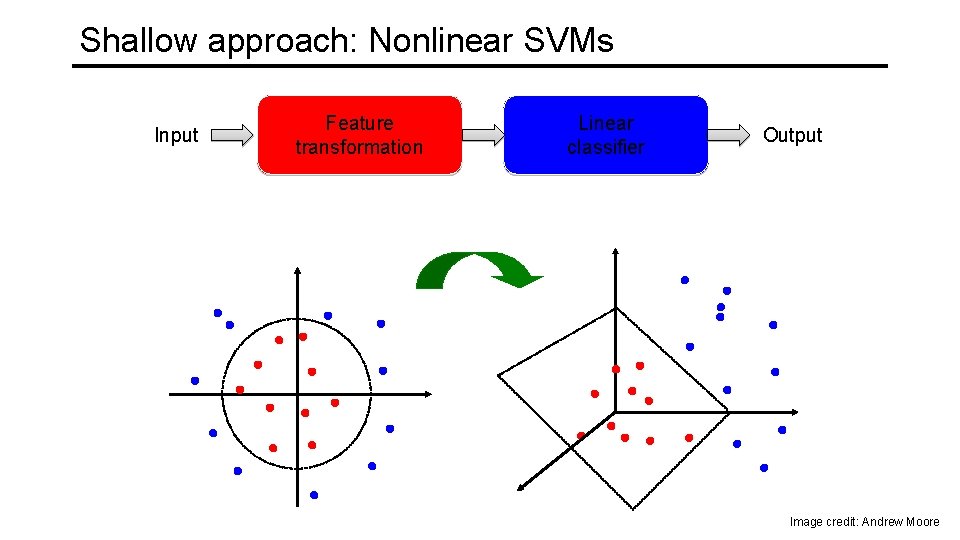
Shallow approach: Nonlinear SVMs Input Feature transformation Linear classifier Output Image credit: Andrew Moore
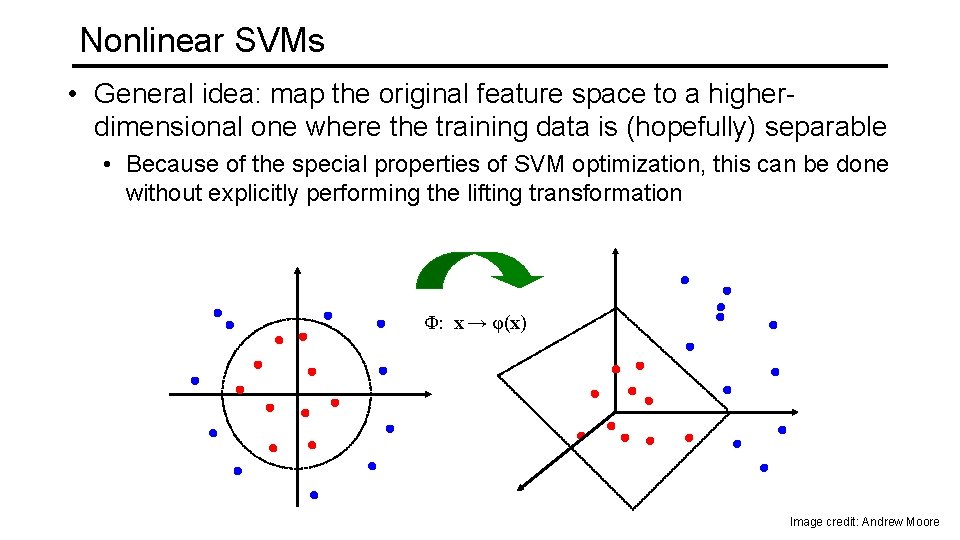
Nonlinear SVMs • General idea: map the original feature space to a higherdimensional one where the training data is (hopefully) separable • Because of the special properties of SVM optimization, this can be done without explicitly performing the lifting transformation Φ: x → φ(x) Image credit: Andrew Moore
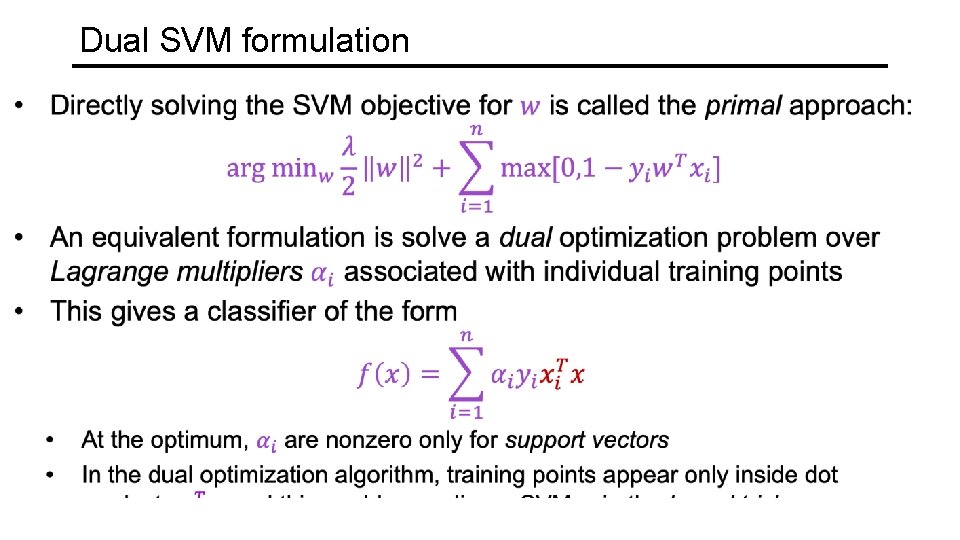
Dual SVM formulation
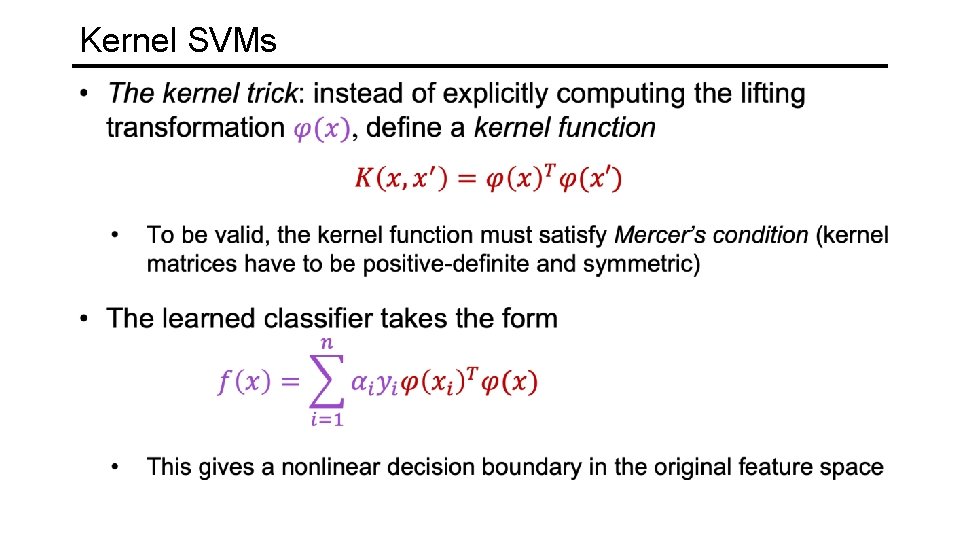
Kernel SVMs
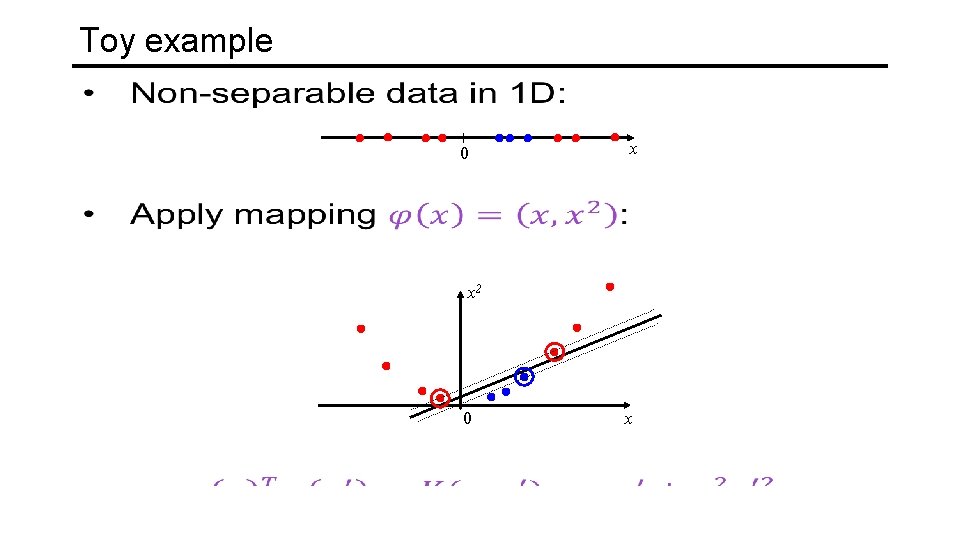
Toy example 0 x x 2 0 x
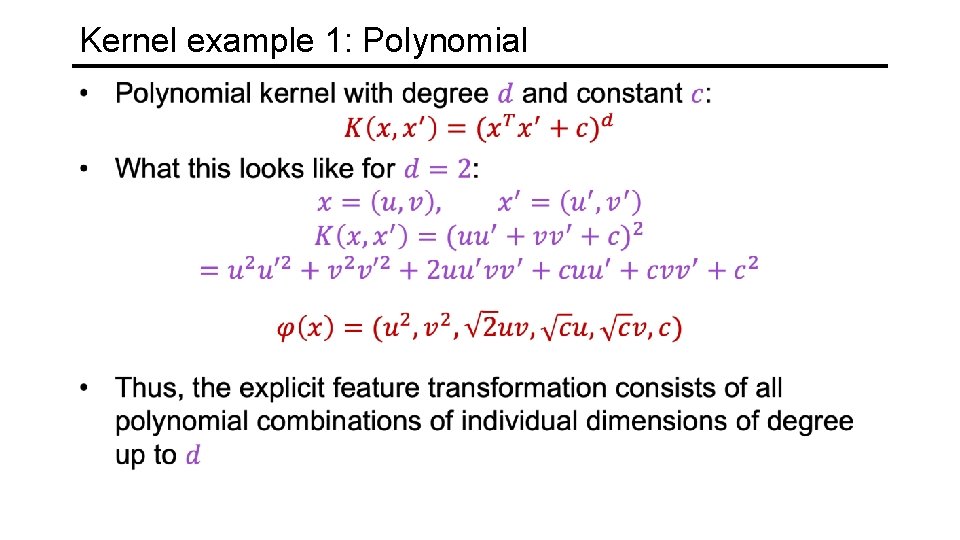
Kernel example 1: Polynomial
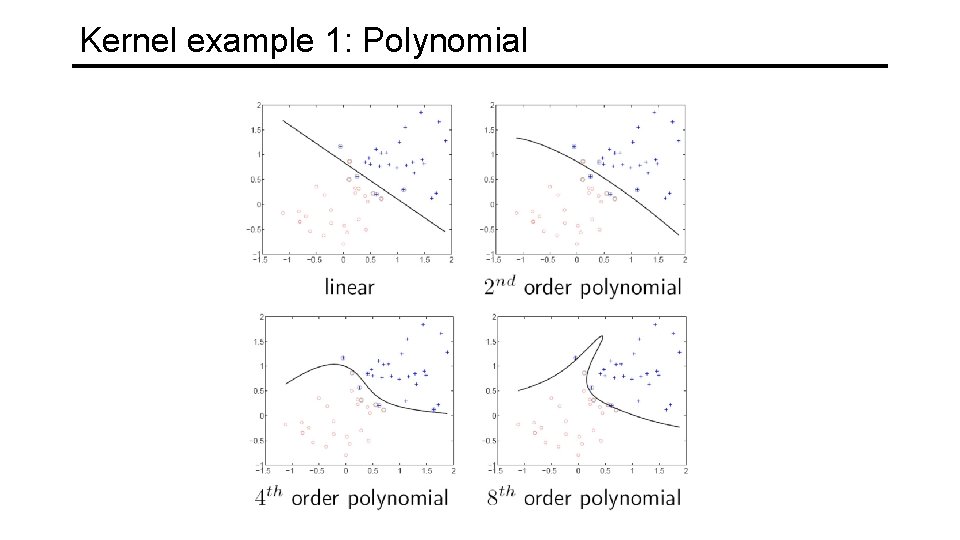
Kernel example 1: Polynomial
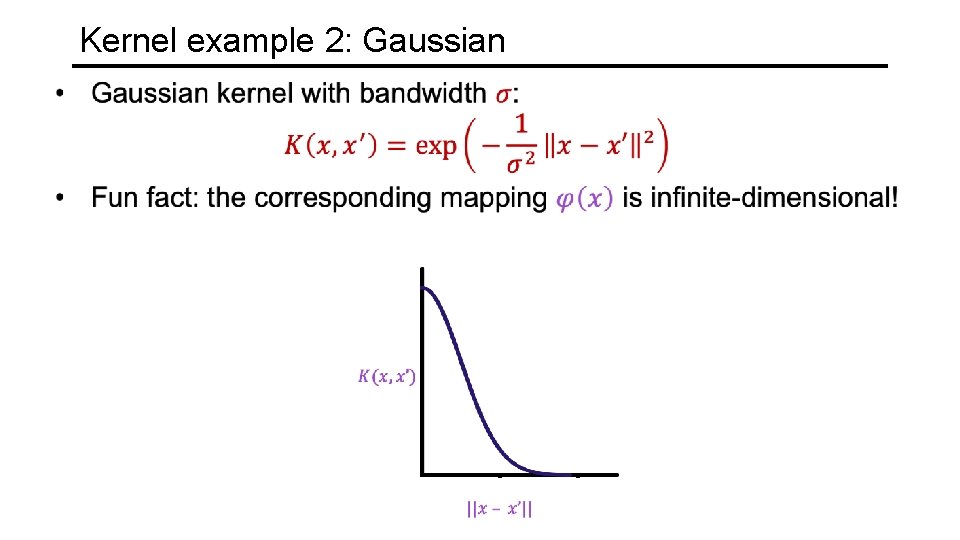
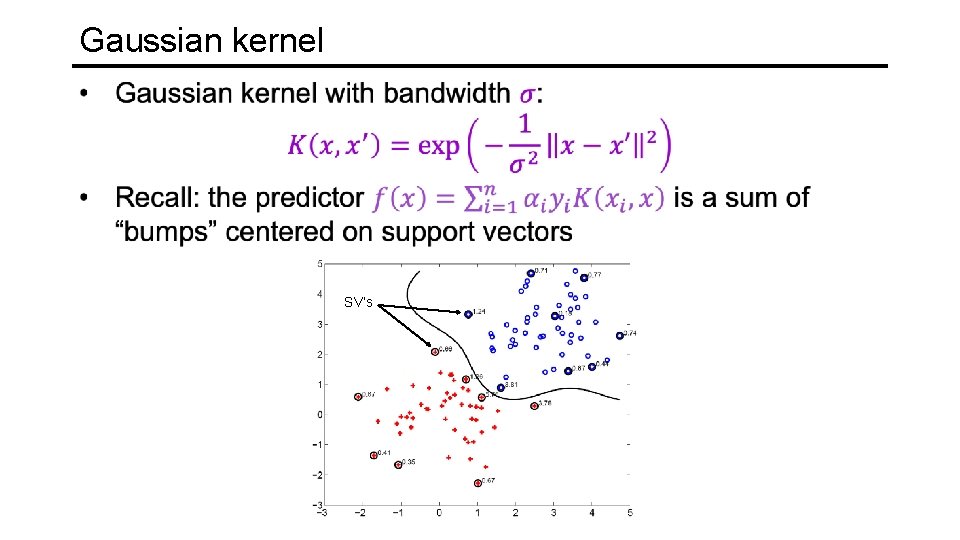
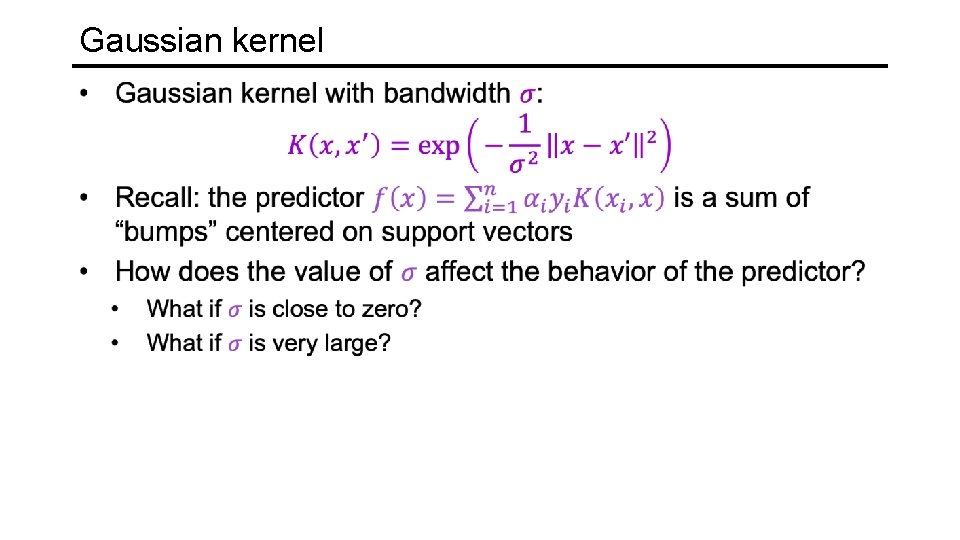
Kernel example 2: Gaussian
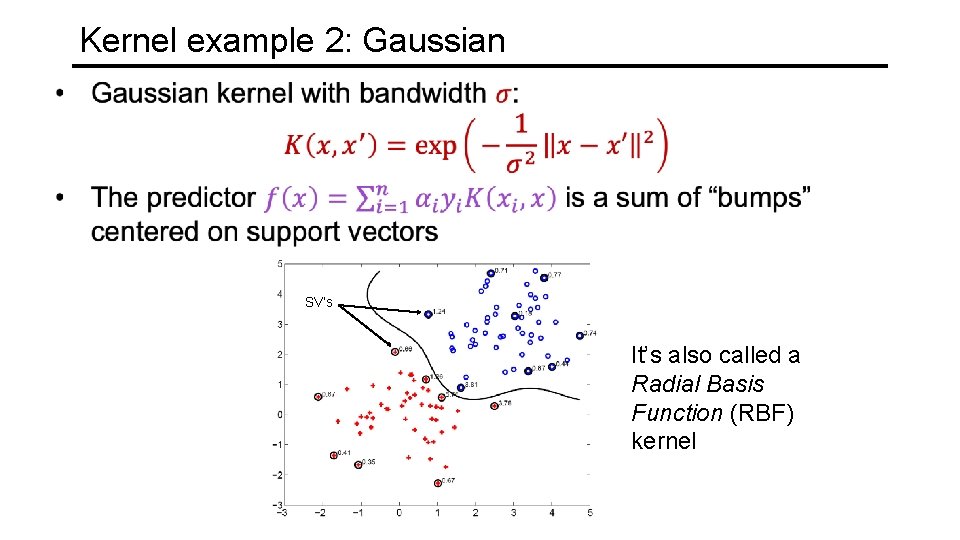
Kernel example 2: Gaussian SV’s It’s also called a Radial Basis Function (RBF) kernel
SVM: Pros and cons • Pros • • • Margin maximization and kernel trick are elegant, amenable to convex optimization and theoretical analysis Kernel SVMs are flexible, can be used with problem-specific kernels SVM loss gives very good accuracy in practice Perfect “off-the-shelf” classifier, many packages are available Linear SVMs can scale to large datasets • Con • Kernel SVM training does not scale to large datasets: memory cost is quadratic and computation cost even worse
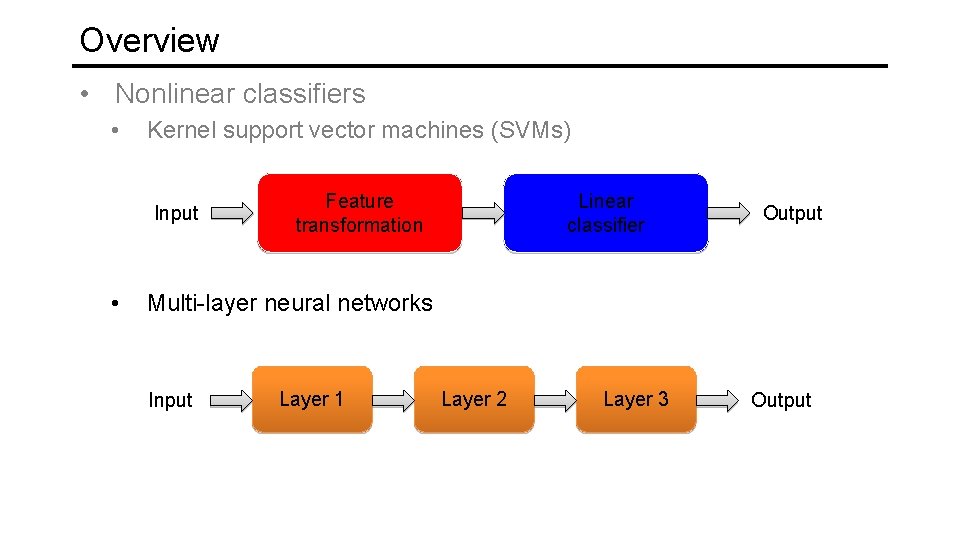
Overview • Nonlinear classifiers • Kernel support vector machines (SVMs) Input • Feature transformation Linear classifier Output Multi-layer neural networks Input Layer 1 Layer 2 Layer 3 Output
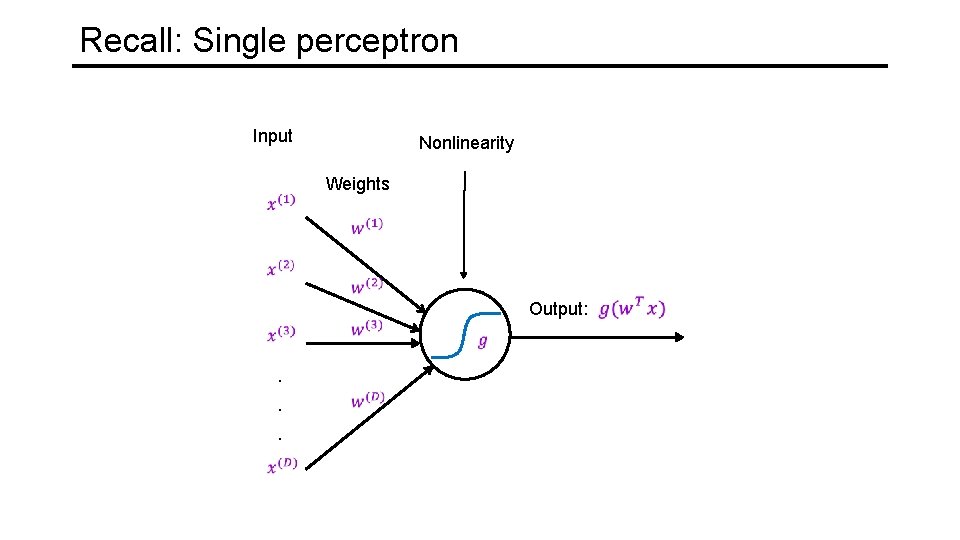
Recall: Single perceptron Input Nonlinearity Weights Output: . . .
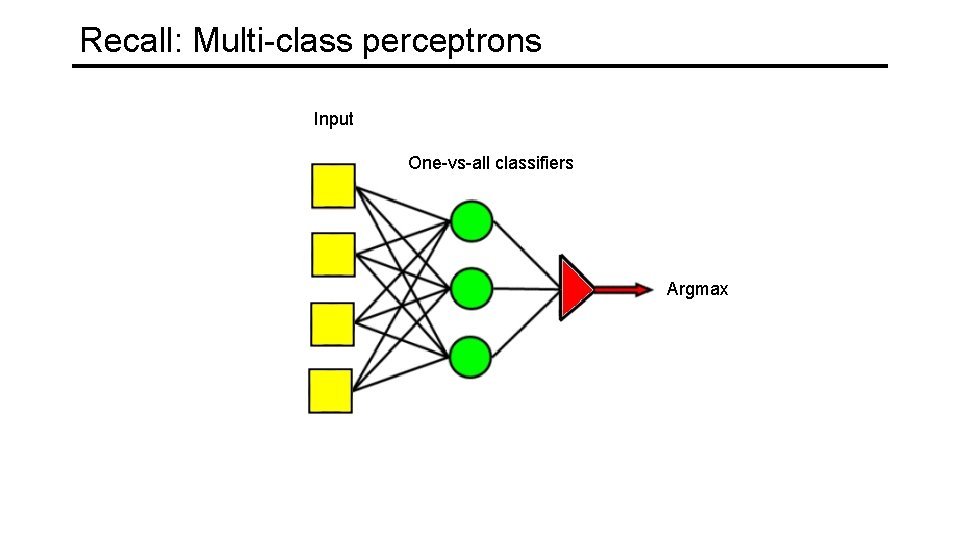
Recall: Multi-class perceptrons Input One-vs-all classifiers Argmax
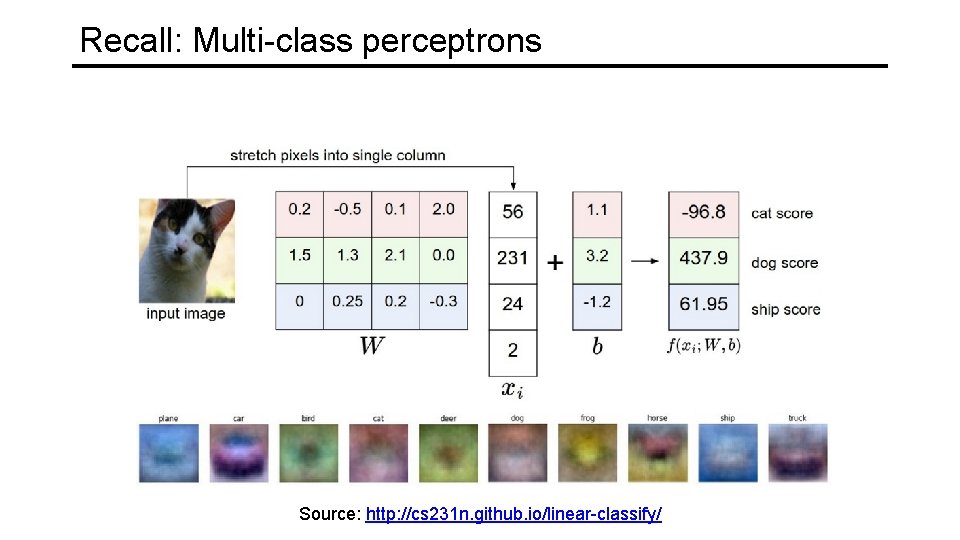
Recall: Multi-class perceptrons Source: http: //cs 231 n. github. io/linear-classify/
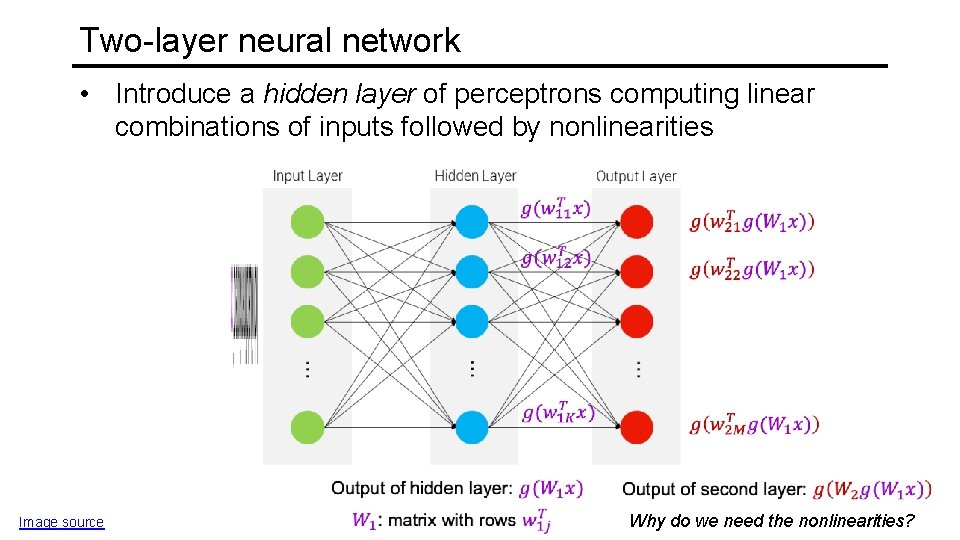
Two-layer neural network • Introduce a hidden layer of perceptrons computing linear combinations of inputs followed by nonlinearities Image source Why do we need the nonlinearities?
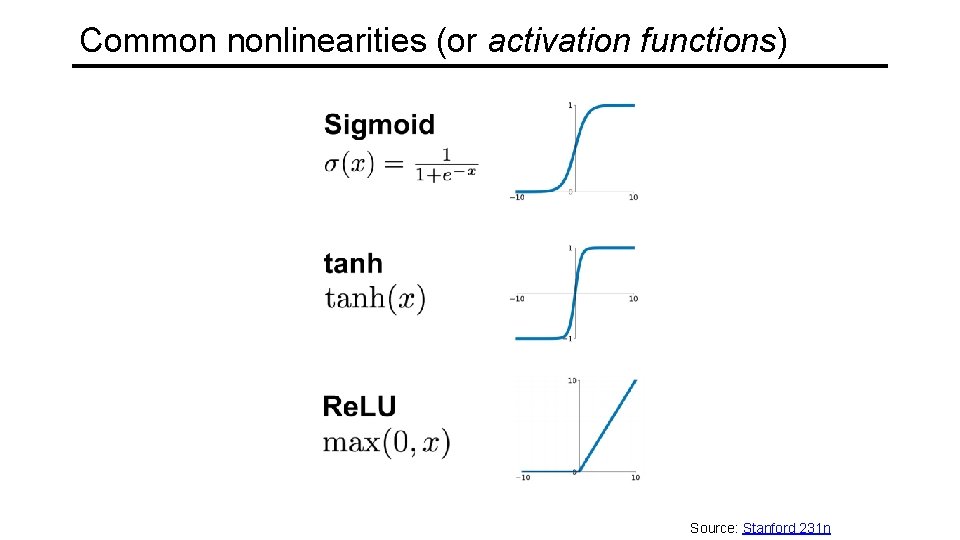
Common nonlinearities (or activation functions) Source: Stanford 231 n
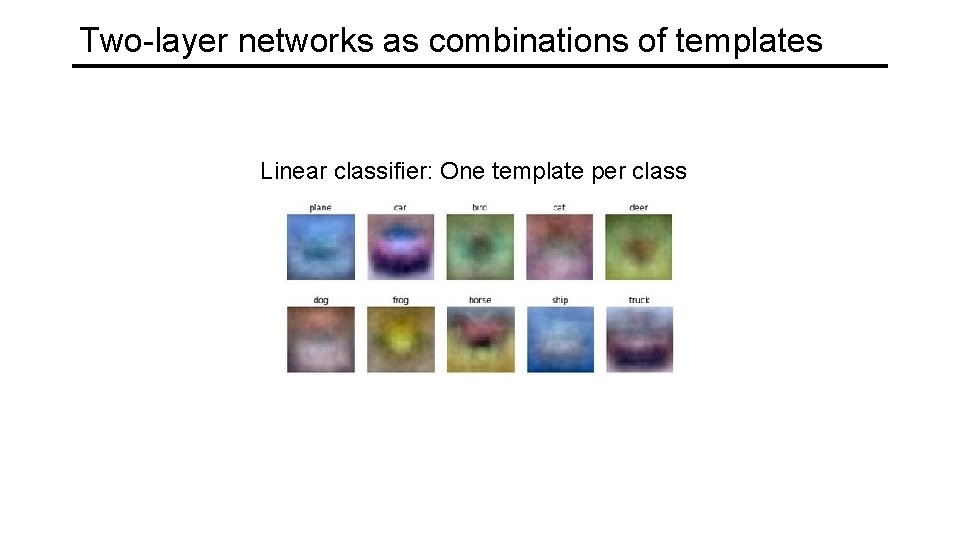
Two-layer networks as combinations of templates Linear classifier: One template per class
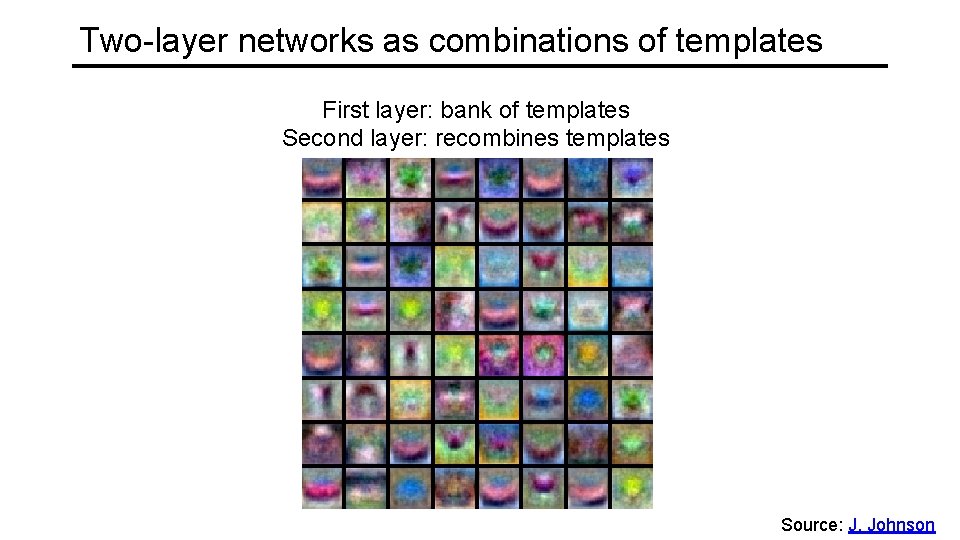
Two-layer networks as combinations of templates First layer: bank of templates Second layer: recombines templates Source: J. Johnson
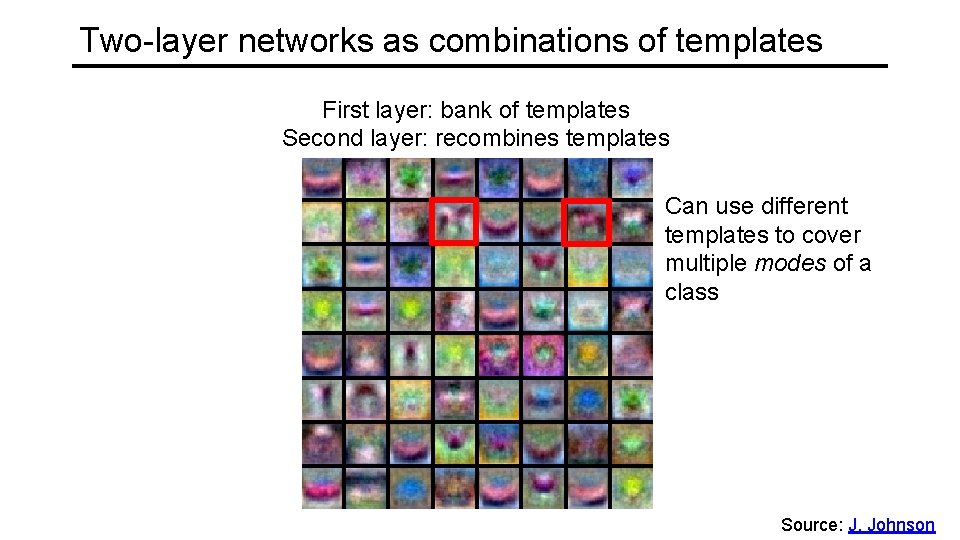
Two-layer networks as combinations of templates First layer: bank of templates Second layer: recombines templates Can use different templates to cover multiple modes of a class Source: J. Johnson
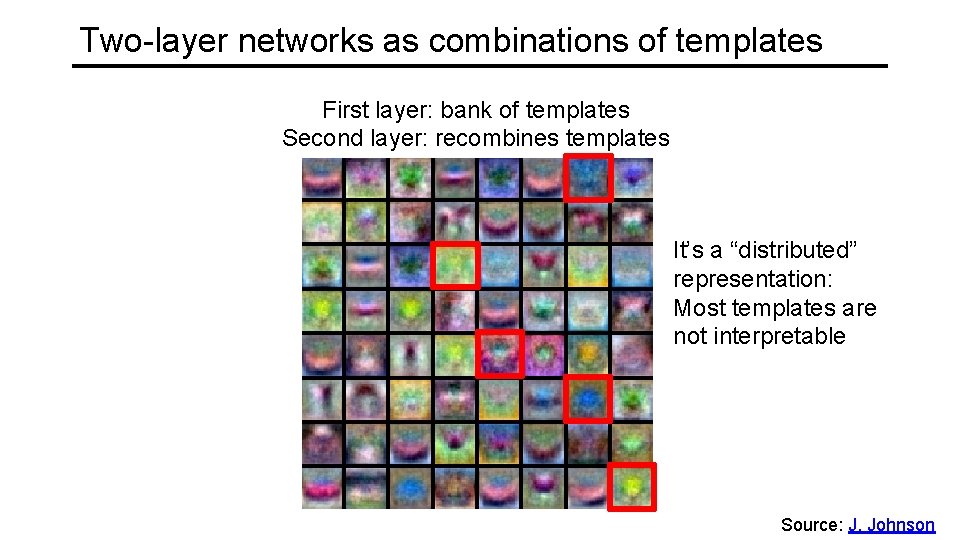
Two-layer networks as combinations of templates First layer: bank of templates Second layer: recombines templates It’s a “distributed” representation: Most templates are not interpretable Source: J. Johnson
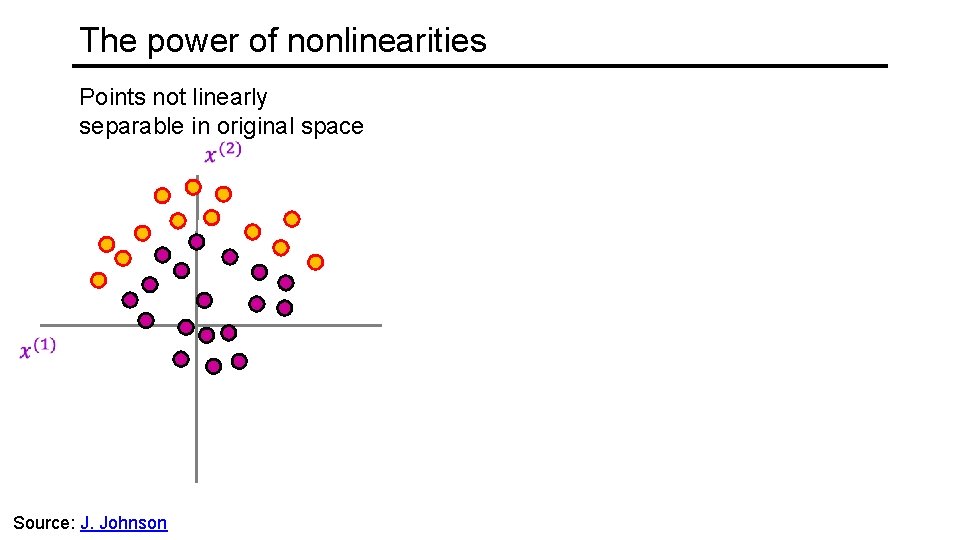
The power of nonlinearities Points not linearly separable in original space Source: J. Johnson
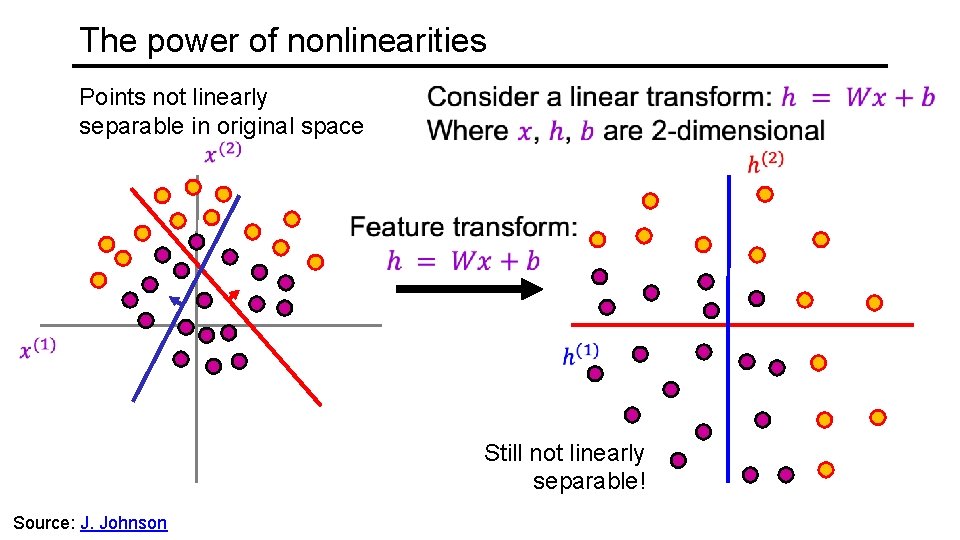
The power of nonlinearities Points not linearly separable in original space Still not linearly separable! Source: J. Johnson
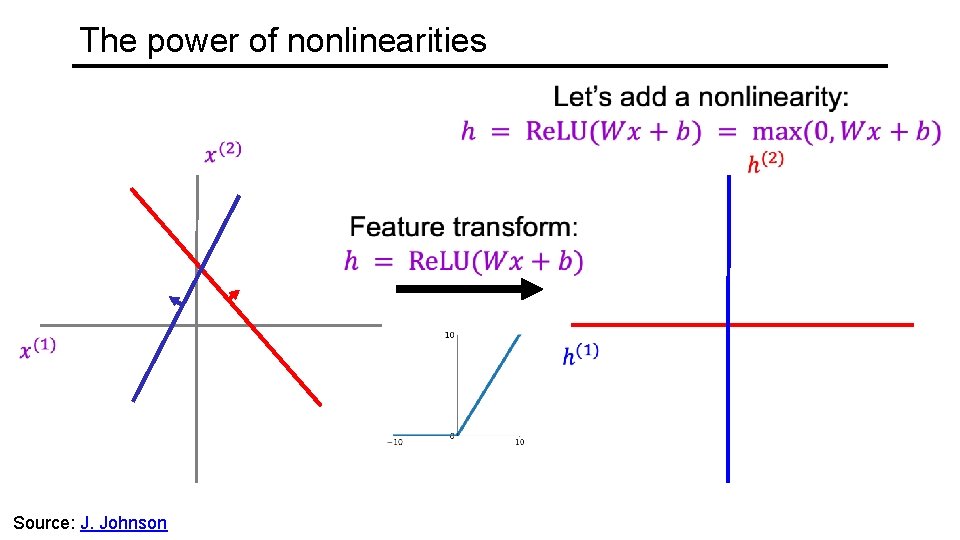
The power of nonlinearities Source: J. Johnson
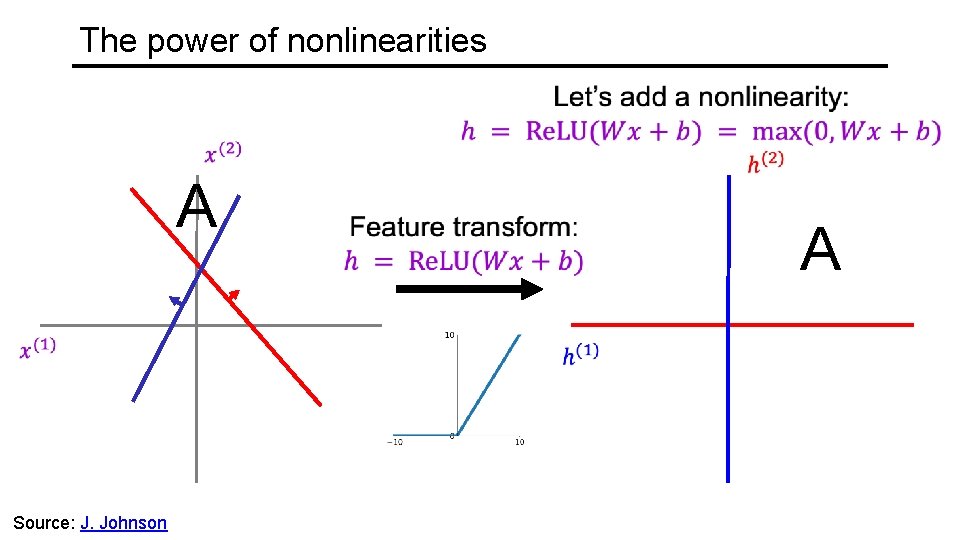
The power of nonlinearities A Source: J. Johnson A
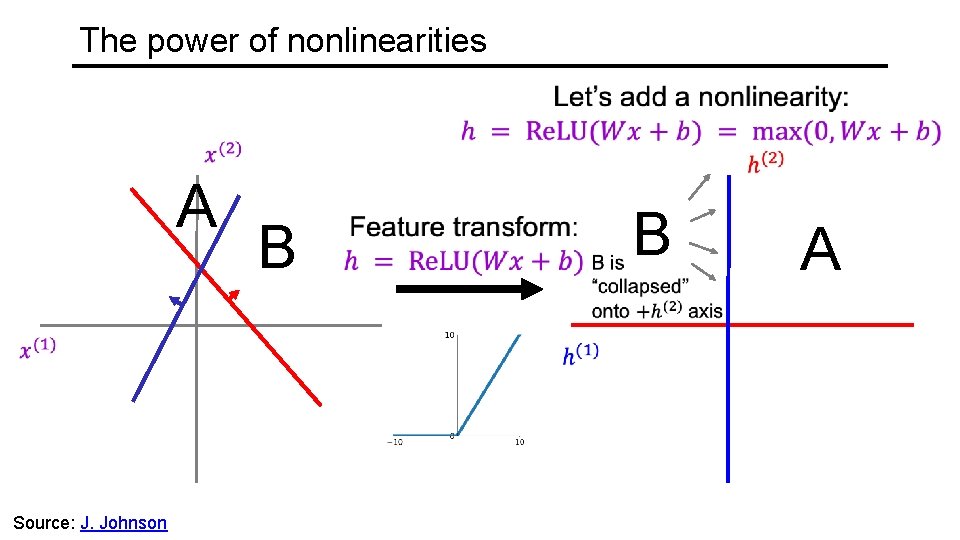
The power of nonlinearities A Source: J. Johnson B B A
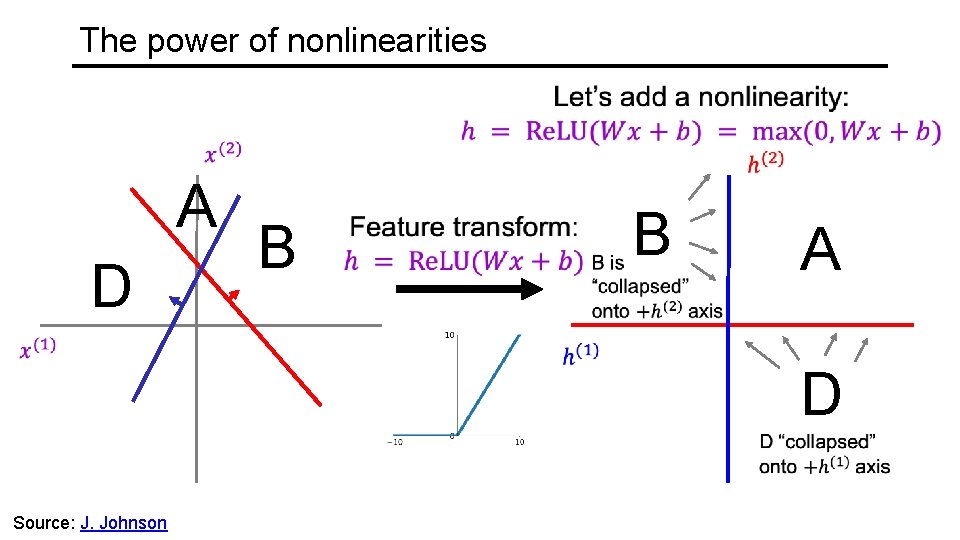
The power of nonlinearities A D B B A D Source: J. Johnson
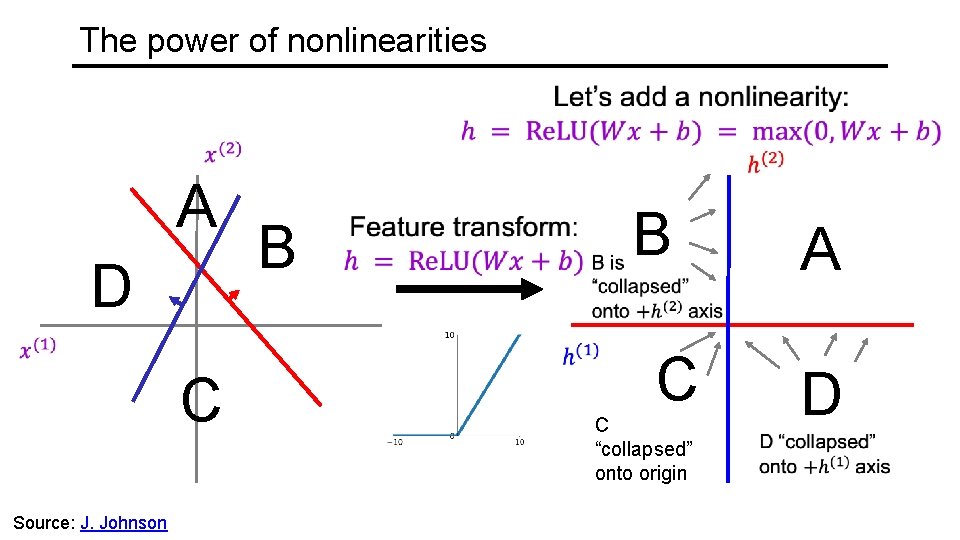
The power of nonlinearities A D C Source: J. Johnson B B C C “collapsed” onto origin A D
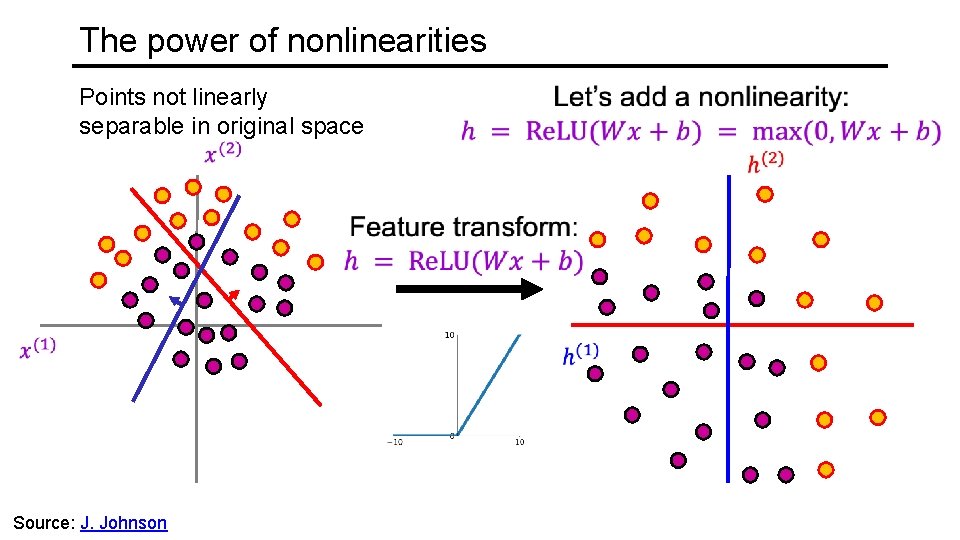
The power of nonlinearities Points not linearly separable in original space Source: J. Johnson
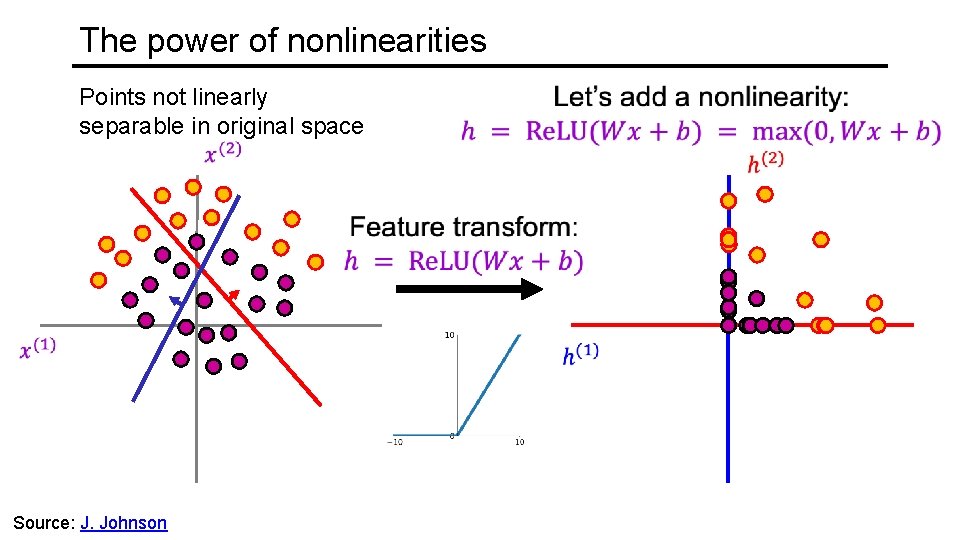
The power of nonlinearities Points not linearly separable in original space Source: J. Johnson
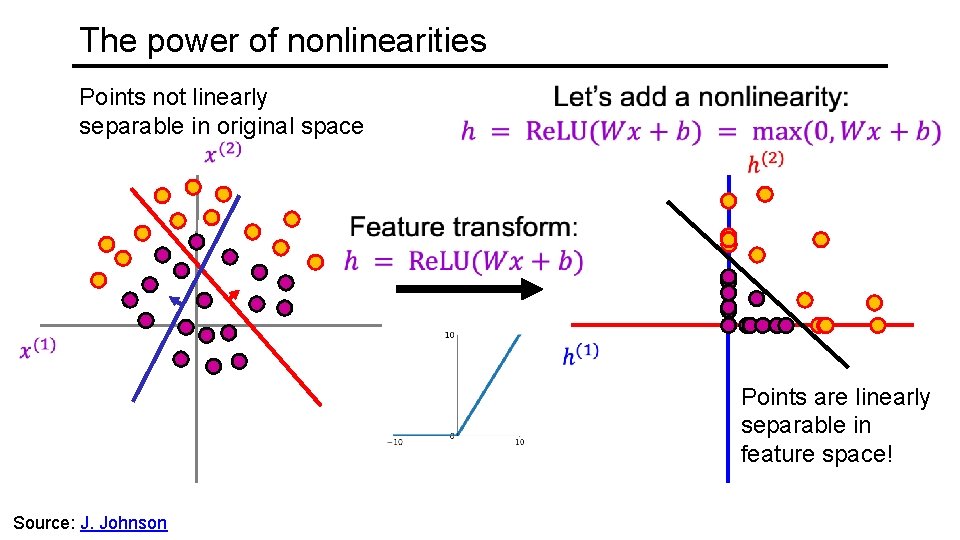
The power of nonlinearities Points not linearly separable in original space Points are linearly separable in feature space! Source: J. Johnson
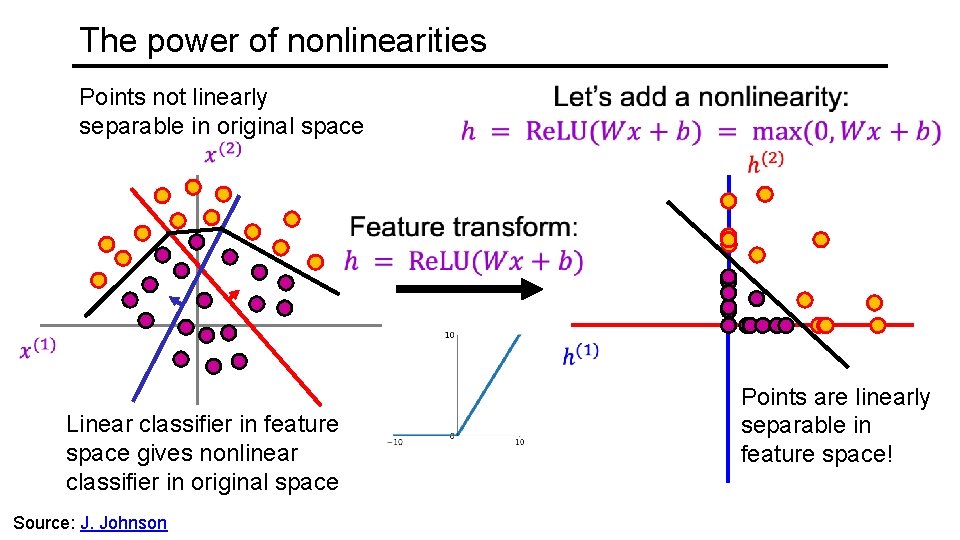
The power of nonlinearities Points not linearly separable in original space Linear classifier in feature space gives nonlinear classifier in original space Source: J. Johnson Points are linearly separable in feature space!
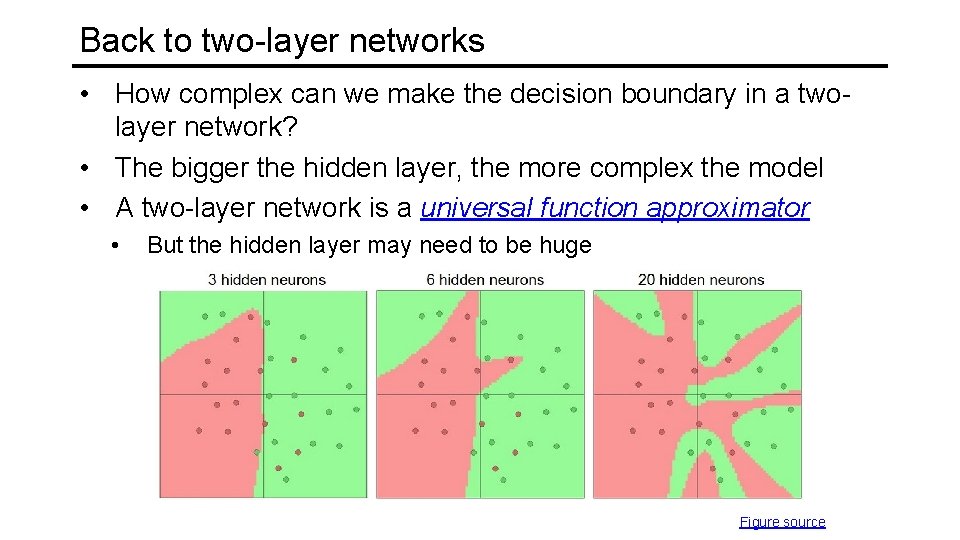
Back to two-layer networks • How complex can we make the decision boundary in a twolayer network? • The bigger the hidden layer, the more complex the model • A two-layer network is a universal function approximator • But the hidden layer may need to be huge Figure source
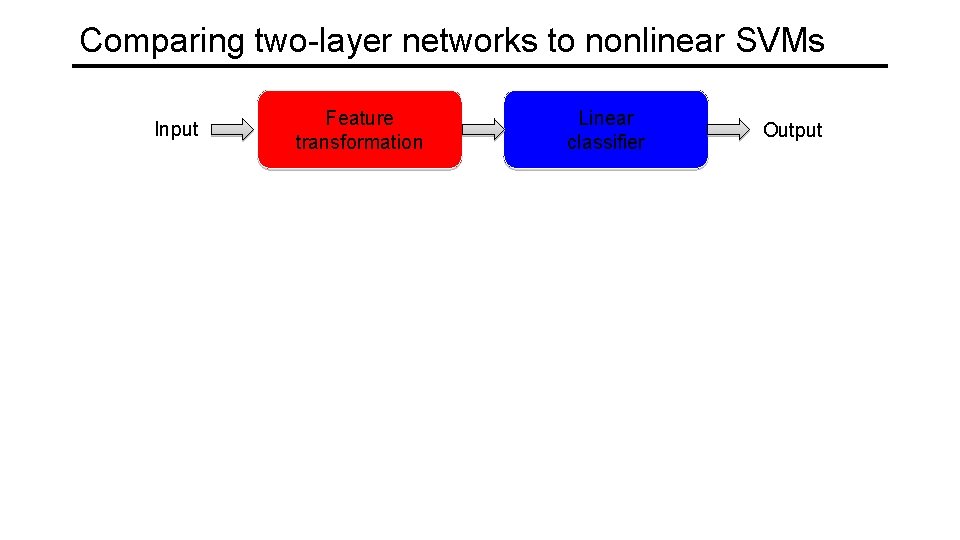
Comparing two-layer networks to nonlinear SVMs Input Feature transformation Linear classifier Output
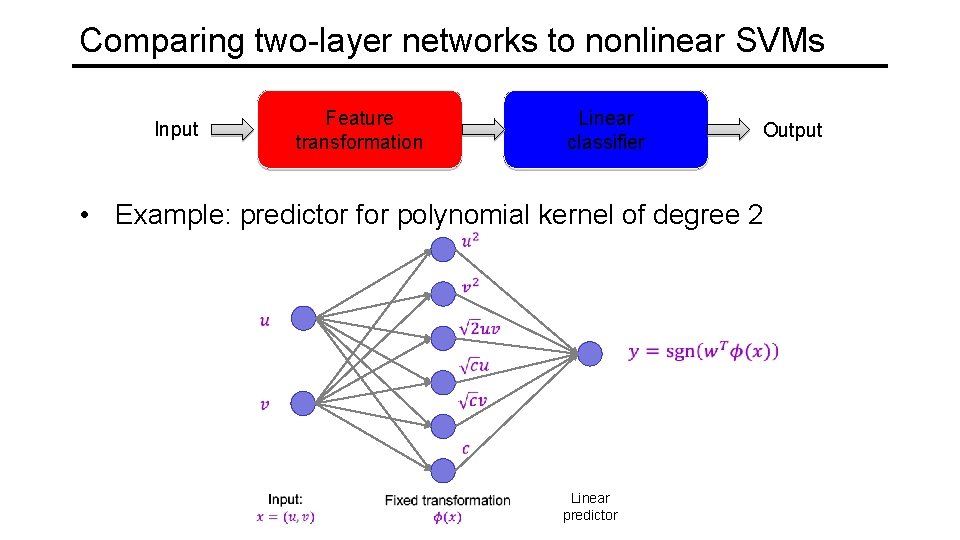
Comparing two-layer networks to nonlinear SVMs Input Feature transformation Linear classifier Output • Example: predictor for polynomial kernel of degree 2 Linear predictor
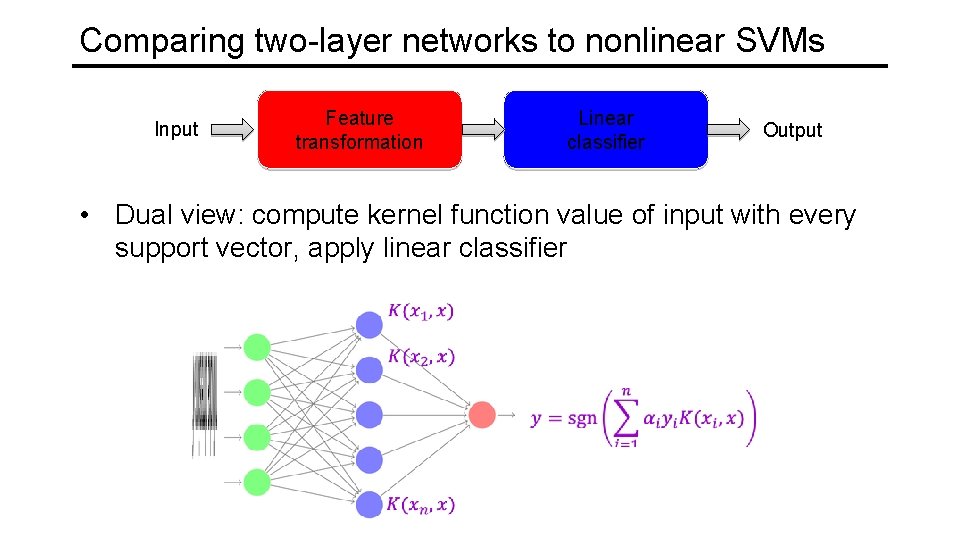
Comparing two-layer networks to nonlinear SVMs Input Feature transformation Linear classifier Output • Dual view: compute kernel function value of input with every support vector, apply linear classifier
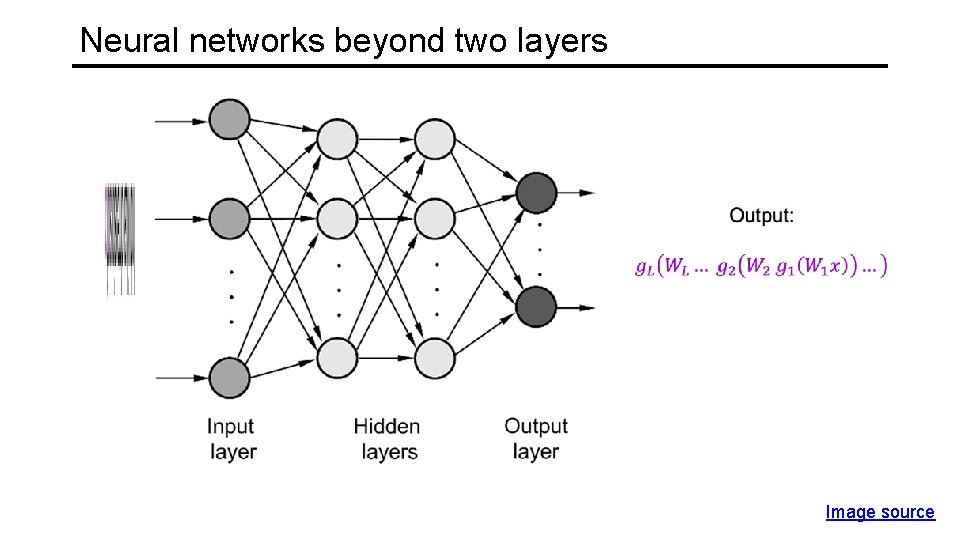
Neural networks beyond two layers Image source
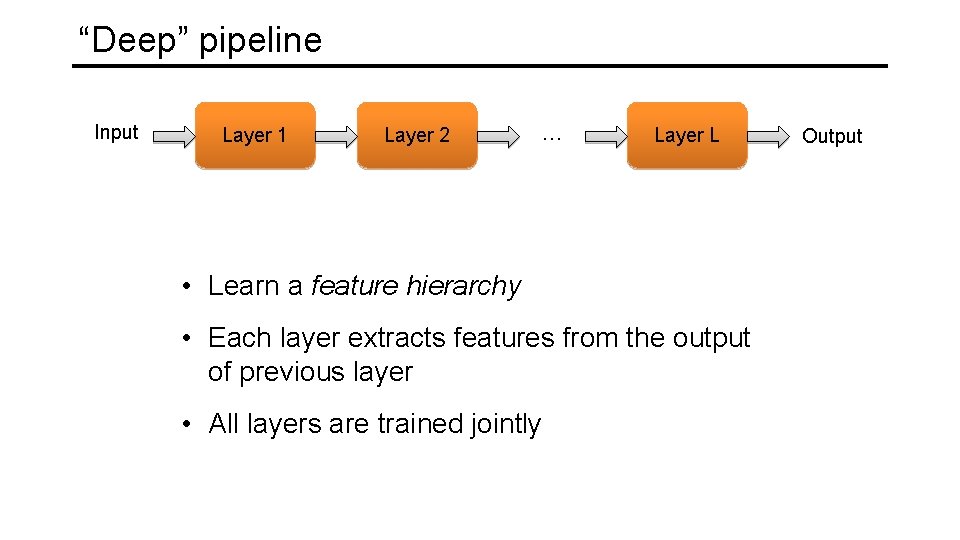
“Deep” pipeline Input Layer 1 Layer 2 … Layer L • Learn a feature hierarchy • Each layer extracts features from the output of previous layer • All layers are trained jointly Output
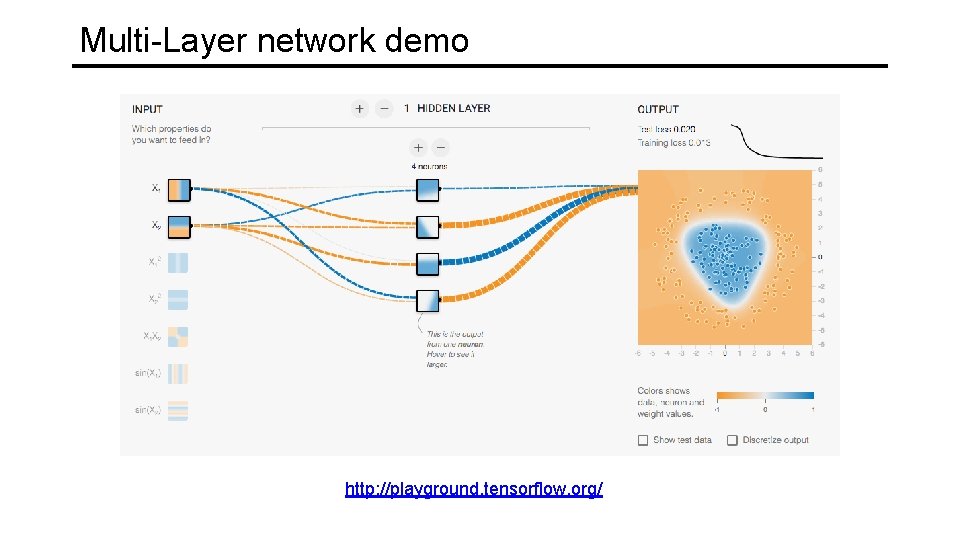
Multi-Layer network demo http: //playground. tensorflow. org/
Overview • Nonlinear classifiers • • Kernel support vector machines (SVMs) Multi-layer neural networks • Controlling classifier complexity • • Hyperparameters Bias-variance tradeoff Overfitting and underfitting Hyperparameter search in practice
Supervised learning outline revisited 1. Collect data and labels 2. Specify model: select model class and loss function 3. Train model: find the parameters of the model that minimize the empirical loss on the training data This involves hyperparameters that affect the generalization ability of the trained model
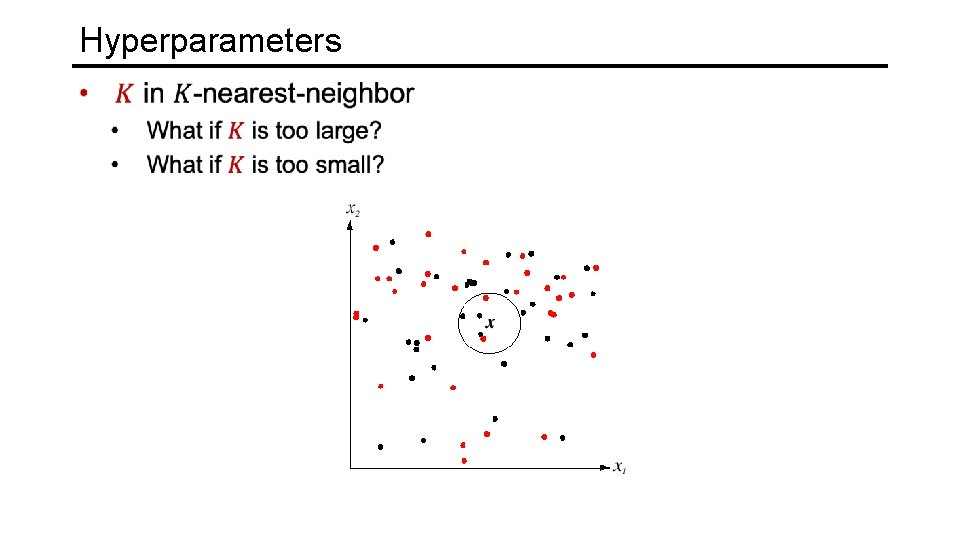
Hyperparameters
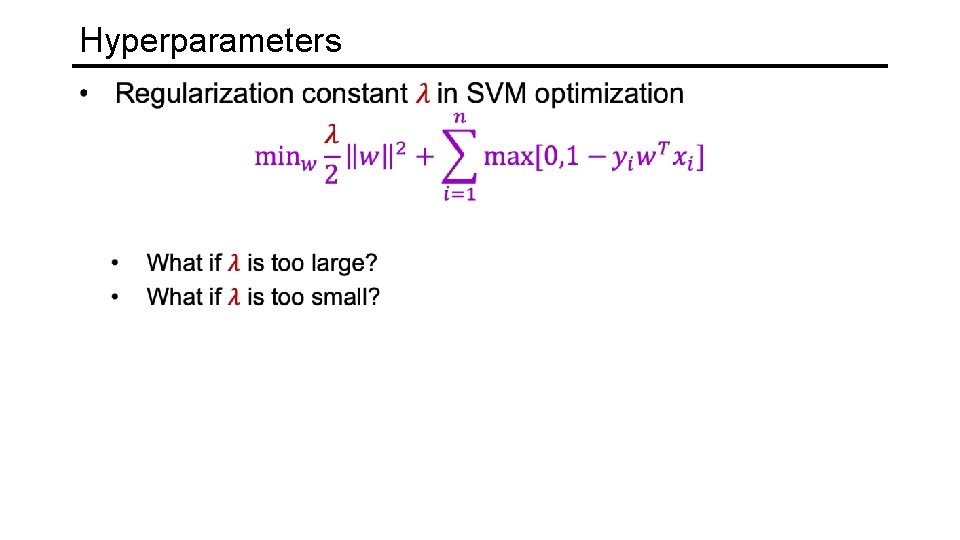
Hyperparameters
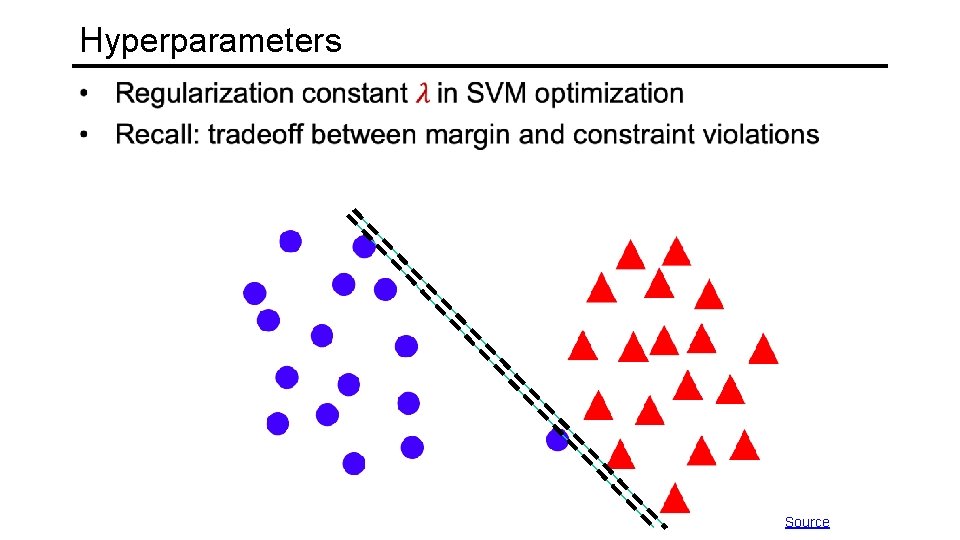
Hyperparameters Source
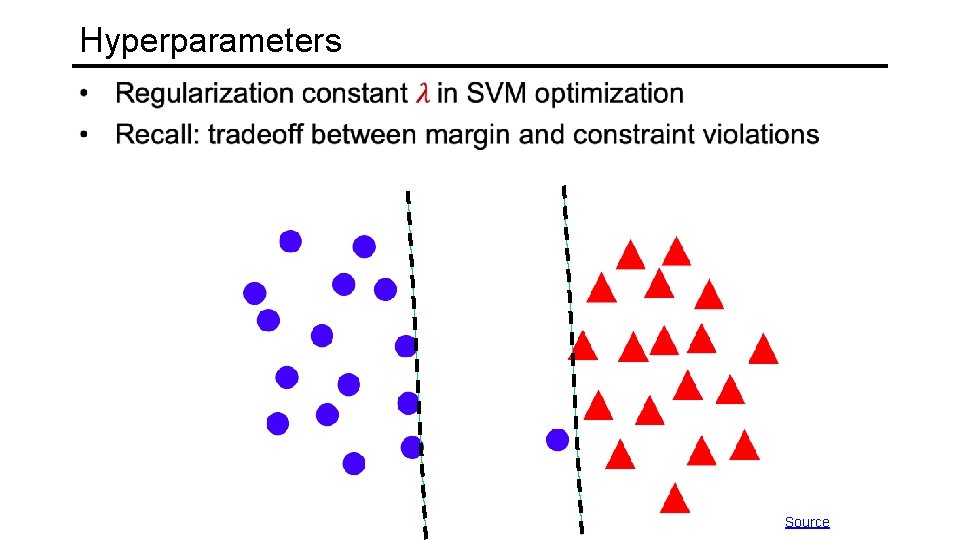
Hyperparameters Source
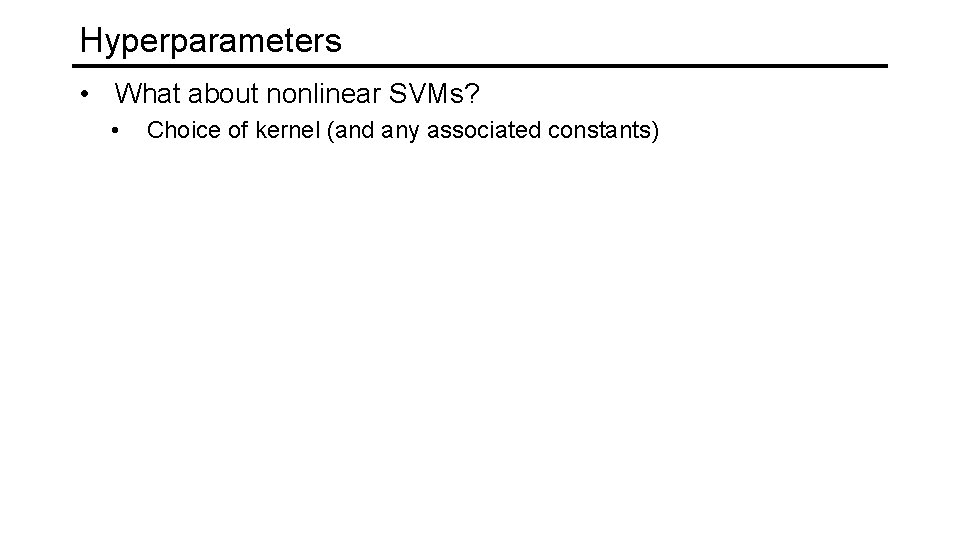
Hyperparameters • What about nonlinear SVMs? • Choice of kernel (and any associated constants)
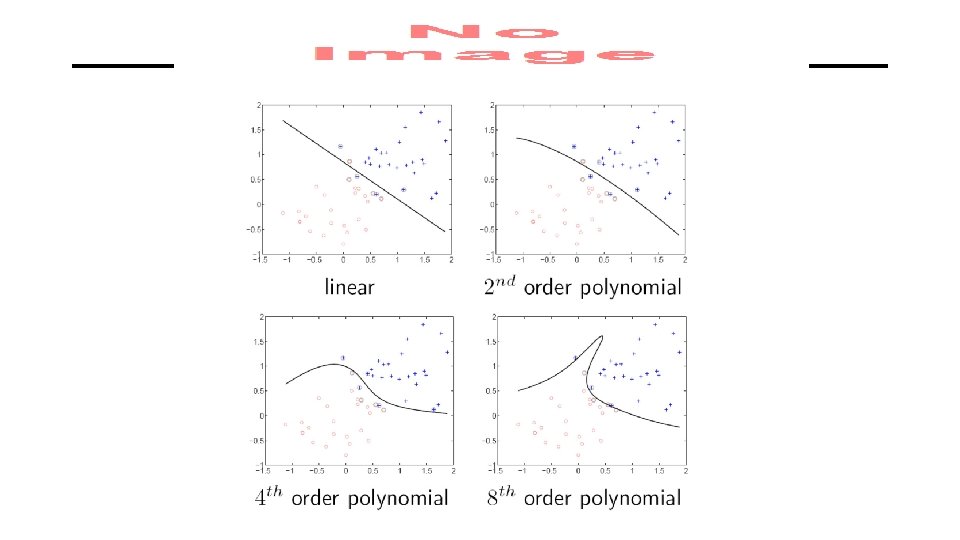
Gaussian kernel SV’s
Gaussian kernel
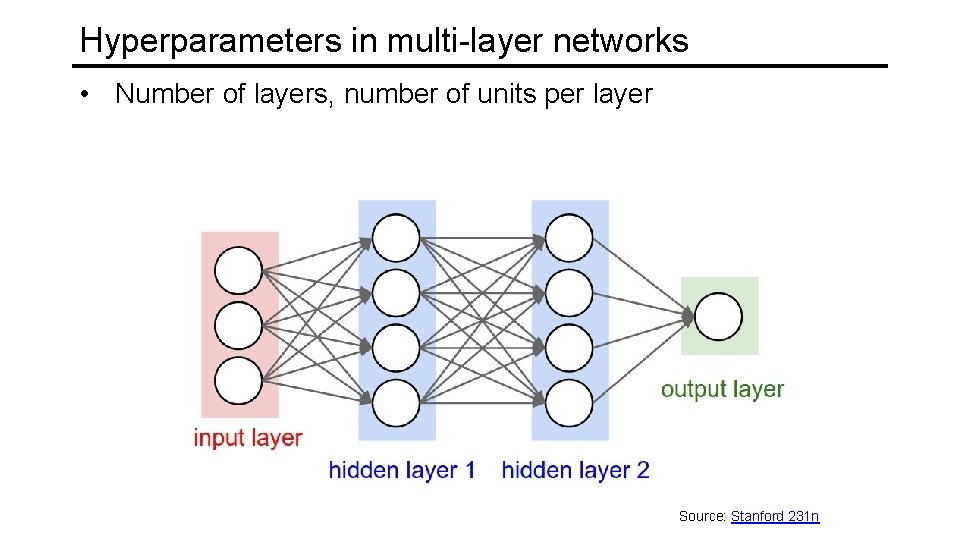
Hyperparameters in multi-layer networks • Number of layers, number of units per layer Source: Stanford 231 n
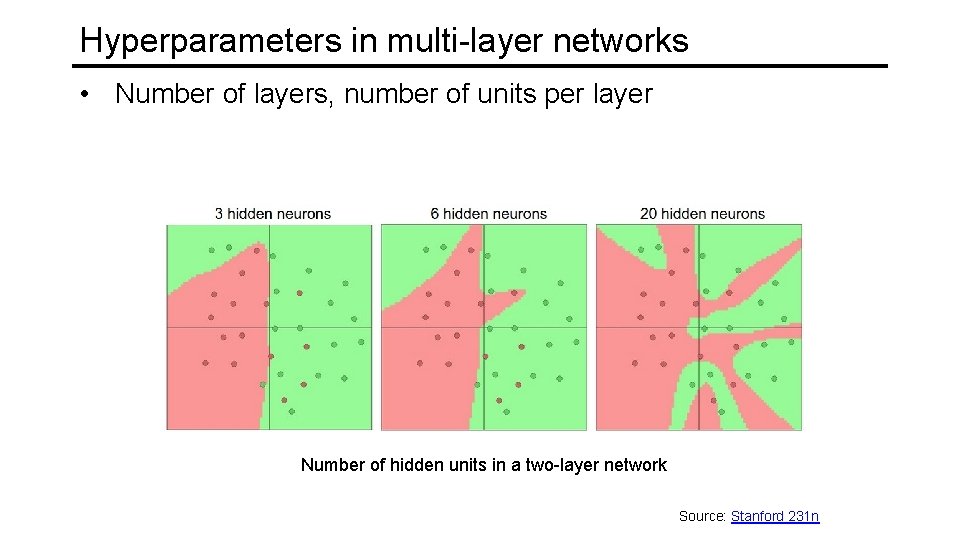
Hyperparameters in multi-layer networks • Number of layers, number of units per layer Number of hidden units in a two-layer network Source: Stanford 231 n
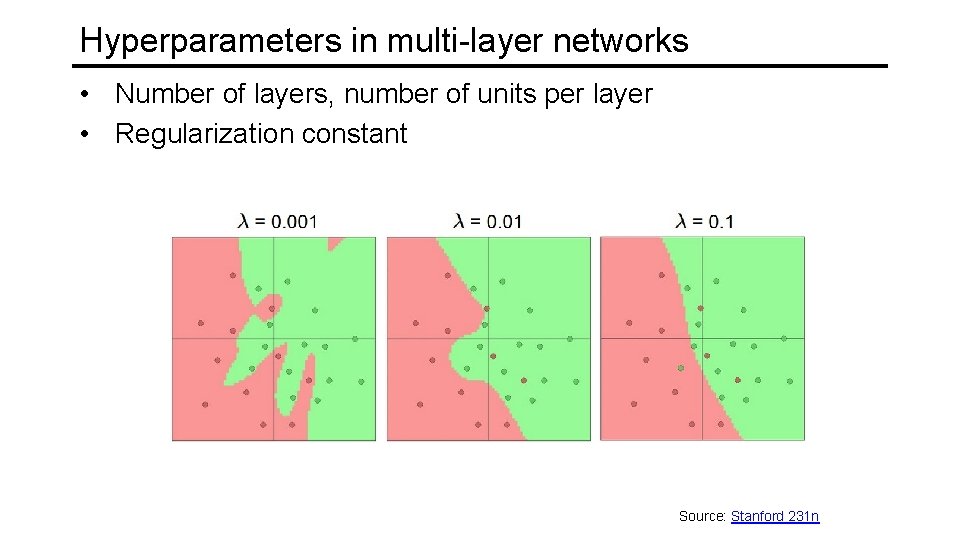
Hyperparameters in multi-layer networks • Number of layers, number of units per layer • Regularization constant Source: Stanford 231 n
Hyperparameters in multi-layer networks • Number of layers, number of units per layer • Regularization constant • SGD settings: learning rate schedule, number of epochs, minibatch size, etc.
Overview • Nonlinear classifiers • • Kernel support vector machines (SVMs) Multi-layer neural networks • Controlling classifier complexity • • Hyperparameters Bias-variance tradeoff Overfitting and underfitting Hyperparameter search in practice
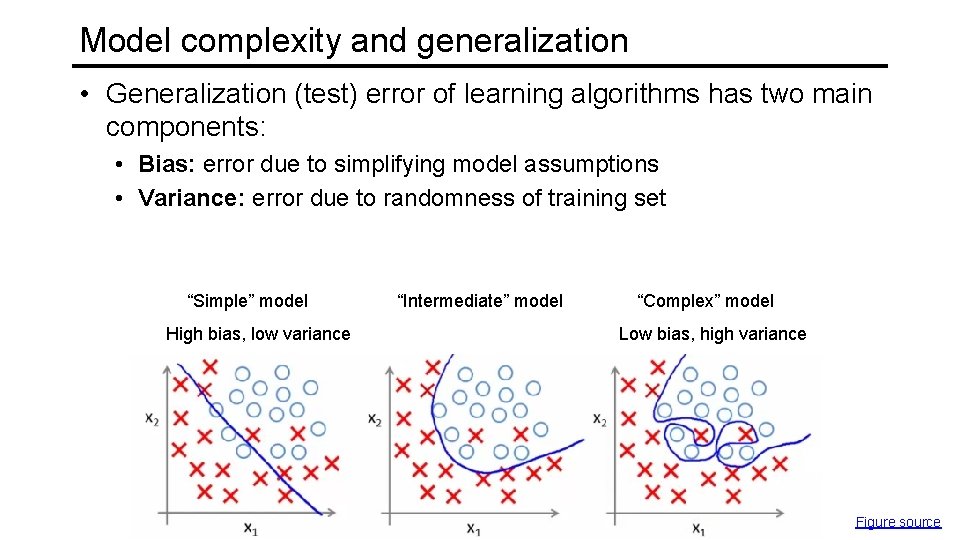
Model complexity and generalization • Generalization (test) error of learning algorithms has two main components: • Bias: error due to simplifying model assumptions • Variance: error due to randomness of training set “Simple” model High bias, low variance “Intermediate” model “Complex” model Low bias, high variance Figure source
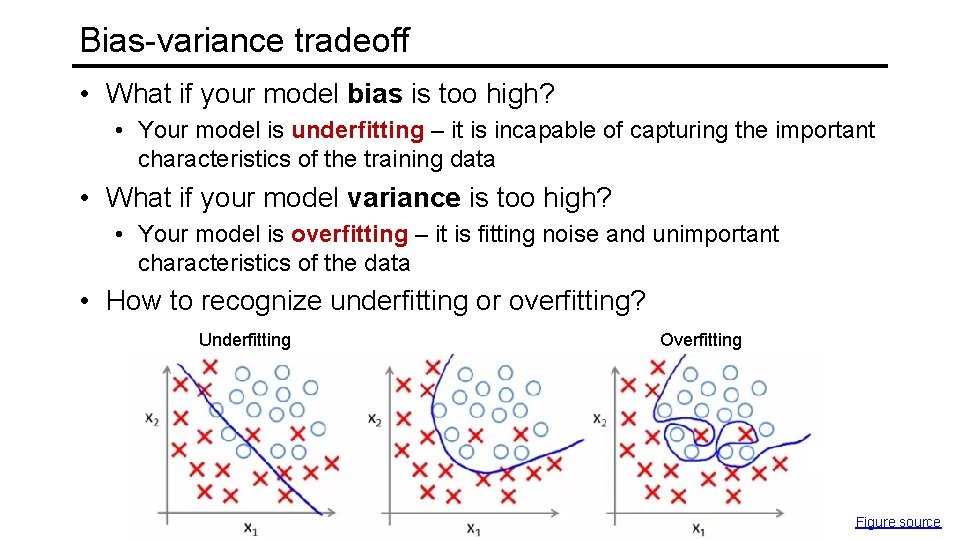
Bias-variance tradeoff • What if your model bias is too high? • Your model is underfitting – it is incapable of capturing the important characteristics of the training data • What if your model variance is too high? • Your model is overfitting – it is fitting noise and unimportant characteristics of the data • How to recognize underfitting or overfitting? Underfitting Overfitting Figure source
Bias-variance tradeoff • What if your model bias is too high? • Your model is underfitting – it is incapable of capturing the important characteristics of the training data • What if your model variance is too high? • Your model is overfitting – it is fitting noise and unimportant characteristics of the data • How to recognize underfitting or overfitting? • Need to look at both training and test error • Underfitting: training and test error are both high • Overfitting: training error is low, test error is high
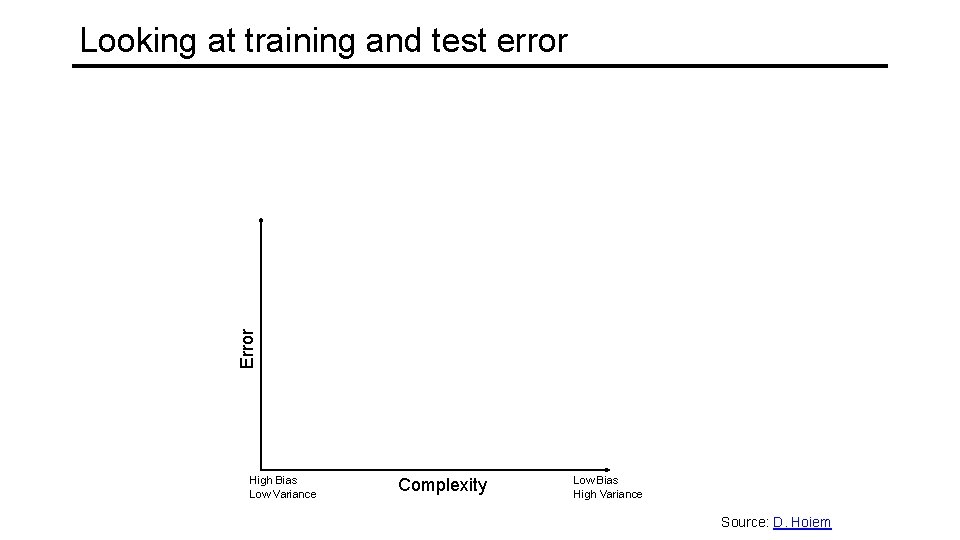
Looking at training and test error Error Test error Training error High Bias Low Variance Complexity Low Bias High Variance Source: D. Hoiem
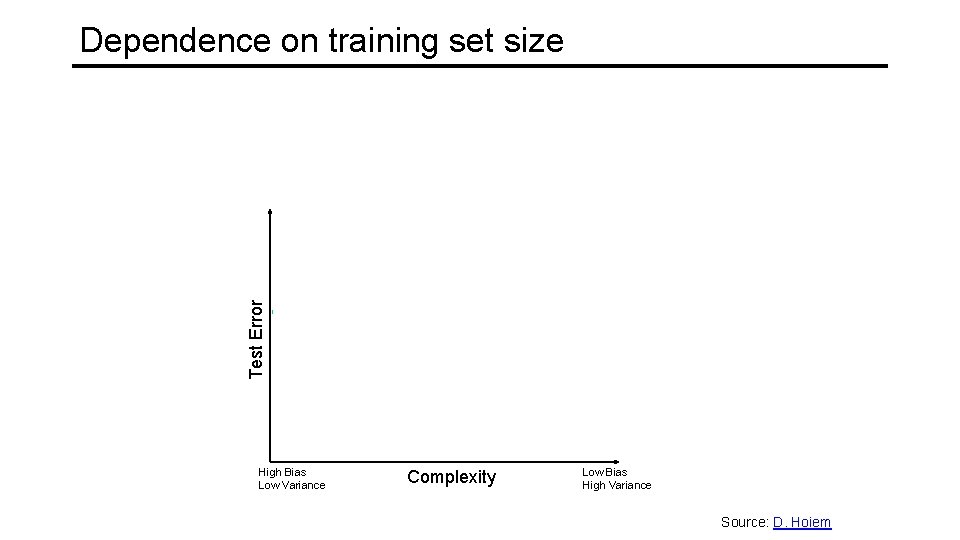
Dependence on training set size Test Error Few training examples High Bias Low Variance Many training examples Complexity Low Bias High Variance Source: D. Hoiem
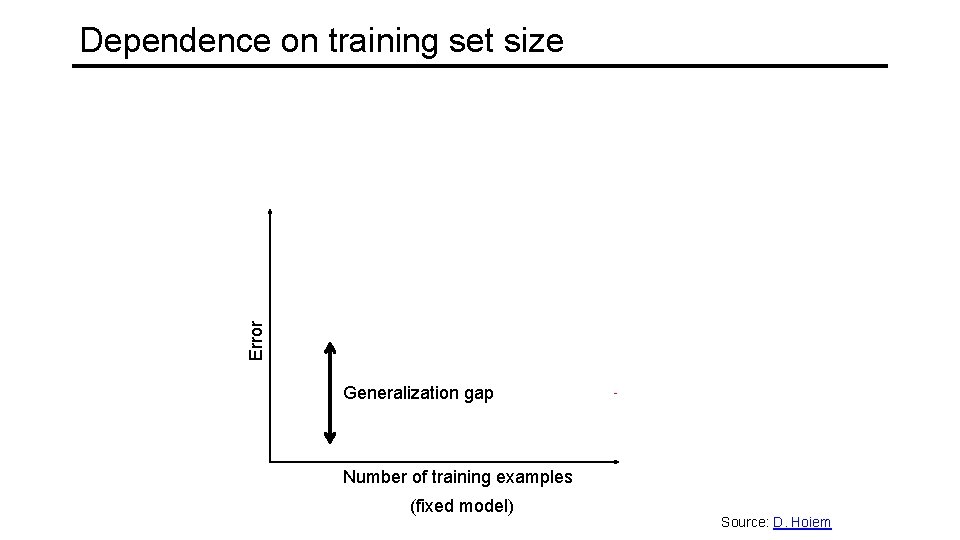
Error Dependence on training set size Testing Generalization gap Training Number of training examples (fixed model) Source: D. Hoiem
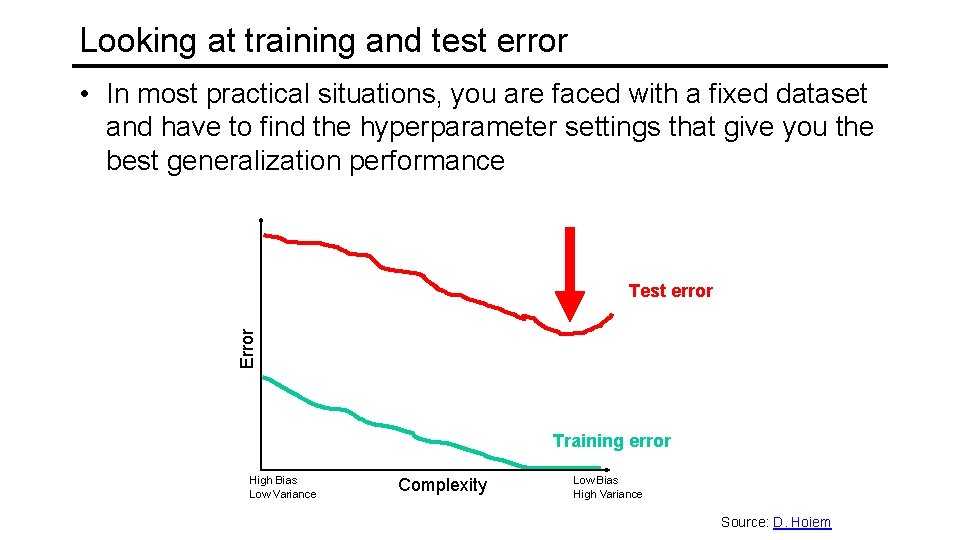
Looking at training and test error • In most practical situations, you are faced with a fixed dataset and have to find the hyperparameter settings that give you the best generalization performance Error Test error Training error High Bias Low Variance Complexity Low Bias High Variance Source: D. Hoiem
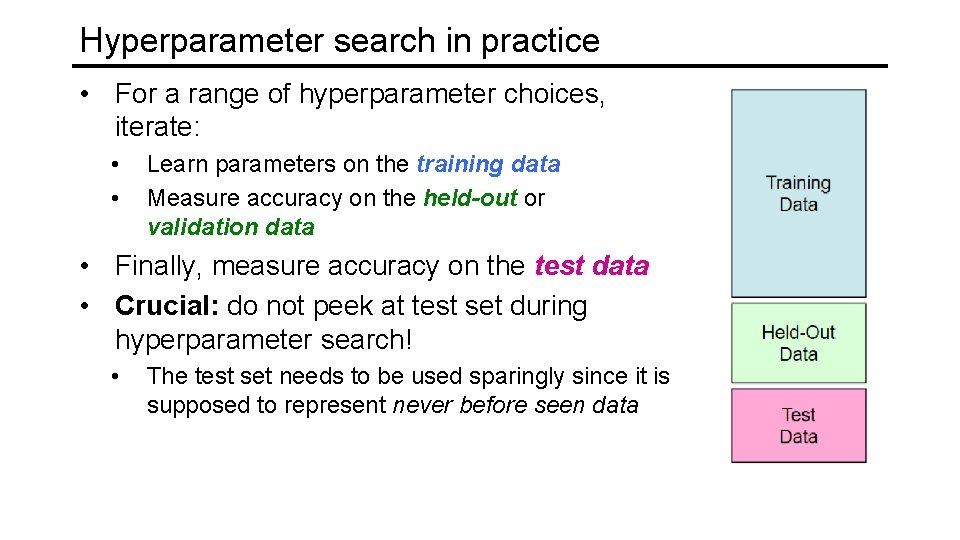
Hyperparameter search in practice • For a range of hyperparameter choices, iterate: • • Learn parameters on the training data Measure accuracy on the held-out or validation data • Finally, measure accuracy on the test data • Crucial: do not peek at test set during hyperparameter search! • The test set needs to be used sparingly since it is supposed to represent never before seen data
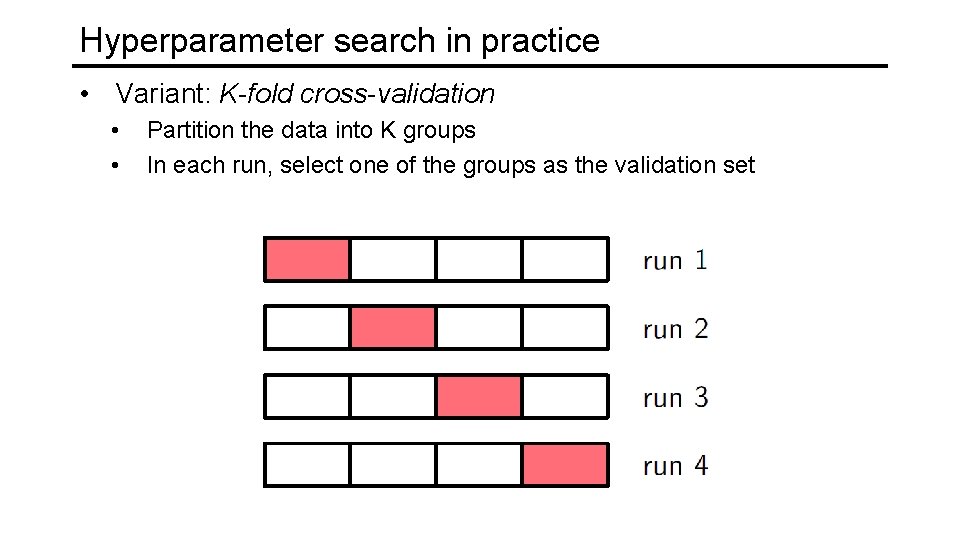
Hyperparameter search in practice • Variant: K-fold cross-validation • • Partition the data into K groups In each run, select one of the groups as the validation set
What’s the big deal? • If you don’t maintain proper training-validation-test hygiene, you will be fooling yourself or others (professors, reviewers, customers) • It may even cause a public scandal!

What’s the big deal?
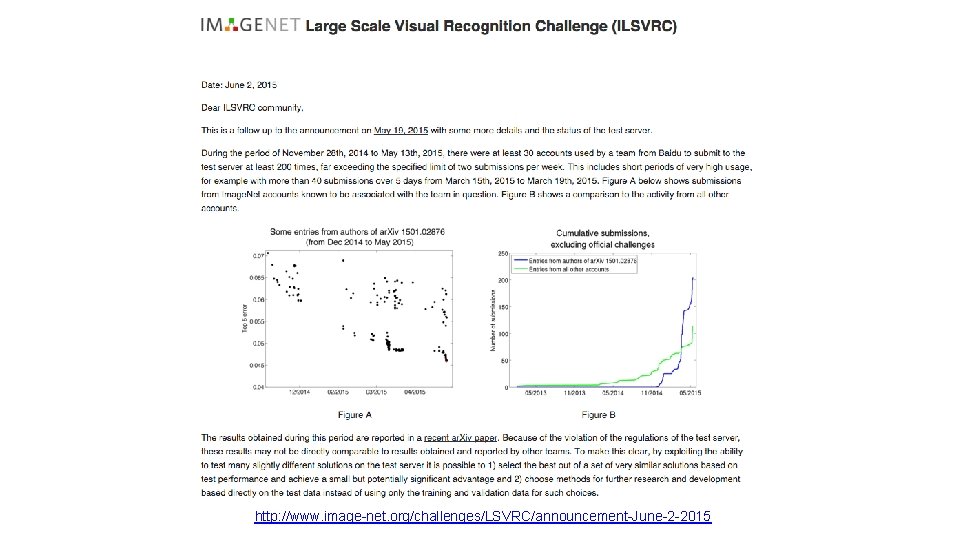
http: //www. image-net. org/challenges/LSVRC/announcement-June-2 -2015
- Slides: 68