
NONINVASIVE MEASUREMENT METHOD OF SKIN CONDITIONS USING DERMALAB

NON-INVASIVE MEASUREMENT METHOD OF SKIN CONDITIONS USING DERMALAB® COMBO Presented by: Asst. Prof. Dr. Hazrina Ab Hadi BPharm, Hons. , MSc. Drug Delivery, Ph. D Pharmaceutics Department of Pharmaceutical Technology Kulliyyah of Pharmacy International Islamic University Malaysia

OUTLINE • • • Background Aims and Objectives Methodology Results and Discussion Conclusions References
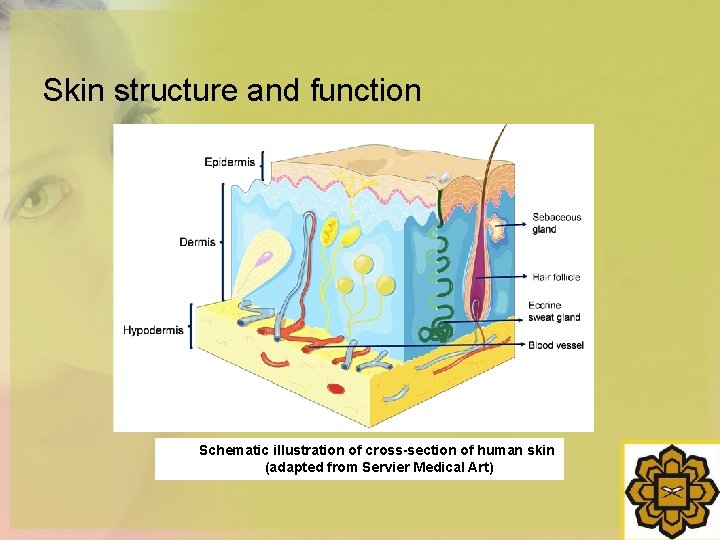
Skin structure and function Schematic illustration of cross-section of human skin (adapted from Servier Medical Art)

Derma. Lab® Combo

TEWL open chamber probe • Principle of vapor diffusion gradient • Sensor inside - to avoid any air currents and direct light. • The TEWL measurement is expressed as g/m 2/hr.

Hydration pin probe • Conductance principle is applied • Measure skin moisture. • Conductivity - to measure the water binding capacity of the stratum corneum.
Skin color probe • Based on the light absorption by the skin • The color measurement is based on the principle of reflectance spectrophotometry. • This probe has an optics design in order to ensure minimal sensitivity to ambient light condition.

Elasticity suction probe • Measure the necessary force needed to lift the skin • Provide a light weight probe • Skin elasticity of subjects is determined by refraction time (R) once the negative pressure is released.

OUTLINE • • • Background Aims and Objectives Methodology Results and Discussion Conclusions References
Aims and Objectives • To evaluate biophysical parameters (TEWL, hydration, melanin content and elasticity) of the skin using Dermalab Combo • To compare skin parameters between genders • To identify possible factors that affect functional state of the skin based on the skin condition measurements

OUTLINE • • • Background Aims and Objectives Methodology Results and Discussion Conclusions References
Methodology • 100 volunteers (IIUM students) • Age: 18 – 27 • Consent Form + simple questionnaire (demographic profile and daily activities) • Acclimatize to ambient T • Measurement on the volar forearm

OUTLINE • • • Background Aims and Objectives Methodology Results and Discussion Conclusions References
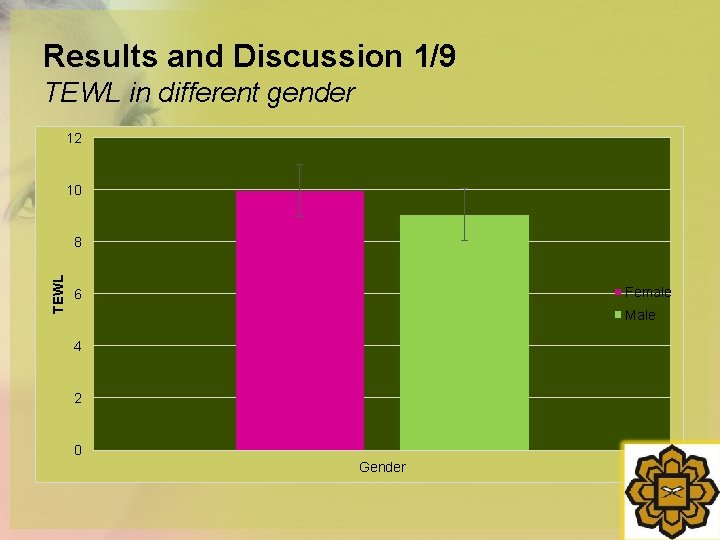
Results and Discussion 1/9 TEWL in different gender 12 10 TEWL 8 Female 6 Male 4 2 0 Gender
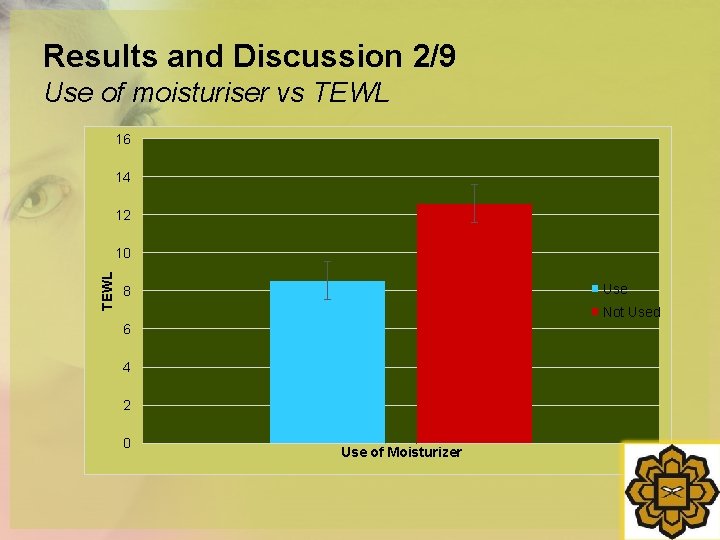
Results and Discussion 2/9 Use of moisturiser vs TEWL 16 14 12 TEWL 10 Use 8 Not Used 6 4 2 0 Use of Moisturizer
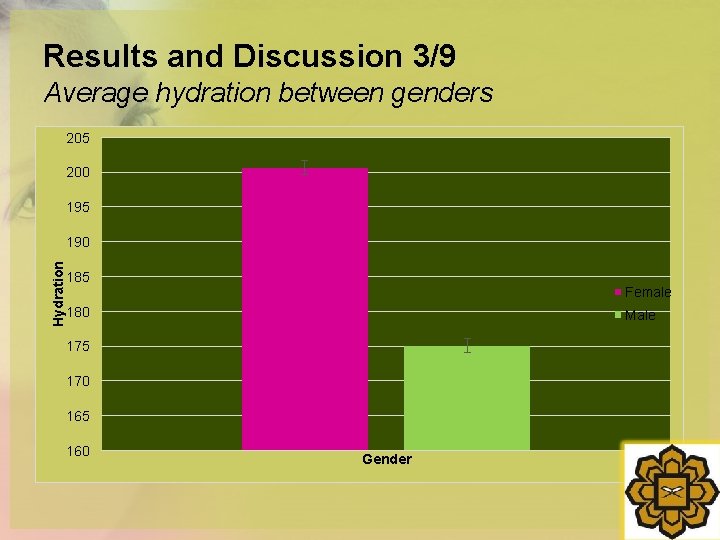
Results and Discussion 3/9 Average hydration between genders 205 200 195 Hydration 190 185 Female 180 Male 175 170 165 160 Gender
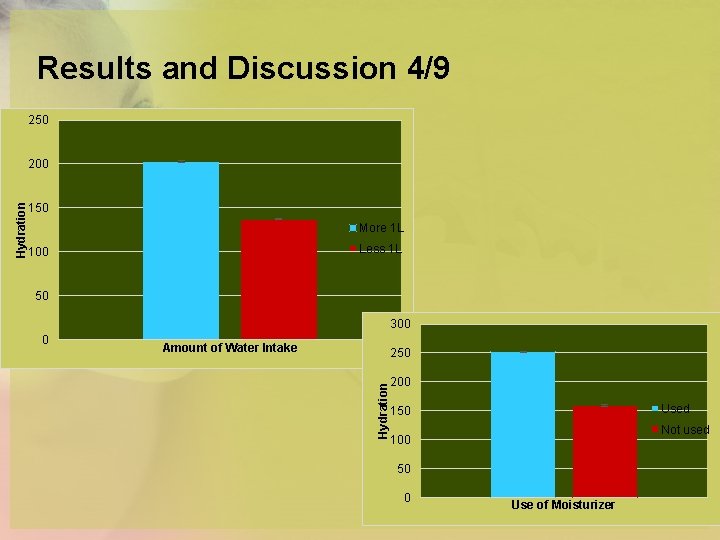
Results and Discussion 4/9 250 150 More 1 L Less 1 L 100 50 300 0 Amount of Water Intake 250 Hydration 200 Used 150 Not used 100 50 0 Use of Moisturizer
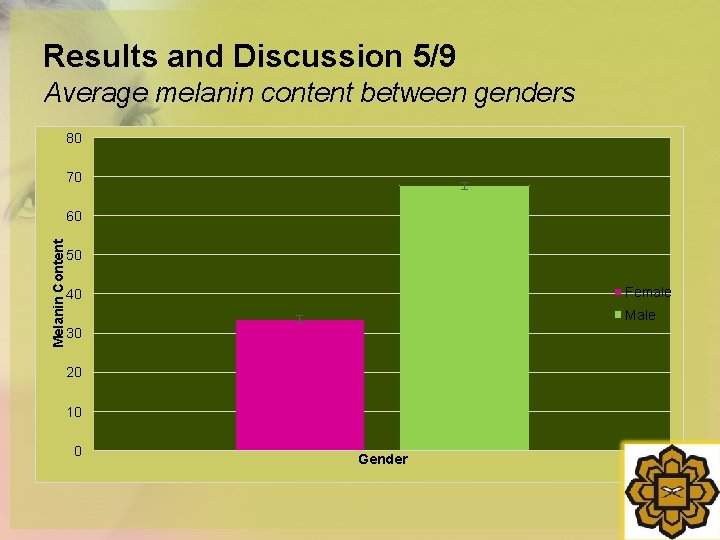
Results and Discussion 5/9 Average melanin content between genders 80 70 Melanin Content 60 50 Female 40 Male 30 20 10 0 Gender
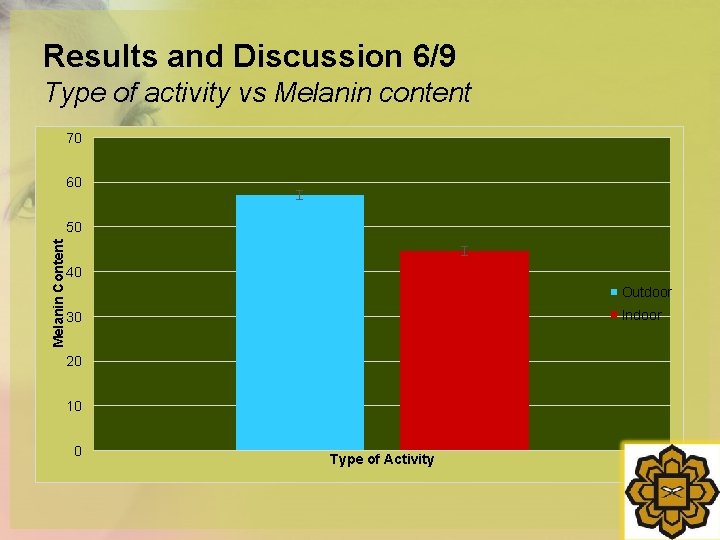
Results and Discussion 6/9 Type of activity vs Melanin content 70 60 Melanin Content 50 40 Outdoor Indoor 30 20 10 0 Type of Activity
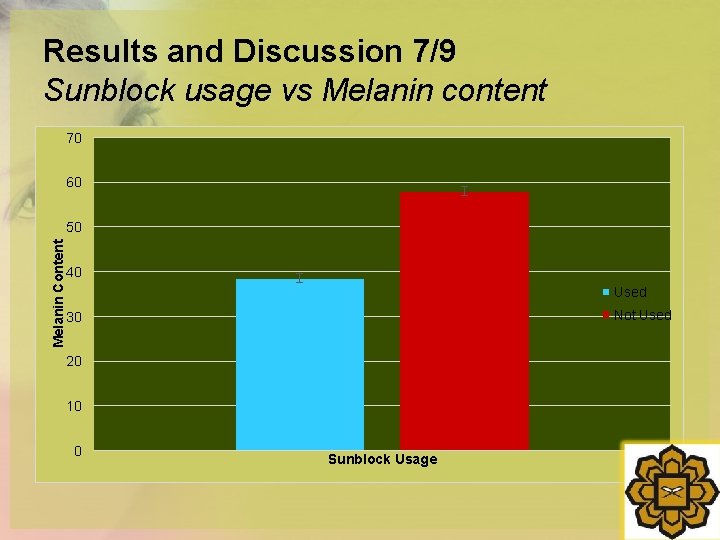
Results and Discussion 7/9 Sunblock usage vs Melanin content 70 60 Melanin Content 50 40 Used Not Used 30 20 10 0 Sunblock Usage
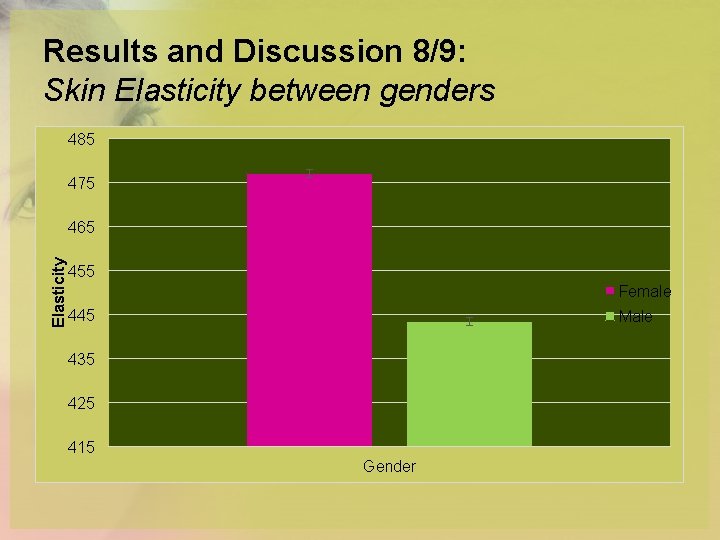
Results and Discussion 8/9: Skin Elasticity between genders 485 475 Elasticity 465 455 Female 445 Male 435 425 415 Gender
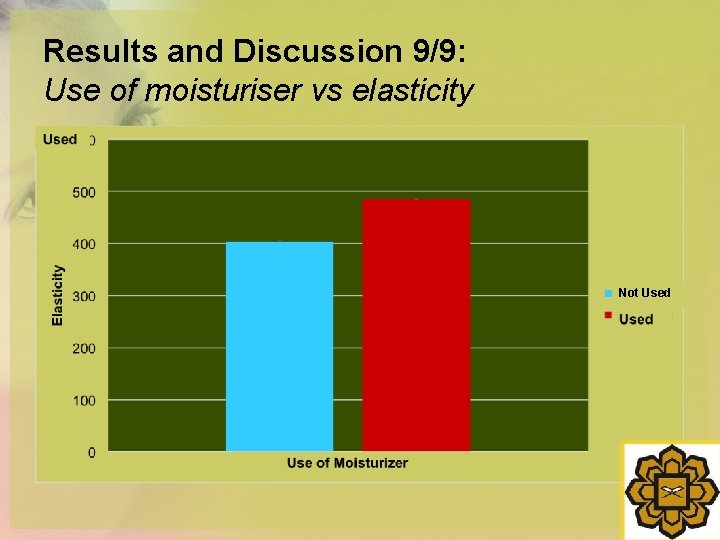
Results and Discussion 9/9: Use of moisturiser vs elasticity Not Used

OUTLINE • • • Background Aims and Objectives Methodology Results and Discussion Conclusions References
Conclusions • Biophysical parameters of the skin vary among different genders. The differences may be due to individuals daily activity, use of skin care products as well as environmental factors. • The use of Derma. Lab® Combo in this experiment provides a reliable measurements for TEWL, hydration, pigmentation and elasticity. Thus, this baseline reading can be used for further research study such as comparison of skin care products and assessment of skin care efficacy.

OUTLINE • • • Background Aims and Objectives Methodology Results and Discussion Conclusions References
References • • • Alexander H, Cook T. Variations with age in the mechanical properties of human skin in vivo. J Tissue Viability 2006; 16: 6– 11. Bouwstra JA, Dubbelaar FE, Gooris GS, Ponec M: The lipid organisation in the skin barrier. Acta. Derm. Venereol. Suppl 2000; 208: 23– 30. Choi, J. W. , Kwon, S. H. , Huh, C. H. , Park, K. C. , &Youn, S. W. (2013). The influences of skin visco‐elasticity, hydration level and aging on the formation of wrinkles: a comprehensive and objective approach. Skin Research and Technology, 19(1), e 349 -e 355. Derma. Lab® Combo. Cortex Technologies, Denmark; (2011). Retrieved Jun 8, 2014, from www. cortextechologies. dk Ehlers, C. , Ivens, U. I. , Møller, M. L. , Senderovitz, T. , &Serup, J. (2001). Females have lower skin surface p. H than men. Skin Research and Technology, 7(2), 90 -94. Elias, P. M. , & Choi, E. H. (2005). Interactions among stratum corneum defensive functions. Experimental dermatology, 14(10), 776 -776. Ishikawa, T. , Ishikawa, O. , &Miyachi, Y. (1995). Measurement of skin elastic properties with a new suction device (I): Relationship to age, sex and the degree of obesity in normal individuals. The Journal of dermatology, 22(10), 713 -717. Kleesz, P. , Darlenski, R. , &Fluhr, J. W. (2011). Full-body skin mapping for six biophysical parameters: baseline values at 16 anatomical sites in 125 human subjects. Skin pharmacology and physiology, 25(1), 25 -33. Maddodi, N. , Jayanthy, A. , &Setaluri, V. (2012). Shining light on skin pigmentation: the darker and the brighter side of effects of UV radiation†. Photochemistry and photobiology, 88(5), 1075 -1082. Proksch, E. , Brandner, J. M. , & Jensen, J. M. (2008). The skin: an indispensable barrier. Experimental dermatology, 17(12), 1063 -1072. Rosado, C. , Pinto, P. , & Rodrigues, L. M. (2009). Assessment of moisturizers and barrier function restoration using dynamic methods. Skin Research and Technology, 15(1), 77 -83. Taieb, M. , Gay, C. , Sebban, S. , &Secnazi, P. (2012). Hyaluronic acid plus mannitol treatment for improved skin hydration and elasticity. Journal of Cosmetic Dermatology, 11(2), 87 -92.

Thank you for your attention!

- Slides: 28