
Nonideal Cavity RingDown Spectroscopy Linear Birefringence Linear Polarization
Non-ideal Cavity Ring-Down Spectroscopy: Linear Birefringence, Linear Polarization Dependent Loss of Supermirrors, and Finite Extinction Ratio of Light Modulator Haifeng Huang and Kevin K. Lehmann Chemistry Department, University of Virginia 63 rd International Symposium on Molecular Spectroscopy Columbus OH, June 20, 2008
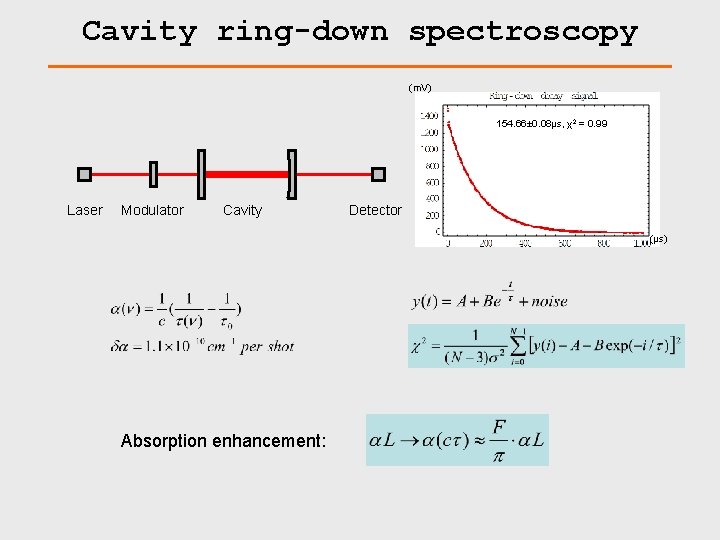
Cavity ring-down spectroscopy (m. V) 154. 66± 0. 08µs, χ2 = 0. 99 Laser Modulator Cavity Detector (µs) Absorption enhancement:
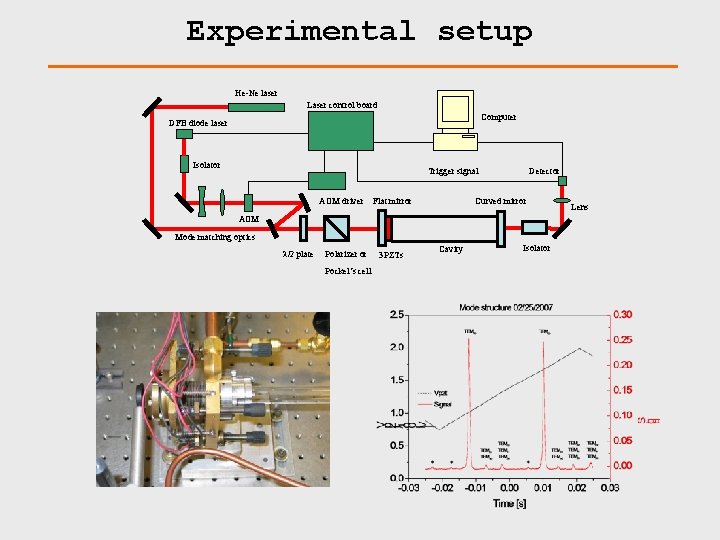
Experimental setup He-Ne laser Laser control board Computer DFB diode laser Isolator Trigger signal AOM driver Flat mirror Detector Curved mirror AOM Mode matching optics λ/2 plate Polarizer or Pockel’s cell 3 PZTs Cavity Isolator Lens
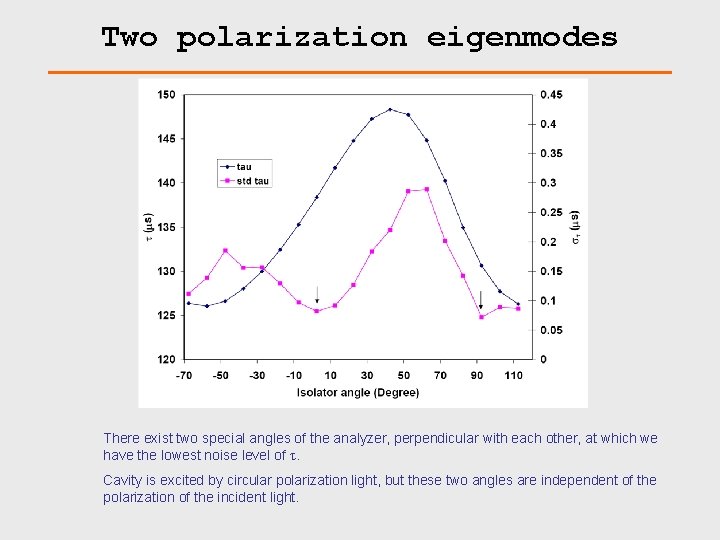
Two polarization eigenmodes There exist two special angles of the analyzer, perpendicular with each other, at which we have the lowest noise level of τ. Cavity is excited by circular polarization light, but these two angles are independent of the polarization of the incident light.
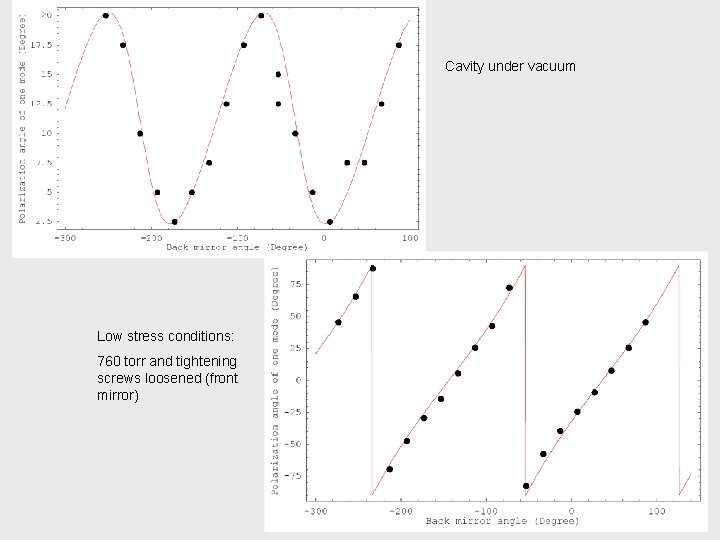
Cavity under vacuum Low stress conditions: 760 torr and tightening screws loosened (front mirror)
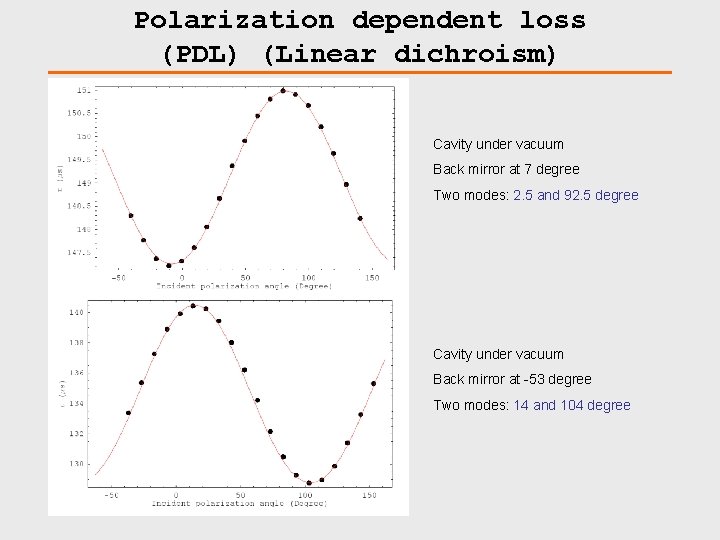
Polarization dependent loss (PDL) (Linear dichroism) Cavity under vacuum Back mirror at 7 degree Two modes: 2. 5 and 92. 5 degree Cavity under vacuum Back mirror at -53 degree Two modes: 14 and 104 degree
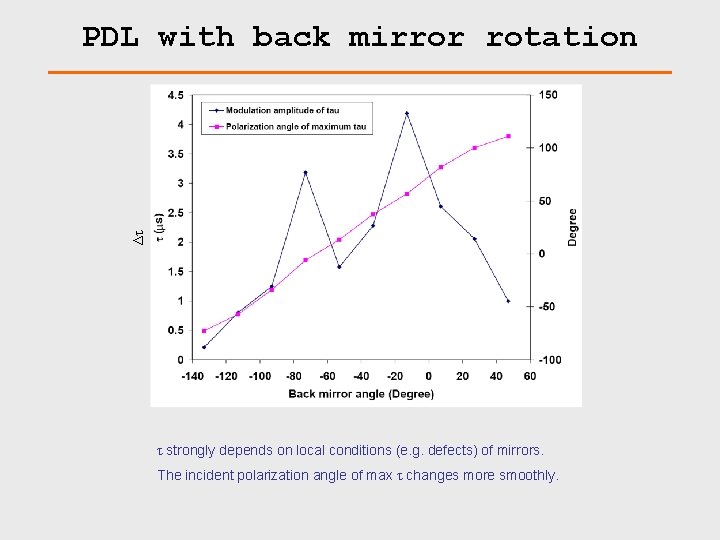
Δτ PDL with back mirror rotation τ strongly depends on local conditions (e. g. defects) of mirrors. The incident polarization angle of max τ changes more smoothly.
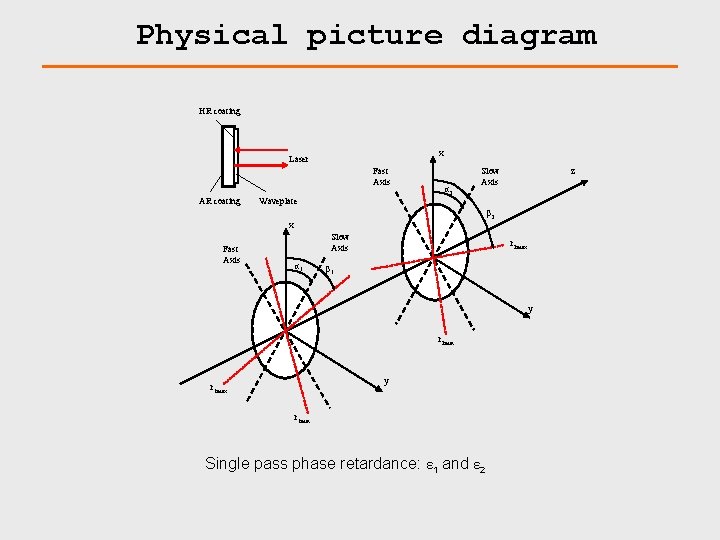
Physical picture diagram HR coating x Laser Fast Axis AR coating α 2 Slow Axis z Waveplate β 2 x Fast Axis Slow Axis α 1 r 2 max β 1 y r 2 min y r 1 max r 1 min Single pass phase retardance: ε 1 and ε 2
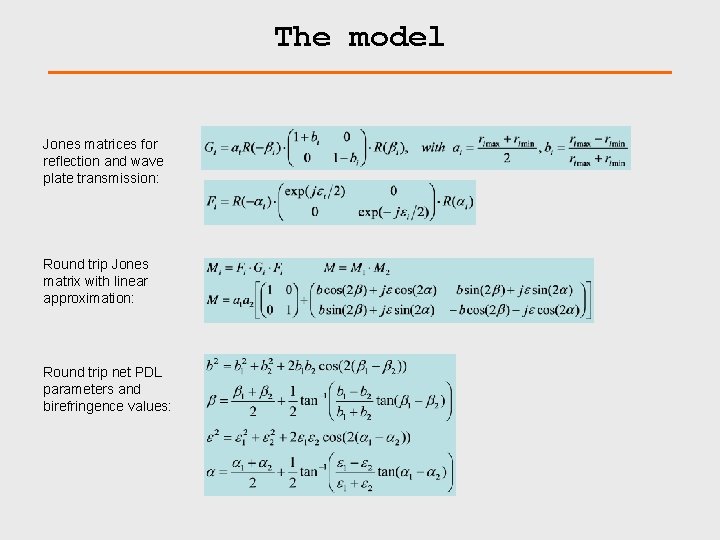
The model Jones matrices for reflection and wave plate transmission: Round trip Jones matrix with linear approximation: Round trip net PDL parameters and birefringence values:
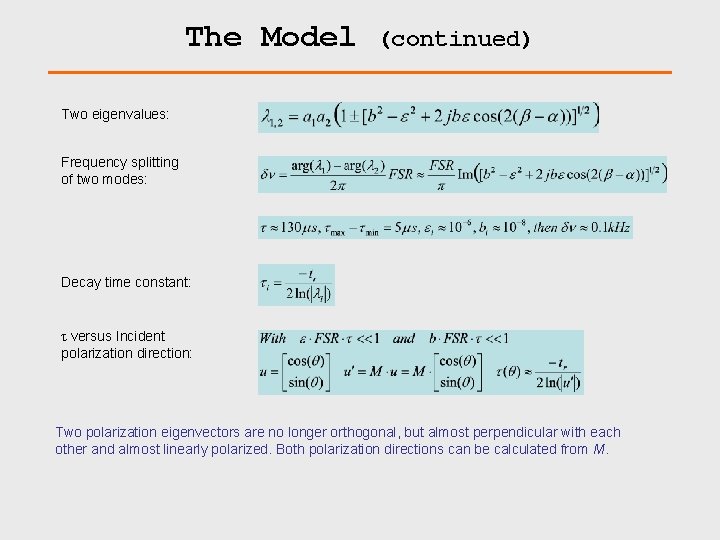
The Model (continued) Two eigenvalues: Frequency splitting of two modes: Decay time constant: τ versus Incident polarization direction: Two polarization eigenvectors are no longer orthogonal, but almost perpendicular with each other and almost linearly polarized. Both polarization directions can be calculated from M.
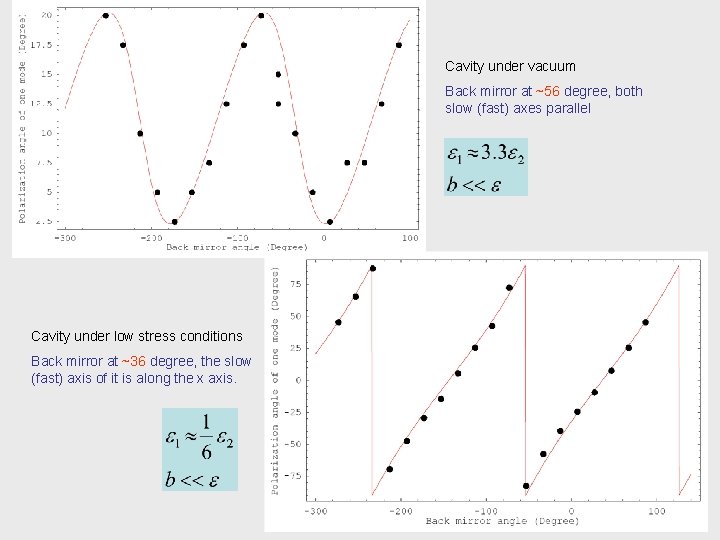
Cavity under vacuum Back mirror at ~56 degree, both slow (fast) axes parallel Cavity under low stress conditions Back mirror at ~36 degree, the slow (fast) axis of it is along the x axis.
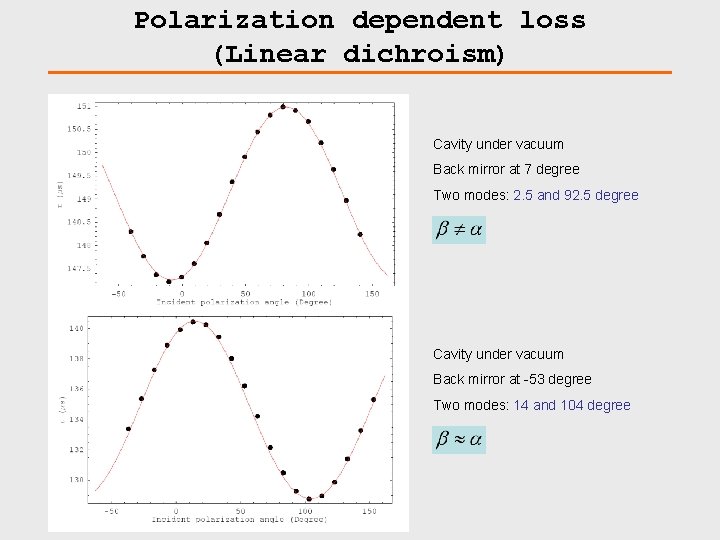
Polarization dependent loss (Linear dichroism) Cavity under vacuum Back mirror at 7 degree Two modes: 2. 5 and 92. 5 degree Cavity under vacuum Back mirror at -53 degree Two modes: 14 and 104 degree
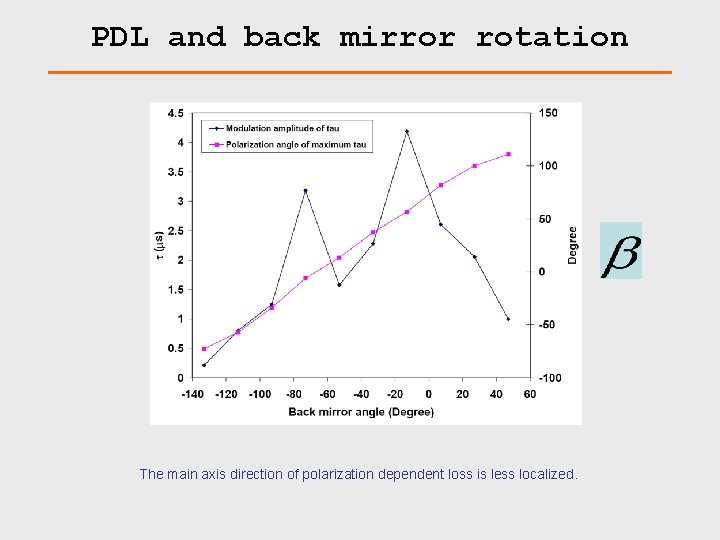
PDL and back mirror rotation The main axis direction of polarization dependent loss is less localized.
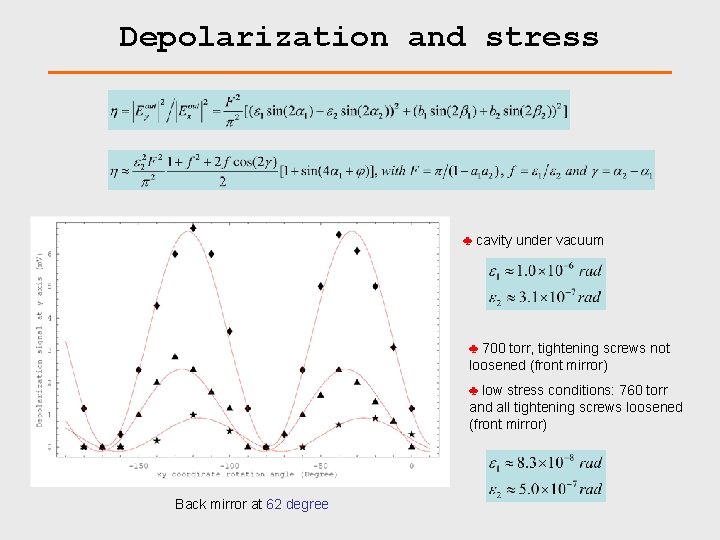
Depolarization and stress ♣ cavity under vacuum ♣ 700 torr, tightening screws not loosened (front mirror) ♣ low stress conditions: 760 torr and all tightening screws loosened (front mirror) Back mirror at 62 degree
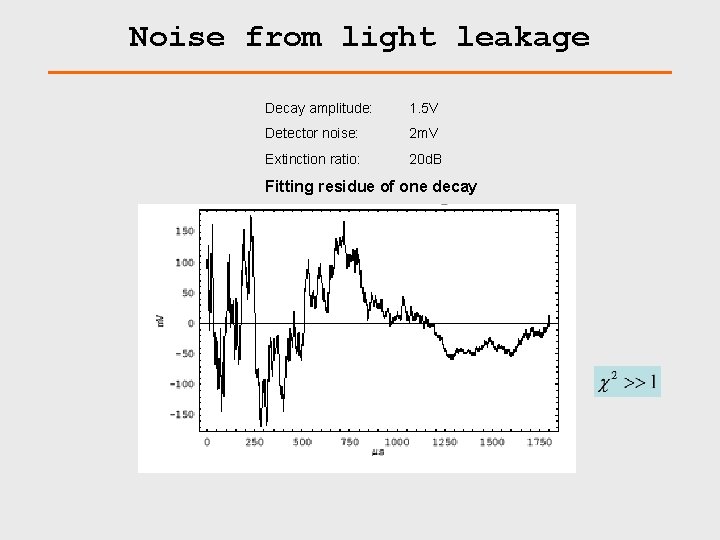
Noise from light leakage Decay amplitude: 1. 5 V Detector noise: 2 m. V Extinction ratio: 20 d. B Fitting residue of one decay
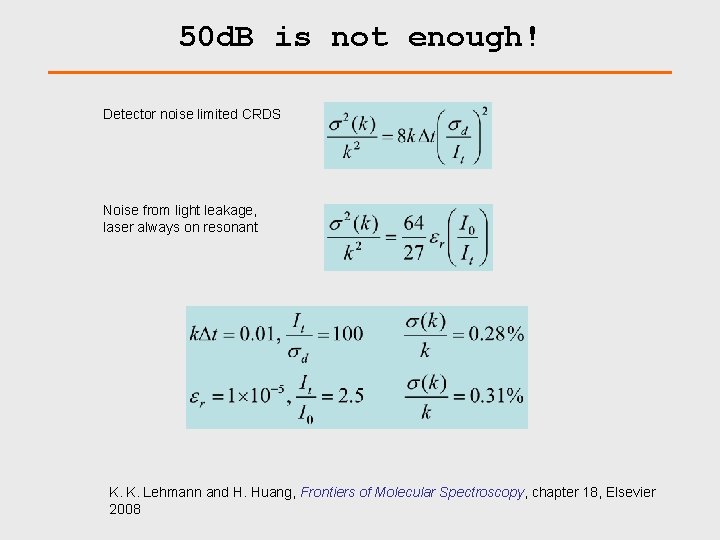
50 d. B is not enough! Detector noise limited CRDS Noise from light leakage, laser always on resonant K. K. Lehmann and H. Huang, Frontiers of Molecular Spectroscopy, chapter 18, Elsevier 2008
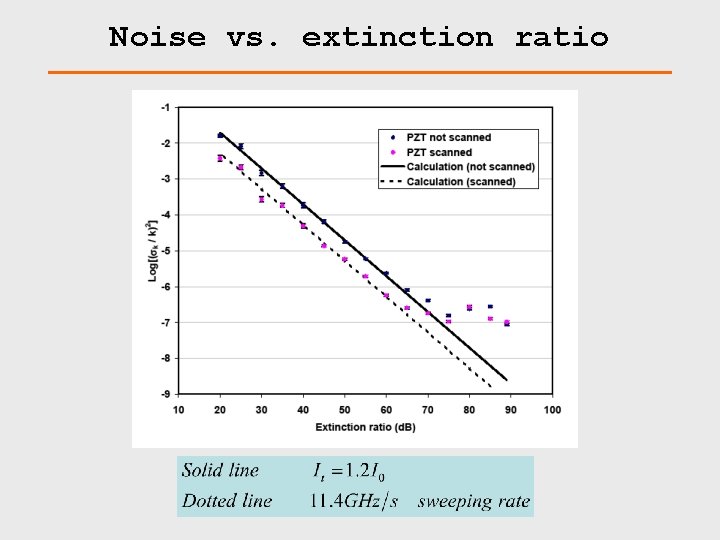
Noise vs. extinction ratio
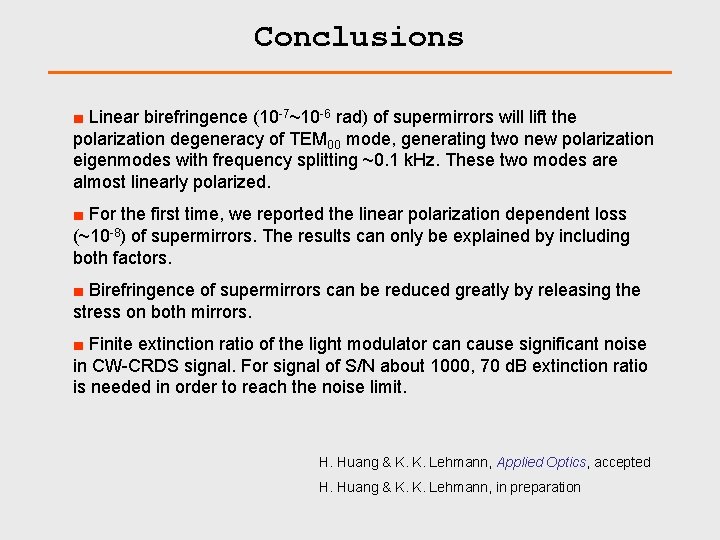
Conclusions ■ Linear birefringence (10 -7~10 -6 rad) of supermirrors will lift the polarization degeneracy of TEM 00 mode, generating two new polarization eigenmodes with frequency splitting ~0. 1 k. Hz. These two modes are almost linearly polarized. ■ For the first time, we reported the linear polarization dependent loss (~10 -8) of supermirrors. The results can only be explained by including both factors. ■ Birefringence of supermirrors can be reduced greatly by releasing the stress on both mirrors. ■ Finite extinction ratio of the light modulator can cause significant noise in CW-CRDS signal. For signal of S/N about 1000, 70 d. B extinction ratio is needed in order to reach the noise limit. H. Huang & K. K. Lehmann, Applied Optics, accepted H. Huang & K. K. Lehmann, in preparation

Acknowledgements Paul Johnston and Robert Fehnel Dr. Brooks Pate’s Lab in UVA
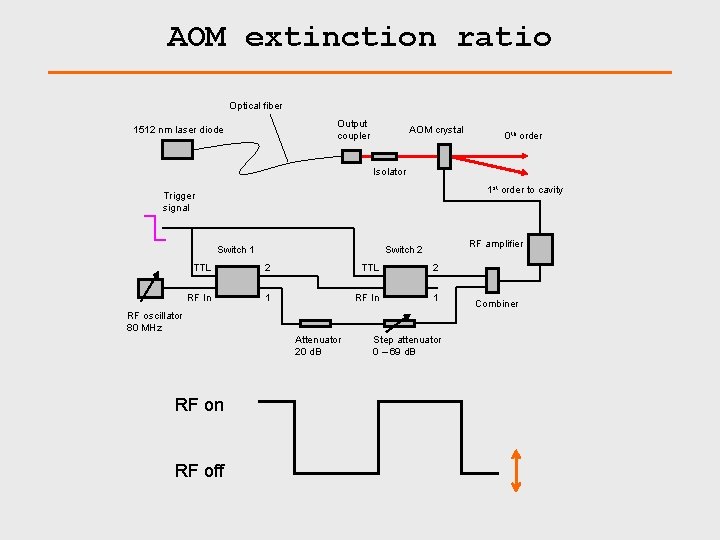
AOM extinction ratio Optical fiber Output coupler 1512 nm laser diode AOM crystal 0 th order Isolator 1 st order to cavity Trigger signal Switch 1 RF amplifier Switch 2 TTL 2 RF In 1 RF oscillator 80 MHz Attenuator 20 d. B RF on RF off Step attenuator 0 – 69 d. B Combiner
- Slides: 20