
Nondeterministic Finite State Machine NFA 2 nd Semester
- Slides: 71
Nondeterministic Finite State Machine (NFA) 2 nd Semester 2017 -2018 Dr. Abdulhussein M. Abdullah Lec #4
Can DFA's be designed to accept any string?
Examples • Design a DFA to recognize strings that start out with k zeros followed by k ones. • Design a DFA to recognize strings with an equal number of ones and zeros. • Design a DFA to recognize strings with an equal number of strings "01" and "10"
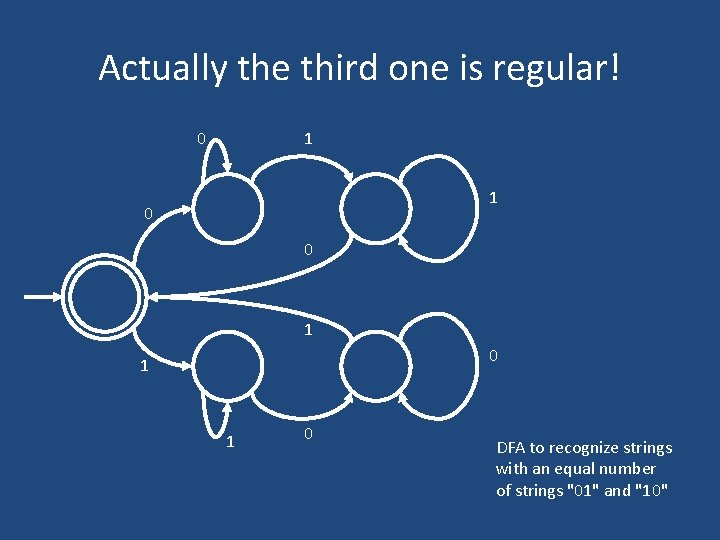
Actually the third one is regular! 0 1 1 0 DFA to recognize strings with an equal number of strings "01" and "10"
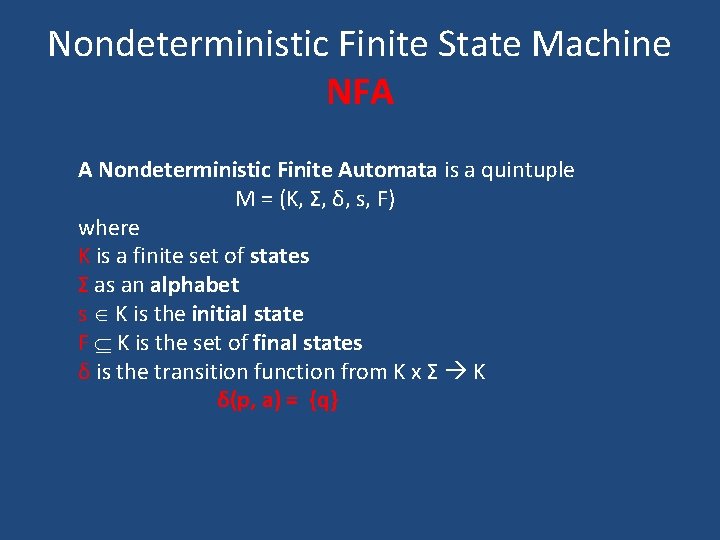
Nondeterministic Finite State Machine NFA A Nondeterministic Finite Automata is a quintuple M = (K, Σ, δ, s, F) where K is a finite set of states Σ as an alphabet s K is the initial state F K is the set of final states δ is the transition function from K x Σ K δ(p, a) = {q}
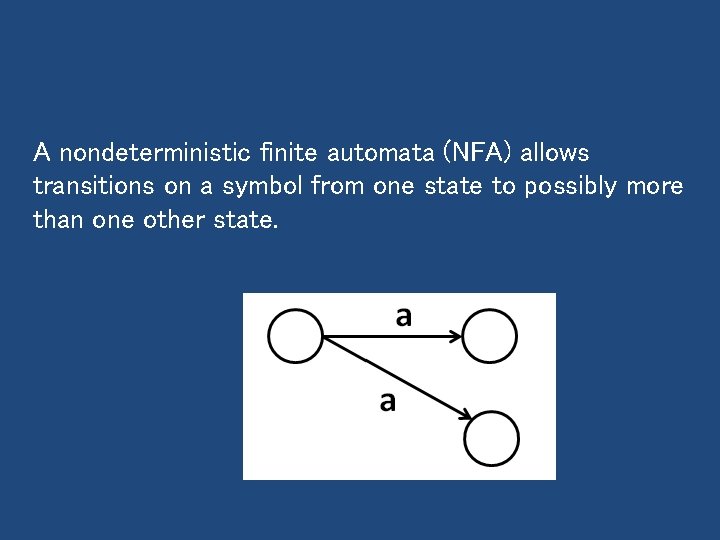
A nondeterministic finite automata (NFA) allows transitions on a symbol from one state to possibly more than one other state.
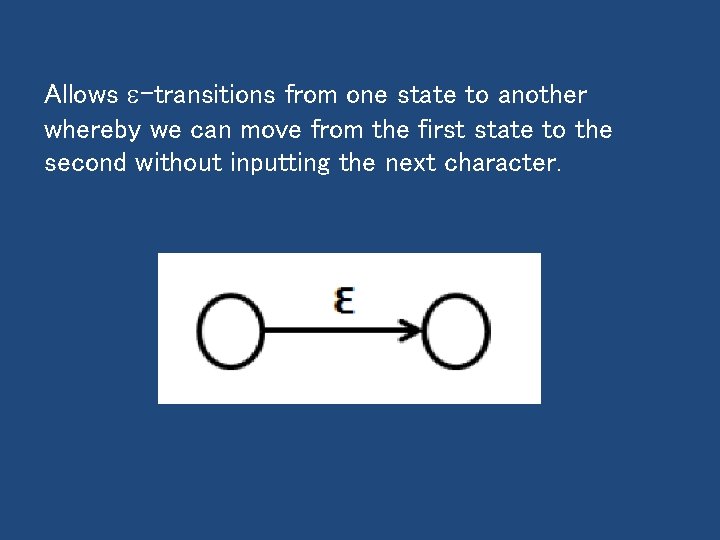
Allows -transitions from one state to another whereby we can move from the first state to the second without inputting the next character.
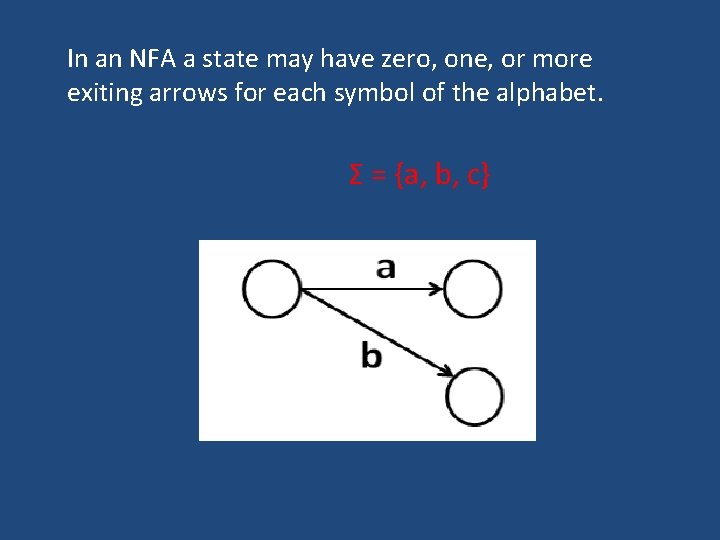
In an NFA a state may have zero, one, or more exiting arrows for each symbol of the alphabet. Σ = {a, b, c}
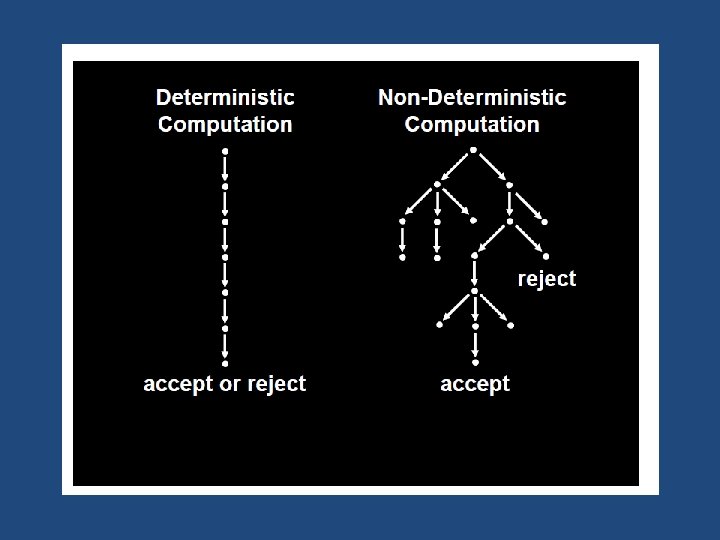
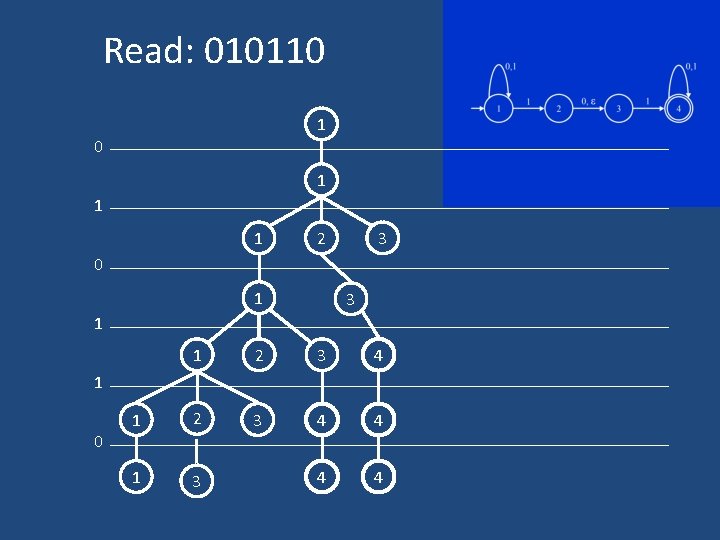
Basic NFA Ideas • Computation – Start in start state – If any transitions, clone a machine for each – Read a symbol, clone a machine for each matching transition – If a symbol is read and there is no way to exit from a state, that machine dies. – At end of input if any machine accepts then accept
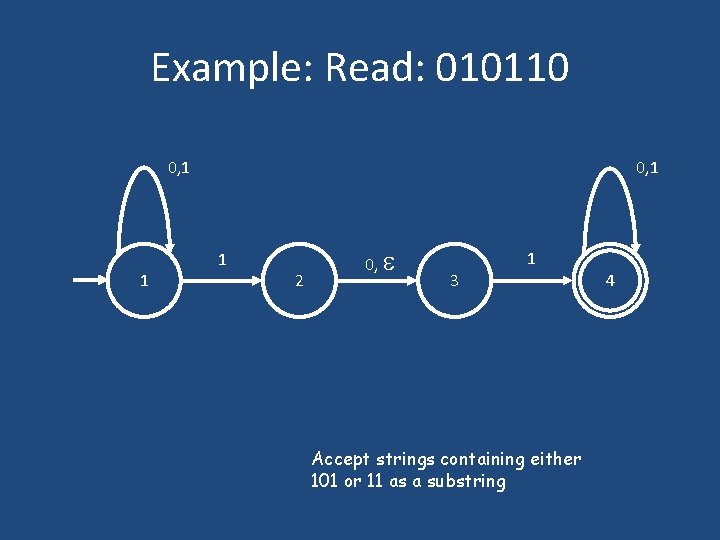
Example: Read: 010110 0, 1 1 2 0, 1 3 Accept strings containing either 101 or 11 as a substring 4
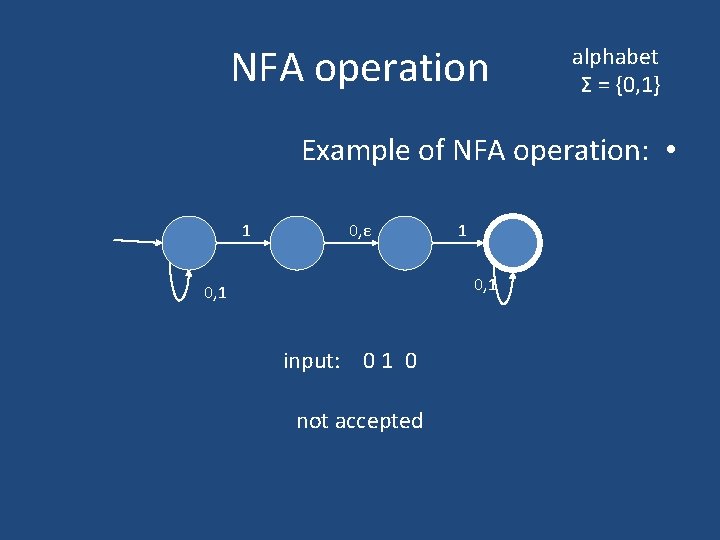
NFA operation alphabet Σ = {0, 1} Example of NFA operation: • 1 0, ε 1 0, 1 input: 0 1 0 not accepted
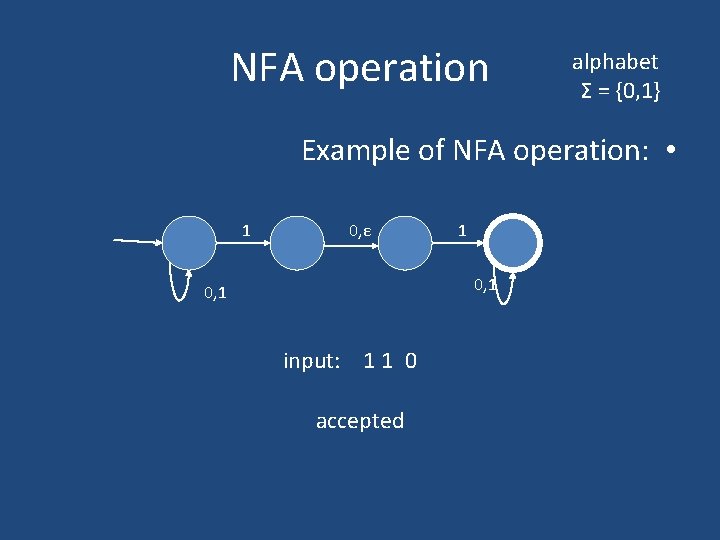
NFA operation alphabet Σ = {0, 1} Example of NFA operation: • 1 0, ε 1 0, 1 input: 1 1 0 accepted
Read: 010110 1 1 1 2 3 0 1 3 1 1 2 3 4 4 1 0
Why? • NFAs can express simple automata that would be extremely complex in DFA form • Theorems and algorithms exist that show that any DFA can be converted into an NFA and any NFA can be converted to a DFA • Theorems also exist showing why union, concatenation and star operations on regular languages produce regular languages.
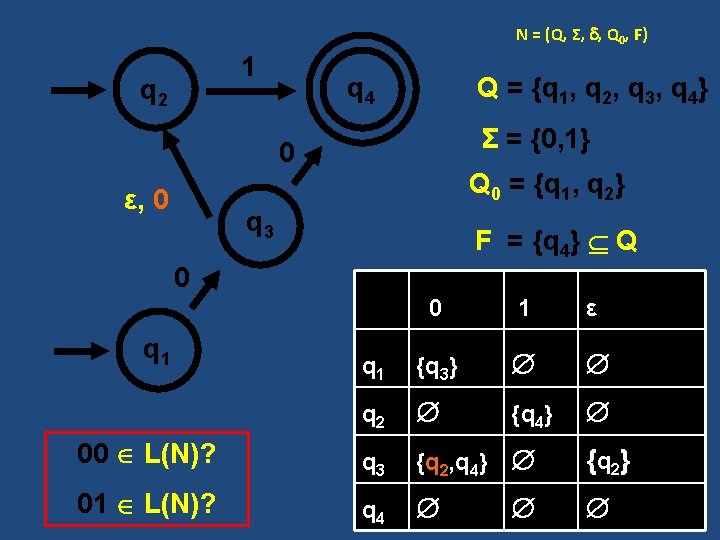
N = (Q, Σ, , Q 0, F) 1 q 2 Q = {q 1, q 2, q 3, q 4} q 4 Σ = {0, 1} 0 ε, 0 Q 0 = { q 1, q 2} q 3 F = {q 4} Q 0 0 1 ε q 1 {q 3} q 2 {q 4} 00 L(N)? q 3 {q 2, q 4} { q 2} 01 L(N)? q 4 q 1
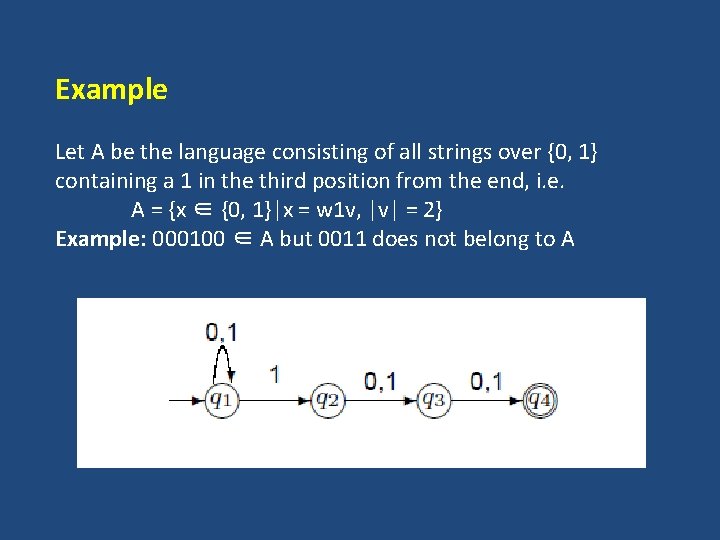
Example Let A be the language consisting of all strings over {0, 1} containing a 1 in the third position from the end, i. e. A = {x ∈ {0, 1}|x = w 1 v, |v| = 2} Example: 000100 ∈ A but 0011 does not belong to A
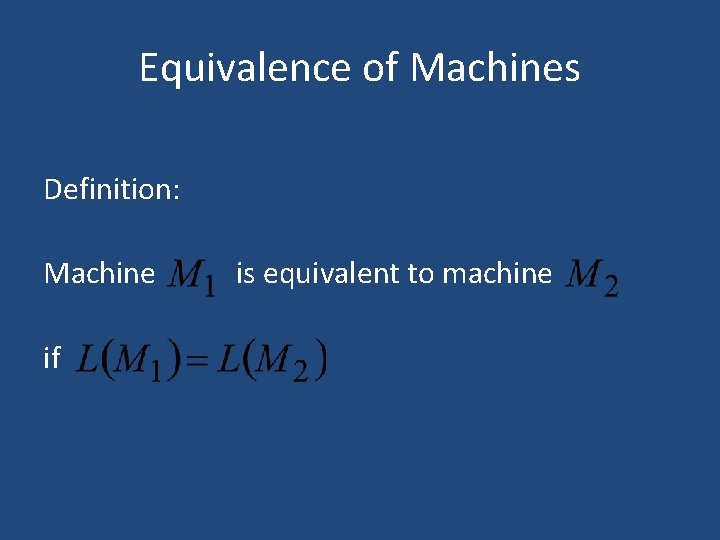
Equivalence of Machines Definition: Machine if is equivalent to machine
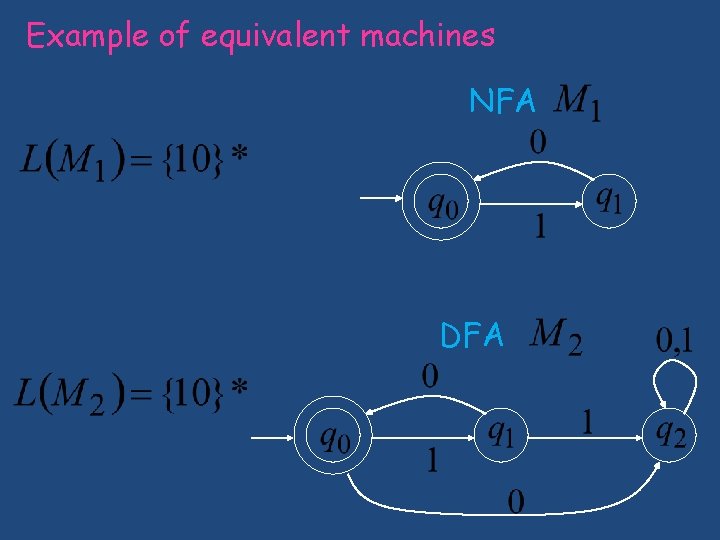
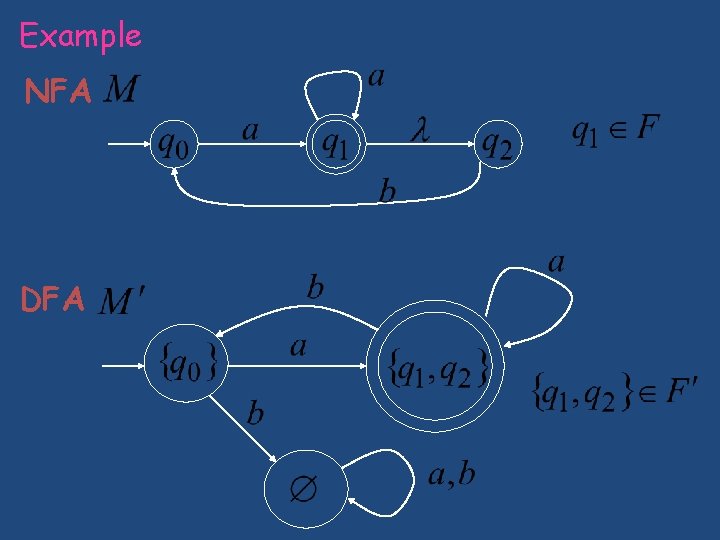
Example of equivalent machines NFA DFA
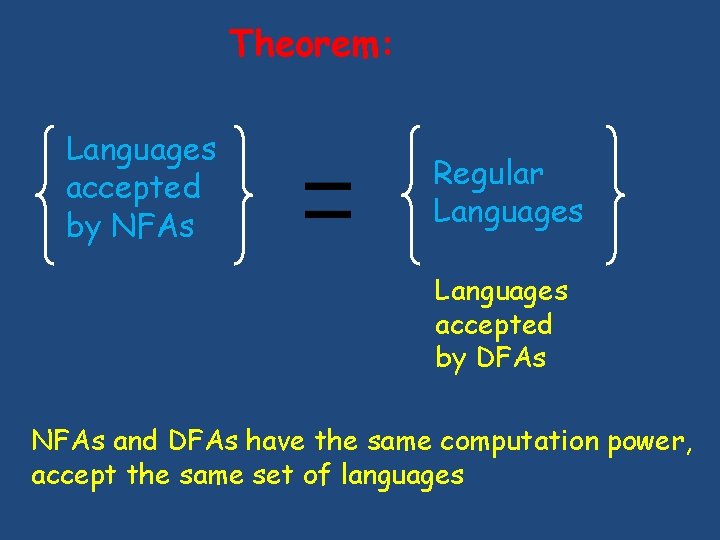
Theorem: Languages accepted by NFAs Regular Languages accepted by DFAs NFAs and DFAs have the same computation power, accept the same set of languages
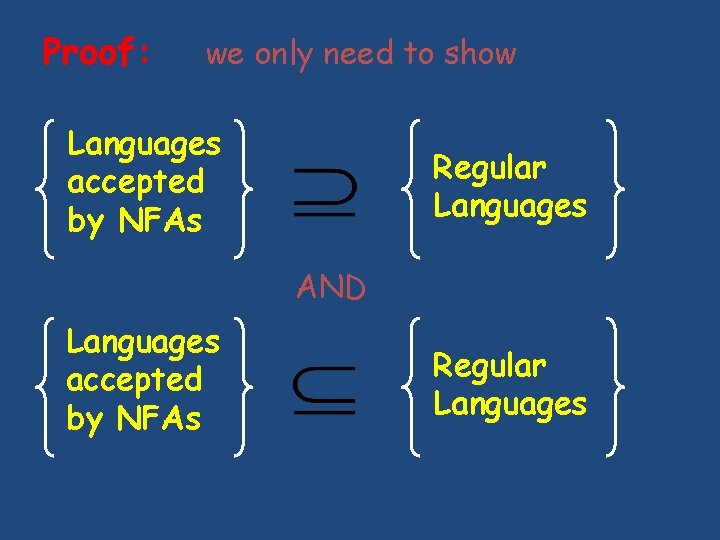
Proof: we only need to show Languages accepted by NFAs Regular Languages AND Languages accepted by NFAs Regular Languages
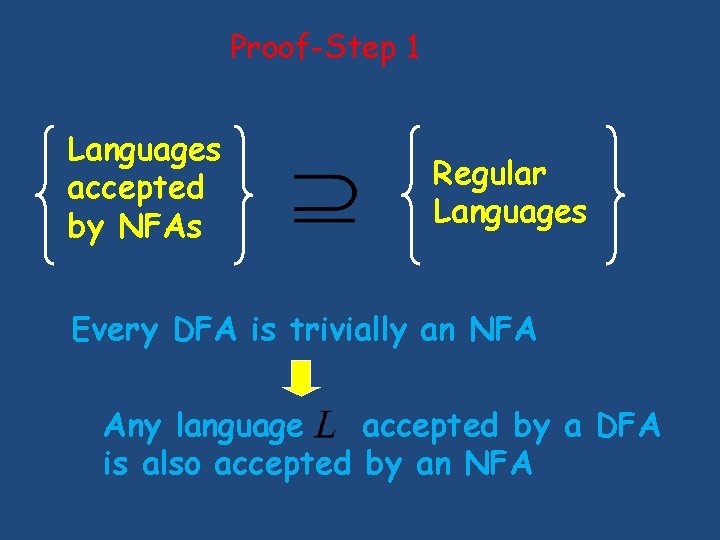
Proof-Step 1 Languages accepted by NFAs Regular Languages Every DFA is trivially an NFA Any language accepted by a DFA is also accepted by an NFA
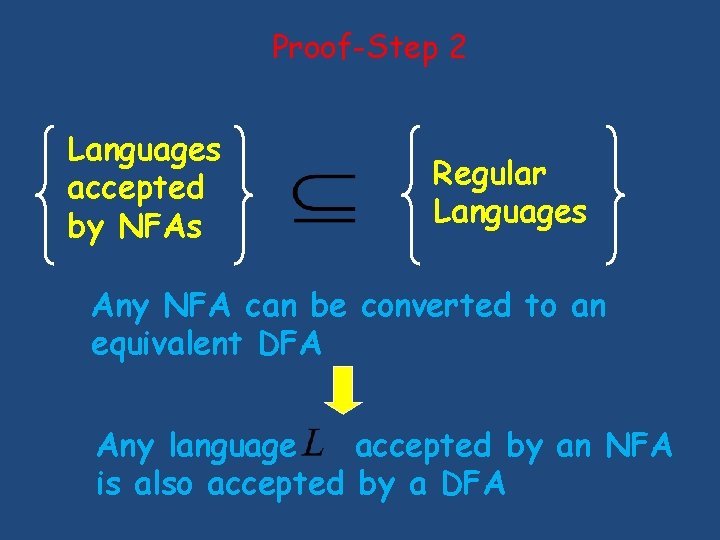
Proof-Step 2 Languages accepted by NFAs Regular Languages Any NFA can be converted to an equivalent DFA Any language accepted by an NFA is also accepted by a DFA
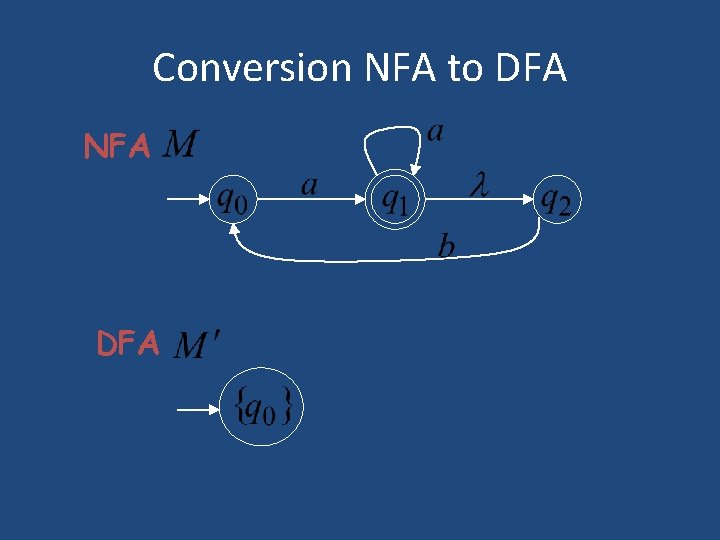
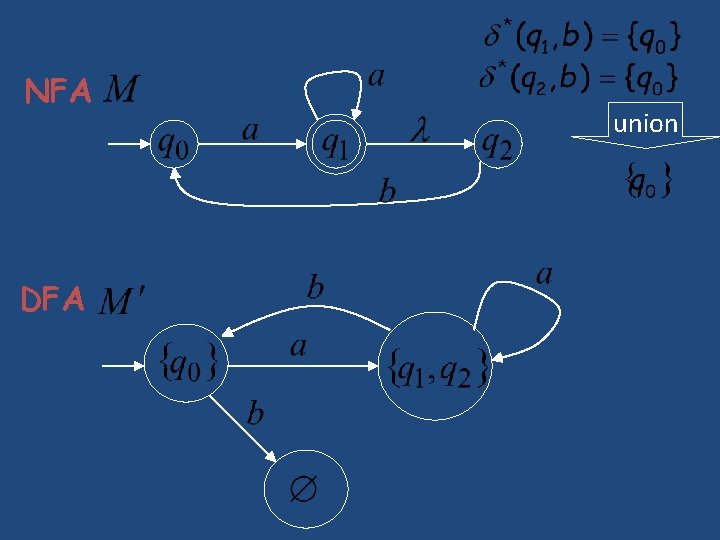
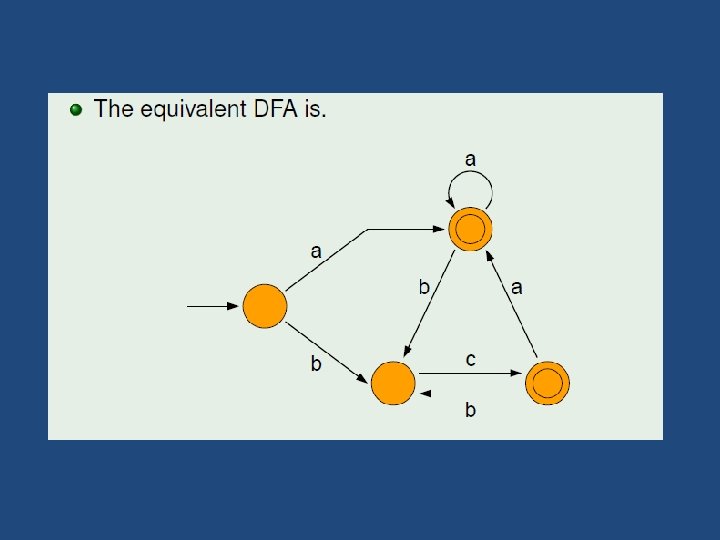
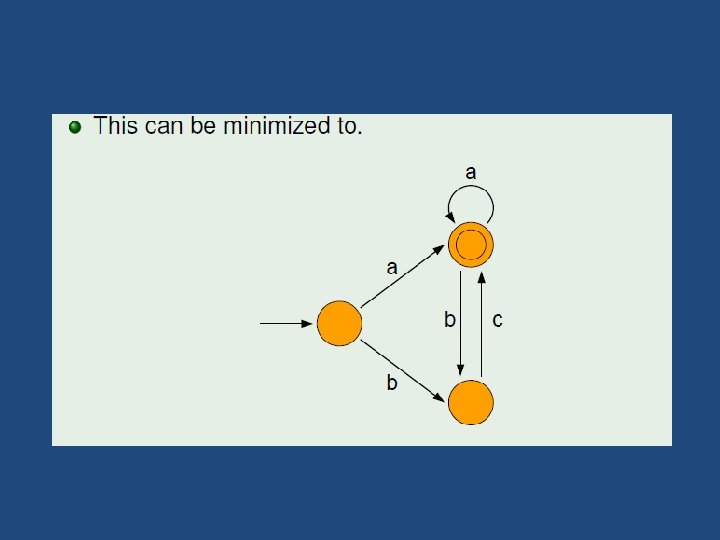
Conversion NFA to DFA NFA DFA
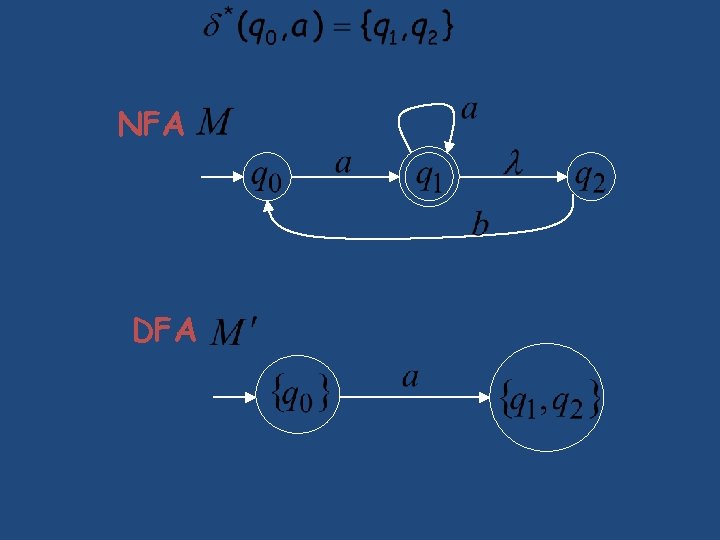
NFA DFA
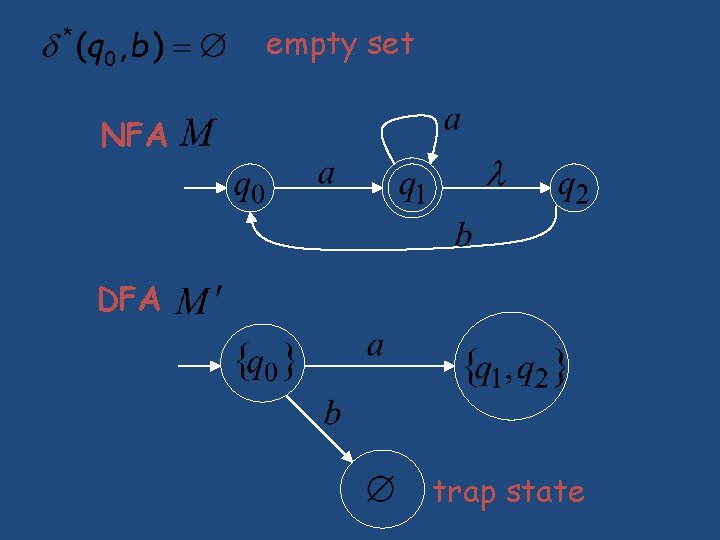
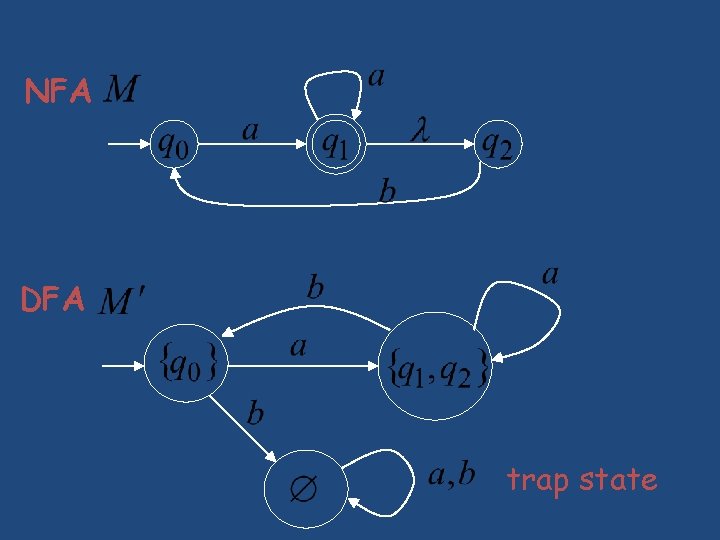
empty set NFA DFA trap state
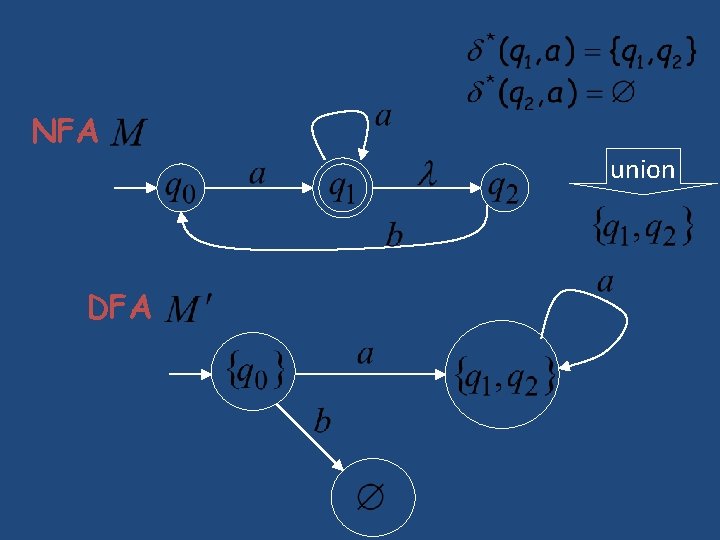
NFA union DFA
NFA DFA union
NFA DFA trap state
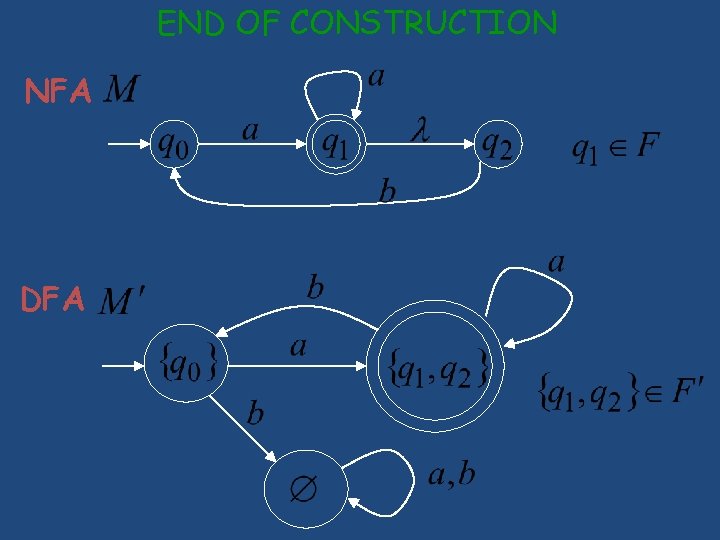
END OF CONSTRUCTION NFA DFA
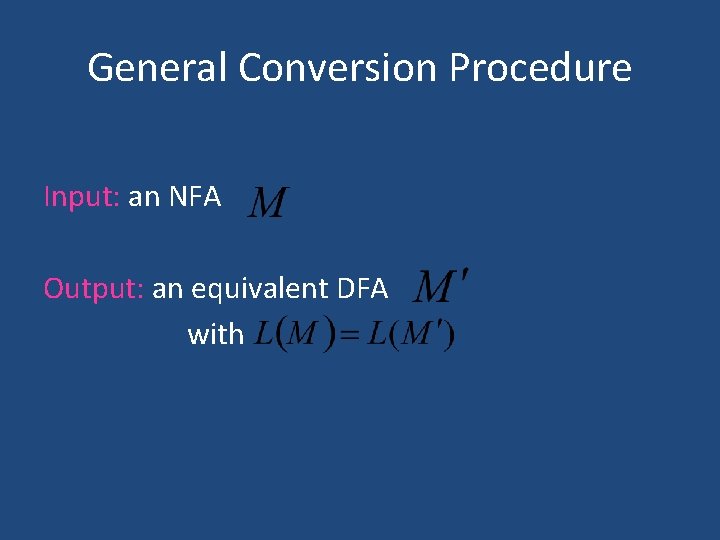
General Conversion Procedure Input: an NFA Output: an equivalent DFA with
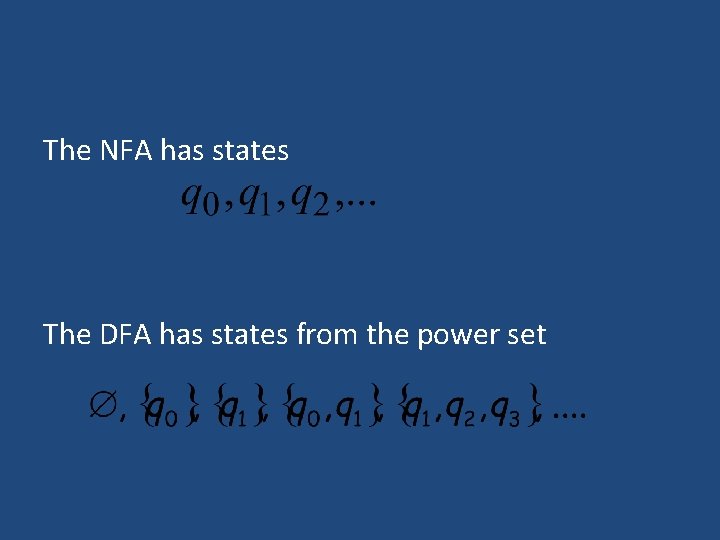
The NFA has states The DFA has states from the power set
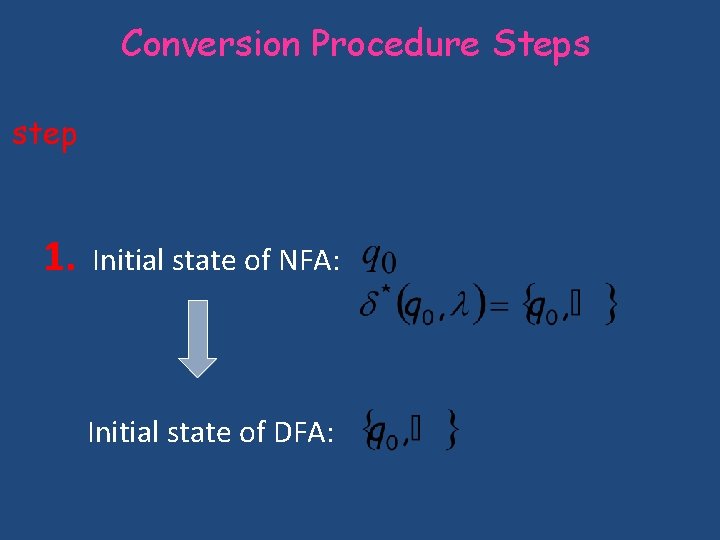
Conversion Procedure Steps step 1. Initial state of NFA: Initial state of DFA:
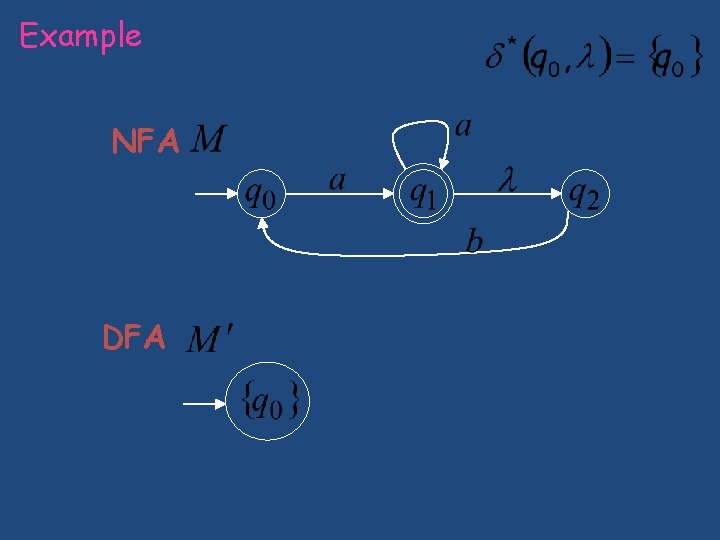
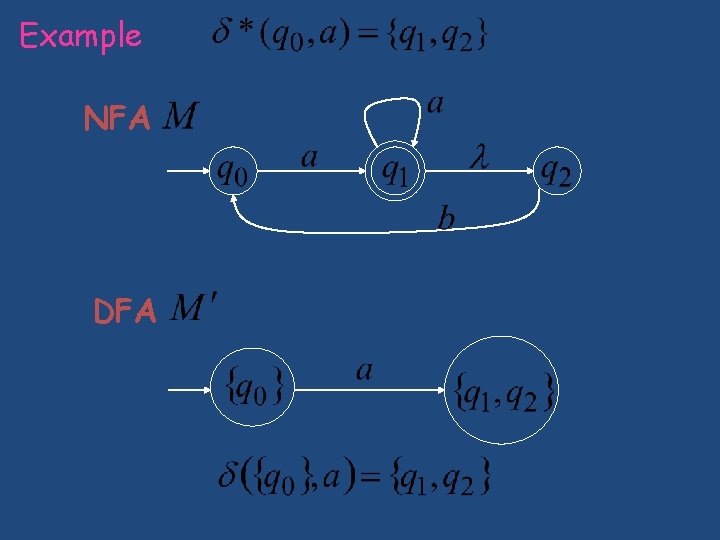
Example NFA DFA
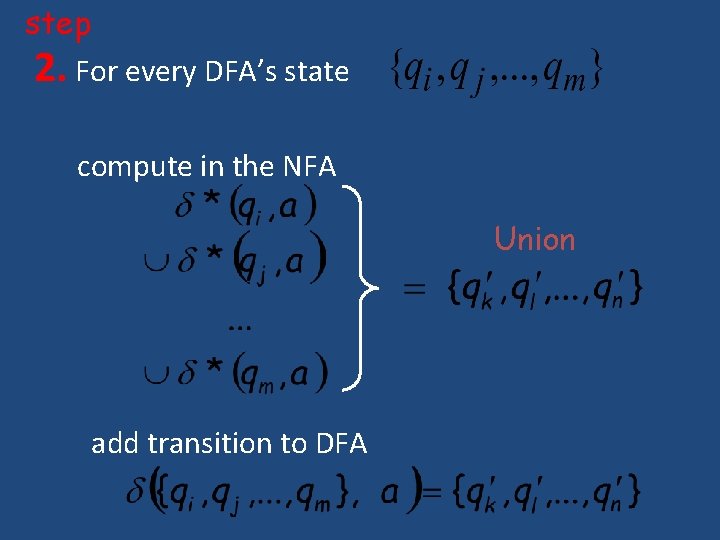
step 2. For every DFA’s state compute in the NFA Union add transition to DFA
Example NFA DFA
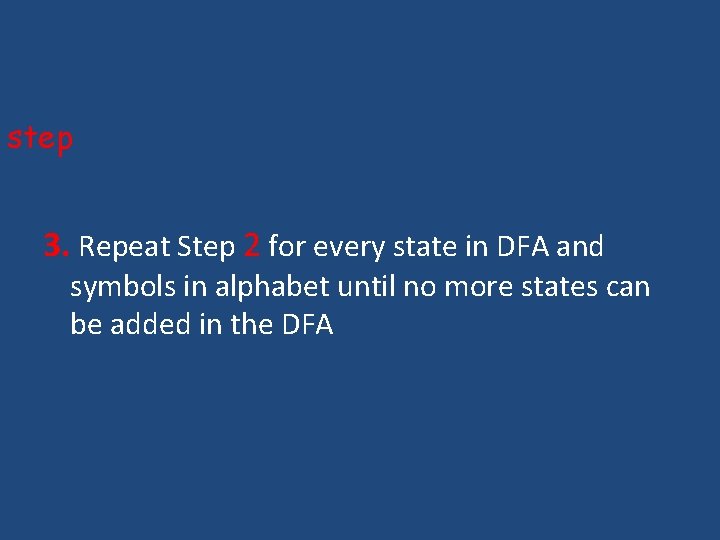
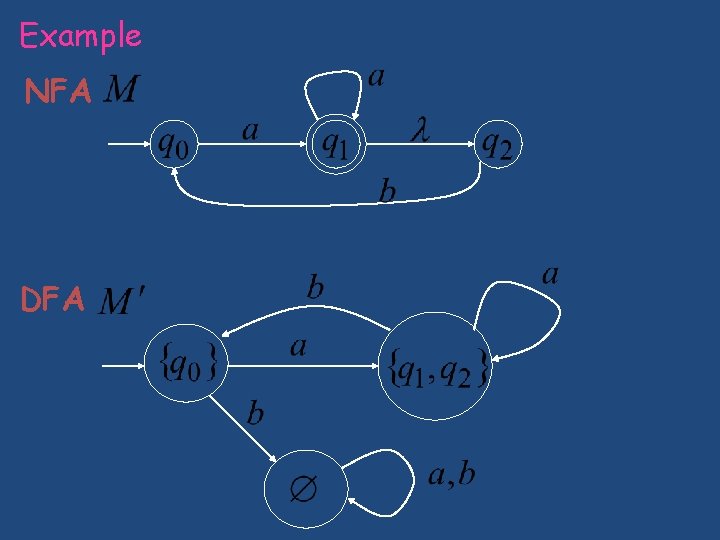
step 3. Repeat Step 2 for every state in DFA and symbols in alphabet until no more states can be added in the DFA
Example NFA DFA
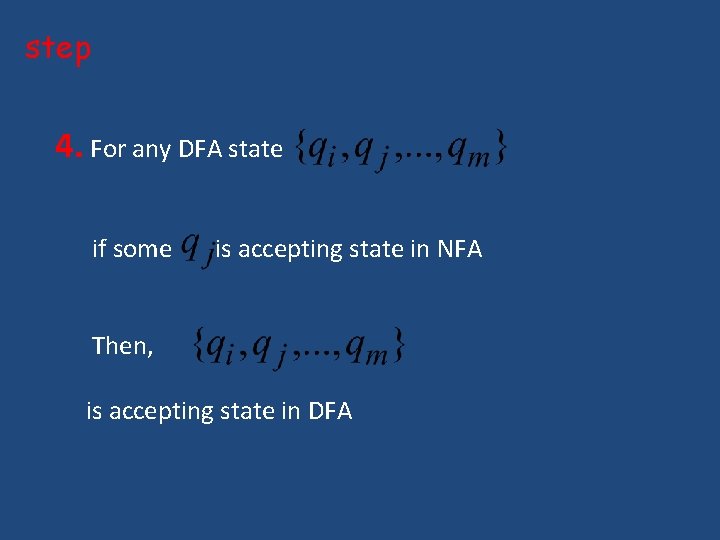
step 4. For any DFA state if some is accepting state in NFA Then, is accepting state in DFA
Example NFA DFA
Properties of Regular Languages
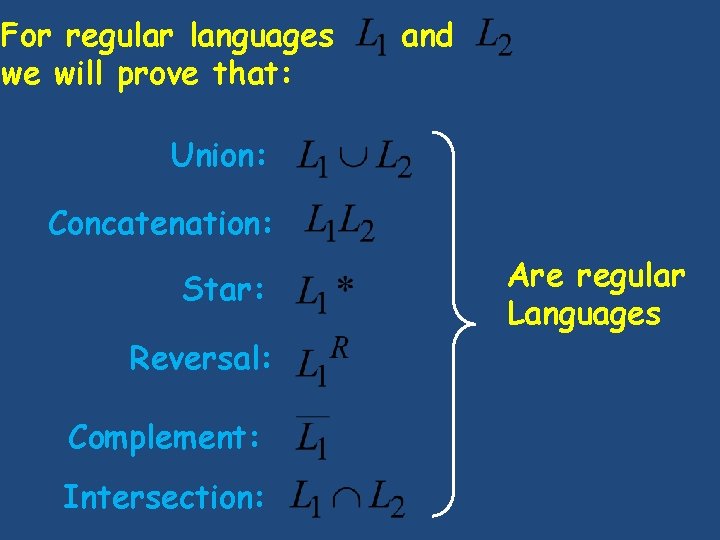
For regular languages we will prove that: and Union: Concatenation: Star: Reversal: Complement: Intersection: Are regular Languages
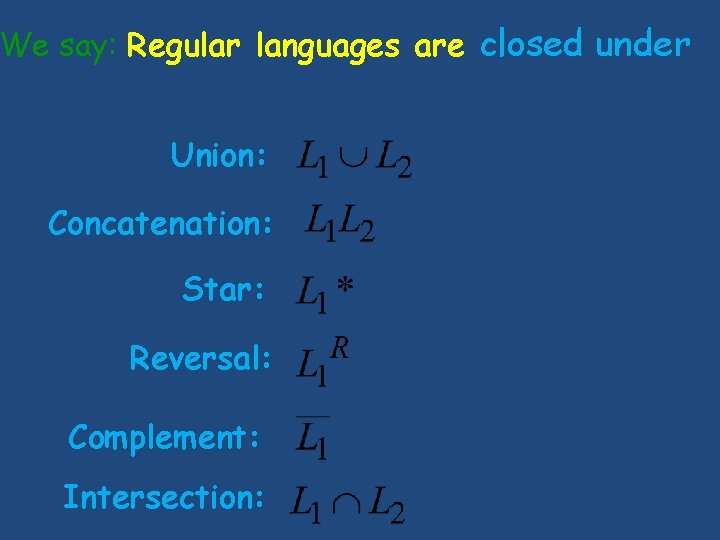
We say: Regular languages are closed under Union: Concatenation: Star: Reversal: Complement: Intersection:
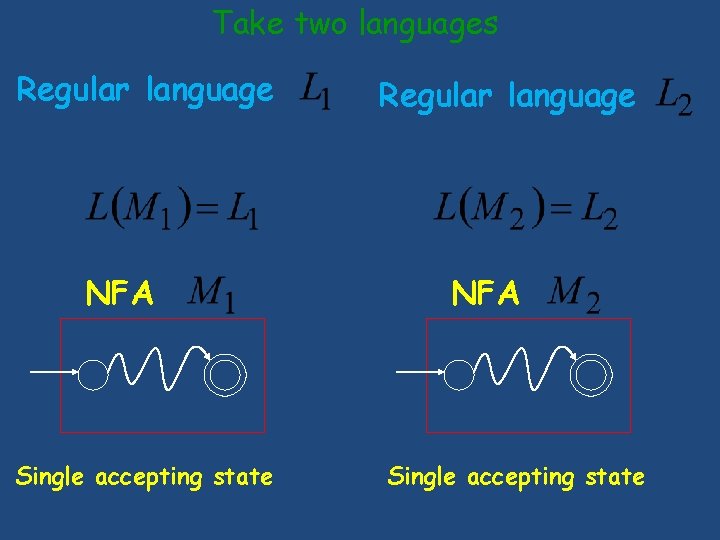
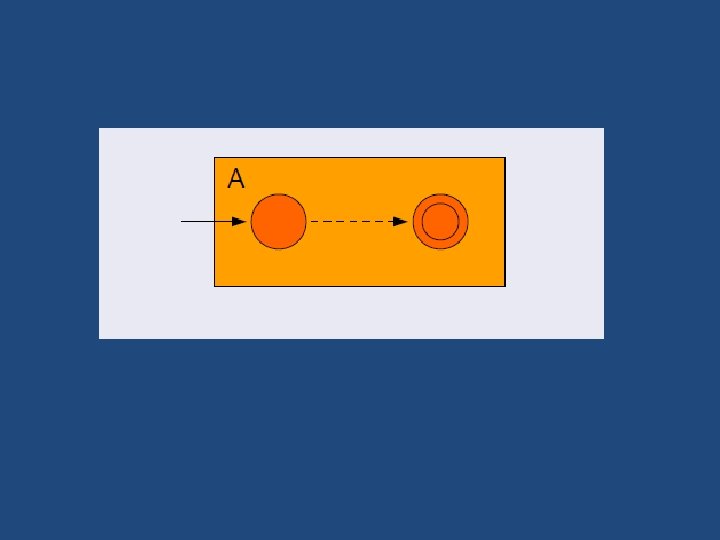
Take two languages Regular language NFA Single accepting state
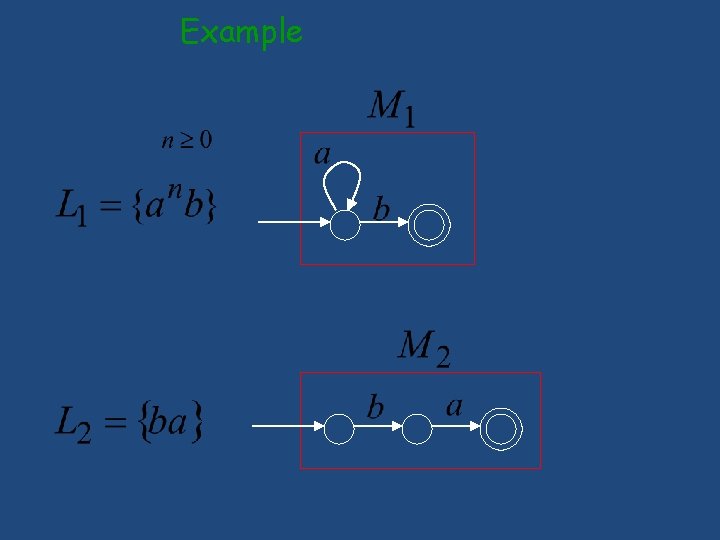
Example
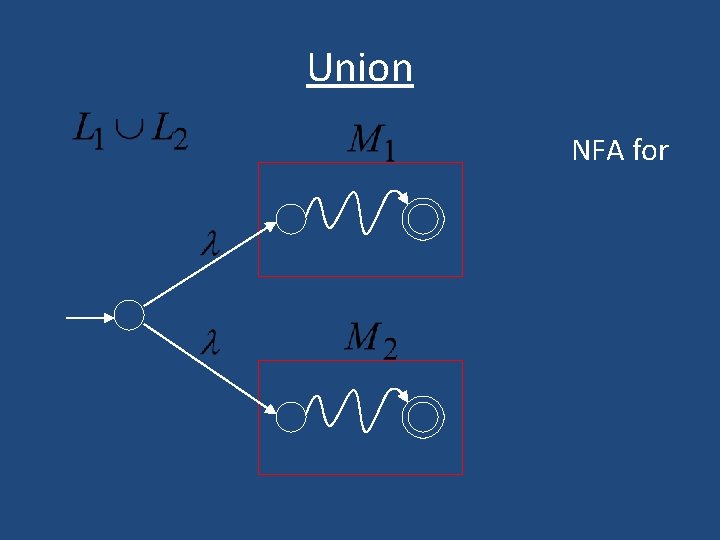
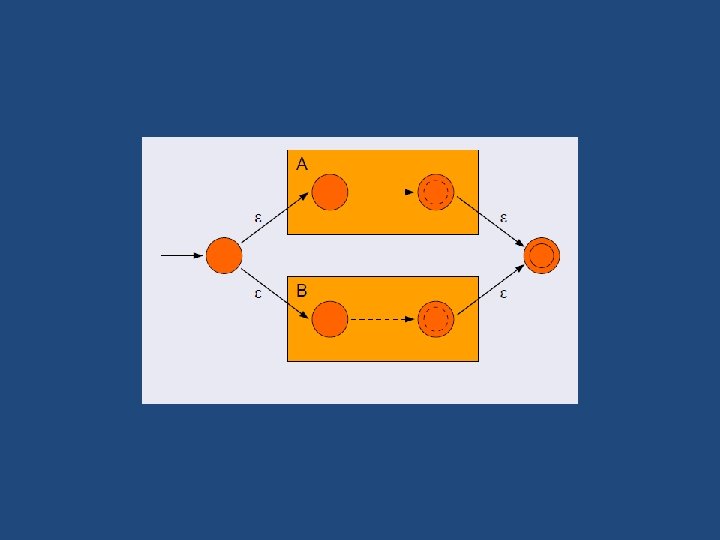
Union NFA for
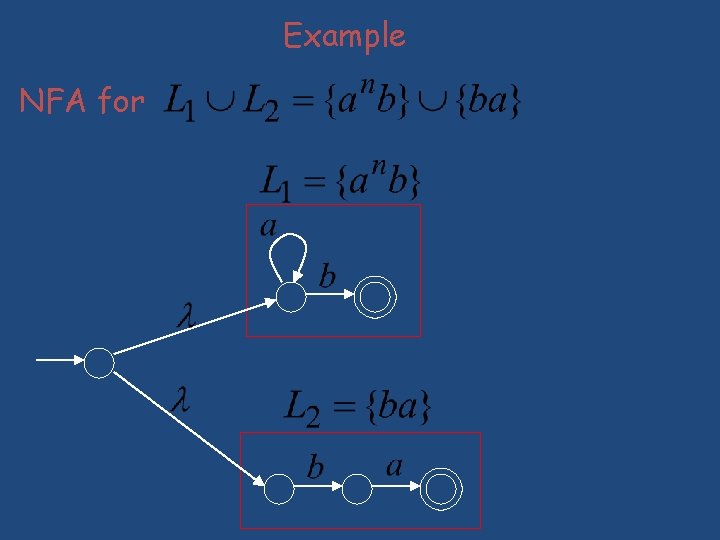
Example NFA for
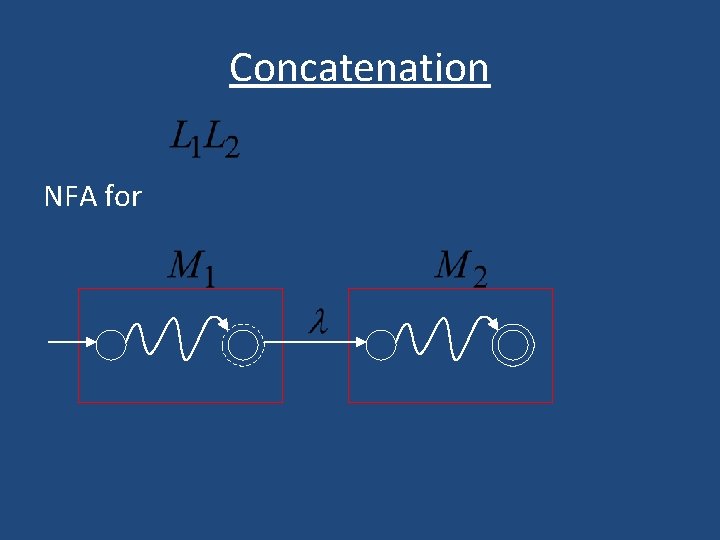
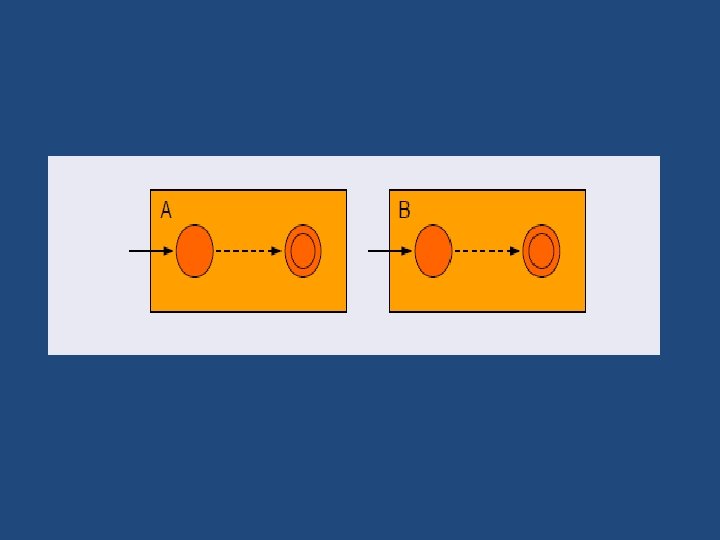
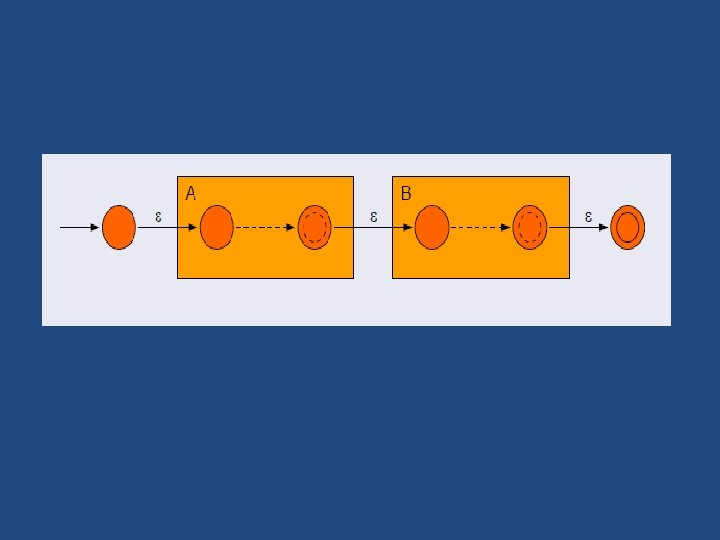
Concatenation NFA for
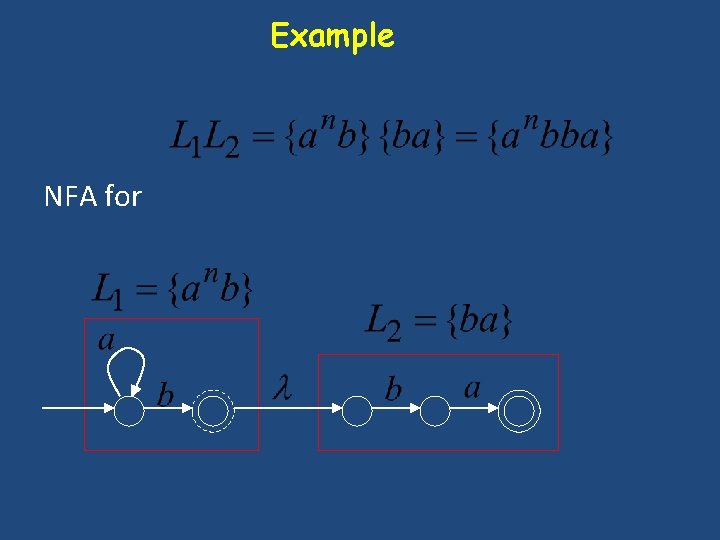
Example NFA for
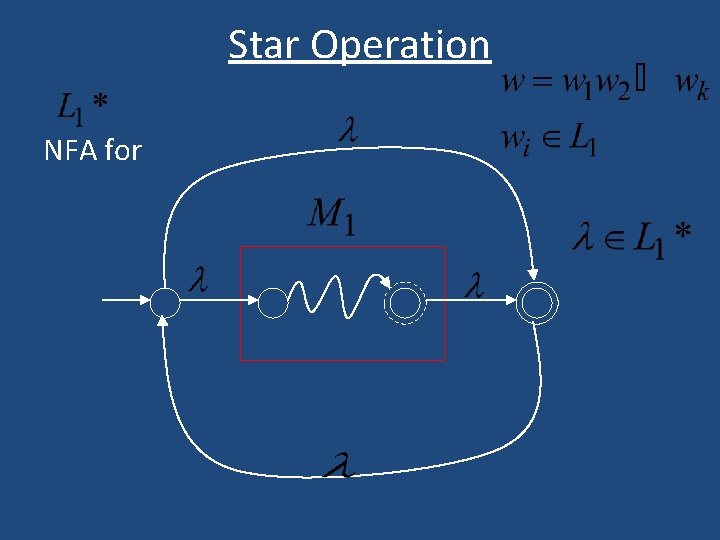
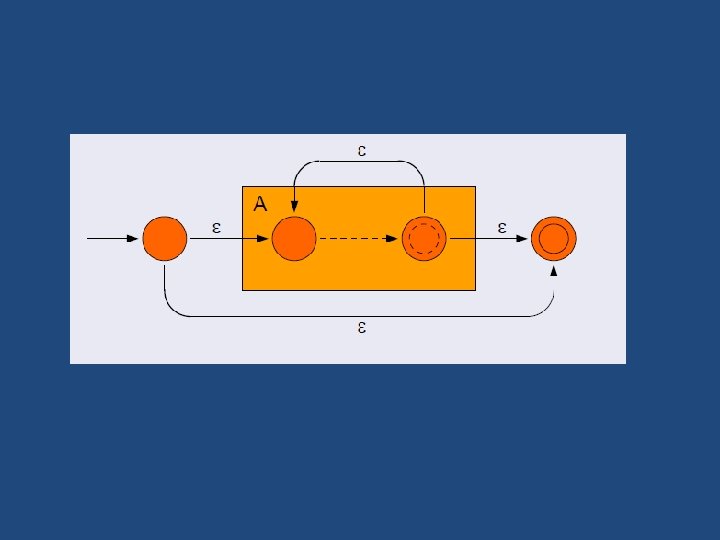
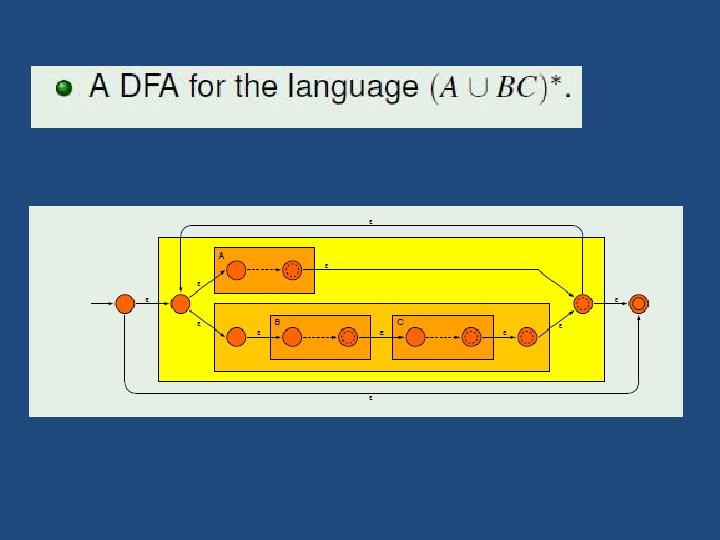
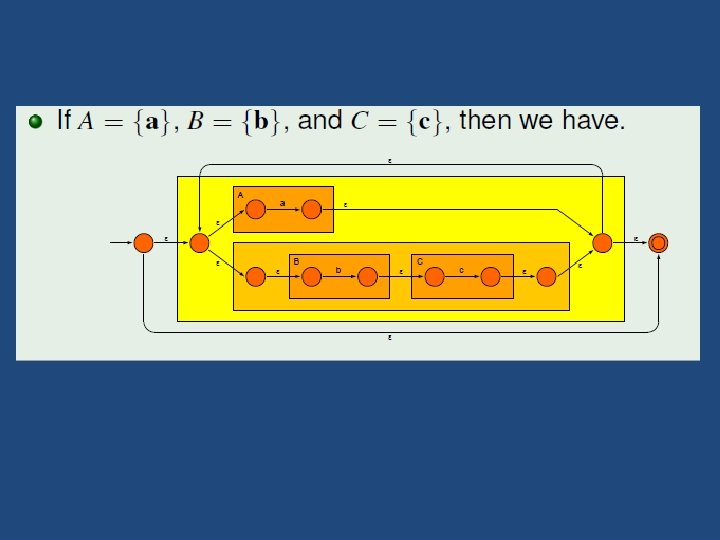
Star Operation NFA for
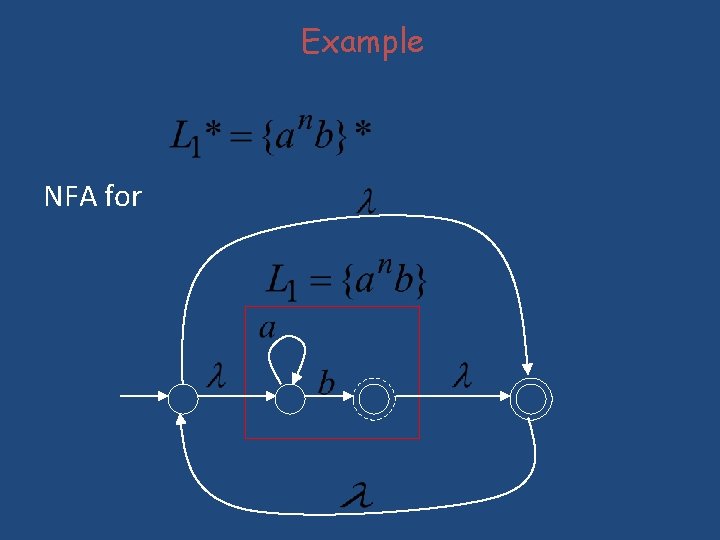
Example NFA for
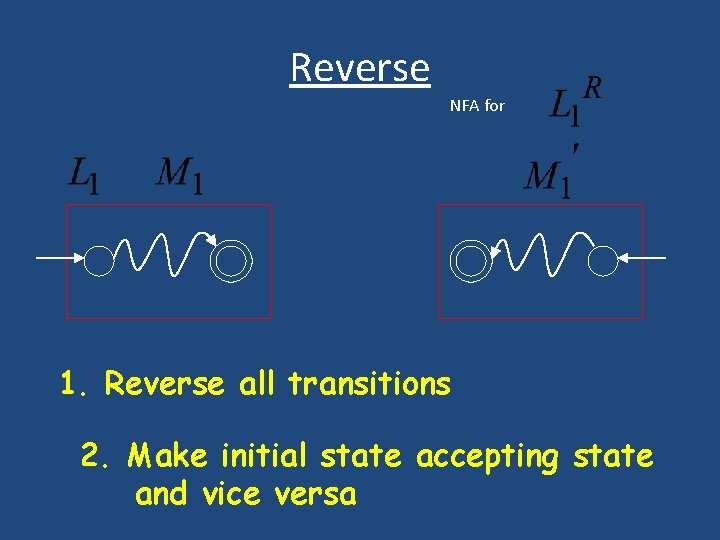
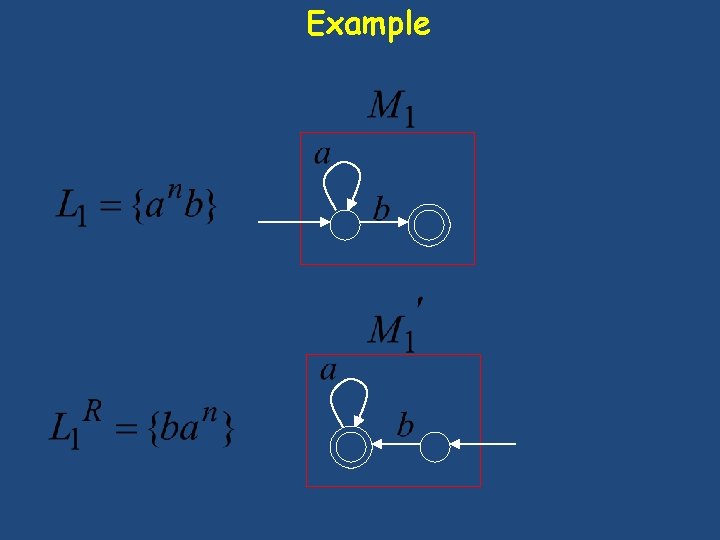
Reverse NFA for 1. Reverse all transitions 2. Make initial state accepting state and vice versa
Example
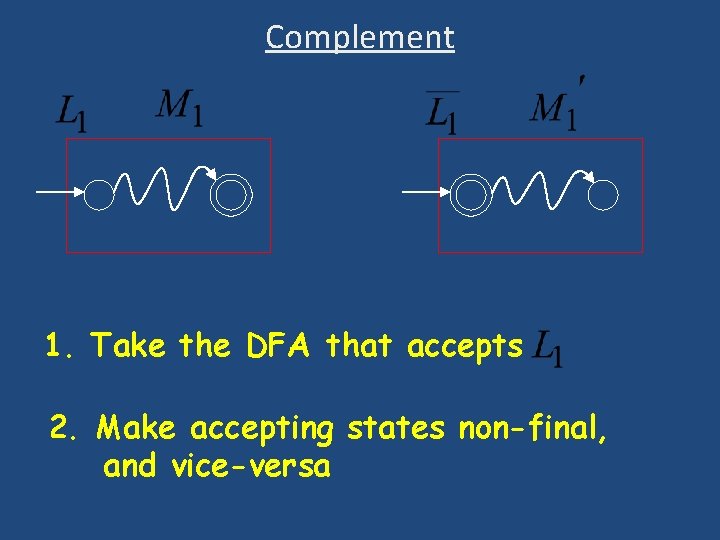
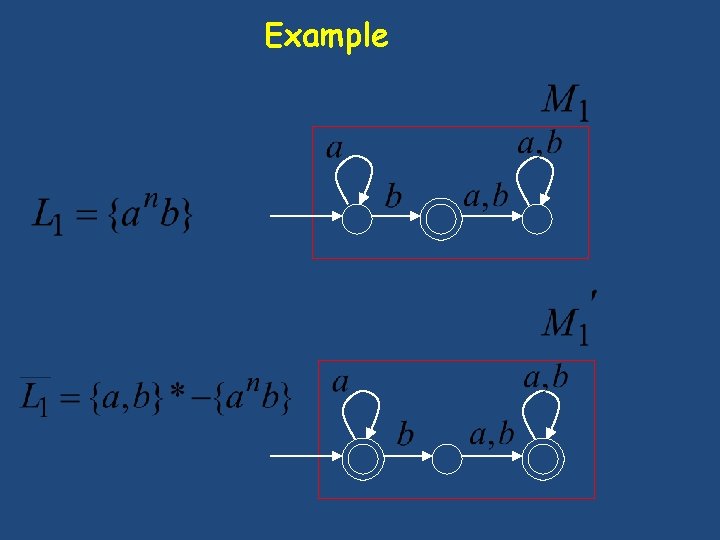
Complement 1. Take the DFA that accepts 2. Make accepting states non-final, and vice-versa
Example
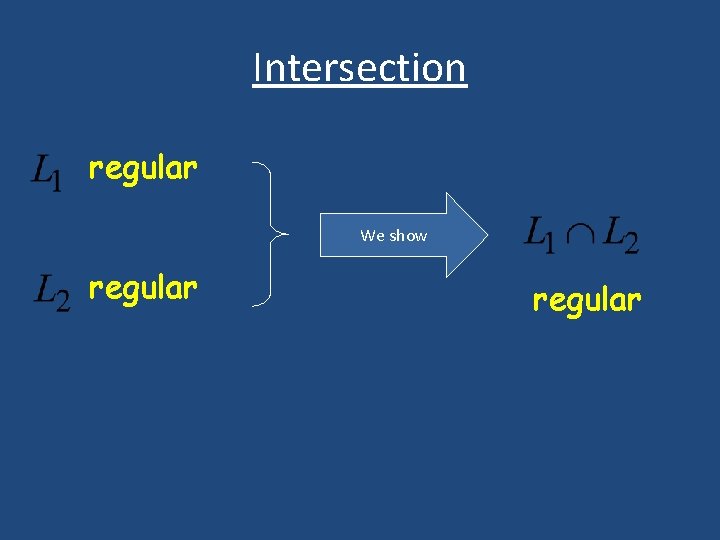
Intersection regular We show regular
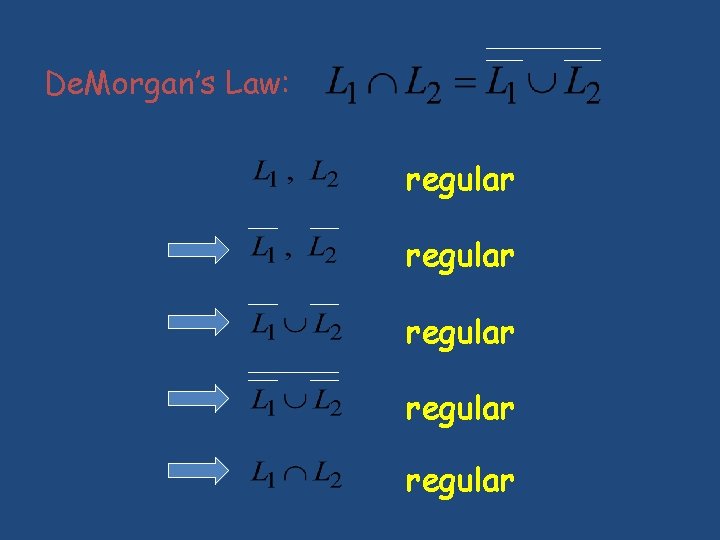
De. Morgan’s Law: regular regular
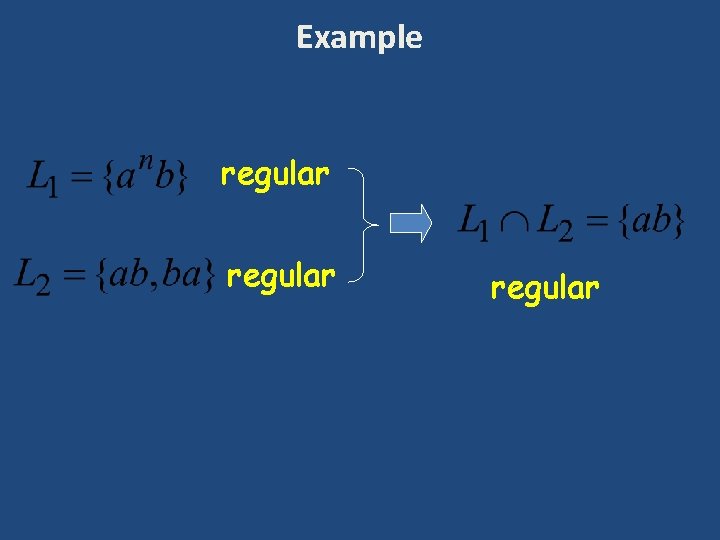
Example regular