
NON VERBAL COMMUNICATION READING BEYOND WORDS Lecture by
NON VERBAL COMMUNICATION READING BEYOND WORDS Lecture by M/s Nandini Lecturer D. A. V College for Girls Yamuna Nagar Haryana.

WHAT ARE THEY SAYING?
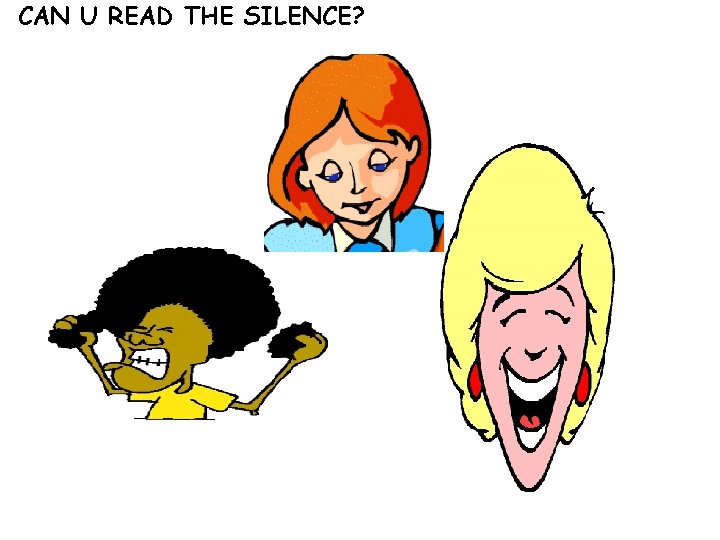
CAN U READ THE SILENCE?
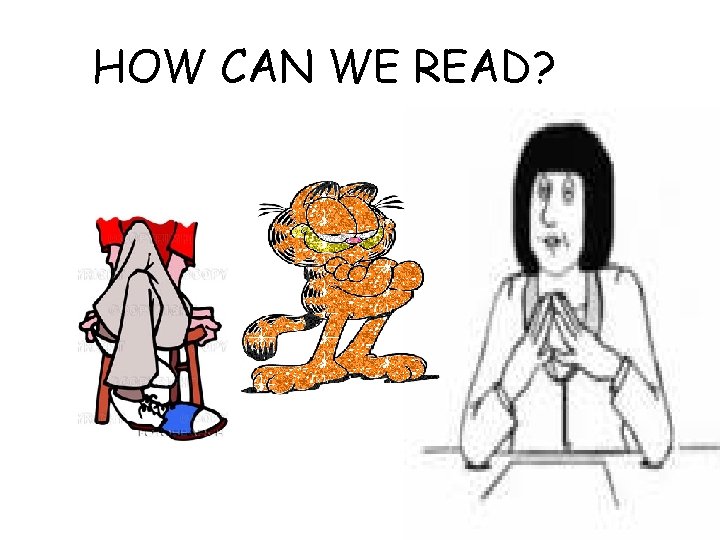
HOW CAN WE READ?
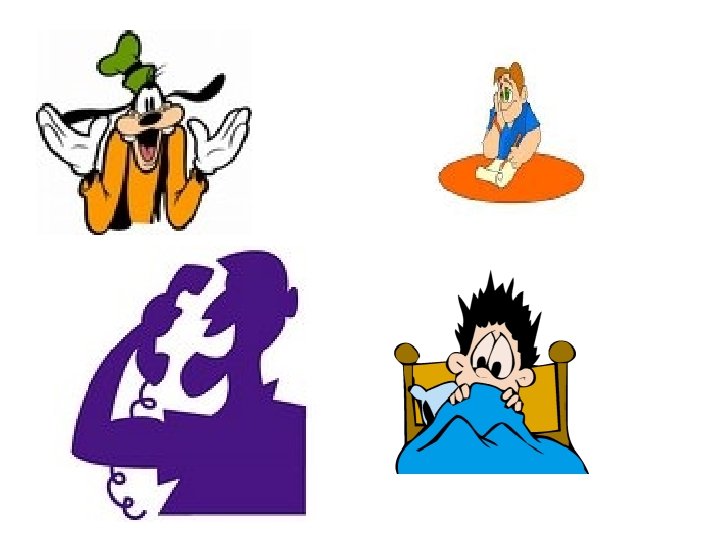
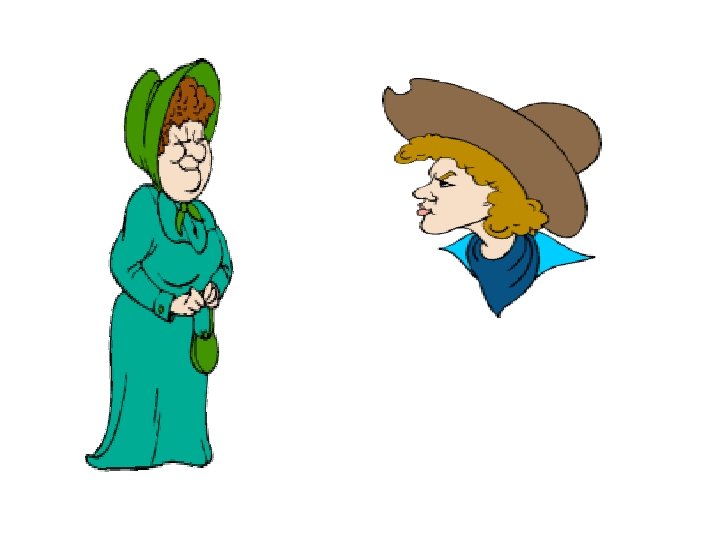
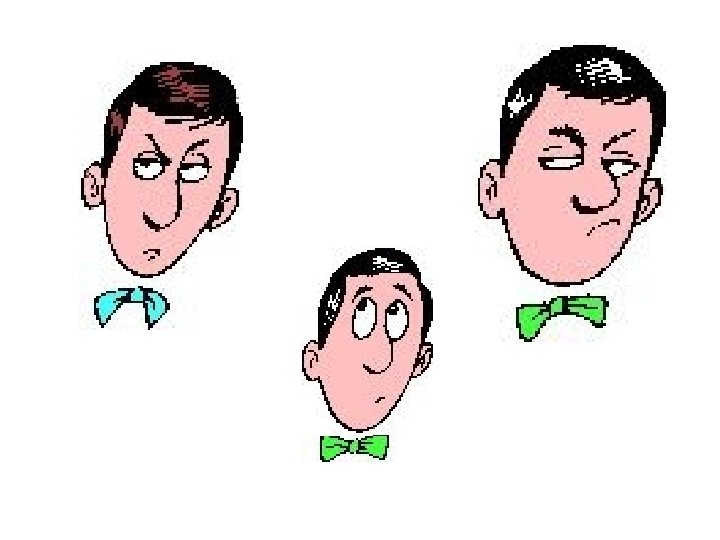
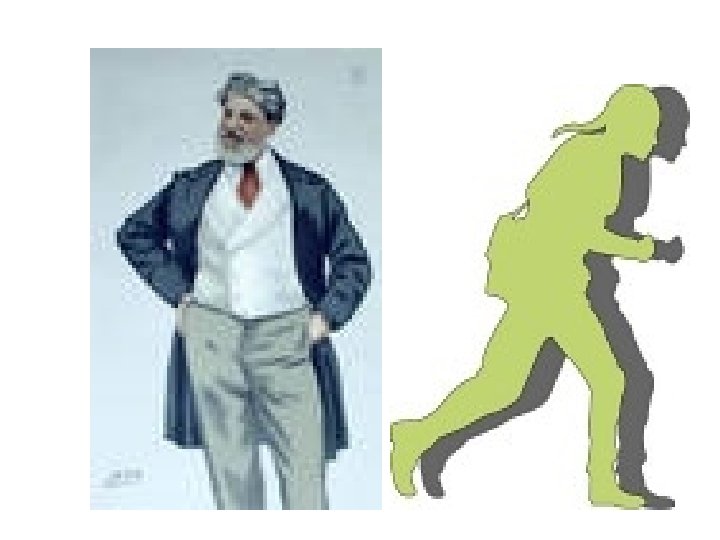
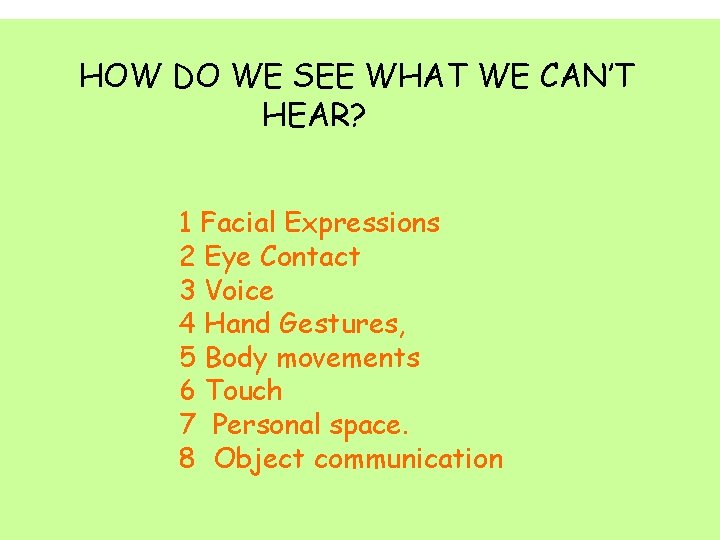
HOW DO WE SEE WHAT WE CAN’T HEAR? 1 Facial Expressions 2 Eye Contact 3 Voice 4 Hand Gestures, 5 Body movements 6 Touch 7 Personal space. 8 Object communication
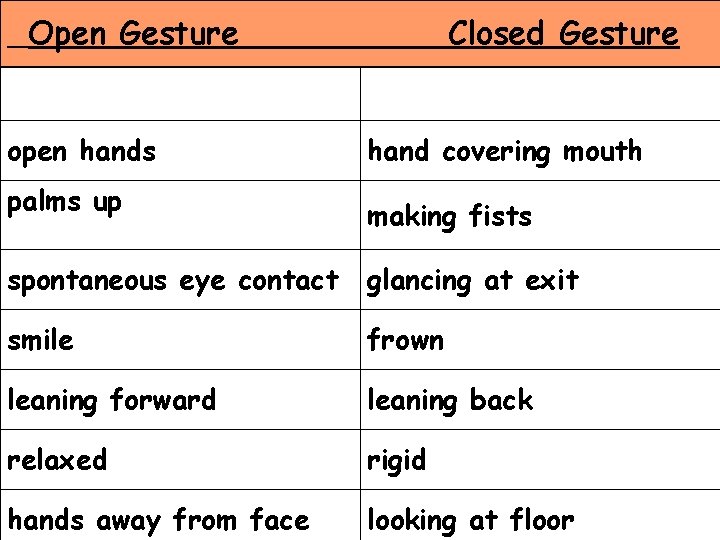
Open Gesture open hands palms up Closed Gesture hand covering mouth making fists spontaneous eye contact glancing at exit smile frown leaning forward leaning back relaxed rigid hands away from face looking at floor
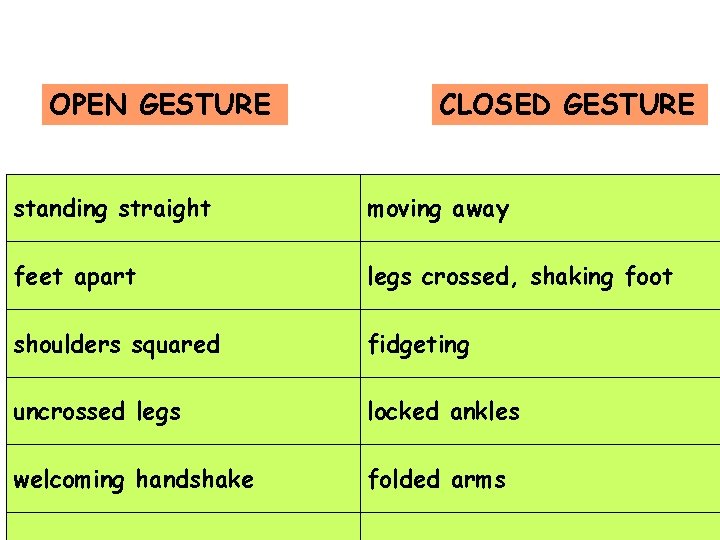
OPEN GESTURE CLOSED GESTURE standing straight moving away feet apart legs crossed, shaking foot shoulders squared fidgeting uncrossed legs locked ankles welcoming handshake folded arms
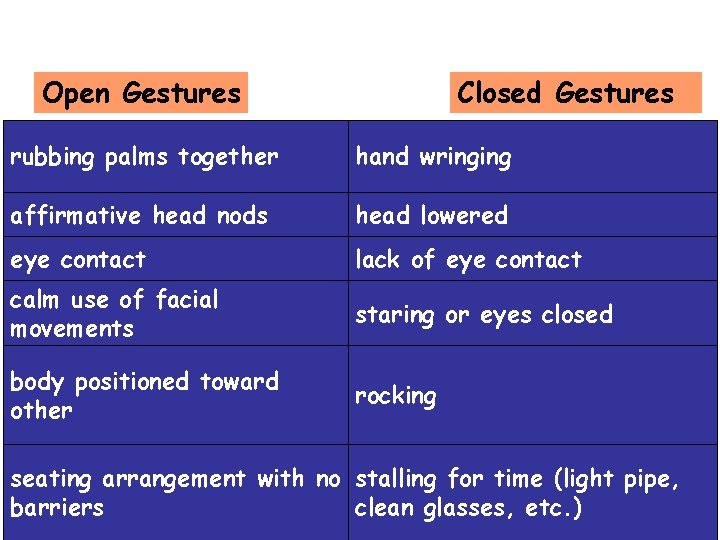
Open Gestures Closed Gestures rubbing palms together hand wringing affirmative head nods head lowered eye contact lack of eye contact calm use of facial movements staring or eyes closed body positioned toward other rocking seating arrangement with no stalling for time (light pipe, barriers clean glasses, etc. )
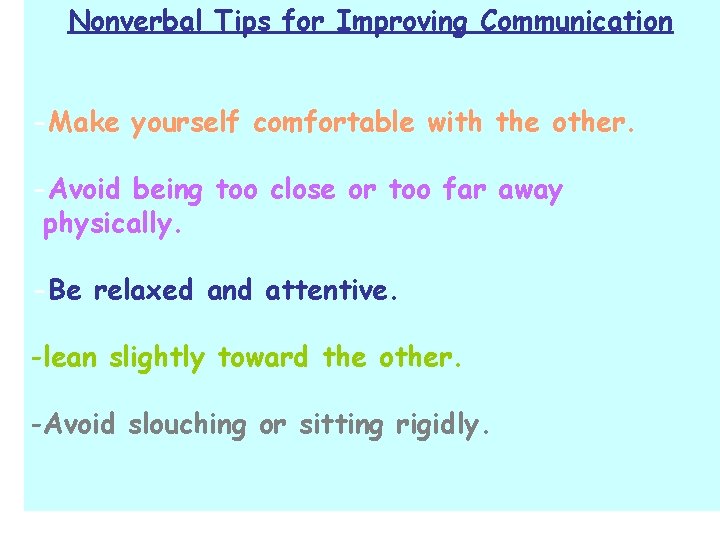
Nonverbal Tips for Improving Communication -Make yourself comfortable with the other. -Avoid being too close or too far away physically. -Be relaxed and attentive. -lean slightly toward the other. -Avoid slouching or sitting rigidly.
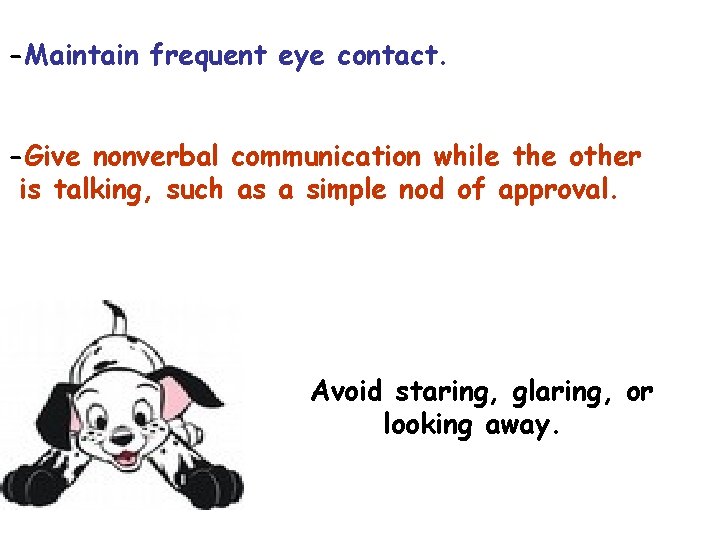
-Maintain frequent eye contact. -Give nonverbal communication while the other is talking, such as a simple nod of approval. Avoid staring, glaring, or looking away.
NON VERBAL ASPECTS OF SUBMISSIVE, ASSERTIVE AND AGGRESSIVE BEHAVIOUR VOICE EYE CONTACT FACIAL EXPRESSIONS BODY MOVEMENTS
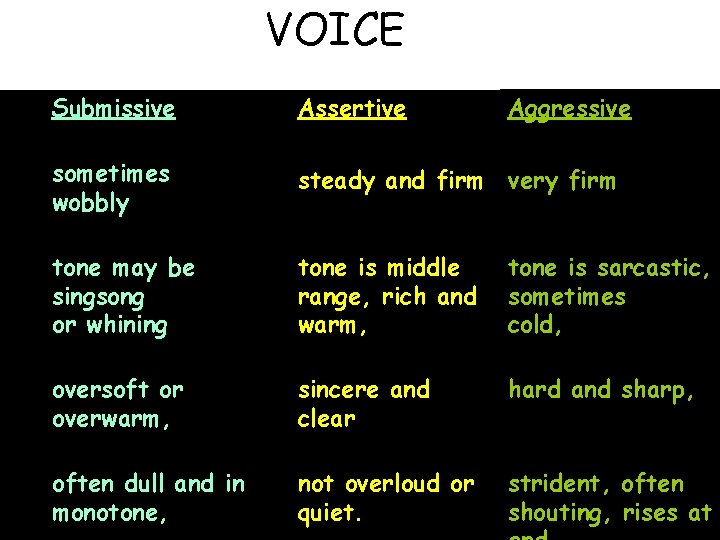
VOICE Submissive Assertive Aggressive sometimes wobbly steady and firm very firm tone may be singsong or whining tone is middle range, rich and warm, tone is sarcastic, sometimes cold, oversoft or overwarm, sincere and clear hard and sharp, often dull and in monotone, not overloud or quiet. strident, often shouting, rises at
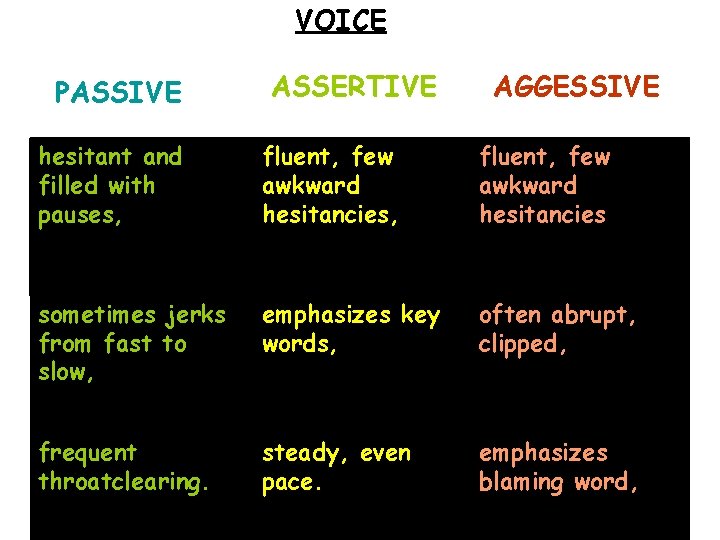
VOICE PASSIVE ASSERTIVE AGGESSIVE hesitant and filled with pauses, fluent, few awkward hesitancies sometimes jerks from fast to slow, emphasizes key words, often abrupt, clipped, frequent throatclearing. steady, even pace. emphasizes blaming word,
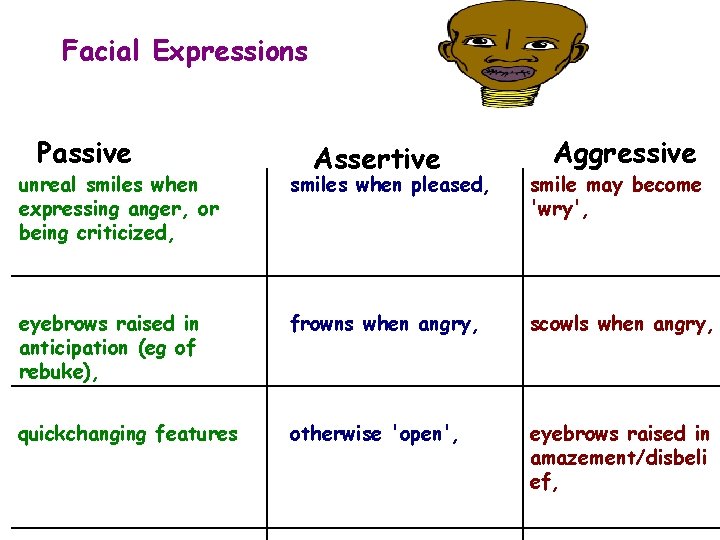
Facial Expressions Passive Assertive Aggressive unreal smiles when expressing anger, or being criticized, smiles when pleased, smile may become 'wry', eyebrows raised in anticipation (eg of rebuke), frowns when angry, scowls when angry, quickchanging features otherwise 'open', eyebrows raised in amazement/disbeli ef,
EYE CONTACT PASSIVE Evasive ASSERTIVE Firm but not a 'stare down'. AGRESSIVE Tries to stare down and dominate.
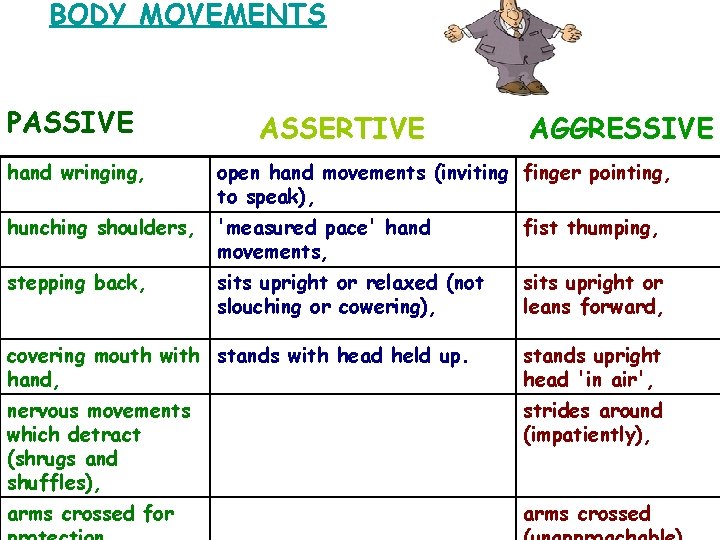
BODY MOVEMENTS PASSIVE ASSERTIVE AGGRESSIVE hand wringing, open hand movements (inviting finger pointing, to speak), hunching shoulders, 'measured pace' hand movements, fist thumping, stepping back, sits upright or relaxed (not slouching or cowering), sits upright or leans forward, covering mouth with stands with head held up. hand, stands upright head 'in air', nervous movements which detract (shrugs and shuffles), strides around (impatiently), arms crossed for arms crossed
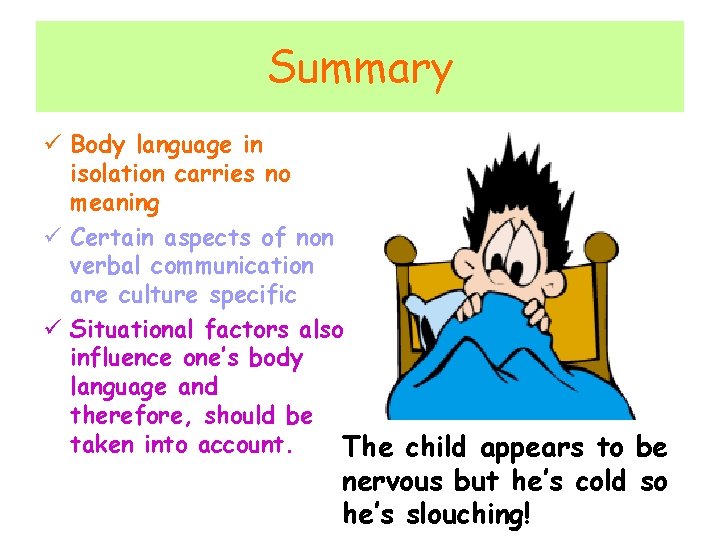
Summary ü Body language in isolation carries no meaning ü Certain aspects of non verbal communication are culture specific ü Situational factors also influence one’s body language and therefore, should be taken into account. The child appears to be nervous but he’s cold so he’s slouching!
- Slides: 21