
Non sufficit orbis Philip IIs global empire after
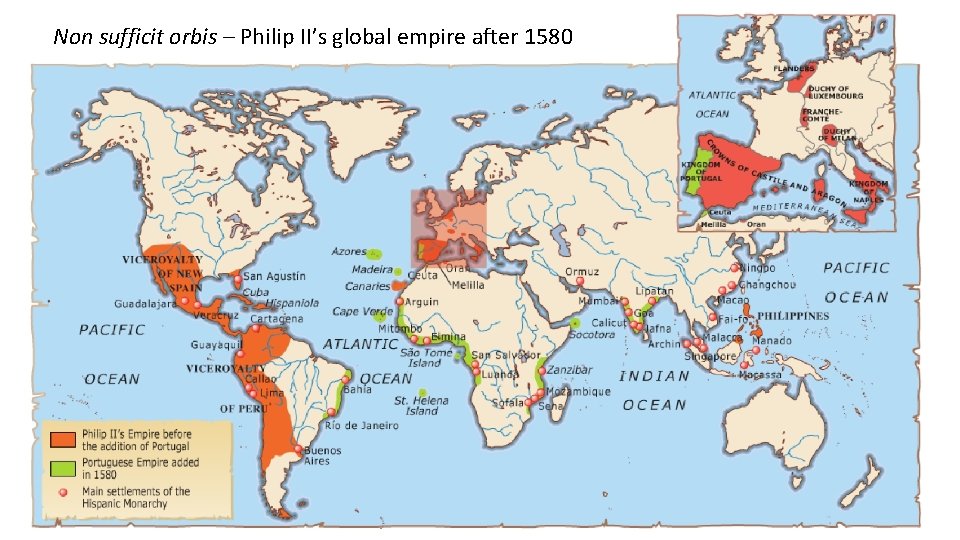
Non sufficit orbis – Philip II’s global empire after 1580
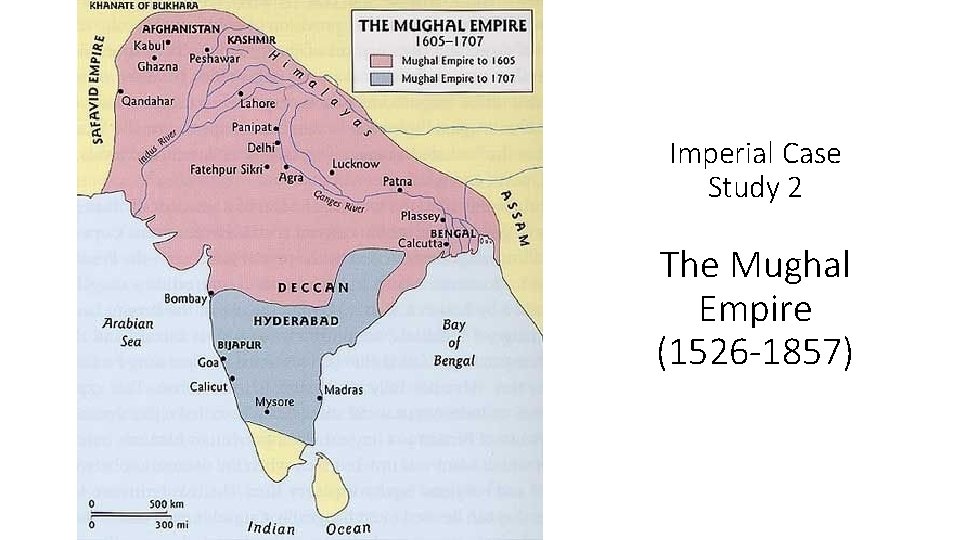
Imperial Case Study 2 The Mughal Empire (1526 -1857)
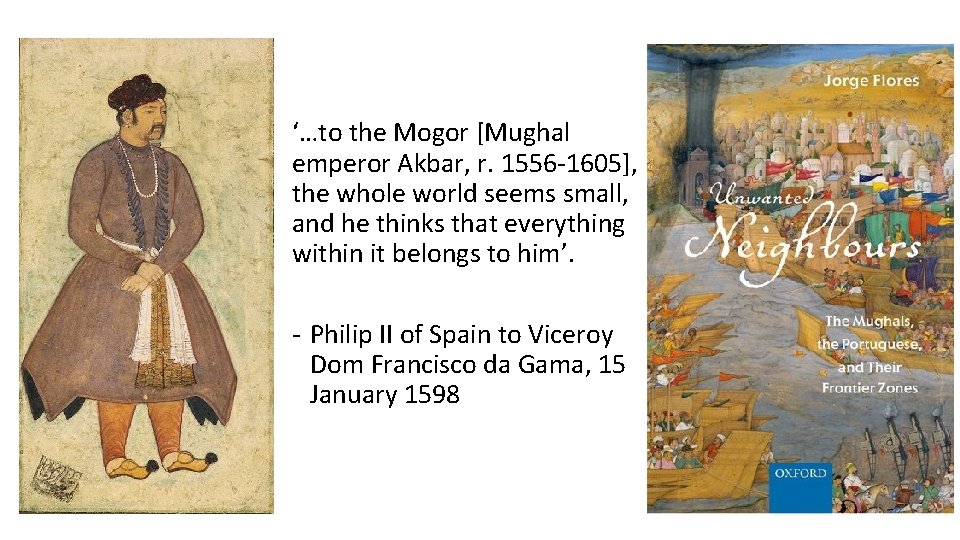
‘…to the Mogor [Mughal emperor Akbar, r. 1556 -1605], the whole world seems small, and he thinks that everything within it belongs to him’. - Philip II of Spain to Viceroy Dom Francisco da Gama, 15 January 1598
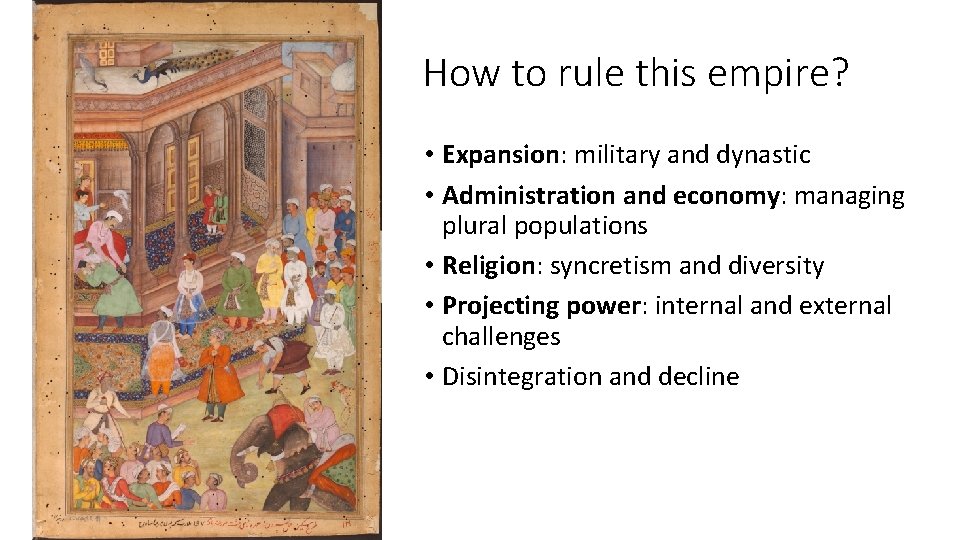
How to rule this empire? • Expansion: military and dynastic • Administration and economy: managing plural populations • Religion: syncretism and diversity • Projecting power: internal and external challenges • Disintegration and decline
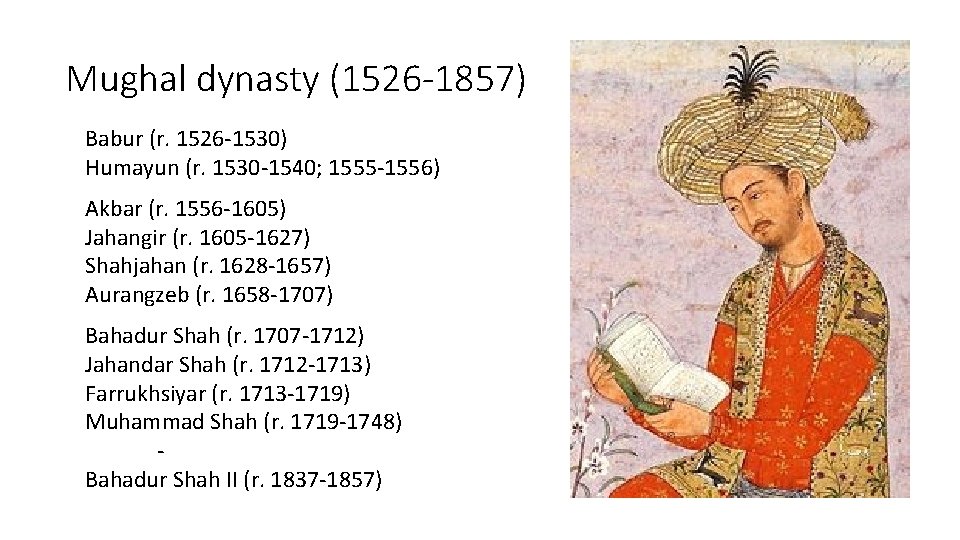
Mughal dynasty (1526 -1857) Babur (r. 1526 -1530) Humayun (r. 1530 -1540; 1555 -1556) Akbar (r. 1556 -1605) Jahangir (r. 1605 -1627) Shahjahan (r. 1628 -1657) Aurangzeb (r. 1658 -1707) Bahadur Shah (r. 1707 -1712) Jahandar Shah (r. 1712 -1713) Farrukhsiyar (r. 1713 -1719) Muhammad Shah (r. 1719 -1748) Bahadur Shah II (r. 1837 -1857)
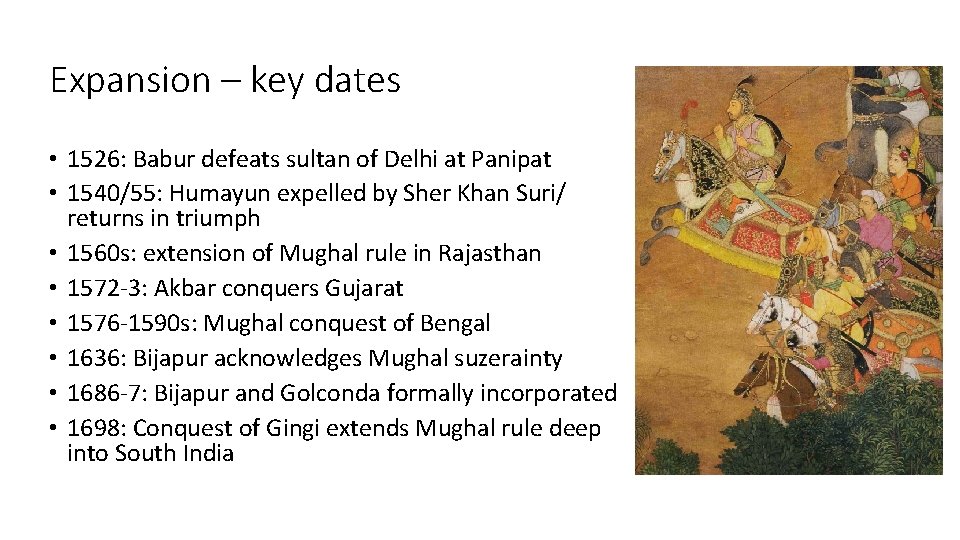
Expansion – key dates • 1526: Babur defeats sultan of Delhi at Panipat • 1540/55: Humayun expelled by Sher Khan Suri/ returns in triumph • 1560 s: extension of Mughal rule in Rajasthan • 1572 -3: Akbar conquers Gujarat • 1576 -1590 s: Mughal conquest of Bengal • 1636: Bijapur acknowledges Mughal suzerainty • 1686 -7: Bijapur and Golconda formally incorporated • 1698: Conquest of Gingi extends Mughal rule deep into South India
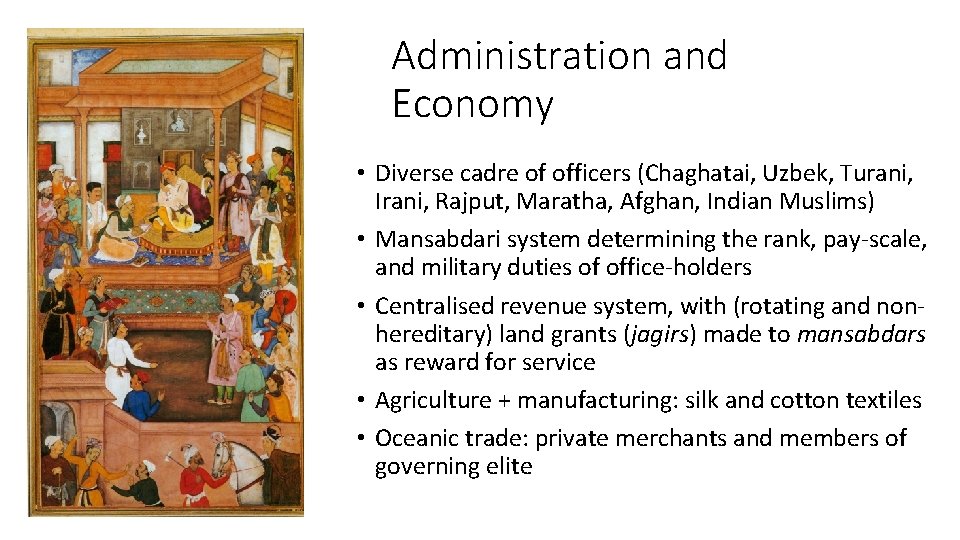
Administration and Economy • Diverse cadre of officers (Chaghatai, Uzbek, Turani, Irani, Rajput, Maratha, Afghan, Indian Muslims) • Mansabdari system determining the rank, pay-scale, and military duties of office-holders • Centralised revenue system, with (rotating and nonhereditary) land grants (jagirs) made to mansabdars as reward for service • Agriculture + manufacturing: silk and cotton textiles • Oceanic trade: private merchants and members of governing elite
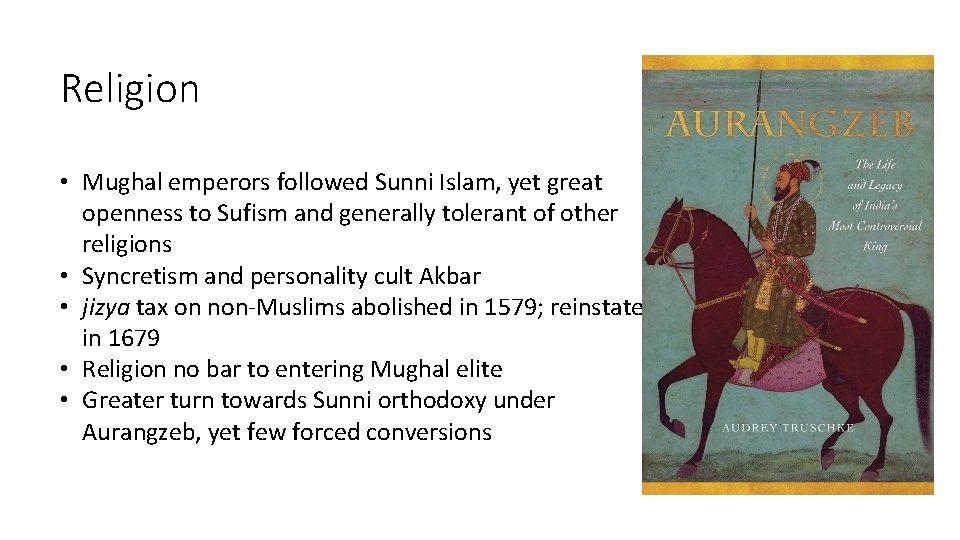
Religion • Mughal emperors followed Sunni Islam, yet great openness to Sufism and generally tolerant of other religions • Syncretism and personality cult Akbar • jizya tax on non-Muslims abolished in 1579; reinstated in 1679 • Religion no bar to entering Mughal elite • Greater turn towards Sunni orthodoxy under Aurangzeb, yet few forced conversions
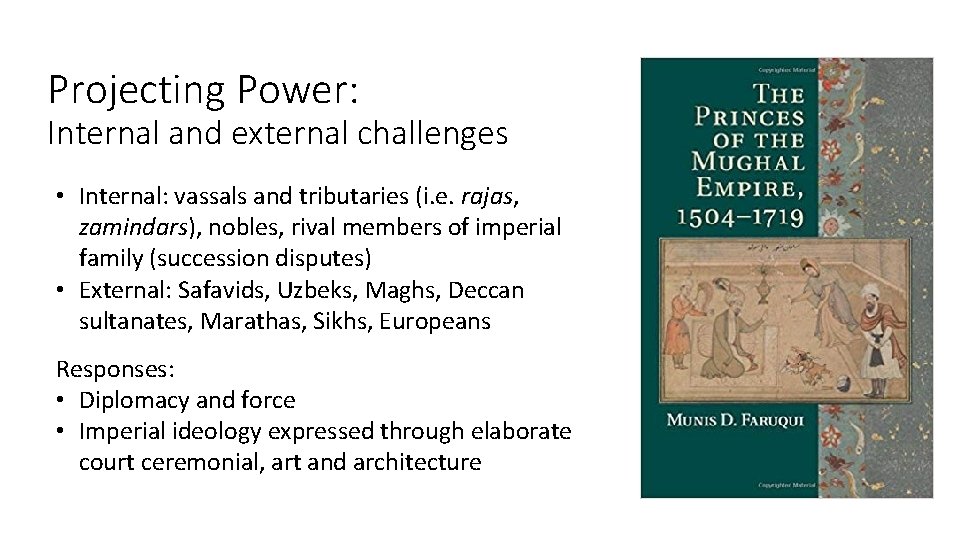
Projecting Power: Internal and external challenges • Internal: vassals and tributaries (i. e. rajas, zamindars), nobles, rival members of imperial family (succession disputes) • External: Safavids, Uzbeks, Maghs, Deccan sultanates, Marathas, Sikhs, Europeans Responses: • Diplomacy and force • Imperial ideology expressed through elaborate court ceremonial, art and architecture
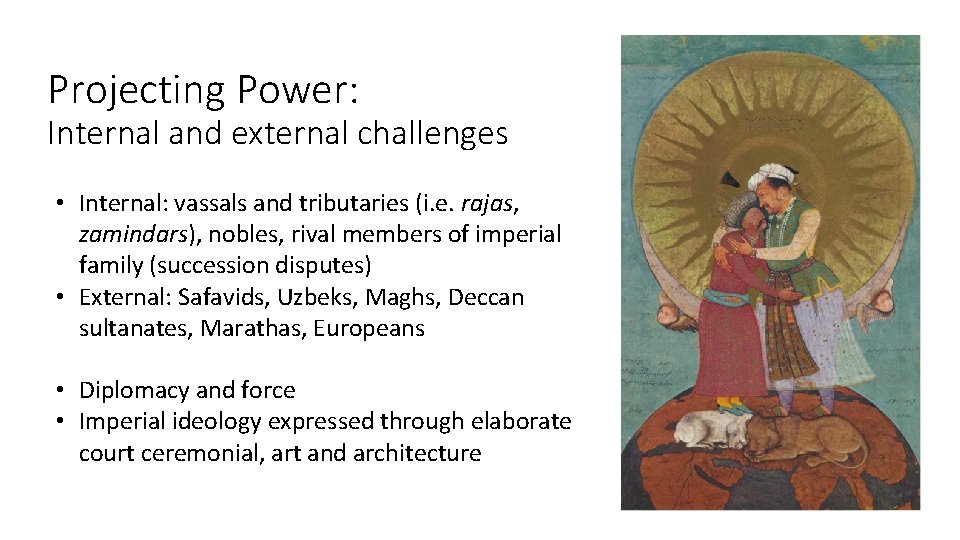
Projecting Power: Internal and external challenges • Internal: vassals and tributaries (i. e. rajas, zamindars), nobles, rival members of imperial family (succession disputes) • External: Safavids, Uzbeks, Maghs, Deccan sultanates, Marathas, Europeans • Diplomacy and force • Imperial ideology expressed through elaborate court ceremonial, art and architecture
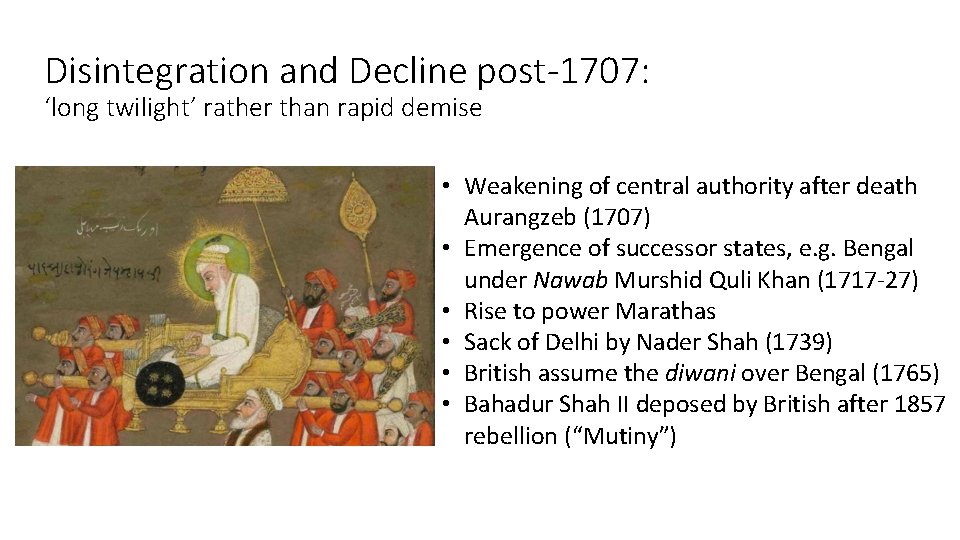
Disintegration and Decline post-1707: ‘long twilight’ rather than rapid demise • Weakening of central authority after death Aurangzeb (1707) • Emergence of successor states, e. g. Bengal under Nawab Murshid Quli Khan (1717 -27) • Rise to power Marathas • Sack of Delhi by Nader Shah (1739) • British assume the diwani over Bengal (1765) • Bahadur Shah II deposed by British after 1857 rebellion (“Mutiny”)
Conclusions - Comparing empires: seeing the diversity of political and cultural arrangements across early modern world - Mughal empire based on contiguous territorial expansion; Habsburg empire maritime and colonial - Mughal rule not predominantly extractive and exploitative: regions flourished - Ethnic and religious pluralism; composite elite - Based on compromise with local and regional elites: permitting plurality within empire, yet opening it to centrifugal forces ‘[The Mughals ruled] over a complex and plural empire with a fair degree of ideological flexibility. ’ Sanjay Subrahmanyam, ‘A Tale of Three Empires: The Mughals, Ottomans, and Habsburgs in a Comparative Context’ (2006), p. 82.
- Slides: 12